Group-6
Snehal Nemane (H-91)
Sayli Mahalle (H-82)
Shruti Adyalkar (H-90)
Vrushabh Agarwal (H-108)
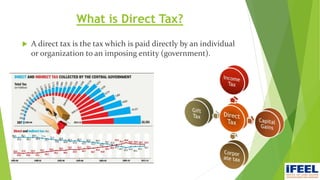
What is Direct Tax?
 A direct tax is the tax which is paid directly by an individual
or organization to an imposing entity (government).
Major changes in Direct Taxes
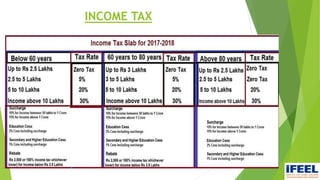
 No Change in Income Tax Slab & Tax Rates for Individuals
 3% Education Cess to be replaced with Health and Education Cess @ 4% for all tax
payers
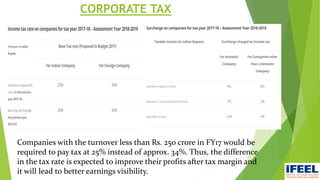
 Corporate Tax: Benefit of Corporate tax @ 25% available for Companies with
turnover up to Rs 250 Crore
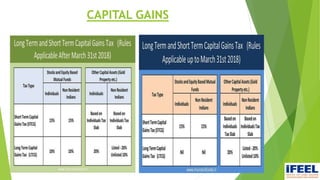
 Long-term capital gains above Rs 1 lakh on the sale of equity shares and equity
oriented mutual funds to be taxed @ 10%.However, Capital gains tax for until 31
January 2018 will be grandfathered
 Senior citizens not covered by insurance can claim reimbursement of medical
expenditure upto Rs. 50,000. Earlier this benefit was available only for very senior
citizens.
INCOME TAX
CAPITAL GAINS
CORPORATE TAX
Companies with the turnover less than Rs. 250 crore in FY17 would be
required to pay tax at 25% instead of approx. 34%. Thus, the difference
in the tax rate is expected to improve their profits after tax margin and
it will lead to better earnings visibility.
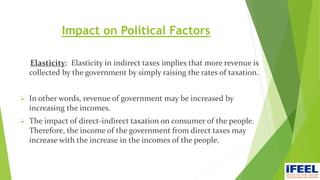
Impact on Political Factors
Elasticity: Elasticity in indirect taxes implies that more revenue is
collected by the government by simply raising the rates of taxation.
 In other words, revenue of government may be increased by
increasing the incomes.
 The impact of direct-indirect taxation on consumer of the people.
Therefore, the income of the government from direct taxes may
increase with the increase in the incomes of the people.
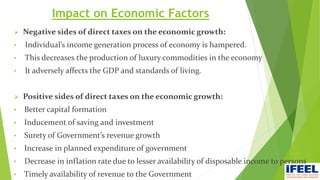
Impact on Economic Factors
 Negative sides of direct taxes on the economic growth:
• Individual’s income generation process of economy is hampered.
• This decreases the production of luxury commodities in the economy
• It adversely affects the GDP and standards of living.
 Positive sides of direct taxes on the economic growth:
• Better capital formation
• Inducement of saving and investment
• Surety of Government’s revenue growth
• Increase in planned expenditure of government
• Decrease in inflation rate due to lesser availability of disposable income to persons
• Timely availability of revenue to the Government
Impact on Social Factors
 Equitable:
• Direct taxes such as income tax, taxes on property, capital gains tax are
equitable.
• Direct taxes are taxed according to the ability to pay by the tax payers.
• Higher incomes are taxed more heavily and lower incomes slightly, the
larger the income the higher the rate of taxes.
 Reduce inequalities:
• Rich people are subjected to higher rates of taxation, while poor people are
exempted from direct tax obligations.
• Rates of taxes increase as the levels of income of persons rise.
Impact on Technological Factors
 As the direct taxes changed the accounting software also have
to be updated with the new tax slabs.
 Ex: In tally software they have to update the tax rate and its
effects on the balance sheet.
Impact on Legal Factors
 As the government change the rules and regulations it affects
the legal bindings of the tax payers.
 Ex: as the tax rate had changed last year the legal bindings of
the tax payers also changed but the tax rates are same this
year so the legal bindings are also same.
References
 https://incometaxdoubts.wordpress.com/2018/02/04/budget-2018-highlights-direct-
taxes/
 http://www.investsaver.com/budget-highlights-changes/
 http://insurancefunda.in/long-term-capital-gain-ltcg-tax/
 https://economictimes.indiatimes.com/wealth/tax/latest-income-tax-
slabs/articleshow/62751981.cms
 http://yourfinancebook.com/corporate-tax-rate-in-india/
 IndianJobs4u.com
 Moneycontrol.com
 file:///C:/Users/user/Downloads/ICAI%20-
%20Highlights%20of%20Tax%20Proposals%20-%20Union%20Budget%202018-
19%20(Direct%20Tax).pdf
Questions

BUDGET 2018_DIRECT TAX

  • 1.
    Group-6 Snehal Nemane (H-91) SayliMahalle (H-82) Shruti Adyalkar (H-90) Vrushabh Agarwal (H-108)
  • 2.
    What is DirectTax?  A direct tax is the tax which is paid directly by an individual or organization to an imposing entity (government).
  • 3.
    Major changes inDirect Taxes  No Change in Income Tax Slab & Tax Rates for Individuals  3% Education Cess to be replaced with Health and Education Cess @ 4% for all tax payers  Corporate Tax: Benefit of Corporate tax @ 25% available for Companies with turnover up to Rs 250 Crore  Long-term capital gains above Rs 1 lakh on the sale of equity shares and equity oriented mutual funds to be taxed @ 10%.However, Capital gains tax for until 31 January 2018 will be grandfathered  Senior citizens not covered by insurance can claim reimbursement of medical expenditure upto Rs. 50,000. Earlier this benefit was available only for very senior citizens.
  • 4.
  • 5.
  • 6.
    CORPORATE TAX Companies withthe turnover less than Rs. 250 crore in FY17 would be required to pay tax at 25% instead of approx. 34%. Thus, the difference in the tax rate is expected to improve their profits after tax margin and it will lead to better earnings visibility.
  • 7.
    Impact on PoliticalFactors Elasticity: Elasticity in indirect taxes implies that more revenue is collected by the government by simply raising the rates of taxation.  In other words, revenue of government may be increased by increasing the incomes.  The impact of direct-indirect taxation on consumer of the people. Therefore, the income of the government from direct taxes may increase with the increase in the incomes of the people.
  • 8.
    Impact on EconomicFactors  Negative sides of direct taxes on the economic growth: • Individual’s income generation process of economy is hampered. • This decreases the production of luxury commodities in the economy • It adversely affects the GDP and standards of living.  Positive sides of direct taxes on the economic growth: • Better capital formation • Inducement of saving and investment • Surety of Government’s revenue growth • Increase in planned expenditure of government • Decrease in inflation rate due to lesser availability of disposable income to persons • Timely availability of revenue to the Government
  • 9.
    Impact on SocialFactors  Equitable: • Direct taxes such as income tax, taxes on property, capital gains tax are equitable. • Direct taxes are taxed according to the ability to pay by the tax payers. • Higher incomes are taxed more heavily and lower incomes slightly, the larger the income the higher the rate of taxes.  Reduce inequalities: • Rich people are subjected to higher rates of taxation, while poor people are exempted from direct tax obligations. • Rates of taxes increase as the levels of income of persons rise.
  • 10.
    Impact on TechnologicalFactors  As the direct taxes changed the accounting software also have to be updated with the new tax slabs.  Ex: In tally software they have to update the tax rate and its effects on the balance sheet.
  • 11.
    Impact on LegalFactors  As the government change the rules and regulations it affects the legal bindings of the tax payers.  Ex: as the tax rate had changed last year the legal bindings of the tax payers also changed but the tax rates are same this year so the legal bindings are also same.
  • 12.
    References  https://incometaxdoubts.wordpress.com/2018/02/04/budget-2018-highlights-direct- taxes/  http://www.investsaver.com/budget-highlights-changes/ http://insurancefunda.in/long-term-capital-gain-ltcg-tax/  https://economictimes.indiatimes.com/wealth/tax/latest-income-tax- slabs/articleshow/62751981.cms  http://yourfinancebook.com/corporate-tax-rate-in-india/  IndianJobs4u.com  Moneycontrol.com  file:///C:/Users/user/Downloads/ICAI%20- %20Highlights%20of%20Tax%20Proposals%20-%20Union%20Budget%202018- 19%20(Direct%20Tax).pdf
  • 13.