Presentation on
Bucket wheel excavator
Submitted by,
Birendra Kumar
Roll No.- 14121019
Introduction,
Bucket Wheel Excavators (BWE) are continuous
cutting machines for soft to semi hard materials like
clay, sand, gravel, marl and their blendings as well as
lignite and hard coal.
• The primary function of BWEs is to act as a
continuous digging machine in large-scale open pit
mining operations.
• BWEs are used for continuous overburden removal in
surface mining applications. They use their cutting
wheels to strip away a section of earth (the working
block) dictated by the size of the excavator
Types,
World Largest Mining equipment Used for Digging the OB ( Over Burden ) it
consists of three types:-
C-TYPE
NORMAL TYPE
COMPACT TYPE
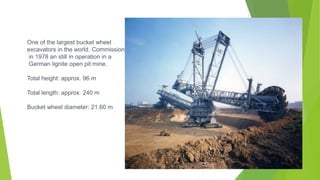
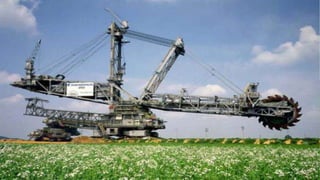
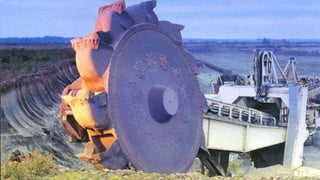
One of the largest bucket wheel
excavators in the world. Commissioned
in 1978 an still in operation in a
German lignite open pit mine.
Total height: approx. 96 m
Total length: approx. 240 m
Bucket wheel diameter: 21.60 m
Working method by BWE,
The following methods of working can be practiced by a
bucket wheel excavator:-
1. Face or front working
2. Full block working
3. Full block working
Application,
Lignite mining:- The primary application of BWEs is
in lignite
(brown coal) mining, where they are used for soft
rock overburden removal in the absence of blasting.
They are useful in this capacity for their ability to
continuously deliver large volumes of materials to
processors, which is especially important given the
continuous demand for lignite.
Material handling,
Bucket wheel technology is used extensively in bulk
materials handling. Bucket wheel reclaimers are used to pick
up material that has been positioned by a stacker for
transport to a processing plant. Stacker reclaimers, which
combine tasks to reduce the number of required machines,
also use bucket wheels to carry out their tasks.
• In shipyards, bucket wheels are used for the continuous
loading and unloading of ships, where they pick up material
from the yard for transfer to the delivery system
Heap Leaching,
Heap leaching entails of constructing stacks of crushed ore,
through which a solvent is passed to extract valuable
materials. The construction and removal of the heaps are an
obvious application of stacking and reclaiming technology.
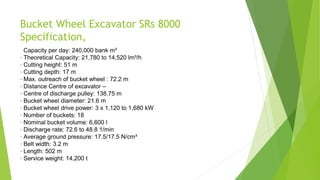
Bucket Wheel Excavator SRs 8000
Specification,
Capacity per day: 240,000 bank m³
• Theoretical Capacity: 21,780 to 14,520 lm³/h
• Cutting height: 51 m
• Cutting depth: 17 m
• Max. outreach of bucket wheel : 72.2 m
• Distance Centre of excavator –
• Centre of discharge pulley: 138.75 m
• Bucket wheel diameter: 21.6 m
• Bucket wheel drive power: 3 x 1,120 to 1,680 kW
• Number of buckets: 18
• Nominal bucket volume: 6,600 l
• Discharge rate: 72.6 to 48.8 1/min
• Average ground pressure: 17.5/17.5 N/cm³
• Belt width: 3.2 m
• Length: 502 m
• Service weight: 14,200 t
The Wheel and Digging Technique,
The "secret" for the ability of the machines to dig through
semi-hard rock lies in its wheel and in its digging technique.
• Common bucket wheels are designed with a bucket wheel
body on which the individual buckets and precutters are
mounted separately. With the new wheel the buckets and
teeth are an integral part of the wheel body and the flow of
the circumferential forces goes undisturbed from the teeth
directly into the main wheel plate.
The teeth itself are designed in a long and
pointed form. This profile assures that the
teeth attack the material with the tip only and
the full power of the strong wheel is directed
at a small area into the material. The high
specific force which is gained by this makes it
possible to cut even very hard material.
• There are two possible ways of excavating a
block, the terrace cut or the drop cut.
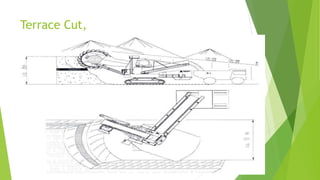
• The terrace cut is highly suitable for soft and
easy diggable material because the digging
process is easiest to monitor under these
conditions and is generally also easiest for
the excavator operator to manage.
Terrace Cut,
Dropping Cut,
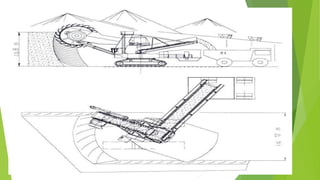
• In drop cut, the bucket wheel is lowered by the depth of one chip after
each change of chip, and if necessary, the machine is traveled back a
little. This
working method is particularly recommended for harder material to avoid
oversized lumps.
• In the drop cut mode the wheel is in constant contact with the ground,
which means that the superstructure cannot shake or swing. In addition to
this, any
oversize individual lumps broken out of the face are carried along the full
height of the face before they are loaded. This means there is more time
for each
individual lump to be crushed against the face by the bucket wheel than
in the terrace cut.
Thanks you
Thanks
df
Bucket wheel excavator ppt

Bucket wheel excavator ppt

  • 1.
    Presentation on Bucket wheelexcavator Submitted by, Birendra Kumar Roll No.- 14121019
  • 2.
    Introduction, Bucket Wheel Excavators(BWE) are continuous cutting machines for soft to semi hard materials like clay, sand, gravel, marl and their blendings as well as lignite and hard coal. • The primary function of BWEs is to act as a continuous digging machine in large-scale open pit mining operations. • BWEs are used for continuous overburden removal in surface mining applications. They use their cutting wheels to strip away a section of earth (the working block) dictated by the size of the excavator
  • 3.
    Types, World Largest Miningequipment Used for Digging the OB ( Over Burden ) it consists of three types:- C-TYPE NORMAL TYPE COMPACT TYPE
  • 4.
    One of thelargest bucket wheel excavators in the world. Commissioned in 1978 an still in operation in a German lignite open pit mine. Total height: approx. 96 m Total length: approx. 240 m Bucket wheel diameter: 21.60 m
  • 5.
    Working method byBWE, The following methods of working can be practiced by a bucket wheel excavator:- 1. Face or front working 2. Full block working 3. Full block working
  • 6.
    Application, Lignite mining:- Theprimary application of BWEs is in lignite (brown coal) mining, where they are used for soft rock overburden removal in the absence of blasting. They are useful in this capacity for their ability to continuously deliver large volumes of materials to processors, which is especially important given the continuous demand for lignite.
  • 7.
    Material handling, Bucket wheeltechnology is used extensively in bulk materials handling. Bucket wheel reclaimers are used to pick up material that has been positioned by a stacker for transport to a processing plant. Stacker reclaimers, which combine tasks to reduce the number of required machines, also use bucket wheels to carry out their tasks. • In shipyards, bucket wheels are used for the continuous loading and unloading of ships, where they pick up material from the yard for transfer to the delivery system
  • 8.
    Heap Leaching, Heap leachingentails of constructing stacks of crushed ore, through which a solvent is passed to extract valuable materials. The construction and removal of the heaps are an obvious application of stacking and reclaiming technology.
  • 11.
    Bucket Wheel ExcavatorSRs 8000 Specification, Capacity per day: 240,000 bank m³ • Theoretical Capacity: 21,780 to 14,520 lm³/h • Cutting height: 51 m • Cutting depth: 17 m • Max. outreach of bucket wheel : 72.2 m • Distance Centre of excavator – • Centre of discharge pulley: 138.75 m • Bucket wheel diameter: 21.6 m • Bucket wheel drive power: 3 x 1,120 to 1,680 kW • Number of buckets: 18 • Nominal bucket volume: 6,600 l • Discharge rate: 72.6 to 48.8 1/min • Average ground pressure: 17.5/17.5 N/cm³ • Belt width: 3.2 m • Length: 502 m • Service weight: 14,200 t
  • 12.
    The Wheel andDigging Technique, The "secret" for the ability of the machines to dig through semi-hard rock lies in its wheel and in its digging technique. • Common bucket wheels are designed with a bucket wheel body on which the individual buckets and precutters are mounted separately. With the new wheel the buckets and teeth are an integral part of the wheel body and the flow of the circumferential forces goes undisturbed from the teeth directly into the main wheel plate.
  • 13.
    The teeth itselfare designed in a long and pointed form. This profile assures that the teeth attack the material with the tip only and the full power of the strong wheel is directed at a small area into the material. The high specific force which is gained by this makes it possible to cut even very hard material. • There are two possible ways of excavating a block, the terrace cut or the drop cut. • The terrace cut is highly suitable for soft and easy diggable material because the digging process is easiest to monitor under these conditions and is generally also easiest for the excavator operator to manage.
  • 14.
  • 15.
    Dropping Cut, • Indrop cut, the bucket wheel is lowered by the depth of one chip after each change of chip, and if necessary, the machine is traveled back a little. This working method is particularly recommended for harder material to avoid oversized lumps. • In the drop cut mode the wheel is in constant contact with the ground, which means that the superstructure cannot shake or swing. In addition to this, any oversize individual lumps broken out of the face are carried along the full height of the face before they are loaded. This means there is more time for each individual lump to be crushed against the face by the bucket wheel than in the terrace cut.
  • 17.
  • 18.
  • 19.