EVALUATING
“TRUTHINESS” ON
THE WEB USING
DIGITAL LITERACY
REBEKAH CUMMINGS
DIGITAL MATTERS LIBRARIAN, MARRIOTT LIBRARY
CTLE TEACHING SYMPOSIUM
AUGUST 12, 2019
DIGITAL LITERACY
The ability to find, understand,
evaluate, create, and use digital
information.
INFO LIT…
SO HOT
RIGHT NOW
DIGITAL NATIVES?
1. Are reliant on Google and Wikipedia
2. Rely on “curators of information” rather than original
research
3. “Value speed over accuracy, sharing over reading, and
commenting over understanding.” (Letaru, 2019)
4. Do not have a toolbox of critically evaluating online content.
CLASSROOM GOALS
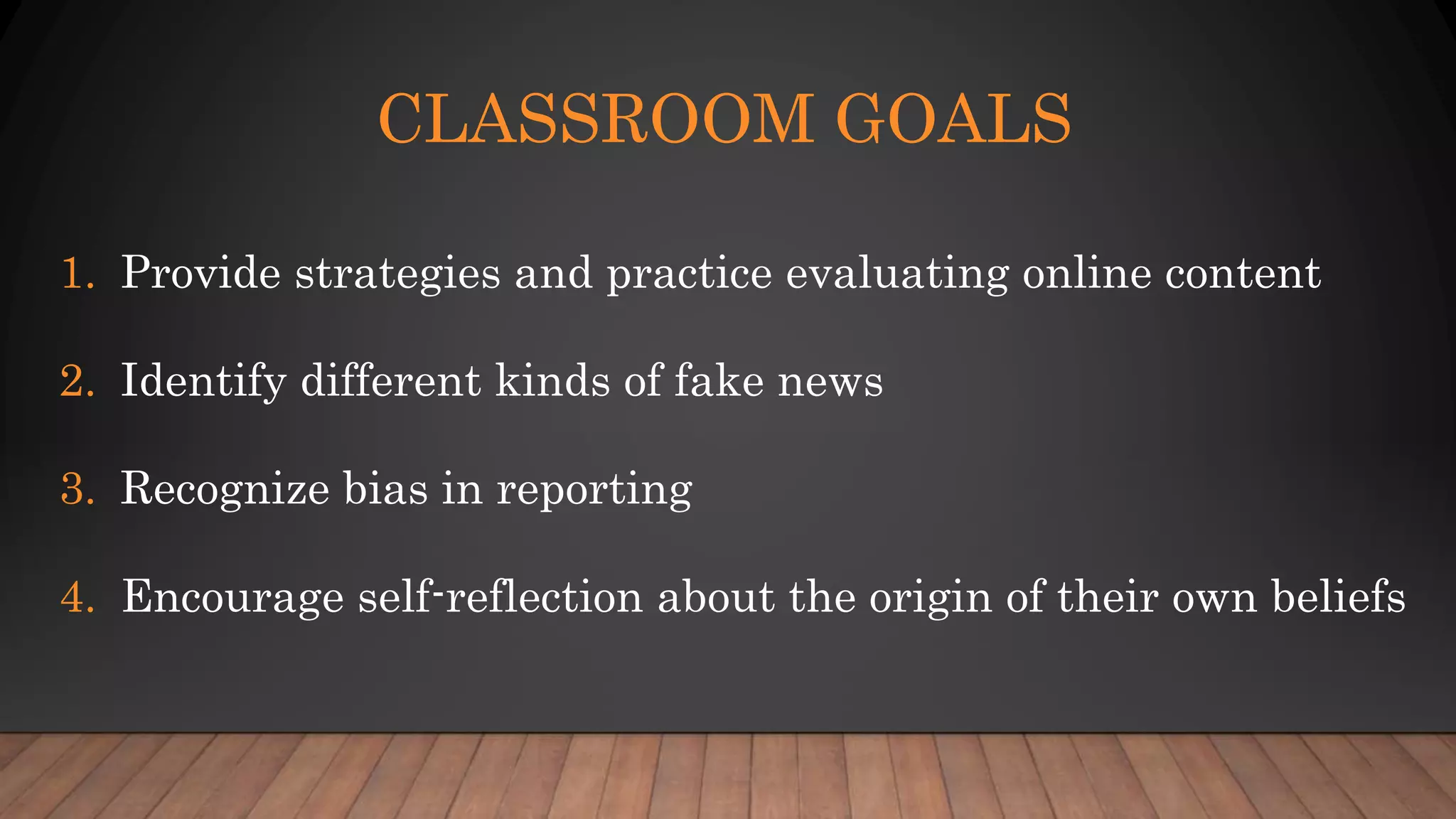
1. Provide strategies and practice evaluating online content
2. Identify different kinds of fake news
3. Recognize bias in reporting
4. Encourage self-reflection about the origin of their own beliefs
FOUR KINDS
OF FAKE
NEWS
BIAS
BEWARE!
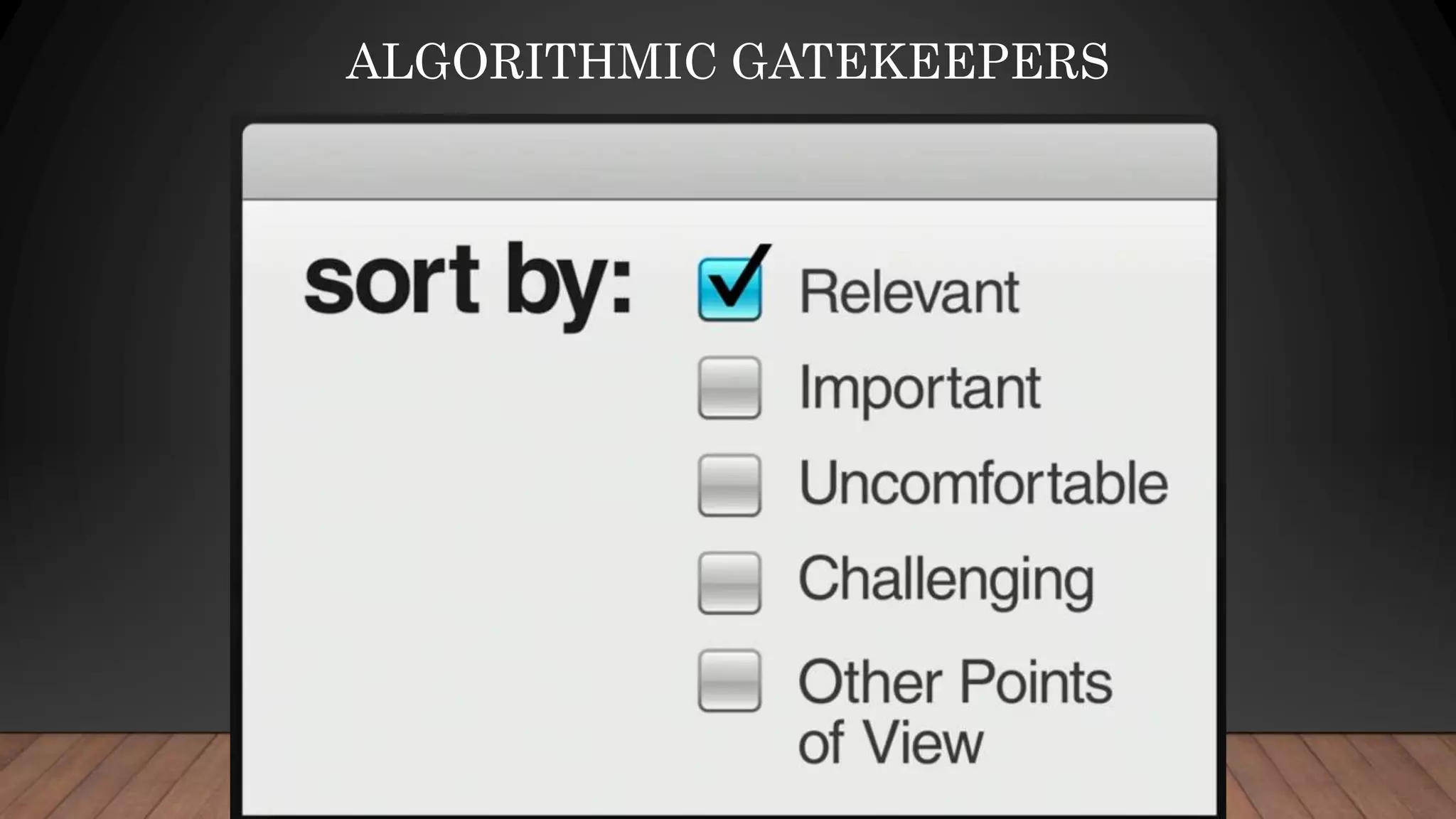
ALGORITHMIC GATEKEEPERS
DIGITAL LITERACY TOOLBOX – THE CRAAP
TEST
• Currency: the timeliness of the information
• Relevance: the importance of the information for your needs
• Authority: the source of the information
• Accuracy: the reliability, truthfulness, and correctness of the
content
• Purpose: the reason the information exists
QUESTIONS TO CONSIDER
• Does it seem like the article wants you to feel a particular way?
Does it use inflammatory language or excessive adjectives?
• Does it use ALL CAPS to make a point?
• Is it BREAKING NEWS?
• Does it link to sites, files, or images that skew left or right?
• Does it talk about research without citing or linking to sources of
the research?
HONING SKEPTICISM
• Google the story and see if anyone else is reporting on it.
• Pay attention to the domain and URL – ex: abcnews.com.co vs.
abcnews.com
• Check “About Us” or Disclaimer
FACT CHECKING SITES
• Snopes.com - http://www.snopes.com/
• Politifact - http://www.politifact.com/
• Washington Post Fact Checker - https://www.washingtonpost.com/news/fact-
checker/?utm_term=.78cb1071dfe4
• FactCheck.org –Annenberg Public Policy Center at the University of Pennsylvania
http://www.factcheck.org/
• ProQuest Research Companion - https://pqrc.proquest.com/tool/source-evaluation-a
GREEN NEW DEAL – ACTIVE
LEARNING!
Group 1 - http://bit.ly/greennewdeal1
Group 2 - http://bit.ly/GreenNewDeal2
Group 3 –http://bit.ly/GreenNewDeal3
Group 4 - http://bit.ly/GreenNewDeal04
Rebekah Cummings
Digital Matters Librarian
@RebekahCummings
Rebekah.cummings@Utah.edu

Digital Literacy

  • 1.
    EVALUATING “TRUTHINESS” ON THE WEBUSING DIGITAL LITERACY REBEKAH CUMMINGS DIGITAL MATTERS LIBRARIAN, MARRIOTT LIBRARY CTLE TEACHING SYMPOSIUM AUGUST 12, 2019
  • 2.
    DIGITAL LITERACY The abilityto find, understand, evaluate, create, and use digital information.
  • 3.
  • 6.
    DIGITAL NATIVES? 1. Arereliant on Google and Wikipedia 2. Rely on “curators of information” rather than original research 3. “Value speed over accuracy, sharing over reading, and commenting over understanding.” (Letaru, 2019) 4. Do not have a toolbox of critically evaluating online content.
  • 7.
    CLASSROOM GOALS 1. Providestrategies and practice evaluating online content 2. Identify different kinds of fake news 3. Recognize bias in reporting 4. Encourage self-reflection about the origin of their own beliefs
  • 8.
  • 9.
  • 10.
  • 12.
    DIGITAL LITERACY TOOLBOX– THE CRAAP TEST • Currency: the timeliness of the information • Relevance: the importance of the information for your needs • Authority: the source of the information • Accuracy: the reliability, truthfulness, and correctness of the content • Purpose: the reason the information exists
  • 13.
    QUESTIONS TO CONSIDER •Does it seem like the article wants you to feel a particular way? Does it use inflammatory language or excessive adjectives? • Does it use ALL CAPS to make a point? • Is it BREAKING NEWS? • Does it link to sites, files, or images that skew left or right? • Does it talk about research without citing or linking to sources of the research?
  • 14.
    HONING SKEPTICISM • Googlethe story and see if anyone else is reporting on it. • Pay attention to the domain and URL – ex: abcnews.com.co vs. abcnews.com • Check “About Us” or Disclaimer
  • 15.
    FACT CHECKING SITES •Snopes.com - http://www.snopes.com/ • Politifact - http://www.politifact.com/ • Washington Post Fact Checker - https://www.washingtonpost.com/news/fact- checker/?utm_term=.78cb1071dfe4 • FactCheck.org –Annenberg Public Policy Center at the University of Pennsylvania http://www.factcheck.org/ • ProQuest Research Companion - https://pqrc.proquest.com/tool/source-evaluation-a
  • 16.
    GREEN NEW DEAL– ACTIVE LEARNING! Group 1 - http://bit.ly/greennewdeal1 Group 2 - http://bit.ly/GreenNewDeal2 Group 3 –http://bit.ly/GreenNewDeal3 Group 4 - http://bit.ly/GreenNewDeal04
  • 17.
    Rebekah Cummings Digital MattersLibrarian @RebekahCummings Rebekah.cummings@Utah.edu

Editor's Notes

  • #2 We’re gong to talk today about ways to incorporate digital literacy into the classroom so that your students learn how to be critical consumers of information they find online whether that be an article that’s shared on Twitter, a meme, a YouTube video, or even a scholarly article in a research database. I think it’s important to match this topic to the moment that we’re in right now. Librarians have been teaching information literacy for decades (our bread and butter, stock in trade), but we happen to be in this moment where everyone is talking about fake news, alternative facts, information bubbles and this crisis where people are operating from different sets of fact and using those different facts to form vastly different opinions. So there’s renewed interest and imperative to make sure our students are equipped to be critical consumers of information and to think about the broader information ecosystem and how information flows to them.
  • #3 Defining our terms. If you Google digital literacy… protecting your personal information online, avoiding cyberbullying. It’s about having a mix of skills -- both cognitive and technical skills -- to find, understand, evaluate, create, and communicate digital information. Closely intertwined with information literacy and media literacy, but it’s an umbrella term for understanding and using information we find in digital mediums, which, is probably about 99% of the information our students come in contact with..
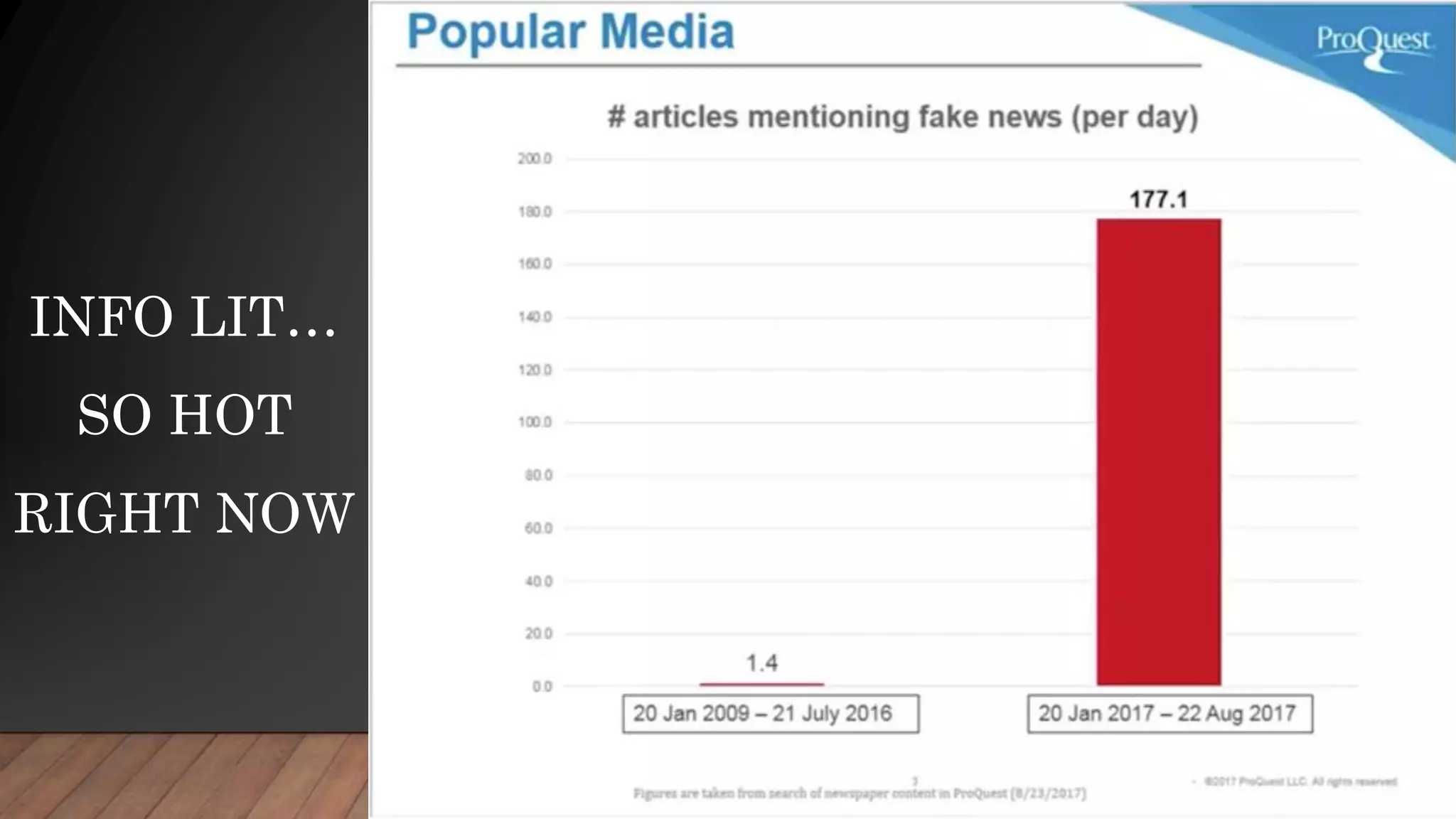
  • #4 I mentioned a moment ago that we are living in a particular moment where information literacy is this very topical thing. This is an infographic from ProQuest that looks at the number of articles per day mentioning fake news. From January 2009 (when President Obama took office) to July 2016 (when Donald Trump announced his candidacy for President) about 1.4 articles a day used the term fake news. From January 2017 – August 2017, 177.1 articles a day used the term. This is not to say that misinformation campaigns didn’t exist prior to 2016. Of course they did!
  • #5 Here is another interesting infographic showing that in the run-up to the 2016 election, fake news stories had more engagement on Facebook than mainstream stories did. The most 'popular' story falsely stated that Pope Francis had endorsed Donald Trump for the presidency - receiving almost one million engagements (shares, reactions and comments). (https://www.statista.com/chart/6795/fake-news-is-a-real-problem/) Important for two reasons: Our student primarily get their news from social media We’re on the brink of another election season where there are sure to be many more misinformation campaigns.
  • #6 I’ve heard my students say, that it’s not their generation that’s sharing and falling for fake news stories. It’s their crazy uncle or grandpa or whatever. They aren’t totally wrong. Boomers are far more likely to share fake news than fake news stories than millennials. There’s is a growing body of research that shows students at every level from junior high to college have a difficult time judging the credibility of online information. That they lack basic digital literacy skills like gauging the trustworthiness of articles, telling the difference between news stories, advertisements, and op-eds, evaluating website credibility, or even identifying social media conventions like the blue checkmark that indicates if an account is verified as legitimate on Facebook and Twitter https://ed.stanford.edu/news/stanford-researchers-find-students-have-trouble-judging-credibility-information-online
  • #7 The truth is that these digital natives is that while they consume copious amounts of digital information that does not translate to having good digital literacy skills or to think about research as strategic exploration. Here are four of the hallmarks of digital native information seeking… maybe this will resonate with you. This is not meant to disparage millennials. I love my students…
  • #8 It’s good to have goals. Librarian instruction is variable. Sometimes we come in for an hour, sometimes we’re embedded in the class and come multiple times… I want my students to ask themselves, why do I believe what I believe? What are my own evidentiary standards?
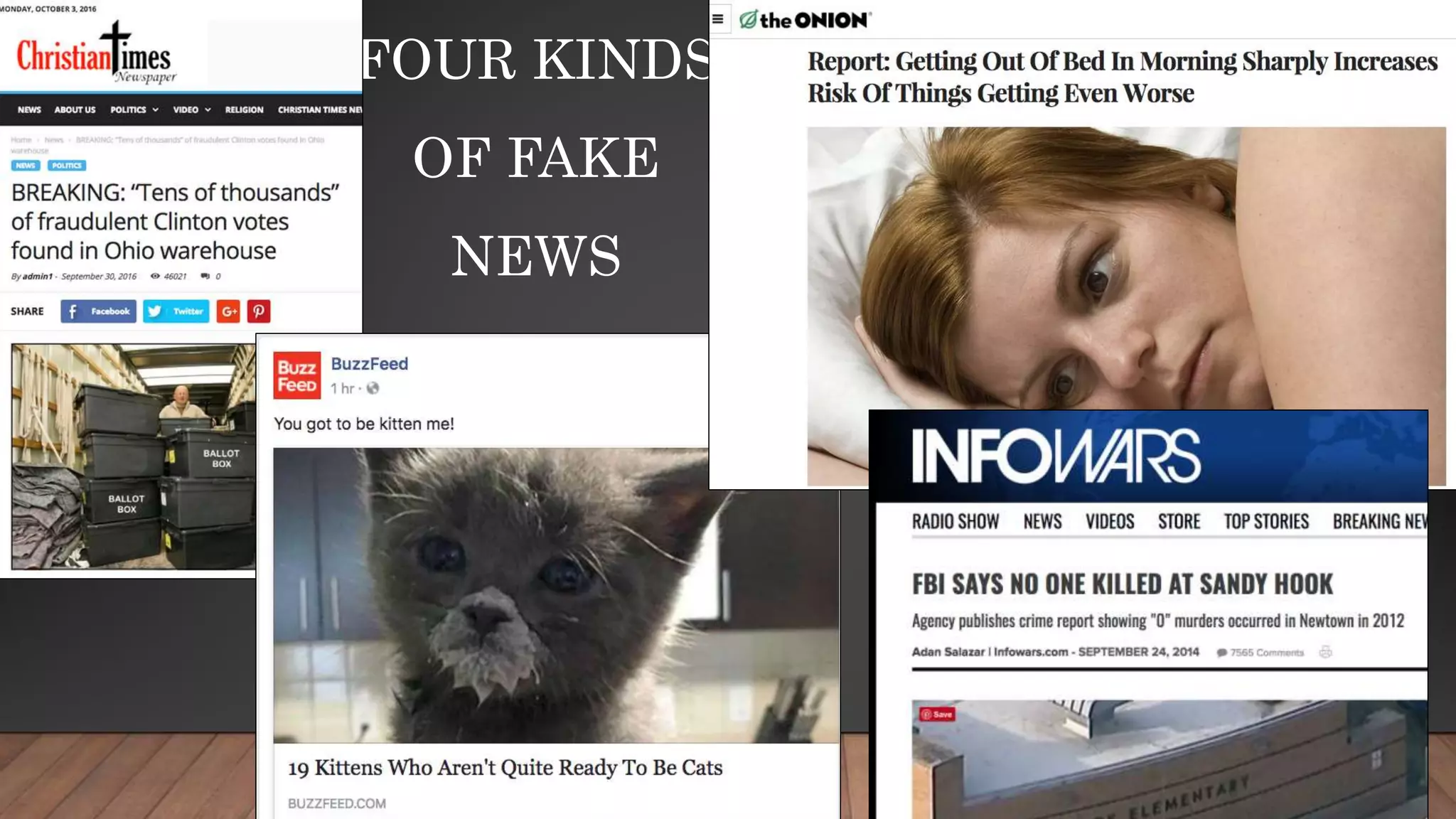
  • #9 Talk about what makes news “fake” It can’t be verified It often appeals to emotion It can’t be found anywhere else It comes from fake news sites It isn’t authored by an expert or reputable journalist Introduce different flavors of fake news and the hallmarks of fake news. Hoaxes Clickbait Websites that circulate misleading and unreliable information Satire
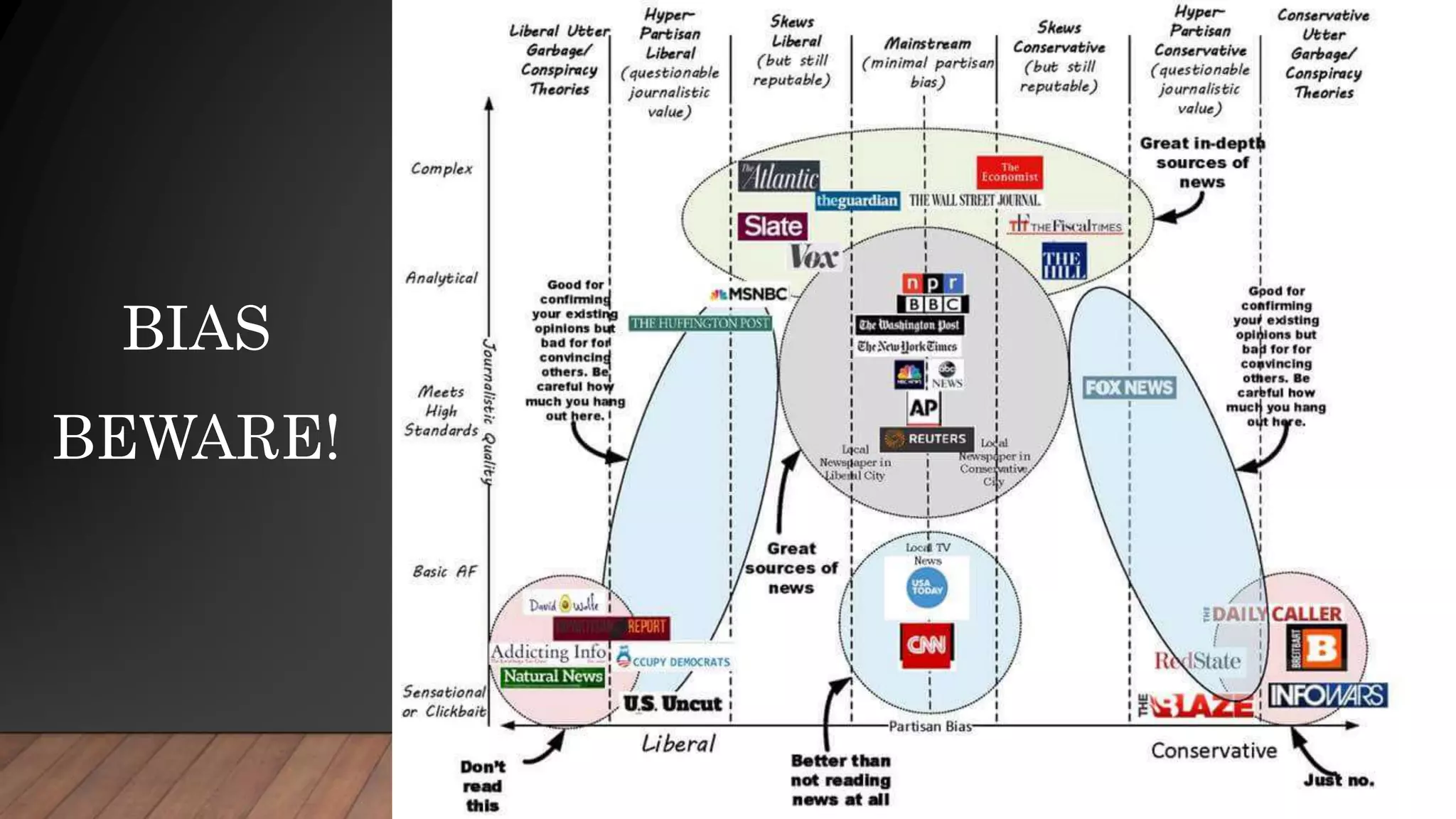
  • #10 We also talk about bias. Some news is straight up fake, other news just has an editorial or partisan slant. Journalism Ethics – Seek the truth and report it, minimize harm, act independently, don’t pay for sources, acknowledge mistakes, prominently label sponsored content. Get your news from a variety of sources and cross the aisle occasionally to challenge your own beliefs. Word of caution with this infographic. “bothsidesism” where Fox News and Huffington Post have roughly equivalent value. Not necessarily true.
  • #11 It's impossible to talk about the information ecosystem without talking about the role of social media. Challenges of social media Invisible algorithmic editing of the web “Passing of the torch from human gatekeepers (traditional editors) to algorithmic ones” https://fitnyc.libguides.com/fakenews/socialmedia
  • #12 What is all of our roles as readers and consumers of information? CONSTANT VIGILENCE! Recognizing that information we come into contact online has an author, a point of view, it ended up in your feed for particular reasons, that it may or may not be true, and even if it's true it it has a value - good, bad, biased, neutral.
  • #13 The first tool we explore in our toolkit is the CRAAP test. Purpose - is it meant to inform, sell, persuade? Why does this information exist in the world? Who paid for it?
  • #14 These are questions I bring up when talking about online content...
  • #15 Part of teaching students how to judge the credibility of online content is teaching them how to hone skepticism.
  • #16 Last bit I will say here is there are sources to help.
  • #17 ACTIVE LEARNING! In the blurb for this class I said that we would have one of these because I think it’s important to do this in the classroom. Four groups Who has computers? Four team leaders. Say a word. So easy to use examples from last year or the year before. Keep it fresh!
  • #18 Thanks everyone! Weave it into your normal classroom instruction AND/OR Bring in a librarian