BRITISH HISTORY
THIS SECTION PRESENTS THE SWEEP OF
BRITISH HISTORY IN CHRONOLOGYCAL
FORM, BROKEN DOWN INTO DISCRETE
TIME PERIODS.
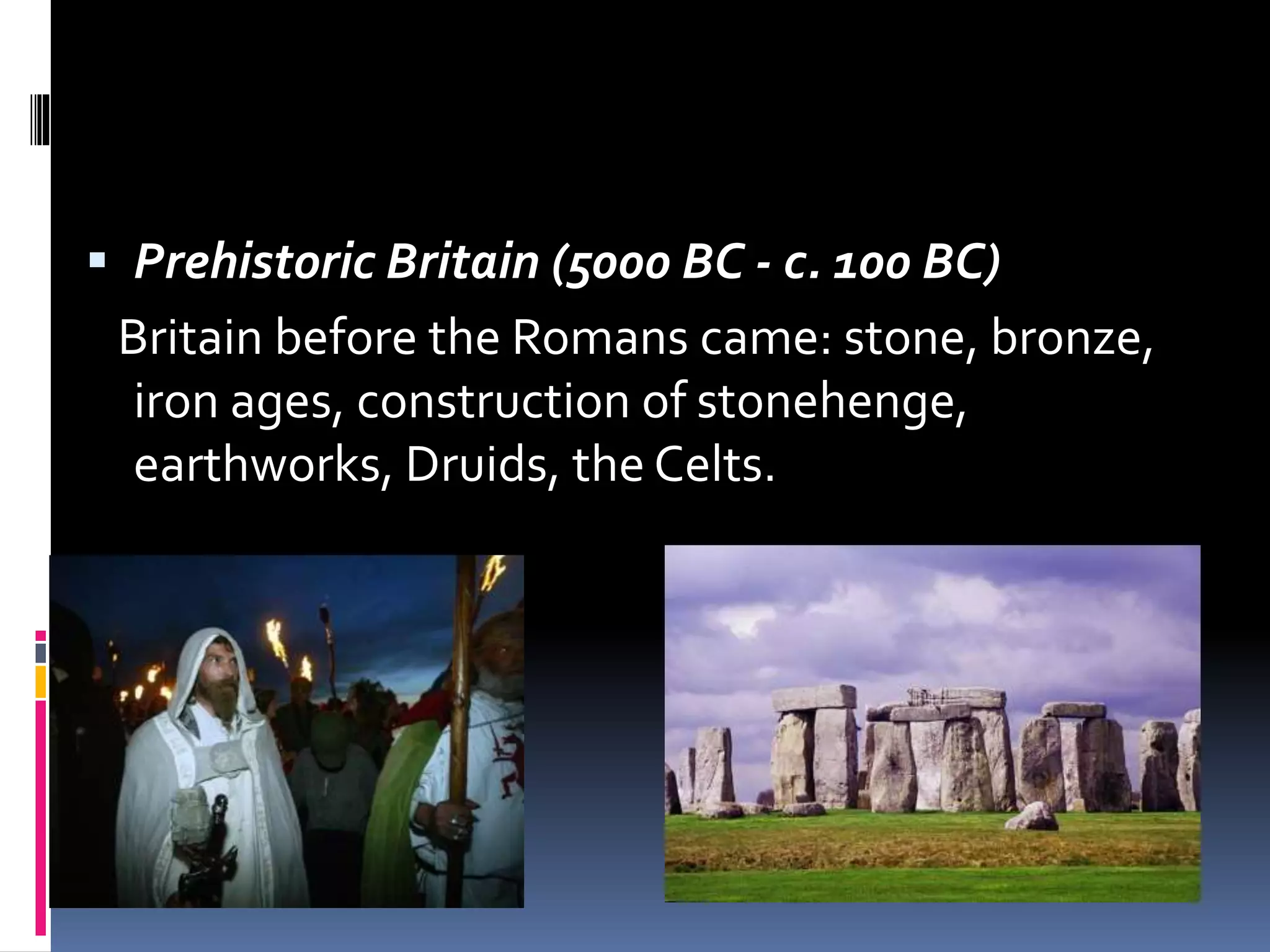
 Prehistoric Britain (5000 BC - c. 100 BC)
Britain before the Romans came: stone, bronze,
iron ages, construction of stonehenge,
earthworks, Druids, the Celts.
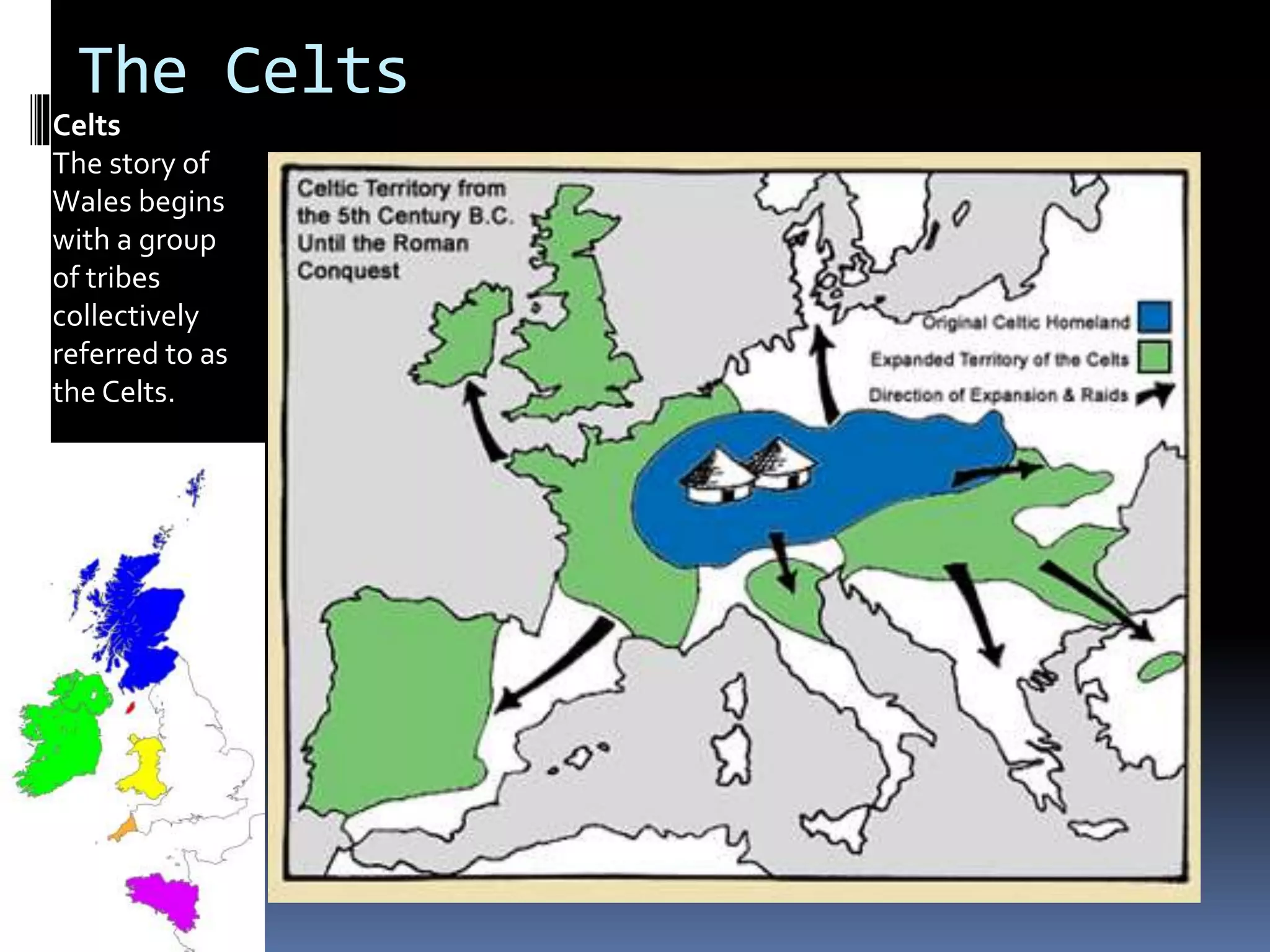
The Celts
Celts
The story of
Wales begins
with a group
of tribes
collectively
referred to as
the Celts.
 Roman Britain (55 BC - 410 AD)
From Julius Caesar's first attempt at conquest to
the final days of Roman administration in
Britain: rebellion, subjugation, advent of
Christianity, barbarian invasions, withdrawal.
 Early British Kingdoms (410 - 598)
After the Roman influence ceased, the
activities of the British people: westward
movement, intrigues & alliances, power
struggles, explosion of missionary activities,
plague, Saxon invasions.
 Early British Kingdoms (599 - 937)
Continuing activities of the British people:
further westward movement, more intrigues
& alliances, more power struggles, more
Saxon invasions, religious strife with Roman
Catholicism.
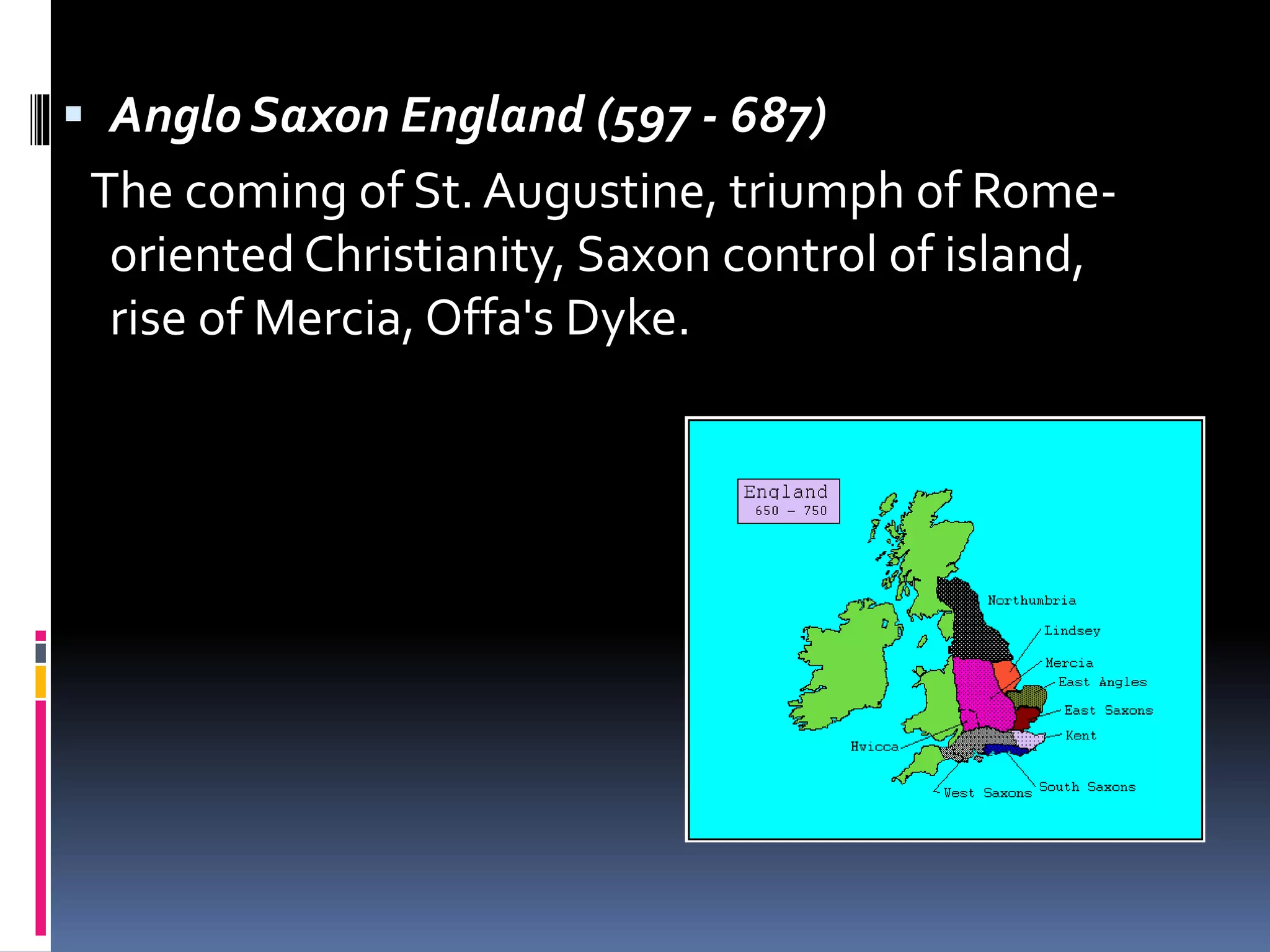
 Anglo Saxon England (597 - 687)
The coming of St. Augustine, triumph of Rome-
oriented Christianity, Saxon control of island,
rise of Mercia, Offa's Dyke.
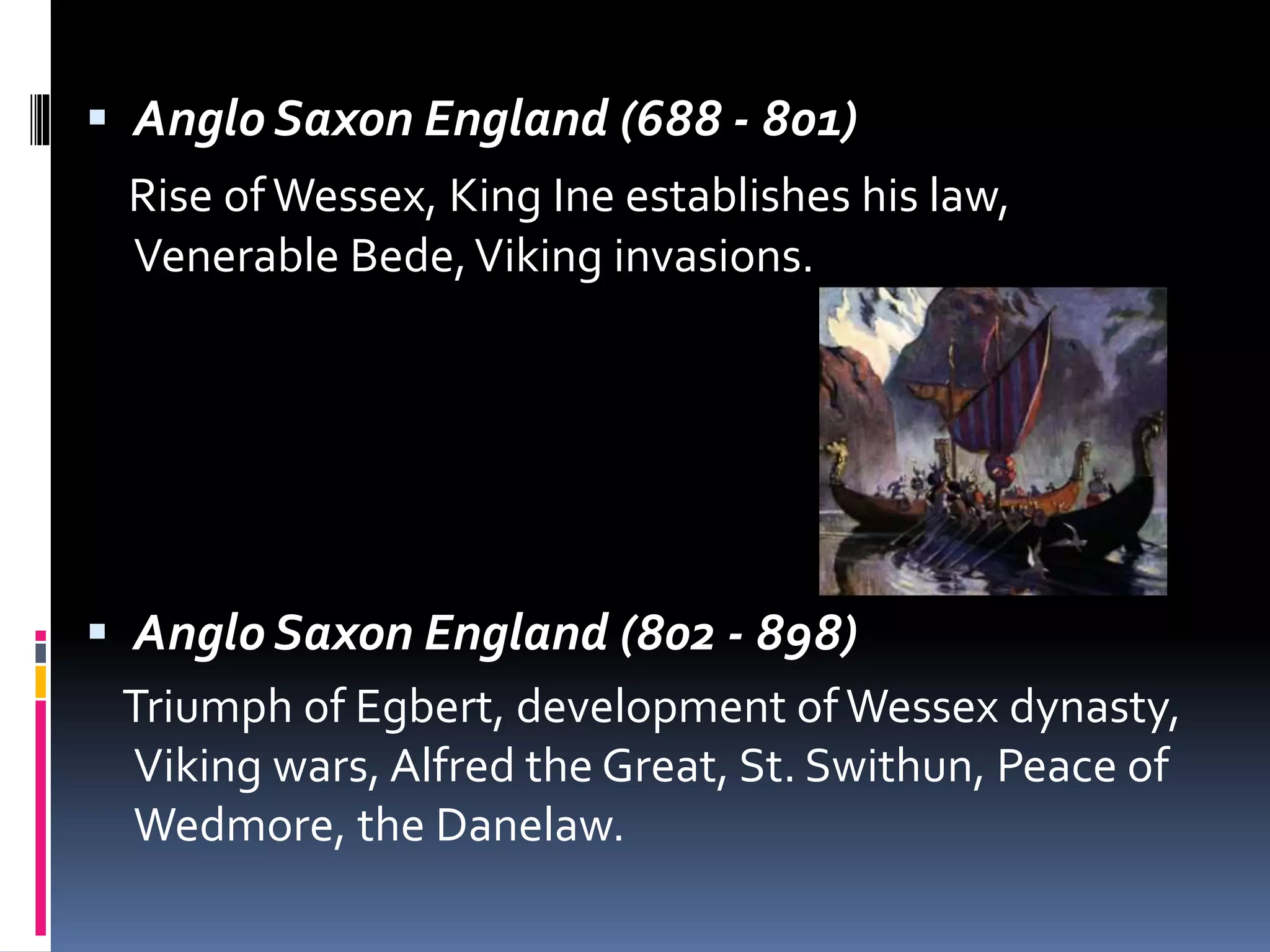
 Anglo Saxon England (688 - 801)
Rise ofWessex, King Ine establishes his law,
Venerable Bede,Viking invasions.
 Anglo Saxon England (802 - 898)
Triumph of Egbert, development ofWessex dynasty,
Viking wars, Alfred the Great, St. Swithun, Peace of
Wedmore, the Danelaw.
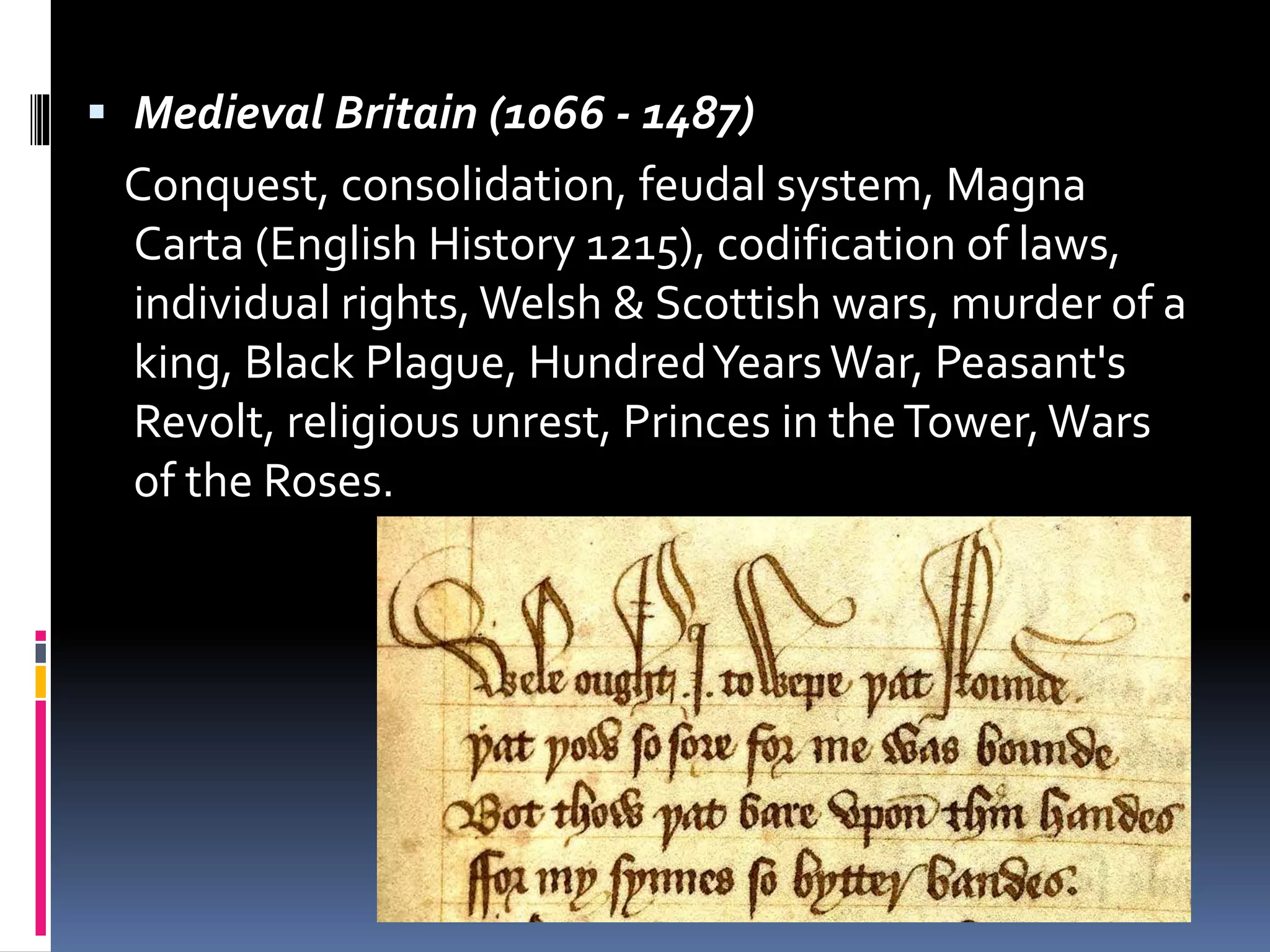
 Medieval Britain (1066 - 1487)
Conquest, consolidation, feudal system, Magna
Carta (English History 1215), codification of laws,
individual rights, Welsh & Scottish wars, murder of a
king, Black Plague, HundredYearsWar, Peasant's
Revolt, religious unrest, Princes in theTower,Wars
of the Roses.
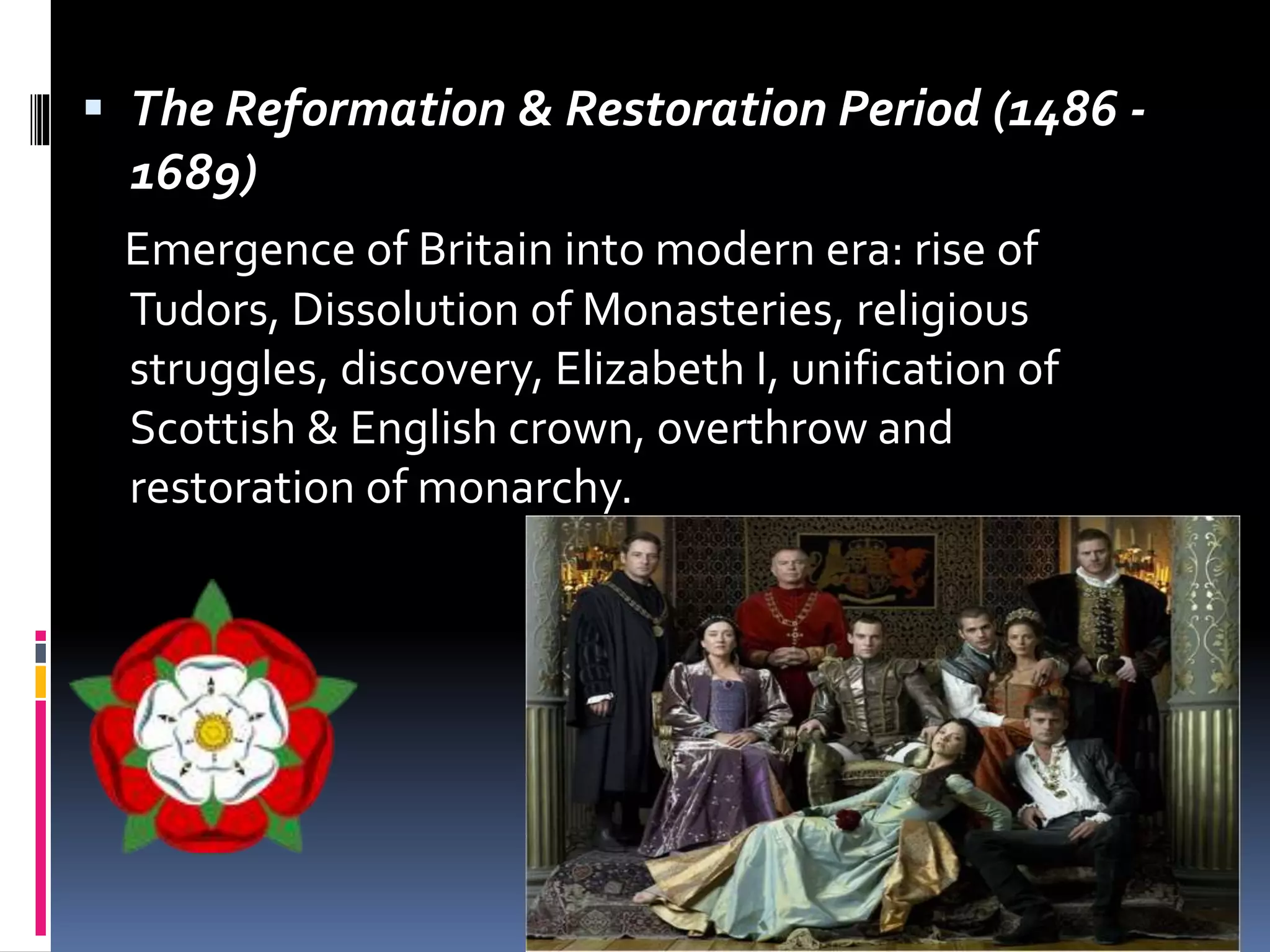
 The Reformation & Restoration Period (1486 -
1689)
Emergence of Britain into modern era: rise of
Tudors, Dissolution of Monasteries, religious
struggles, discovery, Elizabeth I, unification of
Scottish & English crown, overthrow and
restoration of monarchy.
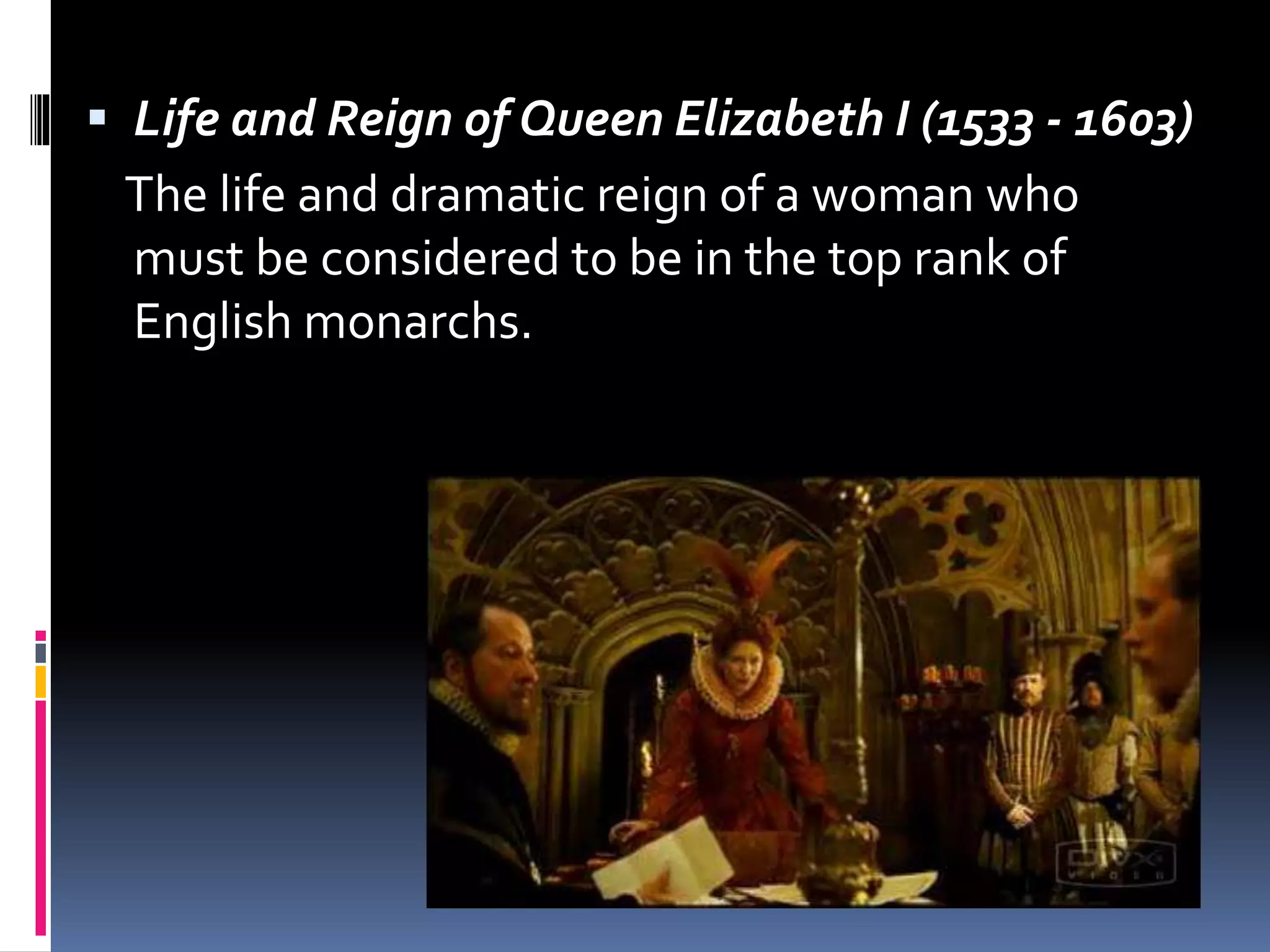
 Life and Reign of Queen Elizabeth I (1533 - 1603)
The life and dramatic reign of a woman who
must be considered to be in the top rank of
English monarchs.
 The first Queen Elizabeth, called "Gloriana" by Edmund
Spenser in "The FaerieQueene", was born in 1533 to
HenryVIII and Anne Boleyn.
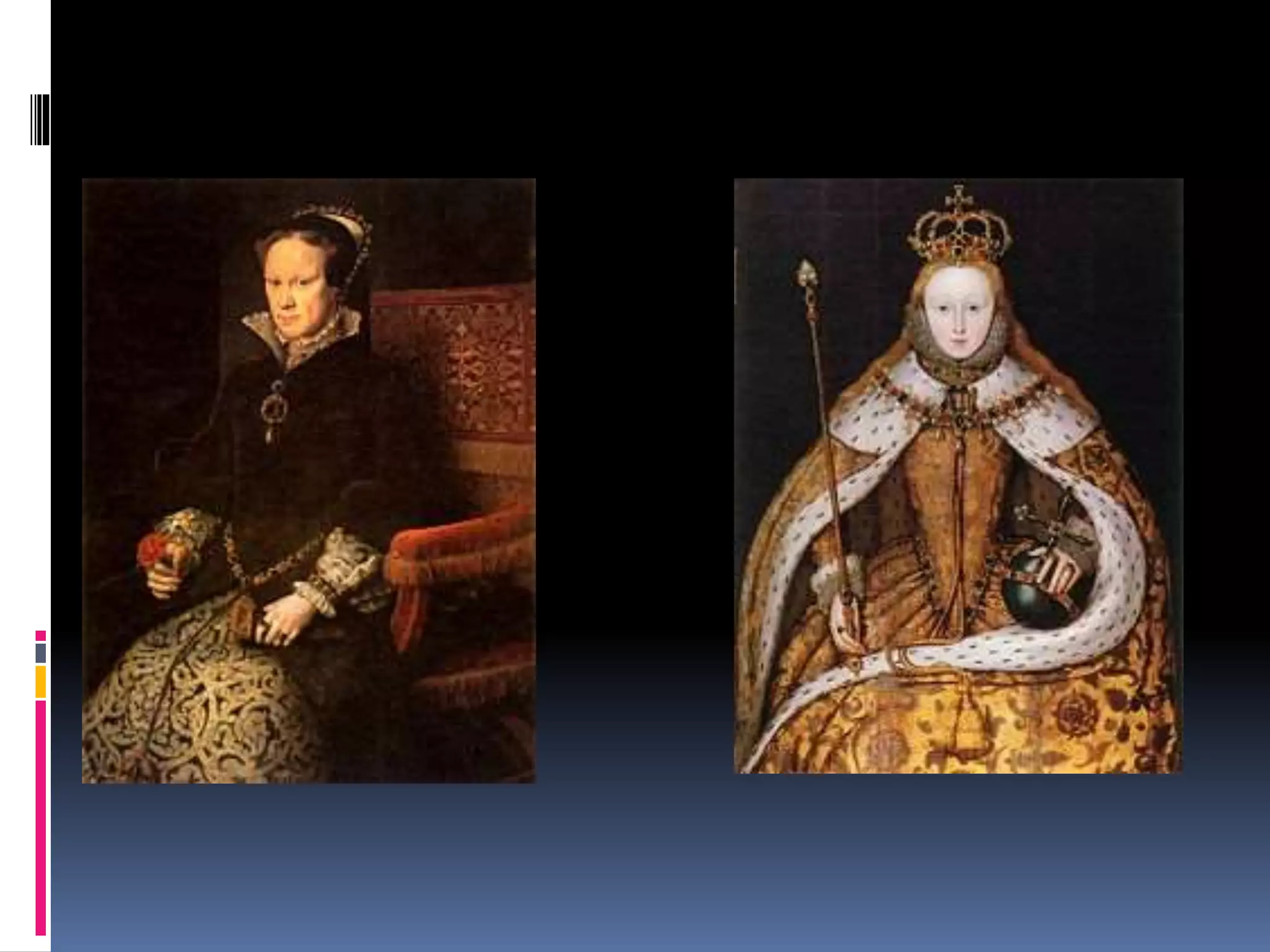
At the time of her accession to the throne in 1558,
England was a militarily weak, religiously divided
backwater, outside the mainstream of continental
culture.
 Elizabeth, the last of theTudor monarchs, died without
leaving an heir at seventy years of age. Her reign turned
out to be one of the most institutionally, geo-politically,
artistically and culturally significant in British history
and must have exceeded even the most hopeful
expectations for it.This, in our view, qualifies her to be
considered in the very top rank of British monarchs.
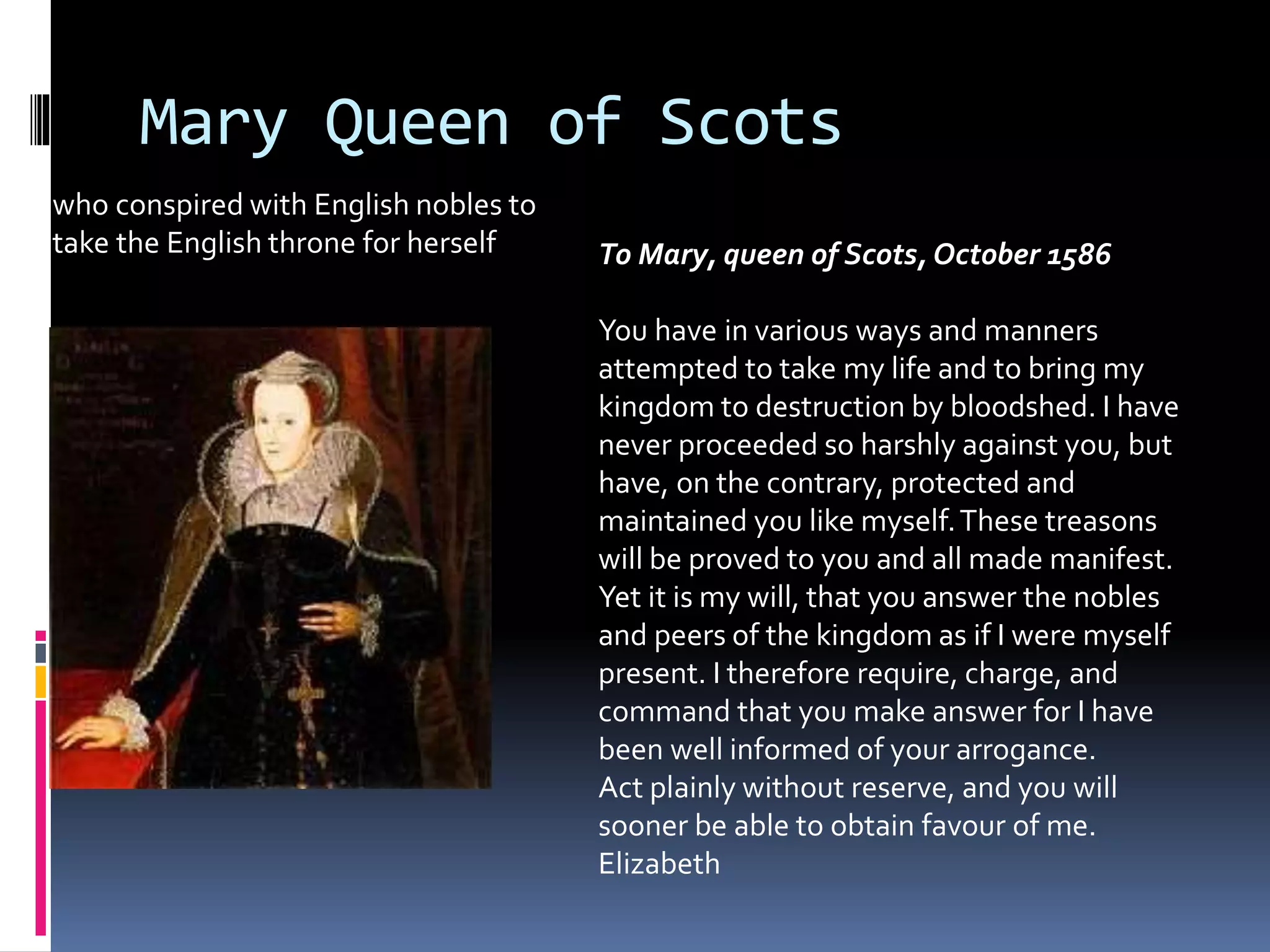
Mary Queen of Scots
who conspired with English nobles to
take the English throne for herself To Mary, queen of Scots, October 1586
You have in various ways and manners
attempted to take my life and to bring my
kingdom to destruction by bloodshed. I have
never proceeded so harshly against you, but
have, on the contrary, protected and
maintained you like myself.These treasons
will be proved to you and all made manifest.
Yet it is my will, that you answer the nobles
and peers of the kingdom as if I were myself
present. I therefore require, charge, and
command that you make answer for I have
been well informed of your arrogance.
Act plainly without reserve, and you will
sooner be able to obtain favour of me.
Elizabeth
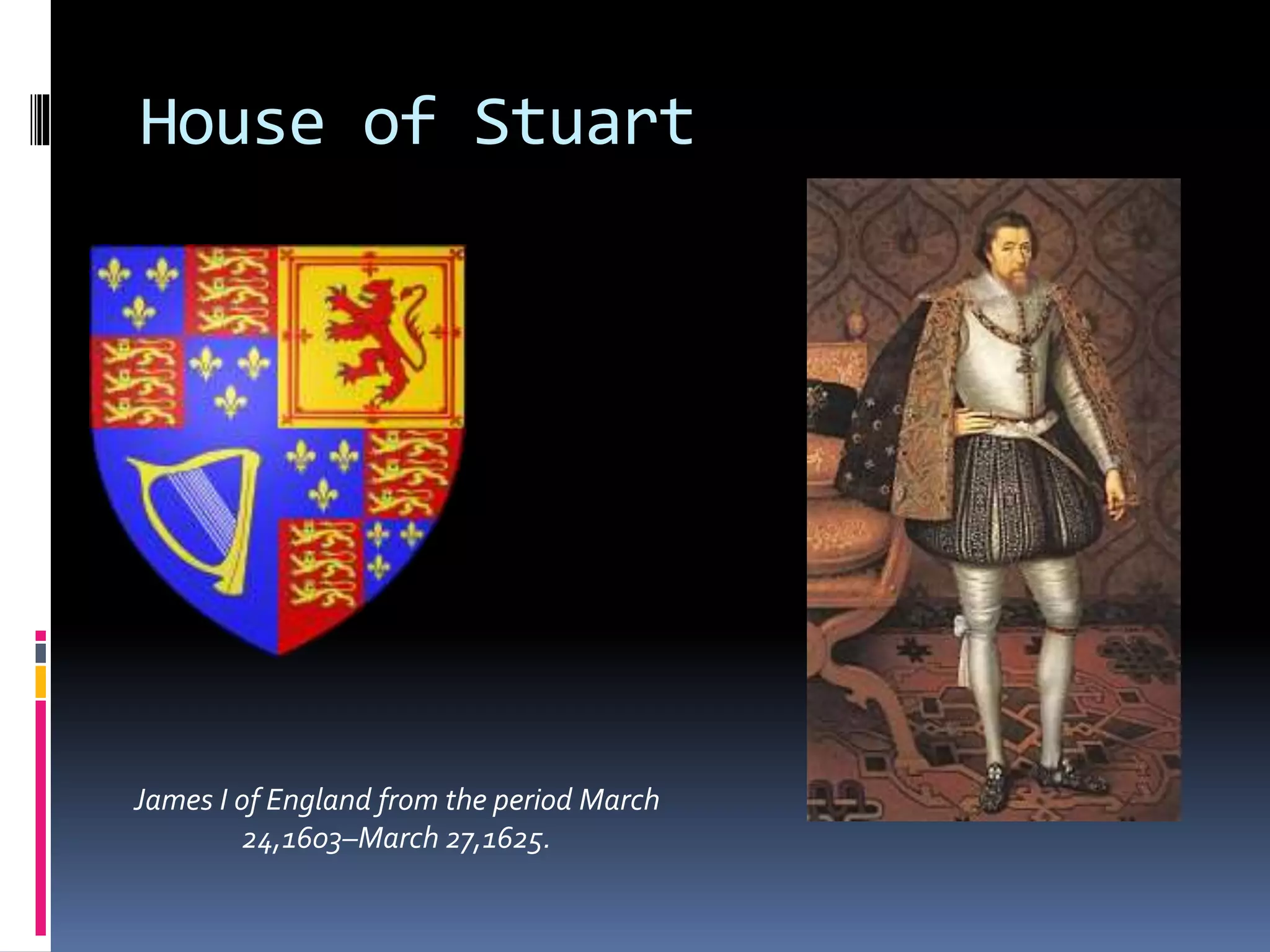
House of Stuart
James I of England from the period March
24,1603–March 27,1625.
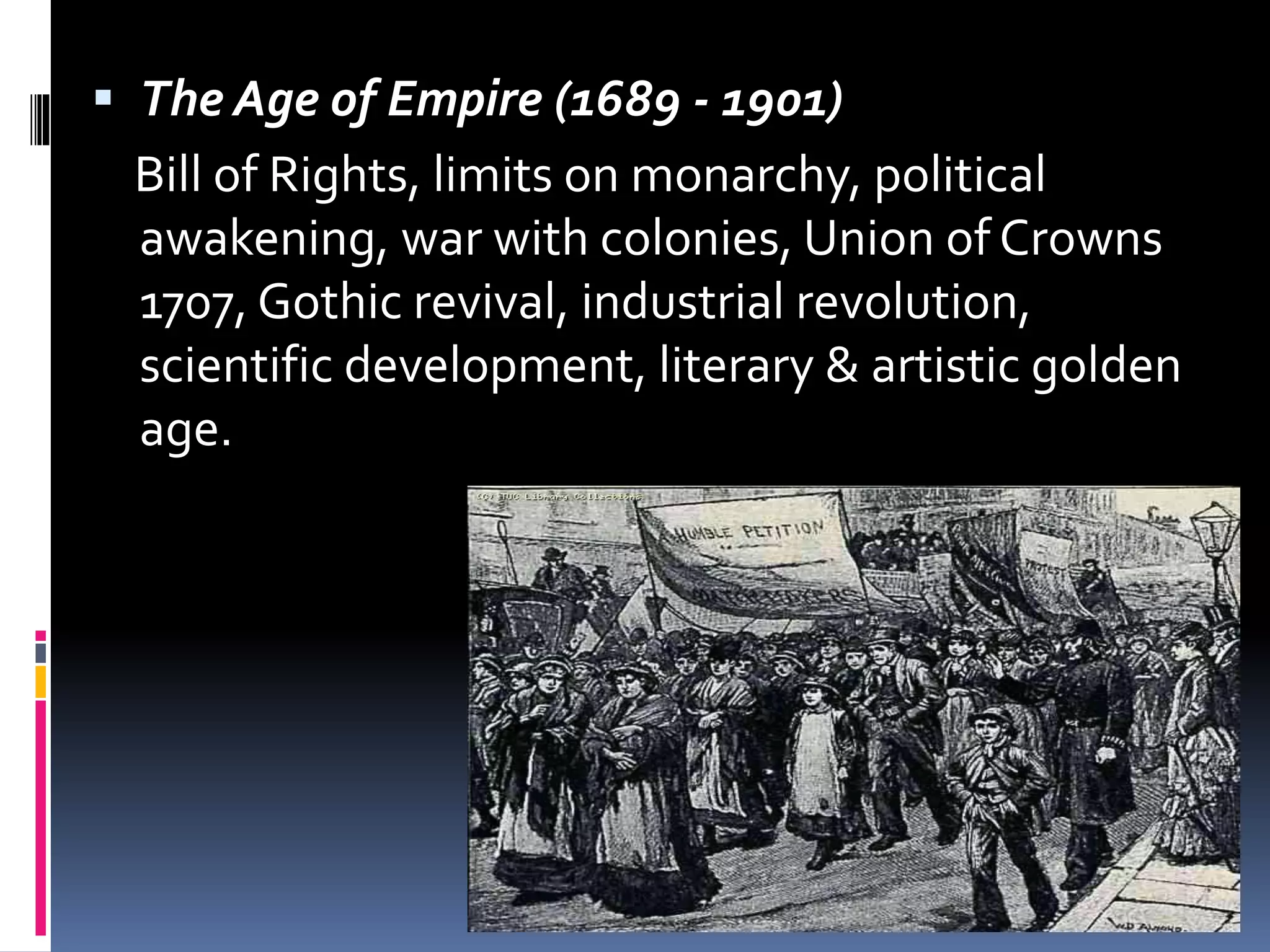
 The Age of Empire (1689 - 1901)
Bill of Rights, limits on monarchy, political
awakening, war with colonies, Union of Crowns
1707, Gothic revival, industrial revolution,
scientific development, literary & artistic golden
age.
Bibliography
http://images.google.com.mx/imgres?imgurl=http://www.bbc.co.uk/wales/history/sit
es/celts/images/celtmap.gif&imgrefurl=http://www.bbc.co.uk/wales/history/sites/celt
s/pages/about.shtml&h=322&w=400&sz=45&hl=es&start=2&um=1&tbnid=yPuNvT9x
W2IgVM:&tbnh=100&tbnw=124&prev=/images%3Fq%3Dthe%2Bcelts%26svnum%3
D10%26um%3D1%26hl%3Des%26rlz%3D1T4GFRB_esMX257MX257 AUDIOS EN
CELTAY LENGUAS DE INGLATERRA MEDIEVAL.
http://journals.cambridge.org/action/displayAbstract?fromPage=online&aid=152
5704&fulltextType=RA&fileId=S0263675100000041 beowolf were this poem
come from

British history intro

  • 1.
    BRITISH HISTORY THIS SECTIONPRESENTS THE SWEEP OF BRITISH HISTORY IN CHRONOLOGYCAL FORM, BROKEN DOWN INTO DISCRETE TIME PERIODS.
  • 7.
     Prehistoric Britain(5000 BC - c. 100 BC) Britain before the Romans came: stone, bronze, iron ages, construction of stonehenge, earthworks, Druids, the Celts.
  • 8.
    The Celts Celts The storyof Wales begins with a group of tribes collectively referred to as the Celts.
  • 9.
     Roman Britain(55 BC - 410 AD) From Julius Caesar's first attempt at conquest to the final days of Roman administration in Britain: rebellion, subjugation, advent of Christianity, barbarian invasions, withdrawal.
  • 10.
     Early BritishKingdoms (410 - 598) After the Roman influence ceased, the activities of the British people: westward movement, intrigues & alliances, power struggles, explosion of missionary activities, plague, Saxon invasions.
  • 11.
     Early BritishKingdoms (599 - 937) Continuing activities of the British people: further westward movement, more intrigues & alliances, more power struggles, more Saxon invasions, religious strife with Roman Catholicism.
  • 12.
     Anglo SaxonEngland (597 - 687) The coming of St. Augustine, triumph of Rome- oriented Christianity, Saxon control of island, rise of Mercia, Offa's Dyke.
  • 13.
     Anglo SaxonEngland (688 - 801) Rise ofWessex, King Ine establishes his law, Venerable Bede,Viking invasions.  Anglo Saxon England (802 - 898) Triumph of Egbert, development ofWessex dynasty, Viking wars, Alfred the Great, St. Swithun, Peace of Wedmore, the Danelaw.
  • 14.
     Medieval Britain(1066 - 1487) Conquest, consolidation, feudal system, Magna Carta (English History 1215), codification of laws, individual rights, Welsh & Scottish wars, murder of a king, Black Plague, HundredYearsWar, Peasant's Revolt, religious unrest, Princes in theTower,Wars of the Roses.
  • 15.
     The Reformation& Restoration Period (1486 - 1689) Emergence of Britain into modern era: rise of Tudors, Dissolution of Monasteries, religious struggles, discovery, Elizabeth I, unification of Scottish & English crown, overthrow and restoration of monarchy.
  • 16.
     Life andReign of Queen Elizabeth I (1533 - 1603) The life and dramatic reign of a woman who must be considered to be in the top rank of English monarchs.
  • 17.
     The firstQueen Elizabeth, called "Gloriana" by Edmund Spenser in "The FaerieQueene", was born in 1533 to HenryVIII and Anne Boleyn. At the time of her accession to the throne in 1558, England was a militarily weak, religiously divided backwater, outside the mainstream of continental culture.  Elizabeth, the last of theTudor monarchs, died without leaving an heir at seventy years of age. Her reign turned out to be one of the most institutionally, geo-politically, artistically and culturally significant in British history and must have exceeded even the most hopeful expectations for it.This, in our view, qualifies her to be considered in the very top rank of British monarchs.
  • 20.
    Mary Queen ofScots who conspired with English nobles to take the English throne for herself To Mary, queen of Scots, October 1586 You have in various ways and manners attempted to take my life and to bring my kingdom to destruction by bloodshed. I have never proceeded so harshly against you, but have, on the contrary, protected and maintained you like myself.These treasons will be proved to you and all made manifest. Yet it is my will, that you answer the nobles and peers of the kingdom as if I were myself present. I therefore require, charge, and command that you make answer for I have been well informed of your arrogance. Act plainly without reserve, and you will sooner be able to obtain favour of me. Elizabeth
  • 21.
    House of Stuart JamesI of England from the period March 24,1603–March 27,1625.
  • 22.
     The Ageof Empire (1689 - 1901) Bill of Rights, limits on monarchy, political awakening, war with colonies, Union of Crowns 1707, Gothic revival, industrial revolution, scientific development, literary & artistic golden age.
  • 23.