OBESITY, PHYSICAL ACTIVITY
& CANCER
16 –17th April 2013, London UK
João Breda
WHO Regional Office for Europe
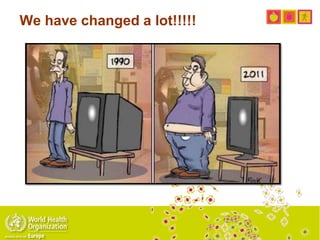
We have changed a lot!!!!!
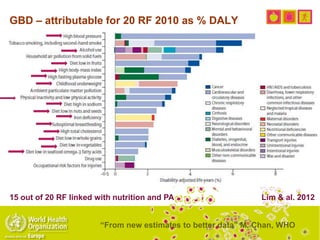
GBD – attributable for 20 RF 2010 as % DALY
15 out of 20 RF linked with nutrition and PA Lim & al. 2012
“From new estimates to better data” M. Chan, WHO
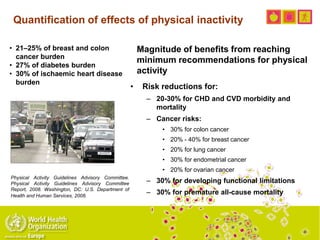
Quantification of effects of physical inactivity
• Risk reductions for:
– 20-30% for CHD and CVD morbidity and
mortality
– Cancer risks:
• 30% for colon cancer
• 20% - 40% for breast cancer
• 20% for lung cancer
• 30% for endometrial cancer
• 20% for ovarian cancer
– 30% for developing functional limitations
– 30% for premature all-cause mortality
Magnitude of benefits from reaching
minimum recommendations for physical
activity
Physical Activity Guidelines Advisory Committee.
Physical Activity Guidelines Advisory Committee
Report, 2008. Washington, DC: U.S. Department of
Health and Human Services, 2008.
• 21–25% of breast and colon
cancer burden
• 27% of diabetes burden
• 30% of ischaemic heart disease
burden
Inactivity status in the European Region
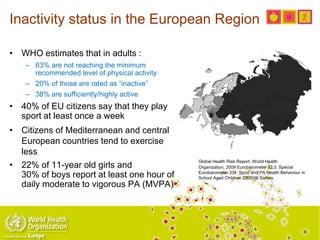
• WHO estimates that in adults :
– 63% are not reaching the minimum
recommended level of physical activity
– 20% of those are rated as “inactive”
– 38% are sufficiently/highly active
• 40% of EU citizens say that they play
sport at least once a week
• Citizens of Mediterranean and central
European countries tend to exercise
less
• 22% of 11-year old girls and
30% of boys report at least one hour of
daily moderate to vigorous PA (MVPA)
Global Health Risk Report, World Health
Organization, 2009 Eurobarometer 72.3. Special
Eurobarometer 334: Sport and PA Health Behaviour in
School Aged Children 2005/06 Survey
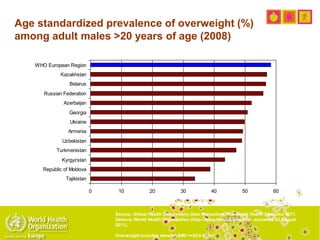
Age standardized prevalence of overweight (%)
among adult males >20 years of age (2008)
Source: Global Health Observatory Data Repository. The World Health Statistics 2011.
Geneva, World Health Organization (http://apps.who.int/ghodata/, accessed 23 August
2011).
Overweight includes obesity: BMI >=25.0 kg/m2
0 10 20 30 40 50 60
Tajikistan
Republic of Moldova
Kyrgyzstan
Turkmenistan
Uzbekistan
Armenia
Ukraine
Georgia
Azerbaijan
Russian Federation
Belarus
Kazakhstan
WHO European Region
34.3
31.1
34.5
35.5
29.2
36.0
33.9
32.4
31.0
29.2
29.5
27.9
29.9
30.6
29.5
33.9
26.4
27.5
25.4
30.2
26.3
27.6
30.3
26.9
24.1
29.5
23.3
26.0
28.0
26.0
29.6
27.0
26.9
26.4
26.8
27.0
22.0
20.8
18.5
17.4
19.3
21.0
18.2
17.2
19.7
18.1
20.1
15.0
18.3
16.0
12.4
12.4
15.1
13.0
14.4
12.0
11.8
11.0
9.9
8.0
9.0
7.8
42.5
36.0
46.7
40.7
36.3
49.7
39.3
41.0
42.8
45.5
40.4
41.1
44.4
38.3
44.9
44.5
45.8
31.1
44.5
38.8
40.4
41.3
41.3
38.5
43.0
40.6
44.8
41.0
41.0
40.9
43.8
43.0
39.0
37.68.7
13.0
11.0
10.4
11.8
12.9
13.0
8.5
13.3
16.0
13.9
11.2
18.3
15.4
17.5
15.5
11.8
14.5
16.9
14.6
4.9
18.3
26.0
21.2
20.5
23.9
21.0
14.2
22.2
19.5
25.2
21.6
26.7
26.0
17.9
13.3
19.6
27.7
22.7
23.9
30.0
27.5
22.3
21.1
22.4
15.5
18.0
18.2
9.7
7.1
80 60 40 20 0 20 40 60 80
United Kingdom: Scotland, 2008, 16+
Hungary, 2009, 18+
Turkey, 2008, 15–49
Croatia, 2003, 18+
United Kingdom: England, 2007–2008, 16+
Serbia, 2006, 20+
Malta, 2006–2007, 18+
Bulgaria, 2004, 20+
United Kingdom: Wales, 2009, 16+
Czech Republic, 2008, 20+
Germany, 2005–2007, 18–80
Poland, 2003–2005, 20–74
Greece, 2003, 20–70
Luxembourg, 2008, 16+
Azerbaijan, 2006, 15–49
Portugal, 2003–2005, 20–74
Lithuania, 2008, 20–64
Latvia, 2006, 15–64
Russian Federation, 2005, 20–49
Spain, 2006, 18+
Estonia, 2008, 16–64
Finland, 2008, 15–64
Slovenia, 2007–2008, 18–65
Armenia, 2005, 15–49
Georgia, 2009, 15–49
Netherlands, 2009, 20+
Republic of Moldova, 2005, 15–49
France, 2009, 15+
Ireland, 2007, 18+
Belgium, 2008, 18+
Albania, 2008–2009, 15–49
Sweden, 2009, 16–84
Cyprus, 2003, 15+
Denmark, 2005, 16+
Italy, 2006, 18+
Norway, 2008–2009, 16+
Austria, 2007–2008, 18–65
Switzerland, 2007, 15+
Tajikistan, 2003, 25–49
Surveycharacteristics:country,year,agerange(years)
Percentage (%)
WomenMen
Pre-obese, measured data
Obese, measured data
Pre-obese, self-reported data
Obese, self-reported data
© WHO, 2010.
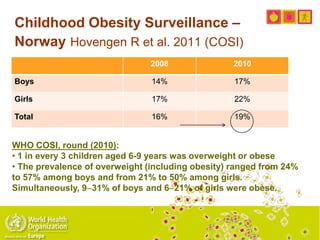
Childhood Obesity Surveillance –
Norway Hovengen R et al. 2011 (COSI)
2008 2010
Boys 14% 17%
Girls 17% 22%
Total 16% 19%
WHO COSI, round (2010):
• 1 in every 3 children aged 6-9 years was overweight or obese
• The prevalence of overweight (including obesity) ranged from 24%
to 57% among boys and from 21% to 50% among girls.
Simultaneously, 931% of boys and 621% of girls were obese.
0%
5%
10%
15%
20%
25%
30%
35%
40%
45%
50%
Percentagedistribution
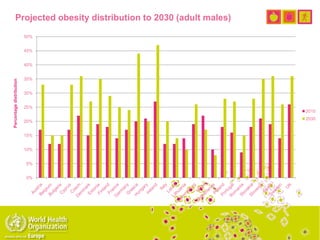
Projected obesity distribution to 2030 (adult males)
2010
2030
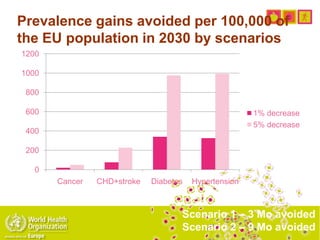
Prevalence gains avoided per 100,000 of
the EU population in 2030 by scenarios
0
200
400
600
800
1000
1200
Cancer CHD+stroke Diabetes Hypertension
1% decrease
5% decrease
Scenario 1 – 3 Mo avoided
Scenario 2 – 9 Mo avoided
Austria
Belgium
Bulgaria
Cyprus
CzechRepublic
Denmark
Estonia
Finland
France
Germany
Greece
Hungary
Ireland
Italy
Latvia
Lithuania
Luxembourg
Malta
Netherlands
Poland
Portugal
Romania
Slovakia
Slovenia
Spain
Sweden
UKofGBandN-Ireland
0
200
400
600
800
1000
1200
Eu 27 countries
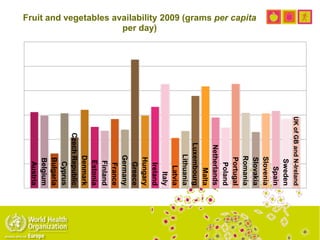
Fruit and vegetables availability 2009 (grams per capita
per day)
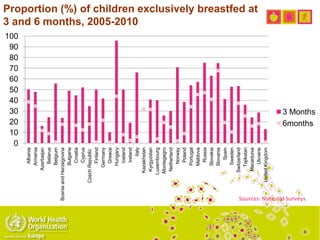
Proportion (%) of children exclusively breastfed at
3 and 6 months, 2005-2010
0
10
20
30
40
50
60
70
80
90
100
Albania
Armenia
Azerbaijan
Belarus
Belgium
BosniaandHerzegovina
Bulgaria
Croatia
Cyprus
CzechRepublic
Finland
Germany
Greece
Hungary
Iceland
Ireland
Italy
Kazakhstan
Kyrgyzstan
Luxembourg
Montegegro
Netherland
Norway
Poland
Portugal
Maldova
Russia
Slovakia
Slovania
Spain
Sweden
Switzerland
Tajikstan
Macedonia
Ukraine
UnitedKingdom
3 Months
6months
Sources: National Surveys
Nutrition, PA and Obesity
International highlights from the HBSC 2009/2010
International Report
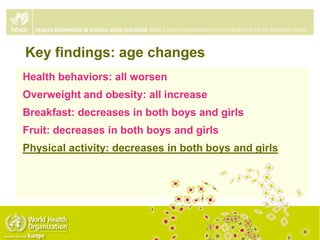
Key findings: age changes
Health behaviors: all worsen
Overweight and obesity: all increase
Breakfast: decreases in both boys and girls
Fruit: decreases in both boys and girls
Physical activity: decreases in both boys and girls
Austria
Belgium
Bulgaria
Cyprus
CzechRepublic
Denmark
Estonia
Finland
France
Germany
Hungary
Ireland
Italy
Latvia
Lithuania
Netherlands
Poland
Portugal
Romania
Slovakia
Slovenia
Spain
Sweden
UKofGBandN-Ireland
0.0
1.0
2.0
3.0
4.0
5.0
6.0
7.0
8.0
9.0
10.0
11.0
12.0
13.0
14.0
15.0
16.0
17.0
18.0
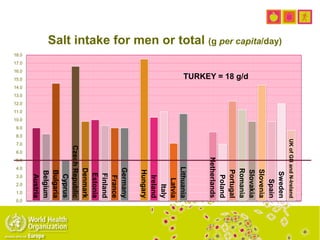
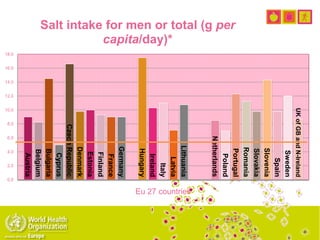
Salt intake for men or total (g per capita/day)
TURKEY = 18 g/d
Austria
Belgium
Bulgaria
Denmark
Estonia
Finland
France
Germany
Greece
Hungary
Ireland
Italy
Latvia
Lithuania
Luxembourg
Malta
Netherlands
Poland
Portugal
Romania
Slovenia
Spain
Sweden
UKofFBandN-Ireland
0
2
4
6
8
10
12
14
Eu 27 countries
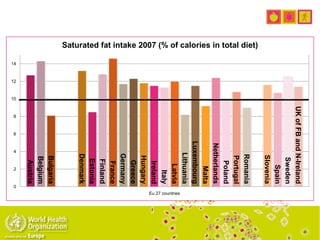
Saturated fat intake 2007 (% of calories in total diet)
Austria
Belgium
Bulgaria
Cyprus
CzechRepublic
Denmark
Estonia
Finland
France
Germany
Hungary
Ireland
Italy
Latvia
Lithuania
Netherlands
Poland
Portugal
Romania
Slovakia
Slovenia
Spain
Sweden
UKofGBandN-Ireland
0.0
2.0
4.0
6.0
8.0
10.0
12.0
14.0
16.0
18.0
Eu 27 countries
Salt intake for men or total (g per
capita/day)*
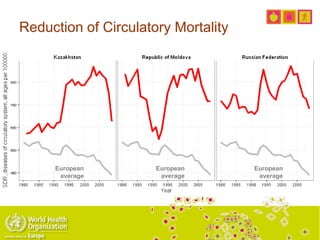
Reduction of Circulatory Mortality
European
average
European
average
European
average
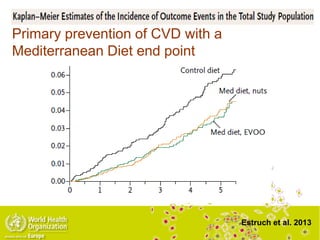
Primary prevention of CVD with a
Mediterranean Diet end point
Estruch et al. 2013
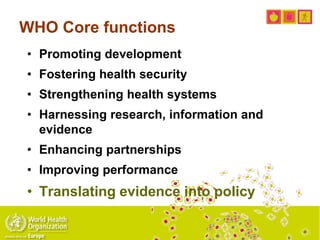
WHO Core functions
• Promoting development
• Fostering health security
• Strengthening health systems
• Harnessing research, information and
evidence
• Enhancing partnerships
• Improving performance
• Translating evidence into policy
WHO Europe’s policy framework and
tools for action
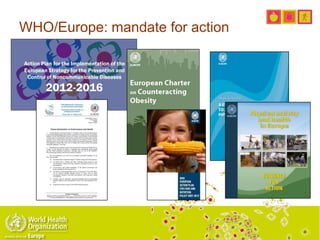
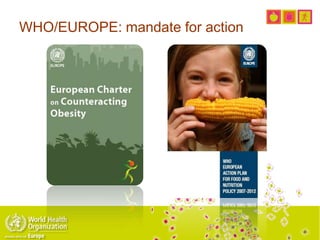
WHO/EUROPE: mandate for action
To properly
evaluate
polices
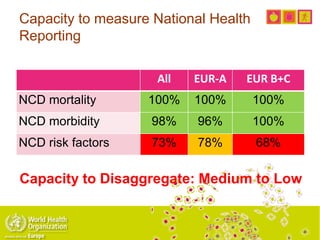
Capacity to measure National Health
Reporting
All EUR-A EUR B+C
NCD mortality 100% 100% 100%
NCD morbidity 98% 96% 100%
NCD risk factors 73% 78% 68%
Capacity to Disaggregate: Medium to Low
WHO/Europe: mandate for action
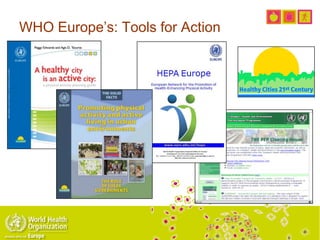
WHO Europe’s: Tools for Action
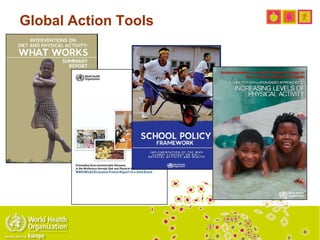
Global Action Tools
Inequalities in physical activity and sport
• Existence of disparities in physical activity and sport across different
social class and ethnic groups within countries in Europe.
• Lower income groups, and those from ethnic minority backgrounds
are most at risk for leisure time physical inactivity (-> double burden)
• The environment is an important contributor
• Significant gap in the evidence base on interventions targeting
physical activity in disadvantaged groups
enormous potential for health promotion!
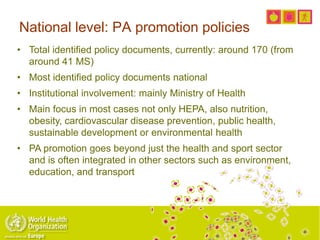
National level: PA promotion policies
• Total identified policy documents, currently: around 170 (from
around 41 MS)
• Most identified policy documents national
• Institutional involvement: mainly Ministry of Health
• Main focus in most cases not only HEPA, also nutrition,
obesity, cardiovascular disease prevention, public health,
sustainable development or environmental health
• PA promotion goes beyond just the health and sport sector
and is often integrated in other sectors such as environment,
education, and transport
Physical Activity Policy
 Physical activity should be promoted as part of daily life
and across all settings (home, workplace, schools,
transport, leisure)
 Formulating a policy on Health Enhancing Physical Activity
gives:
 Support, coherence and visibility at political level
 Common objectives and strategies for the involved
sectors/settings/institutions
 Clear roles and responsibilities
 Greater accountability and greater allocation of resources
Important elements of successful policies
• High level political commitment
• Surveillance, monitoring and evaluation
• Multi-stakeholder support
• Leadership and workforce development
• Integration into national strategies & policies
• Multiple intervention strategies
• Stepwise approach to implementation
• Culturally appropriate
• Implementation at different levels within "local reality"
• Dissemination
• National Physical Activity Guidelines
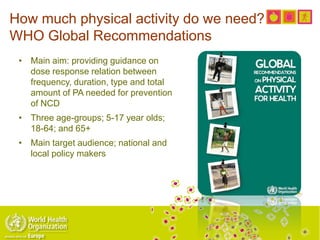
How much physical activity do we need?
WHO Global Recommendations
• Main aim: providing guidance on
dose response relation between
frequency, duration, type and total
amount of PA needed for prevention
of NCD
• Three age-groups; 5-17 year olds;
18-64; and 65+
• Main target audience; national and
local policy makers
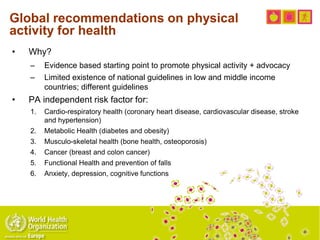
Global recommendations on physical
activity for health
• Why?
– Evidence based starting point to promote physical activity + advocacy
– Limited existence of national guidelines in low and middle income
countries; different guidelines
• PA independent risk factor for:
1. Cardio-respiratory health (coronary heart disease, cardiovascular disease, stroke
and hypertension)
2. Metabolic Health (diabetes and obesity)
3. Musculo-skeletal health (bone health, osteoporosis)
4. Cancer (breast and colon cancer)
5. Functional Health and prevention of falls
6. Anxiety, depression, cognitive functions
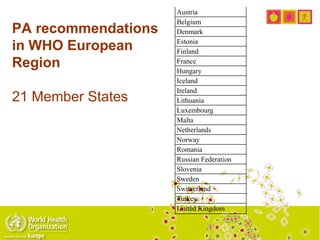
Austria
Belgium
Denmark
Estonia
Finland
France
Hungary
Iceland
Ireland
Lithuania
Luxembourg
Malta
Netherlands
Norway
Romania
Russian Federation
Slovenia
Sweden
Switzerland
Turkey
United Kingdom
PA recommendations
in WHO European
Region
21 Member States
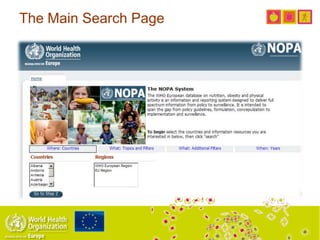
The Main Search Page
41
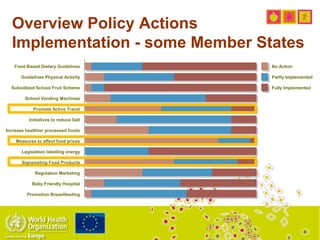
No Action
Partly Implemented
Fully Implemented
Overview Policy Actions
Implementation - some Member States
Food Based Dietary Guidelines
Guidelines Physical Activity
Subsidized School Fruit Scheme
School Vending Machines
Promote Active Travel
Initiatives to reduce Salt
Increase healthier processed foods
Measures to affect food prices
Legislation labelling energy
Signposting Food Products
Regulation Marketing
Baby Friendly Hospital
Promotion Breastfeeding
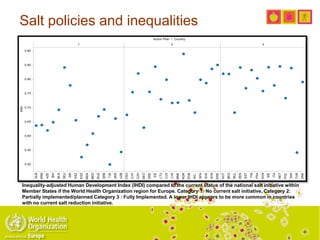
Salt policies and inequalities
Inequality-adjusted Human Development Index (IHDI) compared to the current status of the national salt initiative within
Member States if the World Health Organization region for Europe. Category 1: No current salt initiative, Category 2:
Partially implemented/planned Category 3 : Fully Implemented. A lower IHDI appears to be more common in countries
with no current salt reduction initiative.
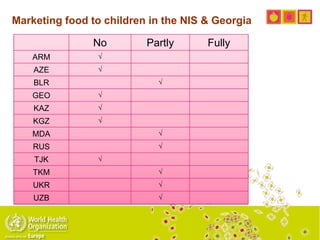
Marketing food to children in the NIS & Georgia
No Partly Fully
ARM √
AZE √
BLR √
GEO √
KAZ √
KGZ √
MDA √
RUS √
TJK √
TKM √
UKR √
UZB √
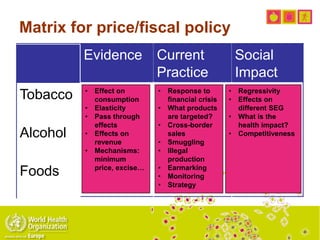
Matrix for price/fiscal policy
Evidence Current
Practice
Social
Impact
Tobacco
Alcohol
Foods
• Effect on
consumption
• Elasticity
• Pass through
effects
• Effects on
revenue
• Mechanisms:
minimum
price, excise…
• Response to
financial crisis
• What products
are targeted?
• Cross-border
sales
• Smuggling
• Illegal
production
• Earmarking
• Monitoring
• Strategy
• Regressivity
• Effects on
different SEG
• What is the
health impact?
• Competitiveness
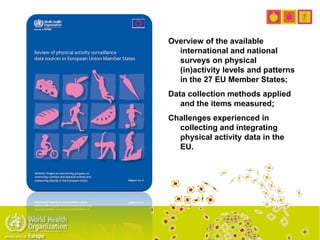
Overview of the available
international and national
surveys on physical
(in)activity levels and patterns
in the 27 EU Member States;
Data collection methods applied
and the items measured;
Challenges experienced in
collecting and integrating
physical activity data in the
EU.
Sport and health: what is the current
policy situation in EU Member States?
• Analysis of existing sport policy documents
from 15 EU MS concluded, among others:
– […] Local environments have a crucial role in
promoting sport and physical activity, since it is
mainly in the local setting that the opportunities to
be physically active are provided.
– Elite sports facilities should not be prioritized at the
expense of facilities for the general public and
the planning of recreational sports facilities should
be considered as an integral part of urban planning
– Taking a life course approach and offering
physical activity in different settings, including
schools and work places, is essential to the
promotion of sport and physical activity.
– Collaboration should take place not only among
ministries but also across government levels
(national, regional and local), with civil society and
the voluntary and private sectors. […]
Outcomes of the
2011 UN General Assembly
High-level Meeting on NCDs
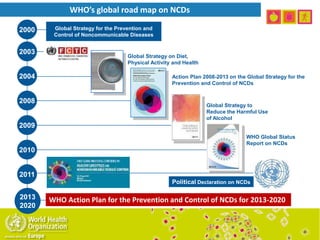
2000
2003
2004
2008
Global Strategy for the Prevention and
Control of Noncommunicable Diseases
Global Strategy on Diet,
Physical Activity and Health
Action Plan 2008-2013 on the Global Strategy for the
Prevention and Control of NCDs
2010
2009
2011
Global Strategy to
Reduce the Harmful Use
of Alcohol
WHO Global Status
Report on NCDs
Political Declaration on NCDs
2013
2020
WHO Action Plan for the Prevention and Control of NCDs for 2013-2020
WHO’s global road map on NCDs
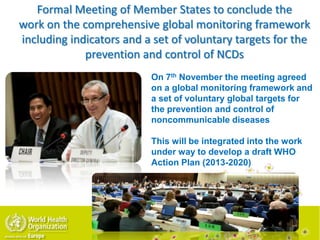
Formal Meeting of Member States to conclude the
work on the comprehensive global monitoring framework
including indicators and a set of voluntary targets for the
prevention and control of NCDs
On 7th November the meeting agreed
on a global monitoring framework and
a set of voluntary global targets for
the prevention and control of
noncommunicable diseases
This will be integrated into the work
under way to develop a draft WHO
Action Plan (2013-2020)
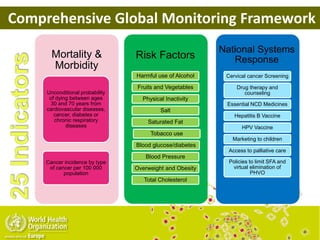
Comprehensive Global Monitoring Framework
Mortality &
Morbidity
Cancer incidence by type
of cancer per 100 000
population
Unconditional probability
of dying between ages
30 and 70 years from
cardiovascular diseases,
cancer, diabetes or
chronic respiratory
diseases
Salt
Fruits and Vegetables
Saturated Fat
Overweight and Obesity
Physical Inactivity
Blood glucose/diabetes
Blood Pressure
Total Cholesterol
Harmful use of Alcohol
Risk Factors
Tobacco use
Access to palliative care
National Systems
Response
Policies to limit SFA and
virtual elimination of
PHVO
Essential NCD Medicines
HPV Vaccine
Marketing to children
Drug therapy and
counseling
Cervical cancer Screening
Hepatitis B Vaccine
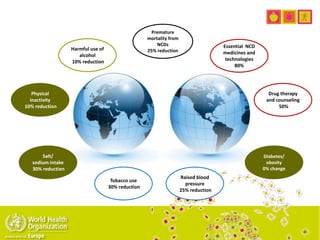
Raised blood
pressure
25% reduction
Salt/
sodium intake
30% reduction
Tobacco use
30% reduction
Physical
inactivity
10% reduction
Harmful use of
alcohol
10% reduction
Drug therapy
and counseling
50%
Premature
mortality from
NCDs
25% reduction
Diabetes/
obesity
0% change
Essential NCD
medicines and
technologies
80%
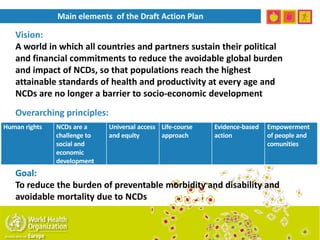
Human rights NCDs are a
challenge to
social and
economic
development
Universal access
and equity
Life-course
approach
Evidence-based
action
Empowerment
of people and
comunities
Vision:
A world in which all countries and partners sustain their political
and financial commitments to reduce the avoidable global burden
and impact of NCDs, so that populations reach the highest
attainable standards of health and productivity at every age and
NCDs are no longer a barrier to socio-economic development
Overarching principles:
Main elements of the Draft Action Plan
Goal:
To reduce the burden of preventable morbidity and disability and
avoidable mortality due to NCDs
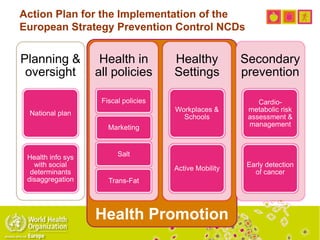
Action Plan for the Implementation of the
European Strategy Prevention Control NCDs
Health Promotion
Planning &
oversight
National plan
Health info sys
with social
determinants
disaggregation
Health in
all policies
Fiscal policies
Marketing
Salt
Trans-Fat
Healthy
Settings
Workplaces &
Schools
Active Mobility
Secondary
prevention
Cardio-
metabolic risk
assessment &
management
Early detection
of cancer
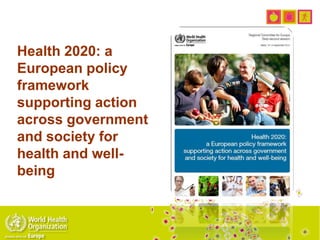
Health 2020: a
European policy
framework
supporting action
across government
and society for
health and well-
being
Paving the way for a new WHO
European Region Nutrition
Policy Framework
To guarantee universal access to food, equity
and gender equality for the nutrition of all citizens
of the WHO European Region through
intersectoral nutrition policies.
Mission
Ministerial Conference will achieve
high level political commitment in
three dimensions:
• Governance, intersectoral action and food and
nutrition systems
• Life-course, nutrition and noncommunicable
diseases
• Inequalities in nutrition, obesity and
noncommunicable diseases
WHO European Ministerial Conference on
Nutrition and NCD in the Context of Health 2020
Thank you
jbr@euro.who.int
www.who.int

Breda opac2013

  • 1.
    OBESITY, PHYSICAL ACTIVITY &CANCER 16 –17th April 2013, London UK João Breda WHO Regional Office for Europe
  • 2.
    We have changeda lot!!!!!
  • 3.
    GBD – attributablefor 20 RF 2010 as % DALY 15 out of 20 RF linked with nutrition and PA Lim & al. 2012 “From new estimates to better data” M. Chan, WHO
  • 4.
    Quantification of effectsof physical inactivity • Risk reductions for: – 20-30% for CHD and CVD morbidity and mortality – Cancer risks: • 30% for colon cancer • 20% - 40% for breast cancer • 20% for lung cancer • 30% for endometrial cancer • 20% for ovarian cancer – 30% for developing functional limitations – 30% for premature all-cause mortality Magnitude of benefits from reaching minimum recommendations for physical activity Physical Activity Guidelines Advisory Committee. Physical Activity Guidelines Advisory Committee Report, 2008. Washington, DC: U.S. Department of Health and Human Services, 2008. • 21–25% of breast and colon cancer burden • 27% of diabetes burden • 30% of ischaemic heart disease burden
  • 5.
    Inactivity status inthe European Region • WHO estimates that in adults : – 63% are not reaching the minimum recommended level of physical activity – 20% of those are rated as “inactive” – 38% are sufficiently/highly active • 40% of EU citizens say that they play sport at least once a week • Citizens of Mediterranean and central European countries tend to exercise less • 22% of 11-year old girls and 30% of boys report at least one hour of daily moderate to vigorous PA (MVPA) Global Health Risk Report, World Health Organization, 2009 Eurobarometer 72.3. Special Eurobarometer 334: Sport and PA Health Behaviour in School Aged Children 2005/06 Survey
  • 7.
    Age standardized prevalenceof overweight (%) among adult males >20 years of age (2008) Source: Global Health Observatory Data Repository. The World Health Statistics 2011. Geneva, World Health Organization (http://apps.who.int/ghodata/, accessed 23 August 2011). Overweight includes obesity: BMI >=25.0 kg/m2 0 10 20 30 40 50 60 Tajikistan Republic of Moldova Kyrgyzstan Turkmenistan Uzbekistan Armenia Ukraine Georgia Azerbaijan Russian Federation Belarus Kazakhstan WHO European Region
  • 8.
    34.3 31.1 34.5 35.5 29.2 36.0 33.9 32.4 31.0 29.2 29.5 27.9 29.9 30.6 29.5 33.9 26.4 27.5 25.4 30.2 26.3 27.6 30.3 26.9 24.1 29.5 23.3 26.0 28.0 26.0 29.6 27.0 26.9 26.4 26.8 27.0 22.0 20.8 18.5 17.4 19.3 21.0 18.2 17.2 19.7 18.1 20.1 15.0 18.3 16.0 12.4 12.4 15.1 13.0 14.4 12.0 11.8 11.0 9.9 8.0 9.0 7.8 42.5 36.0 46.7 40.7 36.3 49.7 39.3 41.0 42.8 45.5 40.4 41.1 44.4 38.3 44.9 44.5 45.8 31.1 44.5 38.8 40.4 41.3 41.3 38.5 43.0 40.6 44.8 41.0 41.0 40.9 43.8 43.0 39.0 37.68.7 13.0 11.0 10.4 11.8 12.9 13.0 8.5 13.3 16.0 13.9 11.2 18.3 15.4 17.5 15.5 11.8 14.5 16.9 14.6 4.9 18.3 26.0 21.2 20.5 23.9 21.0 14.2 22.2 19.5 25.2 21.6 26.7 26.0 17.9 13.3 19.6 27.7 22.7 23.9 30.0 27.5 22.3 21.1 22.4 15.5 18.0 18.2 9.7 7.1 80 60 4020 0 20 40 60 80 United Kingdom: Scotland, 2008, 16+ Hungary, 2009, 18+ Turkey, 2008, 15–49 Croatia, 2003, 18+ United Kingdom: England, 2007–2008, 16+ Serbia, 2006, 20+ Malta, 2006–2007, 18+ Bulgaria, 2004, 20+ United Kingdom: Wales, 2009, 16+ Czech Republic, 2008, 20+ Germany, 2005–2007, 18–80 Poland, 2003–2005, 20–74 Greece, 2003, 20–70 Luxembourg, 2008, 16+ Azerbaijan, 2006, 15–49 Portugal, 2003–2005, 20–74 Lithuania, 2008, 20–64 Latvia, 2006, 15–64 Russian Federation, 2005, 20–49 Spain, 2006, 18+ Estonia, 2008, 16–64 Finland, 2008, 15–64 Slovenia, 2007–2008, 18–65 Armenia, 2005, 15–49 Georgia, 2009, 15–49 Netherlands, 2009, 20+ Republic of Moldova, 2005, 15–49 France, 2009, 15+ Ireland, 2007, 18+ Belgium, 2008, 18+ Albania, 2008–2009, 15–49 Sweden, 2009, 16–84 Cyprus, 2003, 15+ Denmark, 2005, 16+ Italy, 2006, 18+ Norway, 2008–2009, 16+ Austria, 2007–2008, 18–65 Switzerland, 2007, 15+ Tajikistan, 2003, 25–49 Surveycharacteristics:country,year,agerange(years) Percentage (%) WomenMen Pre-obese, measured data Obese, measured data Pre-obese, self-reported data Obese, self-reported data © WHO, 2010.
  • 10.
    Childhood Obesity Surveillance– Norway Hovengen R et al. 2011 (COSI) 2008 2010 Boys 14% 17% Girls 17% 22% Total 16% 19% WHO COSI, round (2010): • 1 in every 3 children aged 6-9 years was overweight or obese • The prevalence of overweight (including obesity) ranged from 24% to 57% among boys and from 21% to 50% among girls. Simultaneously, 931% of boys and 621% of girls were obese.
  • 11.
  • 12.
    Prevalence gains avoidedper 100,000 of the EU population in 2030 by scenarios 0 200 400 600 800 1000 1200 Cancer CHD+stroke Diabetes Hypertension 1% decrease 5% decrease Scenario 1 – 3 Mo avoided Scenario 2 – 9 Mo avoided
  • 13.
  • 14.
    Proportion (%) ofchildren exclusively breastfed at 3 and 6 months, 2005-2010 0 10 20 30 40 50 60 70 80 90 100 Albania Armenia Azerbaijan Belarus Belgium BosniaandHerzegovina Bulgaria Croatia Cyprus CzechRepublic Finland Germany Greece Hungary Iceland Ireland Italy Kazakhstan Kyrgyzstan Luxembourg Montegegro Netherland Norway Poland Portugal Maldova Russia Slovakia Slovania Spain Sweden Switzerland Tajikstan Macedonia Ukraine UnitedKingdom 3 Months 6months Sources: National Surveys
  • 17.
    Nutrition, PA andObesity International highlights from the HBSC 2009/2010 International Report
  • 18.
    Key findings: agechanges Health behaviors: all worsen Overweight and obesity: all increase Breakfast: decreases in both boys and girls Fruit: decreases in both boys and girls Physical activity: decreases in both boys and girls
  • 19.
  • 20.
  • 21.
  • 24.
    Reduction of CirculatoryMortality European average European average European average
  • 25.
    Primary prevention ofCVD with a Mediterranean Diet end point Estruch et al. 2013
  • 26.
    WHO Core functions •Promoting development • Fostering health security • Strengthening health systems • Harnessing research, information and evidence • Enhancing partnerships • Improving performance • Translating evidence into policy
  • 27.
    WHO Europe’s policyframework and tools for action
  • 28.
  • 29.
  • 30.
    Capacity to measureNational Health Reporting All EUR-A EUR B+C NCD mortality 100% 100% 100% NCD morbidity 98% 96% 100% NCD risk factors 73% 78% 68% Capacity to Disaggregate: Medium to Low
  • 31.
  • 32.
  • 33.
  • 34.
    Inequalities in physicalactivity and sport • Existence of disparities in physical activity and sport across different social class and ethnic groups within countries in Europe. • Lower income groups, and those from ethnic minority backgrounds are most at risk for leisure time physical inactivity (-> double burden) • The environment is an important contributor • Significant gap in the evidence base on interventions targeting physical activity in disadvantaged groups enormous potential for health promotion!
  • 35.
    National level: PApromotion policies • Total identified policy documents, currently: around 170 (from around 41 MS) • Most identified policy documents national • Institutional involvement: mainly Ministry of Health • Main focus in most cases not only HEPA, also nutrition, obesity, cardiovascular disease prevention, public health, sustainable development or environmental health • PA promotion goes beyond just the health and sport sector and is often integrated in other sectors such as environment, education, and transport
  • 36.
    Physical Activity Policy Physical activity should be promoted as part of daily life and across all settings (home, workplace, schools, transport, leisure)  Formulating a policy on Health Enhancing Physical Activity gives:  Support, coherence and visibility at political level  Common objectives and strategies for the involved sectors/settings/institutions  Clear roles and responsibilities  Greater accountability and greater allocation of resources
  • 37.
    Important elements ofsuccessful policies • High level political commitment • Surveillance, monitoring and evaluation • Multi-stakeholder support • Leadership and workforce development • Integration into national strategies & policies • Multiple intervention strategies • Stepwise approach to implementation • Culturally appropriate • Implementation at different levels within "local reality" • Dissemination • National Physical Activity Guidelines
  • 38.
    How much physicalactivity do we need? WHO Global Recommendations • Main aim: providing guidance on dose response relation between frequency, duration, type and total amount of PA needed for prevention of NCD • Three age-groups; 5-17 year olds; 18-64; and 65+ • Main target audience; national and local policy makers
  • 39.
    Global recommendations onphysical activity for health • Why? – Evidence based starting point to promote physical activity + advocacy – Limited existence of national guidelines in low and middle income countries; different guidelines • PA independent risk factor for: 1. Cardio-respiratory health (coronary heart disease, cardiovascular disease, stroke and hypertension) 2. Metabolic Health (diabetes and obesity) 3. Musculo-skeletal health (bone health, osteoporosis) 4. Cancer (breast and colon cancer) 5. Functional Health and prevention of falls 6. Anxiety, depression, cognitive functions
  • 40.
  • 41.
  • 42.
    No Action Partly Implemented FullyImplemented Overview Policy Actions Implementation - some Member States Food Based Dietary Guidelines Guidelines Physical Activity Subsidized School Fruit Scheme School Vending Machines Promote Active Travel Initiatives to reduce Salt Increase healthier processed foods Measures to affect food prices Legislation labelling energy Signposting Food Products Regulation Marketing Baby Friendly Hospital Promotion Breastfeeding
  • 44.
    Salt policies andinequalities Inequality-adjusted Human Development Index (IHDI) compared to the current status of the national salt initiative within Member States if the World Health Organization region for Europe. Category 1: No current salt initiative, Category 2: Partially implemented/planned Category 3 : Fully Implemented. A lower IHDI appears to be more common in countries with no current salt reduction initiative.
  • 45.
    Marketing food tochildren in the NIS & Georgia No Partly Fully ARM √ AZE √ BLR √ GEO √ KAZ √ KGZ √ MDA √ RUS √ TJK √ TKM √ UKR √ UZB √
  • 47.
    Matrix for price/fiscalpolicy Evidence Current Practice Social Impact Tobacco Alcohol Foods • Effect on consumption • Elasticity • Pass through effects • Effects on revenue • Mechanisms: minimum price, excise… • Response to financial crisis • What products are targeted? • Cross-border sales • Smuggling • Illegal production • Earmarking • Monitoring • Strategy • Regressivity • Effects on different SEG • What is the health impact? • Competitiveness
  • 48.
    Overview of theavailable international and national surveys on physical (in)activity levels and patterns in the 27 EU Member States; Data collection methods applied and the items measured; Challenges experienced in collecting and integrating physical activity data in the EU.
  • 49.
    Sport and health:what is the current policy situation in EU Member States? • Analysis of existing sport policy documents from 15 EU MS concluded, among others: – […] Local environments have a crucial role in promoting sport and physical activity, since it is mainly in the local setting that the opportunities to be physically active are provided. – Elite sports facilities should not be prioritized at the expense of facilities for the general public and the planning of recreational sports facilities should be considered as an integral part of urban planning – Taking a life course approach and offering physical activity in different settings, including schools and work places, is essential to the promotion of sport and physical activity. – Collaboration should take place not only among ministries but also across government levels (national, regional and local), with civil society and the voluntary and private sectors. […]
  • 50.
    Outcomes of the 2011UN General Assembly High-level Meeting on NCDs
  • 51.
    2000 2003 2004 2008 Global Strategy forthe Prevention and Control of Noncommunicable Diseases Global Strategy on Diet, Physical Activity and Health Action Plan 2008-2013 on the Global Strategy for the Prevention and Control of NCDs 2010 2009 2011 Global Strategy to Reduce the Harmful Use of Alcohol WHO Global Status Report on NCDs Political Declaration on NCDs 2013 2020 WHO Action Plan for the Prevention and Control of NCDs for 2013-2020 WHO’s global road map on NCDs
  • 52.
    Formal Meeting ofMember States to conclude the work on the comprehensive global monitoring framework including indicators and a set of voluntary targets for the prevention and control of NCDs On 7th November the meeting agreed on a global monitoring framework and a set of voluntary global targets for the prevention and control of noncommunicable diseases This will be integrated into the work under way to develop a draft WHO Action Plan (2013-2020)
  • 53.
    Comprehensive Global MonitoringFramework Mortality & Morbidity Cancer incidence by type of cancer per 100 000 population Unconditional probability of dying between ages 30 and 70 years from cardiovascular diseases, cancer, diabetes or chronic respiratory diseases Salt Fruits and Vegetables Saturated Fat Overweight and Obesity Physical Inactivity Blood glucose/diabetes Blood Pressure Total Cholesterol Harmful use of Alcohol Risk Factors Tobacco use Access to palliative care National Systems Response Policies to limit SFA and virtual elimination of PHVO Essential NCD Medicines HPV Vaccine Marketing to children Drug therapy and counseling Cervical cancer Screening Hepatitis B Vaccine
  • 54.
    Raised blood pressure 25% reduction Salt/ sodiumintake 30% reduction Tobacco use 30% reduction Physical inactivity 10% reduction Harmful use of alcohol 10% reduction Drug therapy and counseling 50% Premature mortality from NCDs 25% reduction Diabetes/ obesity 0% change Essential NCD medicines and technologies 80%
  • 55.
    Human rights NCDsare a challenge to social and economic development Universal access and equity Life-course approach Evidence-based action Empowerment of people and comunities Vision: A world in which all countries and partners sustain their political and financial commitments to reduce the avoidable global burden and impact of NCDs, so that populations reach the highest attainable standards of health and productivity at every age and NCDs are no longer a barrier to socio-economic development Overarching principles: Main elements of the Draft Action Plan Goal: To reduce the burden of preventable morbidity and disability and avoidable mortality due to NCDs
  • 56.
    Action Plan forthe Implementation of the European Strategy Prevention Control NCDs Health Promotion Planning & oversight National plan Health info sys with social determinants disaggregation Health in all policies Fiscal policies Marketing Salt Trans-Fat Healthy Settings Workplaces & Schools Active Mobility Secondary prevention Cardio- metabolic risk assessment & management Early detection of cancer
  • 57.
    Health 2020: a Europeanpolicy framework supporting action across government and society for health and well- being
  • 58.
    Paving the wayfor a new WHO European Region Nutrition Policy Framework
  • 59.
    To guarantee universalaccess to food, equity and gender equality for the nutrition of all citizens of the WHO European Region through intersectoral nutrition policies. Mission
  • 60.
    Ministerial Conference willachieve high level political commitment in three dimensions: • Governance, intersectoral action and food and nutrition systems • Life-course, nutrition and noncommunicable diseases • Inequalities in nutrition, obesity and noncommunicable diseases
  • 61.
    WHO European MinisterialConference on Nutrition and NCD in the Context of Health 2020
  • 62.

Editor's Notes

  • #10 WHO Euro is conducting one of the most successful childhood obesity surveillance initiatives worldwide…..
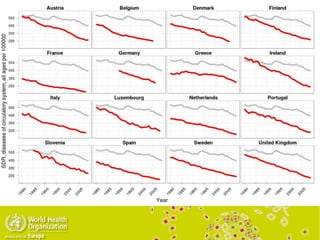
  • #24 On the other hand, in many countries of Europe, we have recorded some of the fastest declines in circulatory mortality in the world. The graph illustrates the rapid fall in age-standardised circulatory mortality seen in many European countries in the last three decades. I highlight one striking example…
  • #25 This is the first year of the European Action Plan for the Implementation of the Regional Strategy for the Prevention and Control of Noncommunicable Diseases. It is also the year where the World Health Assembly has adopted the historic global goal of a 25% reduction in premature mortality from NCDs by 2025. In this context, it is fitting to note the success of some of the countries in this Region in providing leadership in the achievement of the global target already since a few years. I show here the trends circulatory mortality in three countries: the Russian Federation, Kazakhstan, and the Republic of Moldova, shown here compared to the average trend for the whole of the European Region.In each of these three countries, since 2005, we have seen a large and rapid fall, al most large enough to annihilate the rise seen in the early 1990s in the aftermath of independence an recession. The progress in these countries comes from a combination of increased prosperity, increased investment in health services, and to some extent from a change in risk behaviours as lifestyles shift more towards he European average. The success in these countries calls upon us to document these changes, to note that the global goal is indeed achievable, and to focus even more on country related deliverables in the coming years of the NCD Action Plan.In line with the shift towards integrated work on NCDs and chronic conditions in the WHO Reform, I will deal cover some achievements in a few selected countries under this group of conditions.
  • #35 Results from a literature review in 2011 on inequalities in physical activity in Europe:Given that disadvantaged groups have lower levels of physical activity, and higher levels of ill health than the general population, the rationale for focusing physical activity promotion efforts on these groups cannot be disputed. By its nature, work with disadvantaged groups has to be local, and focused. Funding for community based projects in Europe is often short-term and piecemeal and it is not surprising that physical activity projects are often not evaluated, and rarely published. Physical activity researchers will need to be proactive in helping overcome the considerable barriers to working with hard-to-reach populations, including difficulties of recruitment, retention, programme tailoring and flexible delivery, as well as partnership working to make a difference in getting people more active.
  • #50 There is a great opportunity for collaboration between the health sector and the sport sector, as they often share the aim of increasing health-enhancing physical activity levels and promotion of Sport for All. However, it is crucial that development processes ensure intersectoral involvement …