Break the
“Always” Cycle
Fred Schenkelberg
So Why Do the
Same Thing
Just use the same plan as the last
project.
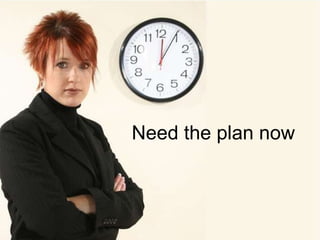
Need the plan now
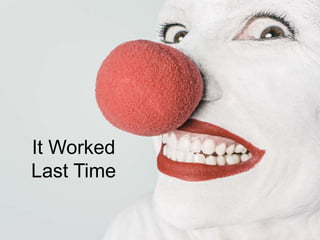
It Worked
Last Time
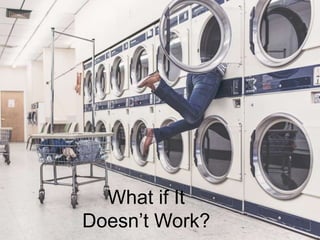
What if It
Doesn’t Work?
ARE RELIABILITY ACTIVITIES
TAILORED FOR EACH SITUATION?
Is each plan customized?
IS RELIABILITY A SET
SEQUENCE OF EVENTS?
Do the results make a difference?
Is There a Better
Way?
In what way is it better?
Set Goals – Make Estimates
Find Risks - Monitor
Do Testing that
Adds Value
WHAT OTHERS WAYS CAN
YOUR PROGRAM IMPROVE?
Do the results make a difference?
Obstacles?
What is preventing you?
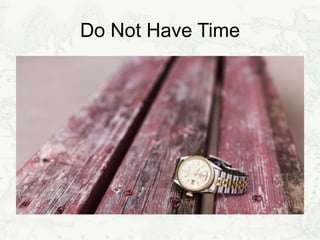
Do Not Have Time
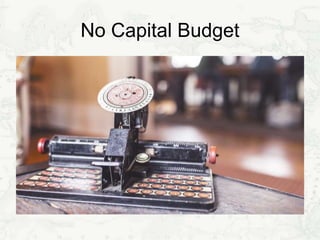
No Capital Budget
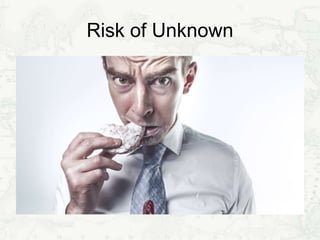
Risk of Unknown
SOMETIMES ITS JUST THE
CHANGE THAT IS DIFFICULT?
Change is good, right?
Ideas?
How do we overcome these
obstacles?
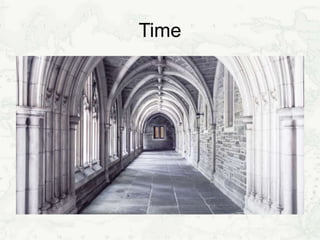
Time
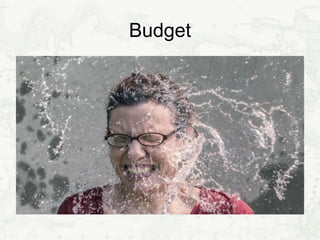
Budget
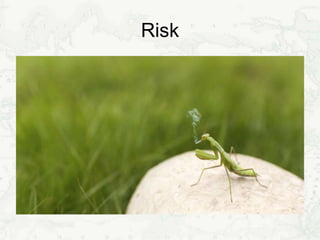
Risk
WHAT OTHERS WAYS CAN
YOUR PROGRAM IMPROVE?
Do the results make a difference?
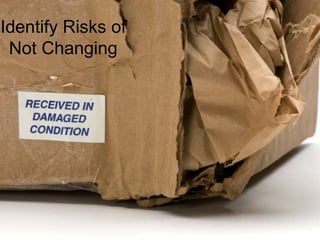
Identify Risks of
Not Changing
Identify a
Better
Approach
Estimate the
Value
of Changing
Change Management
Document
Successes
Break the ‘Always’ Cycle
1. Recognize the risks
1. Identify better
approach
1. Estimate Value
1. Change Management
1. Document Success
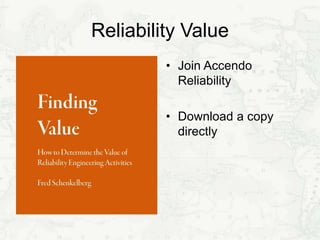
Reliability Value
• Join Accendo
Reliability
• Download a copy
directly
What are your
Questions?
Thanks for participating.

Break the Always Cycle

Editor's Notes

  • #5 Lady with clock – time pressure,
  • #6 Comparison image – allows us to compare
  • #7 Image of risk – what if it doesn’t work
  • #11 Goal - Estimate
  • #12 Risk - Monitor
  • #13 Testing - Value
  • #16 Time
  • #17 budget
  • #18 Risk
  • #21 time
  • #22 budget
  • #23 risk
  • #25 Failure box in warehouse
  • #26 Couplet connections to business and customer expectations
  • #27 Tally or score board
  • #28 Man bending iron bar
  • #29 Man with headset