Budgeting & Forecasting For High
Growth Companies
Agenda
1. Intros
2. Defining budgets/forecasts/models
3. Why take the time to budget?
4. How does your company budget and/or
forecast?
5. Sharing best practices
6. Available software
7. Budgeting gone bad
8. Appreciations
2
Definitions
Budget: static stake in the ground
Forecast: changes and forward-looking
Model: 3 to 5 year plan
3
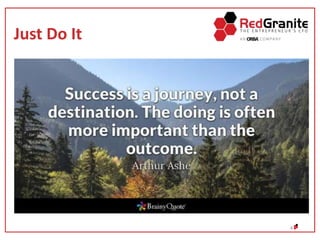
Just Do It
4
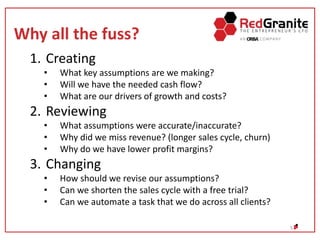
Why all the fuss?
1. Creating
• What key assumptions are we making?
• Will we have the needed cash flow?
• What are our drivers of growth and costs?
2. Reviewing
• What assumptions were accurate/inaccurate?
• Why did we miss revenue? (longer sales cycle, churn)
• Why do we have lower profit margins?
3. Changing
• How should we revise our assumptions?
• Can we shorten the sales cycle with a free trial?
• Can we automate a task that we do across all clients?
5
Sharing is Caring
How does your company budget and/or
forecast?
6
Best Practices We’ve Seen
1. Timing of creation and frequency of review (monthly)
2. Who’s involved, process (all departments should be involved)
3. Top-down goals, bottom-up drivers (set goals from top, but ensure
reasonableness from the bottom)
4. “Aim small, miss small” (“ The Patriot” clip) – details are good!
5. Reviewing actuals to budget AND comparing full-year forecast vs. prior
month forecast (forces you to recap why actuals are different than
budget or forecast)
6. Link expenses to revenue and know your growth ratios (e.g. one person
per every 4 clients)
7. 3A’s Scenarios: Anemic, Average, Awesome (plan for different
scenarios)
7
Red Granite’s Process
1. Time budget for each client (bottom up)
2. Time by task (aim small)
3. Managers and Associates own them
4. Weekly review, monthly analysis
5. “Twice as long” rule drives daily
behavior
8
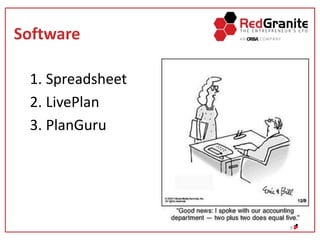
Software
1. Spreadsheet
2. LivePlan
3. PlanGuru
9
Budgeting Gone Bad
1. Not team-based
2. Revenue “plug”
3. Too much detail
10
Appreciations / Q&A
11

A Budgeting & Forecasting Roundtable

  • 1.
    Budgeting & ForecastingFor High Growth Companies
  • 2.
    Agenda 1. Intros 2. Definingbudgets/forecasts/models 3. Why take the time to budget? 4. How does your company budget and/or forecast? 5. Sharing best practices 6. Available software 7. Budgeting gone bad 8. Appreciations 2
  • 3.
    Definitions Budget: static stakein the ground Forecast: changes and forward-looking Model: 3 to 5 year plan 3
  • 4.
  • 5.
    Why all thefuss? 1. Creating • What key assumptions are we making? • Will we have the needed cash flow? • What are our drivers of growth and costs? 2. Reviewing • What assumptions were accurate/inaccurate? • Why did we miss revenue? (longer sales cycle, churn) • Why do we have lower profit margins? 3. Changing • How should we revise our assumptions? • Can we shorten the sales cycle with a free trial? • Can we automate a task that we do across all clients? 5
  • 6.
    Sharing is Caring Howdoes your company budget and/or forecast? 6
  • 7.
    Best Practices We’veSeen 1. Timing of creation and frequency of review (monthly) 2. Who’s involved, process (all departments should be involved) 3. Top-down goals, bottom-up drivers (set goals from top, but ensure reasonableness from the bottom) 4. “Aim small, miss small” (“ The Patriot” clip) – details are good! 5. Reviewing actuals to budget AND comparing full-year forecast vs. prior month forecast (forces you to recap why actuals are different than budget or forecast) 6. Link expenses to revenue and know your growth ratios (e.g. one person per every 4 clients) 7. 3A’s Scenarios: Anemic, Average, Awesome (plan for different scenarios) 7
  • 8.
    Red Granite’s Process 1.Time budget for each client (bottom up) 2. Time by task (aim small) 3. Managers and Associates own them 4. Weekly review, monthly analysis 5. “Twice as long” rule drives daily behavior 8
  • 9.
  • 10.
    Budgeting Gone Bad 1.Not team-based 2. Revenue “plug” 3. Too much detail 10
  • 11.