Brainstorming technique for problem-solving, team-building and creative processBrainstorming with a group of people is a powerful technique.
Brainstorming creates new ideas, solves problems, motivates and develops teams.
Brainstorming motivates because it involves members of a team in bigger management issues, and it gets a team working together. 
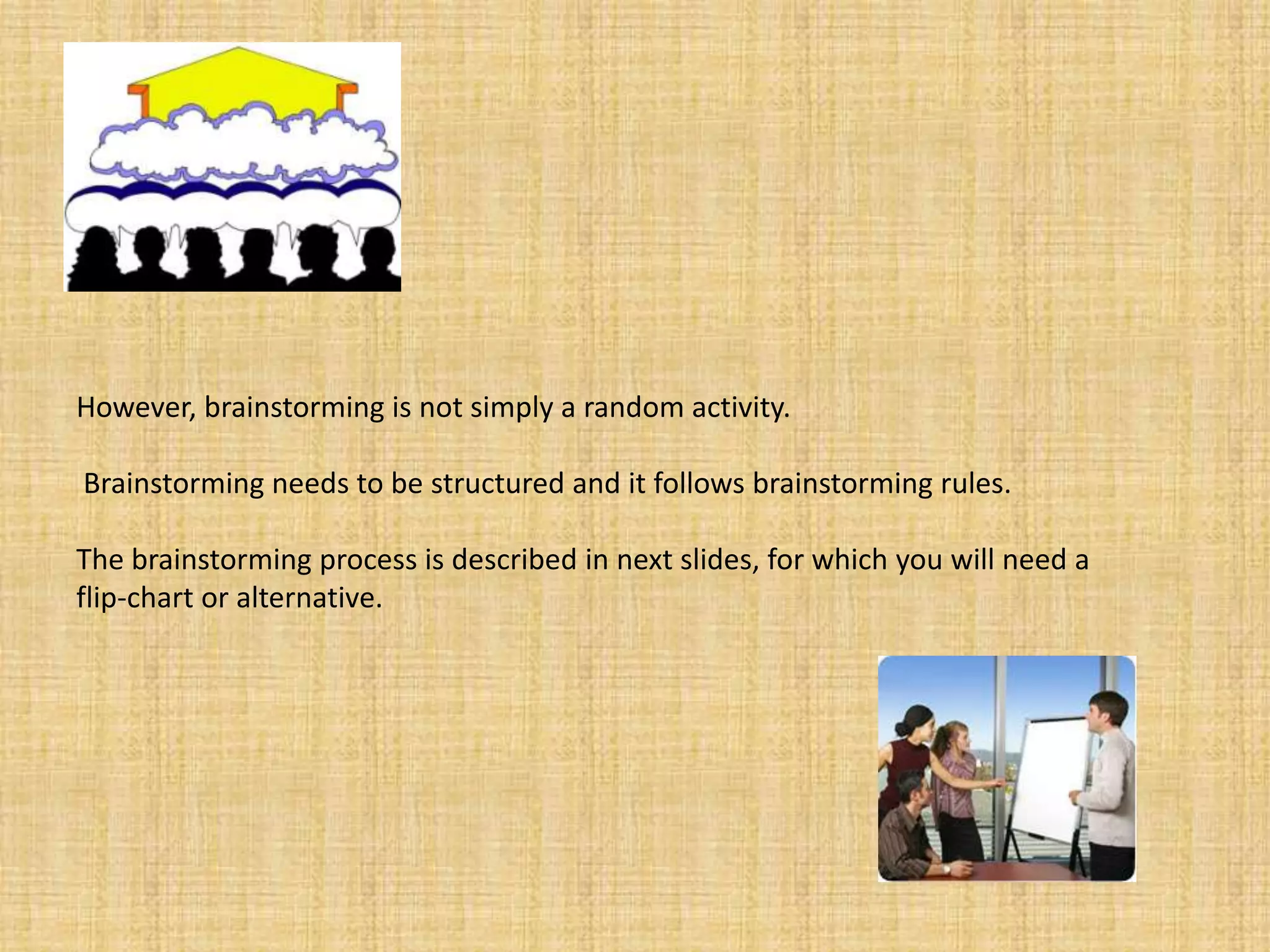
However, brainstorming is not simply a random activity.Brainstorming needs to be structured and it follows brainstorming rules. The brainstorming process is described in next slides, for which you will need a flip-chart or alternative.
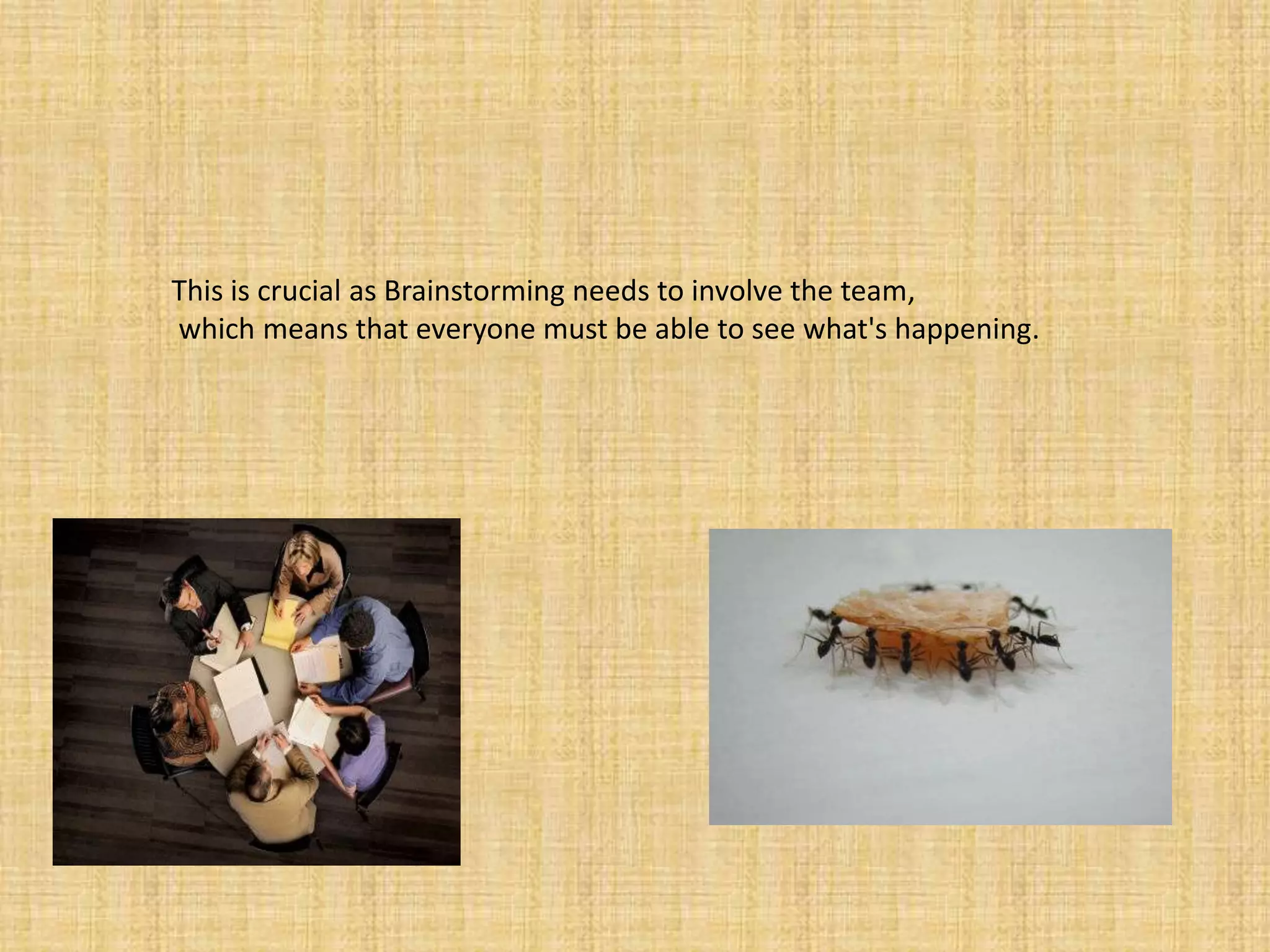
This is crucial as Brainstorming needs to involve the team,which means that everyone must be able to see what's happening.
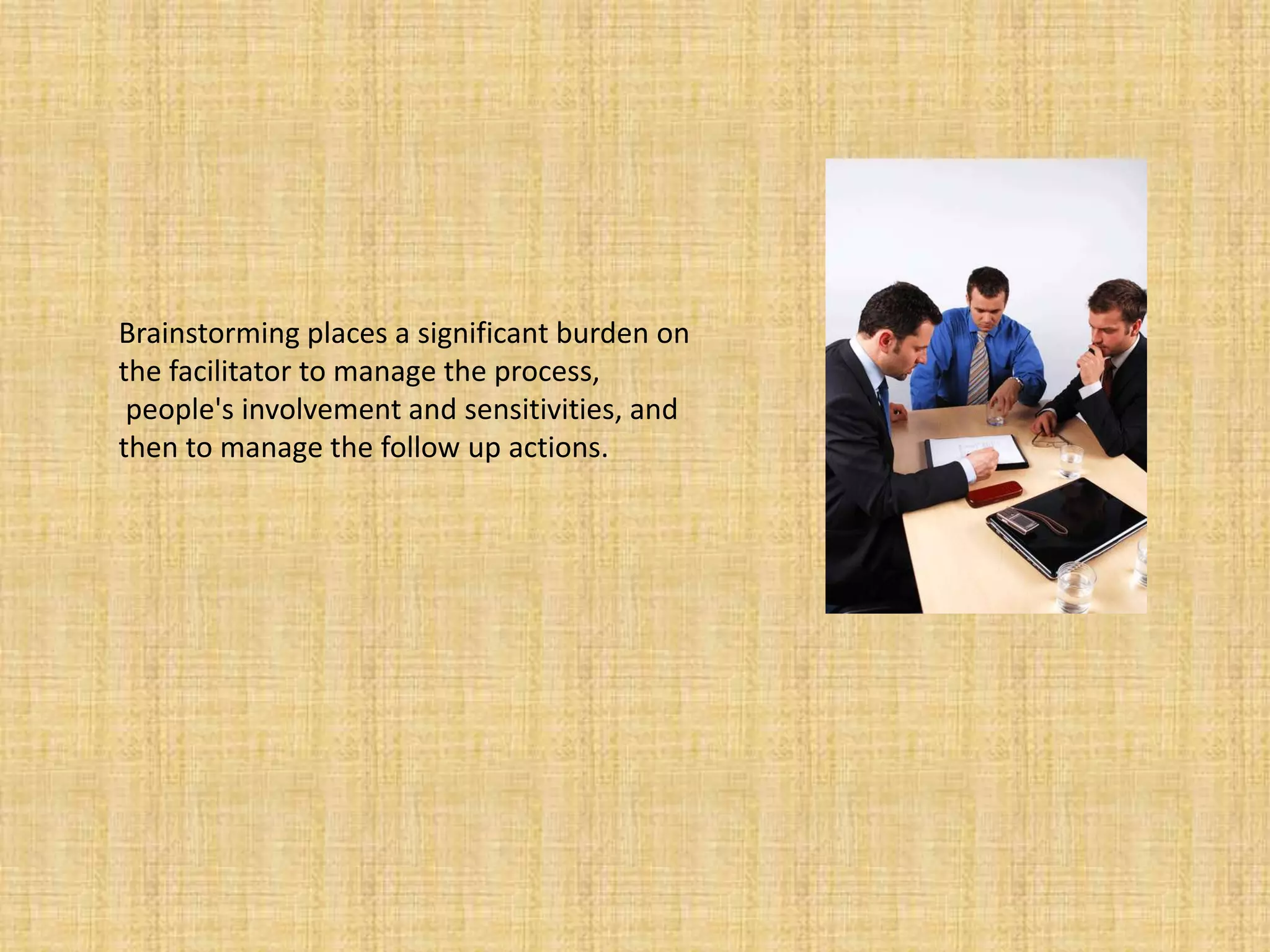
Brainstorming places a significant burden on the facilitator to manage the process, people's involvement and sensitivities, and then to manage the follow up actions.
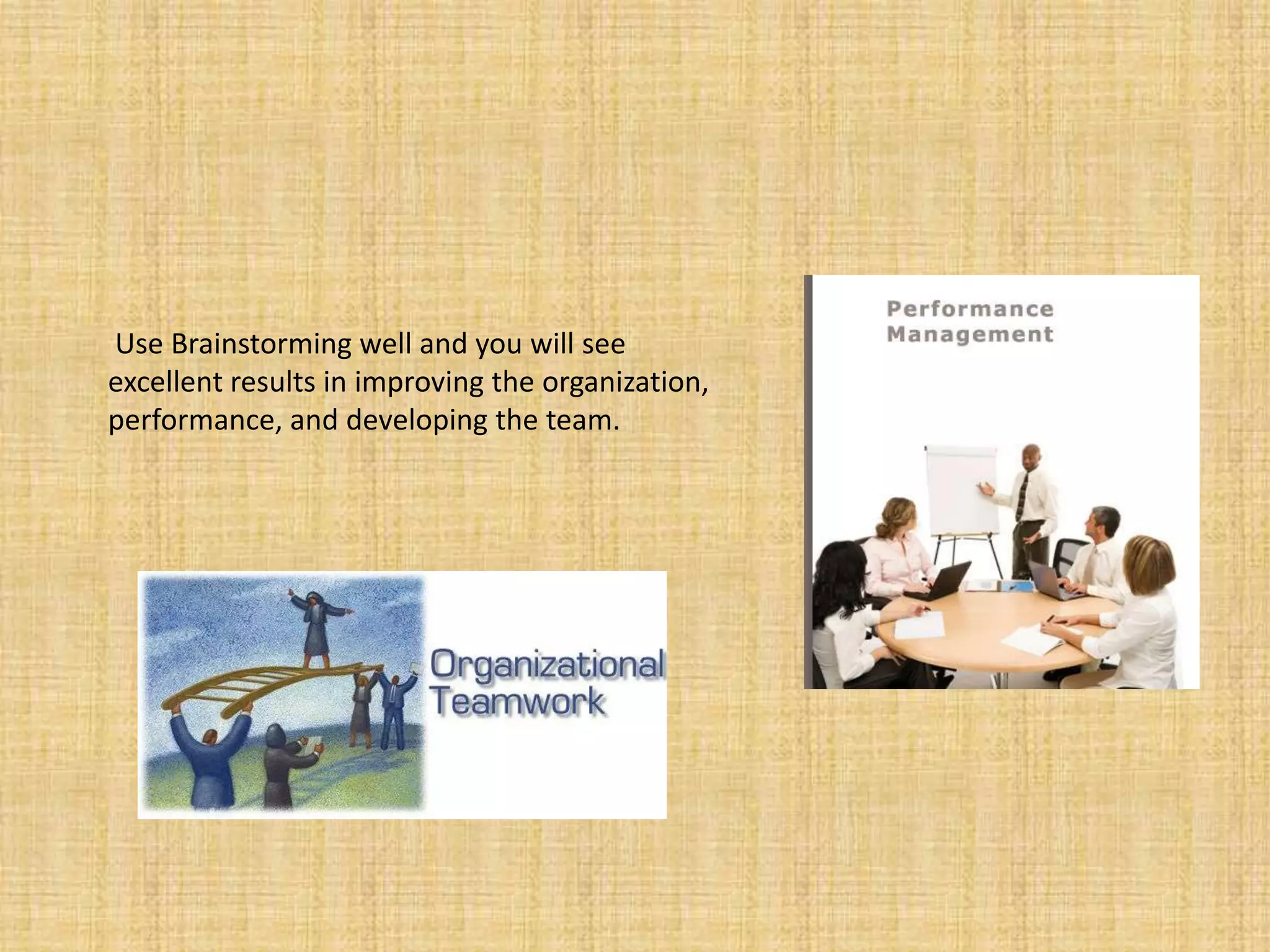
 Use Brainstorming well and you will see excellent results in improving the organization, performance, and developing the team.
Brainstorming processDefine and agree the objective.Brainstorm ideas and suggestions having agreed a time limit..
Categorize/condense/combine/refine. Assess/analyze effects or resultsPrioritize options/rank list as appropriate.   Agree action and timescale.   Control and monitor follow-up.
plan and agree the brainstorming aimEnsure everyone participating in the brainstorm session understandsand agrees the aim of the session(eg, to formulate a new job description for a customer services clerk;to formulate a series of new promotional activities for the next trading year;to suggest ways of improving cooperation between the salesand service departments; to identify costs saving opportunitiesthat will not reduce performance or morale, etc).
Keep the brainstorming objective simple. Allocate a time limit. This will enable you to keep the random brainstorming activity under control and on track.
manage the actual brainstorming activityBrainstorming enables people to suggest ideas at random.
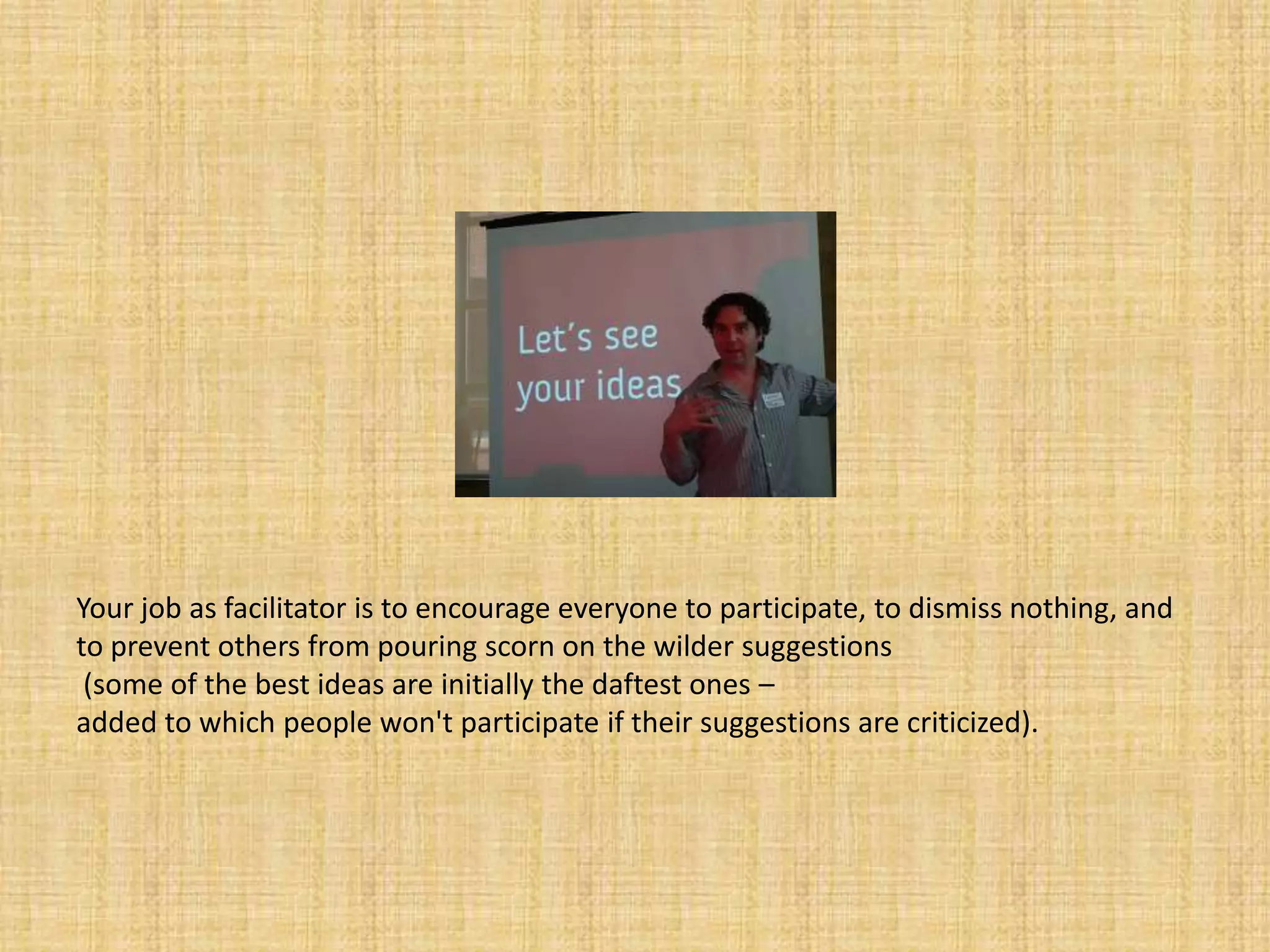
Your job as facilitator is to encourage everyone to participate, to dismiss nothing, and to prevent others from pouring scorn on the wilder suggestions (some of the best ideas are initially the daftest ones – added to which people won't participate if their suggestions are criticized).
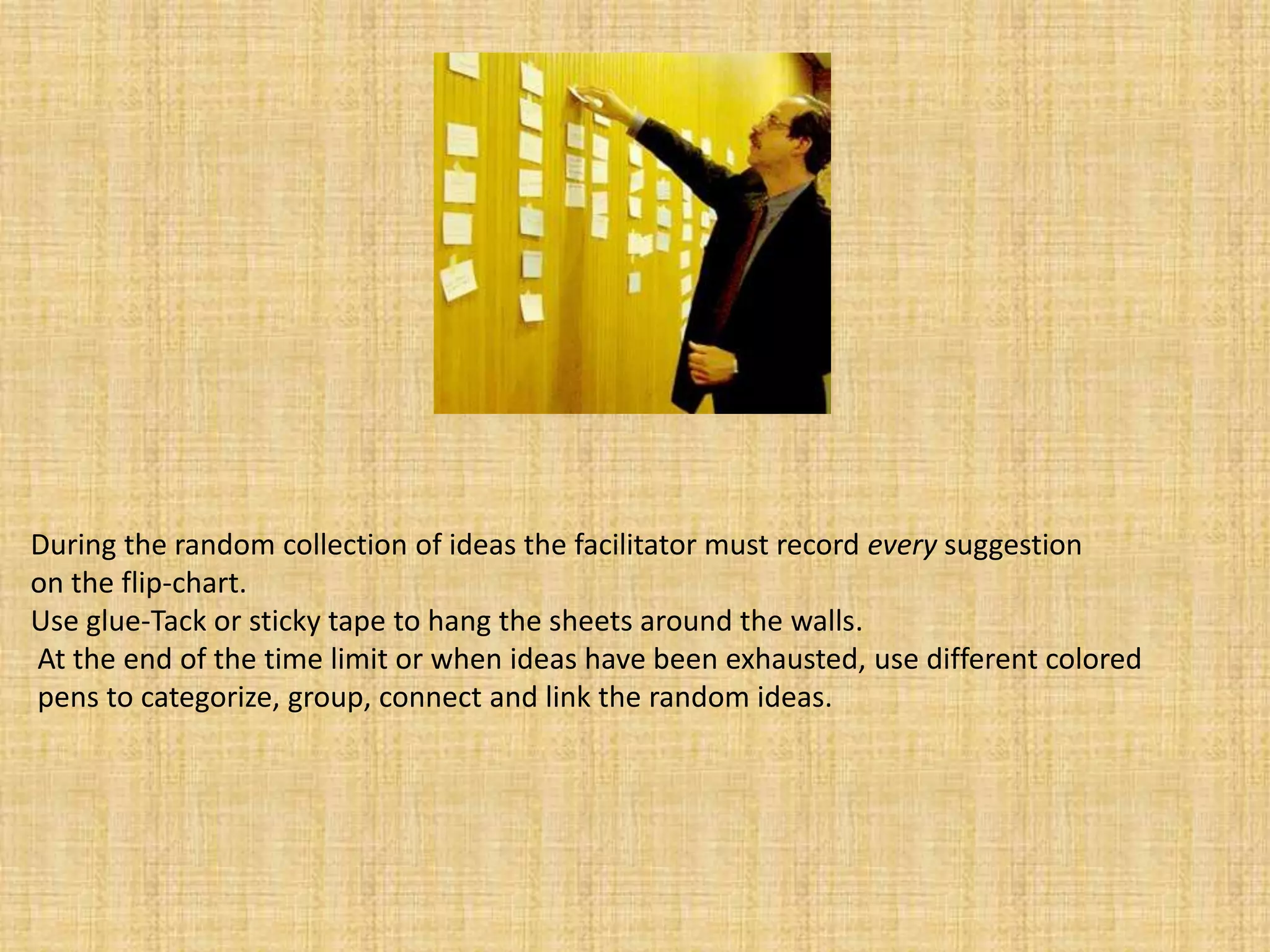
During the random collection of ideas the facilitator must record every suggestion on the flip-chart. Use glue-Tack or sticky tape to hang the sheets around the walls.At the end of the time limit or when ideas have been exhausted, use different coloredpens to categorize, group, connect and link the random ideas. 
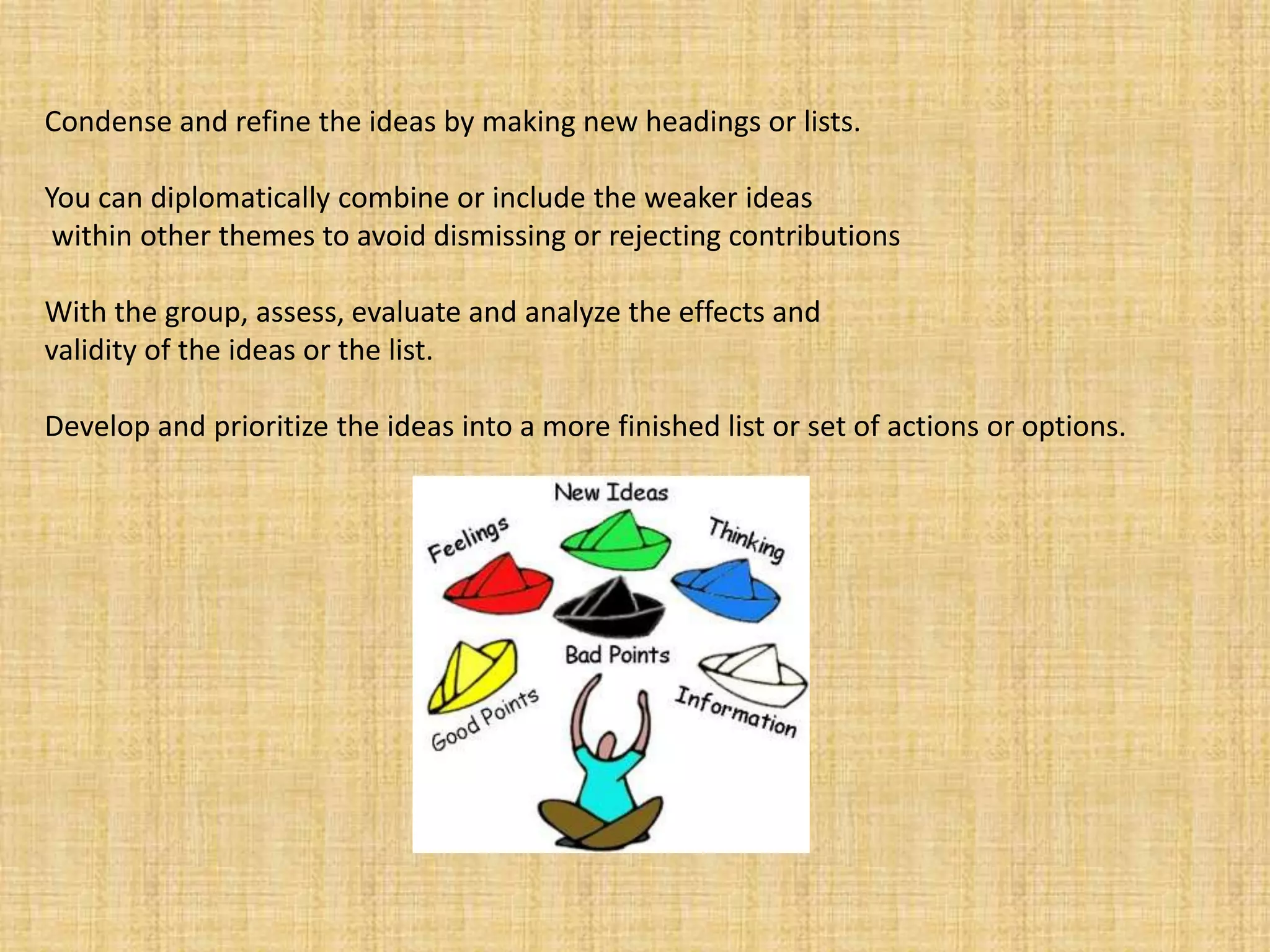
Condense and refine the ideas by making new headings or lists. You can diplomatically combine or include the weaker ideaswithin other themes to avoid dismissing or rejecting contributions With the group, assess, evaluate and analyze the effects and validity of the ideas or the list. Develop and prioritize the ideas into a more finished list or set of actions or options.
Implement the actions agreed from the brainstormingAgree what the next actions will be. Agree a timescale, who's responsible. the session circulate notes, monitor and give feedback.
It's crucial to develop a clear and positive outcome, so that people feel their effort and contribution was worthwhile. When people see that their efforts have resulted in action and change,they will be motivated and keen to help again.                    Sunday slides from sandeep

Brain Storming

  • 1.
    Brainstorming technique forproblem-solving, team-building and creative processBrainstorming with a group of people is a powerful technique.
  • 2.
    Brainstorming creates newideas, solves problems, motivates and develops teams.
  • 3.
    Brainstorming motivates becauseit involves members of a team in bigger management issues, and it gets a team working together. 
  • 4.
    However, brainstorming isnot simply a random activity.Brainstorming needs to be structured and it follows brainstorming rules. The brainstorming process is described in next slides, for which you will need a flip-chart or alternative.
  • 5.
    This is crucialas Brainstorming needs to involve the team,which means that everyone must be able to see what's happening.
  • 6.
    Brainstorming places asignificant burden on the facilitator to manage the process, people's involvement and sensitivities, and then to manage the follow up actions.
  • 7.
    Use Brainstormingwell and you will see excellent results in improving the organization, performance, and developing the team.
  • 8.
    Brainstorming processDefine andagree the objective.Brainstorm ideas and suggestions having agreed a time limit..
  • 9.
    Categorize/condense/combine/refine. Assess/analyze effectsor resultsPrioritize options/rank list as appropriate. Agree action and timescale. Control and monitor follow-up.
  • 10.
    plan and agreethe brainstorming aimEnsure everyone participating in the brainstorm session understandsand agrees the aim of the session(eg, to formulate a new job description for a customer services clerk;to formulate a series of new promotional activities for the next trading year;to suggest ways of improving cooperation between the salesand service departments; to identify costs saving opportunitiesthat will not reduce performance or morale, etc).
  • 11.
    Keep the brainstormingobjective simple. Allocate a time limit. This will enable you to keep the random brainstorming activity under control and on track.
  • 12.
    manage the actualbrainstorming activityBrainstorming enables people to suggest ideas at random.
  • 13.
    Your job asfacilitator is to encourage everyone to participate, to dismiss nothing, and to prevent others from pouring scorn on the wilder suggestions (some of the best ideas are initially the daftest ones – added to which people won't participate if their suggestions are criticized).
  • 14.
    During the randomcollection of ideas the facilitator must record every suggestion on the flip-chart. Use glue-Tack or sticky tape to hang the sheets around the walls.At the end of the time limit or when ideas have been exhausted, use different coloredpens to categorize, group, connect and link the random ideas. 
  • 15.
    Condense and refinethe ideas by making new headings or lists. You can diplomatically combine or include the weaker ideaswithin other themes to avoid dismissing or rejecting contributions With the group, assess, evaluate and analyze the effects and validity of the ideas or the list. Develop and prioritize the ideas into a more finished list or set of actions or options.
  • 16.
    Implement the actionsagreed from the brainstormingAgree what the next actions will be. Agree a timescale, who's responsible. the session circulate notes, monitor and give feedback.
  • 17.
    It's crucial todevelop a clear and positive outcome, so that people feel their effort and contribution was worthwhile. When people see that their efforts have resulted in action and change,they will be motivated and keen to help again. Sunday slides from sandeep