Technology Trends in
Education Help Prepare Our
Students for the Real World
By Brad Jermeland
According to the 2013 Speak Up Survey from Project
Tomorrow, major trends in technology are making their
way across education systems ofAmerica, proving to be
beneficial for students and helping them to prepare for the
real world.
CEO Julie Evans revealed the latest trends from the Speak
Up Survey, which include video for homework and mobile
computing, but these weren’t the only benefits that students
are seeing as a result from the influx in technology.
These results represent over 400,000 surveys from 9,000
schools and 2,700 school districts across the United States.
Input was given from mostly students, but from teachers,
librarians, parents, and district administrators as well. The
most beneficial results from the use of technology in the
education system are the following:
First, students have quickly adapted the ability to use
different tools for various tasks. Julie Evans commented
about how this technological era has made different tools for
students to excel in different areas of learning, tools that are
catered to do exactly what they need to figure out.
Apart from using one platform for an abundance of tasks,
students have proven to become more savvy about taking
advantage of the tools they have available.
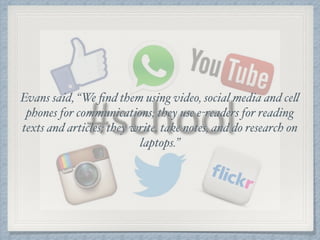
Evans said, “We find them using video, social media and cell
phones for communications; they use e-readers for reading
texts and articles; they write, take notes, and do research on
laptops.”
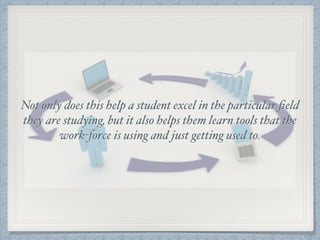
Not only does this help a student excel in the particular field
they are studying, but it also helps them learn tools that the
work-force is using and just getting used to.
So that by the time they see themselves in the real world,
they will be extremely efficient at completing the task at
hand.
Another great technological advance students are using to
their advantage is their increased interest in learning from
online resources.
According to the 2013 Speak Up surveys, students who have
not taken an online course say they are very interested in
the opportunity to do so, stating that they want to have
more control over their learning and will get continuous
support from a teacher who is online.
This could be due to a number of factors, such as an
embarrassment to ask questions in person or peer pressure
from other students that excelling in school is “nerdy” and
“uncool.”
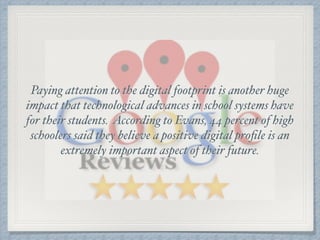
Paying attention to the digital footprint is another huge
impact that technological advances in school systems have
for their students. According to Evans, 44 percent of high
schoolers said they believe a positive digital profile is an
extremely important aspect of their future.
The survey results showed that sixty-four percent of high
school students responding admitted to being cautious about
what they post online; 39 percent admitting that they
stopped interacting with friends who post inappropriate
content online.
Not only do technological innovations in school systems
across the country help students earn higher grades and
prepare themselves for future jobs, but they also keep
students aware of their online presence; because monitoring
online decisions are just as important as the decisions made
in person.

Brad Jermeland: Technology and Education

  • 1.
    Technology Trends in EducationHelp Prepare Our Students for the Real World By Brad Jermeland
  • 2.
    According to the2013 Speak Up Survey from Project Tomorrow, major trends in technology are making their way across education systems ofAmerica, proving to be beneficial for students and helping them to prepare for the real world.
  • 3.
    CEO Julie Evansrevealed the latest trends from the Speak Up Survey, which include video for homework and mobile computing, but these weren’t the only benefits that students are seeing as a result from the influx in technology.
  • 4.
    These results representover 400,000 surveys from 9,000 schools and 2,700 school districts across the United States.
  • 5.
    Input was givenfrom mostly students, but from teachers, librarians, parents, and district administrators as well. The most beneficial results from the use of technology in the education system are the following:
  • 6.
    First, students havequickly adapted the ability to use different tools for various tasks. Julie Evans commented about how this technological era has made different tools for students to excel in different areas of learning, tools that are catered to do exactly what they need to figure out.
  • 7.
    Apart from usingone platform for an abundance of tasks, students have proven to become more savvy about taking advantage of the tools they have available.
  • 8.
    Evans said, “Wefind them using video, social media and cell phones for communications; they use e-readers for reading texts and articles; they write, take notes, and do research on laptops.”
  • 9.
    Not only doesthis help a student excel in the particular field they are studying, but it also helps them learn tools that the work-force is using and just getting used to.
  • 10.
    So that bythe time they see themselves in the real world, they will be extremely efficient at completing the task at hand.
  • 11.
    Another great technologicaladvance students are using to their advantage is their increased interest in learning from online resources.
  • 12.
    According to the2013 Speak Up surveys, students who have not taken an online course say they are very interested in the opportunity to do so, stating that they want to have more control over their learning and will get continuous support from a teacher who is online.
  • 13.
    This could bedue to a number of factors, such as an embarrassment to ask questions in person or peer pressure from other students that excelling in school is “nerdy” and “uncool.”
  • 14.
    Paying attention tothe digital footprint is another huge impact that technological advances in school systems have for their students. According to Evans, 44 percent of high schoolers said they believe a positive digital profile is an extremely important aspect of their future.
  • 15.
    The survey resultsshowed that sixty-four percent of high school students responding admitted to being cautious about what they post online; 39 percent admitting that they stopped interacting with friends who post inappropriate content online.
  • 16.
    Not only dotechnological innovations in school systems across the country help students earn higher grades and prepare themselves for future jobs, but they also keep students aware of their online presence; because monitoring online decisions are just as important as the decisions made in person.