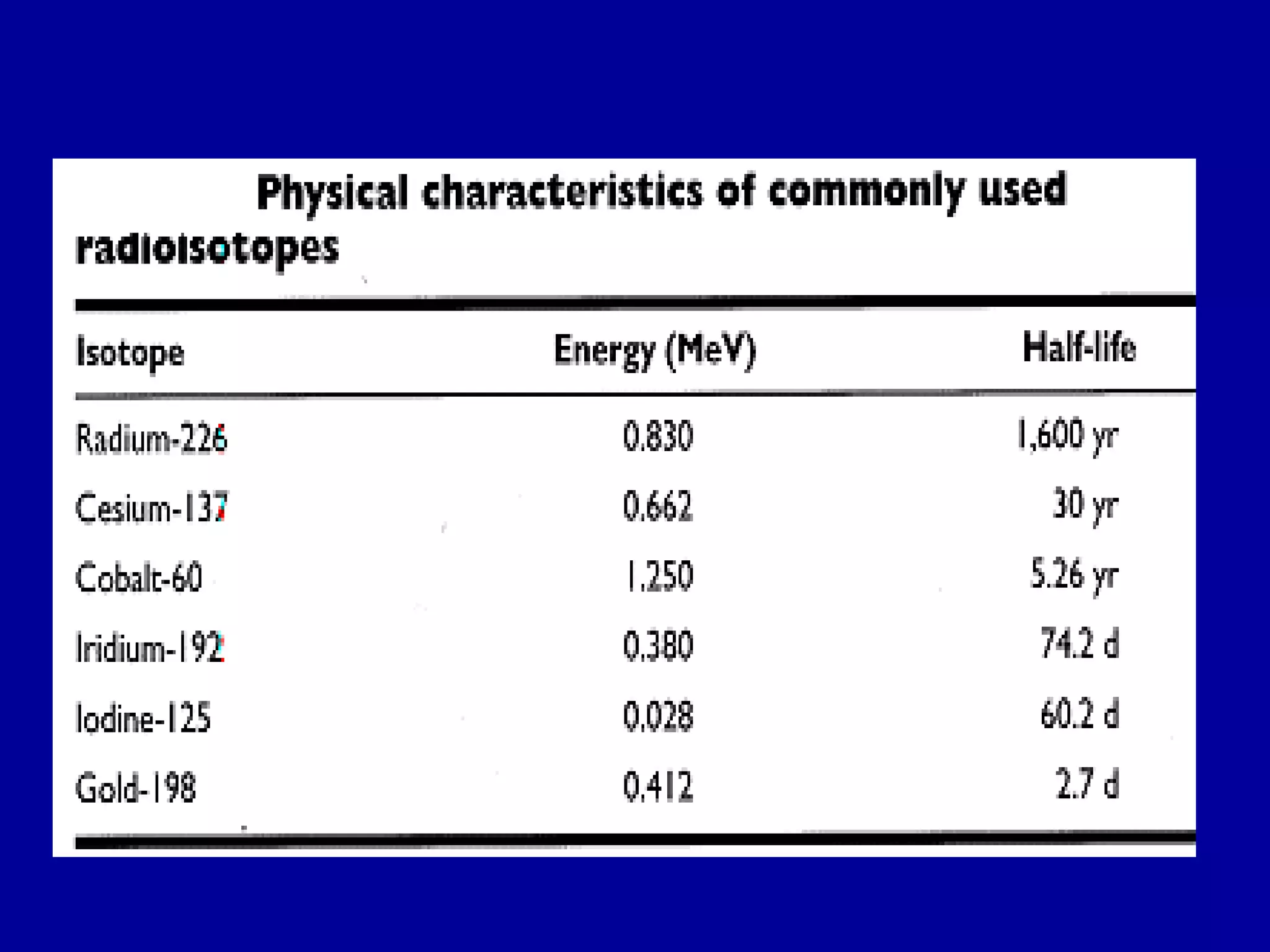
Brachytherapy
• Defined as treatment of cancer by
inserting radio-active sources into or
near the tumor
• It is a type of Radiotherapy
What is Brachytherapy ?
Radiation Therapy
 Treatment of malignant diseases by ionizing
radiation
 Relatively a new specialty (Roentgen 1895)
 Technology oriented subject: rapid progress
 Modern RT: sophisticated and precise
 Heavy investment, regulatory authorities
 Medical fraternity : not very familiar
Radiation Therapy
 It is a localized form of treatment
 It is a prolonged/protracted Tt. (5-7 wks)
 It is easy to administer, specialized Tt.
 It is a painless procedure
Types of Radiotherapy
 Teletherapy or Ext. RT
Cobalt: Radio-active source
Linear Accelerator: X-ray source
 Brachytherapy
Manual afterloading unit
Remote afterloading Unit
Cobalt Teletherapy Unit
Linear Accelerator
Microselectron HDR
Selectron LDR
Microselectron PDR
Brachytherapy
Types of Brachytherapy
It can be categorized in many ways
 Location of implant
 Type of loading
 Dose rate
 Duration of implant
 Type of emission
Types of Brachytherapy
Location of implant
 Intracavitary: cervix, esophagus
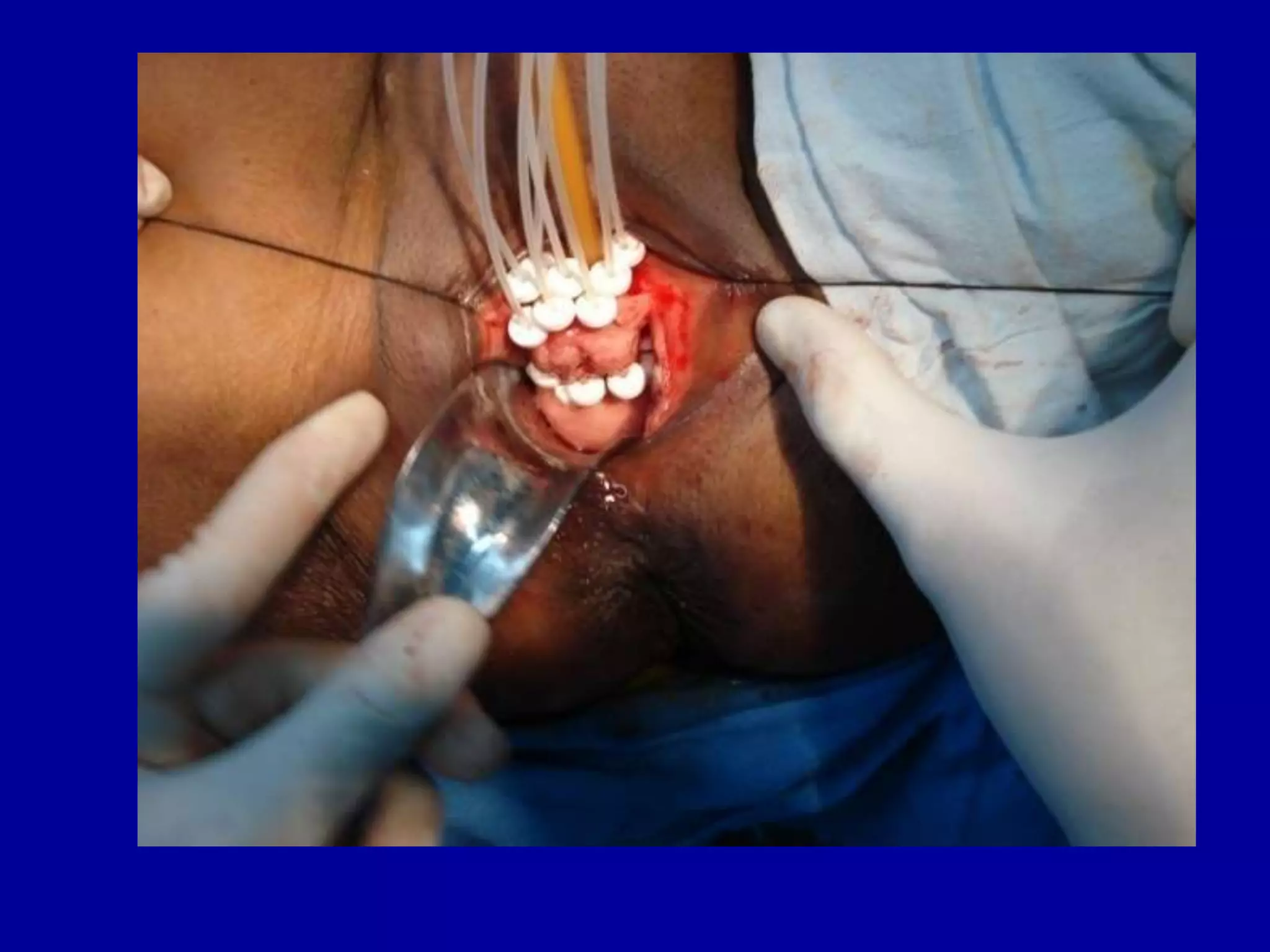
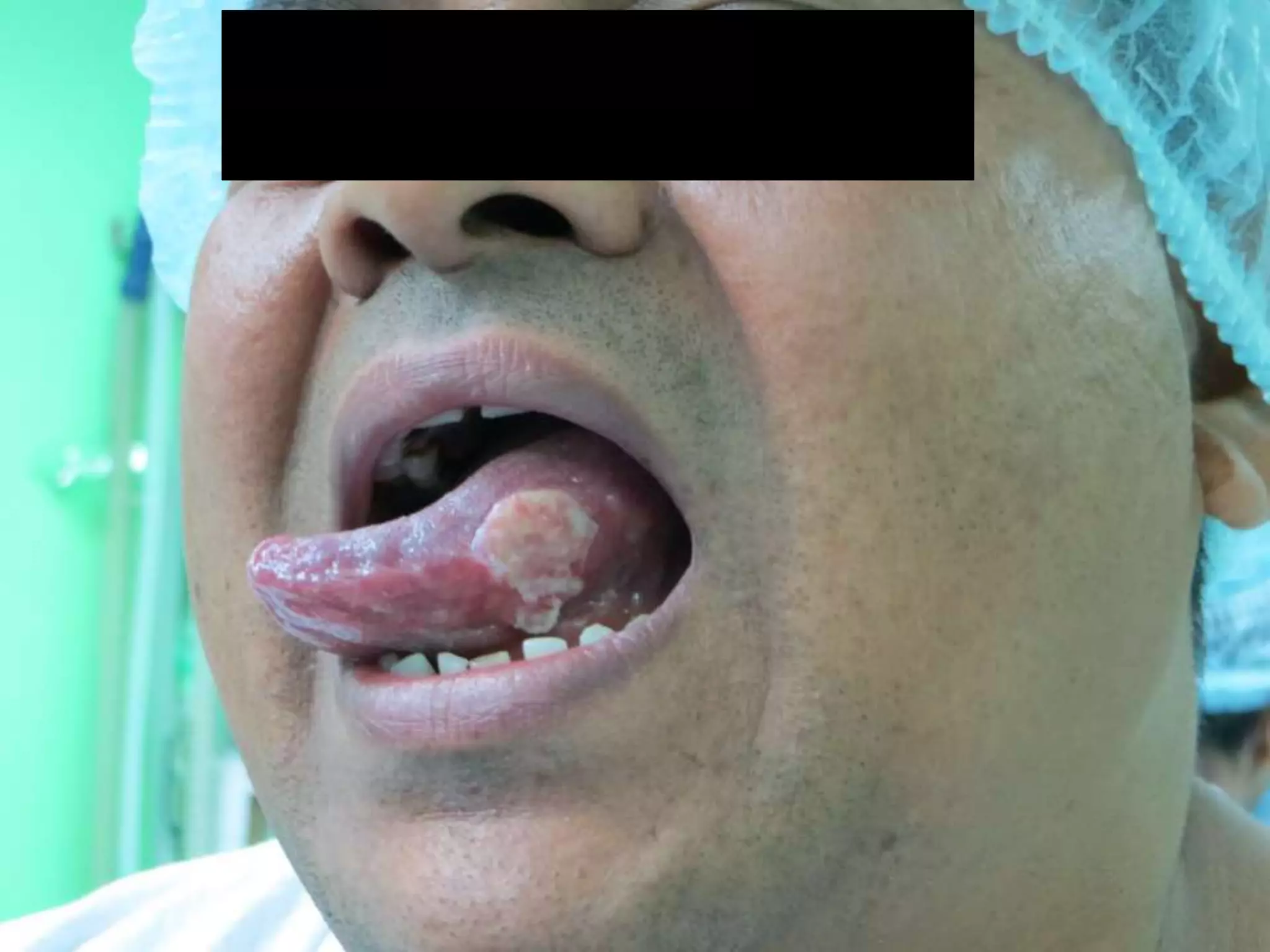
 Interstitial: prostate, tongue
 Surface mold or Plaque: skin, palate, scalp
Types of Brachytherapy
Duration
 Temporary: Source is taken out after the Rx
uterus, breast
 Permanent: Permanently placed in the target
Prostate, Brain
Types of Brachytherapy
Method of delivery
 Manual loading: Radium needles
 Afterloading:
Manual or
Remote controlled
Types of Brachytherapy
dose rate
 Low Dose Rate (LDR) = 0.4-2.0 Gy/hr
 Medium Dose Rate (MDR) = 2-12 Gy/hr
 High Dose Rate (HDR) = >12 Gy/hr
Microselectron HDR
Selectron LDR
Microselectron PDR
ADVANTAGES OF BRACHYTHERAPY
 A high localized radiation dose to a small volume
--higher local control
 Spares surrounding normal organs and tissues leading to
less side effects
 Ultimate form of conformal radiotherapy
 Shorter treatment time-convenient, prevents tumor
proliferation
 Nonhomogenous dose distribution to tumor targeting the
hypoxic central core
EBRT Brachytherapy
Prolonged Treatment (wks) Short duration (hrs)
OPD procedure Indoor
Non-invasive Invasive
Painless Analgesia required
Tumor size : any Small
Simple Treatment Skilled
Normal tissue dose Minimal
Body movements: problem Negligible
Common use alone Often combined with EBRT
Widely available Limited availability
Heavy & costly equipment Small, cheaper
Breachytherapy: Team work
 Brachytherapist
 Anesthesiologist
 Medical Physicist
 Staff nurse
Brachytherapy Facilities in India
Radiotherapy Centres : 357
Teletherapy Facilities : 533
Brachytherapy Facilities : 343
 Remote Afterloading Units (HDR/MDR/LDR) : 227
 Manual Afterloading Brachytherapy facilities : 116
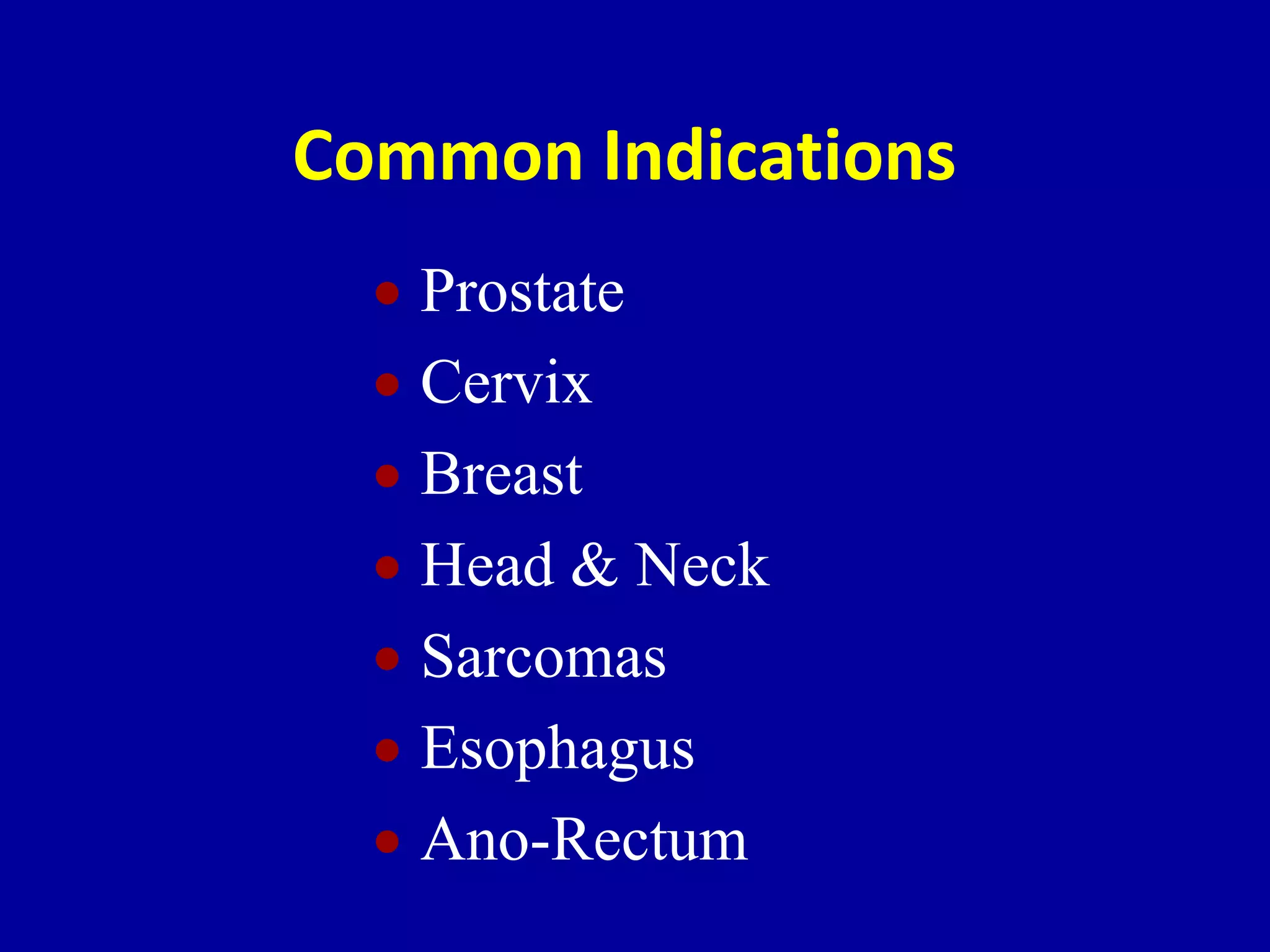
Common Indications
 Prostate
 Cervix
 Breast
 Head & Neck
 Sarcomas
 Esophagus
 Ano-Rectum
BRACHYTHERAPY IN
CARCINOMA CERVIX
BRACHYTHERAPY TYPES IN CA CERVIX
 Intracavitary radiotherapy (ICRT)
 Interstitial brachytherapy
A COMPLETED HDR ICRT APPLICATION
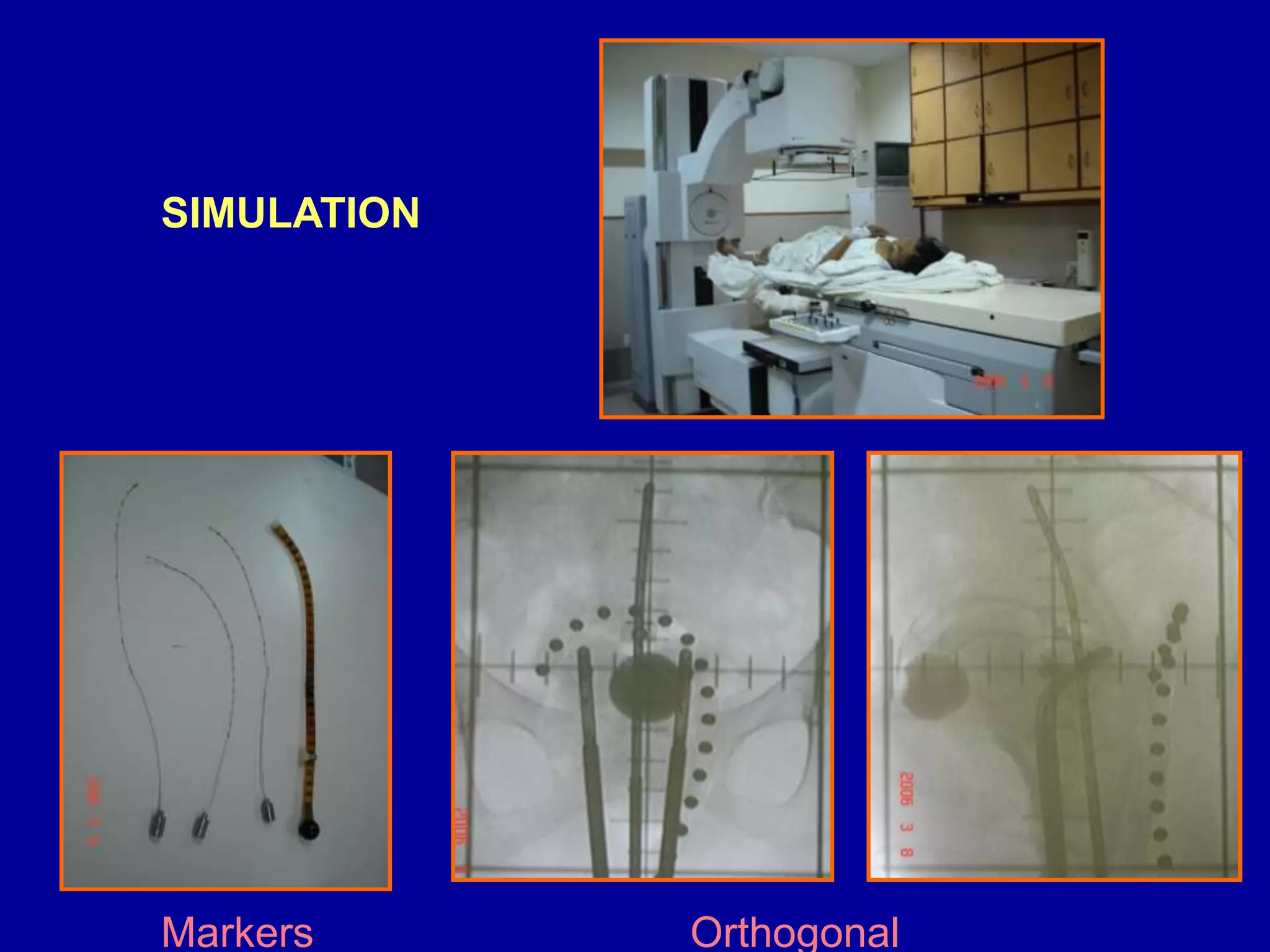
SIMULATION
Markers
Markers Orthogonal
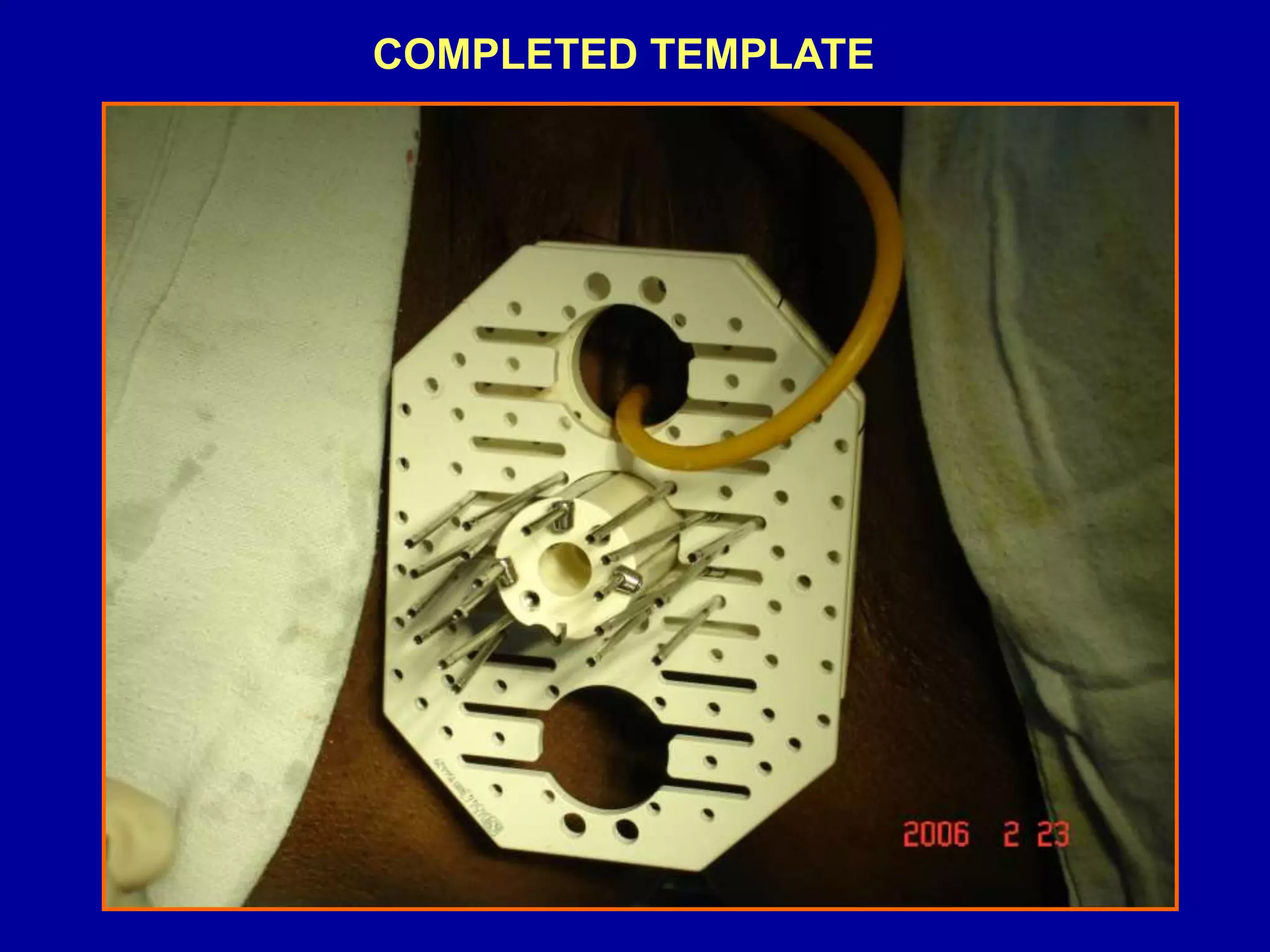
COMPLETED TEMPLATE
IMAGING
Bladder
Target
Rectum
TREATMENT DELIVERY
Fig. 1
ba
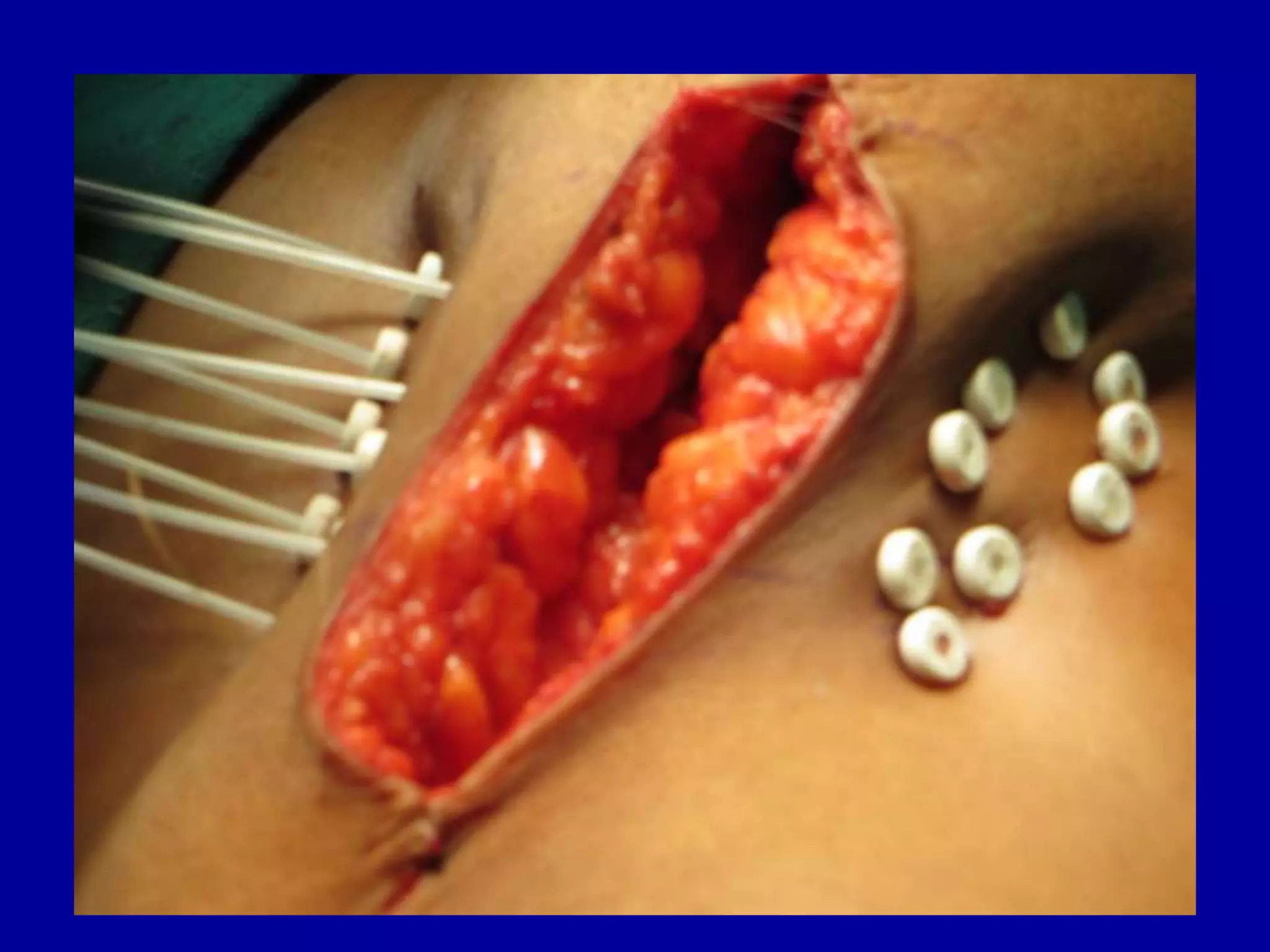
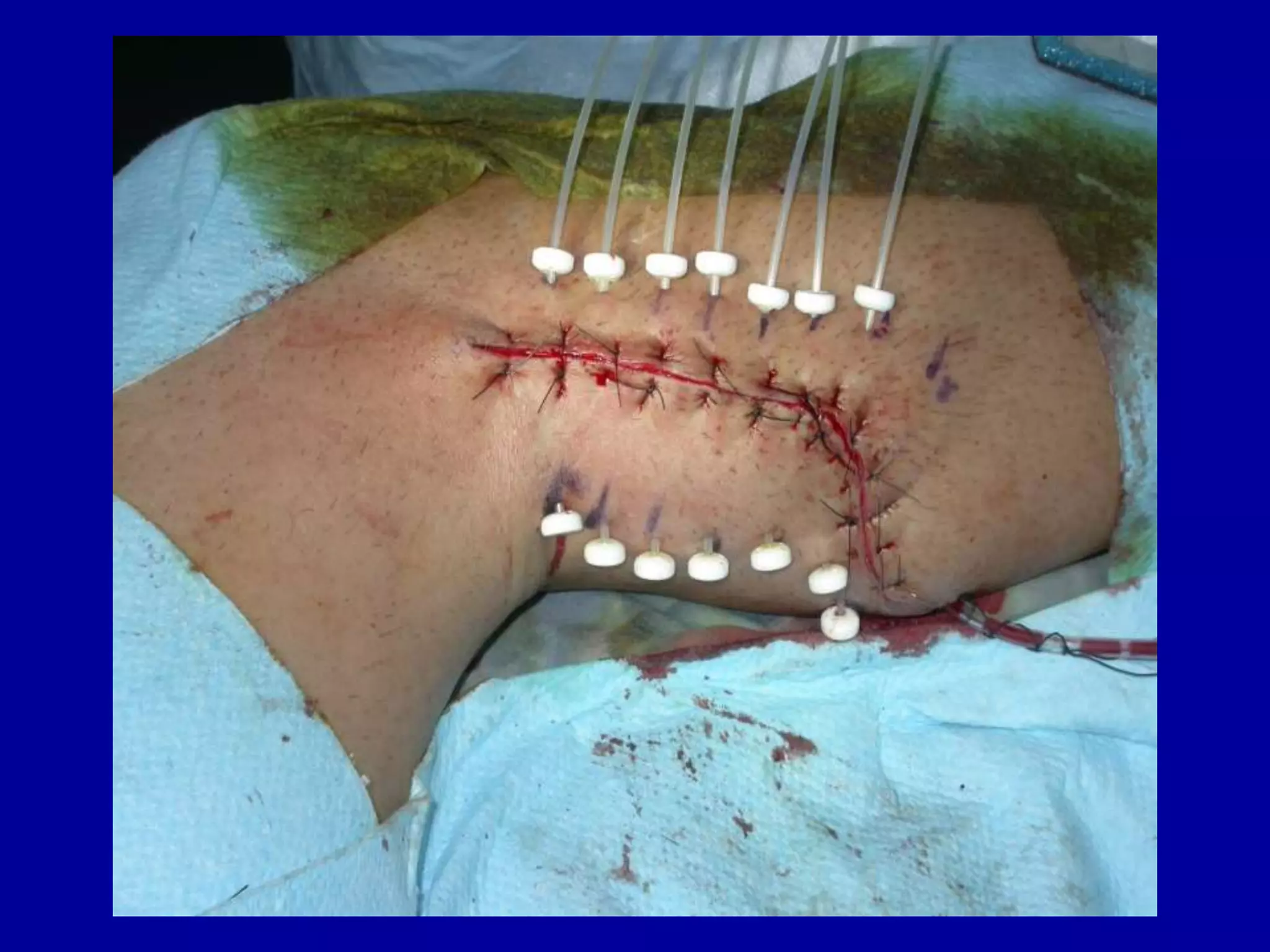
Role of Brachytherapy in Ca Breast
 As boost treatment in BCT: After a dose of 45-50 Gy with
EBRT to the whole breast, boost dose of 15-20 Gy is
delivered by brachytherapy
 As sole modality of treatment: As sole modality of
treatment - an alternative to standard BCT in selected
patients
 For treatment of Chest wall recurrences: Chest wall
irradiation with a moulded cast/interstitial implantation
 LABC (inoperable):
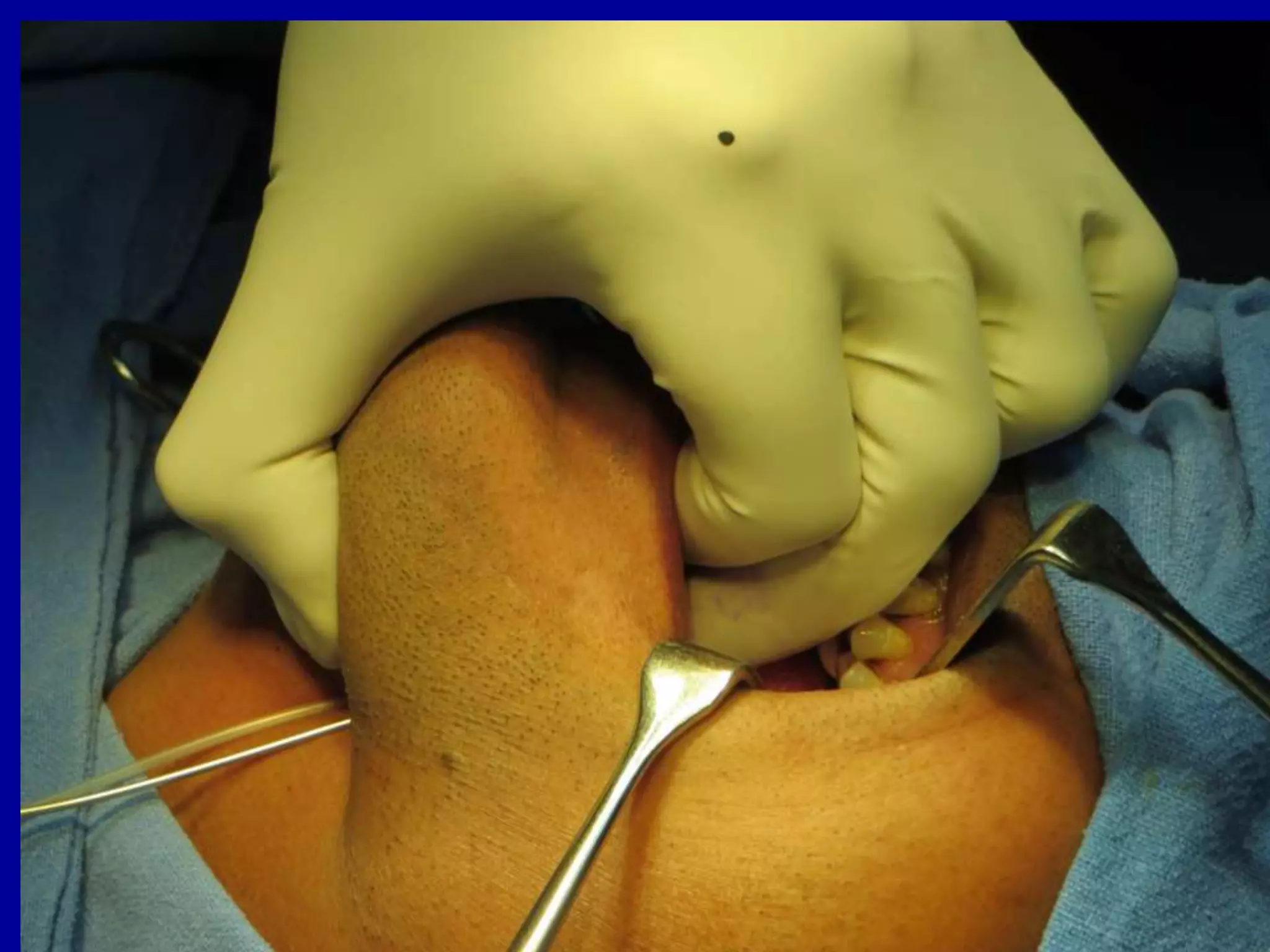
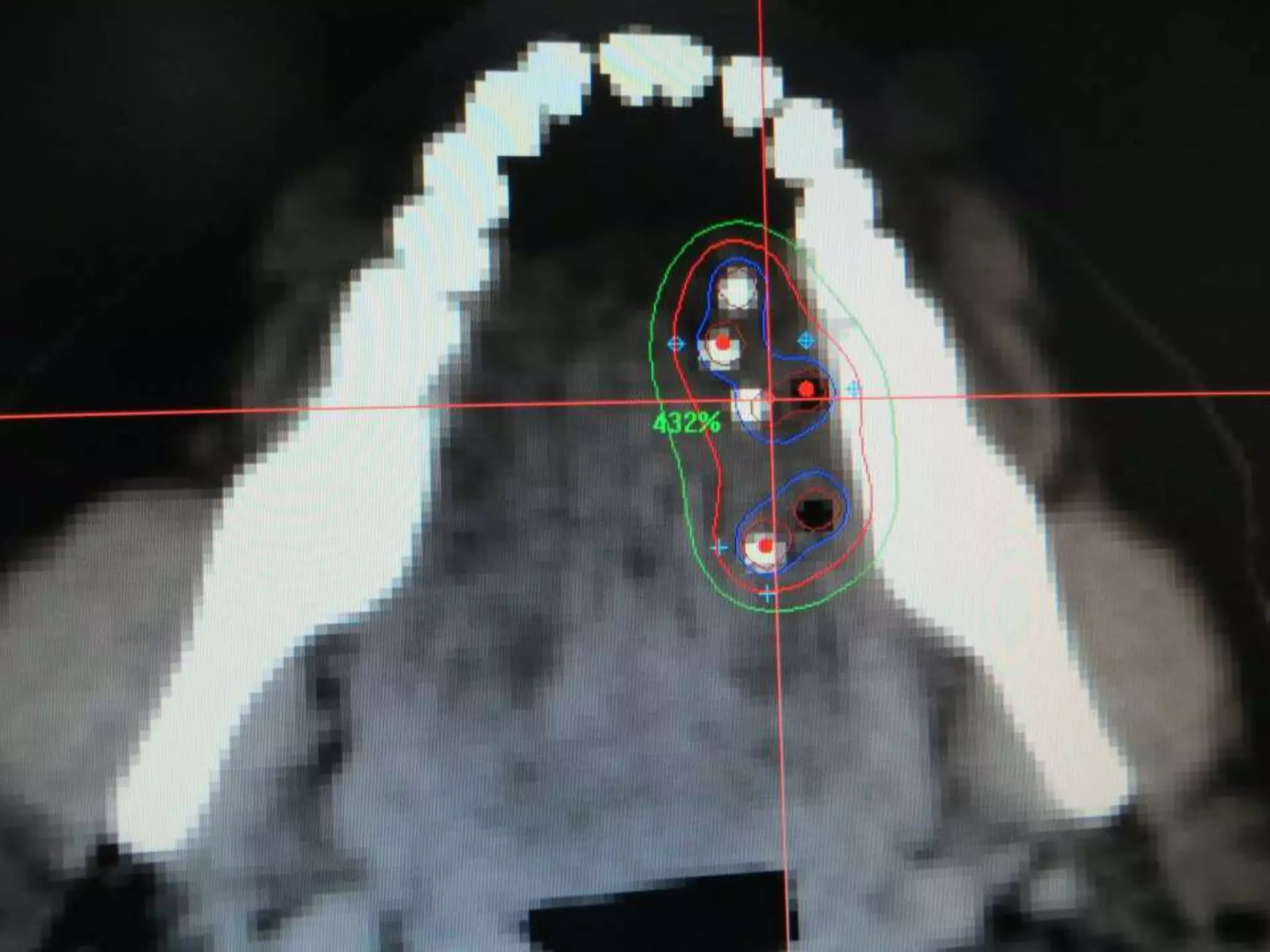
Brachytherapy in Head and neck cancer
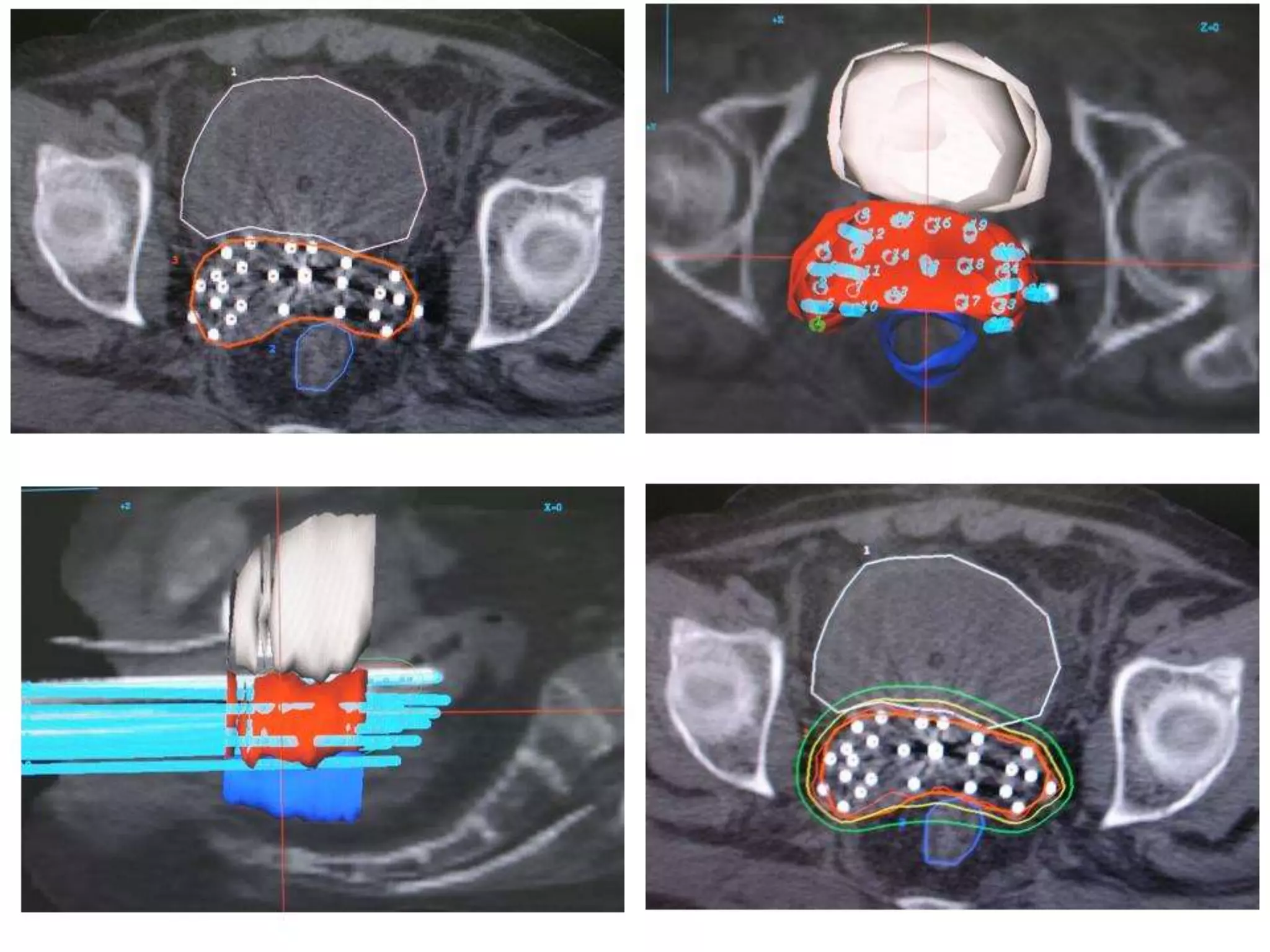
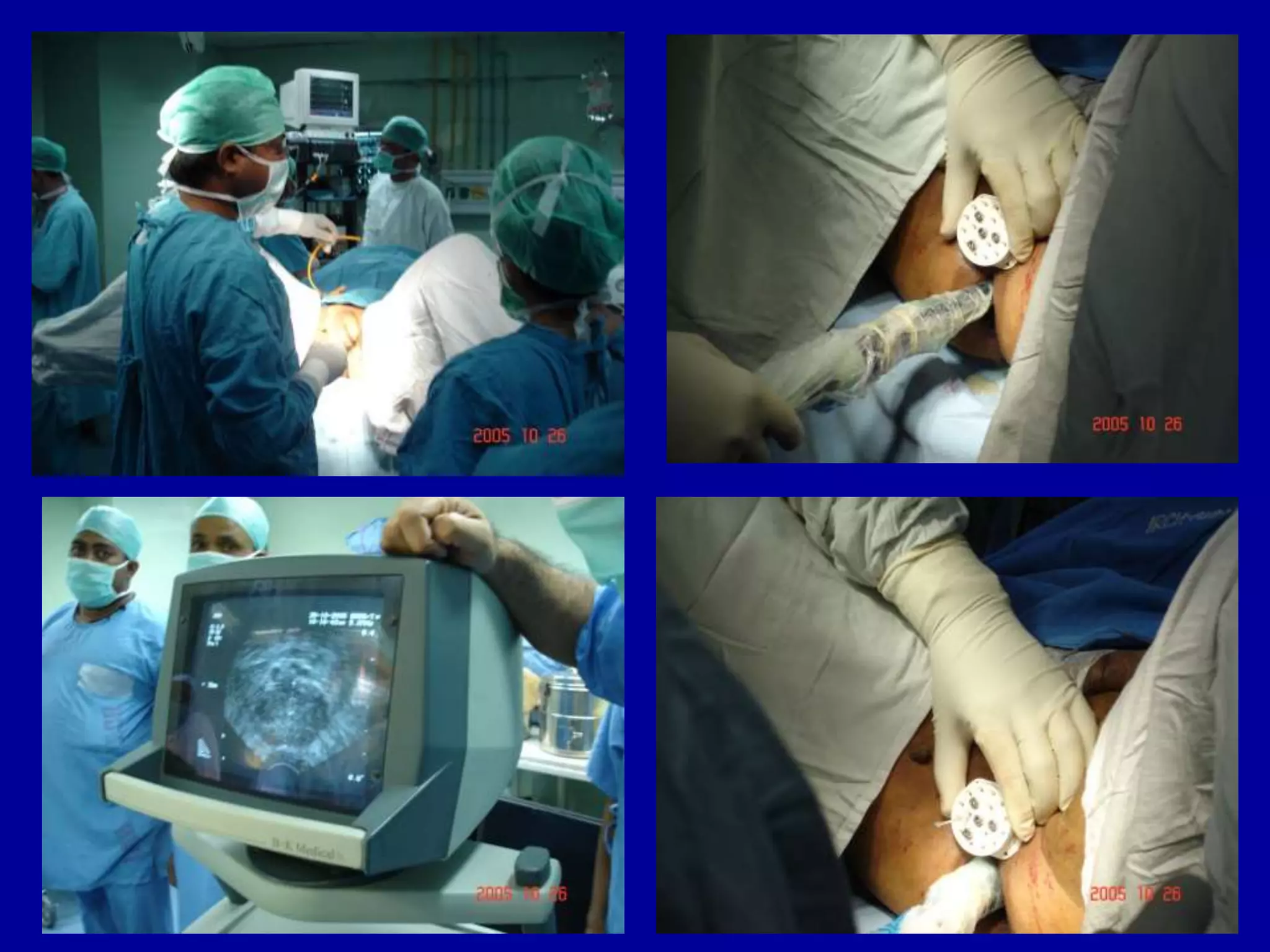
Brachytherapy in Ca Prostate
STEPS:
Planning-TRUS guided volume study—computer preplan
Brachytherapy procedure-TRUS guided trans perineal needle-..
peripheral loading..
seeds placed along the tract from base to apex.
Post implant evaluation-by CT scan
Intra-operative Brachytherapy
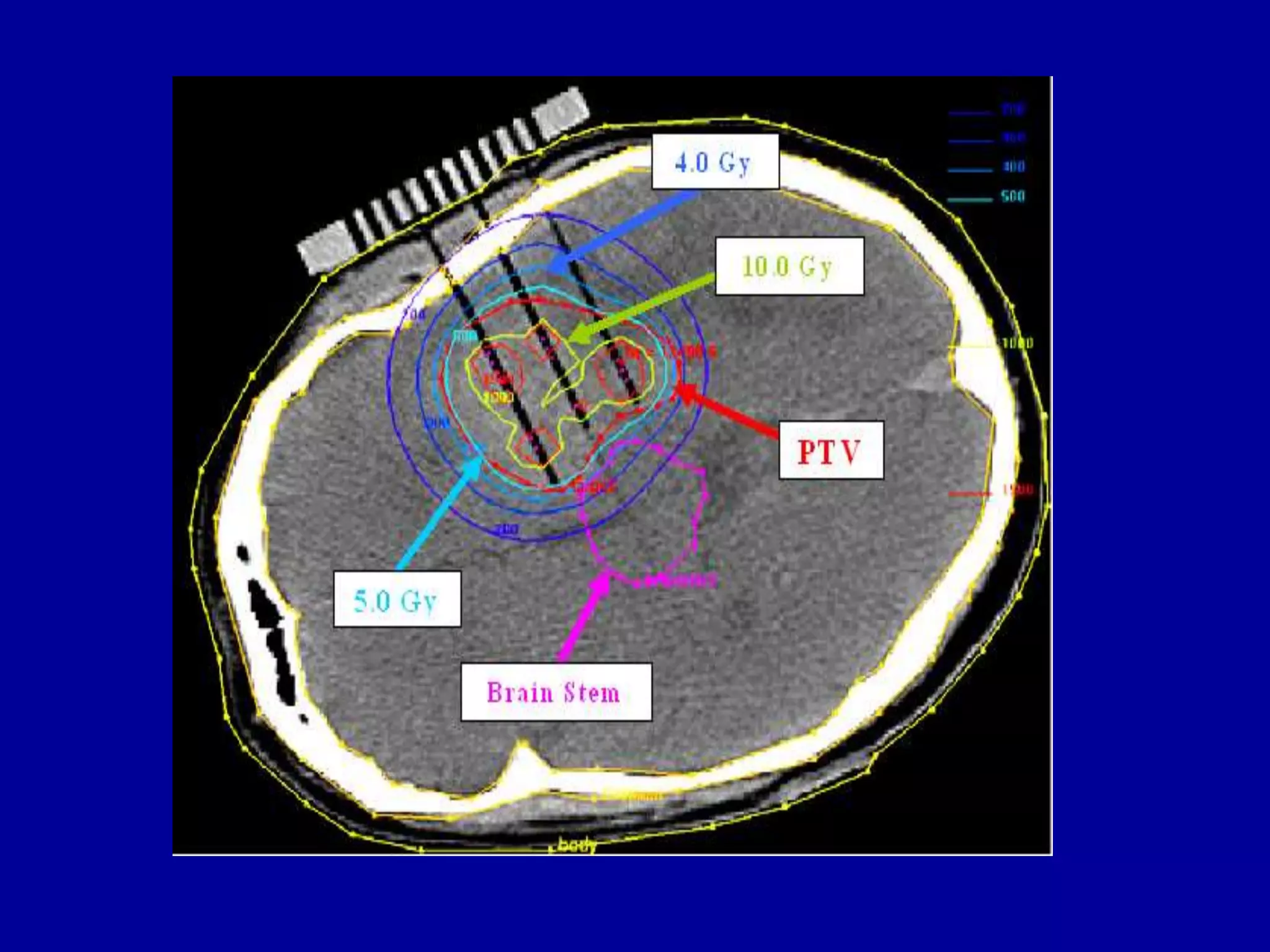
Gliasite Brachytherapy
Skin Cancer
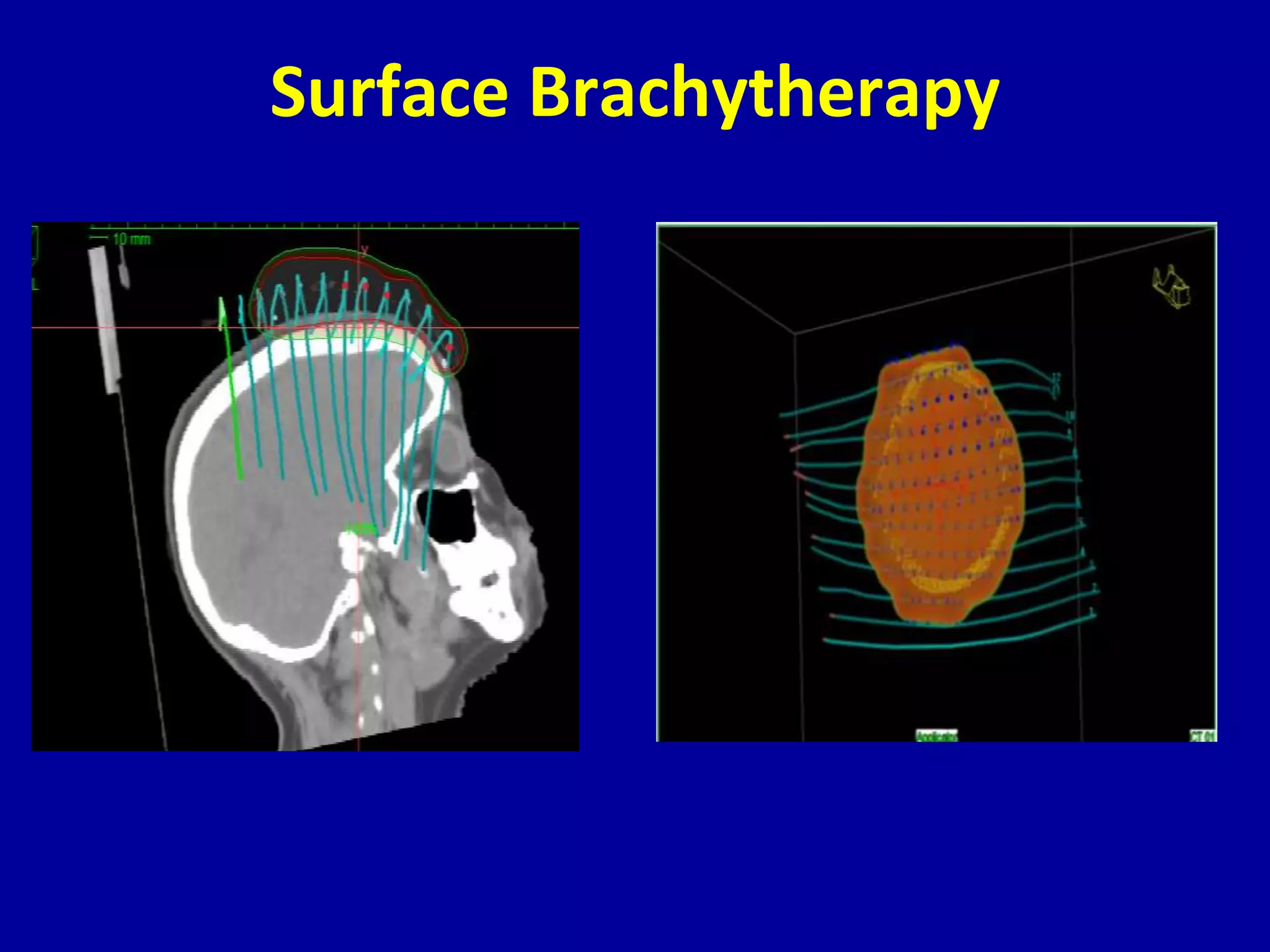
Surface Brachytherapy
Brachytherapy effect
Role of Nursing in RT/Brachytherapy
 Clinical care : Communication; medical care; psychosocial care
 Teaching
 Research
Role of Nursing in RT/Brachytherapy
 Outdoor pts
 Indoor pts
 For management of pts undergoing RT
 For planned brachytherapy/IORT procedures
Role of Nursing in RT
 Familiar with the usual course of RT
 Instruction, precautions during RT
 Knowledge of radiation safety
 Any emergency
Nursing care for brachytherapy
 Limit time in pt room
 Limit visitors to 30 minutes at a 6 foot
distance
 Post radiation signs on door
 No young children or pregnant women
 Nurses wear radiation badge
 Follow policies of radiation dept
Conclusion
 Brachytherapy is highly precise and accurate form
of RT
 Can be done for almost every cancer site
 Small tumors are ideal lesions for cure
 Large lesions are treated by brachytherapy + EBRT
 Knowledge of brachytherapy is essential for
oncology nurses
brachytherapy

brachytherapy