Download to read offline
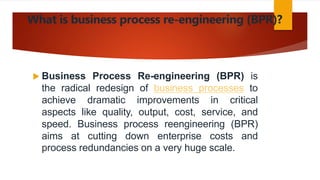
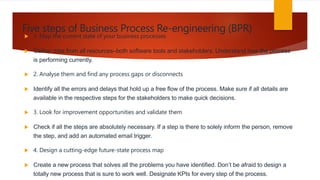
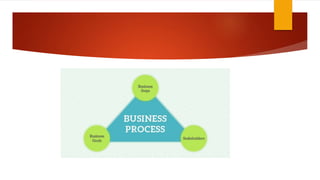

1. Business process reengineering (BPR) aims to radically redesign business processes to achieve dramatic improvements in areas like quality, output, cost, service, and speed. 2. There are 5 steps to BPR: map current processes, analyze for gaps, identify improvement opportunities, design a new future state process map, and implement the new design. 3. Key tools that support successful BPR implementation include focusing on customers and processes, visualizing and benchmarking end processes, change management to address human impacts, and business process mapping to understand existing processes.


