BODY STRUCTURES
THAT HELP ANIMALS
ADAPT AND SURVIVE
IN THEIR PARTICULAR
HABITAT
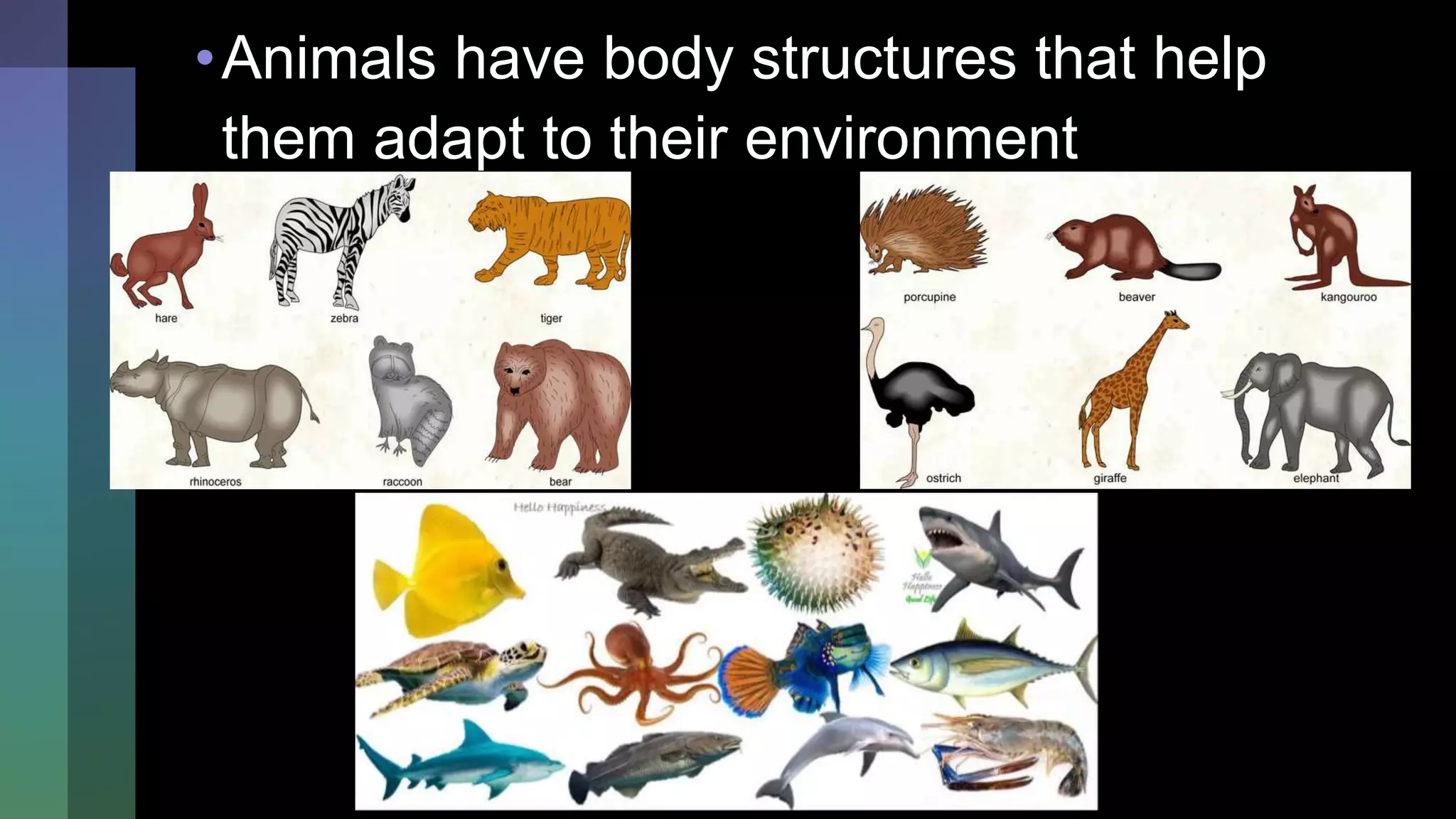
•Animals have body structures that help
them adapt to their environment
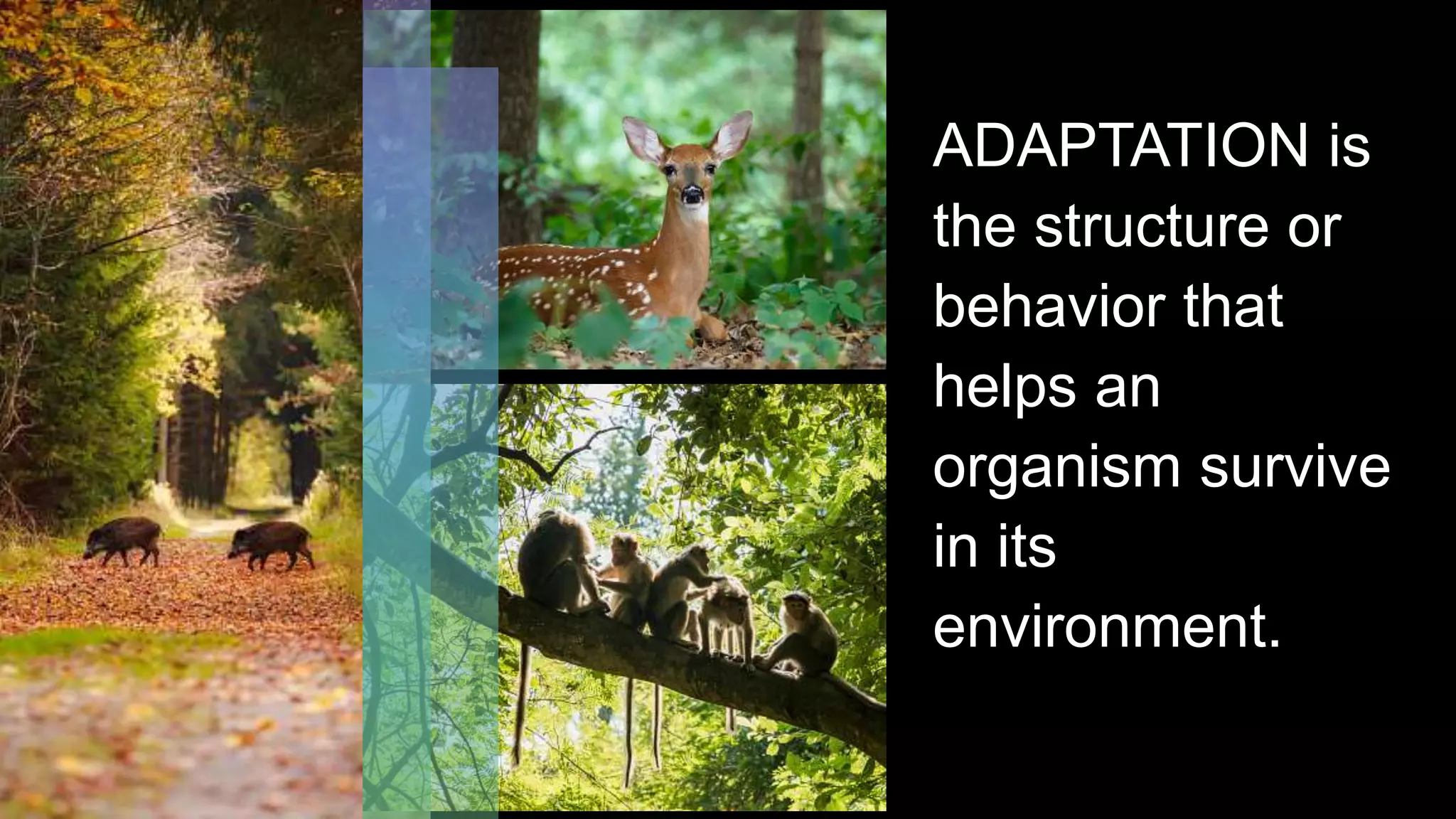
ADAPTATION is
the structure or
behavior that
helps an
organism survive
in its
environment.
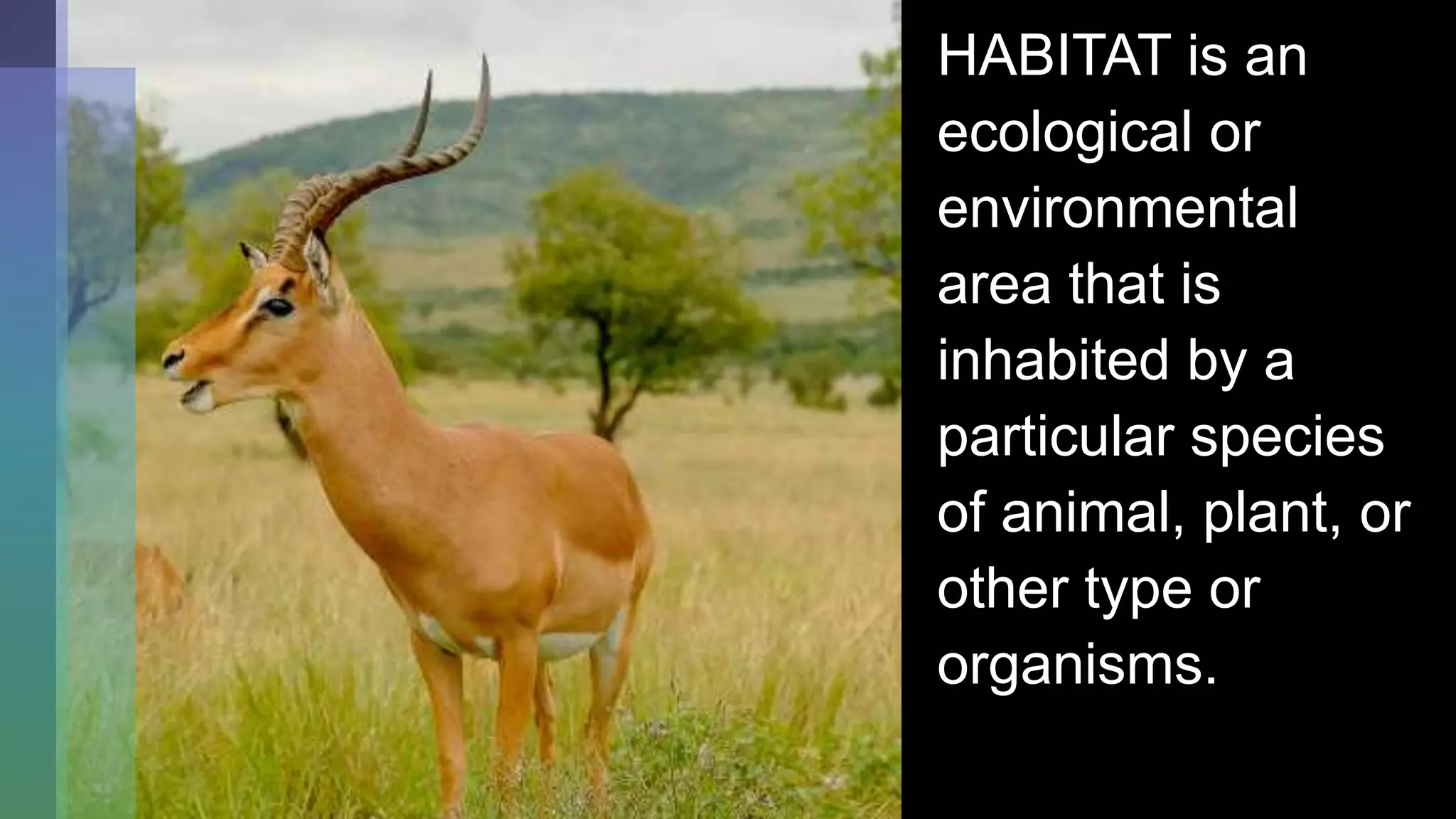
HABITAT is an
ecological or
environmental
area that is
inhabited by a
particular species
of animal, plant, or
other type or
organisms.
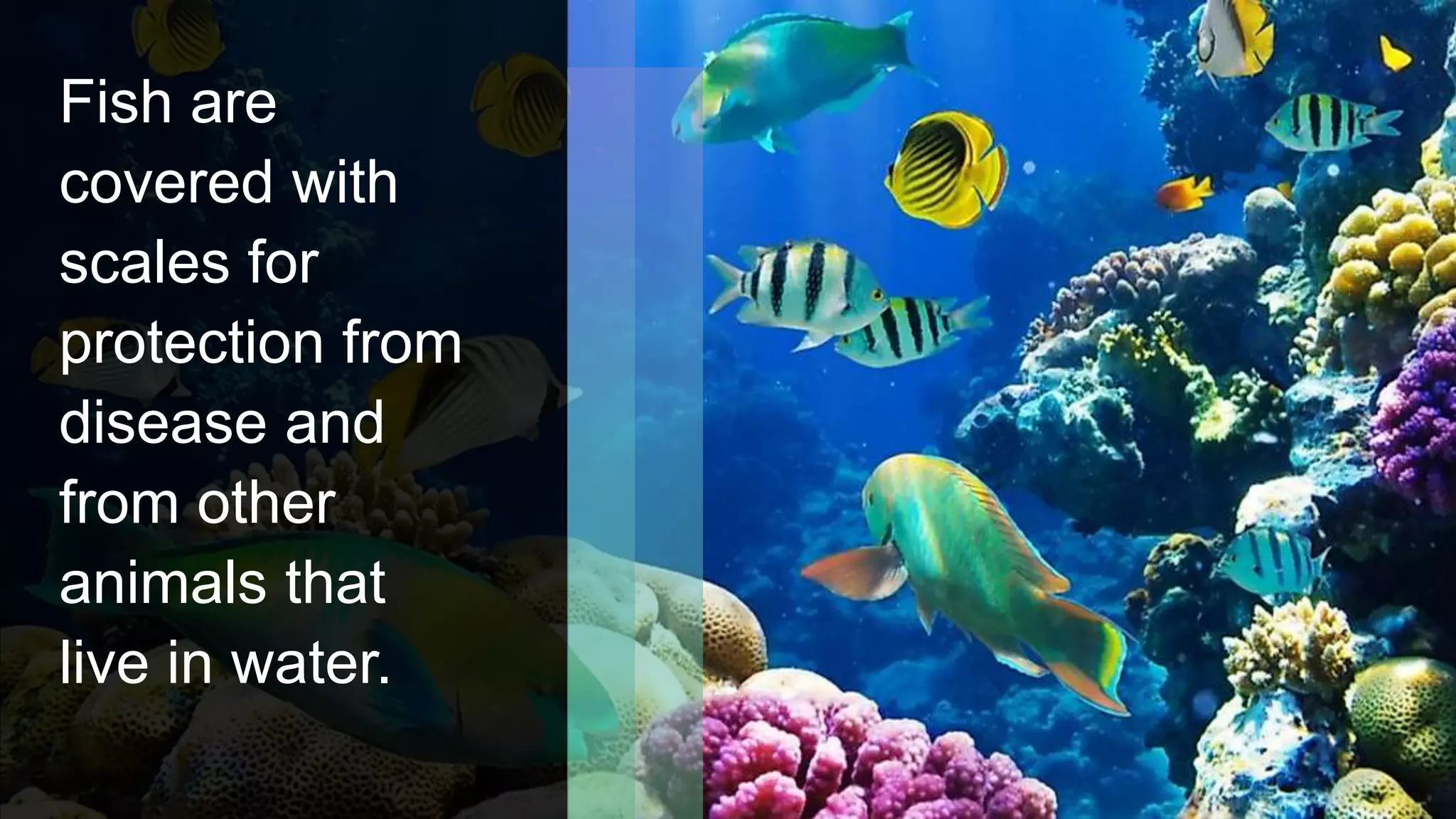
Fish are
covered with
scales for
protection from
disease and
from other
animals that
live in water.
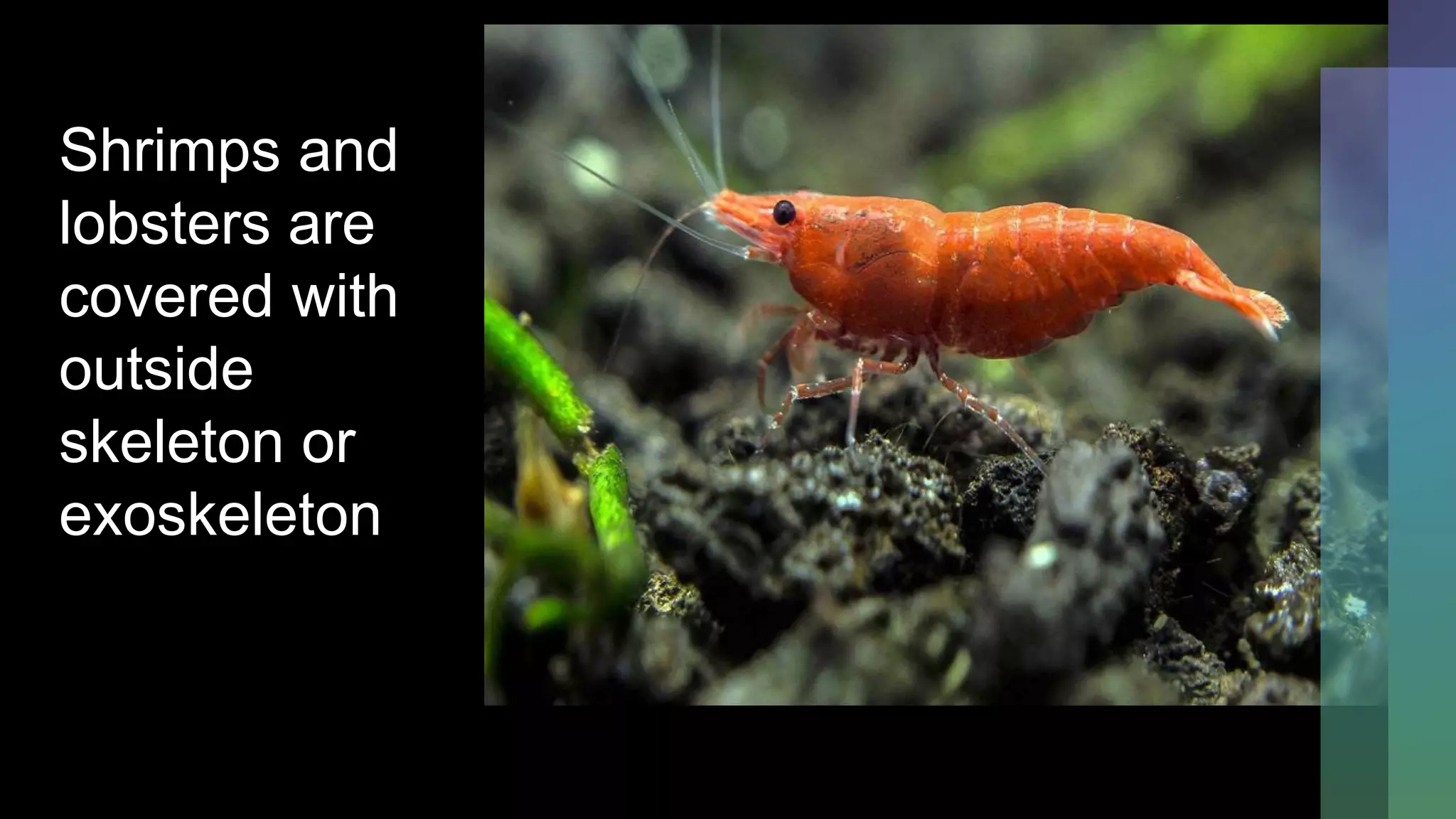
Shrimps and
lobsters are
covered with
outside
skeleton or
exoskeleton
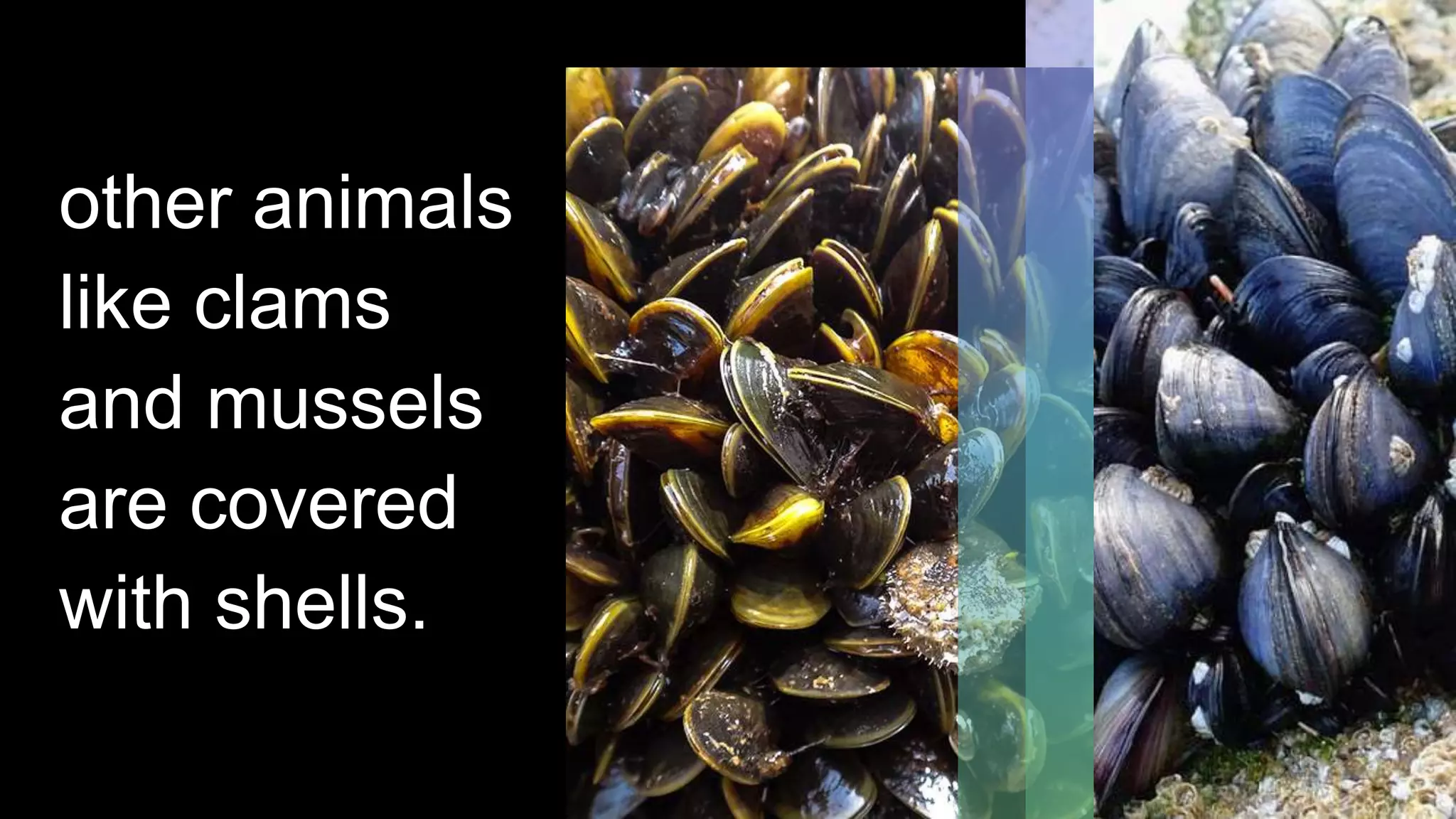
other animals
like clams
and mussels
are covered
with shells.
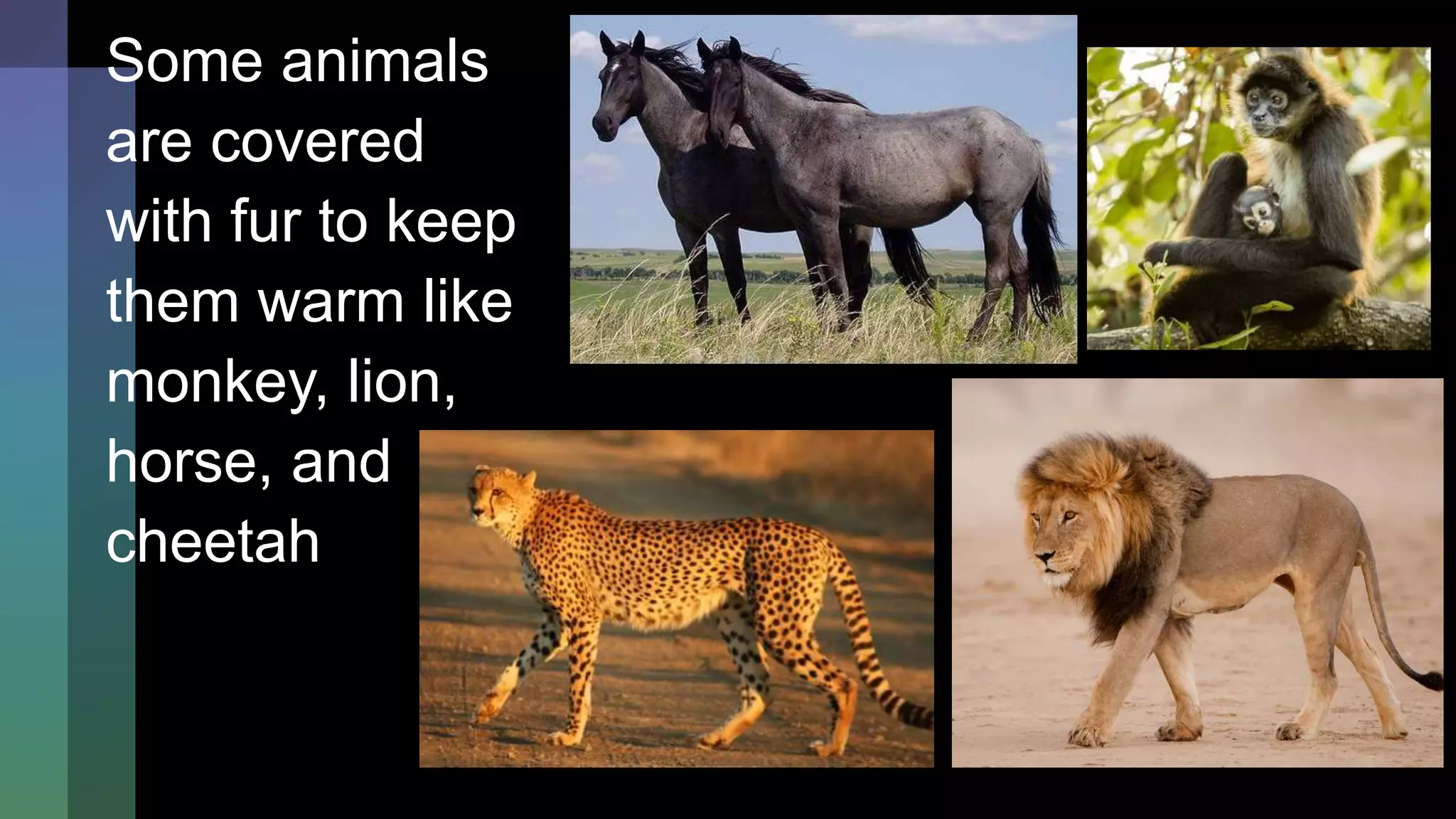
Some animals
are covered
with fur to keep
them warm like
monkey, lion,
horse, and
cheetah
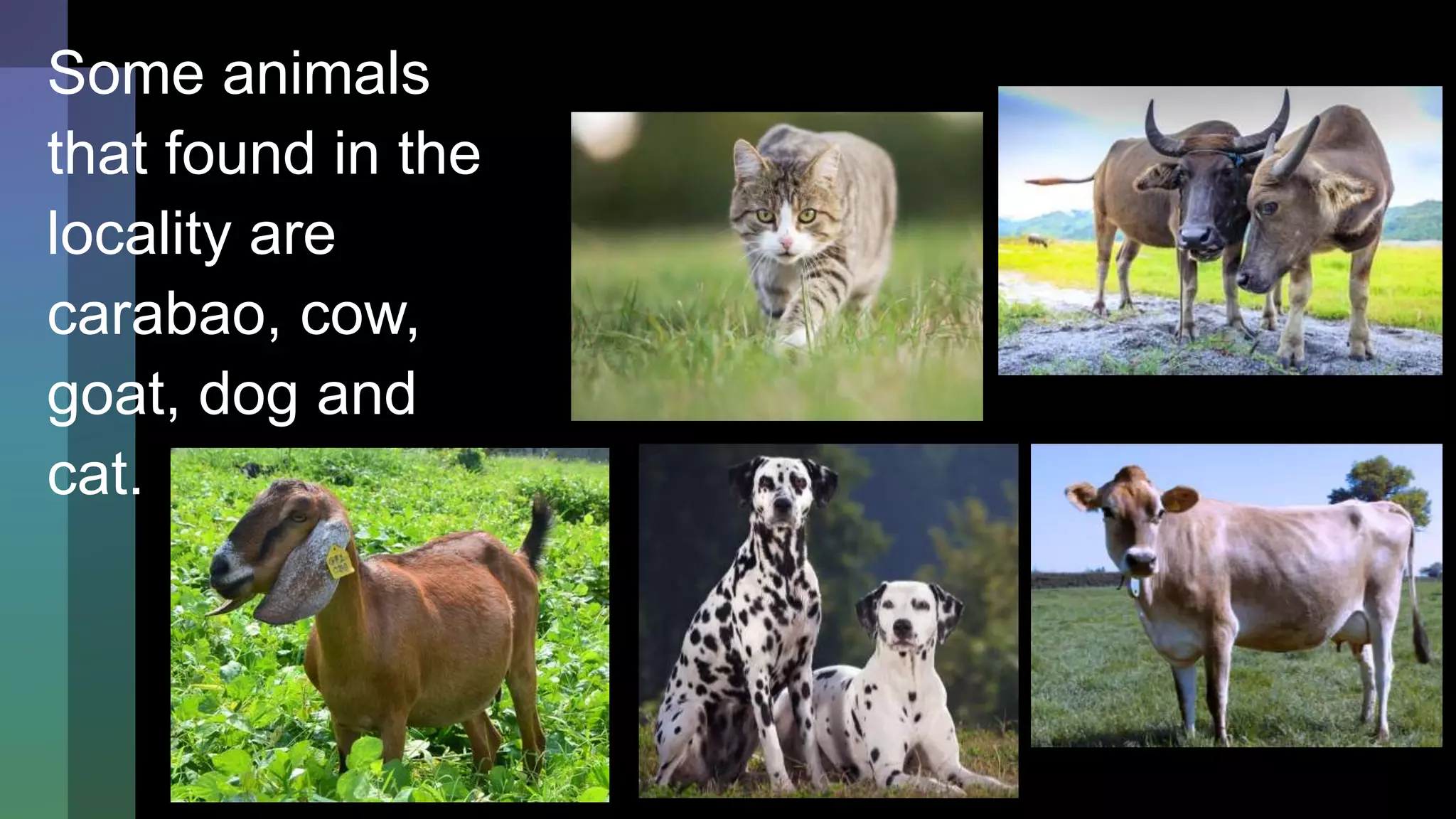
Some animals
that found in the
locality are
carabao, cow,
goat, dog and
cat.
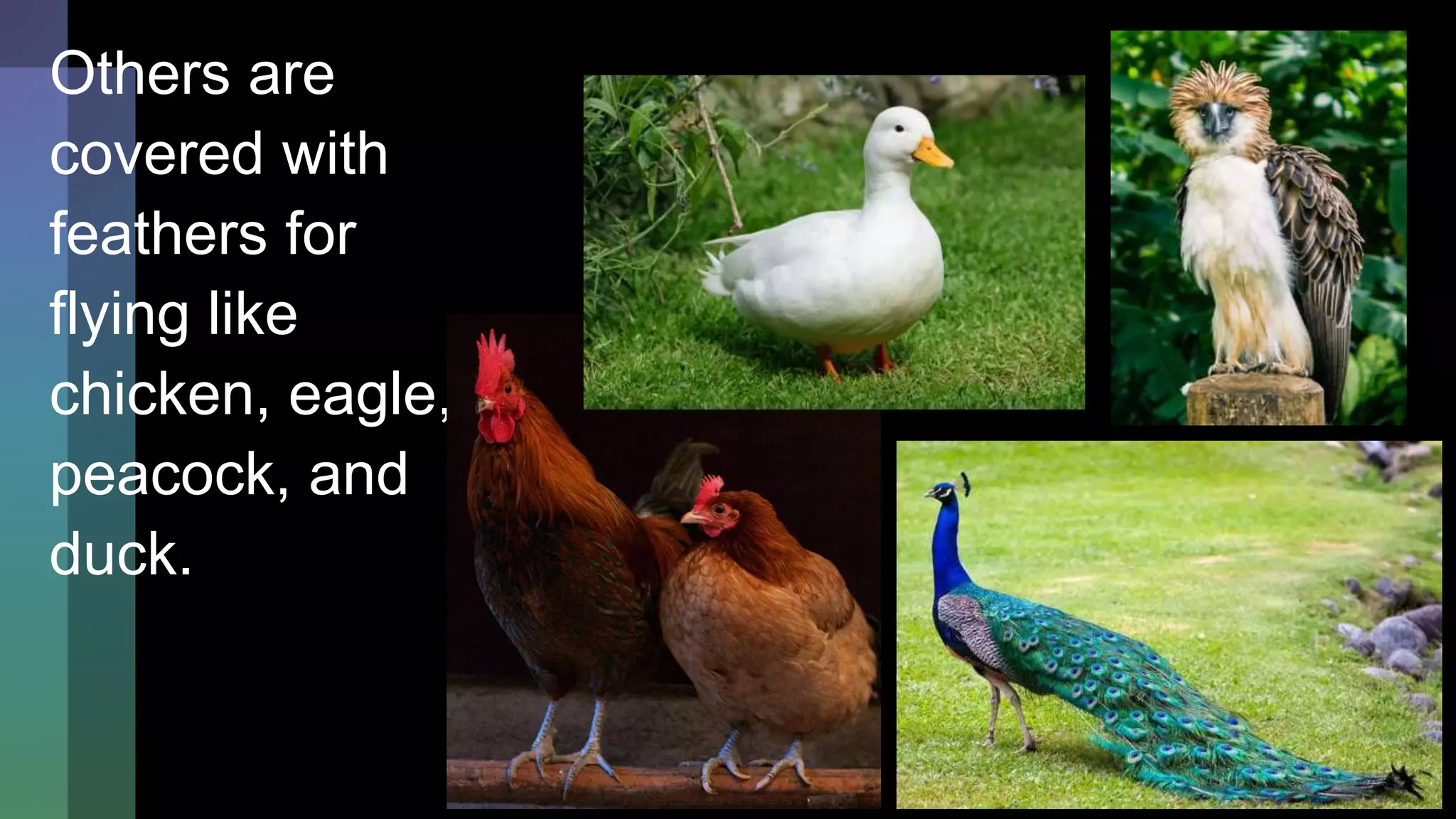
Others are
covered with
feathers for
flying like
chicken, eagle,
peacock, and
duck.
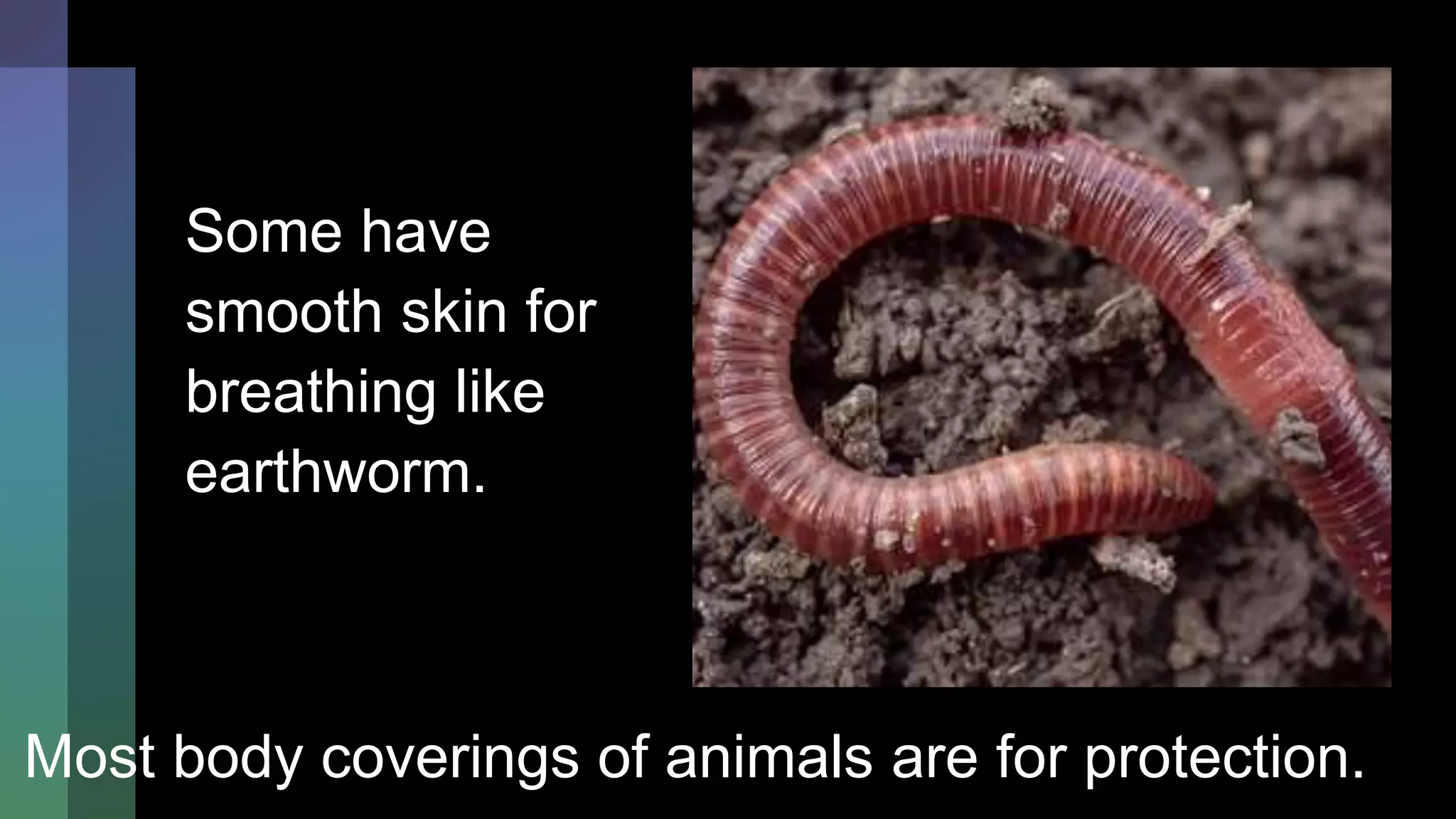
Some have
smooth skin for
breathing like
earthworm.
Most body coverings of animals are for protection.
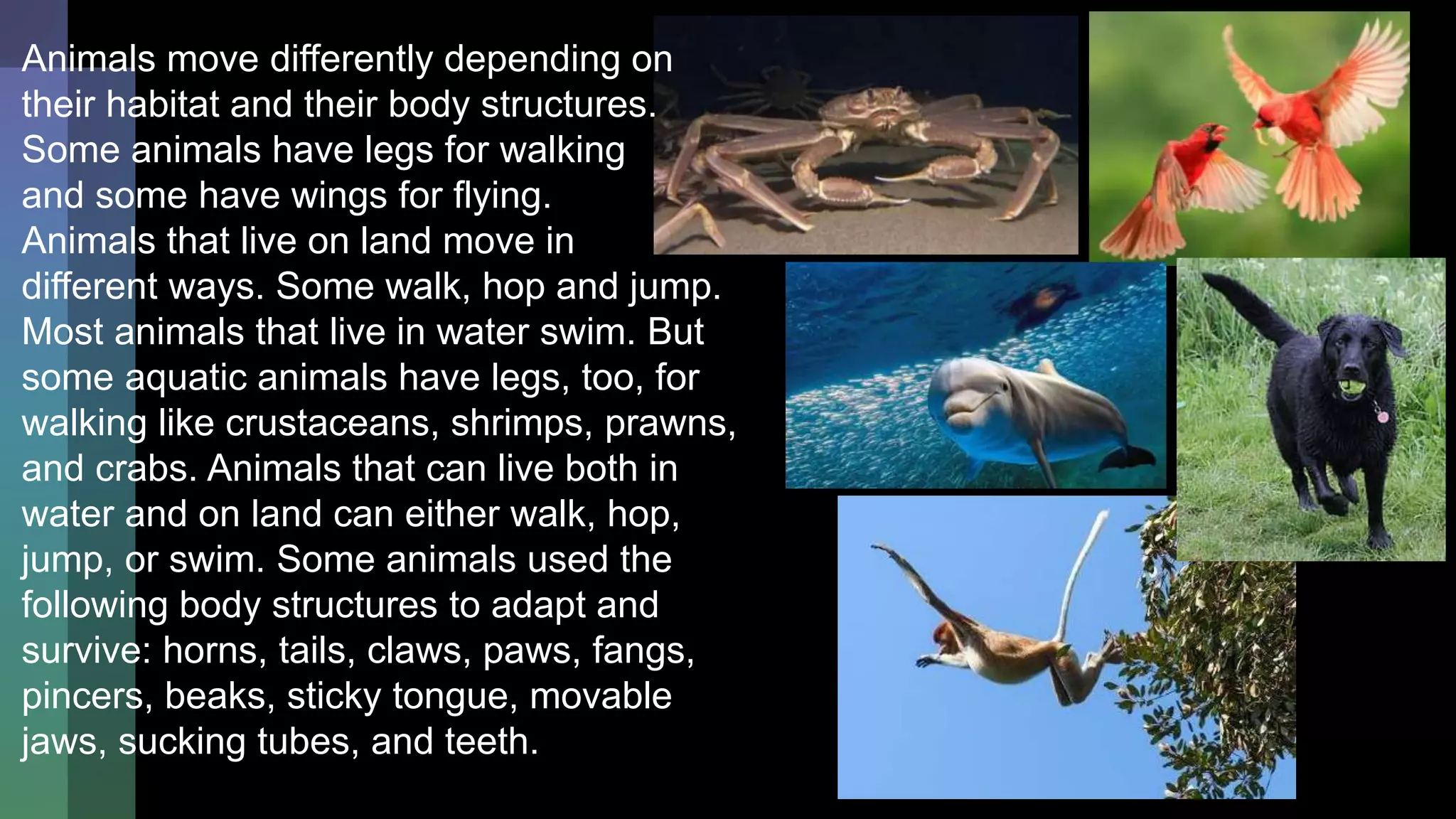
Animals move differently depending on
their habitat and their body structures.
Some animals have legs for walking
and some have wings for flying.
Animals that live on land move in
different ways. Some walk, hop and jump.
Most animals that live in water swim. But
some aquatic animals have legs, too, for
walking like crustaceans, shrimps, prawns,
and crabs. Animals that can live both in
water and on land can either walk, hop,
jump, or swim. Some animals used the
following body structures to adapt and
survive: horns, tails, claws, paws, fangs,
pincers, beaks, sticky tongue, movable
jaws, sucking tubes, and teeth.

BODY STRUCTURES THAT HELP ANIMALS ADAPT AND SURVIVE .pptx

  • 1.
    BODY STRUCTURES THAT HELPANIMALS ADAPT AND SURVIVE IN THEIR PARTICULAR HABITAT
  • 2.
    •Animals have bodystructures that help them adapt to their environment
  • 3.
    ADAPTATION is the structureor behavior that helps an organism survive in its environment.
  • 4.
    HABITAT is an ecologicalor environmental area that is inhabited by a particular species of animal, plant, or other type or organisms.
  • 5.
    Fish are covered with scalesfor protection from disease and from other animals that live in water.
  • 6.
    Shrimps and lobsters are coveredwith outside skeleton or exoskeleton
  • 7.
    other animals like clams andmussels are covered with shells.
  • 8.
    Some animals are covered withfur to keep them warm like monkey, lion, horse, and cheetah
  • 9.
    Some animals that foundin the locality are carabao, cow, goat, dog and cat.
  • 10.
    Others are covered with feathersfor flying like chicken, eagle, peacock, and duck.
  • 11.
    Some have smooth skinfor breathing like earthworm. Most body coverings of animals are for protection.
  • 12.
    Animals move differentlydepending on their habitat and their body structures. Some animals have legs for walking and some have wings for flying. Animals that live on land move in different ways. Some walk, hop and jump. Most animals that live in water swim. But some aquatic animals have legs, too, for walking like crustaceans, shrimps, prawns, and crabs. Animals that can live both in water and on land can either walk, hop, jump, or swim. Some animals used the following body structures to adapt and survive: horns, tails, claws, paws, fangs, pincers, beaks, sticky tongue, movable jaws, sucking tubes, and teeth.