

Speech craft…
YOU CAN MOVE
MOUNTAINS!
 Who makes speeches?
- List the people who make speeches?
 Who is the audience of speeches?
- List the people who listen to speeches
 What is the outcome of speeches?
 What did the speech cause the listeners to do?
THINK TIME!
 Lesson 1: Introduction
 What are Speeches?
 Formal & Informal Speeches
 Purpose of Speeches
 Format of Speeches
 Lesson 2: Speeches in Daily Life
 Speech-Writing in Life
 Speech-Writing in Paper 1
LESSON PLANS
 Two types. Formal and informal speeches. They differ in
their tone (serious or casual) and register (choice of
words).
Purpose of Speeches: speeches create interest
and…
 Build trust with an audience.
 Motivate/ inspire them
 Get them to take action or create awareness of a problem
TYPES OF SPEECHES
 Informal Speeches.
 No need for formal salutations
 Personal level, conveys feelings of speaker
 Personal views about an event: wedding, birthday, funeral
etc.
 Watch this speech…what can you tell about its
characteristics? Is it a formal or informal speech –
TYPES OF SPEECHES
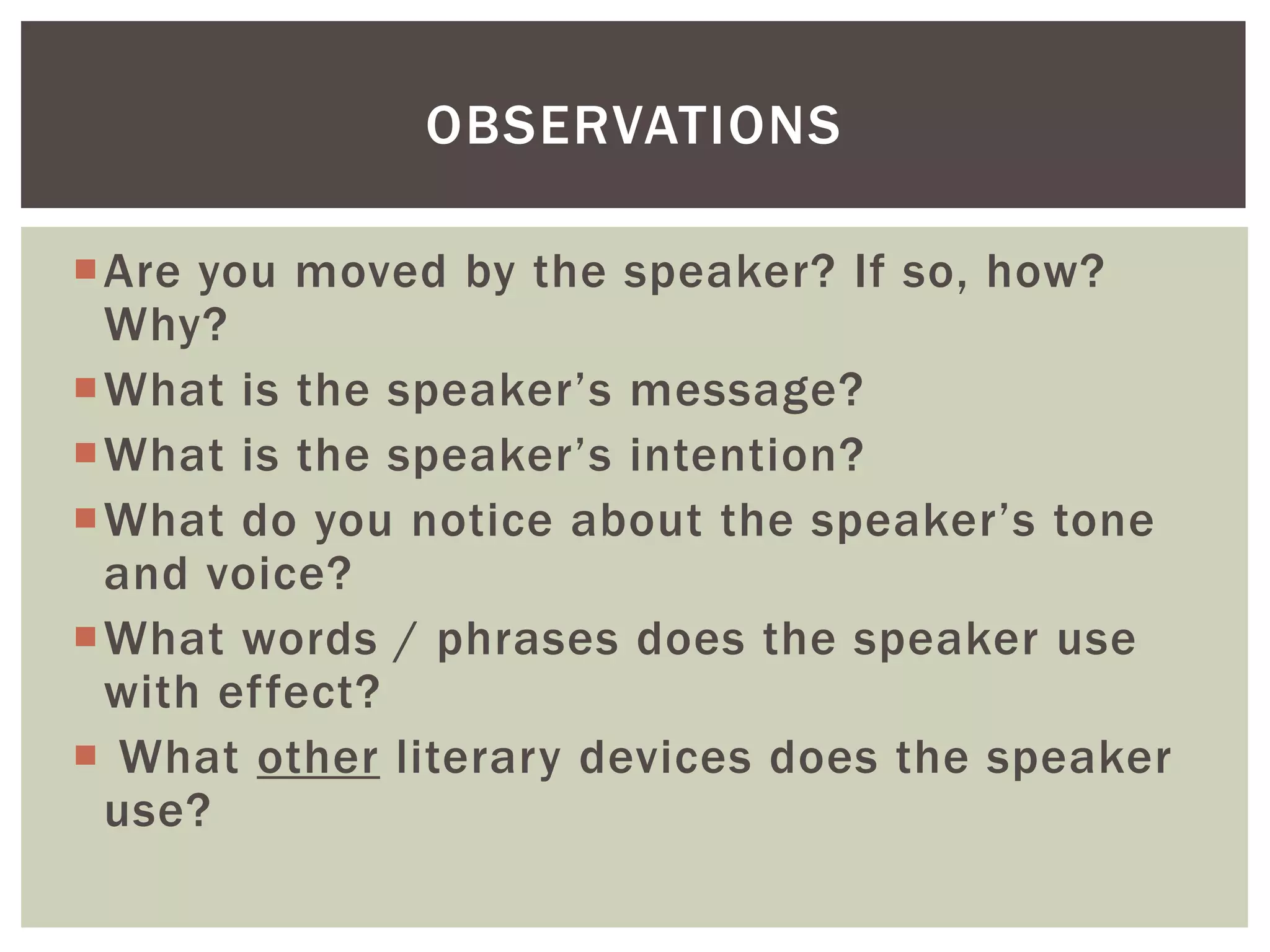
Are you moved by the speaker? If so, how?
Why?
What is the speaker’s message?
What is the speaker’s intention?
What do you notice about the speaker’s tone
and voice?
What words / phrases does the speaker use
with effect?
 What other literary devices does the speaker
use?
OBSERVATIONS
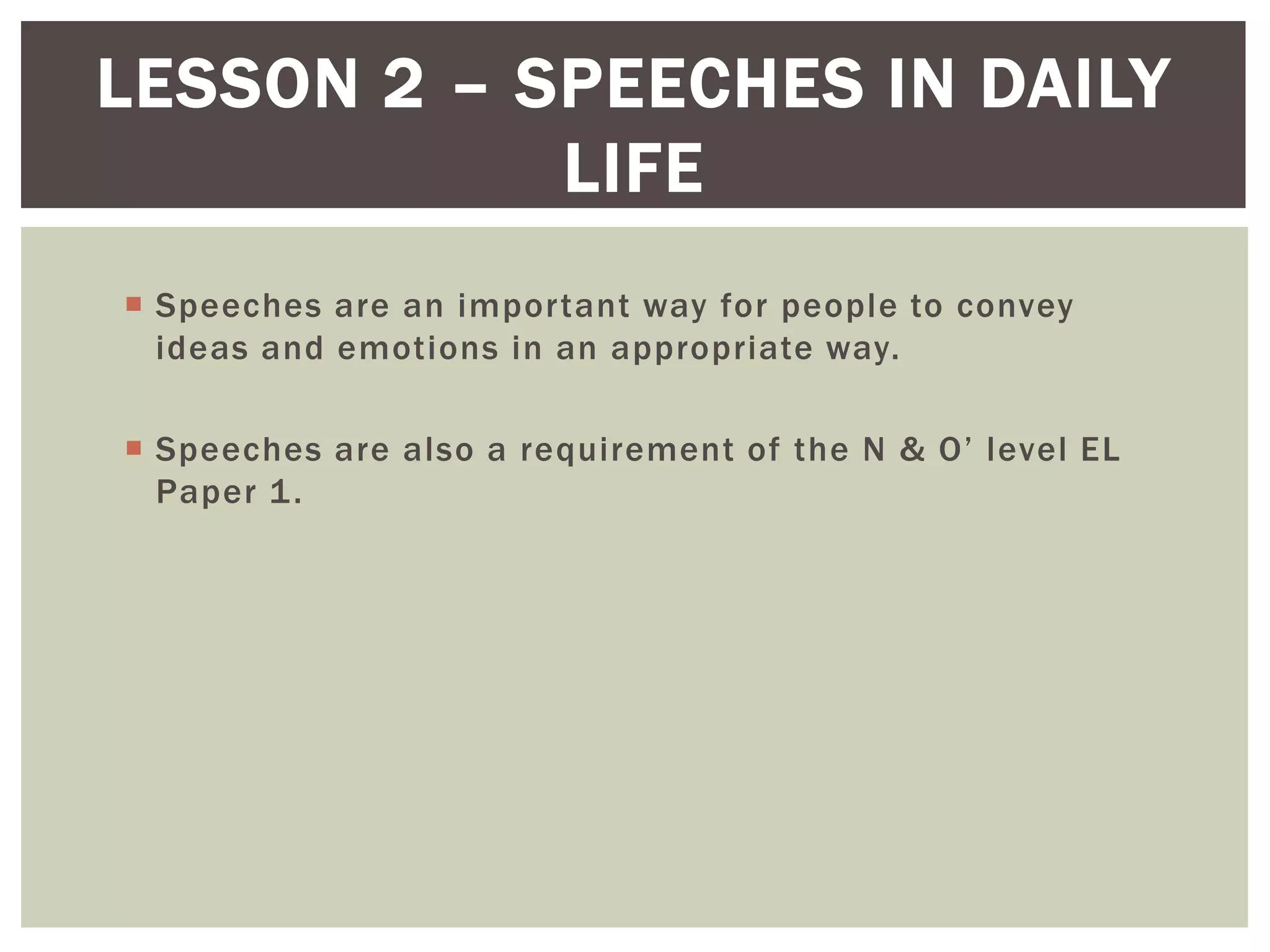
 Speeches are an important way for people to convey
ideas and emotions in an appropriate way.
 Speeches are also a requirement of the N & O’ level EL
Paper 1.
LESSON 2 – SPEECHES IN DAILY
LIFE
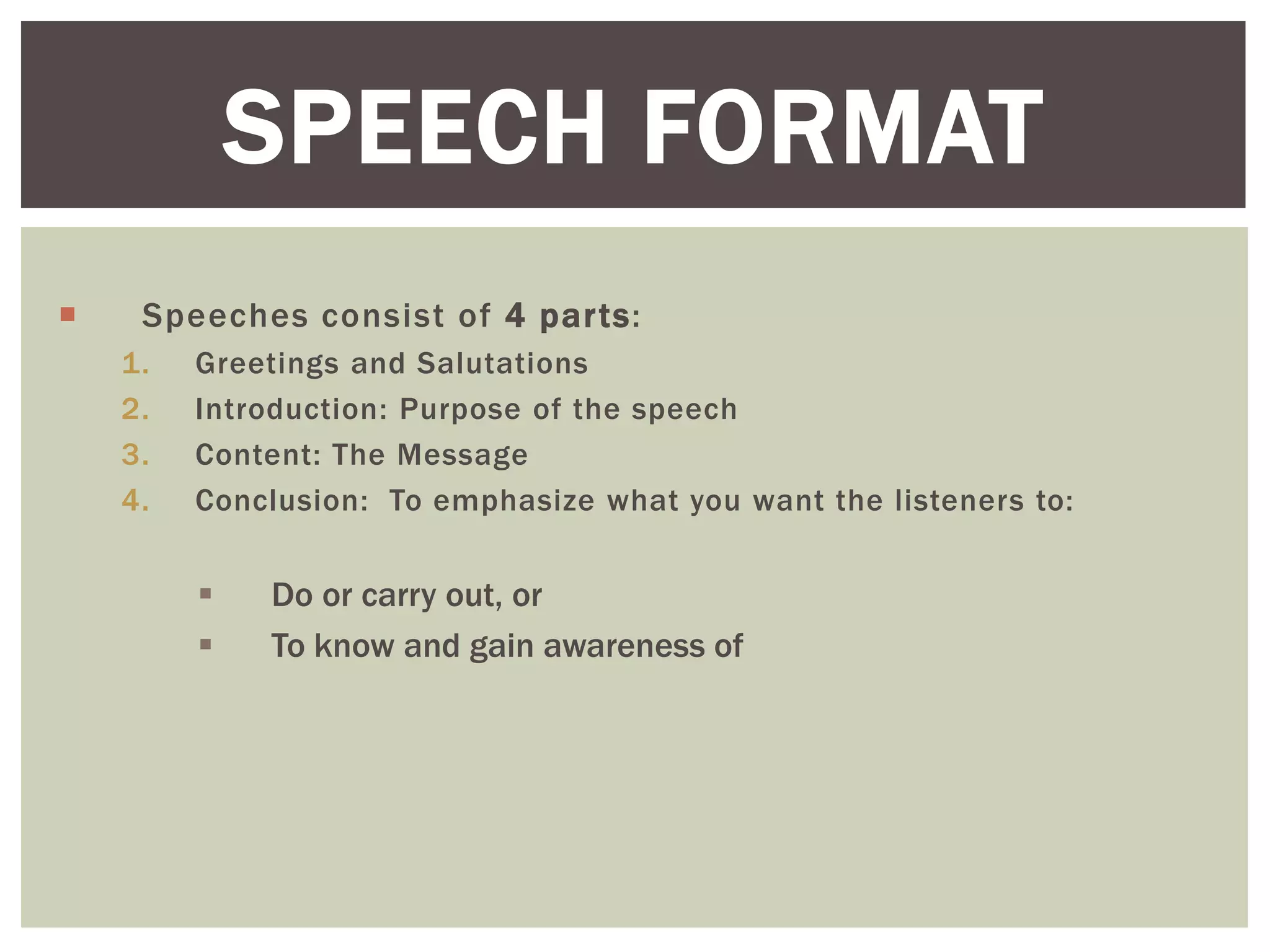
 Speeches consist of 4 parts:
1. Greetings and Salutations
2. Introduction: Purpose of the speech
3. Content: The Message
4. Conclusion: To emphasize what you want the listeners to:
 Do or carry out, or
 To know and gain awareness of
SPEECH FORMAT
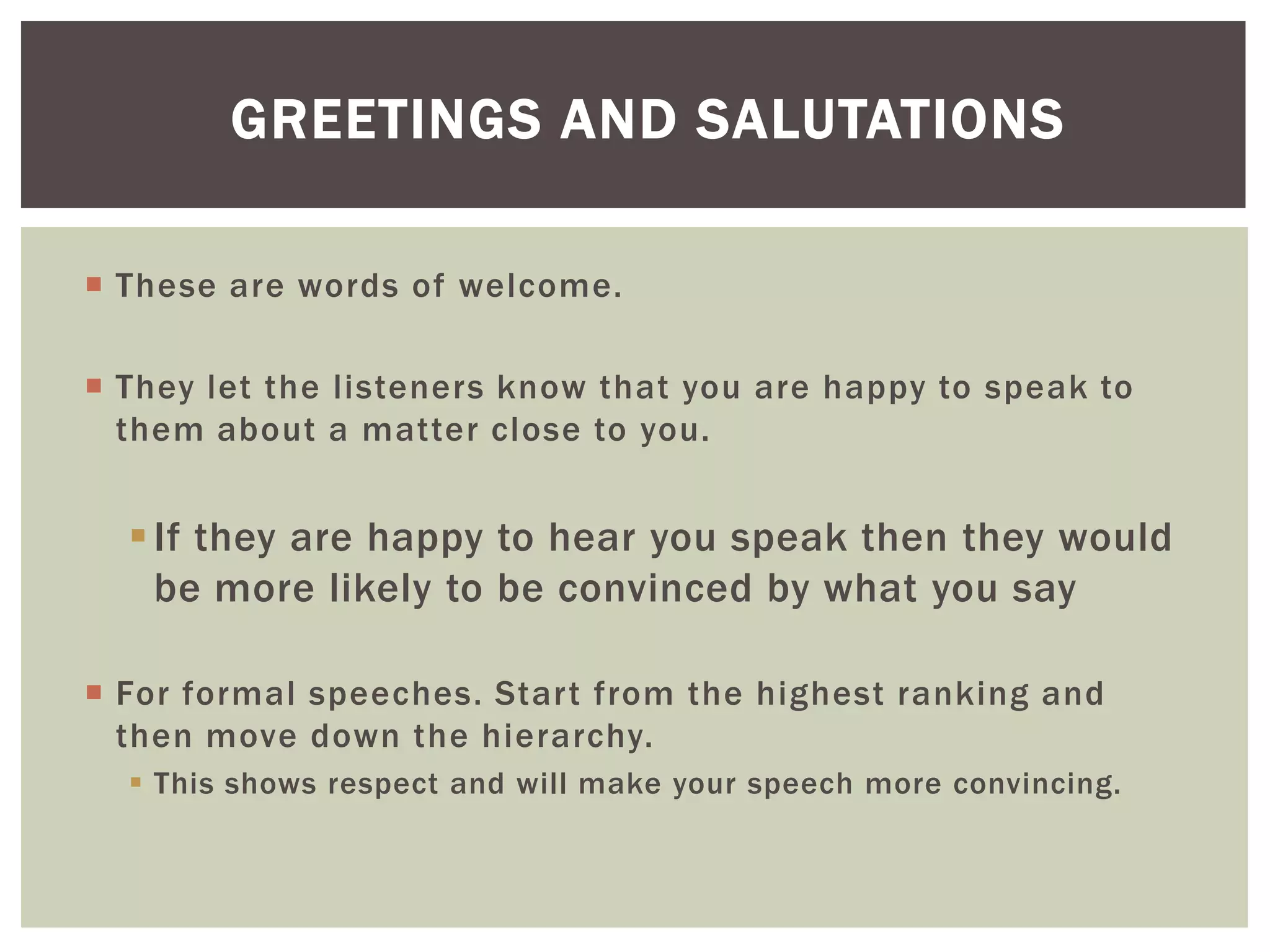
 These are words of welcome.
 They let the listeners know that you are happy to speak to
them about a matter close to you.
If they are happy to hear you speak then they would
be more likely to be convinced by what you say
 For formal speeches. Start from the highest ranking and
then move down the hierarchy.
 This shows respect and will make your speech more convincing.
GREETINGS AND SALUTATIONS
 The introduction must establish:
 Who the speaker is
 What is the purpose of speaking to that particular audience.
 You must select appropriate language to enable your message
to be understood.
INTRODUCTION: PURPOSE OF
SPEECH
 This is the heart of the speech. Expand on the purpose of the
speech.
 This section must contain:
 Main points in support of the purpose.
 Supporting evidence to persuade listeners.
 Some humor is allowed - where appropriate (inappropriate humor
reduces the credibility of the speaker)
CONTENT: MESSAGE OF THE
SPEECH
 Repeat the main ideas of your message!
 Summarize the key ideas of your speech
 Emphasize what you need the listeners to do
 Or What you want from them.
CONCLUSION: DRIVING HOME THE
POINT
Practice
Speech
WritingSPEECHES
You are a student sports CCA promoter. The
school authorities have informed the student
council that the school will have to stop
funding your CCA due to lack of funds and
because the CCA has not produced any
results.
Students do not think this is a good idea.
They have given you feedback on the matter
via e-mails.
The principal has allowed you to speak with
school leaders to try to convince them to
keep your Sports CCA and suggest ways of
funding your CCA without requiring school
funds.
PAIR WORK
 The speech should contain the following information:
 What are the benefits of keeping your sports CCA.
 What are some of the ways the CCA could support itself without
relying on school funds.
 What would be the negative consequences of shutting down this
sports CCA.
PAIR WORK
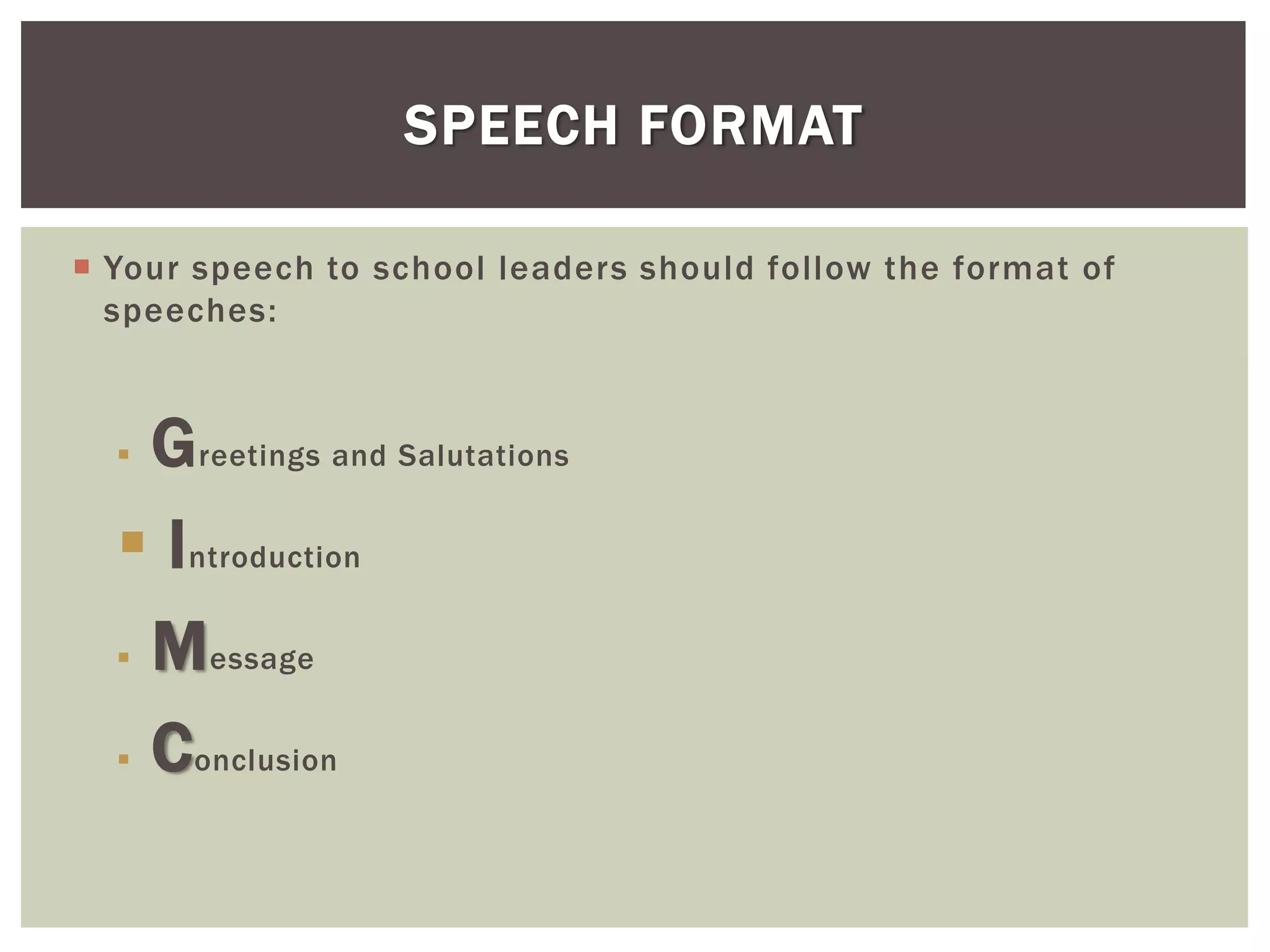
 Your speech to school leaders should follow the format of
speeches:
 Greetings and Salutations
 Introduction
 Message
 Conclusion
SPEECH FORMAT
 Each team has to select a presenter.
 The presenter has 2 minutes to present the outline of the
speech that was developed by the team.
LET’S HEAR IT!

Bmc o&n english_language_composition(situational writing)(speeches)(slideshare)

  • 1.
    Speech craft… YOU CANMOVE MOUNTAINS!
  • 2.
     Who makesspeeches? - List the people who make speeches?  Who is the audience of speeches? - List the people who listen to speeches  What is the outcome of speeches?  What did the speech cause the listeners to do? THINK TIME!
  • 3.
     Lesson 1:Introduction  What are Speeches?  Formal & Informal Speeches  Purpose of Speeches  Format of Speeches  Lesson 2: Speeches in Daily Life  Speech-Writing in Life  Speech-Writing in Paper 1 LESSON PLANS
  • 4.
     Two types.Formal and informal speeches. They differ in their tone (serious or casual) and register (choice of words). Purpose of Speeches: speeches create interest and…  Build trust with an audience.  Motivate/ inspire them  Get them to take action or create awareness of a problem TYPES OF SPEECHES
  • 5.
     Informal Speeches. No need for formal salutations  Personal level, conveys feelings of speaker  Personal views about an event: wedding, birthday, funeral etc.  Watch this speech…what can you tell about its characteristics? Is it a formal or informal speech – TYPES OF SPEECHES
  • 6.
    Are you movedby the speaker? If so, how? Why? What is the speaker’s message? What is the speaker’s intention? What do you notice about the speaker’s tone and voice? What words / phrases does the speaker use with effect?  What other literary devices does the speaker use? OBSERVATIONS
  • 7.
     Speeches arean important way for people to convey ideas and emotions in an appropriate way.  Speeches are also a requirement of the N & O’ level EL Paper 1. LESSON 2 – SPEECHES IN DAILY LIFE
  • 8.
     Speeches consistof 4 parts: 1. Greetings and Salutations 2. Introduction: Purpose of the speech 3. Content: The Message 4. Conclusion: To emphasize what you want the listeners to:  Do or carry out, or  To know and gain awareness of SPEECH FORMAT
  • 9.
     These arewords of welcome.  They let the listeners know that you are happy to speak to them about a matter close to you. If they are happy to hear you speak then they would be more likely to be convinced by what you say  For formal speeches. Start from the highest ranking and then move down the hierarchy.  This shows respect and will make your speech more convincing. GREETINGS AND SALUTATIONS
  • 10.
     The introductionmust establish:  Who the speaker is  What is the purpose of speaking to that particular audience.  You must select appropriate language to enable your message to be understood. INTRODUCTION: PURPOSE OF SPEECH
  • 11.
     This isthe heart of the speech. Expand on the purpose of the speech.  This section must contain:  Main points in support of the purpose.  Supporting evidence to persuade listeners.  Some humor is allowed - where appropriate (inappropriate humor reduces the credibility of the speaker) CONTENT: MESSAGE OF THE SPEECH
  • 12.
     Repeat themain ideas of your message!  Summarize the key ideas of your speech  Emphasize what you need the listeners to do  Or What you want from them. CONCLUSION: DRIVING HOME THE POINT
  • 13.
  • 14.
    You are astudent sports CCA promoter. The school authorities have informed the student council that the school will have to stop funding your CCA due to lack of funds and because the CCA has not produced any results. Students do not think this is a good idea. They have given you feedback on the matter via e-mails. The principal has allowed you to speak with school leaders to try to convince them to keep your Sports CCA and suggest ways of funding your CCA without requiring school funds. PAIR WORK
  • 15.
     The speechshould contain the following information:  What are the benefits of keeping your sports CCA.  What are some of the ways the CCA could support itself without relying on school funds.  What would be the negative consequences of shutting down this sports CCA. PAIR WORK
  • 16.
     Your speechto school leaders should follow the format of speeches:  Greetings and Salutations  Introduction  Message  Conclusion SPEECH FORMAT
  • 17.
     Each teamhas to select a presenter.  The presenter has 2 minutes to present the outline of the speech that was developed by the team. LET’S HEAR IT!