Greetings and
Introductions
Lesson 1
Guidelines to an Effective Greeting
What you do and must say in the first few precious
moments of meeting someone is crucial, if you are to
gain and hold their attention.
•
•
•
•
•
•
•

:

Smile
Introduce yourself / ask for your colleague’s name.
Speak and act sincerely.
Talk about things you know.
Ask non-threatening questions
Look at the other speaker attentively.
Compliment and thank your listener.
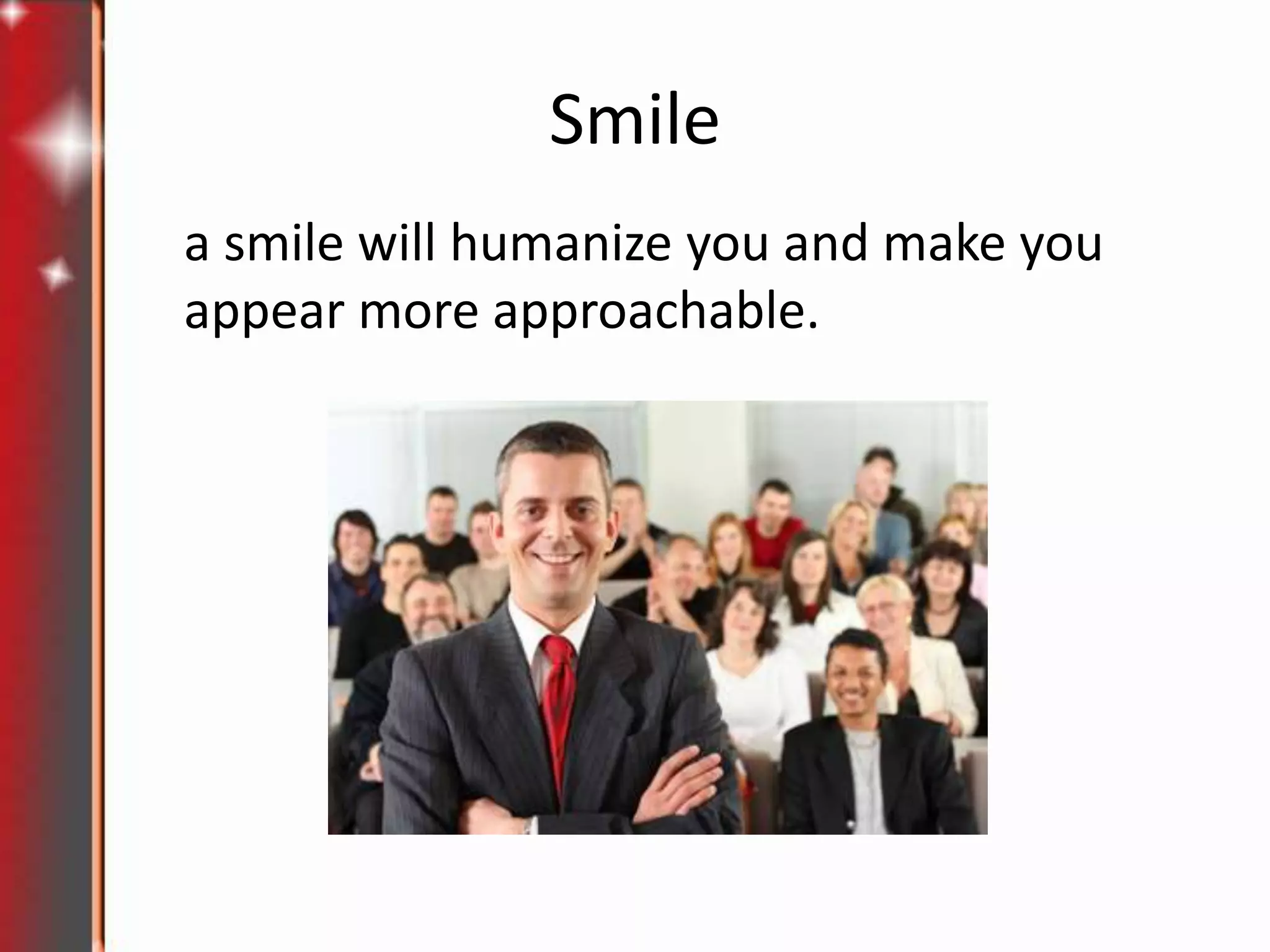
Smile
a smile will humanize you and make you
appear more approachable.
Positive energy
•
•
•
•

smile makes you real
smile always looks good
smiling can be a sign of a success person
smiling is contagious
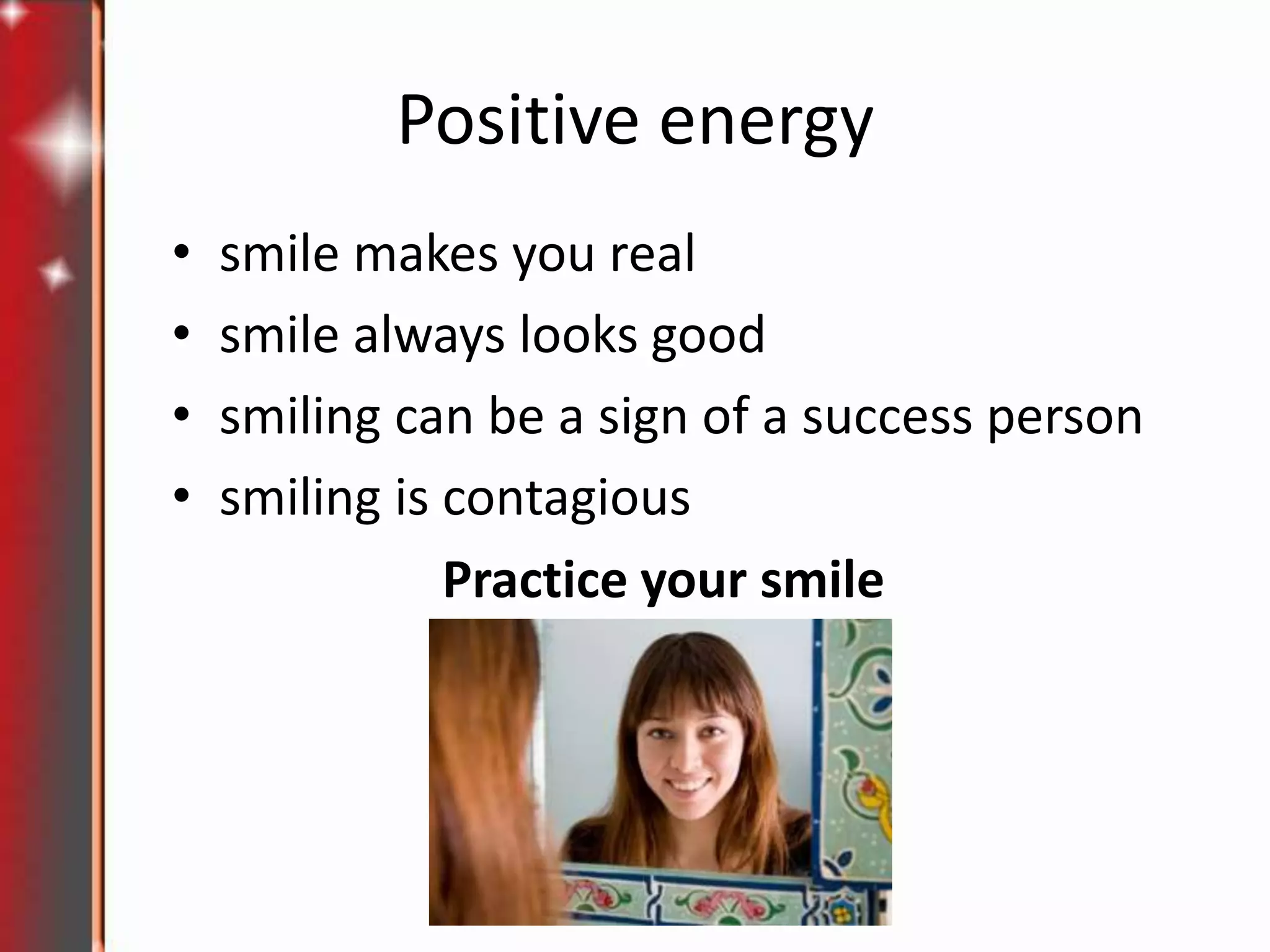
Practice your smile
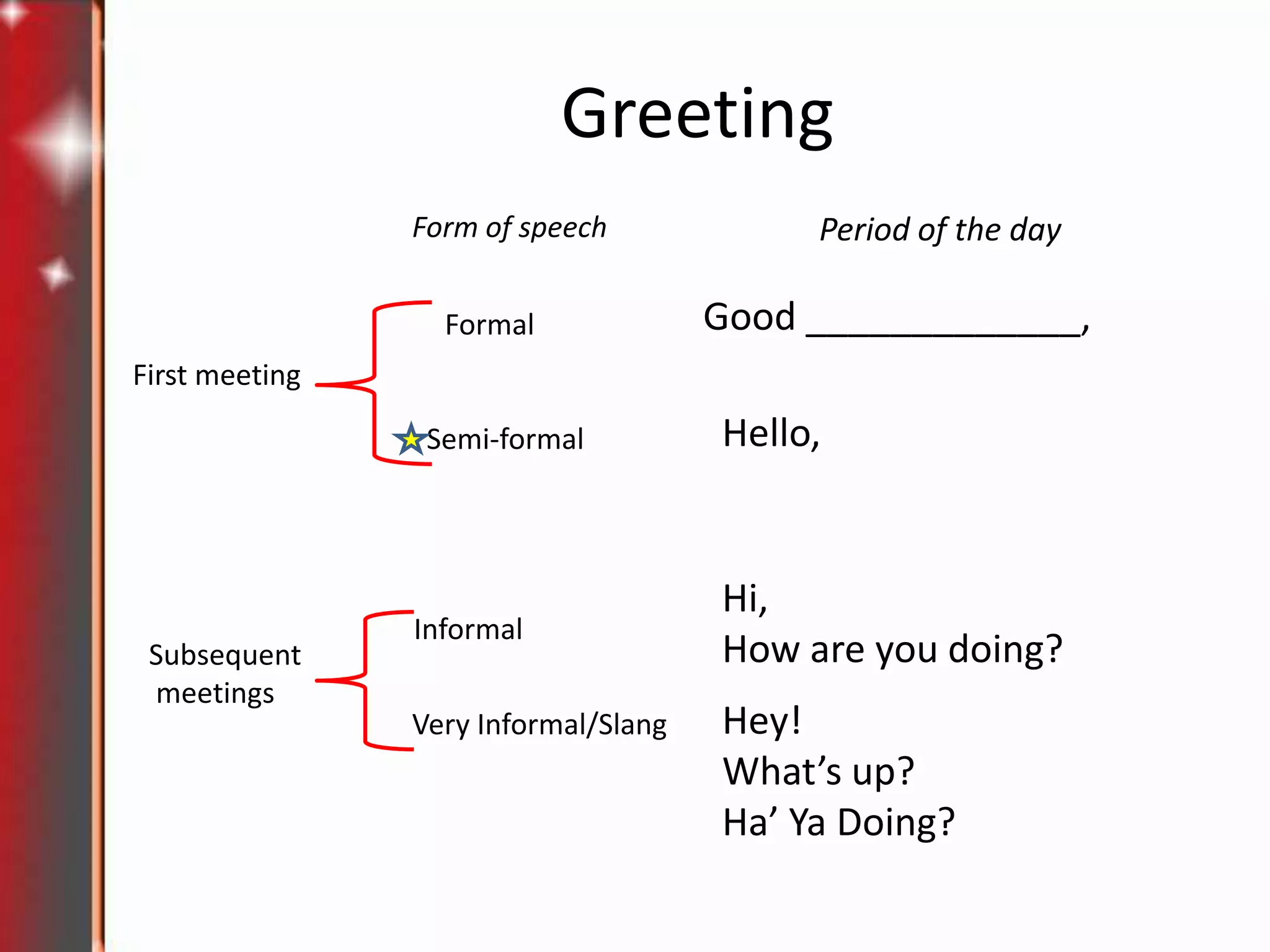
Greeting
Form of speech
Formal

Period of the day

Good _____________,

First meeting
Semi-formal

Subsequent
meetings

Informal
Very Informal/Slang

Hello,

Hi,
How are you doing?
Hey!
What’s up?
Ha’ Ya Doing?
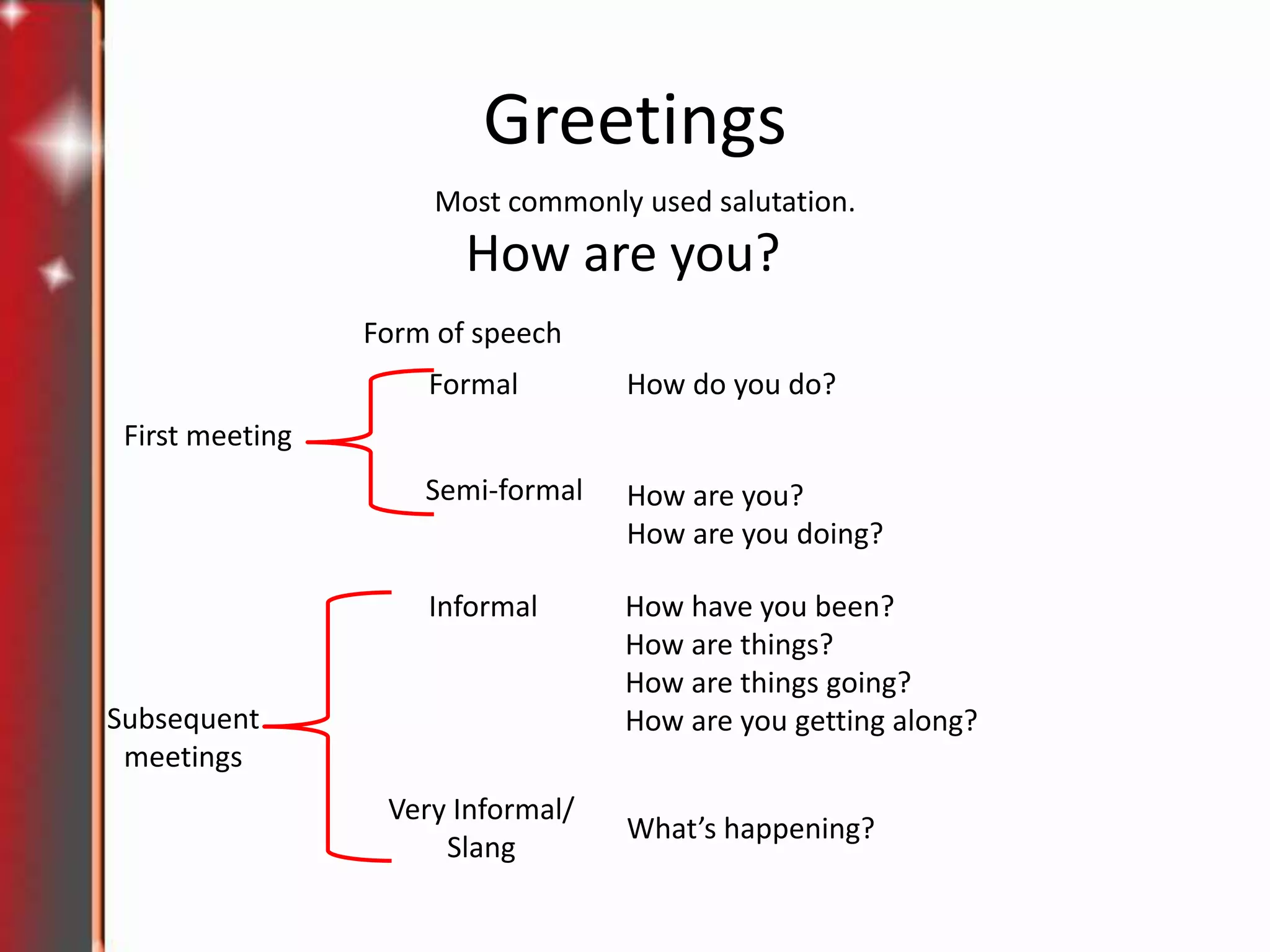
Greetings
Most commonly used salutation.

How are you?
Form of speech
Formal

How do you do?

Semi-formal

How are you?
How are you doing?

Informal

How have you been?
How are things?
How are things going?
How are you getting along?

First meeting

Subsequent
meetings
Very Informal/
Slang

What’s happening?
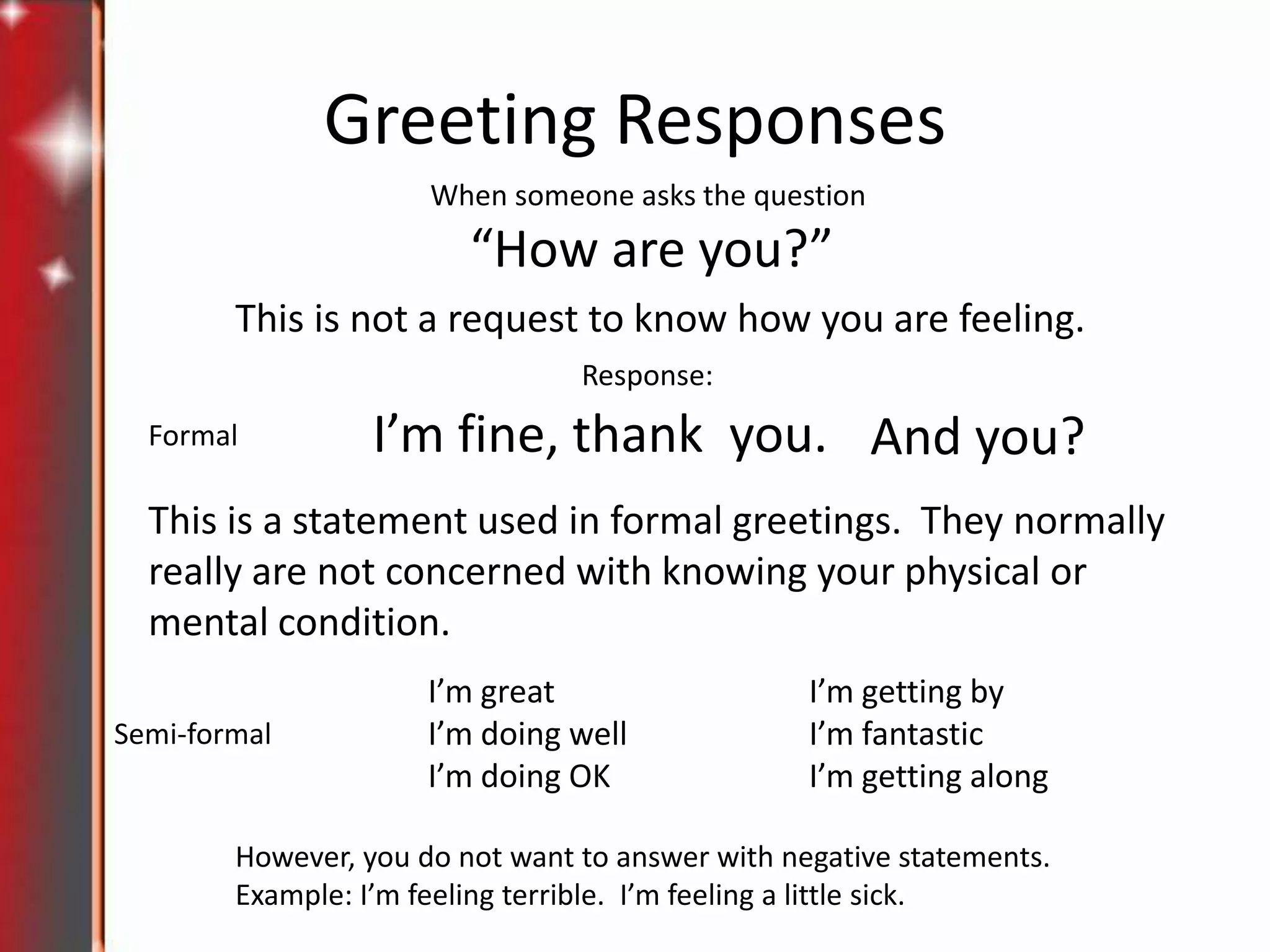
Greeting Responses
When someone asks the question

“How are you?”
This is not a request to know how you are feeling.
Response:
Formal

I’m fine, thank you. And you?

This is a statement used in formal greetings. They normally
really are not concerned with knowing your physical or
mental condition.
Semi-formal

I’m great
I’m doing well
I’m doing OK

I’m getting by
I’m fantastic
I’m getting along

However, you do not want to answer with negative statements.
Example: I’m feeling terrible. I’m feeling a little sick.
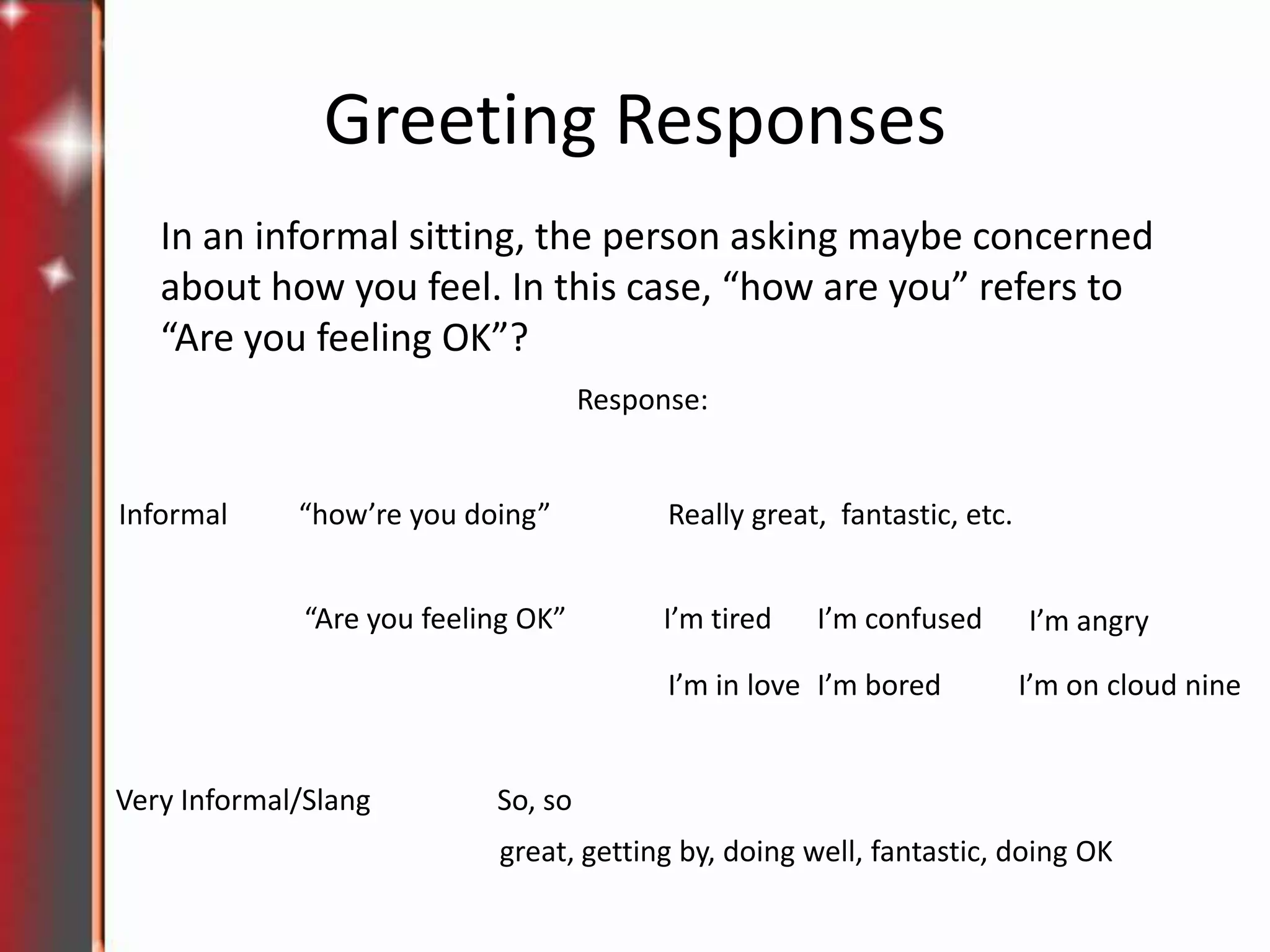
Greeting Responses
In an informal sitting, the person asking maybe concerned
about how you feel. In this case, “how are you” refers to
“Are you feeling OK”?
Response:

Informal

“how’re you doing”

Really great, fantastic, etc.

“Are you feeling OK”

I’m tired

I’m confused

I’m in love I’m bored

Very Informal/Slang

I’m angry
I’m on cloud nine

So, so
great, getting by, doing well, fantastic, doing OK
End of Lesson
Next Lesson
Introducing yourself

Lesson1 Greetings and Introductions

  • 1.
  • 2.
    Guidelines to anEffective Greeting What you do and must say in the first few precious moments of meeting someone is crucial, if you are to gain and hold their attention. • • • • • • • : Smile Introduce yourself / ask for your colleague’s name. Speak and act sincerely. Talk about things you know. Ask non-threatening questions Look at the other speaker attentively. Compliment and thank your listener.
  • 3.
    Smile a smile willhumanize you and make you appear more approachable.
  • 4.
    Positive energy • • • • smile makesyou real smile always looks good smiling can be a sign of a success person smiling is contagious Practice your smile
  • 5.
    Greeting Form of speech Formal Periodof the day Good _____________, First meeting Semi-formal Subsequent meetings Informal Very Informal/Slang Hello, Hi, How are you doing? Hey! What’s up? Ha’ Ya Doing?
  • 6.
    Greetings Most commonly usedsalutation. How are you? Form of speech Formal How do you do? Semi-formal How are you? How are you doing? Informal How have you been? How are things? How are things going? How are you getting along? First meeting Subsequent meetings Very Informal/ Slang What’s happening?
  • 7.
    Greeting Responses When someoneasks the question “How are you?” This is not a request to know how you are feeling. Response: Formal I’m fine, thank you. And you? This is a statement used in formal greetings. They normally really are not concerned with knowing your physical or mental condition. Semi-formal I’m great I’m doing well I’m doing OK I’m getting by I’m fantastic I’m getting along However, you do not want to answer with negative statements. Example: I’m feeling terrible. I’m feeling a little sick.
  • 8.
    Greeting Responses In aninformal sitting, the person asking maybe concerned about how you feel. In this case, “how are you” refers to “Are you feeling OK”? Response: Informal “how’re you doing” Really great, fantastic, etc. “Are you feeling OK” I’m tired I’m confused I’m in love I’m bored Very Informal/Slang I’m angry I’m on cloud nine So, so great, getting by, doing well, fantastic, doing OK
  • 9.
    End of Lesson NextLesson Introducing yourself