
Mussels   Development of best practice and new
          technology for grading, handling, transportation,

  Alive   conditioning and storage of mussels for SMEs in
          the European mussel industry
Mussels can survive for extended
periods out of water and are
traded for human consumption as
live animals
The increased production and
the development of rapid
ground and air transport have
improved the supply of live
product to markets
worldwide
However, live marketing
is a complex issue
Following harvest, cultured mussels
are washed, declumped, and
graded by size
After grading and if bacteria
loads in the harvesting area are
above the legislated level,
mussels must also be either


re-layed          depurated
Shellfish harvested from polluted areas
           can be placed in clean areas (areas free of
Relaying   microbiological contamination) to allow
           shellfish to cleanse or purge themselves
Boost
              Filtering Activity
Clean water


                                                Avoid


                                   Depuration
                                                recontamination
                                                re-watering process in clean
                                                water that promotes the
                                                purging of some bacteria
                                                from the mussels.
Boost
              Filtering Activity
Clean water


                                                Avoid


                                   Depuration
                                                recontamination
                                                re-watering process in clean
                                                water that promotes the
                                                purging of some bacteria
                                                from the mussels.
...after being relayed or
 depurated mussels are once
again declumped, debyssed and
then packed and transported
Transport out of water
can take between 24 and
48 hours
Once out of water mussels
gape and loose water


                            Gaping mussel
                            Gaping mussel
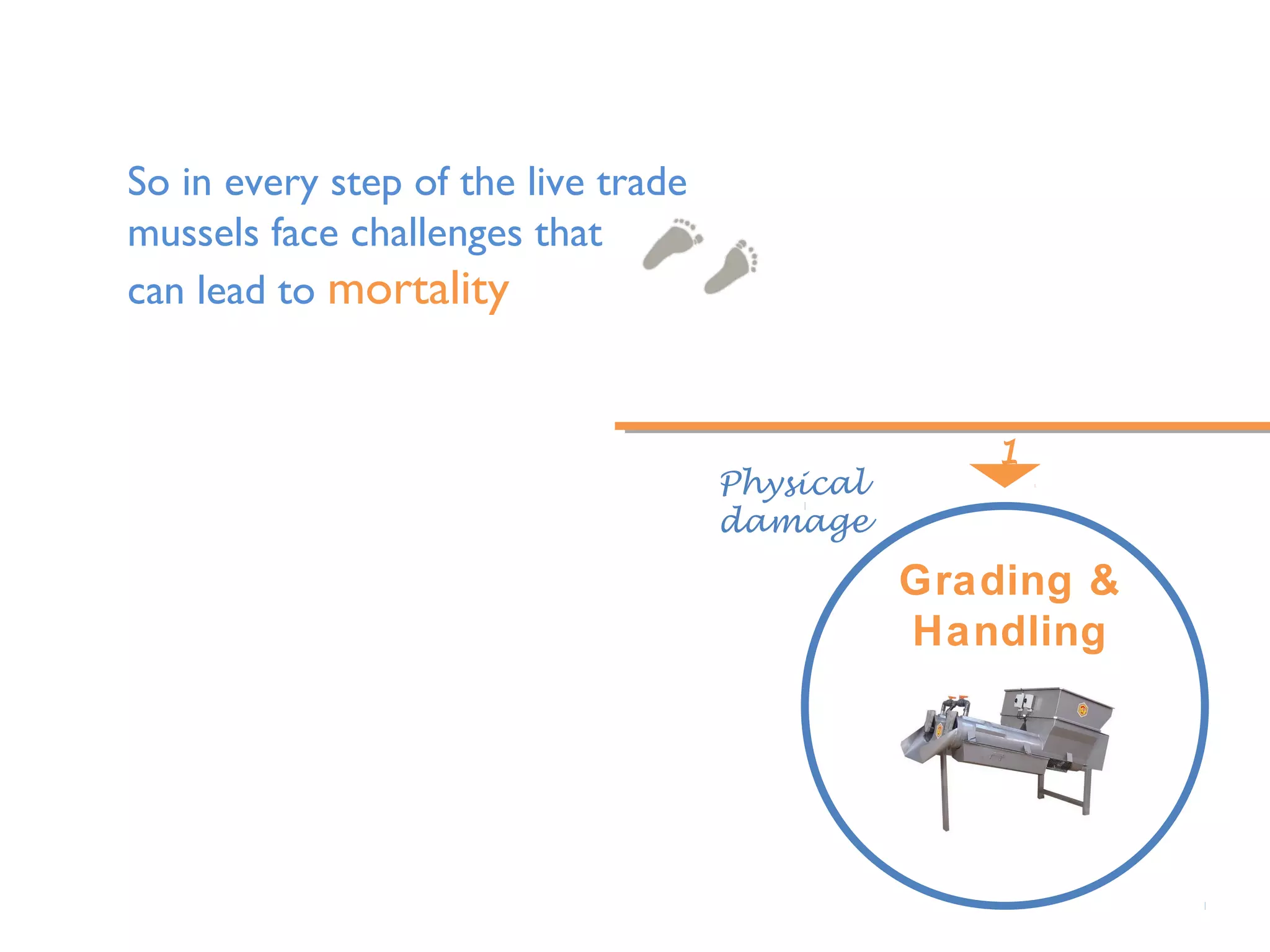
So in every step of the live trade
mussels face challenges that
can lead to mortality


                                                    1
                                     Physical
                                     damage
                                                Grading &
                                                Handling
Holding &
       Conditioning


             2
Poor Water
Quality
Storage


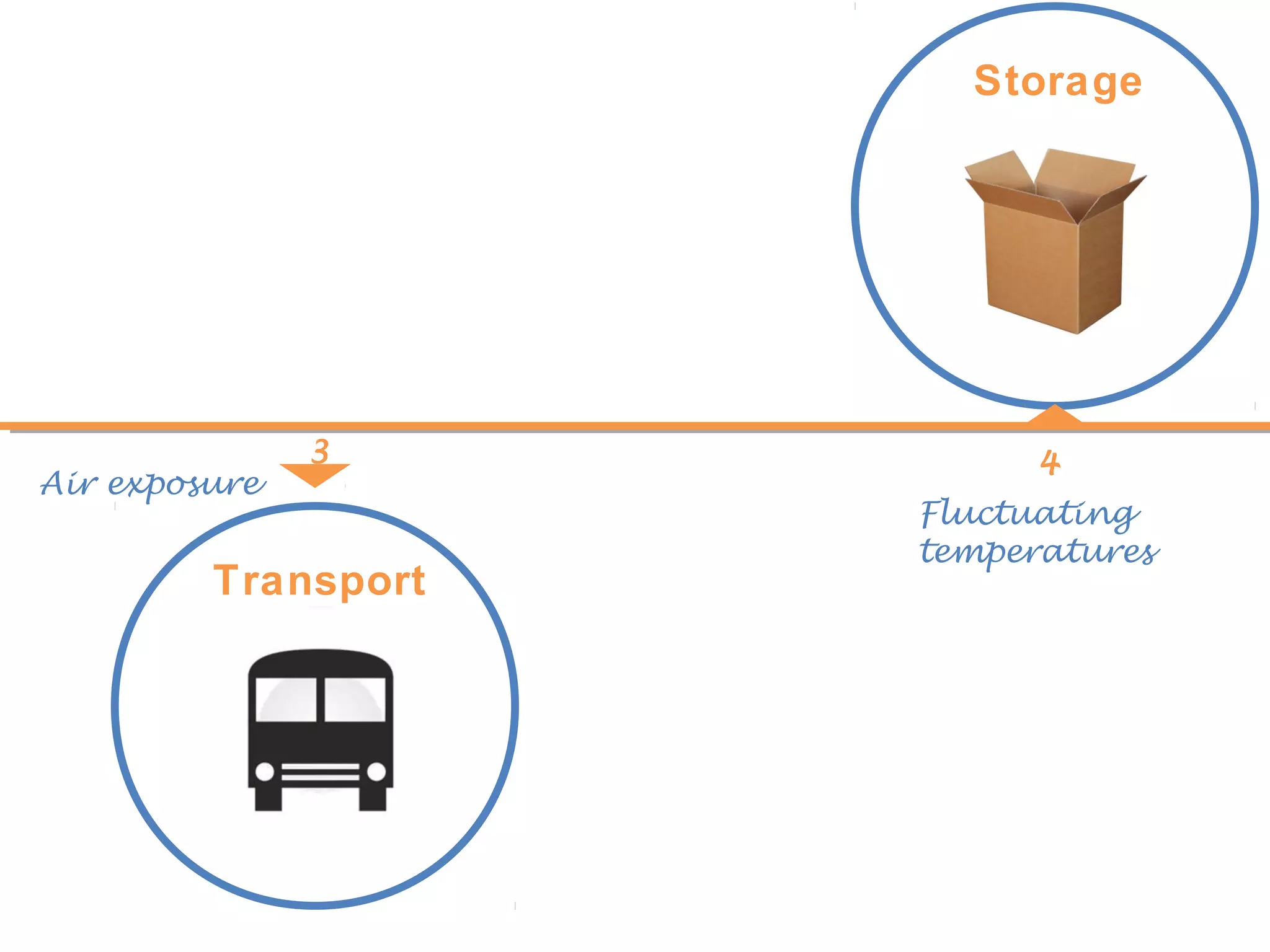
               3           4
Air exposure
                     Fluctuating
                     temperatures
         Transport
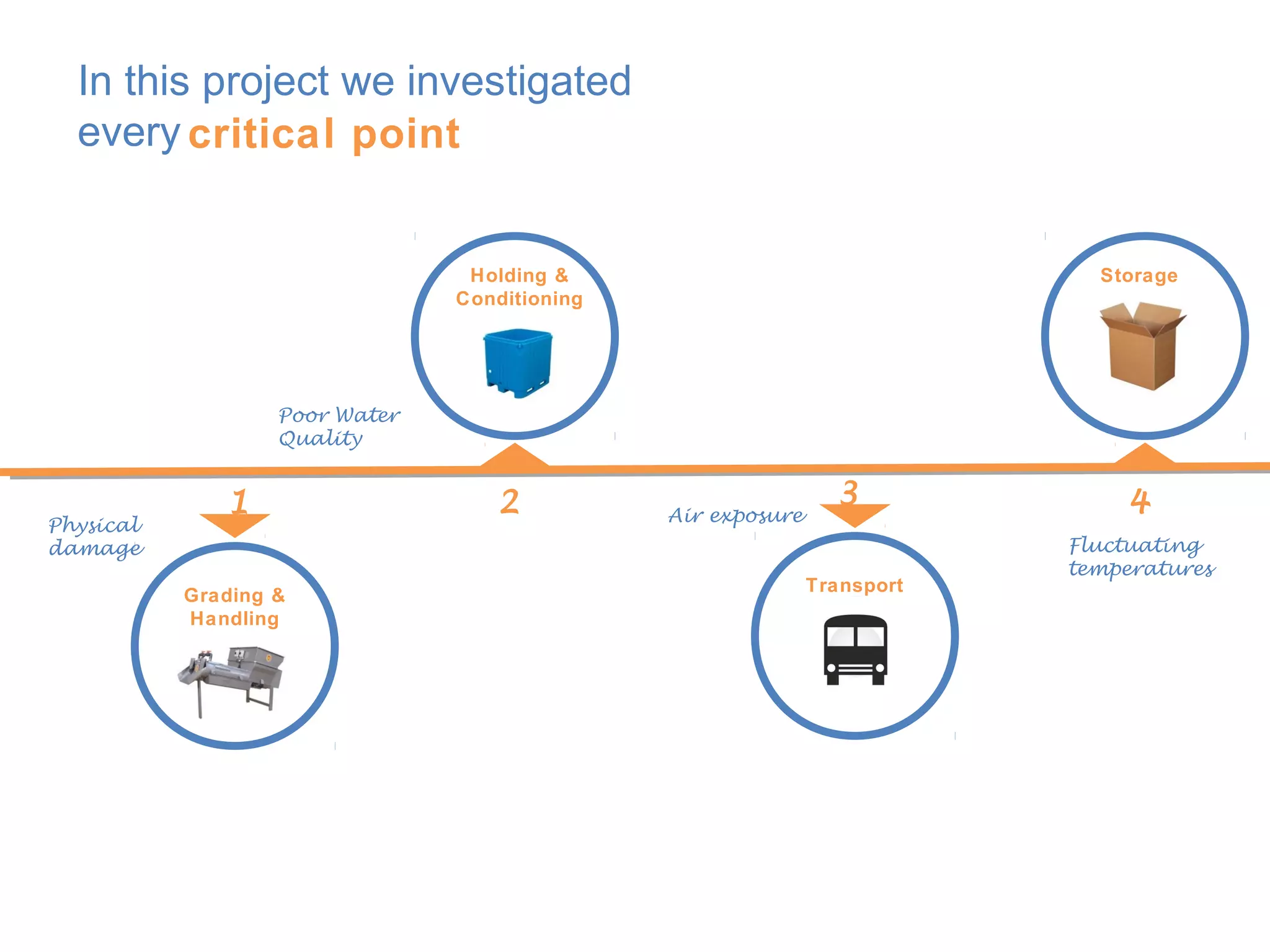
In this project we investigated
  every critical point


                                 Holding &                                  Storage
                                Conditioning


                   Poor Water
                   Quality


              1                    2                            3              4
                                               Air exposure
Physical
damage                                                                    Fluctuating
                                                                          temperatures
                                                              Transport
           Grading &
           Handling
For further information please visit our site at
http://www.musselsaliveproject.com/
This presentation was developed with the support of the European Commission
through the Collaborative Research Project ''MusselsAlive : Development of best
Practice and new technology for grading, handling, transportation, conditioning
and storage of mussels for SMEs in the European mussel industry“


by Sara Barrento
s.i.barrento@swansea.ac.uk
Centre for Sustainable Aquatic Research
http://www.aquaculturewales.com
Swansea University
Singleton Park
Swansea, SA2 8PP

Blue mussels aquaculture challenges explained

  • 2.
    Mussels Development of best practice and new technology for grading, handling, transportation, Alive conditioning and storage of mussels for SMEs in the European mussel industry
  • 3.
    Mussels can survivefor extended periods out of water and are traded for human consumption as live animals
  • 4.
    The increased productionand the development of rapid ground and air transport have improved the supply of live product to markets worldwide
  • 5.
  • 6.
    Following harvest, culturedmussels are washed, declumped, and graded by size
  • 8.
    After grading andif bacteria loads in the harvesting area are above the legislated level, mussels must also be either re-layed depurated
  • 9.
    Shellfish harvested frompolluted areas can be placed in clean areas (areas free of Relaying microbiological contamination) to allow shellfish to cleanse or purge themselves
  • 10.
    Boost Filtering Activity Clean water Avoid Depuration recontamination re-watering process in clean water that promotes the purging of some bacteria from the mussels.
  • 11.
    Boost Filtering Activity Clean water Avoid Depuration recontamination re-watering process in clean water that promotes the purging of some bacteria from the mussels.
  • 12.
    ...after being relayedor depurated mussels are once again declumped, debyssed and then packed and transported
  • 13.
    Transport out ofwater can take between 24 and 48 hours
  • 14.
    Once out ofwater mussels gape and loose water Gaping mussel Gaping mussel
  • 16.
    So in everystep of the live trade mussels face challenges that can lead to mortality 1 Physical damage Grading & Handling
  • 17.
    Holding & Conditioning 2 Poor Water Quality
  • 18.
    Storage 3 4 Air exposure Fluctuating temperatures Transport
  • 19.
    In this projectwe investigated every critical point Holding & Storage Conditioning Poor Water Quality 1 2 3 4 Air exposure Physical damage Fluctuating temperatures Transport Grading & Handling
  • 20.
    For further informationplease visit our site at http://www.musselsaliveproject.com/
  • 21.
    This presentation wasdeveloped with the support of the European Commission through the Collaborative Research Project ''MusselsAlive : Development of best Practice and new technology for grading, handling, transportation, conditioning and storage of mussels for SMEs in the European mussel industry“ by Sara Barrento s.i.barrento@swansea.ac.uk Centre for Sustainable Aquatic Research http://www.aquaculturewales.com Swansea University Singleton Park Swansea, SA2 8PP

Editor's Notes

  • #11 You could think that depuration is about giving the mussels the same conditions that they have in seawater, the location where they were harvested from. Actually the overriding premise in the depuration of bivalve molluscs is to create the conditiosn to elicitate the removal of the contents of the digestive tract into the water system holding the animals and to ensure the resultant faeces and any pseudofaeces remain separated from the bivalves for the duration of immersion. This is done by controlling the environmental parameters of the water such that the animal‟s metabolism is raised to a point were the deposition of faeces increases without exhausting the animal to such and extent that it dies prior to consumption.