Blood transfusion 
Shubha Allard 
BLOOD TRANSFUSION 
Abstract 
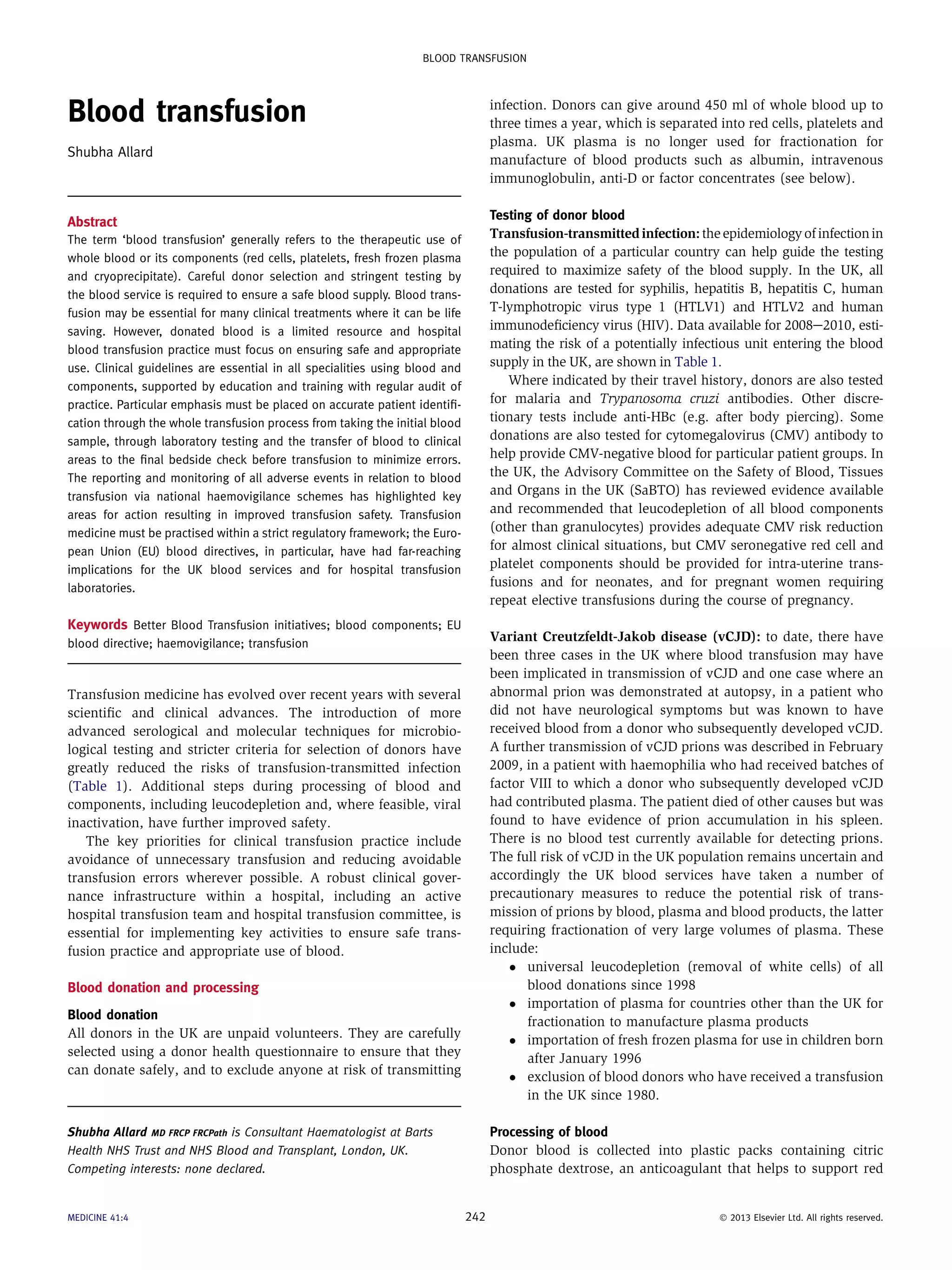
The term ‘blood transfusion’ generally refers to the therapeutic use of 
whole blood or its components (red cells, platelets, fresh frozen plasma 
and cryoprecipitate). Careful donor selection and stringent testing by 
the blood service is required to ensure a safe blood supply. Blood trans-fusion 
may be essential for many clinical treatments where it can be life 
saving. However, donated blood is a limited resource and hospital 
blood transfusion practice must focus on ensuring safe and appropriate 
use. Clinical guidelines are essential in all specialities using blood and 
components, supported by education and training with regular audit of 
practice. Particular emphasis must be placed on accurate patient identifi-cation 
through the whole transfusion process from taking the initial blood 
sample, through laboratory testing and the transfer of blood to clinical 
areas to the final bedside check before transfusion to minimize errors. 
The reporting and monitoring of all adverse events in relation to blood 
transfusion via national haemovigilance schemes has highlighted key 
areas for action resulting in improved transfusion safety. Transfusion 
medicine must be practised within a strict regulatory framework; the Euro-pean 
Union (EU) blood directives, in particular, have had far-reaching 
implications for the UK blood services and for hospital transfusion 
laboratories. 
Keywords Better Blood Transfusion initiatives; blood components; EU 
blood directive; haemovigilance; transfusion 
Transfusion medicine has evolved over recent years with several 
scientific and clinical advances. The introduction of more 
advanced serological and molecular techniques for microbio-logical 
testing and stricter criteria for selection of donors have 
greatly reduced the risks of transfusion-transmitted infection 
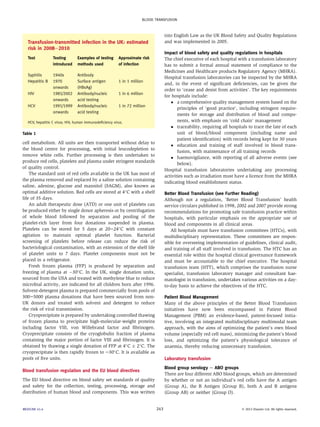
(Table 1). Additional steps during processing of blood and 
components, including leucodepletion and, where feasible, viral 
inactivation, have further improved safety. 
The key priorities for clinical transfusion practice include 
avoidance of unnecessary transfusion and reducing avoidable 
transfusion errors wherever possible. A robust clinical gover-nance 
infrastructure within a hospital, including an active 
hospital transfusion team and hospital transfusion committee, is 
essential for implementing key activities to ensure safe trans-fusion 
practice and appropriate use of blood. 
Blood donation and processing 
Blood donation 
All donors in the UK are unpaid volunteers. They are carefully 
selected using a donor health questionnaire to ensure that they 
can donate safely, and to exclude anyone at risk of transmitting 
infection. Donors can give around 450 ml of whole blood up to 
three times a year, which is separated into red cells, platelets and 
plasma. UK plasma is no longer used for fractionation for 
manufacture of blood products such as albumin, intravenous 
immunoglobulin, anti-D or factor concentrates (see below). 
Testing of donor blood 
Transfusion-transmitted infection: the epidemiology of infection in 
the population of a particular country can help guide the testing 
required to maximize safety of the blood supply. In the UK, all 
donations are tested for syphilis, hepatitis B, hepatitis C, human 
T-lymphotropic virus type 1 (HTLV1) and HTLV2 and human 
immunodeficiency virus (HIV). Data available for 2008e2010, esti-mating 
the risk of a potentially infectious unit entering the blood 
supply in the UK, are shown in Table 1. 
Where indicated by their travel history, donors are also tested 
for malaria and Trypanosoma cruzi antibodies. Other discre-tionary 
tests include anti-HBc (e.g. after body piercing). Some 
donations are also tested for cytomegalovirus (CMV) antibody to 
help provide CMV-negative blood for particular patient groups. In 
the UK, the Advisory Committee on the Safety of Blood, Tissues 
and Organs in the UK (SaBTO) has reviewed evidence available 
and recommended that leucodepletion of all blood components 
(other than granulocytes) provides adequate CMV risk reduction 
for almost clinical situations, but CMV seronegative red cell and 
platelet components should be provided for intra-uterine trans-fusions 
and for neonates, and for pregnant women requiring 
repeat elective transfusions during the course of pregnancy. 
Variant Creutzfeldt-Jakob disease (vCJD): to date, there have 
been three cases in the UK where blood transfusion may have 
been implicated in transmission of vCJD and one case where an 
abnormal prion was demonstrated at autopsy, in a patient who 
did not have neurological symptoms but was known to have 
received blood from a donor who subsequently developed vCJD. 
A further transmission of vCJD prions was described in February 
2009, in a patient with haemophilia who had received batches of 
factor VIII to which a donor who subsequently developed vCJD 
had contributed plasma. The patient died of other causes but was 
found to have evidence of prion accumulation in his spleen. 
There is no blood test currently available for detecting prions. 
The full risk of vCJD in the UK population remains uncertain and 
accordingly the UK blood services have taken a number of 
precautionary measures to reduce the potential risk of trans-mission 
of prions by blood, plasma and blood products, the latter 
requiring fractionation of very large volumes of plasma. These 
include: 
 universal leucodepletion (removal of white cells) of all 
blood donations since 1998 
 importation of plasma for countries other than the UK for 
fractionation to manufacture plasma products 
 importation of fresh frozen plasma for use in children born 
after January 1996 
 exclusion of blood donors who have received a transfusion 
in the UK since 1980. 
Processing of blood 
Donor blood is collected into plastic packs containing citric 
phosphate dextrose, an anticoagulant that helps to support red 
Shubha Allard MD FRCP FRCPath is Consultant Haematologist at Barts 
Health NHS Trust and NHS Blood and Transplant, London, UK. 
Competing interests: none declared. 
MEDICINE 41:4 242  2013 Elsevier Ltd. All rights reserved.
cell metabolism. All units are then transported without delay to 
the blood centre for processing, with initial leucodepletion to 
remove white cells. Further processing is then undertaken to 
produce red cells, platelets and plasma under stringent standards 
of quality control. 
The standard unit of red cells available in the UK has most of 
the plasma removed and replaced by a saline solution containing 
saline, adenine, glucose and mannitol (SAGM), also known as 
optimal additive solution. Red cells are stored at 4C with a shelf 
life of 35 days. 
An adult therapeutic dose (ATD) or one unit of platelets can 
be produced either by single donor apheresis or by centrifugation 
of whole blood followed by separation and pooling of the 
platelet-rich layer from four donations suspended in plasma. 
Platelets can be stored for 5 days at 20e24C with constant 
agitation to maintain optimal platelet function. Bacterial 
screening of platelets before release can reduce the risk of 
bacteriological contamination, with an extension of the shelf life 
of platelet units to 7 days. Platelet components must not be 
placed in a refrigerator. 
Fresh frozen plasma (FFP) is produced by separation and 
freezing of plasma at 30C. In the UK, single donation units, 
sourced from the USA and treated with methylene blue to reduce 
microbial activity, are indicated for all children born after 1996. 
Solvent-detergent plasma is prepared commercially from pools of 
300e5000 plasma donations that have been sourced from non- 
UK donors and treated with solvent and detergent to reduce 
the risk of viral transmission. 
Cryoprecipitate is prepared by undertaking controlled thawing 
of frozen plasma to precipitate high-molecular-weight proteins 
including factor VIII, von Willebrand factor and fibrinogen. 
Cryoprecipitate consists of the cryoglobulin fraction of plasma 
containing the major portion of factor VIII and fibrinogen. It is 
obtained by thawing a single donation of FFP at 4C  2C. The 
cryoprecipitate is then rapidly frozen to e30C. It is available as 
pools of five units. 
Blood transfusion regulation and the EU blood directives 
The EU blood directive on blood safety set standards of quality 
and safety for the collection, testing, processing, storage and 
distribution of human blood and components. This was written 
into English Law as the UK Blood Safety and Quality Regulations 
and was implemented in 2005. 
Impact of blood safety and quality regulations in hospitals 
The chief executive of each hospital with a transfusion laboratory 
has to submit a formal annual statement of compliance to the 
Medicines and Healthcare products Regulatory Agency (MHRA). 
Hospital transfusion laboratories can be inspected by the MHRA 
and, in the event of significant deficiencies, can be given the 
order to ‘cease and desist from activities’. The key requirements 
for hospitals include: 
 a comprehensive quality management system based on the 
principles of ‘good practice’, including stringent require-ments 
for storage and distribution of blood and compo-nents, 
with emphasis on ‘cold chain’ management 
 traceability, requiring all hospitals to trace the fate of each 
unit of blood/blood component (including name and 
patient identification) with records being kept for 30 years 
 education and training of staff involved in blood trans-fusion, 
with maintenance of all training records 
 haemovigilance, with reporting of all adverse events (see 
below). 
Hospital transfusion laboratories undertaking any processing 
activities such as irradiation must have a licence from the MHRA 
indicating blood establishment status. 
Better Blood Transfusion (see Further Reading) 
Although not a regulation, ‘Better Blood Transfusion’ health 
service circulars published in 1998, 2002 and 2007 provide strong 
recommendations for promoting safe transfusion practice within 
hospitals, with particular emphasis on the appropriate use of 
blood and components in all clinical areas. 
All hospitals must have transfusion committees (HTCs), with 
multidisciplinary representation. These committees are respon-sible 
for overseeing implementation of guidelines, clinical audit, 
and training of all staff involved in transfusion. The HTC has an 
essential role within the hospital clinical governance framework 
and must be accountable to the chief executive. The hospital 
transfusion team (HTT), which comprises the transfusion nurse 
specialist, transfusion laboratory manager and consultant hae-matologist 
in transfusion, undertakes various activities on a day-to- 
day basis to achieve the objectives of the HTC. 
Patient Blood Management 
Many of the above principles of the Better Blood Transfusion 
initiatives have now been encompassed in Patient Blood 
Management (PBM) an evidence-based, patient-focused initia-tive, 
involving an integrated multidisciplinary multimodal team 
approach, with the aims of optimizing the patient’s own blood 
volume (especially red cell mass), minimizing the patient’s blood 
loss, and optimizing the patient’s physiological tolerance of 
anaemia, thereby reducing unnecessary transfusion. 
Laboratory transfusion 
Blood group serology e ABO groups 
There are four different ABO blood groups, which are determined 
by whether or not an individual’s red cells have the A antigen 
(Group A), the B Antigen (Group B), both A and B antigens 
(Group AB) or neither (Group O). 
Transfusion-transmitted infection in the UK: estimated 
risk in 2008e2010 
Test Testing 
introduced 
Examples of testing 
methods used 
Approximate risk 
of infection 
Syphilis 1940s Antibody 
Hepatitis B 1970 
onwards 
Surface antigen 
(HBsAg) 
1 in 1 million 
HIV 1985/2002 
onwards 
Antibody/nucleic 
acid testing 
1 in 6 million 
HCV 1991/1999 
onwards 
Antibody/nucleic 
acid testing 
1 in 72 million 
HCV, hepatitis C virus; HIV, human immunodeficiency virus. 
Table 1 
BLOOD TRANSFUSION 
MEDICINE 41:4 243  2013 Elsevier Ltd. All rights reserved.
BLOOD TRANSFUSION 
Depending on the ABOgroup, individuals produce anti-Aor anti- 
B antibodies in early life that are mainly immunoglobulin M (IgM) 
and can rapidly attack and destroy incompatible cellswith activation 
of the full complement pathway, resulting in intravascular hae-molysis 
(acute haemolytic reaction). It is therefore essential that 
only red cells of a compatible ABO group are transfused. 
RhD group and antibodies 
Individuals who lack the RhD antigen are called RhD-negative 
and account for about 15% of the population, with the majority 
who do have the RhD antigen called RhD-positive. RhD-negative 
individuals can become ‘sensitized’ and develop anti-D after 
being exposed to RhD-positive cells during transfusion or preg-nancy. 
The clinical complications include haemolytic disease of 
the newborn (HDN), the risk of which can be minimized by use 
of anti-D immunoglobulin prophylaxis in RhD-negative mothers. 
Transfusion of RhD-positive red cells to an RhD-negative indi-vidual 
who is already sensitized can result in a ‘delayed trans-fusion 
reaction’, in which the red cells become coated with IgG 
and are removed by the reticulo-endothelial system by extra 
vascular haemolysis. This can result in a failure of the haemo-globin 
to rise together with jaundice. 
There are around 300 human blood groups that belong to 30 
separate red cell antigen systems as recognized by the Interna-tional 
Society of Blood Transfusion. The ABO and RhD antigens 
are particularly important but there are many other antigens on 
red cells that may result in formation of antibodies following 
pregnancy or transfusion, such as Kell, other Rh antigens (c, C, E 
and e), Duffy antigens (fya, fyb), Kidd antigens (jka, jkb), and 
these antibodies can also cause delayed transfusion reactions or 
HDN. 
Blood group and compatibility testing 
The patient’s red cells are grouped for ABO and RhD type and the 
plasma is tested for anti-A and anti-B antibodies. The majority of 
laboratories in the UK now use automated blood grouping and 
antibody testing with advanced information technology systems 
for documentation and reporting of results. 
Since errors related to having the ‘wrong blood in tube’ are 
relatively common with potential risk of ABO mismatched 
transfusions, the current British Committee for Standards in 
Haematology (BCSH) guideline (2012) recommends that a 
second sample should be requested for confirmation of the ABO 
group of any new patient, provided this does not impede the 
delivery of urgent red cells or components. 
The hospital transfusion laboratory can readily provide red 
cells that are ABO and RhD compatible using electronic issue (or 
‘computer cross-match’), with no further testing needed, 
provided the patient does not have any antibodies and that there 
are robust automated systems in place for antibody testing and 
identification of the patient. If a patient has red cell antibodies, 
electronic issue should not be used and a full cross-match must 
be carried out. 
Special requirements 
The hospital transfusion laboratory also needs to ensure that 
appropriate blood and components are provided for patients with 
special requirements such as CMV-negative blood (see above) or 
irradiated blood. The latter is needed for immunocompromised 
patients to minimize risk of transfusion-associated graft-versus-host 
disease. In addition to providing RhD-compatible blood, it is 
important to avoid transfusing Kell-positive red cells to Kell-negative 
girls and women with child-bearing potential, to 
prevent formation of anti-K antibodies that can cause severe 
HDN. 
Certain patient groups, such as those with sickle cell disease, 
are at very high risk of forming red cell alloantibodies, which 
increases the risk of delayed haemolytic transfusion reactions. 
Patients with haemoglobinopathy should therefore receive blood 
that is matched for the patient’s full extended Rh type (c, C, D, 
Ee) and K type, to prevent their forming antibodies to these 
highly immunogenic antigens. 
Clinical transfusion practice 
All hospitals must have a transfusion policy with clear guid-ance 
on correct patient identification and the safe administra-tion 
of blood and components, including the detection and 
management of adverse reactions. The National Patient Safety 
Agency has issued a safe practice notice entitled Right Patient, 
Right Blood, which states that all hospital staff involved in the 
transfusion process, including phlebotomists, porters, medical 
and nursing staff, must undergo training and competency 
testing. 
The decision to transfuse must be based on a thorough clinical 
assessment of the patient and their individual needs, and the 
indication for transfusion should be documented in the patients’ 
clinical records. 
Errors in the requesting, collection and administration of 
blood components (red cells, platelets and plasma components) 
can lead to significant risks for patients. The Serious Hazards of 
Transfusion (SHOT) scheme, launched in 1995, has shown 
repeatedly that ‘wrong blood into patient’ episodes are an 
important reported transfusion hazard; these are due mainly to 
human error that can lead to life-threatening haemolytic trans-fusion 
reactions and other significant morbidity. 
All patients receiving a blood transfusion must wear an 
identification band (or risk-assessed equivalent), with the 
minimum patient identifiers including last name, first name, date 
of birth and unique patient number. Positive patient identifica-tion 
is essential at all stages of the blood transfusion process 
including blood sampling, collection of blood from storage and 
delivery to the clinical area and administration to the patient. 
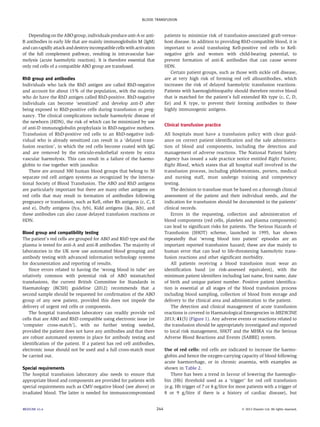
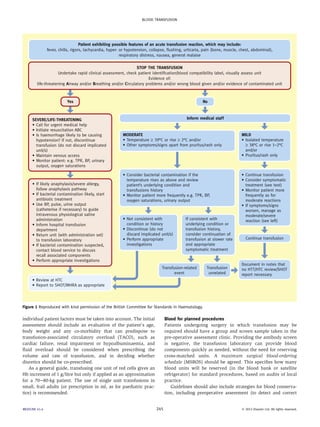
The detection and clinical management of acute transfusion 
reactions is covered in Haematological Emergencies in MEDICINE 
2013; 41(5) (Figure 1). Any adverse events or reactions related to 
the transfusion should be appropriately investigated and reported 
to local risk management, SHOT and the MHRA via the Serious 
Adverse Blood Reactions and Events (SABRE) system. 
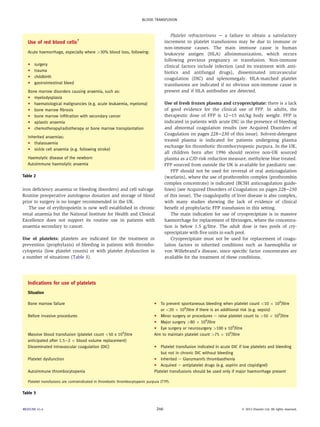
Use of red cells: red cells are indicated to increase the haemo-globin 
and hence the oxygen-carrying capacity of blood following 
acute haemorrhage, or in chronic anaemia, with examples as 
shown in Table 2. 
There has been a trend in favour of lowering the haemoglo-bin 
(Hb) threshold used as a ‘trigger’ for red cell transfusion 
(e.g. Hb trigger of 7 or 8 g/litre for most patients with a trigger of 
8 or 9 g/litre if there is a history of cardiac disease), but 
MEDICINE 41:4 244  2013 Elsevier Ltd. All rights reserved.
BLOOD TRANSFUSION 
Patient exhibiting possible features of an acute transfusion reaction, which may include: 
fever, chills, rigors, tachycardia, hyper- or hypotension, collapse, flushing, urticaria, pain (bone, muscle, chest, abdominal), 
respiratory distress, nausea, general malaise 
STOP THE TRANSFUSION 
Undertake rapid clinical assessment, check patient identification/blood compatibility label, visually assess unit 
individual patient factors must be taken into account. The initial 
assessment should include an evaluation of the patient’s age, 
body weight and any co-morbidity that can predispose to 
transfusion-associated circulatory overload (TACO), such as 
cardiac failure, renal impairment or hypoalbuminaemia, and 
fluid overload should be considered when prescribing the 
volume and rate of transfusion, and in deciding whether 
diuretics should be co-prescribed. 
As a general guide, transfusing one unit of red cells gives an 
Hb increment of 1 g/litre but only if applied as an approximation 
for a 70e80-kg patient. The use of single unit transfusions in 
small, frail adults (or prescription in ml, as for paediatric prac-tice) 
is recommended. 
Blood for planned procedures 
Patients undergoing surgery in which transfusion may be 
required should have a group and screen sample taken in the 
pre-operative assessment clinic. Providing the antibody screen 
is negative, the transfusion laboratory can provide blood 
components quickly as needed, without the need for reserving 
cross-matched units. A maximum surgical blood-ordering 
schedule (MSBOS) should be agreed. This specifies how many 
blood units will be reserved (in the blood bank or satellite 
refrigerator) for standard procedures, based on audits of local 
practice. 
Guidelines should also include strategies for blood conserva-tion, 
including preoperative assessment (to detect and correct 
Evidence of: 
Iife-threatening Airway and/or Breathing and/or Circulatory problems and/or wrong blood given and/or evidence of contaminated unit 
Yes No 
SEVERE/LIFE-THREATENING Inform medical staff 
• Call for urgent medical help 
• Initiate resuscitation ABC 
• Is haemorrhage likely to be causing 
MODERATE 
hypotension? If not, discontinue 
• Temperature ≥ 39°C or rise ≥ 2°C and/or 
transfusion (do not discard implicated 
• Other symptoms/signs apart from pruritus/rash only 
unit/s) 
• Maintain venous access 
• Monitor patient: e.g. TPR, BP, urinary 
output, oxygen saturations 
MILD 
• Isolated temperature 
≥ 38°C or rise 1–2°C 
and/or 
• Pruritus/rash only 
• Consider bacterial contamination if the 
temperature rises as above and review 
patient’s underlying condition and 
transfusions history 
• Monitor patient more frequently e.g. TPR, BP, 
oxygen saturations, urinary output 
• Not consistent with 
condition or history 
• Discontinue (do not 
discard implicated unit/s) 
• Perform appropriate 
investigations 
If consistent with 
underlying condition or 
transfusion history, 
consider continuation of 
transfusion at slower rate 
and appropriate 
symptomatic treatment 
• Continue transfusion 
• Consider symptomatic 
treatment (see text) 
• Monitor patient more 
frequently as for 
moderate reactions 
• If symptoms/signs 
worsen, manage as 
moderate/severe 
reaction (see left) 
Continue transfusion 
Document in notes that 
no HTT/HTC review/SHOT 
report necessary 
Transfusion-related 
event 
• Review at HTC 
• Report to SHOT/MHRA as appropriate 
Transfusion 
unrelated 
• If likely anaphylaxis/severe allergy, 
follow anaphylaxis pathway 
• If bacterial contamination likely, start 
antibiotic treatment 
• Use BP, pulse, urine output 
(catheterise if necessary) to guide 
intravenous physiological saline 
administration 
• Inform hospital transfusion 
department 
• Return unit (with administration set) 
to transfusion laboratory 
• If bacterial contamination suspected, 
contact blood service to discuss 
recall associated components 
• Perform appropriate investigations 
Figure 1 Reproduced with kind permission of the British Committee for Standards in Haematology. 
MEDICINE 41:4 245  2013 Elsevier Ltd. All rights reserved.
Use of red blood cells7 
Acute haemorrhage, especially where 30% blood loss, following: 
C surgery 
C trauma 
C childbirth 
C gastrointestinal bleed 
Bone marrow disorders causing anaemia, such as: 
C myelodysplasia 
C haematological malignancies (e.g. acute leukaemia, myeloma) 
C bone marrow fibrosis 
C bone marrow infiltration with secondary cancer 
C aplastic anaemia 
C chemotherapy/radiotherapy or bone marrow transplantation 
Inherited anaemias: 
C thalassaemia 
C sickle cell anaemia (e.g. following stroke) 
Haemolytic disease of the newborn 
Autoimmune haemolytic anaemia 
Table 2 
iron deficiency anaemia or bleeding disorders) and cell salvage. 
Routine preoperative autologous donation and storage of blood 
prior to surgery is no longer recommended in the UK. 
The use of erythropoietin is now well established in chronic 
renal anaemia but the National Institute for Health and Clinical 
Excellence does not support its routine use in patients with 
anaemia secondary to cancer. 
Use of platelets: platelets are indicated for the treatment or 
prevention (prophylaxis) of bleeding in patients with thrombo-cytopenia 
(low platelet counts) or with platelet dysfunction in 
a number of situations (Table 3). 
Platelet refractoriness e a failure to obtain a satisfactory 
increment to platelet transfusions may be due to immune or 
non-immune causes. The main immune cause is human 
leukocyte antigen (HLA) alloimmunization, which occurs 
following previous pregnancy or transfusion. Non-immune 
clinical factors include infection (and its treatment with anti-biotics 
and antifungal drugs), disseminated intravascular 
coagulation (DIC) and splenomegaly. HLA-matched platelet 
transfusions are indicated if no obvious non-immune cause is 
present and if HLA antibodies are detected. 
Use of fresh frozen plasma and cryoprecipitate: there is a lack 
of good evidence for the clinical use of FFP. In adults, the 
therapeutic dose of FFP is 12e15 ml/kg body weight. FFP is 
indicated in patients with acute DIC in the presence of bleeding 
and abnormal coagulation results (see Acquired Disorders of 
Coagulation on pages 228e230 of this issue). Solvent-detergent 
treated plasma is indicated for patients undergoing plasma 
exchange for thrombotic thrombocytopenic purpura. In the UK, 
all children born after 1996 should receive non-UK sourced 
plasma as a CJD risk reduction measure, methylene blue treated. 
FFP sourced from outside the UK is available for paediatric use. 
FFP should not be used for reversal of oral anticoagulation 
(warfarin), where the use of prothrombin complex (prothrombin 
complex concentrate) is indicated (BCSH anticoagulation guide-lines) 
(see Acquired Disorders of Coagulation on pages 228e230 
of this issue). The coagulopathy of liver disease is also complex, 
with many studies showing the lack of evidence of clinical 
benefit of prophylactic FFP transfusion in this setting. 
The main indication for use of cryoprecipitate is in massive 
haemorrhage for replacement of fibrinogen, where the concentra-tion 
is below 1.5 g/litre. The adult dose is two pools of cry-oprecipitate 
with five units in each pool. 
Cryoprecipitate must not be used for replacement of coagu-lation 
factors in inherited conditions such as haemophilia or 
von Willebrand’s disease, since specific factor concentrates are 
available for the treatment of these conditions. 
Indications for use of platelets 
Situation 
Bone marrow failure C To prevent spontaneous bleeding when platelet count 10  109/litre 
or 20  109/litre if there is an additional risk (e.g. sepsis) 
Before invasive procedures C Minor surgery or procedures e raise platelet count to 50  109/litre 
C Major surgery 80  109/litre 
C Eye surgery or neurosurgery 100 x 109/litre 
Massive blood transfusion (platelet count 50 x 109/litre 
anticipated after 1.5e2  blood volume replacement) 
Aim to maintain platelet count 75  109/litre 
Disseminated intravascular coagulation (DIC) C Platelet transfusion indicated in acute DIC if low platelets and bleeding 
but not in chronic DIC without bleeding 
Platelet dysfunction C Inherited e Glanzmann’s thrombasthenia 
C Acquired e antiplatelet drugs (e.g. aspirin and clopidigrel) 
Autoimmune thrombocytopenia Platelet transfusions should be used only if major haemorrhage present 
Platelet transfusions are contraindicated in thrombotic thrombocytopenic purpura (TTP). 
Table 3 
BLOOD TRANSFUSION 
MEDICINE 41:4 246  2013 Elsevier Ltd. All rights reserved.
BLOOD TRANSFUSION 
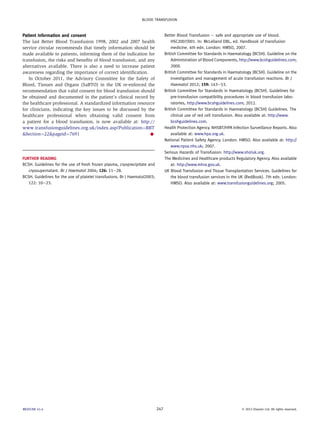
Patient information and consent 
The last Better Blood Transfusion 1998, 2002 and 2007 health 
service circular recommends that timely information should be 
made available to patients, informing them of the indication for 
transfusion, the risks and benefits of blood transfusion, and any 
alternatives available. There is also a need to increase patient 
awareness regarding the importance of correct identification. 
In October 2011, the Advisory Committee for the Safety of 
Blood, Tissues and Organs (SaBTO) in the UK re-enforced the 
recommendation that valid consent for blood transfusion should 
be obtained and documented in the patient’s clinical record by 
the healthcare professional. A standardized information resource 
for clinicians, indicating the key issues to be discussed by the 
healthcare professional when obtaining valid consent from 
a patient for a blood transfusion, is now available at: http:// 
www.transfusionguidelines.org.uk/index.asp?Publication¼BBT 
Section¼22pageid¼7691 A 
FURTHER READING 
BCSH. Guidelines for the use of fresh frozen plasma, cryoprecipitate and 
cryosupernatant. Br J Haematol 2004; 126: 11e28. 
BCSH. Guidelines for the use of platelet transfusions. Br J Haematol2003; 
122: 10e23. 
Better Blood Transfusion e safe and appropriate use of blood. 
HSC2007/001. In: McLelland DBL, ed. Handbook of transfusion 
medicine. 4th edn. London: HMSO, 2007. 
British Committee for Standards in Haematology (BCSH). Guideline on the 
Administration of Blood Components, http://www.bcshguidelines.com; 
2009. 
British Committee for Standards in Haematology (BCSH). Guideline on the 
investigation and management of acute transfusion reactions. Br J 
Haematol 2012; 159: 143e53. 
British Committee for Standards in Haematology (BCSH). Guidelines for 
pre-transfusion compatibility procedures in blood transfusion labo-ratories, 
http://www.bcshguidelines.com; 2012. 
British Committee for Standards in Haematology (BCSH) Guidelines. The 
clinical use of red cell transfusion. Also available at: http://www. 
bcshguidelines.com. 
Health Protection Agency. NHSBT/HPA Infection Surveillance Reports. Also 
available at: www.hpa.org.uk. 
National Patient Safety Agency. London: HMSO. Also available at: http:// 
www.npsa.nhs.uk; 2007. 
Serious Hazards of Transfusion: http://www.shotuk.org. 
The Medicines and Healthcare products Regulatory Agency. Also available 
at: http://www.mhra.gov.uk. 
UK Blood Transfusion and Tissue Transplantation Services. Guidelines for 
the blood transfusion services in the UK (RedBook). 7th edn. London: 
HMSO. Also available at: www.transfusionguidelines.org; 2005. 
MEDICINE 41:4 247  2013 Elsevier Ltd. All rights reserved.

Blood transfusion

  • 1.
    Blood transfusion ShubhaAllard BLOOD TRANSFUSION Abstract The term ‘blood transfusion’ generally refers to the therapeutic use of whole blood or its components (red cells, platelets, fresh frozen plasma and cryoprecipitate). Careful donor selection and stringent testing by the blood service is required to ensure a safe blood supply. Blood trans-fusion may be essential for many clinical treatments where it can be life saving. However, donated blood is a limited resource and hospital blood transfusion practice must focus on ensuring safe and appropriate use. Clinical guidelines are essential in all specialities using blood and components, supported by education and training with regular audit of practice. Particular emphasis must be placed on accurate patient identifi-cation through the whole transfusion process from taking the initial blood sample, through laboratory testing and the transfer of blood to clinical areas to the final bedside check before transfusion to minimize errors. The reporting and monitoring of all adverse events in relation to blood transfusion via national haemovigilance schemes has highlighted key areas for action resulting in improved transfusion safety. Transfusion medicine must be practised within a strict regulatory framework; the Euro-pean Union (EU) blood directives, in particular, have had far-reaching implications for the UK blood services and for hospital transfusion laboratories. Keywords Better Blood Transfusion initiatives; blood components; EU blood directive; haemovigilance; transfusion Transfusion medicine has evolved over recent years with several scientific and clinical advances. The introduction of more advanced serological and molecular techniques for microbio-logical testing and stricter criteria for selection of donors have greatly reduced the risks of transfusion-transmitted infection (Table 1). Additional steps during processing of blood and components, including leucodepletion and, where feasible, viral inactivation, have further improved safety. The key priorities for clinical transfusion practice include avoidance of unnecessary transfusion and reducing avoidable transfusion errors wherever possible. A robust clinical gover-nance infrastructure within a hospital, including an active hospital transfusion team and hospital transfusion committee, is essential for implementing key activities to ensure safe trans-fusion practice and appropriate use of blood. Blood donation and processing Blood donation All donors in the UK are unpaid volunteers. They are carefully selected using a donor health questionnaire to ensure that they can donate safely, and to exclude anyone at risk of transmitting infection. Donors can give around 450 ml of whole blood up to three times a year, which is separated into red cells, platelets and plasma. UK plasma is no longer used for fractionation for manufacture of blood products such as albumin, intravenous immunoglobulin, anti-D or factor concentrates (see below). Testing of donor blood Transfusion-transmitted infection: the epidemiology of infection in the population of a particular country can help guide the testing required to maximize safety of the blood supply. In the UK, all donations are tested for syphilis, hepatitis B, hepatitis C, human T-lymphotropic virus type 1 (HTLV1) and HTLV2 and human immunodeficiency virus (HIV). Data available for 2008e2010, esti-mating the risk of a potentially infectious unit entering the blood supply in the UK, are shown in Table 1. Where indicated by their travel history, donors are also tested for malaria and Trypanosoma cruzi antibodies. Other discre-tionary tests include anti-HBc (e.g. after body piercing). Some donations are also tested for cytomegalovirus (CMV) antibody to help provide CMV-negative blood for particular patient groups. In the UK, the Advisory Committee on the Safety of Blood, Tissues and Organs in the UK (SaBTO) has reviewed evidence available and recommended that leucodepletion of all blood components (other than granulocytes) provides adequate CMV risk reduction for almost clinical situations, but CMV seronegative red cell and platelet components should be provided for intra-uterine trans-fusions and for neonates, and for pregnant women requiring repeat elective transfusions during the course of pregnancy. Variant Creutzfeldt-Jakob disease (vCJD): to date, there have been three cases in the UK where blood transfusion may have been implicated in transmission of vCJD and one case where an abnormal prion was demonstrated at autopsy, in a patient who did not have neurological symptoms but was known to have received blood from a donor who subsequently developed vCJD. A further transmission of vCJD prions was described in February 2009, in a patient with haemophilia who had received batches of factor VIII to which a donor who subsequently developed vCJD had contributed plasma. The patient died of other causes but was found to have evidence of prion accumulation in his spleen. There is no blood test currently available for detecting prions. The full risk of vCJD in the UK population remains uncertain and accordingly the UK blood services have taken a number of precautionary measures to reduce the potential risk of trans-mission of prions by blood, plasma and blood products, the latter requiring fractionation of very large volumes of plasma. These include: universal leucodepletion (removal of white cells) of all blood donations since 1998 importation of plasma for countries other than the UK for fractionation to manufacture plasma products importation of fresh frozen plasma for use in children born after January 1996 exclusion of blood donors who have received a transfusion in the UK since 1980. Processing of blood Donor blood is collected into plastic packs containing citric phosphate dextrose, an anticoagulant that helps to support red Shubha Allard MD FRCP FRCPath is Consultant Haematologist at Barts Health NHS Trust and NHS Blood and Transplant, London, UK. Competing interests: none declared. MEDICINE 41:4 242 2013 Elsevier Ltd. All rights reserved.
  • 2.
    cell metabolism. Allunits are then transported without delay to the blood centre for processing, with initial leucodepletion to remove white cells. Further processing is then undertaken to produce red cells, platelets and plasma under stringent standards of quality control. The standard unit of red cells available in the UK has most of the plasma removed and replaced by a saline solution containing saline, adenine, glucose and mannitol (SAGM), also known as optimal additive solution. Red cells are stored at 4C with a shelf life of 35 days. An adult therapeutic dose (ATD) or one unit of platelets can be produced either by single donor apheresis or by centrifugation of whole blood followed by separation and pooling of the platelet-rich layer from four donations suspended in plasma. Platelets can be stored for 5 days at 20e24C with constant agitation to maintain optimal platelet function. Bacterial screening of platelets before release can reduce the risk of bacteriological contamination, with an extension of the shelf life of platelet units to 7 days. Platelet components must not be placed in a refrigerator. Fresh frozen plasma (FFP) is produced by separation and freezing of plasma at 30C. In the UK, single donation units, sourced from the USA and treated with methylene blue to reduce microbial activity, are indicated for all children born after 1996. Solvent-detergent plasma is prepared commercially from pools of 300e5000 plasma donations that have been sourced from non- UK donors and treated with solvent and detergent to reduce the risk of viral transmission. Cryoprecipitate is prepared by undertaking controlled thawing of frozen plasma to precipitate high-molecular-weight proteins including factor VIII, von Willebrand factor and fibrinogen. Cryoprecipitate consists of the cryoglobulin fraction of plasma containing the major portion of factor VIII and fibrinogen. It is obtained by thawing a single donation of FFP at 4C 2C. The cryoprecipitate is then rapidly frozen to e30C. It is available as pools of five units. Blood transfusion regulation and the EU blood directives The EU blood directive on blood safety set standards of quality and safety for the collection, testing, processing, storage and distribution of human blood and components. This was written into English Law as the UK Blood Safety and Quality Regulations and was implemented in 2005. Impact of blood safety and quality regulations in hospitals The chief executive of each hospital with a transfusion laboratory has to submit a formal annual statement of compliance to the Medicines and Healthcare products Regulatory Agency (MHRA). Hospital transfusion laboratories can be inspected by the MHRA and, in the event of significant deficiencies, can be given the order to ‘cease and desist from activities’. The key requirements for hospitals include: a comprehensive quality management system based on the principles of ‘good practice’, including stringent require-ments for storage and distribution of blood and compo-nents, with emphasis on ‘cold chain’ management traceability, requiring all hospitals to trace the fate of each unit of blood/blood component (including name and patient identification) with records being kept for 30 years education and training of staff involved in blood trans-fusion, with maintenance of all training records haemovigilance, with reporting of all adverse events (see below). Hospital transfusion laboratories undertaking any processing activities such as irradiation must have a licence from the MHRA indicating blood establishment status. Better Blood Transfusion (see Further Reading) Although not a regulation, ‘Better Blood Transfusion’ health service circulars published in 1998, 2002 and 2007 provide strong recommendations for promoting safe transfusion practice within hospitals, with particular emphasis on the appropriate use of blood and components in all clinical areas. All hospitals must have transfusion committees (HTCs), with multidisciplinary representation. These committees are respon-sible for overseeing implementation of guidelines, clinical audit, and training of all staff involved in transfusion. The HTC has an essential role within the hospital clinical governance framework and must be accountable to the chief executive. The hospital transfusion team (HTT), which comprises the transfusion nurse specialist, transfusion laboratory manager and consultant hae-matologist in transfusion, undertakes various activities on a day-to- day basis to achieve the objectives of the HTC. Patient Blood Management Many of the above principles of the Better Blood Transfusion initiatives have now been encompassed in Patient Blood Management (PBM) an evidence-based, patient-focused initia-tive, involving an integrated multidisciplinary multimodal team approach, with the aims of optimizing the patient’s own blood volume (especially red cell mass), minimizing the patient’s blood loss, and optimizing the patient’s physiological tolerance of anaemia, thereby reducing unnecessary transfusion. Laboratory transfusion Blood group serology e ABO groups There are four different ABO blood groups, which are determined by whether or not an individual’s red cells have the A antigen (Group A), the B Antigen (Group B), both A and B antigens (Group AB) or neither (Group O). Transfusion-transmitted infection in the UK: estimated risk in 2008e2010 Test Testing introduced Examples of testing methods used Approximate risk of infection Syphilis 1940s Antibody Hepatitis B 1970 onwards Surface antigen (HBsAg) 1 in 1 million HIV 1985/2002 onwards Antibody/nucleic acid testing 1 in 6 million HCV 1991/1999 onwards Antibody/nucleic acid testing 1 in 72 million HCV, hepatitis C virus; HIV, human immunodeficiency virus. Table 1 BLOOD TRANSFUSION MEDICINE 41:4 243 2013 Elsevier Ltd. All rights reserved.
  • 3.
    BLOOD TRANSFUSION Dependingon the ABOgroup, individuals produce anti-Aor anti- B antibodies in early life that are mainly immunoglobulin M (IgM) and can rapidly attack and destroy incompatible cellswith activation of the full complement pathway, resulting in intravascular hae-molysis (acute haemolytic reaction). It is therefore essential that only red cells of a compatible ABO group are transfused. RhD group and antibodies Individuals who lack the RhD antigen are called RhD-negative and account for about 15% of the population, with the majority who do have the RhD antigen called RhD-positive. RhD-negative individuals can become ‘sensitized’ and develop anti-D after being exposed to RhD-positive cells during transfusion or preg-nancy. The clinical complications include haemolytic disease of the newborn (HDN), the risk of which can be minimized by use of anti-D immunoglobulin prophylaxis in RhD-negative mothers. Transfusion of RhD-positive red cells to an RhD-negative indi-vidual who is already sensitized can result in a ‘delayed trans-fusion reaction’, in which the red cells become coated with IgG and are removed by the reticulo-endothelial system by extra vascular haemolysis. This can result in a failure of the haemo-globin to rise together with jaundice. There are around 300 human blood groups that belong to 30 separate red cell antigen systems as recognized by the Interna-tional Society of Blood Transfusion. The ABO and RhD antigens are particularly important but there are many other antigens on red cells that may result in formation of antibodies following pregnancy or transfusion, such as Kell, other Rh antigens (c, C, E and e), Duffy antigens (fya, fyb), Kidd antigens (jka, jkb), and these antibodies can also cause delayed transfusion reactions or HDN. Blood group and compatibility testing The patient’s red cells are grouped for ABO and RhD type and the plasma is tested for anti-A and anti-B antibodies. The majority of laboratories in the UK now use automated blood grouping and antibody testing with advanced information technology systems for documentation and reporting of results. Since errors related to having the ‘wrong blood in tube’ are relatively common with potential risk of ABO mismatched transfusions, the current British Committee for Standards in Haematology (BCSH) guideline (2012) recommends that a second sample should be requested for confirmation of the ABO group of any new patient, provided this does not impede the delivery of urgent red cells or components. The hospital transfusion laboratory can readily provide red cells that are ABO and RhD compatible using electronic issue (or ‘computer cross-match’), with no further testing needed, provided the patient does not have any antibodies and that there are robust automated systems in place for antibody testing and identification of the patient. If a patient has red cell antibodies, electronic issue should not be used and a full cross-match must be carried out. Special requirements The hospital transfusion laboratory also needs to ensure that appropriate blood and components are provided for patients with special requirements such as CMV-negative blood (see above) or irradiated blood. The latter is needed for immunocompromised patients to minimize risk of transfusion-associated graft-versus-host disease. In addition to providing RhD-compatible blood, it is important to avoid transfusing Kell-positive red cells to Kell-negative girls and women with child-bearing potential, to prevent formation of anti-K antibodies that can cause severe HDN. Certain patient groups, such as those with sickle cell disease, are at very high risk of forming red cell alloantibodies, which increases the risk of delayed haemolytic transfusion reactions. Patients with haemoglobinopathy should therefore receive blood that is matched for the patient’s full extended Rh type (c, C, D, Ee) and K type, to prevent their forming antibodies to these highly immunogenic antigens. Clinical transfusion practice All hospitals must have a transfusion policy with clear guid-ance on correct patient identification and the safe administra-tion of blood and components, including the detection and management of adverse reactions. The National Patient Safety Agency has issued a safe practice notice entitled Right Patient, Right Blood, which states that all hospital staff involved in the transfusion process, including phlebotomists, porters, medical and nursing staff, must undergo training and competency testing. The decision to transfuse must be based on a thorough clinical assessment of the patient and their individual needs, and the indication for transfusion should be documented in the patients’ clinical records. Errors in the requesting, collection and administration of blood components (red cells, platelets and plasma components) can lead to significant risks for patients. The Serious Hazards of Transfusion (SHOT) scheme, launched in 1995, has shown repeatedly that ‘wrong blood into patient’ episodes are an important reported transfusion hazard; these are due mainly to human error that can lead to life-threatening haemolytic trans-fusion reactions and other significant morbidity. All patients receiving a blood transfusion must wear an identification band (or risk-assessed equivalent), with the minimum patient identifiers including last name, first name, date of birth and unique patient number. Positive patient identifica-tion is essential at all stages of the blood transfusion process including blood sampling, collection of blood from storage and delivery to the clinical area and administration to the patient. The detection and clinical management of acute transfusion reactions is covered in Haematological Emergencies in MEDICINE 2013; 41(5) (Figure 1). Any adverse events or reactions related to the transfusion should be appropriately investigated and reported to local risk management, SHOT and the MHRA via the Serious Adverse Blood Reactions and Events (SABRE) system. Use of red cells: red cells are indicated to increase the haemo-globin and hence the oxygen-carrying capacity of blood following acute haemorrhage, or in chronic anaemia, with examples as shown in Table 2. There has been a trend in favour of lowering the haemoglo-bin (Hb) threshold used as a ‘trigger’ for red cell transfusion (e.g. Hb trigger of 7 or 8 g/litre for most patients with a trigger of 8 or 9 g/litre if there is a history of cardiac disease), but MEDICINE 41:4 244 2013 Elsevier Ltd. All rights reserved.
  • 4.
    BLOOD TRANSFUSION Patientexhibiting possible features of an acute transfusion reaction, which may include: fever, chills, rigors, tachycardia, hyper- or hypotension, collapse, flushing, urticaria, pain (bone, muscle, chest, abdominal), respiratory distress, nausea, general malaise STOP THE TRANSFUSION Undertake rapid clinical assessment, check patient identification/blood compatibility label, visually assess unit individual patient factors must be taken into account. The initial assessment should include an evaluation of the patient’s age, body weight and any co-morbidity that can predispose to transfusion-associated circulatory overload (TACO), such as cardiac failure, renal impairment or hypoalbuminaemia, and fluid overload should be considered when prescribing the volume and rate of transfusion, and in deciding whether diuretics should be co-prescribed. As a general guide, transfusing one unit of red cells gives an Hb increment of 1 g/litre but only if applied as an approximation for a 70e80-kg patient. The use of single unit transfusions in small, frail adults (or prescription in ml, as for paediatric prac-tice) is recommended. Blood for planned procedures Patients undergoing surgery in which transfusion may be required should have a group and screen sample taken in the pre-operative assessment clinic. Providing the antibody screen is negative, the transfusion laboratory can provide blood components quickly as needed, without the need for reserving cross-matched units. A maximum surgical blood-ordering schedule (MSBOS) should be agreed. This specifies how many blood units will be reserved (in the blood bank or satellite refrigerator) for standard procedures, based on audits of local practice. Guidelines should also include strategies for blood conserva-tion, including preoperative assessment (to detect and correct Evidence of: Iife-threatening Airway and/or Breathing and/or Circulatory problems and/or wrong blood given and/or evidence of contaminated unit Yes No SEVERE/LIFE-THREATENING Inform medical staff • Call for urgent medical help • Initiate resuscitation ABC • Is haemorrhage likely to be causing MODERATE hypotension? If not, discontinue • Temperature ≥ 39°C or rise ≥ 2°C and/or transfusion (do not discard implicated • Other symptoms/signs apart from pruritus/rash only unit/s) • Maintain venous access • Monitor patient: e.g. TPR, BP, urinary output, oxygen saturations MILD • Isolated temperature ≥ 38°C or rise 1–2°C and/or • Pruritus/rash only • Consider bacterial contamination if the temperature rises as above and review patient’s underlying condition and transfusions history • Monitor patient more frequently e.g. TPR, BP, oxygen saturations, urinary output • Not consistent with condition or history • Discontinue (do not discard implicated unit/s) • Perform appropriate investigations If consistent with underlying condition or transfusion history, consider continuation of transfusion at slower rate and appropriate symptomatic treatment • Continue transfusion • Consider symptomatic treatment (see text) • Monitor patient more frequently as for moderate reactions • If symptoms/signs worsen, manage as moderate/severe reaction (see left) Continue transfusion Document in notes that no HTT/HTC review/SHOT report necessary Transfusion-related event • Review at HTC • Report to SHOT/MHRA as appropriate Transfusion unrelated • If likely anaphylaxis/severe allergy, follow anaphylaxis pathway • If bacterial contamination likely, start antibiotic treatment • Use BP, pulse, urine output (catheterise if necessary) to guide intravenous physiological saline administration • Inform hospital transfusion department • Return unit (with administration set) to transfusion laboratory • If bacterial contamination suspected, contact blood service to discuss recall associated components • Perform appropriate investigations Figure 1 Reproduced with kind permission of the British Committee for Standards in Haematology. MEDICINE 41:4 245 2013 Elsevier Ltd. All rights reserved.
  • 5.
    Use of redblood cells7 Acute haemorrhage, especially where 30% blood loss, following: C surgery C trauma C childbirth C gastrointestinal bleed Bone marrow disorders causing anaemia, such as: C myelodysplasia C haematological malignancies (e.g. acute leukaemia, myeloma) C bone marrow fibrosis C bone marrow infiltration with secondary cancer C aplastic anaemia C chemotherapy/radiotherapy or bone marrow transplantation Inherited anaemias: C thalassaemia C sickle cell anaemia (e.g. following stroke) Haemolytic disease of the newborn Autoimmune haemolytic anaemia Table 2 iron deficiency anaemia or bleeding disorders) and cell salvage. Routine preoperative autologous donation and storage of blood prior to surgery is no longer recommended in the UK. The use of erythropoietin is now well established in chronic renal anaemia but the National Institute for Health and Clinical Excellence does not support its routine use in patients with anaemia secondary to cancer. Use of platelets: platelets are indicated for the treatment or prevention (prophylaxis) of bleeding in patients with thrombo-cytopenia (low platelet counts) or with platelet dysfunction in a number of situations (Table 3). Platelet refractoriness e a failure to obtain a satisfactory increment to platelet transfusions may be due to immune or non-immune causes. The main immune cause is human leukocyte antigen (HLA) alloimmunization, which occurs following previous pregnancy or transfusion. Non-immune clinical factors include infection (and its treatment with anti-biotics and antifungal drugs), disseminated intravascular coagulation (DIC) and splenomegaly. HLA-matched platelet transfusions are indicated if no obvious non-immune cause is present and if HLA antibodies are detected. Use of fresh frozen plasma and cryoprecipitate: there is a lack of good evidence for the clinical use of FFP. In adults, the therapeutic dose of FFP is 12e15 ml/kg body weight. FFP is indicated in patients with acute DIC in the presence of bleeding and abnormal coagulation results (see Acquired Disorders of Coagulation on pages 228e230 of this issue). Solvent-detergent treated plasma is indicated for patients undergoing plasma exchange for thrombotic thrombocytopenic purpura. In the UK, all children born after 1996 should receive non-UK sourced plasma as a CJD risk reduction measure, methylene blue treated. FFP sourced from outside the UK is available for paediatric use. FFP should not be used for reversal of oral anticoagulation (warfarin), where the use of prothrombin complex (prothrombin complex concentrate) is indicated (BCSH anticoagulation guide-lines) (see Acquired Disorders of Coagulation on pages 228e230 of this issue). The coagulopathy of liver disease is also complex, with many studies showing the lack of evidence of clinical benefit of prophylactic FFP transfusion in this setting. The main indication for use of cryoprecipitate is in massive haemorrhage for replacement of fibrinogen, where the concentra-tion is below 1.5 g/litre. The adult dose is two pools of cry-oprecipitate with five units in each pool. Cryoprecipitate must not be used for replacement of coagu-lation factors in inherited conditions such as haemophilia or von Willebrand’s disease, since specific factor concentrates are available for the treatment of these conditions. Indications for use of platelets Situation Bone marrow failure C To prevent spontaneous bleeding when platelet count 10 109/litre or 20 109/litre if there is an additional risk (e.g. sepsis) Before invasive procedures C Minor surgery or procedures e raise platelet count to 50 109/litre C Major surgery 80 109/litre C Eye surgery or neurosurgery 100 x 109/litre Massive blood transfusion (platelet count 50 x 109/litre anticipated after 1.5e2 blood volume replacement) Aim to maintain platelet count 75 109/litre Disseminated intravascular coagulation (DIC) C Platelet transfusion indicated in acute DIC if low platelets and bleeding but not in chronic DIC without bleeding Platelet dysfunction C Inherited e Glanzmann’s thrombasthenia C Acquired e antiplatelet drugs (e.g. aspirin and clopidigrel) Autoimmune thrombocytopenia Platelet transfusions should be used only if major haemorrhage present Platelet transfusions are contraindicated in thrombotic thrombocytopenic purpura (TTP). Table 3 BLOOD TRANSFUSION MEDICINE 41:4 246 2013 Elsevier Ltd. All rights reserved.
  • 6.
    BLOOD TRANSFUSION Patientinformation and consent The last Better Blood Transfusion 1998, 2002 and 2007 health service circular recommends that timely information should be made available to patients, informing them of the indication for transfusion, the risks and benefits of blood transfusion, and any alternatives available. There is also a need to increase patient awareness regarding the importance of correct identification. In October 2011, the Advisory Committee for the Safety of Blood, Tissues and Organs (SaBTO) in the UK re-enforced the recommendation that valid consent for blood transfusion should be obtained and documented in the patient’s clinical record by the healthcare professional. A standardized information resource for clinicians, indicating the key issues to be discussed by the healthcare professional when obtaining valid consent from a patient for a blood transfusion, is now available at: http:// www.transfusionguidelines.org.uk/index.asp?Publication¼BBT Section¼22pageid¼7691 A FURTHER READING BCSH. Guidelines for the use of fresh frozen plasma, cryoprecipitate and cryosupernatant. Br J Haematol 2004; 126: 11e28. BCSH. Guidelines for the use of platelet transfusions. Br J Haematol2003; 122: 10e23. Better Blood Transfusion e safe and appropriate use of blood. HSC2007/001. In: McLelland DBL, ed. Handbook of transfusion medicine. 4th edn. London: HMSO, 2007. British Committee for Standards in Haematology (BCSH). Guideline on the Administration of Blood Components, http://www.bcshguidelines.com; 2009. British Committee for Standards in Haematology (BCSH). Guideline on the investigation and management of acute transfusion reactions. Br J Haematol 2012; 159: 143e53. British Committee for Standards in Haematology (BCSH). Guidelines for pre-transfusion compatibility procedures in blood transfusion labo-ratories, http://www.bcshguidelines.com; 2012. British Committee for Standards in Haematology (BCSH) Guidelines. The clinical use of red cell transfusion. Also available at: http://www. bcshguidelines.com. Health Protection Agency. NHSBT/HPA Infection Surveillance Reports. Also available at: www.hpa.org.uk. National Patient Safety Agency. London: HMSO. Also available at: http:// www.npsa.nhs.uk; 2007. Serious Hazards of Transfusion: http://www.shotuk.org. The Medicines and Healthcare products Regulatory Agency. Also available at: http://www.mhra.gov.uk. UK Blood Transfusion and Tissue Transplantation Services. Guidelines for the blood transfusion services in the UK (RedBook). 7th edn. London: HMSO. Also available at: www.transfusionguidelines.org; 2005. MEDICINE 41:4 247 2013 Elsevier Ltd. All rights reserved.