Downloaded 14 times
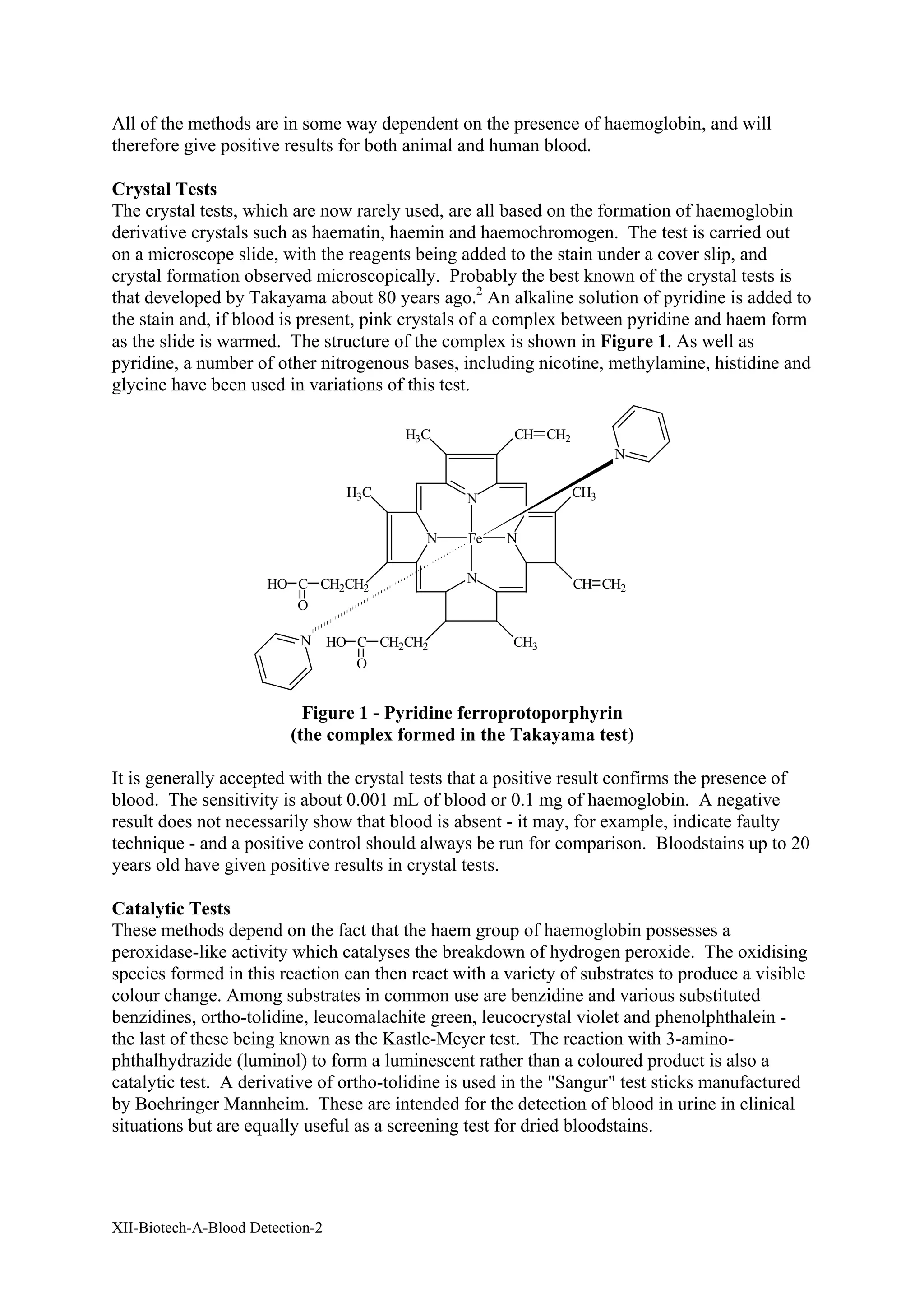
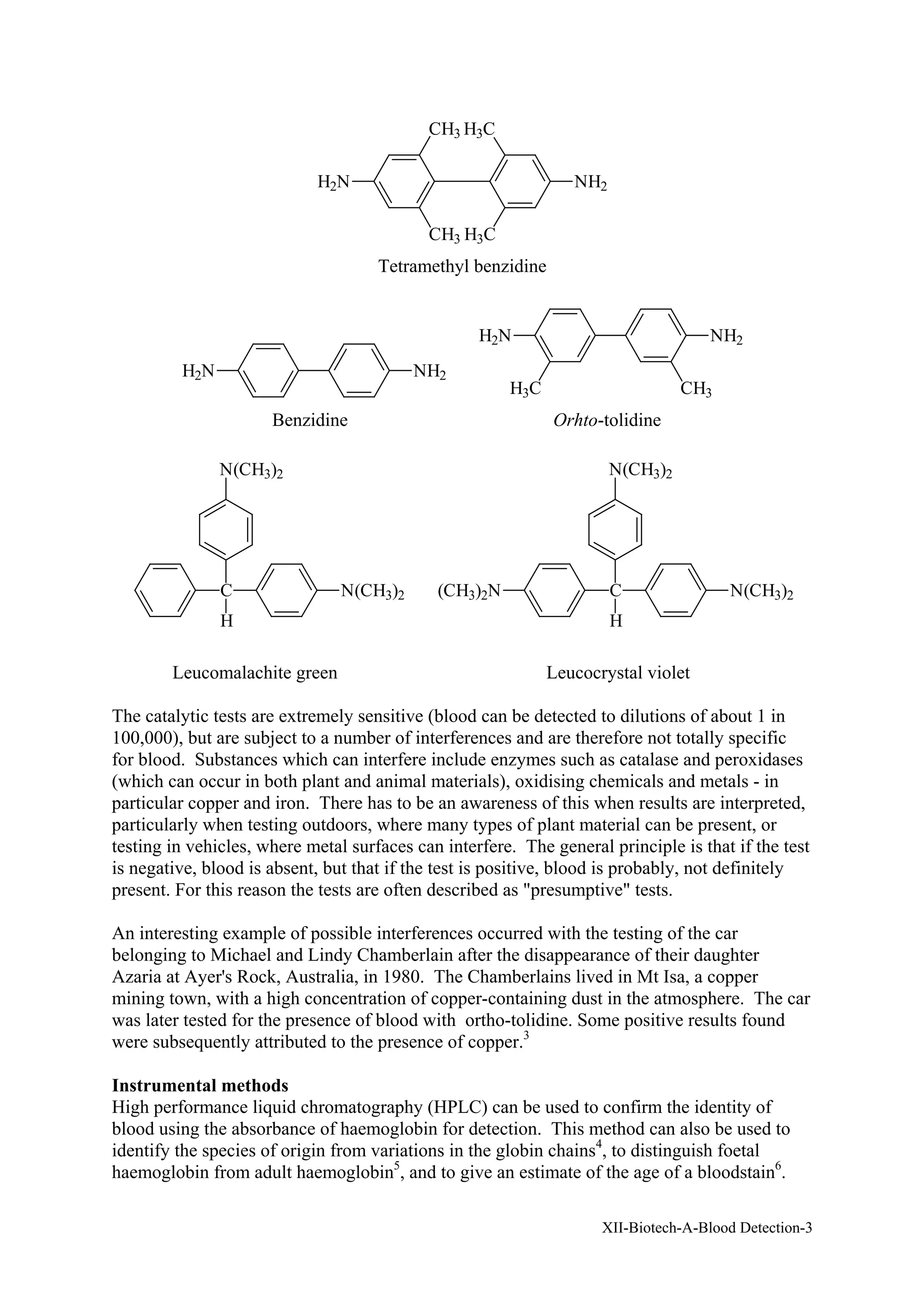
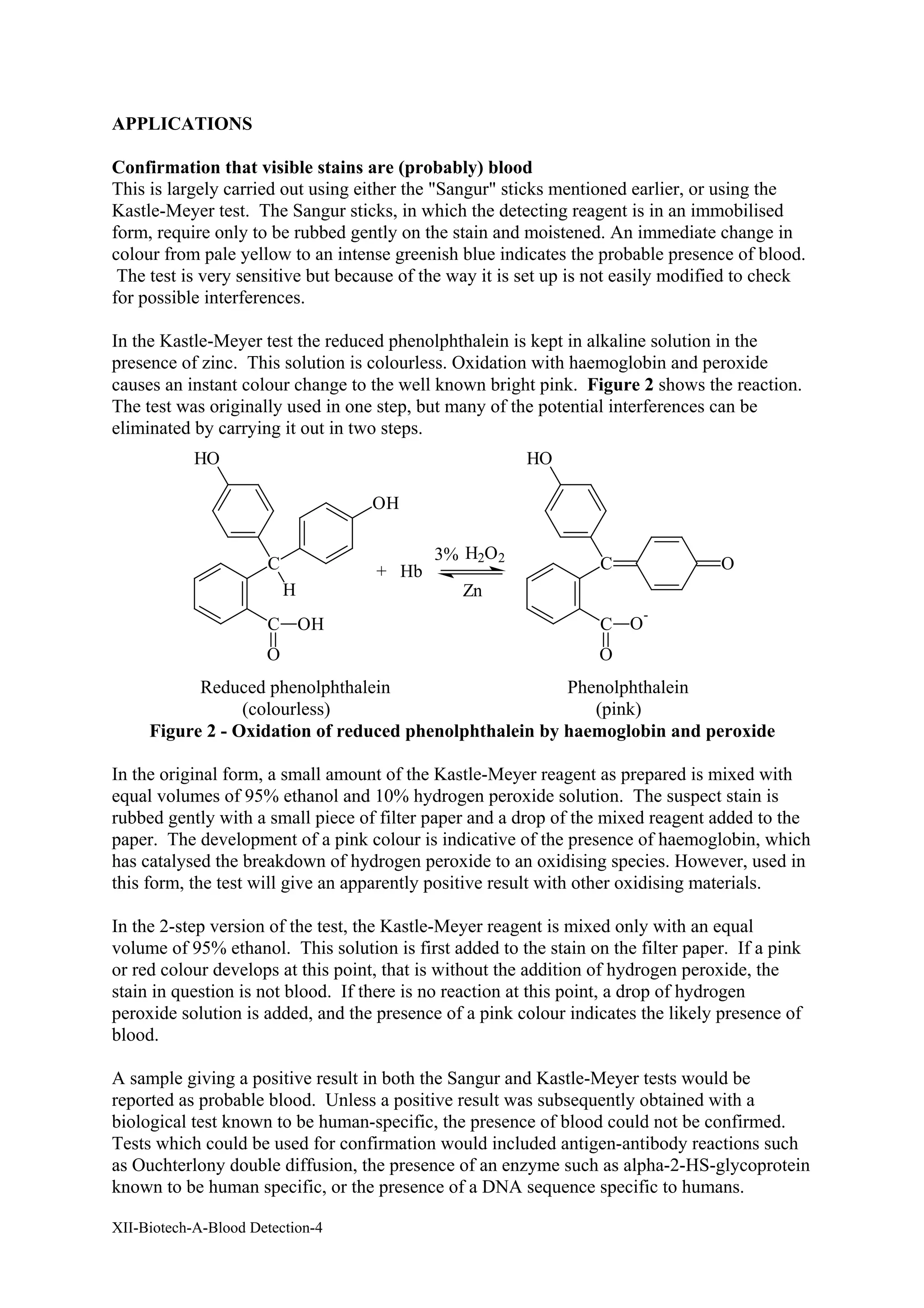
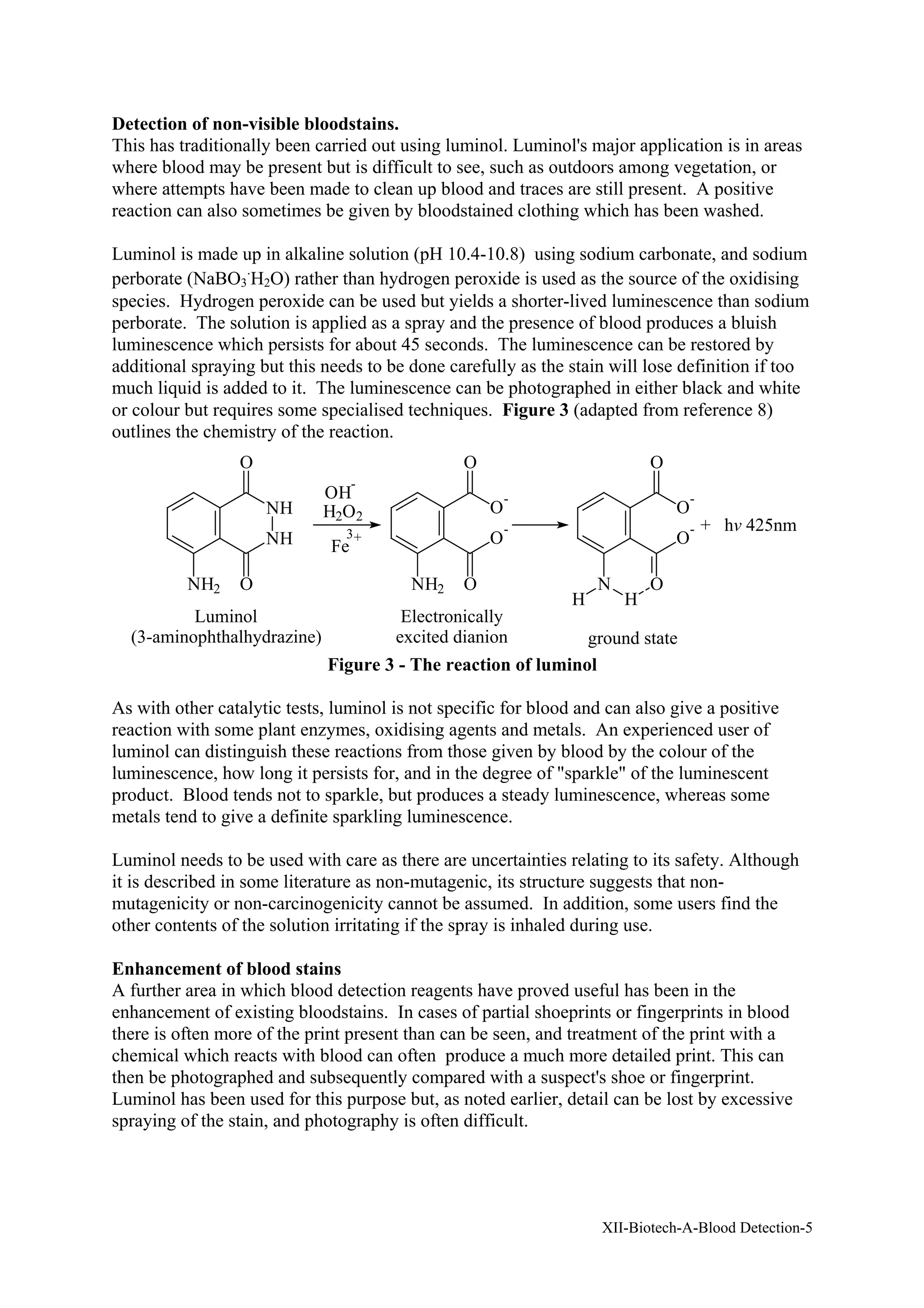

Forensic scientists use three main categories of chemical methods to detect blood at crime scenes: crystal tests, catalytic tests, and instrumental methods. Crystal tests examine the formation of haemoglobin derivative crystals under a microscope. Catalytic tests rely on haemoglobin's ability to catalyze the breakdown of hydrogen peroxide, producing a color change. Instrumental methods like chromatography can identify and characterize haemoglobin. These chemical tests are used to confirm visible blood stains, detect non-visible stains, and enhance faint stains, helping investigators identify potential suspects.


![Biological stains -blood[Forensic Medicine].pptx](https://cdn.slidesharecdn.com/ss_thumbnails/biologicalstains-blood-250318041747-d8c33463-thumbnail.jpg?width=640&height=640&fit=bounds)


