Blood Circulation
&
Gastro-intestinal System
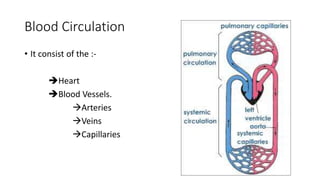
Blood Circulation
• It consist of the :-
Heart
Blood Vessels.
Arteries
Veins
Capillaries
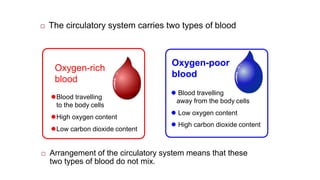
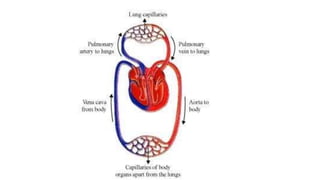
 The circulatory system carries two types of blood
 Arrangement of the circulatory system means that these
two types of blood do not mix.
Oxygen-rich
blood
Oxygen-poor
blood
Blood travelling
to the body cells
High oxygen content
Low carbon dioxide content
 Blood travelling
away from the body cells
 Low oxygen content
 High carbon dioxide content
• Arteries are blood vessels that carry blood away from the heart.
• All arteries , exception of the pulmonary arteries , carry oxygenated
blood.
• Pulmonary arteries carry deoxygenated blood to heart.
• Veins is a blood vessel that carries blood back toward the heart.
• Veins carry low oxygen blood from the tissues back to the heart except
pulmonary veins.
• Pulmonary veins carry oxygenated rich blood from lungs to the left
atrium of the heart.
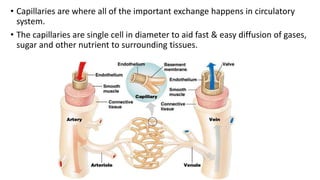
• Capillaries are where all of the important exchange happens in circulatory
system.
• The capillaries are single cell in diameter to aid fast & easy diffusion of gases,
sugar and other nutrient to surrounding tissues.
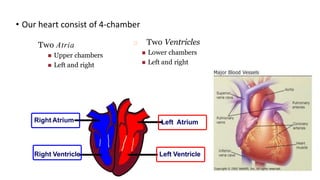
• Our heart consist of 4-chamber
Two Atria
 Upper chambers
 Left and right
Two Ventricles
 Lower chambers
 Left and right
Right Ventricle
Right Atrium
Left Ventricle
Left Atrium
• The major blood vessels connected to your heart are the aorta.
• The superior vena cava, the inferior vena cava, the pulmonary artery (which
takes oxygen-poor blood from the heart to the lungs where it is oxygenated), the
pulmonary veins (which bring oxygen-rich blood from the lungs to the heart).
• It is divided into the left and right side by a wall called the septum.
• The atria and ventricles work together, contracting and relaxing to pump blood
out of the heart.
• As blood leaves each chamber of the heart, it passes through a valve.
• There are four heart valves within the heart:
1. Mitral valve
2. Tricuspid valve
3. Aortic valve
4. Pulmonic valve (also called pulmonary valve).
• The right and left sides of the heart work together.
• Right side
• Blood enters the heart through two large veins, the inferior and superior vena
cava, emptying oxygen-poor blood from the body into the right atrium.
• As the atrium contracts, blood flows from your right atrium into your right
ventricle through the open tricuspid valve.
• When the ventricle is full, the tricuspid valve shuts. This prevents blood from
flowing backward into the atria while the ventricle contracts.
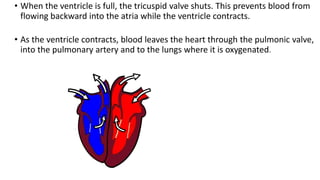
• As the ventricle contracts, blood leaves the heart through the pulmonic valve,
into the pulmonary artery and to the lungs where it is oxygenated.
• Left side
• The pulmonary vein empties oxygen-rich blood from the lungs into the left
atrium.
• As the atrium contracts, blood flows from your left atrium into your left
ventricle through the open mitral valve.
• When the ventricle is full, the mitral valve shuts. This prevents blood from
flowing backward into the atrium while the ventricle contracts.
• As the ventricle contracts, blood leaves the heart through the aortic valve, into
the aorta and to the body.
• The atria and ventricles work together, alternately contracting and relaxing to
make the heart beat and pump blood.
• The impulse starts in a small bundle of specialized cells called the SA node
(Sinoatrial node), located in the right atrium. This node is known as the heart's
natural pacemaker.
• The electrical activity spreads through the walls of the atria and causes them to
contract.
• The centre of the heart between the atria and ventricles, the AV node
(atrioventricular node) is like a gate that slows the electrical signal before it
enters the ventricles.
Gastrointestinal System
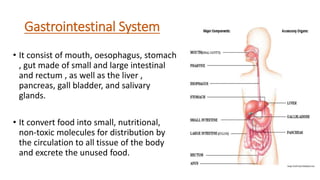
• It consist of mouth, oesophagus, stomach
, gut made of small and large intestinal
and rectum , as well as the liver ,
pancreas, gall bladder, and salivary
glands.
• It convert food into small, nutritional,
non-toxic molecules for distribution by
the circulation to all tissue of the body
and excrete the unused food.
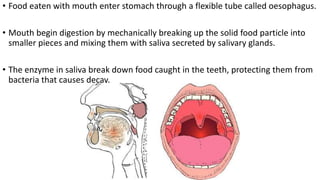
• Food eaten with mouth enter stomach through a flexible tube called oesophagus.
• Mouth begin digestion by mechanically breaking up the solid food particle into
smaller pieces and mixing them with saliva secreted by salivary glands.
• The enzyme in saliva break down food caught in the teeth, protecting them from
bacteria that causes decay.
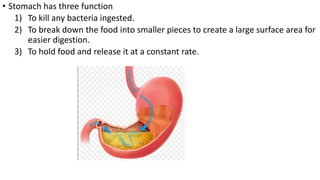
• Stomach has three function
1) To kill any bacteria ingested.
2) To break down the food into smaller pieces to create a large surface area for
easier digestion.
3) To hold food and release it at a constant rate.
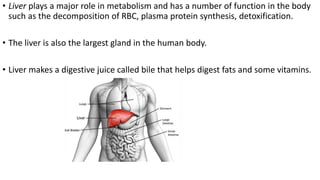
• Liver plays a major role in metabolism and has a number of function in the body
such as the decomposition of RBC, plasma protein synthesis, detoxification.
• The liver is also the largest gland in the human body.
• Liver makes a digestive juice called bile that helps digest fats and some vitamins.
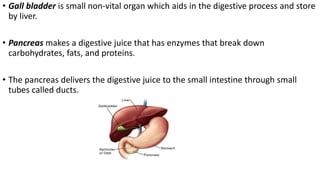
• Gall bladder is small non-vital organ which aids in the digestive process and store
by liver.
• Pancreas makes a digestive juice that has enzymes that break down
carbohydrates, fats, and proteins.
• The pancreas delivers the digestive juice to the small intestine through small
tubes called ducts.
• The largest part of digestion take place in the small intestine that is located below
the stomach.
• Small intestine is about five time larger than large intestine , it is called due to
small in diameter comparable to large intestine.
• Small intestine consist of 1000 of finger like outgrowth called villi.
• Villi increases surface area for absorption of digested food.
• Villi has network of a thin and small blood vessel to its surface.
• The surface of villi absorb the digested food material and transported via blood
vessels to different organs of the body , where they are used to build complex
substance such as the proteins required by our bofy.
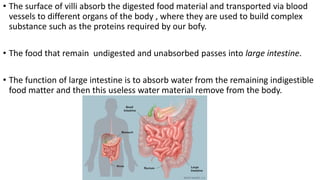
• The food that remain undigested and unabsorbed passes into large intestine.
• The function of large intestine is to absorb water from the remaining indigestible
food matter and then this useless water material remove from the body.
Blood circulatory system & gastroinstential system

Blood circulatory system & gastroinstential system

  • 2.
  • 3.
    Blood Circulation • Itconsist of the :- Heart Blood Vessels. Arteries Veins Capillaries
  • 4.
     The circulatorysystem carries two types of blood  Arrangement of the circulatory system means that these two types of blood do not mix. Oxygen-rich blood Oxygen-poor blood Blood travelling to the body cells High oxygen content Low carbon dioxide content  Blood travelling away from the body cells  Low oxygen content  High carbon dioxide content
  • 5.
    • Arteries areblood vessels that carry blood away from the heart. • All arteries , exception of the pulmonary arteries , carry oxygenated blood. • Pulmonary arteries carry deoxygenated blood to heart. • Veins is a blood vessel that carries blood back toward the heart. • Veins carry low oxygen blood from the tissues back to the heart except pulmonary veins. • Pulmonary veins carry oxygenated rich blood from lungs to the left atrium of the heart.
  • 6.
    • Capillaries arewhere all of the important exchange happens in circulatory system. • The capillaries are single cell in diameter to aid fast & easy diffusion of gases, sugar and other nutrient to surrounding tissues.
  • 7.
    • Our heartconsist of 4-chamber Two Atria  Upper chambers  Left and right Two Ventricles  Lower chambers  Left and right Right Ventricle Right Atrium Left Ventricle Left Atrium
  • 8.
    • The majorblood vessels connected to your heart are the aorta. • The superior vena cava, the inferior vena cava, the pulmonary artery (which takes oxygen-poor blood from the heart to the lungs where it is oxygenated), the pulmonary veins (which bring oxygen-rich blood from the lungs to the heart). • It is divided into the left and right side by a wall called the septum. • The atria and ventricles work together, contracting and relaxing to pump blood out of the heart. • As blood leaves each chamber of the heart, it passes through a valve.
  • 9.
    • There arefour heart valves within the heart: 1. Mitral valve 2. Tricuspid valve 3. Aortic valve 4. Pulmonic valve (also called pulmonary valve). • The right and left sides of the heart work together. • Right side • Blood enters the heart through two large veins, the inferior and superior vena cava, emptying oxygen-poor blood from the body into the right atrium. • As the atrium contracts, blood flows from your right atrium into your right ventricle through the open tricuspid valve.
  • 10.
    • When theventricle is full, the tricuspid valve shuts. This prevents blood from flowing backward into the atria while the ventricle contracts. • As the ventricle contracts, blood leaves the heart through the pulmonic valve, into the pulmonary artery and to the lungs where it is oxygenated.
  • 11.
    • Left side •The pulmonary vein empties oxygen-rich blood from the lungs into the left atrium. • As the atrium contracts, blood flows from your left atrium into your left ventricle through the open mitral valve. • When the ventricle is full, the mitral valve shuts. This prevents blood from flowing backward into the atrium while the ventricle contracts. • As the ventricle contracts, blood leaves the heart through the aortic valve, into the aorta and to the body.
  • 12.
    • The atriaand ventricles work together, alternately contracting and relaxing to make the heart beat and pump blood. • The impulse starts in a small bundle of specialized cells called the SA node (Sinoatrial node), located in the right atrium. This node is known as the heart's natural pacemaker. • The electrical activity spreads through the walls of the atria and causes them to contract. • The centre of the heart between the atria and ventricles, the AV node (atrioventricular node) is like a gate that slows the electrical signal before it enters the ventricles.
  • 14.
    Gastrointestinal System • Itconsist of mouth, oesophagus, stomach , gut made of small and large intestinal and rectum , as well as the liver , pancreas, gall bladder, and salivary glands. • It convert food into small, nutritional, non-toxic molecules for distribution by the circulation to all tissue of the body and excrete the unused food.
  • 15.
    • Food eatenwith mouth enter stomach through a flexible tube called oesophagus. • Mouth begin digestion by mechanically breaking up the solid food particle into smaller pieces and mixing them with saliva secreted by salivary glands. • The enzyme in saliva break down food caught in the teeth, protecting them from bacteria that causes decay.
  • 16.
    • Stomach hasthree function 1) To kill any bacteria ingested. 2) To break down the food into smaller pieces to create a large surface area for easier digestion. 3) To hold food and release it at a constant rate.
  • 17.
    • Liver playsa major role in metabolism and has a number of function in the body such as the decomposition of RBC, plasma protein synthesis, detoxification. • The liver is also the largest gland in the human body. • Liver makes a digestive juice called bile that helps digest fats and some vitamins.
  • 18.
    • Gall bladderis small non-vital organ which aids in the digestive process and store by liver. • Pancreas makes a digestive juice that has enzymes that break down carbohydrates, fats, and proteins. • The pancreas delivers the digestive juice to the small intestine through small tubes called ducts.
  • 19.
    • The largestpart of digestion take place in the small intestine that is located below the stomach. • Small intestine is about five time larger than large intestine , it is called due to small in diameter comparable to large intestine. • Small intestine consist of 1000 of finger like outgrowth called villi. • Villi increases surface area for absorption of digested food. • Villi has network of a thin and small blood vessel to its surface.
  • 20.
    • The surfaceof villi absorb the digested food material and transported via blood vessels to different organs of the body , where they are used to build complex substance such as the proteins required by our bofy. • The food that remain undigested and unabsorbed passes into large intestine. • The function of large intestine is to absorb water from the remaining indigestible food matter and then this useless water material remove from the body.