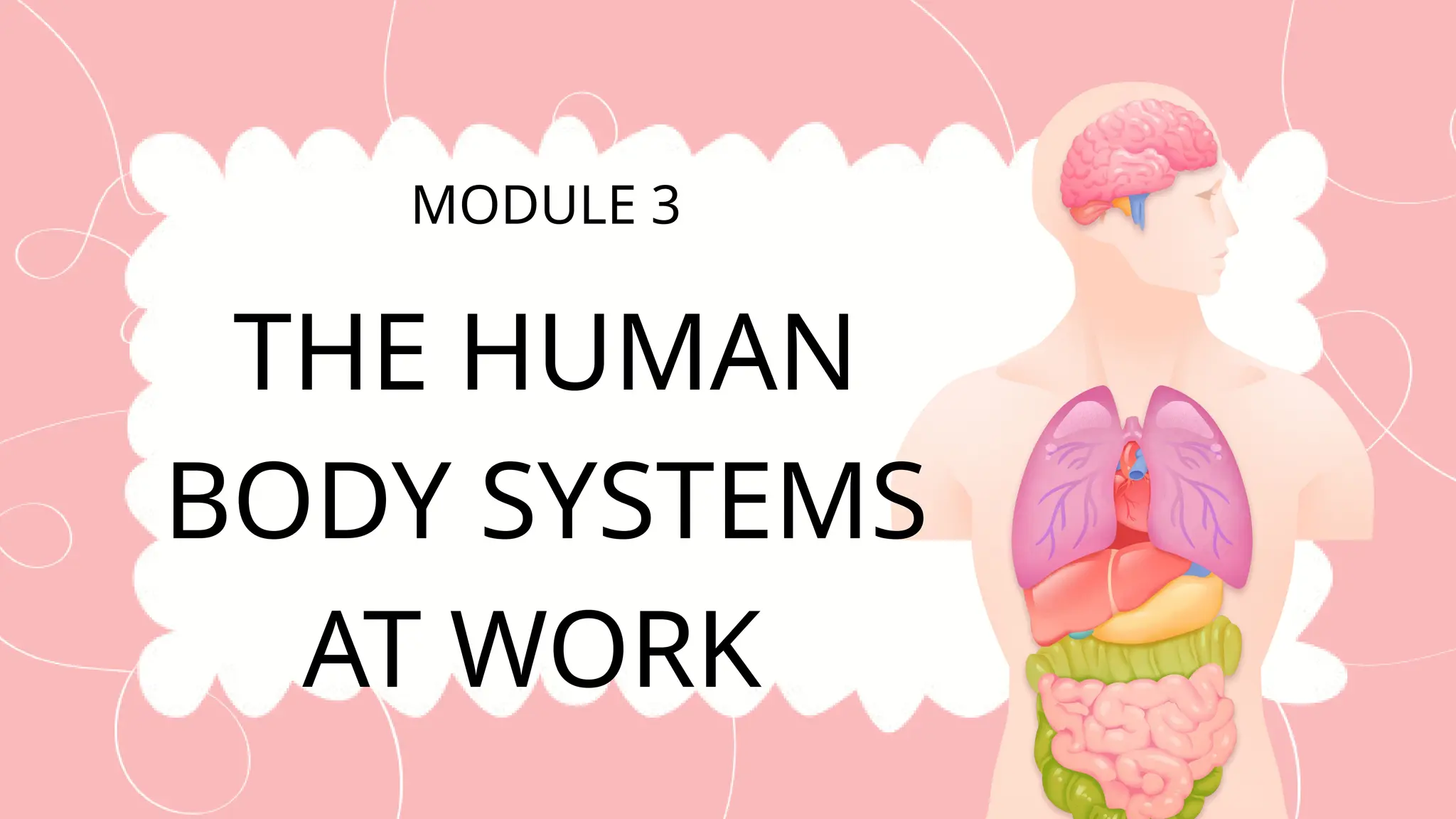
THE HUMAN
BODY SYSTEMS
AT WORK
MODULE 3
The human body is a complex
machine made up of multiple
systems working together to keep us
alive and functioning.
Human Body
systems
Digestive System
Circulatory System
Respiratory System
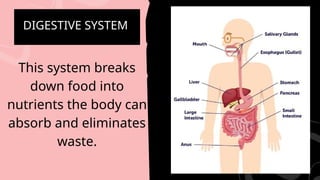
DIGESTIVE SYSTEM
This system breaks
down food into
nutrients the body can
absorb and eliminates
waste.
MOUTH: Is the first stop for food.Your teeth chew food
into smaller pieces, and your tongue helps mix it with
saliva.
ESOPHAGUS :This is like a slippery slide that takes the
food down to the stomach.
STOMACH :mixes the food with strong juices that
break it down even further.
THE MAIN PARTS AND FUNCTIONS
Gallbladder: Imagine a small pouch that stores a special
liquid called bile. Bile helps break down fats in your food.
It's like a tiny helper that makes it easier for your body to
digest greasy foods.
Pancreas: This is a long, thin organ that makes special
juices that help break down food in your stomach and
intestines.
Salivary glands: These are small glands in your mouth that
make saliva.
SMALL INTESTINE: This is the longest part of the road,
and it's where most of the nutrients are absorbed into
your body.
LARGE INTESTINE: It absorbs water from the food and
gets rid of any waste that your body doesn't need.
ANUS: It's where the waste leaves your body.
1. Mouth: The journey starts here! Your teeth chew food
into smaller pieces, and your saliva mixes with the food to
help break it down even further.
2. Esophagus: This muscular tube carries food from your
mouth to your stomach. It's like a slippery slide that
moves food down.
3. Stomach: This muscular pouch churns and mixes
food with powerful acids and enzymes.
The DIGESTIVE SYSTEM works:
4. Small Intestine: This long, coiled tube is where most
of the nutrients from food are absorbed into your
bloodstream.
5. Large Intestine: This shorter, wider tube absorbs water
from the remaining food and forms waste products called
feces.
6.Rectum: This is the final part of the large intestine,
where feces are stored until they are eliminated from
the body.
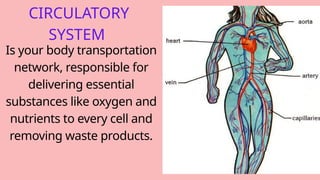
CIRCULATORY
SYSTEM
Is your body transportation
network, responsible for
delivering essential
substances like oxygen and
nutrients to every cell and
removing waste products.
THE MAIN ORGAN OF CIRCULATORY SYSTEM
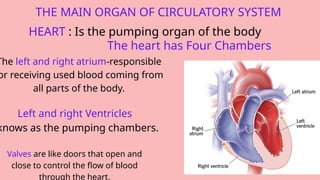
HEART : Is the pumping organ of the body
The heart has Four Chambers
The left and right atrium-responsible
or receiving used blood coming from
all parts of the body.
Left and right Ventricles
knows as the pumping chambers.
Valves are like doors that open and
close to control the flow of blood
through the heart.
Superior Vena Cava: It has a large vein that carries
deoxygenated blood from the upper body (head, neck,
arms, and chest) to the right atrium of the heart.
Inferior Vena Cava: It is a another large vein that carries
deoxygenated blood from the lower body (legs,
abdomen, and pelvis) to the right atrium of the heart.
TWO LARGE VEINS
The pulmonary valve prevents blood from flowing back
into the right ventricle after it has been pumped into the
pulmonary artery.
Pulmonary artery carries deoxygenated blood from the
right ventricle to the lungs, where it picks up oxygen.
Pulmonary vein carries oxygenated blood from the lungs
back to the left atrium of the heart.
The aorta is the largest artery in the body. It carries
oxygenated blood from the left ventricle to the rest of the
body.
Mitral valve prevents blood from flowing back into the
left atrium after it has been pumped into the left
ventricle.
Tricuspid valve prevents blood from flowing back into
the right atrium after it has been pumped into the
right ventricle.
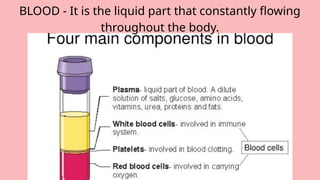
BLOOD - It is the liquid part that constantly flowing
throughout the body.
TWO TYPES OF BLOOD CIRCULATION
Pulmonary circulation is the flow of blood between
the heart and the lungs. It is responsible for
oxygenating the blood.
Systemic circulation is the flow of blood between
the heart and the rest of the body. It is responsible
for delivering oxygenated blood to the body's
tissues and removing waste products.
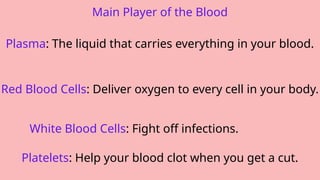
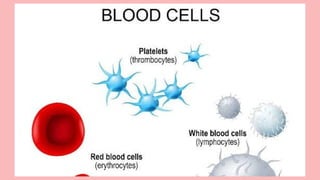
Plasma: The liquid that carries everything in your blood.
Red Blood Cells: Deliver oxygen to every cell in your body.
White Blood Cells: Fight off infections.
Platelets: Help your blood clot when you get a cut.
Main Player of the Blood
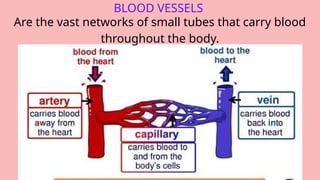
BLOOD VESSELS
Are the vast networks of small tubes that carry blood
throughout the body.
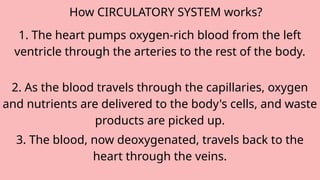
1. The heart pumps oxygen-rich blood from the left
ventricle through the arteries to the rest of the body.
2. As the blood travels through the capillaries, oxygen
and nutrients are delivered to the body's cells, and waste
products are picked up.
How CIRCULATORY SYSTEM works?
3. The blood, now deoxygenated, travels back to the
heart through the veins.
4. The heart pumps the deoxygenated blood to the lungs,
where it picks up oxygen and releases carbon dioxide.
5. The oxygen-rich blood is sent back to the heart, ready
to be pumped out to the body again.
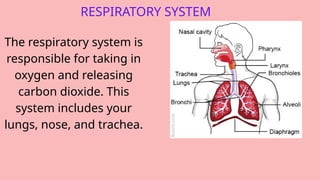
RESPIRATORY SYSTEM
The respiratory system is
responsible for taking in
oxygen and releasing
carbon dioxide. This
system includes your
lungs, nose, and trachea.
Nose and Nasal Cavity:
The nose serves as the primary entry point for air into
the respiratory system. The nasal cavity, located inside
the nose, is lined with tiny hairs called cilia and a moist
mucous membrane.
THE MAIN ORGANS OF RESPIRATORY SYSTEM
CILIA: These hairs trap dust, pollen, and other foreign
particles, preventing them from entering the lungs.
MUCOUS MEMBRANE: The moist lining helps warm,
humidify, and filter incoming air.
MOUTH AND ORAL CAVITY
While the nose is the primary entry point for air, the
mouth can also be used for breathing, especially when
the nose is blocked. The oral cavity, like the nasal cavity,
helps to warm and humidify incoming air.
SINUSES: The sinuses are air-filled cavities within the
bones of the skull, connected to the nasal cavity. They
contribute to the resonance of sound during speech
and help lighten the skull.
PHARYNX (Throat):
Is a muscular tube that connects the nasal and oral
cavities to the larynx. A flap of tissue called the
epiglottis closes over the opening of the larynx during
swallowing, preventing food from entering the
trachea.
LARYNX (Voice Box):
Located at the top of the trachea, the larynx contains the
vocal cords. These cords vibrate as air passes over them,
producing sound.
TRACHEA (Windpipe):
It is a rigid tube that carries air from the larynx to the
bronchi. Its walls are reinforced with C-shaped rings of
cartilage, which keep the trachea open and prevent it
from collapsing.
BRONCHI (Large Airways):The bronchi further divide into
smaller and smaller tubes called bronchioles. The bronchi
and bronchioles carry air to the tiny air sacs in the lungs
called alveoli.
LUNGS: The lungs are responsible for the exchange of
gases between the air we breathe and our blood.
DIAPHRAGM :is a dome-shaped muscle that separates
the chest cavity from the abdominal cavity. It plays a
crucial role in breathing by contracting and relaxing.
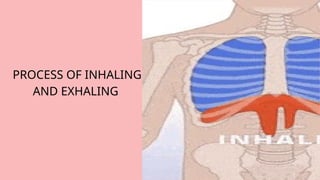
Inhaling: When the diaphragm contracts, it flattens,
increasing the volume of the chest cavity and drawing air
into the lungs.
Exhaling: When the diaphragm relaxes, it returns to its
dome shape, decreasing the volume of the chest cavity
and forcing air out of the lungs.
PROCESS OF INHALING
AND EXHALING
1. INHALING: When you breathe in, air travels through
your nose or mouth, then down the pharynx, trachea,
bronchi, and bronchioles, finally reaching the alveoli.
2. GAS EXCHANGE :Inside the alveoli, oxygen from the air
passes into the blood, and carbon dioxide from the blood
passes into the air.
RESPIRATORY SYSTEM works:
3. EXHALING: When you breathe out, the diaphragm
relaxes, pushing the air out of your lungs, and the carbon
dioxide is released from your body.
THANK YOU 😊

Respiratory-circulatory-and-digestive-system.pptx

  • 1.
  • 2.
    The human bodyis a complex machine made up of multiple systems working together to keep us alive and functioning.
  • 3.
  • 4.
    DIGESTIVE SYSTEM This systembreaks down food into nutrients the body can absorb and eliminates waste.
  • 5.
    MOUTH: Is thefirst stop for food.Your teeth chew food into smaller pieces, and your tongue helps mix it with saliva. ESOPHAGUS :This is like a slippery slide that takes the food down to the stomach. STOMACH :mixes the food with strong juices that break it down even further. THE MAIN PARTS AND FUNCTIONS
  • 6.
    Gallbladder: Imagine asmall pouch that stores a special liquid called bile. Bile helps break down fats in your food. It's like a tiny helper that makes it easier for your body to digest greasy foods. Pancreas: This is a long, thin organ that makes special juices that help break down food in your stomach and intestines. Salivary glands: These are small glands in your mouth that make saliva.
  • 7.
    SMALL INTESTINE: Thisis the longest part of the road, and it's where most of the nutrients are absorbed into your body. LARGE INTESTINE: It absorbs water from the food and gets rid of any waste that your body doesn't need. ANUS: It's where the waste leaves your body.
  • 9.
    1. Mouth: Thejourney starts here! Your teeth chew food into smaller pieces, and your saliva mixes with the food to help break it down even further. 2. Esophagus: This muscular tube carries food from your mouth to your stomach. It's like a slippery slide that moves food down. 3. Stomach: This muscular pouch churns and mixes food with powerful acids and enzymes. The DIGESTIVE SYSTEM works:
  • 10.
    4. Small Intestine:This long, coiled tube is where most of the nutrients from food are absorbed into your bloodstream. 5. Large Intestine: This shorter, wider tube absorbs water from the remaining food and forms waste products called feces. 6.Rectum: This is the final part of the large intestine, where feces are stored until they are eliminated from the body.
  • 11.
    CIRCULATORY SYSTEM Is your bodytransportation network, responsible for delivering essential substances like oxygen and nutrients to every cell and removing waste products.
  • 12.
    THE MAIN ORGANOF CIRCULATORY SYSTEM HEART : Is the pumping organ of the body The heart has Four Chambers The left and right atrium-responsible or receiving used blood coming from all parts of the body. Left and right Ventricles knows as the pumping chambers. Valves are like doors that open and close to control the flow of blood through the heart.
  • 13.
    Superior Vena Cava:It has a large vein that carries deoxygenated blood from the upper body (head, neck, arms, and chest) to the right atrium of the heart. Inferior Vena Cava: It is a another large vein that carries deoxygenated blood from the lower body (legs, abdomen, and pelvis) to the right atrium of the heart. TWO LARGE VEINS
  • 14.
    The pulmonary valveprevents blood from flowing back into the right ventricle after it has been pumped into the pulmonary artery. Pulmonary artery carries deoxygenated blood from the right ventricle to the lungs, where it picks up oxygen. Pulmonary vein carries oxygenated blood from the lungs back to the left atrium of the heart.
  • 15.
    The aorta isthe largest artery in the body. It carries oxygenated blood from the left ventricle to the rest of the body. Mitral valve prevents blood from flowing back into the left atrium after it has been pumped into the left ventricle. Tricuspid valve prevents blood from flowing back into the right atrium after it has been pumped into the right ventricle.
  • 16.
    BLOOD - Itis the liquid part that constantly flowing throughout the body.
  • 17.
    TWO TYPES OFBLOOD CIRCULATION Pulmonary circulation is the flow of blood between the heart and the lungs. It is responsible for oxygenating the blood. Systemic circulation is the flow of blood between the heart and the rest of the body. It is responsible for delivering oxygenated blood to the body's tissues and removing waste products.
  • 18.
    Plasma: The liquidthat carries everything in your blood. Red Blood Cells: Deliver oxygen to every cell in your body. White Blood Cells: Fight off infections. Platelets: Help your blood clot when you get a cut. Main Player of the Blood
  • 21.
    BLOOD VESSELS Are thevast networks of small tubes that carry blood throughout the body.
  • 22.
    1. The heartpumps oxygen-rich blood from the left ventricle through the arteries to the rest of the body. 2. As the blood travels through the capillaries, oxygen and nutrients are delivered to the body's cells, and waste products are picked up. How CIRCULATORY SYSTEM works? 3. The blood, now deoxygenated, travels back to the heart through the veins.
  • 23.
    4. The heartpumps the deoxygenated blood to the lungs, where it picks up oxygen and releases carbon dioxide. 5. The oxygen-rich blood is sent back to the heart, ready to be pumped out to the body again.
  • 24.
    RESPIRATORY SYSTEM The respiratorysystem is responsible for taking in oxygen and releasing carbon dioxide. This system includes your lungs, nose, and trachea.
  • 26.
    Nose and NasalCavity: The nose serves as the primary entry point for air into the respiratory system. The nasal cavity, located inside the nose, is lined with tiny hairs called cilia and a moist mucous membrane. THE MAIN ORGANS OF RESPIRATORY SYSTEM CILIA: These hairs trap dust, pollen, and other foreign particles, preventing them from entering the lungs.
  • 27.
    MUCOUS MEMBRANE: Themoist lining helps warm, humidify, and filter incoming air. MOUTH AND ORAL CAVITY While the nose is the primary entry point for air, the mouth can also be used for breathing, especially when the nose is blocked. The oral cavity, like the nasal cavity, helps to warm and humidify incoming air.
  • 28.
    SINUSES: The sinusesare air-filled cavities within the bones of the skull, connected to the nasal cavity. They contribute to the resonance of sound during speech and help lighten the skull. PHARYNX (Throat): Is a muscular tube that connects the nasal and oral cavities to the larynx. A flap of tissue called the epiglottis closes over the opening of the larynx during swallowing, preventing food from entering the trachea.
  • 29.
    LARYNX (Voice Box): Locatedat the top of the trachea, the larynx contains the vocal cords. These cords vibrate as air passes over them, producing sound. TRACHEA (Windpipe): It is a rigid tube that carries air from the larynx to the bronchi. Its walls are reinforced with C-shaped rings of cartilage, which keep the trachea open and prevent it from collapsing.
  • 30.
    BRONCHI (Large Airways):Thebronchi further divide into smaller and smaller tubes called bronchioles. The bronchi and bronchioles carry air to the tiny air sacs in the lungs called alveoli. LUNGS: The lungs are responsible for the exchange of gases between the air we breathe and our blood. DIAPHRAGM :is a dome-shaped muscle that separates the chest cavity from the abdominal cavity. It plays a crucial role in breathing by contracting and relaxing.
  • 31.
    Inhaling: When thediaphragm contracts, it flattens, increasing the volume of the chest cavity and drawing air into the lungs. Exhaling: When the diaphragm relaxes, it returns to its dome shape, decreasing the volume of the chest cavity and forcing air out of the lungs.
  • 32.
  • 33.
    1. INHALING: Whenyou breathe in, air travels through your nose or mouth, then down the pharynx, trachea, bronchi, and bronchioles, finally reaching the alveoli. 2. GAS EXCHANGE :Inside the alveoli, oxygen from the air passes into the blood, and carbon dioxide from the blood passes into the air. RESPIRATORY SYSTEM works:
  • 34.
    3. EXHALING: Whenyou breathe out, the diaphragm relaxes, pushing the air out of your lungs, and the carbon dioxide is released from your body.
  • 35.