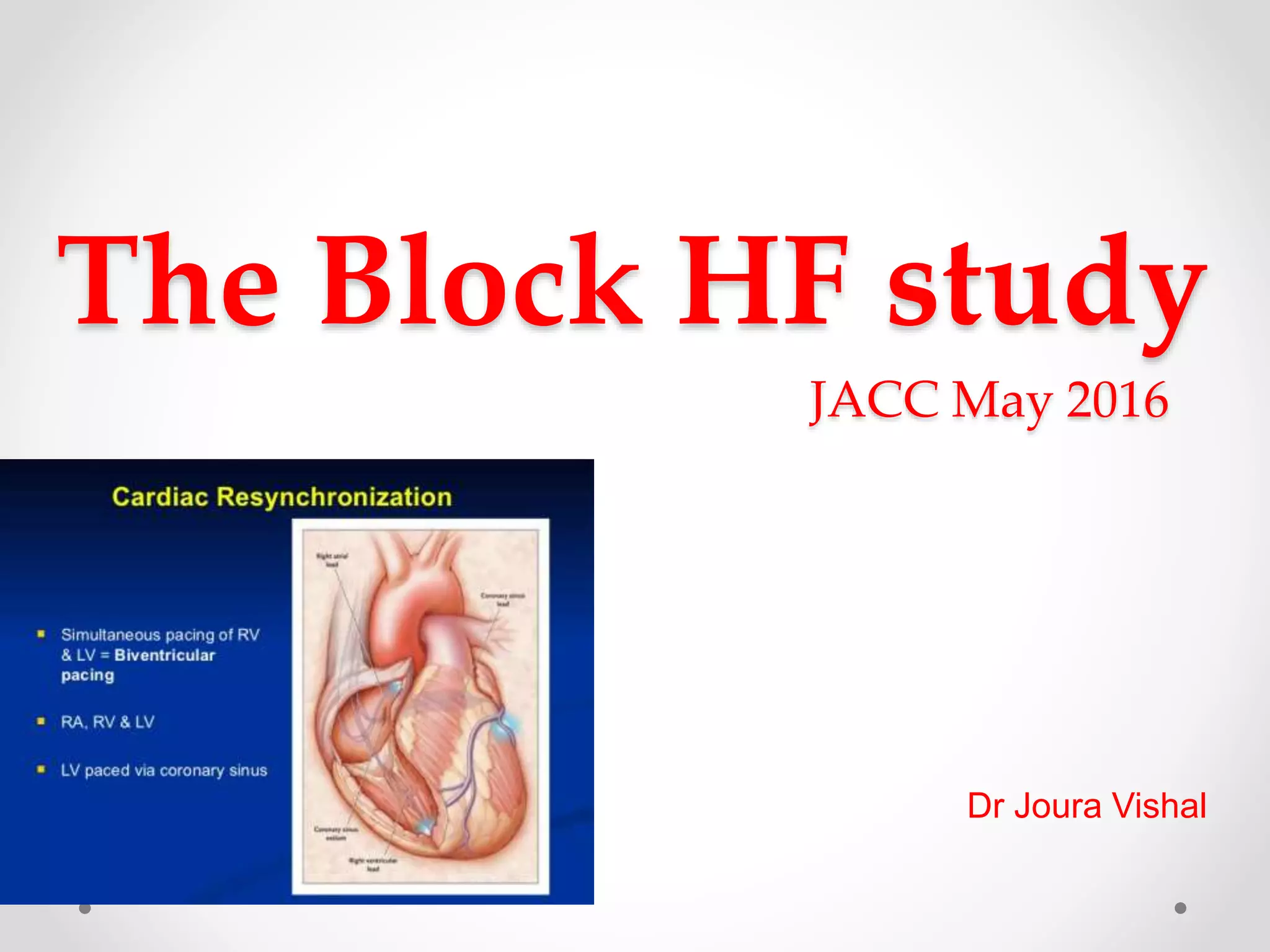

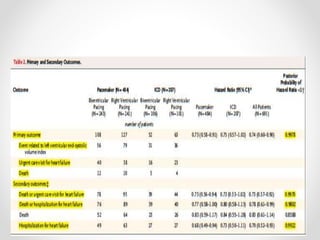








The Block HF study
JACC May 2016
Dr Joura Vishal
Introduction
• Heart failure : end stage of various cardiac conditions
• Refractory heart failure : symptoms at rest inspite of diet
, fluid modifications and Optimal medical therapy ( OMT )
• Affects 2.5 % in United states and european countries
2.5 to 5 million in India
Introduction
• Systolic heart failure may have
- intraventricular dyssynchrony
- interventricular dyssynchrony
- atriventricular dysnchrony
These patients are at high risk of refractory heart failure
and suden cardiac death
Baldasseroni et al Am Heart J 2002
Introduction
Cardiac resynchronization therapy
• minimises regional left ventricular delay
• Reduces Mitral regurgitation
• Normalises neurohormonal factors
Thus altering the natural history of disease
Mc Alister FA et al JAMA 2007
Introduction
Biventricular pacing is a/w
- improved QOL
- increased functional capacity
- reducing hospitalization
- Improved survival
The Block HF trial
RV pacing lead to worse clinic outcomes compared to low
rate ventricular pacing in patients with pacemakers and
ICD who have intact AV conduction
In AV block pacing is required all the time
Hypothesis
In patients with
AV block , LVEF < 50% , NYHA class I , NYHA II
Biventricular pacing would be superior to RV pacing with
respect to
• combined end point of death
• heart failure related urgent care
• adverse LV remodeling manifested by a > 15 % LVESV
index
NEJM 2013
Methods
• Prospective
• Multicenter ( 58 sites in United States & 2 in Canada )
• Randomized
• Double blind
Methods
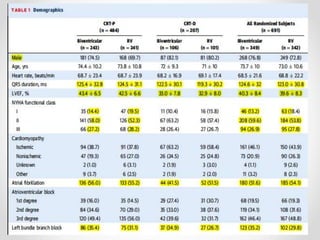
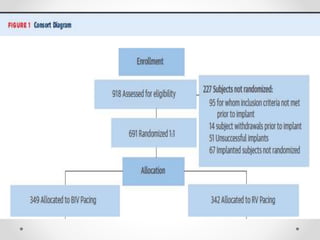
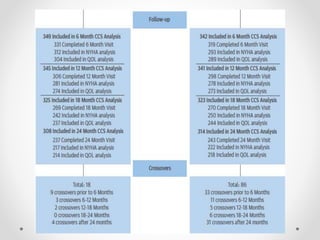
• 918 patients were enrolled from Dec 2003 till Nov 2011
• 691 randomized
• Follow up average 37 months
Statistical analysis : Bayesian statistical method was
used with pre specified metric of benefit being : posterior
probability > 0.95
Methods
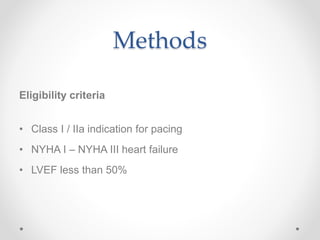
Eligibility criteria
• Class I / IIa indication for pacing
• NYHA I – NYHA III heart failure
• LVEF less than 50%
Methods
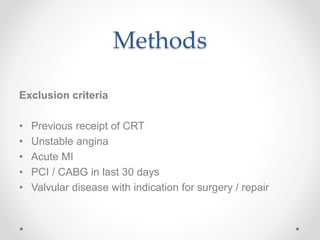
Exclusion criteria
• Previous receipt of CRT
• Unstable angina
• Acute MI
• PCI / CABG in last 30 days
• Valvular disease with indication for surgery / repair
Methods
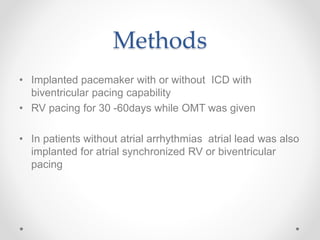
• Implanted pacemaker with or without ICD with
biventricular pacing capability
• RV pacing for 30 -60days while OMT was given
• In patients without atrial arrhythmias atrial lead was also
implanted for atrial synchronized RV or biventricular
pacing
Methods
• Echocardiographic examination was done at baseline then
at 6 , 12, 18 and 24 months
Prespecified outcomes:
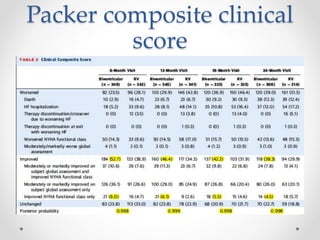
• Packer clinical composite score
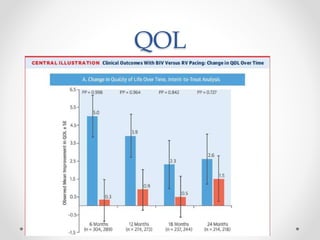
• QOL
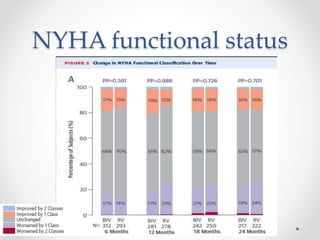
• NYHA functional class
Packer composite clinical
score
Worsened
• Died
• Experienced a hospitalization
• Worsening of NYHA class
Improved
Improvement in NYHA class
Reduced symptoms
Unchanged : none of the above criteria met
Results
Packer composite clinical
score
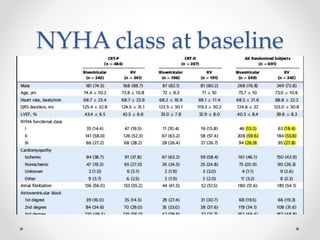
NYHA class at baseline
NYHA functional status
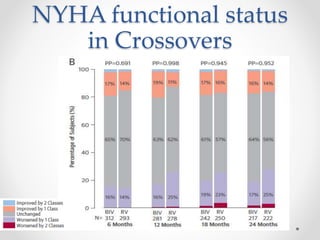
in Crossovers
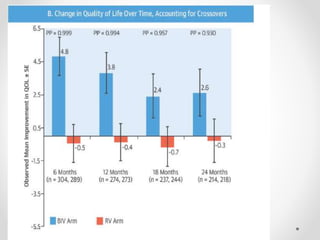
QOL
QOL
Discussion
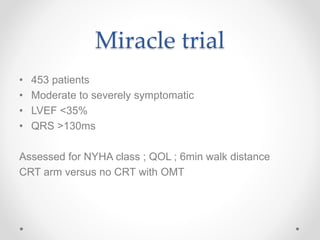
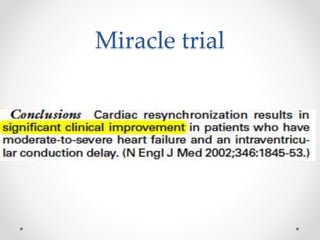
Miracle trial
• 453 patients
• Moderate to severely symptomatic
• LVEF <35%
• QRS >130ms
Assessed for NYHA class ; QOL ; 6min walk distance
CRT arm versus no CRT with OMT
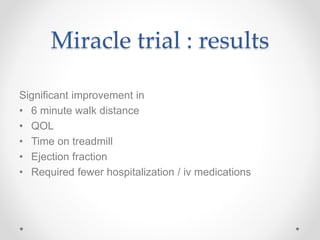
Miracle trial : results
Significant improvement in
• 6 minute walk distance
• QOL
• Time on treadmill
• Ejection fraction
• Required fewer hospitalization / iv medications
Miracle trial
Effects similar to those seen with beta blockers in heart
failure were seen in this trial but these effects were seen
with CRT who were already on beta blockers
Miracle trial
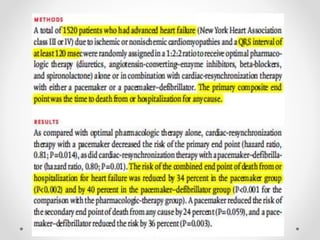
COMPANION TRIAL
NEJM 2004
COMPANION TRIAL
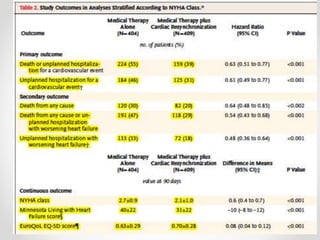
CARE HF trial
CARE HF trial
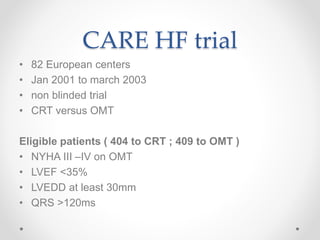
• 82 European centers
• Jan 2001 to march 2003
• non blinded trial
• CRT versus OMT
Eligible patients ( 404 to CRT ; 409 to OMT )
• NYHA III –IV on OMT
• LVEF <35%
• LVEDD at least 30mm
• QRS >120ms
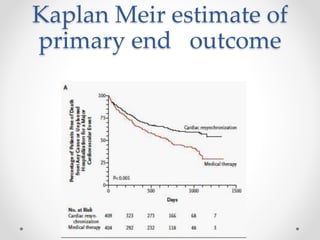
Kaplan Meir estimate of
primary end outcome
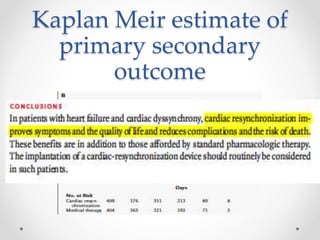
Kaplan Meir estimate of
primary secondary
outcome
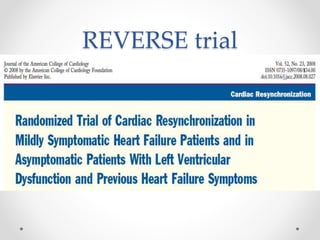
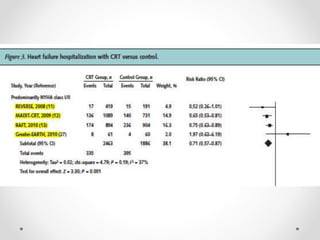
REVERSE trial
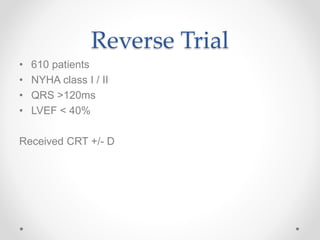
Reverse Trial
• 610 patients
• NYHA class I / II
• QRS >120ms
• LVEF < 40%
Received CRT +/- D
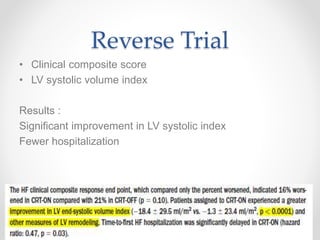
Reverse Trial
• Clinical composite score
• LV systolic volume index
Results :
Significant improvement in LV systolic index
Fewer hospitalization
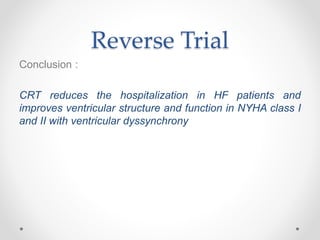
Reverse Trial
Conclusion :
CRT reduces the hospitalization in HF patients and
improves ventricular structure and function in NYHA class I
and II with ventricular dyssynchrony
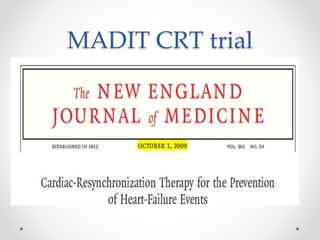
MADIT CRT trial
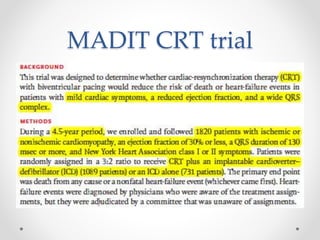
MADIT CRT trial
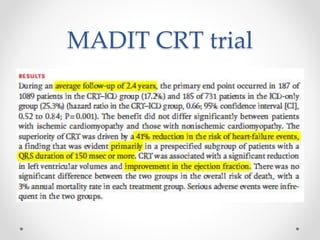
MADIT CRT trial
MADIT CRT trial
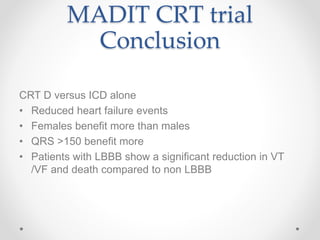
Conclusion
CRT D versus ICD alone
• Reduced heart failure events
• Females benefit more than males
• QRS >150 benefit more
• Patients with LBBB show a significant reduction in VT
/VF and death compared to non LBBB
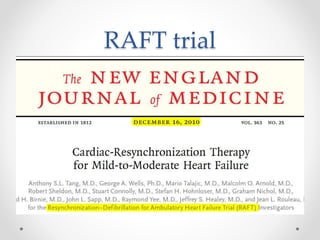
RAFT trial
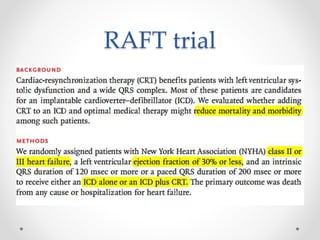
RAFT trial
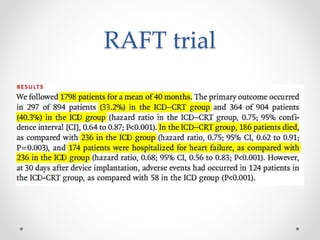
RAFT trial
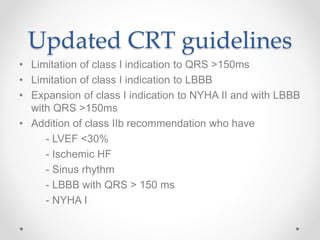
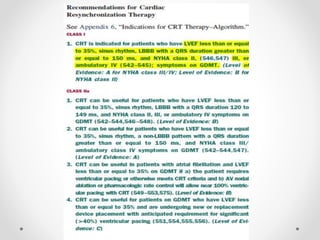
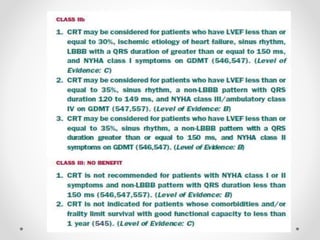
Updated CRT guidelines
• Limitation of class I indication to QRS >150ms
• Limitation of class I indication to LBBB
• Expansion of class I indication to NYHA II and with LBBB
with QRS >150ms
• Addition of class IIb recommendation who have
- LVEF <30%
- Ischemic HF
- Sinus rhythm
- LBBB with QRS > 150 ms
- NYHA I
BLOCK HF trial
BLOCK HF trial

BLOCK HF trial

  • 1.
    The Block HFstudy JACC May 2016 Dr Joura Vishal
  • 2.
    Introduction • Heart failure: end stage of various cardiac conditions • Refractory heart failure : symptoms at rest inspite of diet , fluid modifications and Optimal medical therapy ( OMT ) • Affects 2.5 % in United states and european countries 2.5 to 5 million in India
  • 3.
    Introduction • Systolic heartfailure may have - intraventricular dyssynchrony - interventricular dyssynchrony - atriventricular dysnchrony These patients are at high risk of refractory heart failure and suden cardiac death Baldasseroni et al Am Heart J 2002
  • 5.
    Introduction Cardiac resynchronization therapy •minimises regional left ventricular delay • Reduces Mitral regurgitation • Normalises neurohormonal factors Thus altering the natural history of disease Mc Alister FA et al JAMA 2007
  • 6.
    Introduction Biventricular pacing isa/w - improved QOL - increased functional capacity - reducing hospitalization - Improved survival
  • 7.
    The Block HFtrial RV pacing lead to worse clinic outcomes compared to low rate ventricular pacing in patients with pacemakers and ICD who have intact AV conduction In AV block pacing is required all the time
  • 8.
    Hypothesis In patients with AVblock , LVEF < 50% , NYHA class I , NYHA II Biventricular pacing would be superior to RV pacing with respect to • combined end point of death • heart failure related urgent care • adverse LV remodeling manifested by a > 15 % LVESV index
  • 9.
  • 11.
    Methods • Prospective • Multicenter( 58 sites in United States & 2 in Canada ) • Randomized • Double blind
  • 12.
    Methods • 918 patientswere enrolled from Dec 2003 till Nov 2011 • 691 randomized • Follow up average 37 months Statistical analysis : Bayesian statistical method was used with pre specified metric of benefit being : posterior probability > 0.95
  • 14.
    Methods Eligibility criteria • ClassI / IIa indication for pacing • NYHA I – NYHA III heart failure • LVEF less than 50%
  • 15.
    Methods Exclusion criteria • Previousreceipt of CRT • Unstable angina • Acute MI • PCI / CABG in last 30 days • Valvular disease with indication for surgery / repair
  • 16.
    Methods • Implanted pacemakerwith or without ICD with biventricular pacing capability • RV pacing for 30 -60days while OMT was given • In patients without atrial arrhythmias atrial lead was also implanted for atrial synchronized RV or biventricular pacing
  • 19.
    Methods • Echocardiographic examinationwas done at baseline then at 6 , 12, 18 and 24 months Prespecified outcomes: • Packer clinical composite score • QOL • NYHA functional class
  • 20.
    Packer composite clinical score Worsened •Died • Experienced a hospitalization • Worsening of NYHA class Improved Improvement in NYHA class Reduced symptoms Unchanged : none of the above criteria met
  • 21.
  • 22.
  • 23.
    NYHA class atbaseline
  • 24.
  • 25.
  • 26.
  • 27.
  • 28.
  • 30.
    Miracle trial • 453patients • Moderate to severely symptomatic • LVEF <35% • QRS >130ms Assessed for NYHA class ; QOL ; 6min walk distance CRT arm versus no CRT with OMT
  • 31.
    Miracle trial :results Significant improvement in • 6 minute walk distance • QOL • Time on treadmill • Ejection fraction • Required fewer hospitalization / iv medications
  • 32.
    Miracle trial Effects similarto those seen with beta blockers in heart failure were seen in this trial but these effects were seen with CRT who were already on beta blockers
  • 33.
  • 34.
  • 36.
  • 37.
  • 38.
    CARE HF trial •82 European centers • Jan 2001 to march 2003 • non blinded trial • CRT versus OMT Eligible patients ( 404 to CRT ; 409 to OMT ) • NYHA III –IV on OMT • LVEF <35% • LVEDD at least 30mm • QRS >120ms
  • 40.
    Kaplan Meir estimateof primary end outcome
  • 41.
    Kaplan Meir estimateof primary secondary outcome
  • 42.
  • 43.
    Reverse Trial • 610patients • NYHA class I / II • QRS >120ms • LVEF < 40% Received CRT +/- D
  • 44.
    Reverse Trial • Clinicalcomposite score • LV systolic volume index Results : Significant improvement in LV systolic index Fewer hospitalization
  • 45.
    Reverse Trial Conclusion : CRTreduces the hospitalization in HF patients and improves ventricular structure and function in NYHA class I and II with ventricular dyssynchrony
  • 46.
  • 47.
  • 48.
  • 49.
    MADIT CRT trial Conclusion CRTD versus ICD alone • Reduced heart failure events • Females benefit more than males • QRS >150 benefit more • Patients with LBBB show a significant reduction in VT /VF and death compared to non LBBB
  • 50.
  • 51.
  • 52.
  • 55.
    Updated CRT guidelines •Limitation of class I indication to QRS >150ms • Limitation of class I indication to LBBB • Expansion of class I indication to NYHA II and with LBBB with QRS >150ms • Addition of class IIb recommendation who have - LVEF <30% - Ischemic HF - Sinus rhythm - LBBB with QRS > 150 ms - NYHA I