COMMERCIAL INTERIOR
DESIGN
TOPIC:-
BLINDS, SHADES AND SHUTTERS
 ASHDEEP SINGH 1
CONTENTS:-
INTRODUCTION 3
WINDOW SHUTTER 4
BLINDS 5
CLASSIFICATION 6-10
 SHADES 11
CLASSIFICATION 12-19
2
WINDOW COVERINGS
•Window coverings are material used to cover
a window to manage sunlight, to provide additional
weatherproofing, to ensure privacy or sometimes
security, or for purely decorative purposes.
•Types of covering includes:-
Curtains
Blinds
Shades
Shutters
3
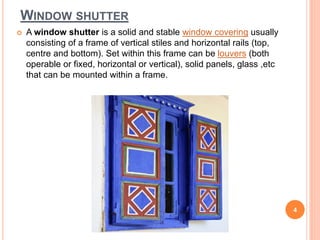
WINDOW SHUTTER
 A window shutter is a solid and stable window covering usually
consisting of a frame of vertical stiles and horizontal rails (top,
centre and bottom). Set within this frame can be louvers (both
operable or fixed, horizontal or vertical), solid panels, glass ,etc
that can be mounted within a frame.
4
BLINDS
 A type of window covering made of a series of evenly
spaced slats that may be opened or closed by cords.
 They are much more affordable than other coverings.
 Blinds can be accented with valances and
other window treatments like curtains to help make
them look more decorative.
 Blinds come in several colors and range from the less
expensive plastic varieties to wood and other decorative
styles.
5
THEY ARE CLASSIFIED AS FOLLOW:-
•Vertical blinds
•Horizontal/slat blinds
BLINDS
6
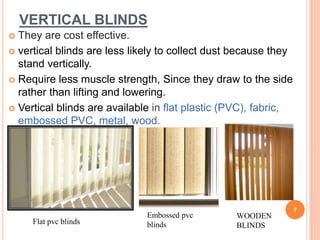
VERTICAL BLINDS
 They are cost effective.
 vertical blinds are less likely to collect dust because they
stand vertically.
 Require less muscle strength, Since they draw to the side
rather than lifting and lowering.
 Vertical blinds are available in flat plastic (PVC), fabric,
embossed PVC, metal, wood.
7
Embossed pvc
blindsFlat pvc blinds
WOODEN
BLINDS
8
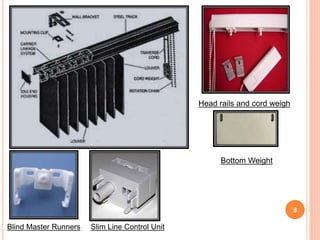
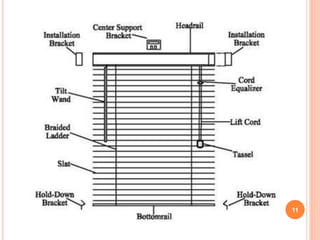
Head rails and cord weigh
Bottom Weight
Blind Master Runners Slim Line Control Unit
9
 Blinds are “hard” window coverings,
have slats or vanes that tumble down
the blind as it is lowered or can be
pulled across a window to stack
lengthwise, to the side.
 These slats complete blind and are
usually controlled by a manual pull
cord.
 Closed tightly for privacy and for light
control, but they can be adjusted or
tilted at different angles to allow you to
control the amount of light needed.
 Wood, Faux-Wood, Woven Wood,
Mini Blinds and Vertical Blinds are the
most popular “blinds”.
 These materials exude a tactile feeling
of hard or bumpy; hence the name,
hard window treatments..
 Shades are “soft” window
treatments which are made of
materials on a continuous roll
to cover window opening
 . Shades are drawn up and
down by cords or rolled up
with a spring device. Shades
have no slats or vanes and
offer a smooth look to your
windows; hence, they are
called soft window treatments
as the fabric and feeling of the
shade is warm and flowing.
Although you cannot adjust for
light filtering, as with blinds,
you can choose different
levels of opacity for light
preferences.
BLINDS SHADES
SLAT BLINDS
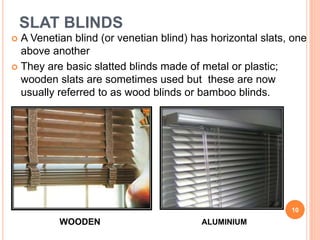
 A Venetian blind (or venetian blind) has horizontal slats, one
above another
 They are basic slatted blinds made of metal or plastic;
wooden slats are sometimes used but these are now
usually referred to as wood blinds or bamboo blinds.
10
WOODEN ALUMINIUM
11
SHADES
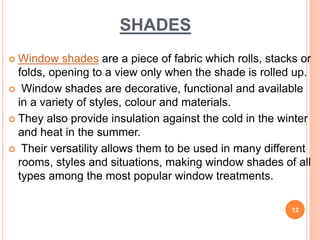
 Window shades are a piece of fabric which rolls, stacks or
folds, opening to a view only when the shade is rolled up.
 Window shades are decorative, functional and available
in a variety of styles, colour and materials.
 They also provide insulation against the cold in the winter
and heat in the summer.
 Their versatility allows them to be used in many different
rooms, styles and situations, making window shades of all
types among the most popular window treatments.
12
•CELLULAR
•ROLLER
•ROMAN
•WOVEN WOOD SHADE
TYPES OF
SHADES
13
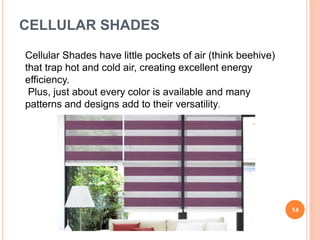
CELLULAR SHADES
14
Cellular Shades have little pockets of air (think beehive)
that trap hot and cold air, creating excellent energy
efficiency.
Plus, just about every color is available and many
patterns and designs add to their versatility.
15
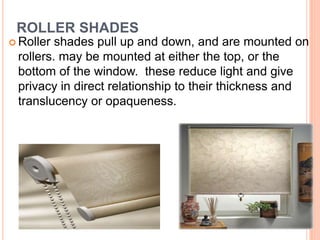
ROLLER SHADES
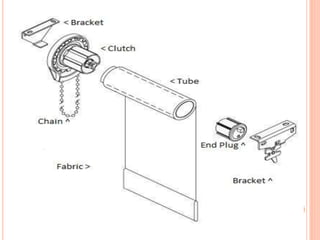
 Roller shades pull up and down, and are mounted on
rollers. may be mounted at either the top, or the
bottom of the window. these reduce light and give
privacy in direct relationship to their thickness and
translucency or opaqueness.
16
17
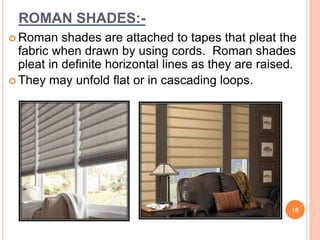
ROMAN SHADES:-
 Roman shades are attached to tapes that pleat the
fabric when drawn by using cords. Roman shades
pleat in definite horizontal lines as they are raised.
 They may unfold flat or in cascading loops.
18
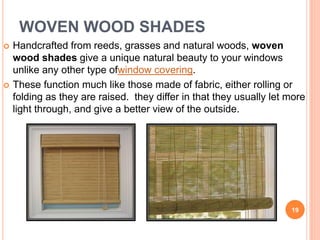
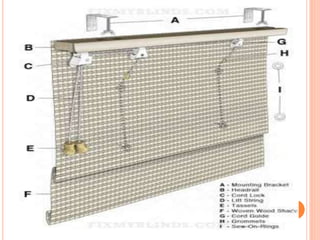
WOVEN WOOD SHADES
 Handcrafted from reeds, grasses and natural woods, woven
wood shades give a unique natural beauty to your windows
unlike any other type ofwindow covering.
 These function much like those made of fabric, either rolling or
folding as they are raised. they differ in that they usually let more
light through, and give a better view of the outside.
19
20

Blinds, shades & shutters

  • 1.
    COMMERCIAL INTERIOR DESIGN TOPIC:- BLINDS, SHADESAND SHUTTERS  ASHDEEP SINGH 1
  • 2.
    CONTENTS:- INTRODUCTION 3 WINDOW SHUTTER4 BLINDS 5 CLASSIFICATION 6-10  SHADES 11 CLASSIFICATION 12-19 2
  • 3.
    WINDOW COVERINGS •Window coveringsare material used to cover a window to manage sunlight, to provide additional weatherproofing, to ensure privacy or sometimes security, or for purely decorative purposes. •Types of covering includes:- Curtains Blinds Shades Shutters 3
  • 4.
    WINDOW SHUTTER  Awindow shutter is a solid and stable window covering usually consisting of a frame of vertical stiles and horizontal rails (top, centre and bottom). Set within this frame can be louvers (both operable or fixed, horizontal or vertical), solid panels, glass ,etc that can be mounted within a frame. 4
  • 5.
    BLINDS  A typeof window covering made of a series of evenly spaced slats that may be opened or closed by cords.  They are much more affordable than other coverings.  Blinds can be accented with valances and other window treatments like curtains to help make them look more decorative.  Blinds come in several colors and range from the less expensive plastic varieties to wood and other decorative styles. 5
  • 6.
    THEY ARE CLASSIFIEDAS FOLLOW:- •Vertical blinds •Horizontal/slat blinds BLINDS 6
  • 7.
    VERTICAL BLINDS  Theyare cost effective.  vertical blinds are less likely to collect dust because they stand vertically.  Require less muscle strength, Since they draw to the side rather than lifting and lowering.  Vertical blinds are available in flat plastic (PVC), fabric, embossed PVC, metal, wood. 7 Embossed pvc blindsFlat pvc blinds WOODEN BLINDS
  • 8.
    8 Head rails andcord weigh Bottom Weight Blind Master Runners Slim Line Control Unit
  • 9.
    9  Blinds are“hard” window coverings, have slats or vanes that tumble down the blind as it is lowered or can be pulled across a window to stack lengthwise, to the side.  These slats complete blind and are usually controlled by a manual pull cord.  Closed tightly for privacy and for light control, but they can be adjusted or tilted at different angles to allow you to control the amount of light needed.  Wood, Faux-Wood, Woven Wood, Mini Blinds and Vertical Blinds are the most popular “blinds”.  These materials exude a tactile feeling of hard or bumpy; hence the name, hard window treatments..  Shades are “soft” window treatments which are made of materials on a continuous roll to cover window opening  . Shades are drawn up and down by cords or rolled up with a spring device. Shades have no slats or vanes and offer a smooth look to your windows; hence, they are called soft window treatments as the fabric and feeling of the shade is warm and flowing. Although you cannot adjust for light filtering, as with blinds, you can choose different levels of opacity for light preferences. BLINDS SHADES
  • 10.
    SLAT BLINDS  AVenetian blind (or venetian blind) has horizontal slats, one above another  They are basic slatted blinds made of metal or plastic; wooden slats are sometimes used but these are now usually referred to as wood blinds or bamboo blinds. 10 WOODEN ALUMINIUM
  • 11.
  • 12.
    SHADES  Window shadesare a piece of fabric which rolls, stacks or folds, opening to a view only when the shade is rolled up.  Window shades are decorative, functional and available in a variety of styles, colour and materials.  They also provide insulation against the cold in the winter and heat in the summer.  Their versatility allows them to be used in many different rooms, styles and situations, making window shades of all types among the most popular window treatments. 12
  • 13.
  • 14.
    CELLULAR SHADES 14 Cellular Shadeshave little pockets of air (think beehive) that trap hot and cold air, creating excellent energy efficiency. Plus, just about every color is available and many patterns and designs add to their versatility.
  • 15.
  • 16.
    ROLLER SHADES  Rollershades pull up and down, and are mounted on rollers. may be mounted at either the top, or the bottom of the window. these reduce light and give privacy in direct relationship to their thickness and translucency or opaqueness. 16
  • 17.
  • 18.
    ROMAN SHADES:-  Romanshades are attached to tapes that pleat the fabric when drawn by using cords. Roman shades pleat in definite horizontal lines as they are raised.  They may unfold flat or in cascading loops. 18
  • 19.
    WOVEN WOOD SHADES Handcrafted from reeds, grasses and natural woods, woven wood shades give a unique natural beauty to your windows unlike any other type ofwindow covering.  These function much like those made of fabric, either rolling or folding as they are raised. they differ in that they usually let more light through, and give a better view of the outside. 19
  • 20.