BY : JAYANT YADAV, CCSHAU, HISAR
Birds control techniques
Bird…
is a warm-blooded, egg-laying vertebrate animal
distinguished by the possession of feathers, wings, a beak
without teeth, and typically by being able to fly.
General characters of Birds
 Warm blooded (104° F)
 Mouth as a beak
 Fore limbs modified into wings
 Hind limbs used for walking, running and swimming
 Oviparous
 Body covered with feathers
 Heart four chambered
 Body contains air sacs which help in flight.
classification
Kingdom Animalia
Phylum Cordata
Subphylum Vertebrata
Class Aves
introduction
 In India, 25 species out of 1200 species (2.1 %).
 High metabolic rate hence consume 10% of their body
weight in 24 hours.
 In West Africa, 32 studies show that average loss of
cereals was 6.9 %; in Sahelian zone cereal losses were
24.6%, in humid zone rice losses were 13.8%.
 Weaverbird (Quelea quelea) - world’s worst bird pest,
affects African counties.
In India…
 Mustard damage is up 63 % by parakeets at ripening.
(Simwat and Sidhu, 1973)
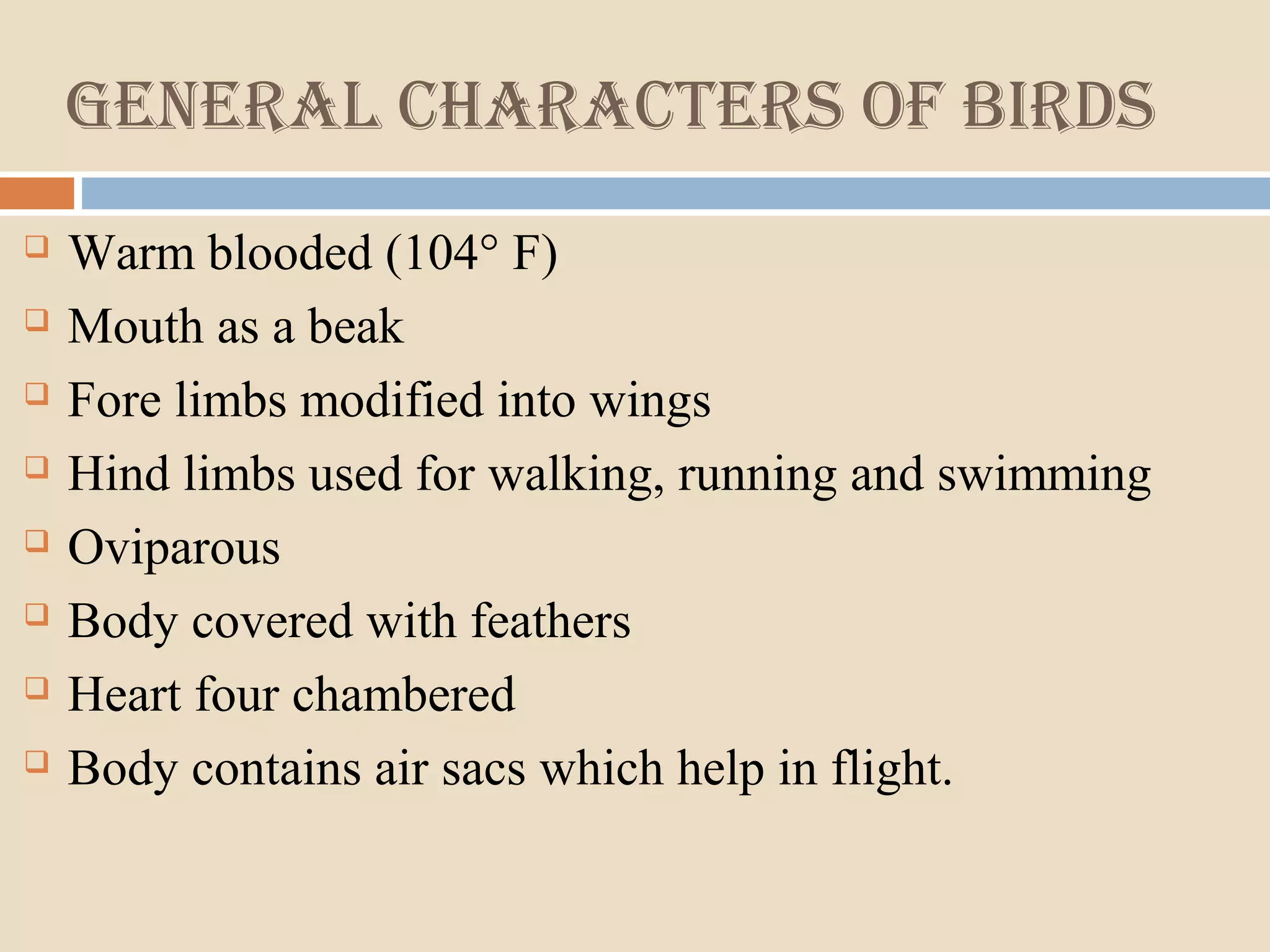
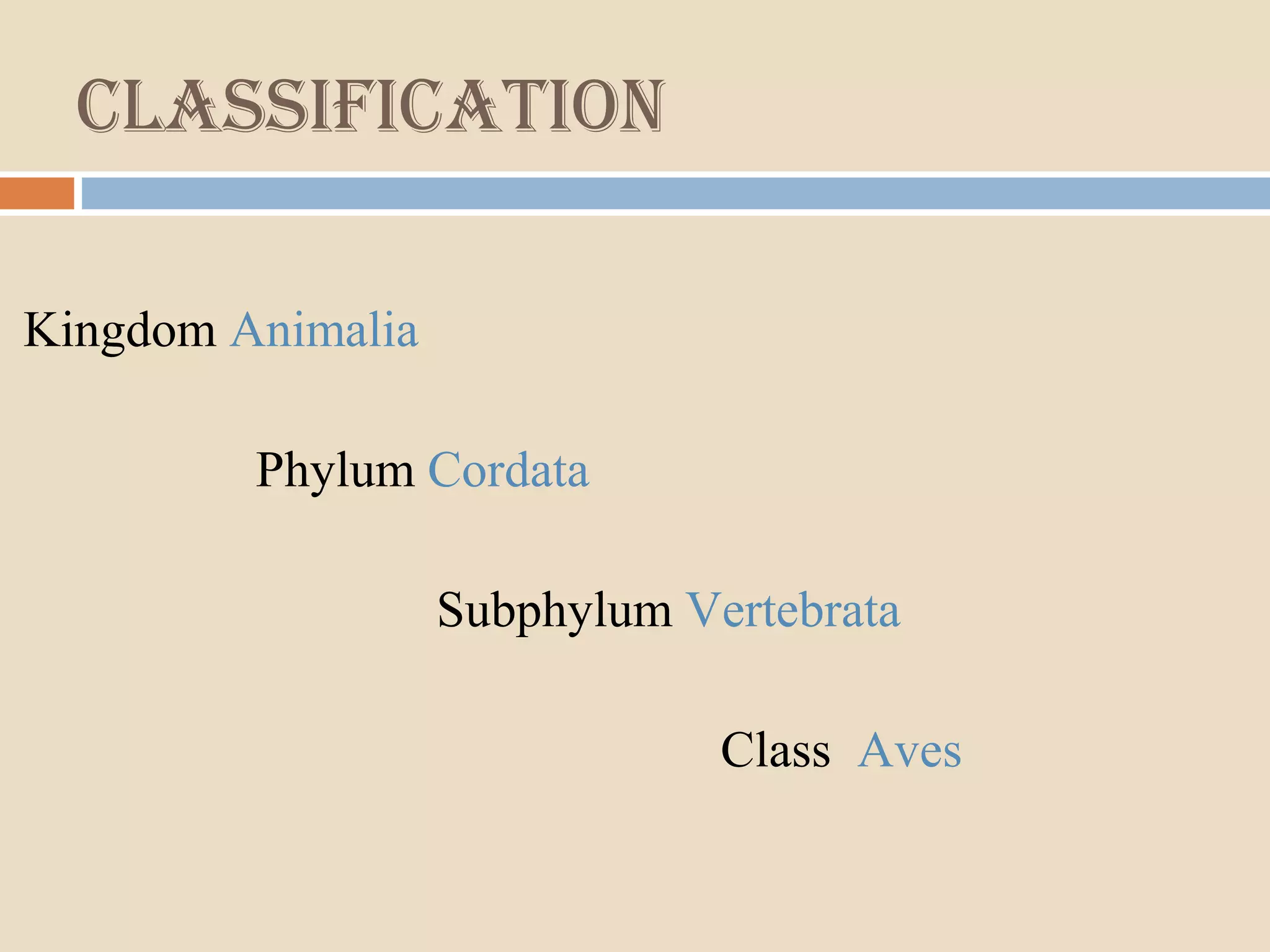
 There is up to 66 % damage of pulses by Doves,
pigeons, parakeets and sparrow.
(Mehrotra and Bhatnagar, 1979)
 Crows can damage wheat 17-20 % at sprouting.
(Chahal et al, 1973)
 Parakeets damage Guava 20 % at ripening.
(Singh and Kumar, 1982)
 Peach yield is decreased 32 % by parakeets and crows.
(Toor and Sandhu, 1981)
Birds causes crop losses By…
 Feeding on grains, fruits and sown seed.
 Pulling up seedling.
 Trampling seedling.
 Breaking branches when roosting.
 Nipping buds.
 Fouling nursery stock and lawns.
 Damage irrigation pipes.
 Serve as vectors of plant pathogens like bacteria.
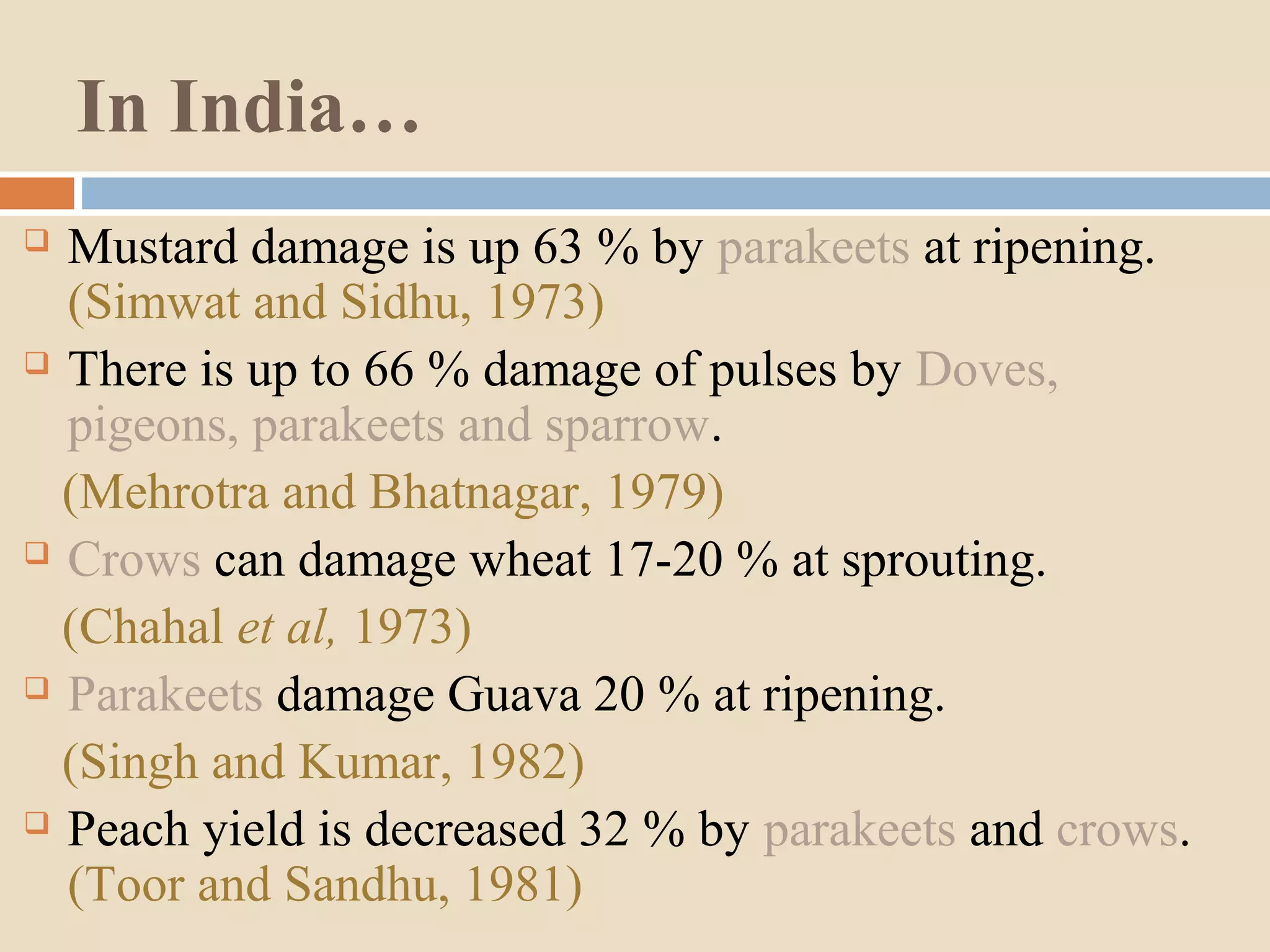
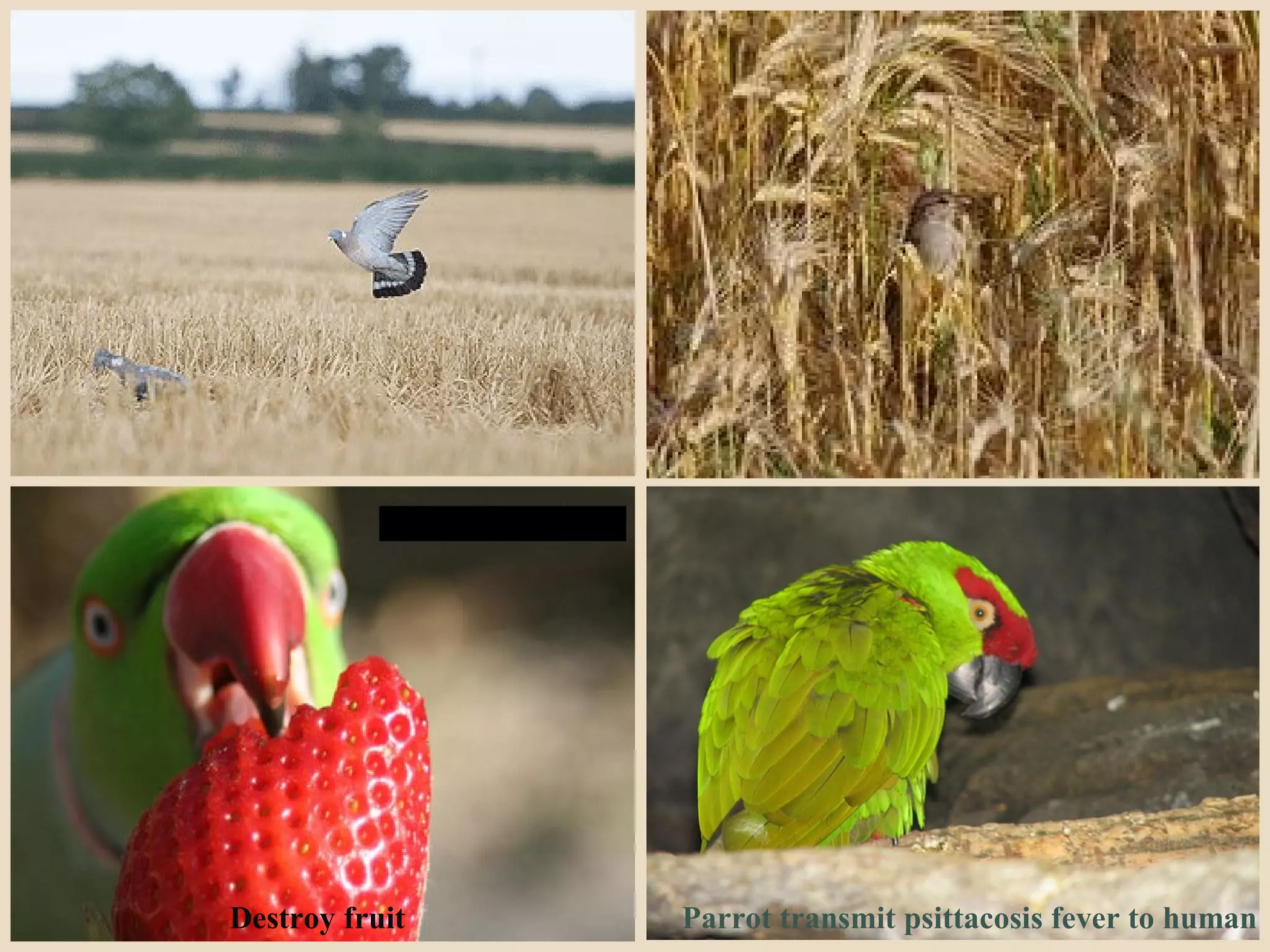
Parrot transmit psittacosis fever to humanDestroy fruit
some depredatory Birds
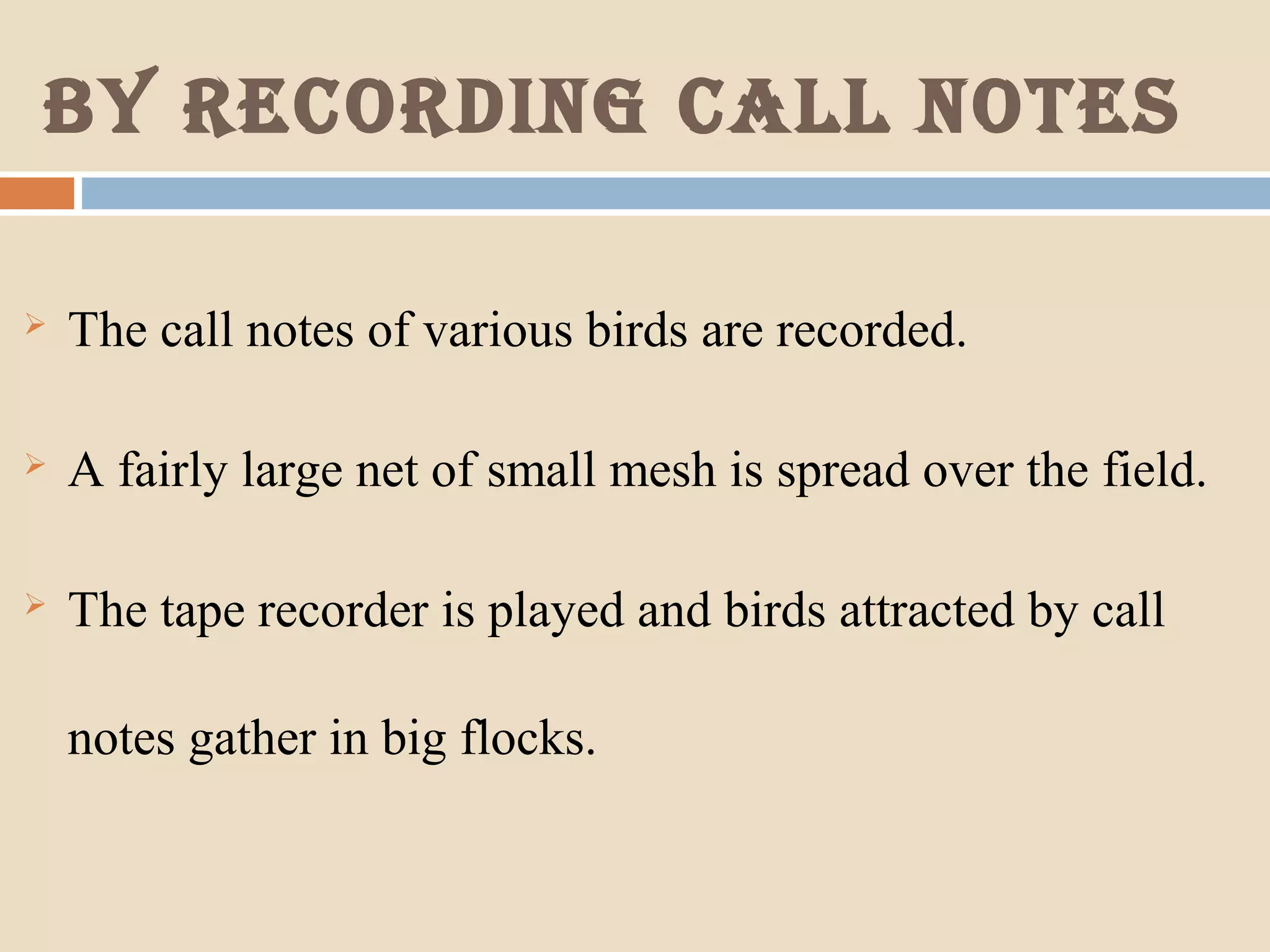
 House crow ( Corvus splendes)
 Common weaver bird ( Plocea philippinus)
 House sparrow (Passer domesticus)
 Common myna (Acridotheres tristis)
 Rose ringed parakeet ( Psittacula krameri)
 Blue rock pigeon ( Columba livia)
Common myna Common weaver bird
Blue rock pigeon Rose ringed parakeet
Bird Control
Man operated traps Automatic traps Scaring techniques
1.By spreading net
and producing
musical sounds
2. Using straw
basket,
wooded rod
and long rope
3. By recording
birds’ call
notes and
nets.
1. Potter trap
2. House trap
1. Crow scare
2. Drumming
3. Platform
10. Automatic
crow scarer
4. Hanging dead
bird
5.Shouting and
using Gulel
6. Hawk kite
7. Balloons
8. Fireworks
9. Using CDs
Man operated traps
By MusiCal notes
 Spreading of net of small mesh on a part of field during
late evening.
 Birds are attracted by producing musical notes.
 Birds are attracted to the sound and approach the area of
net and thus caught in the net.
using straw Basket
 Big straw basket are held inverted supported on a
wooden rod.
 A long rope is attached to the rod and other end is held at
a distance by man.
 Baits considering of grains is
spread under the basket.
 When birds come for feed
the rod is gently released
with the help of attached
rope and the bird are caught.
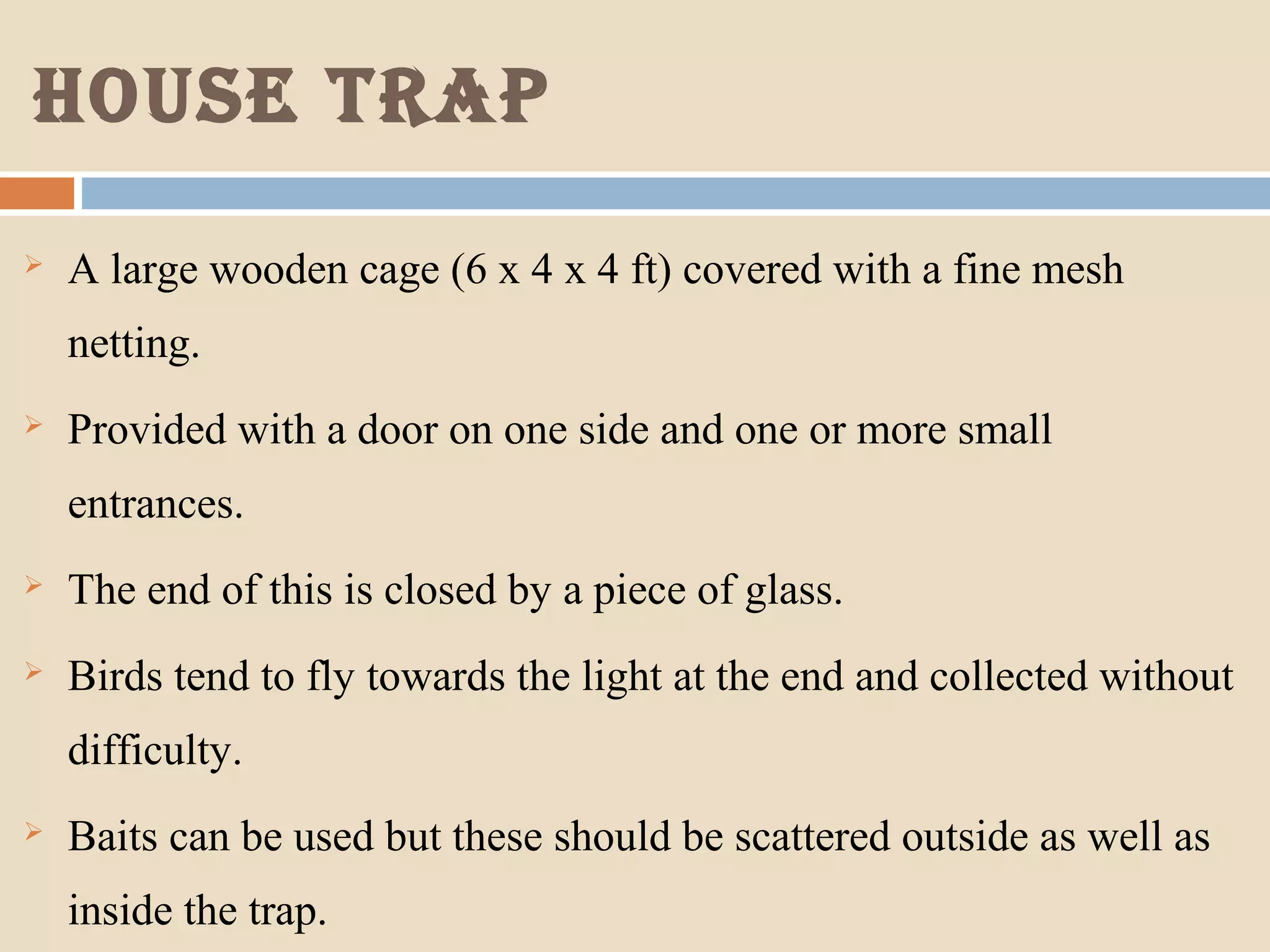
By reCording Call notes
 The call notes of various birds are recorded.
 A fairly large net of small mesh is spread over the field.
 The tape recorder is played and birds attracted by call
notes gather in big flocks.
autoMatiC traps
potter trap
 It consists of several compartments each fixed with a
vertically sliding door.
 The trap door is kept open by means of a wire attached
to a platform below.
 A bird entering a compartment alights on this platform.
 The weight of the bird is sufficient to release the door
above and the bird is thus caught.
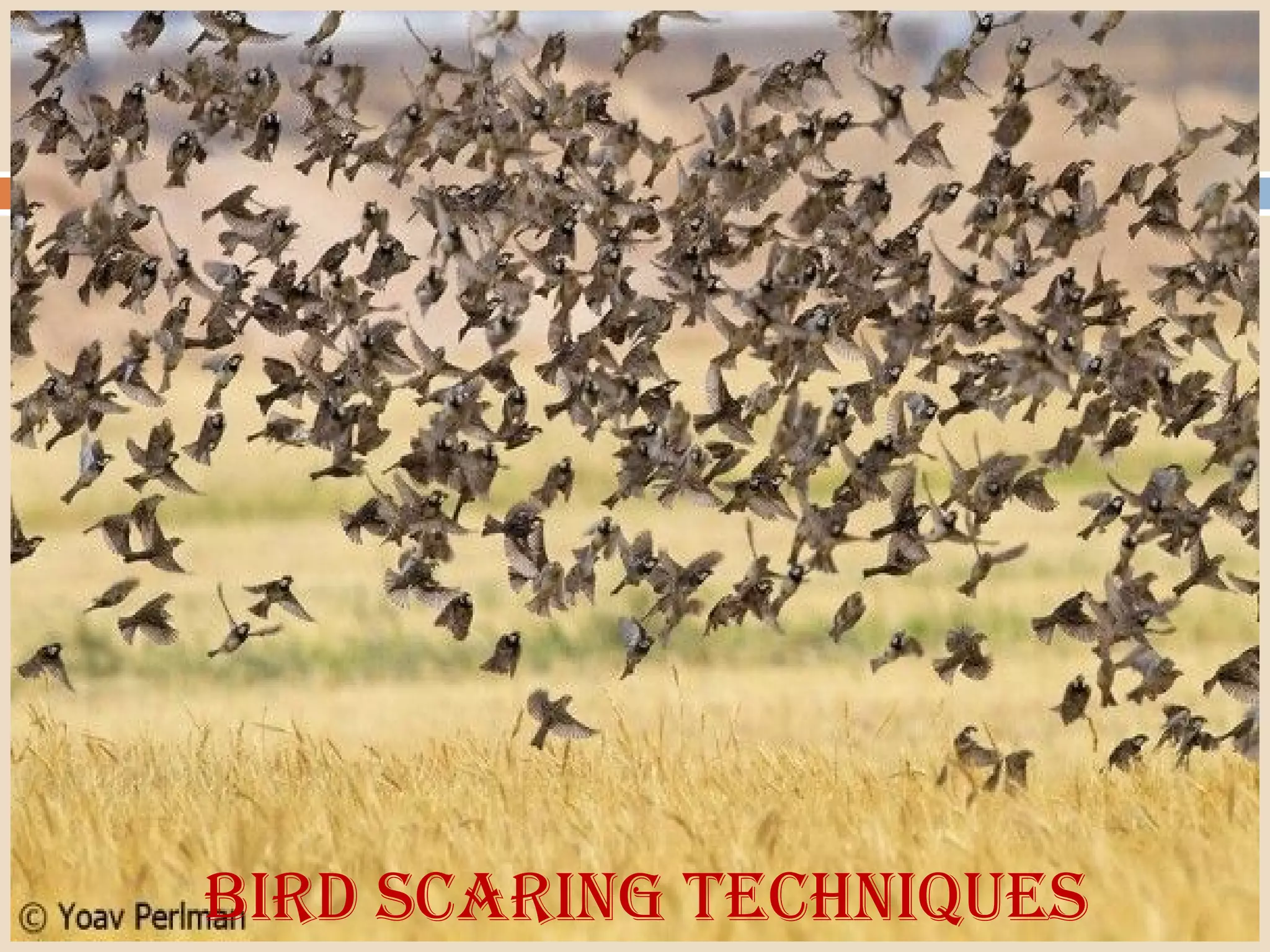
House trap
 A large wooden cage (6 x 4 x 4 ft) covered with a fine mesh
netting.
 Provided with a door on one side and one or more small
entrances.
 The end of this is closed by a piece of glass.
 Birds tend to fly towards the light at the end and collected without
difficulty.
 Baits can be used but these should be scattered outside as well as
inside the trap.
Bird scaring tecHniques
crow scare
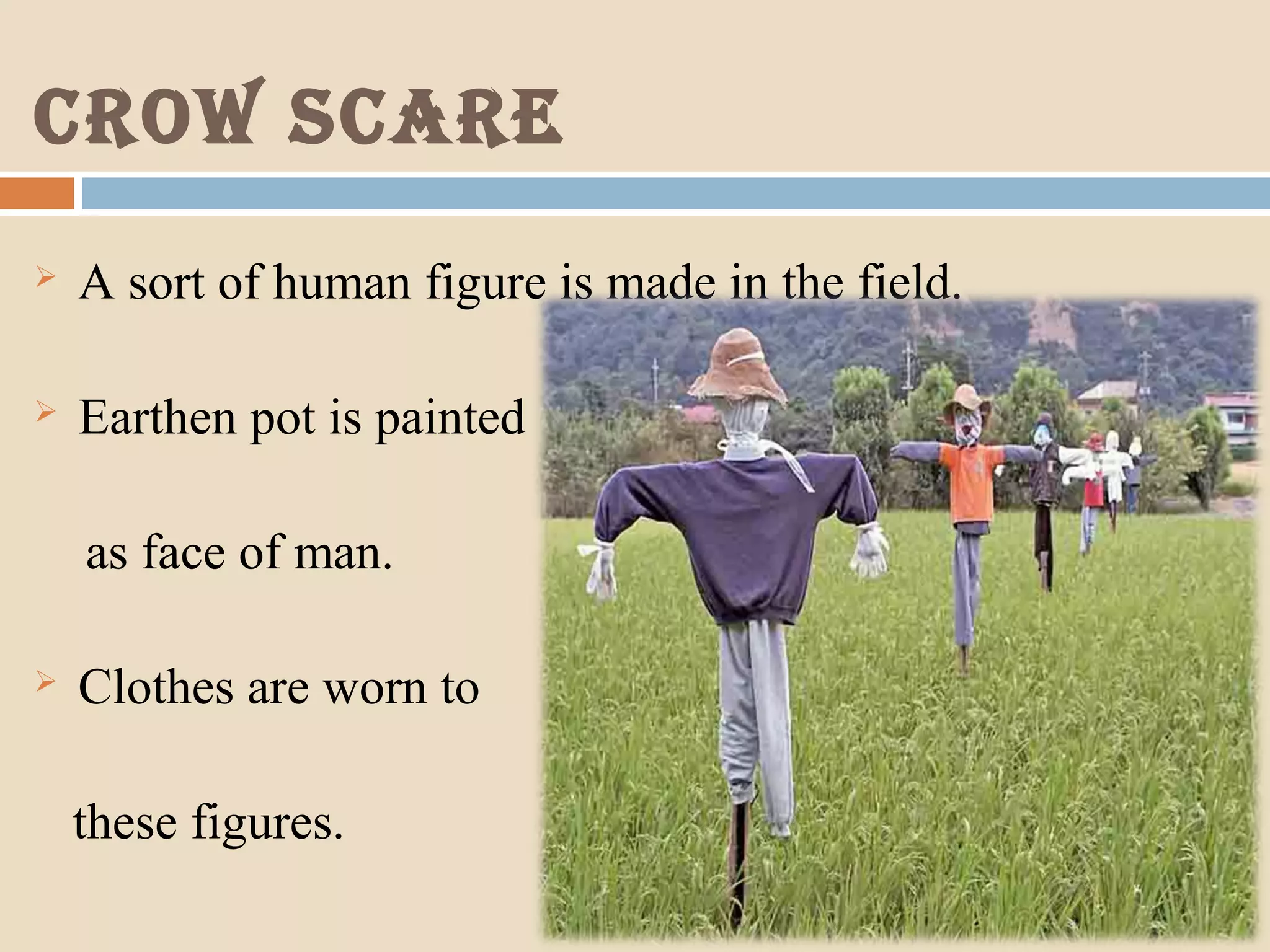
 A sort of human figure is made in the field.
 Earthen pot is painted
as face of man.
 Clothes are worn to
these figures.
drumming
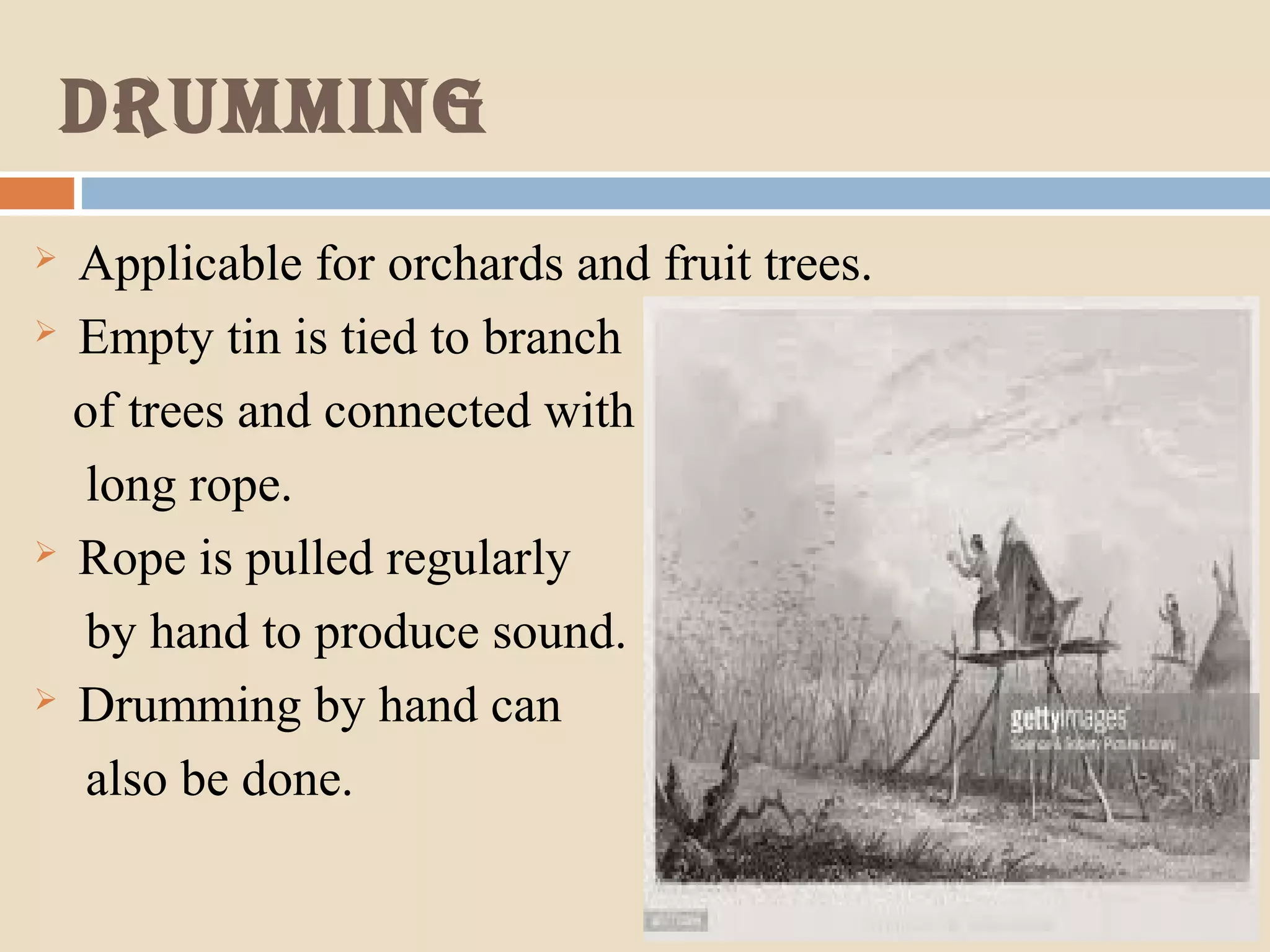
 Applicable for orchards and fruit trees.
 Empty tin is tied to branch
of trees and connected with
long rope.
 Rope is pulled regularly
by hand to produce sound.
 Drumming by hand can
also be done.
platform
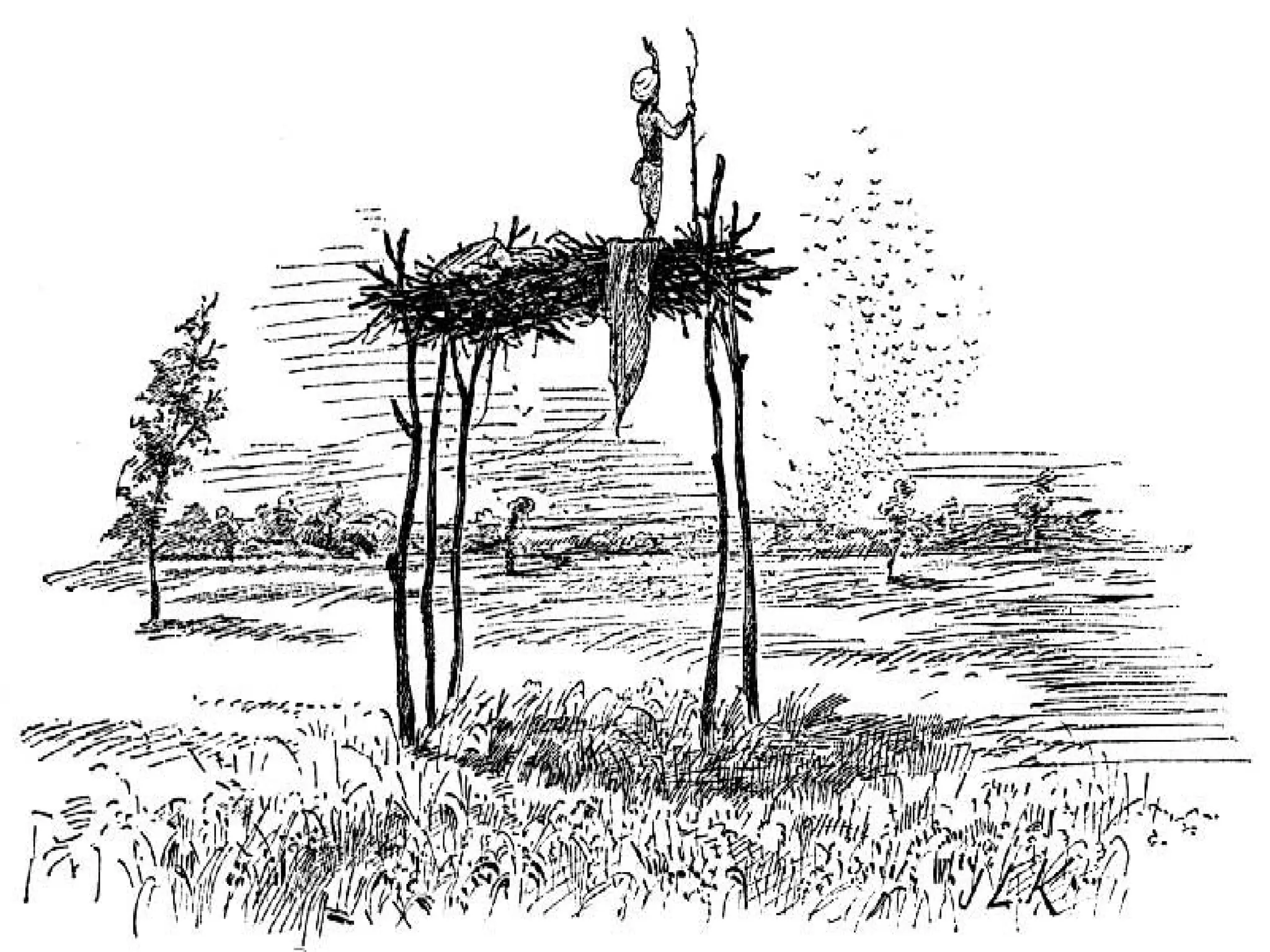
 Straw and wood platform is made in the centre of field.
 Floor should be 6 ft. from ground.
 Farmer gets on this platform and throw small stones.
 Stone is held in a small piece of gunny net or cloth, the
two ends of which are attached to strings.
 The stone is placed on the net and rotated vigorously by
hand and suddenly one end of string is released which
flings the stone to a great distance with considerable
force.
Hanging dead Bird
 A bird is killed by gun or poisonous bait feeding.
 It is hanged in the field/
orchard where bird visit
regularly.
 The use of model or actual
dead birds is used to signal
danger to others.
sHouting or using gulel
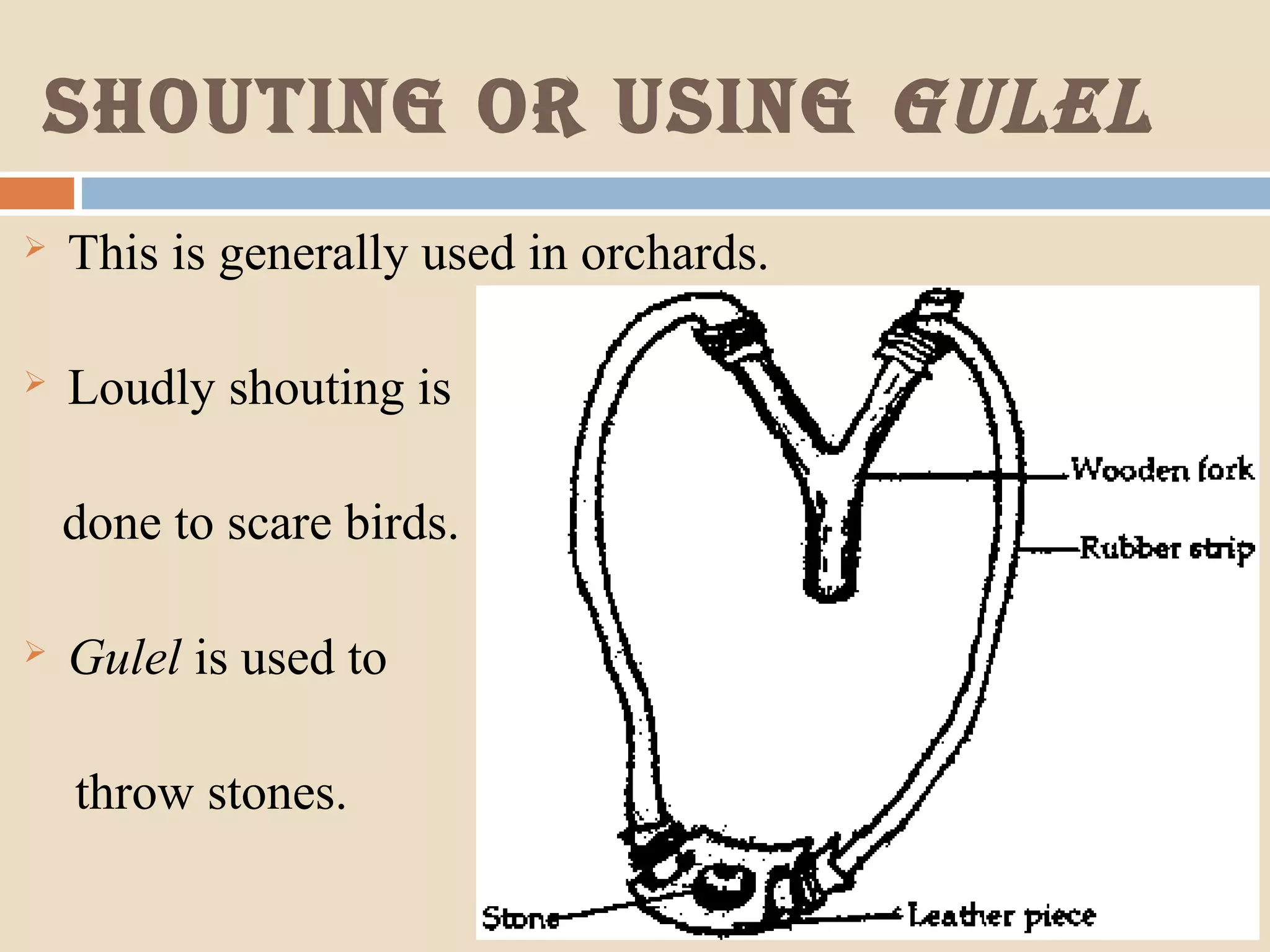
 This is generally used in orchards.
 Loudly shouting is
done to scare birds.
 Gulel is used to
throw stones.
Hawk kite
 Bird are naturally afraid of predators such as birds of
prey.
 "Hawk kites" are designed
to fly from poles in the
wind and hover above
the field to be protected.
Balloons
 Balloons are an inexpensive deterrent.
 Eye illustrations on the balloons has been shown to
increase this method's effectiveness.
 The long-term effectiveness of this method can be
increased by periodically
moving the placement of
the scare devices.
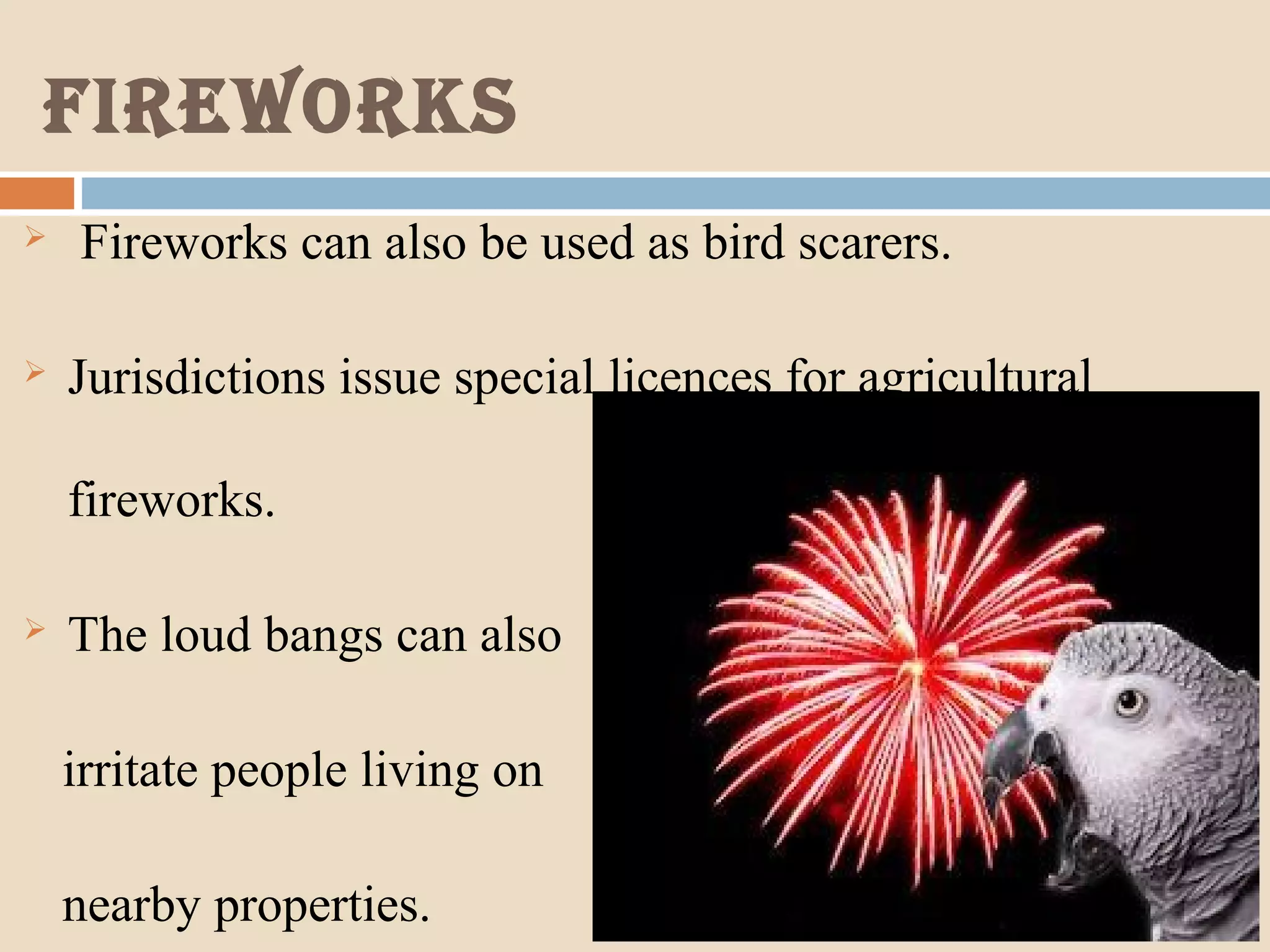
Fireworks
 Fireworks can also be used as bird scarers.
 Jurisdictions issue special licences for agricultural
fireworks.
 The loud bangs can also
irritate people living on
nearby properties.
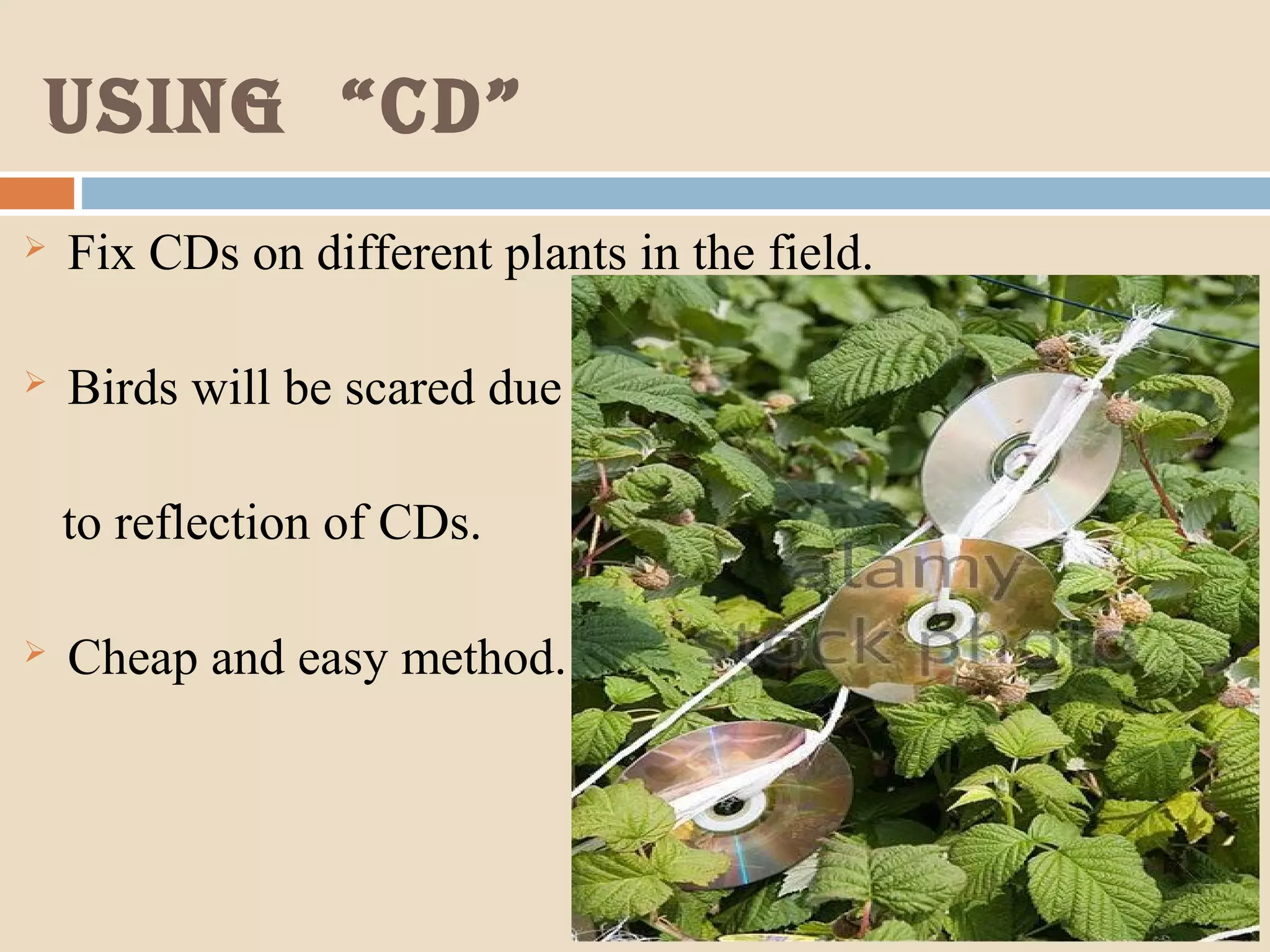
Using “CD”
 Fix CDs on different plants in the field.
 Birds will be scared due
to reflection of CDs.
 Cheap and easy method.
aUtomatiC Crow sCarer
 Mechanical device operated by hand with the help of carbide
gas.
 Apparatus consists: a) Main cylinder (6 inches dia.,10
inches high).
b) Small funnel (fixed in the centre of
cylinder).
c) A small cylinder (fits in mouth of
bigger one).
Working:
 Carbide gas is filled in the form of small pieces or
powder in funnel of lower cylinder and upper cylinder
is filled with water.
 As the water drops fall on the carbide material in
funnel, gas is produced which rise up.
 Fire is set in a small chamber set for this purpose.
 Fresh air is introduced in small chamber with the help
of pipe.
 As carbide gas burns a cracking sound is produced.
 Cracker like bursting sound helps to scare away the
birds.
other Deterrents…
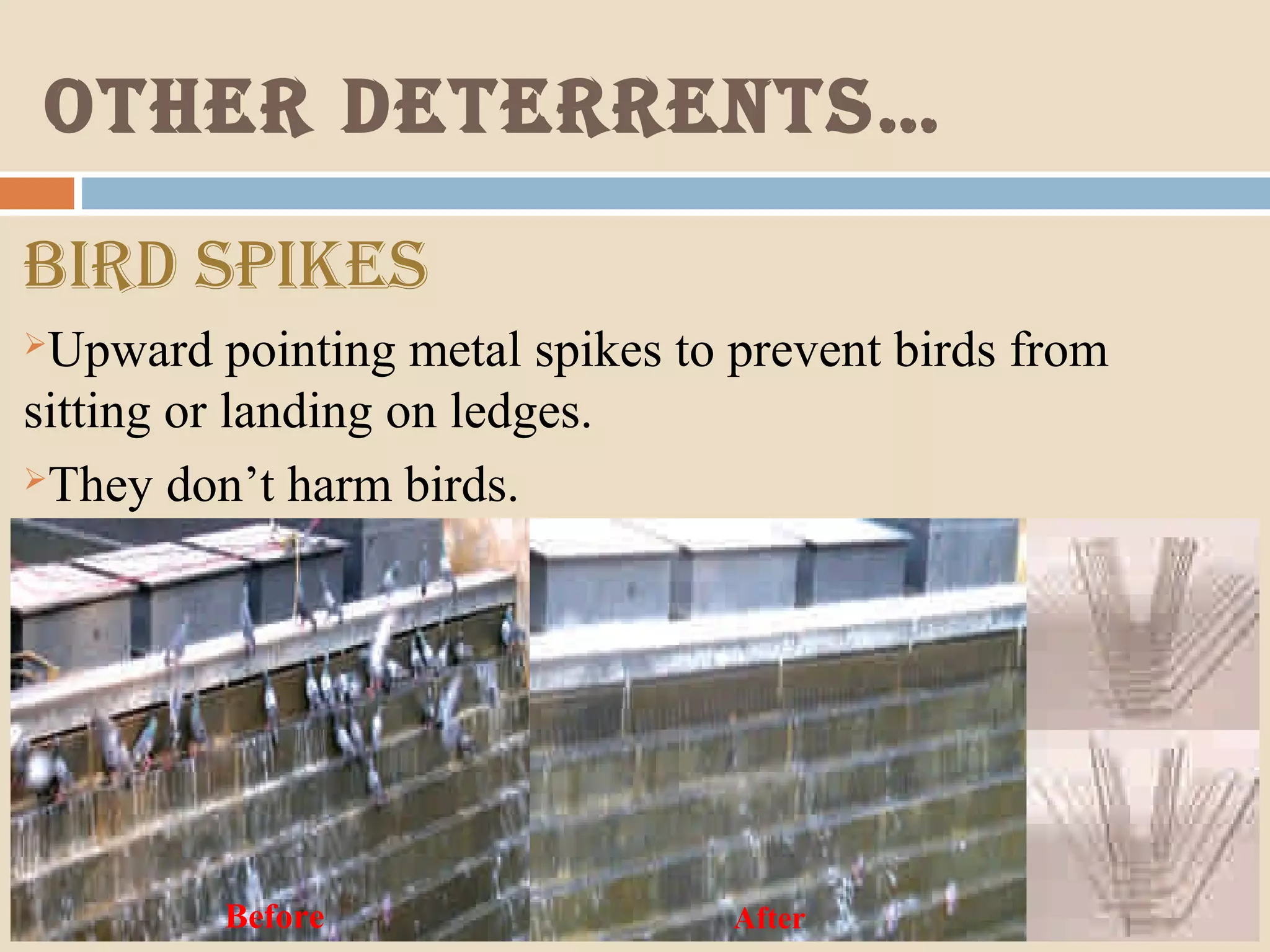
BirD spikes
Upward pointing metal spikes to prevent birds from
sitting or landing on ledges.
They don’t harm birds.
Before After
BirD net system
 Simplest, most commonly used and cost effective.
 For all kind of birds (Pigeons, sparrows, crows and
mynahs)
For pigeons For sparrow
ChemiCal Control
A piece of chapati dipped in 0.3% methyl parathion or 2 % fenthion placed on top
of roof
thanks…

Birds control techniques

  • 1.
    BY : JAYANTYADAV, CCSHAU, HISAR Birds control techniques
  • 2.
    Bird… is a warm-blooded,egg-laying vertebrate animal distinguished by the possession of feathers, wings, a beak without teeth, and typically by being able to fly.
  • 3.
    General characters ofBirds  Warm blooded (104° F)  Mouth as a beak  Fore limbs modified into wings  Hind limbs used for walking, running and swimming  Oviparous  Body covered with feathers  Heart four chambered  Body contains air sacs which help in flight.
  • 4.
  • 5.
    introduction  In India,25 species out of 1200 species (2.1 %).  High metabolic rate hence consume 10% of their body weight in 24 hours.  In West Africa, 32 studies show that average loss of cereals was 6.9 %; in Sahelian zone cereal losses were 24.6%, in humid zone rice losses were 13.8%.  Weaverbird (Quelea quelea) - world’s worst bird pest, affects African counties.
  • 6.
    In India…  Mustarddamage is up 63 % by parakeets at ripening. (Simwat and Sidhu, 1973)  There is up to 66 % damage of pulses by Doves, pigeons, parakeets and sparrow. (Mehrotra and Bhatnagar, 1979)  Crows can damage wheat 17-20 % at sprouting. (Chahal et al, 1973)  Parakeets damage Guava 20 % at ripening. (Singh and Kumar, 1982)  Peach yield is decreased 32 % by parakeets and crows. (Toor and Sandhu, 1981)
  • 7.
    Birds causes croplosses By…  Feeding on grains, fruits and sown seed.  Pulling up seedling.  Trampling seedling.  Breaking branches when roosting.  Nipping buds.  Fouling nursery stock and lawns.  Damage irrigation pipes.  Serve as vectors of plant pathogens like bacteria.
  • 8.
    Parrot transmit psittacosisfever to humanDestroy fruit
  • 9.
    some depredatory Birds House crow ( Corvus splendes)  Common weaver bird ( Plocea philippinus)  House sparrow (Passer domesticus)  Common myna (Acridotheres tristis)  Rose ringed parakeet ( Psittacula krameri)  Blue rock pigeon ( Columba livia)
  • 10.
    Common myna Commonweaver bird Blue rock pigeon Rose ringed parakeet
  • 11.
    Bird Control Man operatedtraps Automatic traps Scaring techniques 1.By spreading net and producing musical sounds 2. Using straw basket, wooded rod and long rope 3. By recording birds’ call notes and nets. 1. Potter trap 2. House trap 1. Crow scare 2. Drumming 3. Platform 10. Automatic crow scarer 4. Hanging dead bird 5.Shouting and using Gulel 6. Hawk kite 7. Balloons 8. Fireworks 9. Using CDs
  • 12.
  • 13.
    By MusiCal notes Spreading of net of small mesh on a part of field during late evening.  Birds are attracted by producing musical notes.  Birds are attracted to the sound and approach the area of net and thus caught in the net.
  • 14.
    using straw Basket Big straw basket are held inverted supported on a wooden rod.  A long rope is attached to the rod and other end is held at a distance by man.  Baits considering of grains is spread under the basket.  When birds come for feed the rod is gently released with the help of attached rope and the bird are caught.
  • 15.
    By reCording Callnotes  The call notes of various birds are recorded.  A fairly large net of small mesh is spread over the field.  The tape recorder is played and birds attracted by call notes gather in big flocks.
  • 16.
  • 17.
    potter trap  Itconsists of several compartments each fixed with a vertically sliding door.  The trap door is kept open by means of a wire attached to a platform below.  A bird entering a compartment alights on this platform.  The weight of the bird is sufficient to release the door above and the bird is thus caught.
  • 19.
    House trap  Alarge wooden cage (6 x 4 x 4 ft) covered with a fine mesh netting.  Provided with a door on one side and one or more small entrances.  The end of this is closed by a piece of glass.  Birds tend to fly towards the light at the end and collected without difficulty.  Baits can be used but these should be scattered outside as well as inside the trap.
  • 20.
  • 21.
    crow scare  Asort of human figure is made in the field.  Earthen pot is painted as face of man.  Clothes are worn to these figures.
  • 22.
    drumming  Applicable fororchards and fruit trees.  Empty tin is tied to branch of trees and connected with long rope.  Rope is pulled regularly by hand to produce sound.  Drumming by hand can also be done.
  • 23.
    platform  Straw andwood platform is made in the centre of field.  Floor should be 6 ft. from ground.  Farmer gets on this platform and throw small stones.  Stone is held in a small piece of gunny net or cloth, the two ends of which are attached to strings.  The stone is placed on the net and rotated vigorously by hand and suddenly one end of string is released which flings the stone to a great distance with considerable force.
  • 25.
    Hanging dead Bird A bird is killed by gun or poisonous bait feeding.  It is hanged in the field/ orchard where bird visit regularly.  The use of model or actual dead birds is used to signal danger to others.
  • 26.
    sHouting or usinggulel  This is generally used in orchards.  Loudly shouting is done to scare birds.  Gulel is used to throw stones.
  • 27.
    Hawk kite  Birdare naturally afraid of predators such as birds of prey.  "Hawk kites" are designed to fly from poles in the wind and hover above the field to be protected.
  • 28.
    Balloons  Balloons arean inexpensive deterrent.  Eye illustrations on the balloons has been shown to increase this method's effectiveness.  The long-term effectiveness of this method can be increased by periodically moving the placement of the scare devices.
  • 29.
    Fireworks  Fireworks canalso be used as bird scarers.  Jurisdictions issue special licences for agricultural fireworks.  The loud bangs can also irritate people living on nearby properties.
  • 30.
    Using “CD”  FixCDs on different plants in the field.  Birds will be scared due to reflection of CDs.  Cheap and easy method.
  • 31.
    aUtomatiC Crow sCarer Mechanical device operated by hand with the help of carbide gas.  Apparatus consists: a) Main cylinder (6 inches dia.,10 inches high). b) Small funnel (fixed in the centre of cylinder). c) A small cylinder (fits in mouth of bigger one).
  • 32.
    Working:  Carbide gasis filled in the form of small pieces or powder in funnel of lower cylinder and upper cylinder is filled with water.  As the water drops fall on the carbide material in funnel, gas is produced which rise up.  Fire is set in a small chamber set for this purpose.  Fresh air is introduced in small chamber with the help of pipe.  As carbide gas burns a cracking sound is produced.  Cracker like bursting sound helps to scare away the birds.
  • 33.
    other Deterrents… BirD spikes Upwardpointing metal spikes to prevent birds from sitting or landing on ledges. They don’t harm birds. Before After
  • 34.
    BirD net system Simplest, most commonly used and cost effective.  For all kind of birds (Pigeons, sparrows, crows and mynahs) For pigeons For sparrow
  • 35.
    ChemiCal Control A pieceof chapati dipped in 0.3% methyl parathion or 2 % fenthion placed on top of roof
  • 36.