 Biochemical alteration of chemicals such as (but not
limited to) nutrients, amino acids, toxins, and drugs
in the body
 It is also needed to render nonpolar compounds
polar so that they are not reabsorbed in renal
tubules and are excreted.
 The body typically deals with a foreign compound
(DRUGS) by making it more water-soluble, to
increase the rate of its excretion through the urine
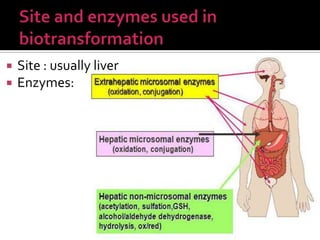
 Site : usually liver
 Enzymes:
MICROSOMAL ENZYMES
 A group of enzymes
associated with a certain
particulate fraction of liver
homogenate.
 These are a mixed function
oxidase system or
monooxygenases.
 These requires NADPH and
oxygen.
NON MICROSOMAL ENZYMES
 These are present in the
cytoplasm and
mitochondria of hepatic
cells as well as in other
tissues including plasma.
The 2 most imp.
Microsomal
enzymes:
1. NADPH cyt.
P450 reductase
2. Cut. P450
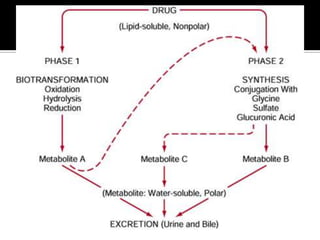
Phase I
• Includes oxidative, reductive, and hydrolytic reactions.
• In these type of reactions, a polar group is either introduced or
unmasked, so the drug molecule becomes more water-soluble
and can be excreted.
• Reactions are non-synthetic in nature and in general produce a
more water-soluble and less active metabolites
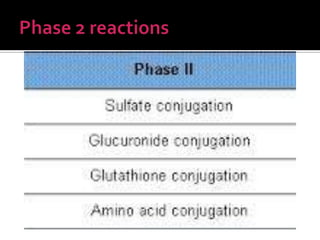
Phase II
• These reactions involve covalent attachment of small polar
endogenous molecule such as glucuronic acid, sulfate, or
glycine to form water-soluble compounds.
• This is also known as a conjugation reaction.
• The final compounds have a larger molecular weight.
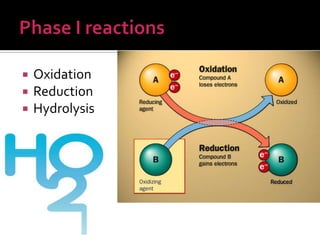
 Oxidation
 Reduction
 Hydrolysis
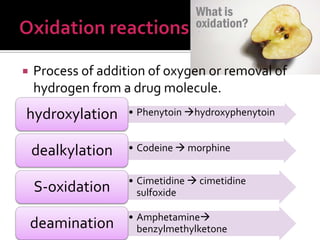
 Process of addition of oxygen or removal of
hydrogen from a drug molecule.
• Phenytoin hydroxyphenytoinhydroxylation
• Codeine  morphinedealkylation
• Cimetidine  cimetidine
sulfoxideS-oxidation
• Amphetamine
benzylmethylketonedeamination
 Addition of hydrogen or removal of oxygen
from a drug molecule.
 Nitro reduction :
chloramphenicol  arylamine
 Keto reduction:
cortisone  hydrocortisone
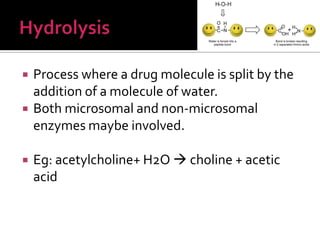
 Process where a drug molecule is split by the
addition of a molecule of water.
 Both microsomal and non-microsomal
enzymes maybe involved.
 Eg: acetylcholine+ H2O  choline + acetic
acid
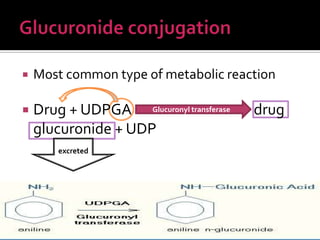
 Most common type of metabolic reaction
 Drug + UDPGA drug
glucuronide + UDP
Glucuronyl transferase
excreted
Glutathione –s –
transferase
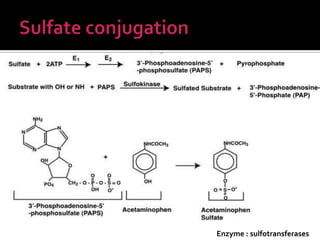
Enzyme : sulfotransferases
Biotransformation

Biotransformation

  • 2.
     Biochemical alterationof chemicals such as (but not limited to) nutrients, amino acids, toxins, and drugs in the body  It is also needed to render nonpolar compounds polar so that they are not reabsorbed in renal tubules and are excreted.  The body typically deals with a foreign compound (DRUGS) by making it more water-soluble, to increase the rate of its excretion through the urine
  • 3.
     Site :usually liver  Enzymes:
  • 4.
    MICROSOMAL ENZYMES  Agroup of enzymes associated with a certain particulate fraction of liver homogenate.  These are a mixed function oxidase system or monooxygenases.  These requires NADPH and oxygen. NON MICROSOMAL ENZYMES  These are present in the cytoplasm and mitochondria of hepatic cells as well as in other tissues including plasma. The 2 most imp. Microsomal enzymes: 1. NADPH cyt. P450 reductase 2. Cut. P450
  • 5.
    Phase I • Includesoxidative, reductive, and hydrolytic reactions. • In these type of reactions, a polar group is either introduced or unmasked, so the drug molecule becomes more water-soluble and can be excreted. • Reactions are non-synthetic in nature and in general produce a more water-soluble and less active metabolites Phase II • These reactions involve covalent attachment of small polar endogenous molecule such as glucuronic acid, sulfate, or glycine to form water-soluble compounds. • This is also known as a conjugation reaction. • The final compounds have a larger molecular weight.
  • 7.
  • 8.
     Process ofaddition of oxygen or removal of hydrogen from a drug molecule. • Phenytoin hydroxyphenytoinhydroxylation • Codeine  morphinedealkylation • Cimetidine  cimetidine sulfoxideS-oxidation • Amphetamine benzylmethylketonedeamination
  • 9.
     Addition ofhydrogen or removal of oxygen from a drug molecule.  Nitro reduction : chloramphenicol  arylamine  Keto reduction: cortisone  hydrocortisone
  • 10.
     Process wherea drug molecule is split by the addition of a molecule of water.  Both microsomal and non-microsomal enzymes maybe involved.  Eg: acetylcholine+ H2O  choline + acetic acid
  • 12.
     Most commontype of metabolic reaction  Drug + UDPGA drug glucuronide + UDP Glucuronyl transferase excreted
  • 13.
  • 14.