BIOTECHNOLOGY: PRINCIPLES
AND PROCESSES
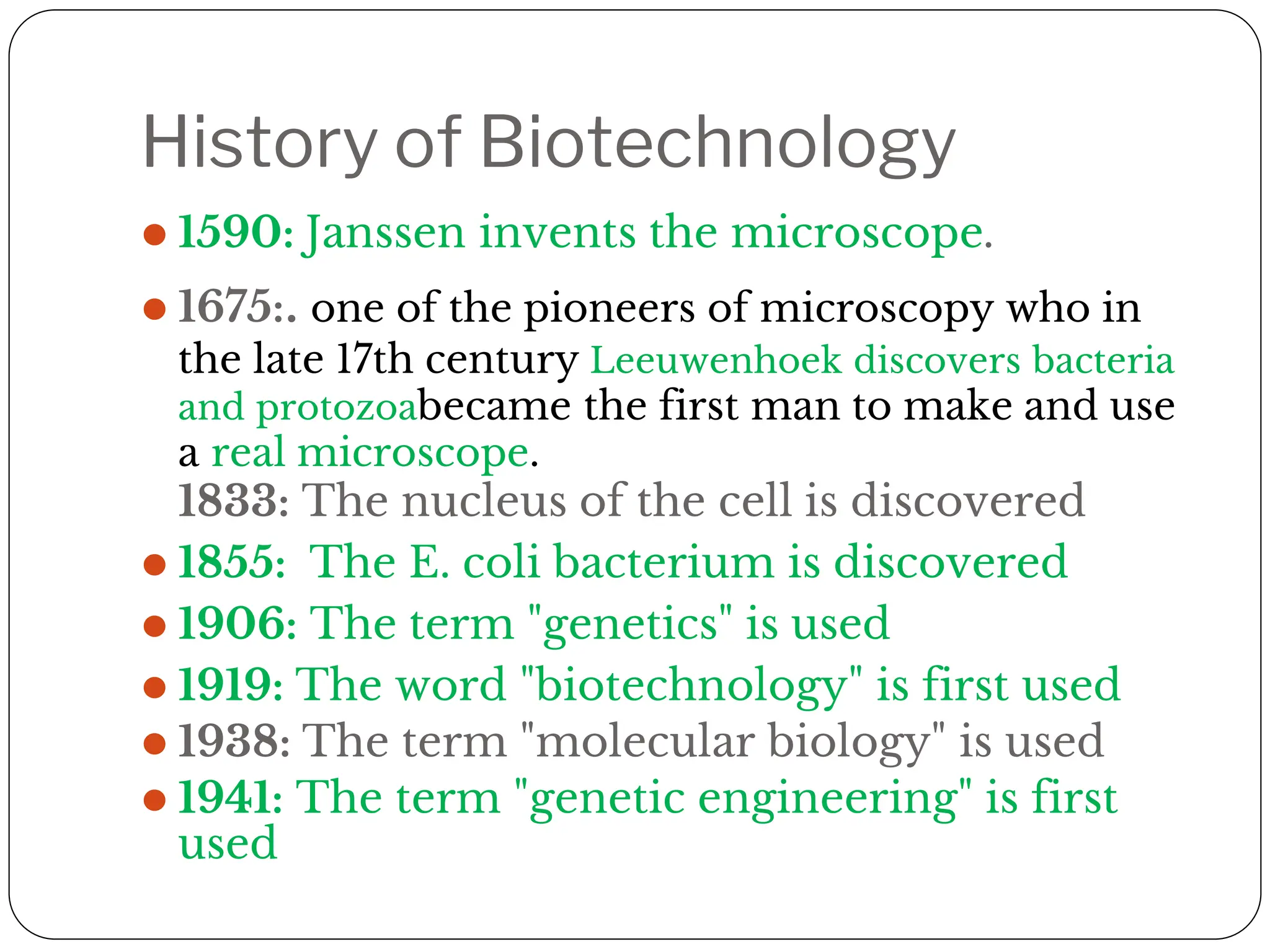
History of Biotechnology
⚫ 1590: Janssen invents the microscope.
⚫ 1675:. one of the pioneers of microscopy who in
the late 17th century Leeuwenhoek discovers bacteria
and protozoabecame the first man to make and use
a real microscope.
1833: The nucleus of the cell is discovered
⚫ 1855: The E. coli bacterium is discovered
⚫ 1906: The term "genetics" is used
⚫ 1919: The word "biotechnology" is first used
⚫ 1938: The term "molecular biology" is used
⚫ 1941: The term "genetic engineering" is first
used
⚫1980: The U.S. patent for gene cloning
is awarded to Boyer and Cohen.
⚫1981: The first genetically-engineered
plant is reported (TOBACCO)
⚫1981: 1st mice to be successfully cloned
⚫1984: The DNA fingerprinting
technique is developed.
⚫1984: The first genetically-
engineered vaccine is developed
against Hepatitis B.
⚫1999: The genetic code of the human
chromosome is deciphered
⚫2001: The sequence of the human genome
is published in Science and Nature
⚫2003: Dolly, the cloned sheep from 1997, is
euthanized
⚫ The term "biotechnology" was coined in 1919 by Karl
Ereky, an Hungarian engineer.
⚫ Definition: the term "biotechnology" refers to the
use of living organisms or their products to modify
human health and the human environment.
⚫ Louis Pasteur (1822-1895), the French chemist and
microbiologist, is considered the actual “Father of
biotechnology” by most renowned scientists of the
world
⚫ Karoly Ereky (1878-1952) from Hungary coined the
term “biotechnologie” in 1919. At that time, he
was food minister in Hungary.
⚫ Daniel Nathans (1928-1999), Nobel laureate in
medicine-1978; is considered “Father of Modern
Biotechnology” by many researchers
⚫ Some people consider Kiran Mazumdar Shaw (born in 1953)
as father/mother of biotechnology in India.
⚫ Dr. Pushpa Bhargava (born in 1928); established CCMB
BIOTECHNOLOGY: PRINCIPLES AND
PROCESSES
⚫Two core techniques that enabled birth of
modern biotechnology:
⚫Genetic engineering: Techniques to alter the
chemistry of genetic material (DNA and RNA)
to introduce into host organisms and thus
change the phenotype of the host organism.
⚫Maintenance of sterile (microbial
contamination-free) ambient chemical
engineering processes to enable growth of
only the desired microbe/eukaryotic cell in
RESTRICTION ENZYME
VIDEO
Conceptual development of the principle of
genetic engineering
⚫ Asexual reproduction preserves the genetic
identity of species.
⚫ Sexual reproduction creates variation and
creates unique combinations of genetic makeup.
⚫ Traditional hybridization procedures used in
plant and animal breeding leads to undesirable
genes along with desired genes.
⚫ The techniques of genetic engineering which
includes creation of recombinant DNA, use
of gene cloning and gene transfer, overcome
this limitation and allows us to isolate and
introduce only one or a set of desirable genes
without introducing undesirable genes into
target organism
⚫ Three basic steps in genetically modifying an
organism –
⚫ Identification of DNA with desirable gene
TOOLS OF RECOMBINANT DNA
TECHNOLOGY
⚫Restriction Enzymes
⚫Cloning vectors
⚫Competent Host (for transformation with
recombinant DNA)
⚫Before starting with the entire process I
would like to show you a short video
clip.
https://www.youtube.com/watch?v=6Ui
KZKFHbMQ
Restriction Enzymes
⚫In the year 1963 two enzymes discovered
from Escherichia coli which restrict the growth
of bacteriophage in it.
⚫One of these added methyl groups to DNA.
⚫Other cut the phage DNA. (restriction
endonuclease)
⚫
⚫The first restriction endonuclease discovered
is Hind II.
⚫Hind II always cut DNA molecule at particular
point by recognizing a specific sequence of six
base pairs. This is called recognition
sequence for Hind II.
⚫Till date around 900 restriction enzymes
⚫ Restriction enzyme belongs to nucleases.
⚫ There are two kind of nucleases:
⚫ Exonuclease
⚫ Endonuclease
⚫
⚫ Exonuclease removes nucleotides from the free
ends of the DNA.
⚫ Endonucleases make cuts at specific
positions within the DNA.
⚫ Each restriction endonuclease recognizes a
specific palindromic nucleotide sequences in
the DNA.
⚫ Palindromes are the group of letters that read
same both forward and backward, e.g.
“MALAYALAM”.
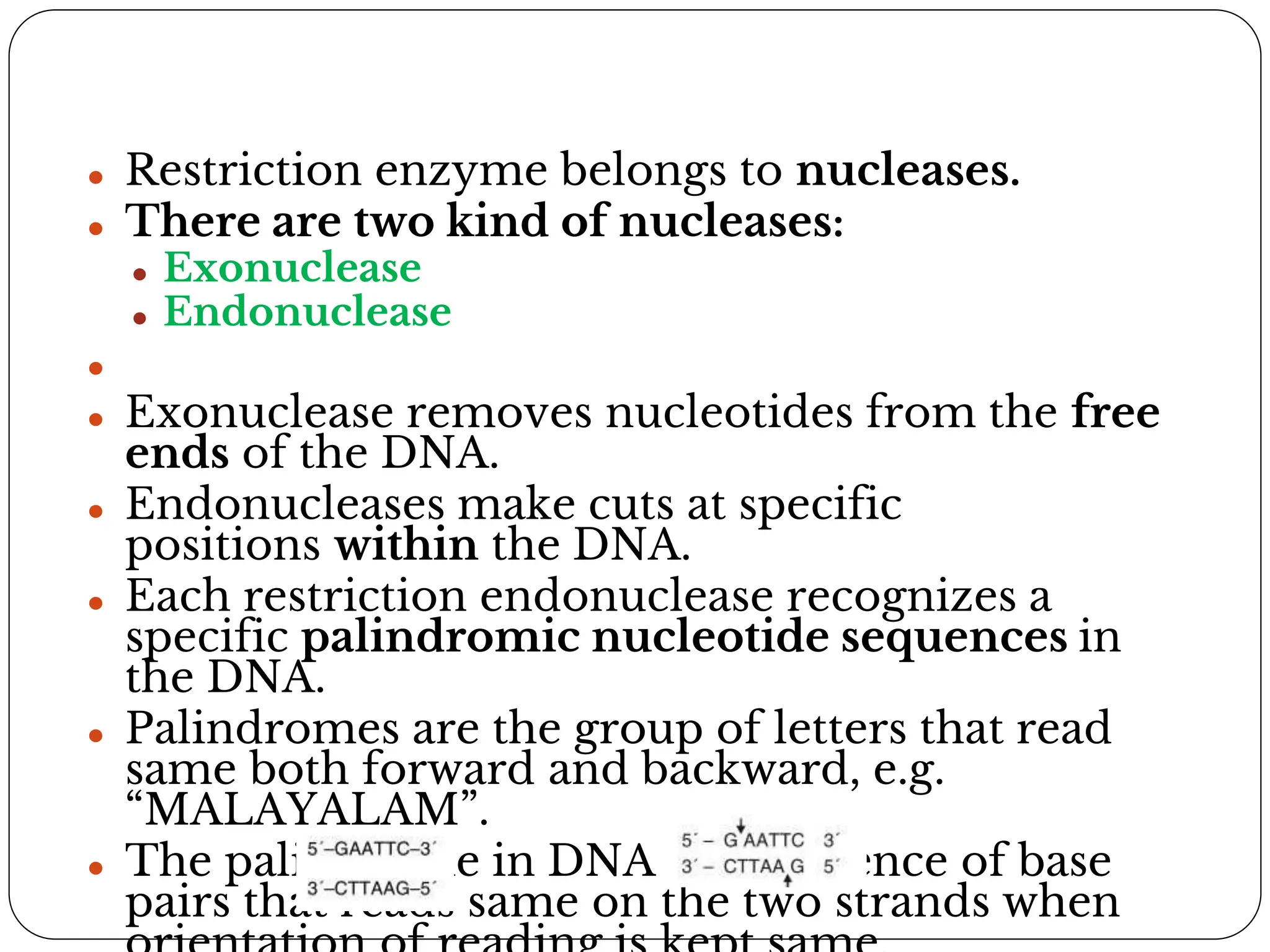
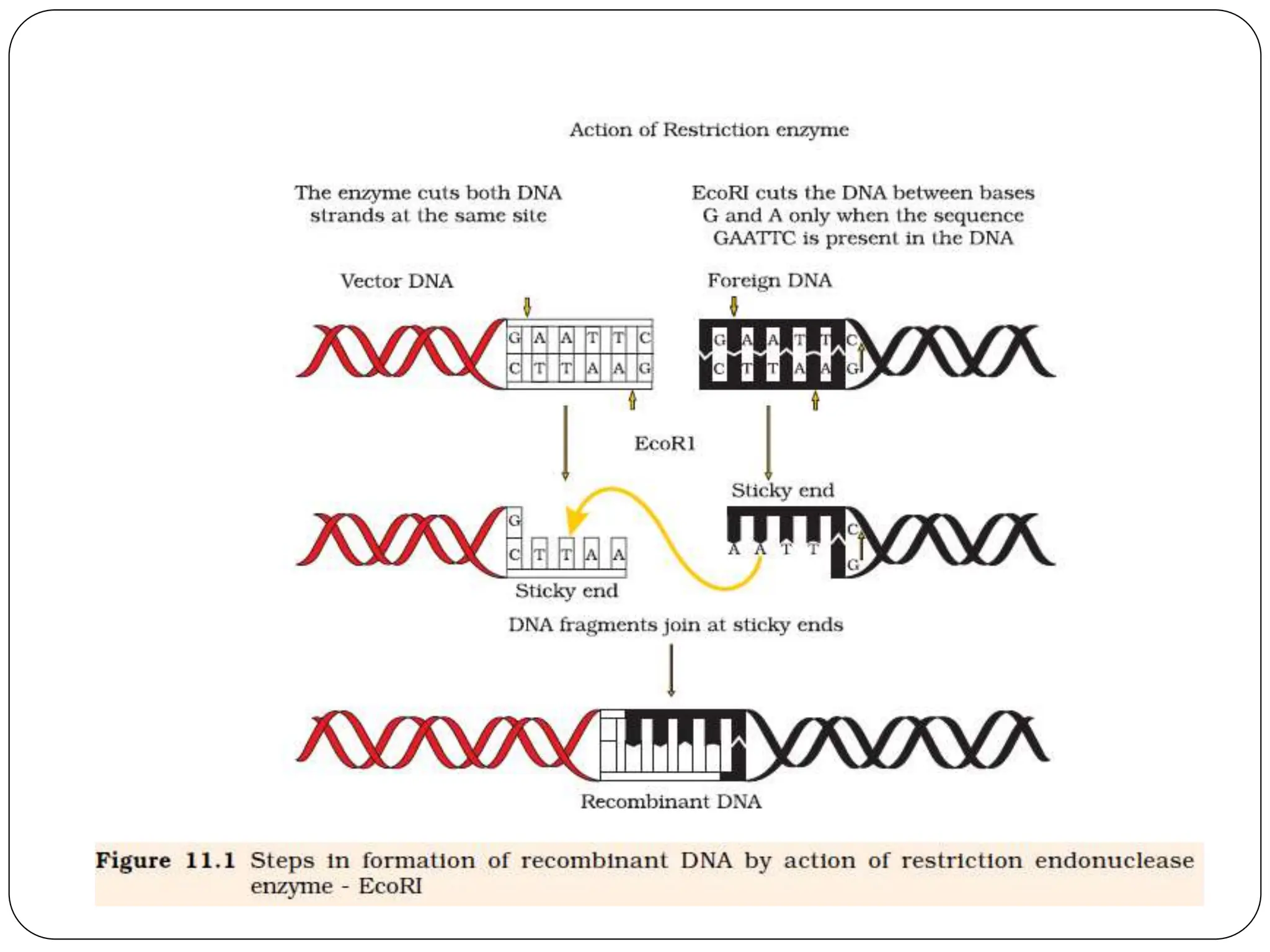
⚫ The palindrome in DNA is a sequence of base
pairs that reads same on the two strands when
⚫The restriction enzyme cut the strand of
DNA little away from the centre of the
palindrome sites, but between the same two
bases on the opposite strand. This leaves
single stranded portions at the ends. There
are overhanging stretches called sticky
ends on each strand.
⚫This stickiness of the ends facilitates the
action of the enzyme DNA ligases.
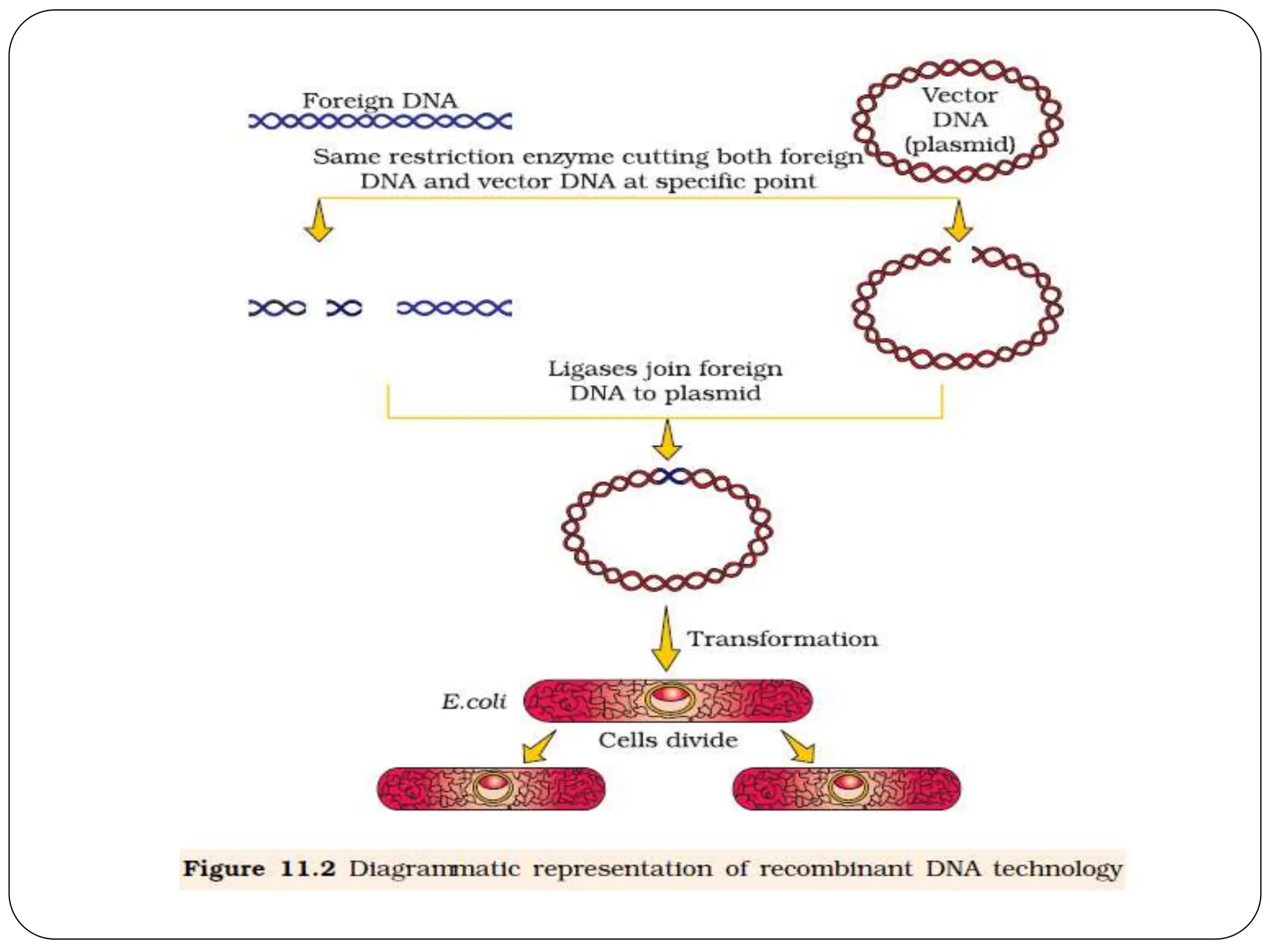
⚫The foreign DNA and the host DNA cut by
the same restriction endonuclease, the
resultant DNA fragments have the same kind
of ‘sticky-ends’ and these can be joined
together using DNA ligases.
Convention for naming restriction
endonuclease
⚫The first letter of the name comes from
the genus.
⚫Second two letters come from the species
of the prokaryotic cell from which the
enzyme isolated
⚫The fourth letter is in capital form derived
from the Strain of microbes.
⚫The Roman letter followed is the order of
discovery
⚫Best example: EcoRI comes
from Escherichia coli RY 13
Separation and isolation of DNA
fragments
⚫ The cutting of DNA by restriction
endonucleases results in the
fragments of DNA.
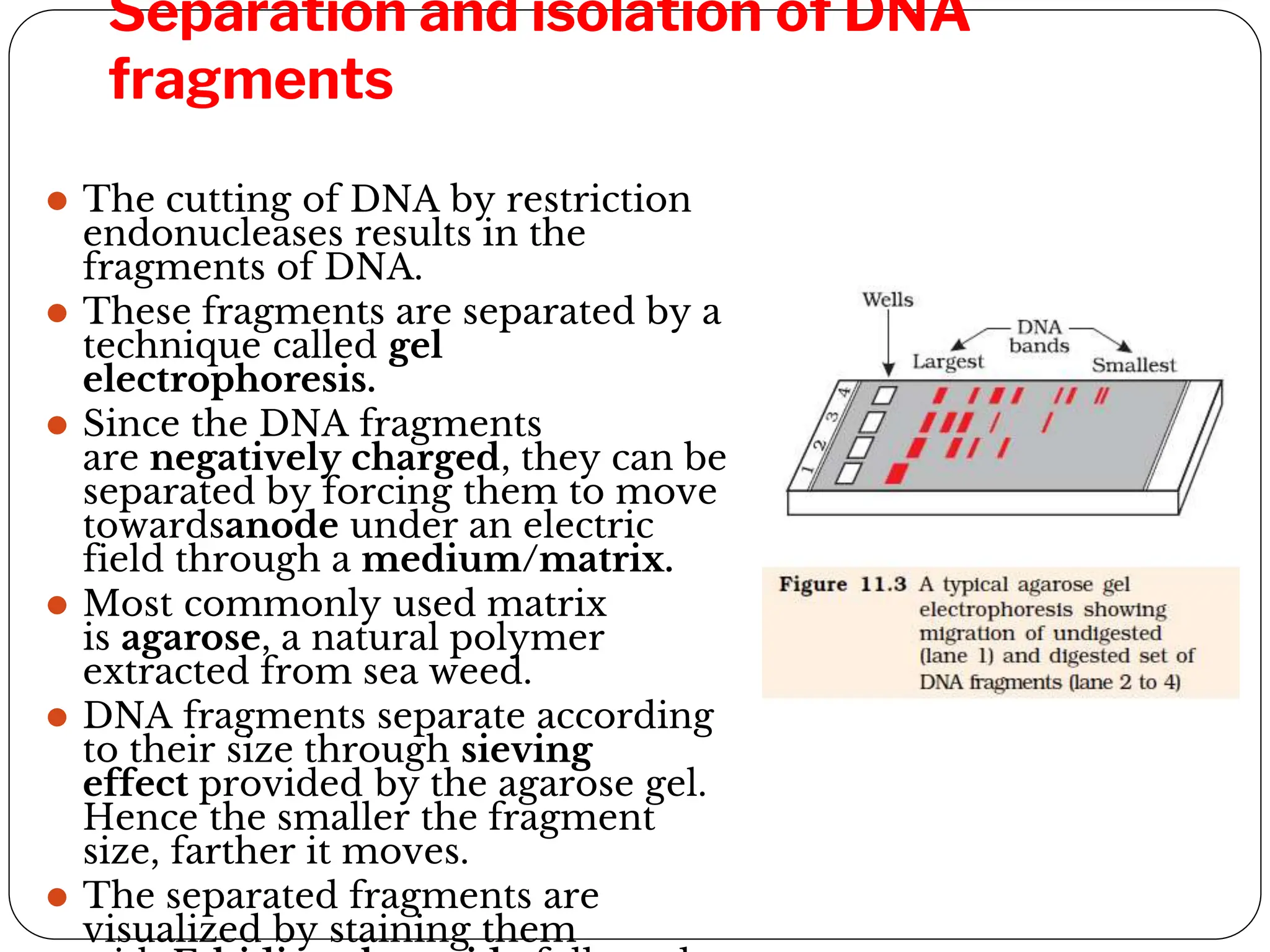
⚫ These fragments are separated by a
technique called gel
electrophoresis.
⚫ Since the DNA fragments
are negatively charged, they can be
separated by forcing them to move
towardsanode under an electric
field through a medium/matrix.
⚫ Most commonly used matrix
is agarose, a natural polymer
extracted from sea weed.
⚫ DNA fragments separate according
to their size through sieving
effect provided by the agarose gel.
Hence the smaller the fragment
size, farther it moves.
⚫ The separated fragments are
visualized by staining them
Cloning vectors:
⚫ The plasmid and
bacteriophages have the
ability to replicate within
bacterial cells independent of
the control of chromosomal
DNA.
⚫ Alien DNA linked with the
vector multiply its number
equal to the copy number of
the plasmid or bacteriophage.
Features of cloning vector:
Origin of replication:
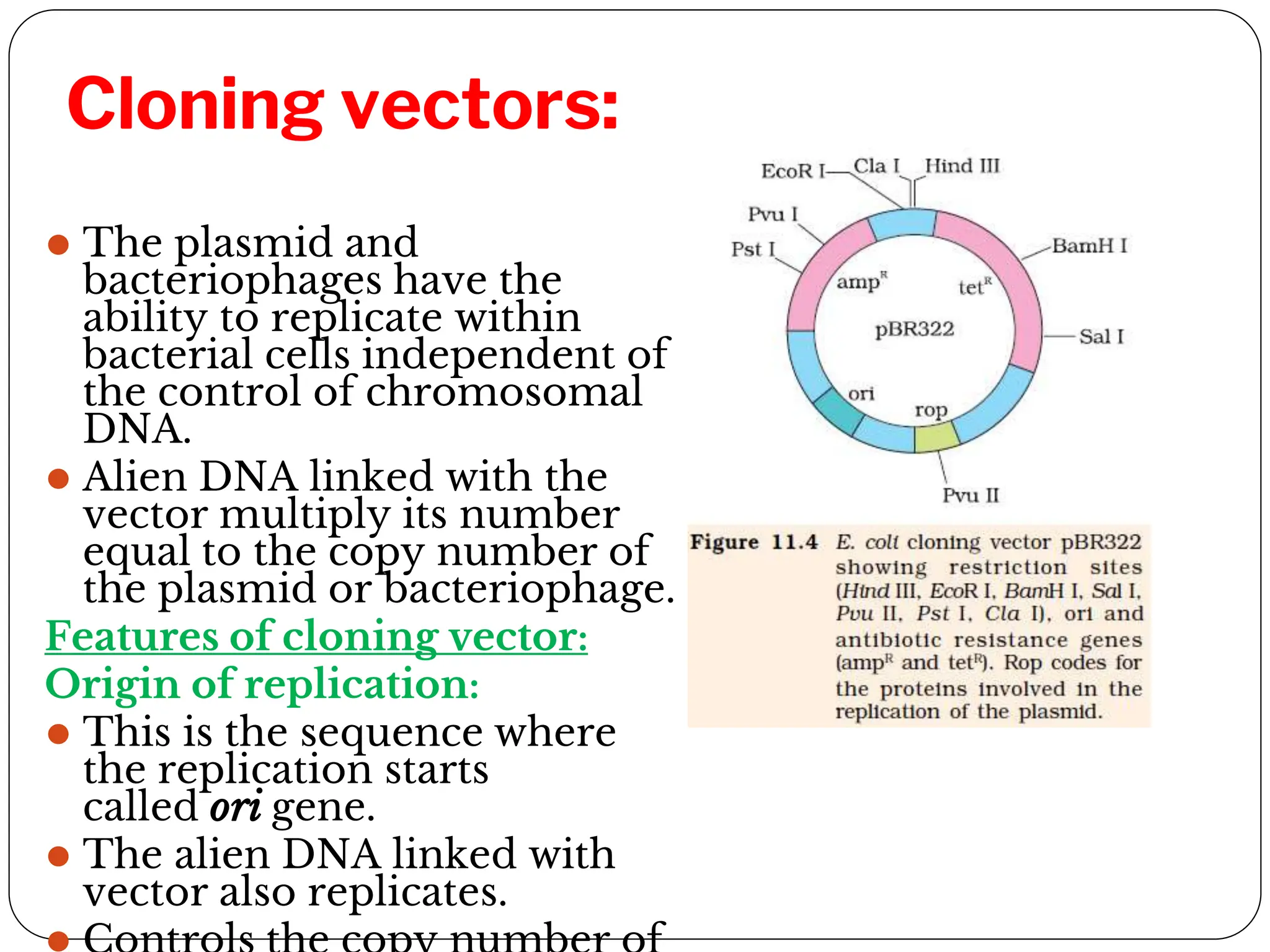
⚫ This is the sequence where
the replication starts
called ori gene.
⚫ The alien DNA linked with
vector also replicates.
Selectable marker
⚫It is required to identify recombinant from
the non-recombinant.
⚫Helps in identifying and eliminating non-
transformants and selectively permitting the
growth of the transformants.
⚫Transformation is a procedure through
which a piece of foreign DNA is introduced
in a host bacterium.
⚫Normally, the gene coding resistance to
antibiotics such as ampicilin. Tetracycline,
chloramphenicol or kanamycins etc are
considered as useful selectable markers
for E.coli.
⚫The normal E.coli cells do not carry
Cloning sites
⚫ In order to link the alien DNA, the vector needs to have
very few, preferably single, recognition sites (palindromic
site)for the commonly used restriction endonuclease.
⚫ Commonly used vector is pBR322, for E.coli.
⚫ The ligation of foreign DNA is carried out at a restriction
site present in one of the two antibiotic resistance genes.
⚫ If a foreign DNA ligated or inserted at the Bam H I site of
tetracycline resistance gene in the vector pBR322, the
recombinant plasmid will lose tetracycline resistance.
(insertional inactivation)
⚫
⚫ The recombinant can be identified from the non-
recombinant in following steps:
⚫ All are grown in ampicilin medium
⚫ One replica of above plate grown in ampicilin medium
(control)
⚫ Other replica grown in the medium containing
both tetracycline and ampicilin.
⚫ The colonies grows in plate-I but failed to grow in plate-II
are identified as recombinants
Alternative selectable marker
⚫ In E.coli a plasmid called PUK-18 is used as
selectable marker, which is better than pBR322.
⚫ The foreign DNA is introduced within the coding
sequence of an enzyme β-galactosidase, which
convert X-Gal (chromatogenic substrate) into
Galactose and 5-bromo+4 chloro indigo (blue
color)
⚫ The non-recombinant produce enzyme and give
blue colored colonies.
⚫ The recombinant unable to produce β-
galactosidase and does not produce blue colored
colonies after addition of chromatogenic
substrate i.e. X-Gal.
Vectors for cloning genes in plants and
animals
⚫ Agrobacterium tumefaciens, a pathogenic
bacterium of several dicot plants.
⚫ This bacterium contains a plasmid called Ti-
plasmid.(tumor inducing)
⚫ In natural condition the A.tumifaciens transfer
the T-DNA into the plant which transform
normal plant cells into a tumor and direct these
tumor cells to produce the chemical required by
the pathogen.
⚫ Retroviruses in animals have the ability to
transform normal cells into cancerous cells.
⚫ The dis-armed retroviruses are being used to
transfer gene into animals.
⚫ In Ti-plasmid the T-DNA is replaced by the
gene of interest, still A.tumifaciens able to
transfer the gene into the plant without causing
tumor in plants.
Competent Host (for transformation with
recombinant DNA)
⚫ DNA is a hydrophilic molecule; it cannot pass
through cell membranes.
⚫ In order to force bacteria to take-up the plasmid,
the bacterial cells must first be made ‘competent’
to take up DNA.
⚫ The bacterial cell is treated with divalent cations
such as calcium, which increases the efficiency of
DNA up take by the bacteria.
⚫ Recombinant DNA and the bacterial cells are
incubated in ice, followed by placing them briefly
at 42oC (heat shock) and then putting them back in
ice.
⚫ By microinjection the recombinant DNA directly
injected into the nucleus of the animal cell.
⚫ Plant cells are bombarded with high velocity
micro-particles of gold or tungsten coated with
DNA in a method known as biolistics or gene gun.
PROCESS OF RECOMBINANT
TECHNOLOGY:
⚫Isolation of DNA ,
⚫Fragmentation of DNA by restriction
endonuclease.
⚫Isolation of desired DNA fragment by gel
electrophoresis.
⚫Ligation of DNA fragment with a vector
by DNA ligase
⚫Transferring the recombinant DNA into the
host
⚫Culturing the host cells in a medium at large
scale in a bioreactor.
⚫Extraction of desired product
Isolation of the Genetic material (DNA):
⚫Bacterial cell wall digested by Lysozyme.
⚫Plant cell wall is digested
by cellulase and pectinase.
⚫Fungal cell wall is digested by chitinase.
⚫RNA of the cellular content is digested
by ribonuclease.
⚫Proteins are removed by Proteases.
⚫Purified DNA ultimately precipitated out
after addition of chilled ethanol.
⚫The precipitated DNA is separated and
removed by spooling.
Amplification of Gene of Interest using PCR
⚫PCR stands for Polymerase chain reaction:
⚫Multiple copy of gene of interest can be
synthesized in vitro.
⚫PCR includes following steps:
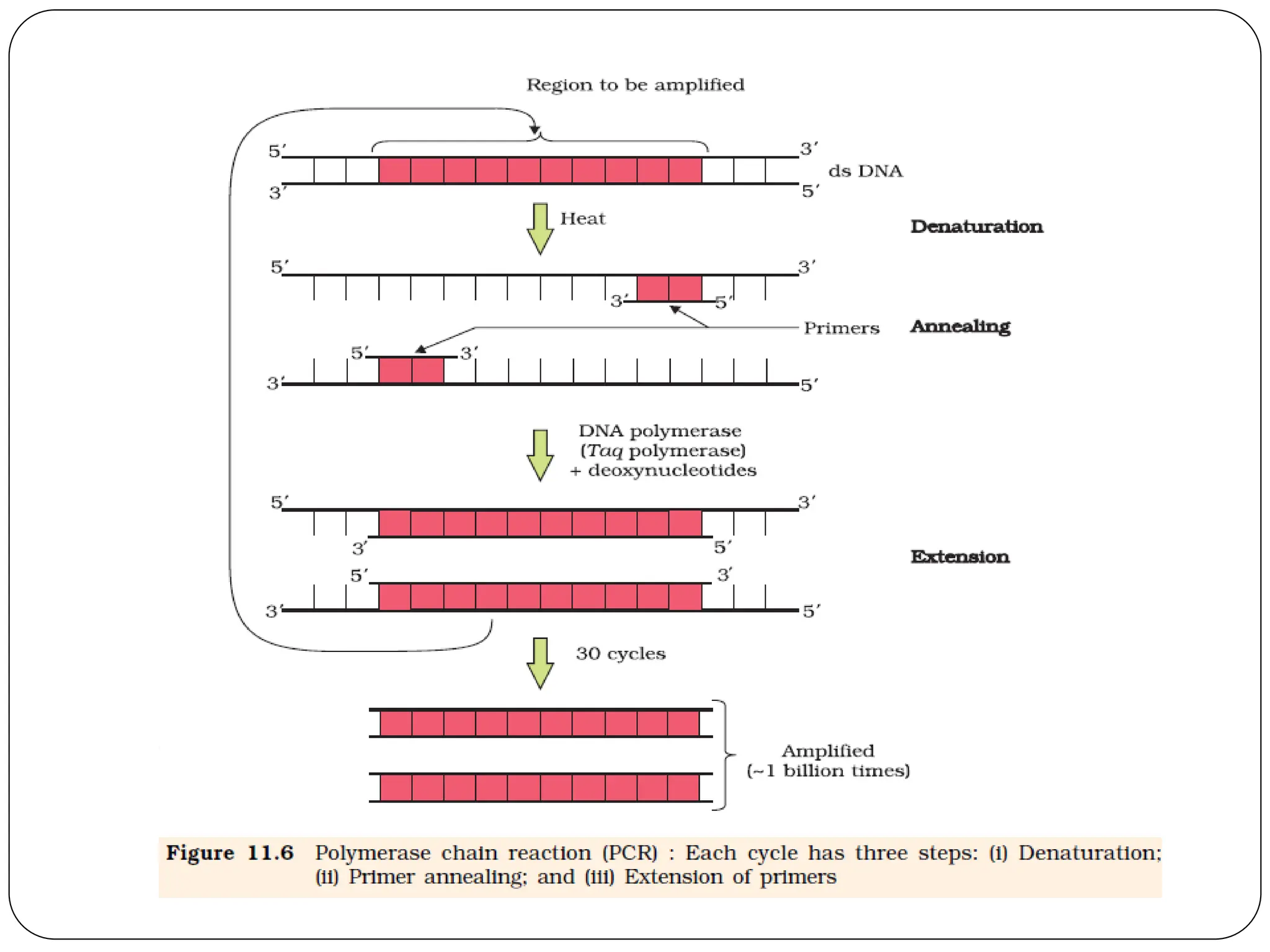
Denaturation
⚫Double stranded DNA made single stranded.
⚫It is done by heating the DNA at 94oC.
⚫Each single stranded DNA is called
Template strand
Annealing
⚫ Two sets of primer (small oligonucleotide
chain that are complementary to the DNA at 3’
end of the DNA template) added to the
medium.
⚫ This is done at around 50oC.
Extension
⚫ Deoxyribonucleotides triphosphates are added
in the medium.
⚫ Taq polymerase catalyses the polymerization
reaction using nucleotides extending from the
primer towards 5’ end of the template.
⚫ Taq polymerase is a thermostable polymerase
isolated from a bacterium called Thermus
aquaticus.
⚫ It catalyses polymerization reaction at 74oC.
⚫Obtaining the Foreign Gene product or
Recombinant product:
⚫The protein encoding gene is expressed in
a heterogeneous host is called
a recombinant protein.
⚫The host is cultured in a continuous
culture system provided in bioreactor.
⚫A bioreactor provides optimum growth
conditions (temperature, pH, substrate,
salts, vitamins, oxygen)
⚫Bioreactor covert the raw materials into
specific product, specific enzyme.
Downstream processing
⚫After biosynthesis inside the bioreactor,
the product has to be subjected through a
series of processes before it is ready for
marketing.
⚫The process includes separation and
purification, which are collectively
referred as downstream processing.
⚫The product has to be formulated in
suitable preservatives.
⚫Such formulation has to undergo through
clinical trials as in case of drugs.
11. BIOTECHNOLOGY PRINCIPLES AND PROCESSES.pdf

  • 1.
  • 2.
    History of Biotechnology ⚫1590: Janssen invents the microscope. ⚫ 1675:. one of the pioneers of microscopy who in the late 17th century Leeuwenhoek discovers bacteria and protozoabecame the first man to make and use a real microscope. 1833: The nucleus of the cell is discovered ⚫ 1855: The E. coli bacterium is discovered ⚫ 1906: The term "genetics" is used ⚫ 1919: The word "biotechnology" is first used ⚫ 1938: The term "molecular biology" is used ⚫ 1941: The term "genetic engineering" is first used
  • 3.
    ⚫1980: The U.S.patent for gene cloning is awarded to Boyer and Cohen. ⚫1981: The first genetically-engineered plant is reported (TOBACCO) ⚫1981: 1st mice to be successfully cloned ⚫1984: The DNA fingerprinting technique is developed.
  • 4.
    ⚫1984: The firstgenetically- engineered vaccine is developed against Hepatitis B. ⚫1999: The genetic code of the human chromosome is deciphered ⚫2001: The sequence of the human genome is published in Science and Nature ⚫2003: Dolly, the cloned sheep from 1997, is euthanized
  • 5.
    ⚫ The term"biotechnology" was coined in 1919 by Karl Ereky, an Hungarian engineer. ⚫ Definition: the term "biotechnology" refers to the use of living organisms or their products to modify human health and the human environment. ⚫ Louis Pasteur (1822-1895), the French chemist and microbiologist, is considered the actual “Father of biotechnology” by most renowned scientists of the world ⚫ Karoly Ereky (1878-1952) from Hungary coined the term “biotechnologie” in 1919. At that time, he was food minister in Hungary. ⚫ Daniel Nathans (1928-1999), Nobel laureate in medicine-1978; is considered “Father of Modern Biotechnology” by many researchers ⚫ Some people consider Kiran Mazumdar Shaw (born in 1953) as father/mother of biotechnology in India. ⚫ Dr. Pushpa Bhargava (born in 1928); established CCMB
  • 6.
    BIOTECHNOLOGY: PRINCIPLES AND PROCESSES ⚫Twocore techniques that enabled birth of modern biotechnology: ⚫Genetic engineering: Techniques to alter the chemistry of genetic material (DNA and RNA) to introduce into host organisms and thus change the phenotype of the host organism. ⚫Maintenance of sterile (microbial contamination-free) ambient chemical engineering processes to enable growth of only the desired microbe/eukaryotic cell in
  • 7.
  • 8.
    Conceptual development ofthe principle of genetic engineering ⚫ Asexual reproduction preserves the genetic identity of species. ⚫ Sexual reproduction creates variation and creates unique combinations of genetic makeup. ⚫ Traditional hybridization procedures used in plant and animal breeding leads to undesirable genes along with desired genes. ⚫ The techniques of genetic engineering which includes creation of recombinant DNA, use of gene cloning and gene transfer, overcome this limitation and allows us to isolate and introduce only one or a set of desirable genes without introducing undesirable genes into target organism ⚫ Three basic steps in genetically modifying an organism – ⚫ Identification of DNA with desirable gene
  • 9.
    TOOLS OF RECOMBINANTDNA TECHNOLOGY ⚫Restriction Enzymes ⚫Cloning vectors ⚫Competent Host (for transformation with recombinant DNA) ⚫Before starting with the entire process I would like to show you a short video clip. https://www.youtube.com/watch?v=6Ui KZKFHbMQ
  • 10.
    Restriction Enzymes ⚫In theyear 1963 two enzymes discovered from Escherichia coli which restrict the growth of bacteriophage in it. ⚫One of these added methyl groups to DNA. ⚫Other cut the phage DNA. (restriction endonuclease) ⚫ ⚫The first restriction endonuclease discovered is Hind II. ⚫Hind II always cut DNA molecule at particular point by recognizing a specific sequence of six base pairs. This is called recognition sequence for Hind II. ⚫Till date around 900 restriction enzymes
  • 11.
    ⚫ Restriction enzymebelongs to nucleases. ⚫ There are two kind of nucleases: ⚫ Exonuclease ⚫ Endonuclease ⚫ ⚫ Exonuclease removes nucleotides from the free ends of the DNA. ⚫ Endonucleases make cuts at specific positions within the DNA. ⚫ Each restriction endonuclease recognizes a specific palindromic nucleotide sequences in the DNA. ⚫ Palindromes are the group of letters that read same both forward and backward, e.g. “MALAYALAM”. ⚫ The palindrome in DNA is a sequence of base pairs that reads same on the two strands when
  • 13.
    ⚫The restriction enzymecut the strand of DNA little away from the centre of the palindrome sites, but between the same two bases on the opposite strand. This leaves single stranded portions at the ends. There are overhanging stretches called sticky ends on each strand. ⚫This stickiness of the ends facilitates the action of the enzyme DNA ligases. ⚫The foreign DNA and the host DNA cut by the same restriction endonuclease, the resultant DNA fragments have the same kind of ‘sticky-ends’ and these can be joined together using DNA ligases.
  • 14.
    Convention for namingrestriction endonuclease ⚫The first letter of the name comes from the genus. ⚫Second two letters come from the species of the prokaryotic cell from which the enzyme isolated ⚫The fourth letter is in capital form derived from the Strain of microbes. ⚫The Roman letter followed is the order of discovery ⚫Best example: EcoRI comes from Escherichia coli RY 13
  • 15.
    Separation and isolationof DNA fragments ⚫ The cutting of DNA by restriction endonucleases results in the fragments of DNA. ⚫ These fragments are separated by a technique called gel electrophoresis. ⚫ Since the DNA fragments are negatively charged, they can be separated by forcing them to move towardsanode under an electric field through a medium/matrix. ⚫ Most commonly used matrix is agarose, a natural polymer extracted from sea weed. ⚫ DNA fragments separate according to their size through sieving effect provided by the agarose gel. Hence the smaller the fragment size, farther it moves. ⚫ The separated fragments are visualized by staining them
  • 16.
    Cloning vectors: ⚫ Theplasmid and bacteriophages have the ability to replicate within bacterial cells independent of the control of chromosomal DNA. ⚫ Alien DNA linked with the vector multiply its number equal to the copy number of the plasmid or bacteriophage. Features of cloning vector: Origin of replication: ⚫ This is the sequence where the replication starts called ori gene. ⚫ The alien DNA linked with vector also replicates.
  • 18.
    Selectable marker ⚫It isrequired to identify recombinant from the non-recombinant. ⚫Helps in identifying and eliminating non- transformants and selectively permitting the growth of the transformants. ⚫Transformation is a procedure through which a piece of foreign DNA is introduced in a host bacterium. ⚫Normally, the gene coding resistance to antibiotics such as ampicilin. Tetracycline, chloramphenicol or kanamycins etc are considered as useful selectable markers for E.coli. ⚫The normal E.coli cells do not carry
  • 19.
    Cloning sites ⚫ Inorder to link the alien DNA, the vector needs to have very few, preferably single, recognition sites (palindromic site)for the commonly used restriction endonuclease. ⚫ Commonly used vector is pBR322, for E.coli. ⚫ The ligation of foreign DNA is carried out at a restriction site present in one of the two antibiotic resistance genes. ⚫ If a foreign DNA ligated or inserted at the Bam H I site of tetracycline resistance gene in the vector pBR322, the recombinant plasmid will lose tetracycline resistance. (insertional inactivation) ⚫ ⚫ The recombinant can be identified from the non- recombinant in following steps: ⚫ All are grown in ampicilin medium ⚫ One replica of above plate grown in ampicilin medium (control) ⚫ Other replica grown in the medium containing both tetracycline and ampicilin. ⚫ The colonies grows in plate-I but failed to grow in plate-II are identified as recombinants
  • 20.
    Alternative selectable marker ⚫In E.coli a plasmid called PUK-18 is used as selectable marker, which is better than pBR322. ⚫ The foreign DNA is introduced within the coding sequence of an enzyme β-galactosidase, which convert X-Gal (chromatogenic substrate) into Galactose and 5-bromo+4 chloro indigo (blue color) ⚫ The non-recombinant produce enzyme and give blue colored colonies. ⚫ The recombinant unable to produce β- galactosidase and does not produce blue colored colonies after addition of chromatogenic substrate i.e. X-Gal.
  • 21.
    Vectors for cloninggenes in plants and animals ⚫ Agrobacterium tumefaciens, a pathogenic bacterium of several dicot plants. ⚫ This bacterium contains a plasmid called Ti- plasmid.(tumor inducing) ⚫ In natural condition the A.tumifaciens transfer the T-DNA into the plant which transform normal plant cells into a tumor and direct these tumor cells to produce the chemical required by the pathogen. ⚫ Retroviruses in animals have the ability to transform normal cells into cancerous cells. ⚫ The dis-armed retroviruses are being used to transfer gene into animals. ⚫ In Ti-plasmid the T-DNA is replaced by the gene of interest, still A.tumifaciens able to transfer the gene into the plant without causing tumor in plants.
  • 22.
    Competent Host (fortransformation with recombinant DNA) ⚫ DNA is a hydrophilic molecule; it cannot pass through cell membranes. ⚫ In order to force bacteria to take-up the plasmid, the bacterial cells must first be made ‘competent’ to take up DNA. ⚫ The bacterial cell is treated with divalent cations such as calcium, which increases the efficiency of DNA up take by the bacteria. ⚫ Recombinant DNA and the bacterial cells are incubated in ice, followed by placing them briefly at 42oC (heat shock) and then putting them back in ice. ⚫ By microinjection the recombinant DNA directly injected into the nucleus of the animal cell. ⚫ Plant cells are bombarded with high velocity micro-particles of gold or tungsten coated with DNA in a method known as biolistics or gene gun.
  • 23.
    PROCESS OF RECOMBINANT TECHNOLOGY: ⚫Isolationof DNA , ⚫Fragmentation of DNA by restriction endonuclease. ⚫Isolation of desired DNA fragment by gel electrophoresis. ⚫Ligation of DNA fragment with a vector by DNA ligase ⚫Transferring the recombinant DNA into the host ⚫Culturing the host cells in a medium at large scale in a bioreactor. ⚫Extraction of desired product
  • 24.
    Isolation of theGenetic material (DNA): ⚫Bacterial cell wall digested by Lysozyme. ⚫Plant cell wall is digested by cellulase and pectinase. ⚫Fungal cell wall is digested by chitinase. ⚫RNA of the cellular content is digested by ribonuclease. ⚫Proteins are removed by Proteases. ⚫Purified DNA ultimately precipitated out after addition of chilled ethanol. ⚫The precipitated DNA is separated and removed by spooling.
  • 25.
    Amplification of Geneof Interest using PCR ⚫PCR stands for Polymerase chain reaction: ⚫Multiple copy of gene of interest can be synthesized in vitro. ⚫PCR includes following steps: Denaturation ⚫Double stranded DNA made single stranded. ⚫It is done by heating the DNA at 94oC. ⚫Each single stranded DNA is called Template strand
  • 27.
    Annealing ⚫ Two setsof primer (small oligonucleotide chain that are complementary to the DNA at 3’ end of the DNA template) added to the medium. ⚫ This is done at around 50oC. Extension ⚫ Deoxyribonucleotides triphosphates are added in the medium. ⚫ Taq polymerase catalyses the polymerization reaction using nucleotides extending from the primer towards 5’ end of the template. ⚫ Taq polymerase is a thermostable polymerase isolated from a bacterium called Thermus aquaticus. ⚫ It catalyses polymerization reaction at 74oC.
  • 28.
    ⚫Obtaining the ForeignGene product or Recombinant product: ⚫The protein encoding gene is expressed in a heterogeneous host is called a recombinant protein. ⚫The host is cultured in a continuous culture system provided in bioreactor. ⚫A bioreactor provides optimum growth conditions (temperature, pH, substrate, salts, vitamins, oxygen) ⚫Bioreactor covert the raw materials into specific product, specific enzyme.
  • 29.
    Downstream processing ⚫After biosynthesisinside the bioreactor, the product has to be subjected through a series of processes before it is ready for marketing. ⚫The process includes separation and purification, which are collectively referred as downstream processing. ⚫The product has to be formulated in suitable preservatives. ⚫Such formulation has to undergo through clinical trials as in case of drugs.