Fatty Acid Synthesis
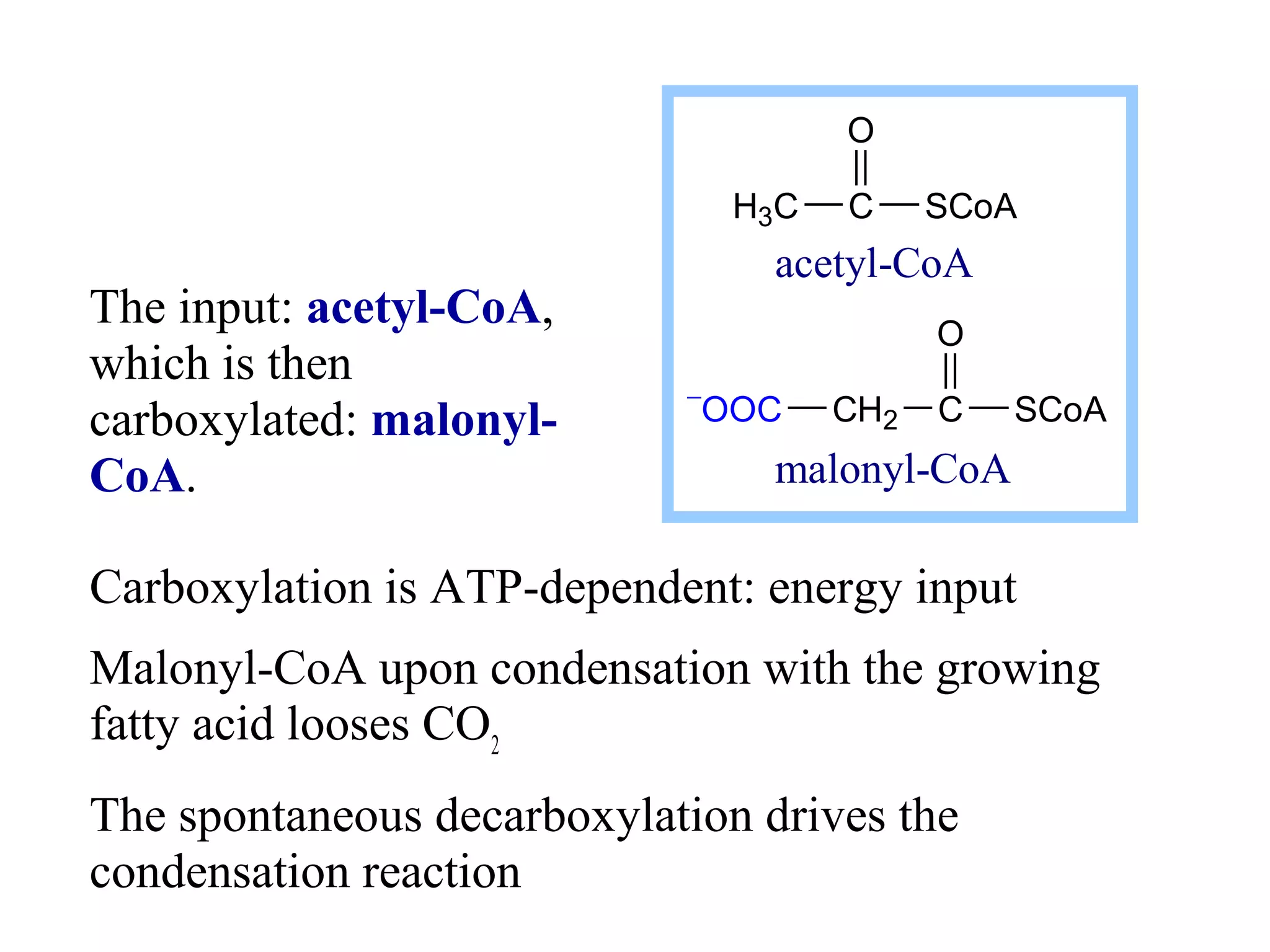
Carboxylation is ATP-dependent: energy input
Malonyl-CoA upon condensation with the growing
fatty acid looses CO2
The spontaneous decarboxylation drives the
condensation reaction
H3C C SCoA
O
CH2 C SCoA
O
−
OOC
acetyl-CoA
malonyl-CoA
The input: acetyl-CoA,
which is then
carboxylated: malonyl-
CoA.
As with other carboxylation reactions, the enzyme
prosthetic group is biotin
ATP-dependent carboxylation of the biotin, carried out at
one active site 1 , is followed by transfer of the carboxyl
group to acetyl-CoA at a second active site 2 .
Acetyl-CoA
Carboxylase
catalyzes the
2-step reaction
by which
acetyl-CoA is
carboxylated
to form
malonyl-CoA
ll
Enzyme-biotin
HCO3
-
+ ATP
ADP + Pi
Enzyme-biotin-CO2
-
O
CH3-C-SCoA
acetyl-CoA
O
-
O2C-CH2-C-SCoA
malonyl-CoA
ll
Enzyme-biotin
1
2
Fatty acid synthesis from acetyl-CoA & malonyl-CoA
occurs by a series of reactions that:
 in bacteria catalyzed by 6 different enzymes plus a
separate acyl carrier protein (ACP)
 in mammals catalyzed by individual domains of a very
large polypeptide that includes an ACP domain
NADPH serves as electron donor in the two reactions
involving substrate reduction
The NADPH is produced mainly by the Pentose Phosphate
Pathway
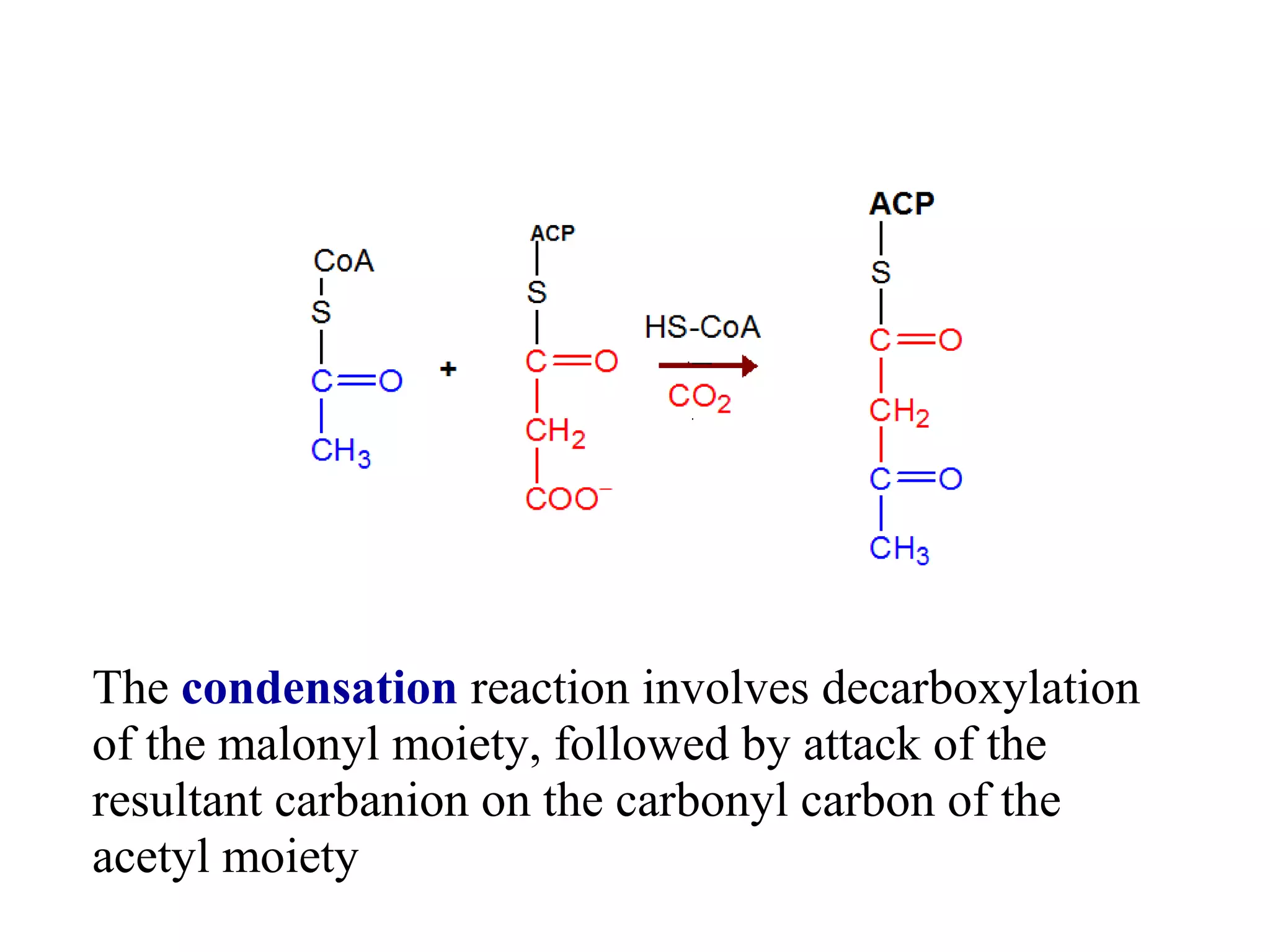
The condensation reaction involves decarboxylation
of the malonyl moiety, followed by attack of the
resultant carbanion on the carbonyl carbon of the
acetyl moiety
Product release:
When the fatty acid is 16 carbon atoms long, a
Thioesterase domain catalyzes hydrolysis of the
thioester linking the fatty acid to phosphopantetheine.
The 16-C saturated fatty acid palmitate is the final
product of the Fatty Acid Synthase complex.
Desaturases introduce double bonds at specific
positions in a fatty acid chain.
Mammalian cells are unable to produce double bonds
at certain locations, e.g., ∆12
.
Thus some polyunsaturated fatty acids are dietary
essentials, e.g., linoleic acid, 18:2 cis ∆9,12
(18 C atoms
long, with cis double bonds at carbons 9-10 & 12-13).
C
O
OH
910
oleate 18:1 cis ∆9

Biosynthesis of fatty acids --Sir Khalid (Biochem)

  • 1.
  • 2.
    Carboxylation is ATP-dependent:energy input Malonyl-CoA upon condensation with the growing fatty acid looses CO2 The spontaneous decarboxylation drives the condensation reaction H3C C SCoA O CH2 C SCoA O − OOC acetyl-CoA malonyl-CoA The input: acetyl-CoA, which is then carboxylated: malonyl- CoA.
  • 3.
    As with othercarboxylation reactions, the enzyme prosthetic group is biotin ATP-dependent carboxylation of the biotin, carried out at one active site 1 , is followed by transfer of the carboxyl group to acetyl-CoA at a second active site 2 . Acetyl-CoA Carboxylase catalyzes the 2-step reaction by which acetyl-CoA is carboxylated to form malonyl-CoA ll Enzyme-biotin HCO3 - + ATP ADP + Pi Enzyme-biotin-CO2 - O CH3-C-SCoA acetyl-CoA O - O2C-CH2-C-SCoA malonyl-CoA ll Enzyme-biotin 1 2
  • 4.
    Fatty acid synthesisfrom acetyl-CoA & malonyl-CoA occurs by a series of reactions that:  in bacteria catalyzed by 6 different enzymes plus a separate acyl carrier protein (ACP)  in mammals catalyzed by individual domains of a very large polypeptide that includes an ACP domain NADPH serves as electron donor in the two reactions involving substrate reduction The NADPH is produced mainly by the Pentose Phosphate Pathway
  • 5.
    The condensation reactioninvolves decarboxylation of the malonyl moiety, followed by attack of the resultant carbanion on the carbonyl carbon of the acetyl moiety
  • 7.
    Product release: When thefatty acid is 16 carbon atoms long, a Thioesterase domain catalyzes hydrolysis of the thioester linking the fatty acid to phosphopantetheine. The 16-C saturated fatty acid palmitate is the final product of the Fatty Acid Synthase complex.
  • 8.
    Desaturases introduce doublebonds at specific positions in a fatty acid chain. Mammalian cells are unable to produce double bonds at certain locations, e.g., ∆12 . Thus some polyunsaturated fatty acids are dietary essentials, e.g., linoleic acid, 18:2 cis ∆9,12 (18 C atoms long, with cis double bonds at carbons 9-10 & 12-13). C O OH 910 oleate 18:1 cis ∆9