Biosocial Research: Some
methodological considerations
Tarani Chandola
NCRM, University of Manchester
Acknowledgements: UKHLS Understanding
Society Biomarker Team
Methodological considerations
• Biosocial research framework
• Biological data quality issues
• Missing data in biosocial research
What is biosocial research
• https://www.youtube.com/watch?v=LxUEXc8ylzU
• Professor Michaela Benzeval
Methodological considerations
• Methodological issues relevant methods in
biosocial research are the same as in
biological or social science research
• Some standard methodological issues get
highlighted in particular because of the nature
of biosocial data
Why combine biological and social data?
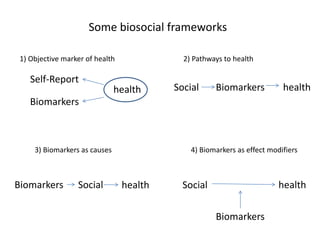
1) Using biomarkers as an objective measure of
health, physical functioning and illness
2) Using biomarkers to understand the pathways by
which social factors are associated with health
3) Using biomarkers to understand how the
biological factors such influence social outcomes
4) Using biomarkers to understand gene-
environment interactions
Some biosocial frameworks
Biomarkers
Self-Report
1) Objective marker of health
Social
2) Pathways to health
health
3) Biomarkers as causes 4) Biomarkers as effect modifiers
Biomarkers health
Biomarkers Social health healthSocial
Biomarkers
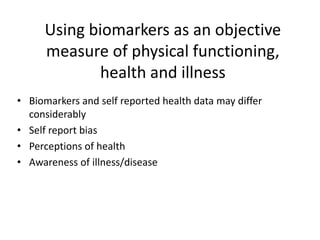
Using biomarkers as an objective
measure of physical functioning,
health and illness
• Biomarkers and self reported health data may differ
considerably
• Self report bias
• Perceptions of health
• Awareness of illness/disease
Measuring stress: Self-Report
How stressed are you feeling?
Very/Some/A little/Not at all
Neuro-endrocrine biomarkers:
- Adrenaline
- Nor-adrenaline
- Cortisol
- Cortisone
- DHEA
Sympathetic/Parasympathetic nervous system:
- Heart-Rate Variability
Biomarkers related to stress
Biomarkers related to recovery process are just as
important as those related to the acute stress
response
Physiological stress levels
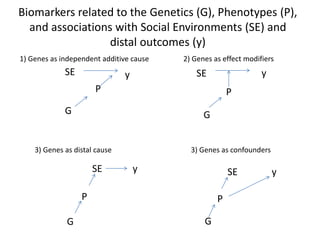
Biomarkers related to the Genetics (G), Phenotypes (P),
and associations with Social Environments (SE) and
distal outcomes (y)
G
P
SE
1) Genes as independent additive cause
G
P
ySE
2) Genes as effect modifiers
G
P
SE y
y
3) Genes as distal cause 3) Genes as confounders
G
P
SE y
Biosocial research framework:
methodological considerations
• In each of the biomarker examples, the association
between the social and biological data needs careful
consideration within a relevant (theoretical)
framework
• Danger of p-hacking, multiple comparisons, non-
reproducible results
• Need for interdisciplinary research teams
Biosocial research framework

Biosocial research framework

  • 2.
    Biosocial Research: Some methodologicalconsiderations Tarani Chandola NCRM, University of Manchester Acknowledgements: UKHLS Understanding Society Biomarker Team
  • 3.
    Methodological considerations • Biosocialresearch framework • Biological data quality issues • Missing data in biosocial research
  • 4.
    What is biosocialresearch • https://www.youtube.com/watch?v=LxUEXc8ylzU • Professor Michaela Benzeval
  • 5.
    Methodological considerations • Methodologicalissues relevant methods in biosocial research are the same as in biological or social science research • Some standard methodological issues get highlighted in particular because of the nature of biosocial data
  • 6.
    Why combine biologicaland social data? 1) Using biomarkers as an objective measure of health, physical functioning and illness 2) Using biomarkers to understand the pathways by which social factors are associated with health 3) Using biomarkers to understand how the biological factors such influence social outcomes 4) Using biomarkers to understand gene- environment interactions
  • 7.
    Some biosocial frameworks Biomarkers Self-Report 1)Objective marker of health Social 2) Pathways to health health 3) Biomarkers as causes 4) Biomarkers as effect modifiers Biomarkers health Biomarkers Social health healthSocial Biomarkers
  • 8.
    Using biomarkers asan objective measure of physical functioning, health and illness • Biomarkers and self reported health data may differ considerably • Self report bias • Perceptions of health • Awareness of illness/disease
  • 9.
    Measuring stress: Self-Report Howstressed are you feeling? Very/Some/A little/Not at all
  • 10.
    Neuro-endrocrine biomarkers: - Adrenaline -Nor-adrenaline - Cortisol - Cortisone - DHEA Sympathetic/Parasympathetic nervous system: - Heart-Rate Variability Biomarkers related to stress
  • 11.
    Biomarkers related torecovery process are just as important as those related to the acute stress response Physiological stress levels
  • 12.
    Biomarkers related tothe Genetics (G), Phenotypes (P), and associations with Social Environments (SE) and distal outcomes (y) G P SE 1) Genes as independent additive cause G P ySE 2) Genes as effect modifiers G P SE y y 3) Genes as distal cause 3) Genes as confounders G P SE y
  • 13.
    Biosocial research framework: methodologicalconsiderations • In each of the biomarker examples, the association between the social and biological data needs careful consideration within a relevant (theoretical) framework • Danger of p-hacking, multiple comparisons, non- reproducible results • Need for interdisciplinary research teams