Bio fuels
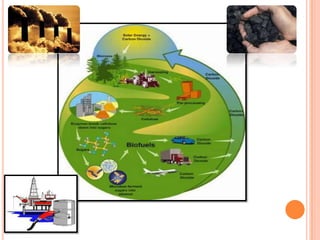
Biofuels are produced from living organisms or from metabolic by-products (organic or food waste products).
 In order to be considered a biofuel the fuel must contain over 80 percent renewable materials.
 It is originally derived from the photosynthesis process and can therefore often be referred to as a solar energy source.
 There are many pros and cons to using biofuels as an energy source.What are the advantages and disadvantages of bio fuels?
advantagesCost: Once the technology is widely available, biofuels can be significantly less expensive than gasoline and other fossil fuels, particularly as worldwide demand for oil increases, therefore increasing oil and gasoline prices to unheard of levels.
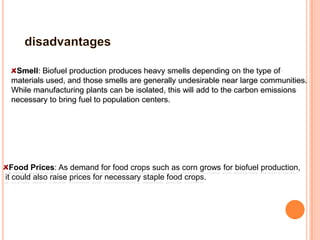
Lower Carbon Emissions: When biofuels are burned, they produce significantly less carbon output and fewer toxins, making them a safer alternative to preserve atmospheric quality and lower air pollution. disadvantagesSmell: Biofuel production produces heavy smells depending on the type of materials used, and those smells are generally undesirable near large communities. While manufacturing plants can be isolated, this will add to the carbon emissions necessary to bring fuel to population centers. Food Prices: As demand for food crops such as corn grows for biofuel production,it could also raise prices for necessary staple food crops.
How are theyProduced?Fossil fuels are produced when an animal or plant dies the animal goes into the earths crust and the energy in it's body over thousands of years turns into natural gas or fossil fuels.
Should the UAE develop bio fuels? "There's the potential to displace 50 percent of global fuel supply without affecting food or pasture,“.Development stage technologies for producing ethanol from cellulose could be deployed within the next two years. But other biofuel technologies required much more work."Under a very optimistic scenario for de-carbonisation, we need biofuel to account for 20 per cent of fuel supply by 2050," Prof Walter said.

Biofules

  • 1.
  • 2.
    Biofuels are producedfrom living organisms or from metabolic by-products (organic or food waste products).
  • 3.
    In orderto be considered a biofuel the fuel must contain over 80 percent renewable materials.
  • 4.
    It isoriginally derived from the photosynthesis process and can therefore often be referred to as a solar energy source.
  • 5.
    There aremany pros and cons to using biofuels as an energy source.What are the advantages and disadvantages of bio fuels?
  • 6.
    advantagesCost: Once thetechnology is widely available, biofuels can be significantly less expensive than gasoline and other fossil fuels, particularly as worldwide demand for oil increases, therefore increasing oil and gasoline prices to unheard of levels.
  • 7.
    Lower Carbon Emissions:When biofuels are burned, they produce significantly less carbon output and fewer toxins, making them a safer alternative to preserve atmospheric quality and lower air pollution. disadvantagesSmell: Biofuel production produces heavy smells depending on the type of materials used, and those smells are generally undesirable near large communities. While manufacturing plants can be isolated, this will add to the carbon emissions necessary to bring fuel to population centers. Food Prices: As demand for food crops such as corn grows for biofuel production,it could also raise prices for necessary staple food crops.
  • 8.
    How are theyProduced?Fossilfuels are produced when an animal or plant dies the animal goes into the earths crust and the energy in it's body over thousands of years turns into natural gas or fossil fuels.
  • 9.
    Should the UAEdevelop bio fuels? "There's the potential to displace 50 percent of global fuel supply without affecting food or pasture,“.Development stage technologies for producing ethanol from cellulose could be deployed within the next two years. But other biofuel technologies required much more work."Under a very optimistic scenario for de-carbonisation, we need biofuel to account for 20 per cent of fuel supply by 2050," Prof Walter said.