1
Integrated Food – Energy Systems
Charles Jumbe
Oliver Johnson
Sid Mohan
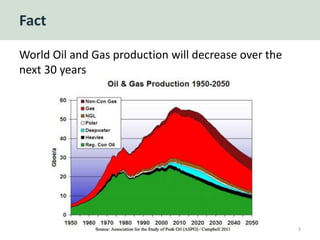
Fact
World Oil and Gas production will decrease over the
next 30 years
3
Fact
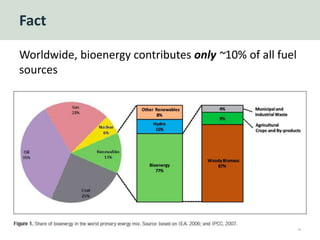
Worldwide, bioenergy contributes only ~10% of all fuel
sources
4
Fact
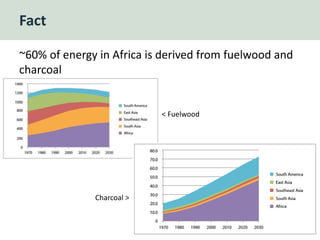
~60% of energy in Africa is derived from fuelwood and
charcoal
5
< Fuelwood
Charcoal >
Fact
6
< Fuelwood
Charcoal >
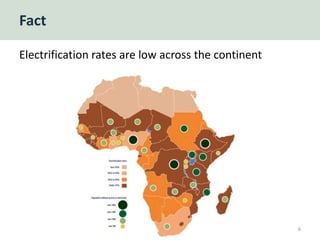
Electrification rates are low across the continent
Fact
7
< Fuelwood
Charcoal >
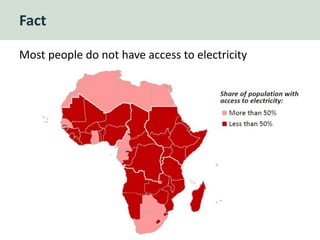
Most people do not have access to electricity
The current situation (World Energy Outlook 2014)
 GDP is rising, but almost half of a fast-growing
population lives in extreme poverty: energy is
vital to the prospects for development
 Region accounts for 13% of global population,
but only 4% of its energy demand
 Poor electricity infrastructure is a key
impediment to growth
 Large resource base, exploited only in part in
the case of oil, gas & coal, largely untouched
in renewables 8
The current situation
 2/3rds of SSA without electricity access
currently
 500 million people without access by 2040
 Average of 60% of SSA’s energy is imported
 Energy policy initiatives largely ignore trees
 Energy from biological sources only 10% of global
use, but 80% in Africa
 Trees provide multiple benefits - soil fertility,
water management, fruit production, fodder
production, fuelwood and timber 9
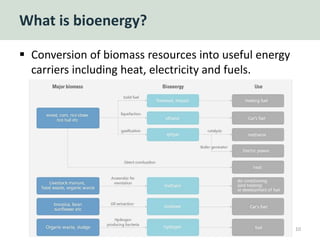
What is bioenergy?
 Conversion of biomass resources into useful energy
carriers including heat, electricity and fuels.
10
Bioenergy
 Woody biomass primary energy source in rural
SSA
 Same biomass can be used in gasification
systems to drive machinery and generate
electricity
 Different scales possible – small household
units to large industrial scale
 Allied products include biofuels, both
biodiesel and ethanol
 Gaining traction in many parts of SSA 11
Will bioenergy compete with food?
 Valid concerns can be raised
 Bioenergy provides income and improved
livelihoods
 Trees fit well into integrated food-energy
systems
 Tree growing is scalable – from agroforestry
systems on farms to large scale woodlots
12
In this session
 Charles Jumbe – Biofuels’ role in economic
security and development
 Oliver Johnson – Water, food, energy and
environment nexus
 Sid Mohan – Biomass power in Sri Lanka and
EverGreen Energy
13
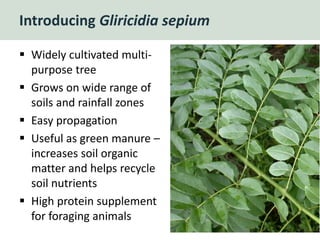
Introducing Gliricidia sepium
 Widely cultivated multi-
purpose tree
 Grows on wide range of
soils and rainfall zones
 Easy propagation
 Useful as green manure –
increases soil organic
matter and helps recycle
soil nutrients
 High protein supplement
for foraging animals
14
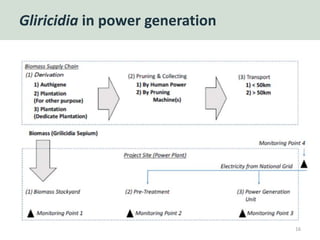
Gliricidia in power generation
 Highly scalable
 Can be grown on farmer fields as intercrop or
plantation style
 Harvested as frequent as 6 – 8 months for
biomass
 Can be used in combination with other
biomass sources
 Source of rural employment – over 100,000
farmers involved in Sri Lanka in 2 plants alone
 Demonstrated reduction in CO2 levels 15
Gliricidia in power generation
16
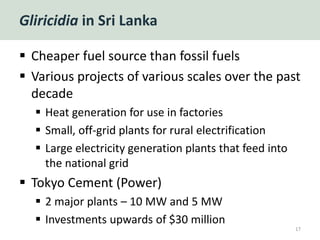
Gliricidia in Sri Lanka
 Cheaper fuel source than fossil fuels
 Various projects of various scales over the past
decade
 Heat generation for use in factories
 Small, off-grid plants for rural electrification
 Large electricity generation plants that feed into
the national grid
 Tokyo Cement (Power)
 2 major plants – 10 MW and 5 MW
 Investments upwards of $30 million
17
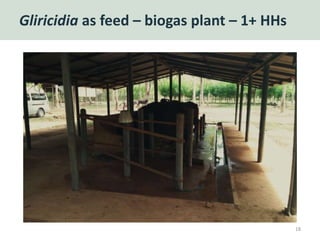
Gliricidia as feed – biogas plant – 1+ HHs
18
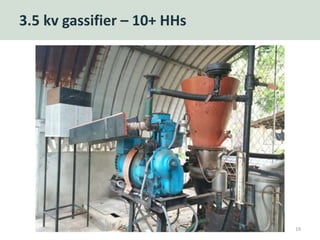
3.5 kv gassifier – 10+ HHs
19
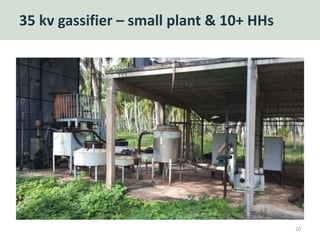
35 kv gassifier – small plant & 10+ HHs
20
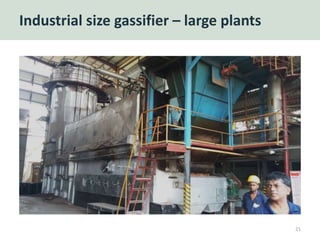
Industrial size gassifier – large plants
21
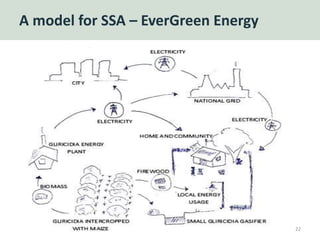
A model for SSA – EverGreen Energy
22
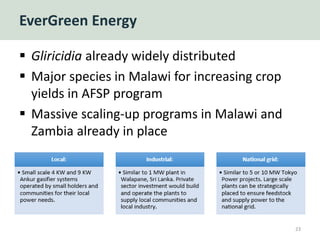
EverGreen Energy
 Gliricidia already widely distributed
 Major species in Malawi for increasing crop
yields in AFSP program
 Massive scaling-up programs in Malawi and
Zambia already in place
23
Next
 What are the areas where such a project can
be planned for?
 What barriers or challenges do you foresee?
 Who are the major stakeholders who should
be involved in this?
24
Next steps
 Review, quantify and publicize the potential of
tree-based bioenergy
 Put tree-based bioenergy into its proper place
in international and national energy policies
 Develop urgently-needed energy resources for
poor people
 Develop tree-based bioenergy for power
supply and electricity production for
development
 Promote and develop biofuel production 25
Thank you
26
For more information:
Charles Jumbe - charlesjumbe@gmail.com
Oliver Johnson - oliver.johnson@sei-international.org
Sid Mohan – s.mohan@cigar.org

Integrated food-energy systems

  • 1.
  • 2.
    Integrated Food –Energy Systems Charles Jumbe Oliver Johnson Sid Mohan
  • 3.
    Fact World Oil andGas production will decrease over the next 30 years 3
  • 4.
    Fact Worldwide, bioenergy contributesonly ~10% of all fuel sources 4
  • 5.
    Fact ~60% of energyin Africa is derived from fuelwood and charcoal 5 < Fuelwood Charcoal >
  • 6.
    Fact 6 < Fuelwood Charcoal > Electrificationrates are low across the continent
  • 7.
    Fact 7 < Fuelwood Charcoal > Mostpeople do not have access to electricity
  • 8.
    The current situation(World Energy Outlook 2014)  GDP is rising, but almost half of a fast-growing population lives in extreme poverty: energy is vital to the prospects for development  Region accounts for 13% of global population, but only 4% of its energy demand  Poor electricity infrastructure is a key impediment to growth  Large resource base, exploited only in part in the case of oil, gas & coal, largely untouched in renewables 8
  • 9.
    The current situation 2/3rds of SSA without electricity access currently  500 million people without access by 2040  Average of 60% of SSA’s energy is imported  Energy policy initiatives largely ignore trees  Energy from biological sources only 10% of global use, but 80% in Africa  Trees provide multiple benefits - soil fertility, water management, fruit production, fodder production, fuelwood and timber 9
  • 10.
    What is bioenergy? Conversion of biomass resources into useful energy carriers including heat, electricity and fuels. 10
  • 11.
    Bioenergy  Woody biomassprimary energy source in rural SSA  Same biomass can be used in gasification systems to drive machinery and generate electricity  Different scales possible – small household units to large industrial scale  Allied products include biofuels, both biodiesel and ethanol  Gaining traction in many parts of SSA 11
  • 12.
    Will bioenergy competewith food?  Valid concerns can be raised  Bioenergy provides income and improved livelihoods  Trees fit well into integrated food-energy systems  Tree growing is scalable – from agroforestry systems on farms to large scale woodlots 12
  • 13.
    In this session Charles Jumbe – Biofuels’ role in economic security and development  Oliver Johnson – Water, food, energy and environment nexus  Sid Mohan – Biomass power in Sri Lanka and EverGreen Energy 13
  • 14.
    Introducing Gliricidia sepium Widely cultivated multi- purpose tree  Grows on wide range of soils and rainfall zones  Easy propagation  Useful as green manure – increases soil organic matter and helps recycle soil nutrients  High protein supplement for foraging animals 14
  • 15.
    Gliricidia in powergeneration  Highly scalable  Can be grown on farmer fields as intercrop or plantation style  Harvested as frequent as 6 – 8 months for biomass  Can be used in combination with other biomass sources  Source of rural employment – over 100,000 farmers involved in Sri Lanka in 2 plants alone  Demonstrated reduction in CO2 levels 15
  • 16.
    Gliricidia in powergeneration 16
  • 17.
    Gliricidia in SriLanka  Cheaper fuel source than fossil fuels  Various projects of various scales over the past decade  Heat generation for use in factories  Small, off-grid plants for rural electrification  Large electricity generation plants that feed into the national grid  Tokyo Cement (Power)  2 major plants – 10 MW and 5 MW  Investments upwards of $30 million 17
  • 18.
    Gliricidia as feed– biogas plant – 1+ HHs 18
  • 19.
    3.5 kv gassifier– 10+ HHs 19
  • 20.
    35 kv gassifier– small plant & 10+ HHs 20
  • 21.
    Industrial size gassifier– large plants 21
  • 22.
    A model forSSA – EverGreen Energy 22
  • 23.
    EverGreen Energy  Gliricidiaalready widely distributed  Major species in Malawi for increasing crop yields in AFSP program  Massive scaling-up programs in Malawi and Zambia already in place 23
  • 24.
    Next  What arethe areas where such a project can be planned for?  What barriers or challenges do you foresee?  Who are the major stakeholders who should be involved in this? 24
  • 25.
    Next steps  Review,quantify and publicize the potential of tree-based bioenergy  Put tree-based bioenergy into its proper place in international and national energy policies  Develop urgently-needed energy resources for poor people  Develop tree-based bioenergy for power supply and electricity production for development  Promote and develop biofuel production 25
  • 26.
    Thank you 26 For moreinformation: Charles Jumbe - charlesjumbe@gmail.com Oliver Johnson - oliver.johnson@sei-international.org Sid Mohan – s.mohan@cigar.org