Topic biosynthesis of triacylglycerol
Presented by
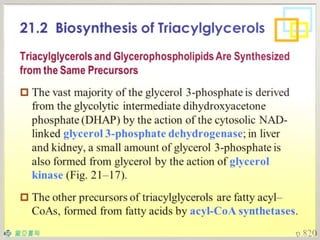
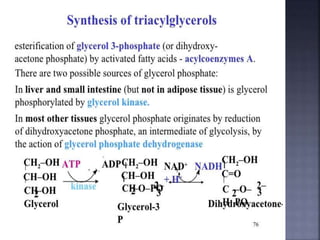
 is provided by esterification of glycerol 3-
phosphate (or
dihydroxyacetonephosphate) by activated
fatty acids - acylcoenzymes A.
 There are two possible sources of glycerol
phosphate:
 In liver and small intestine (but not in
adipose tissue) is glycerol
phosphorylated by glycerol kinase.
 In most other tissues glycerol
phosphate originates by reduction of
dihydroxyacetone phosphate, an
intermediate of glycolysis, by the action of
glycerol phosphate dehydrogenase
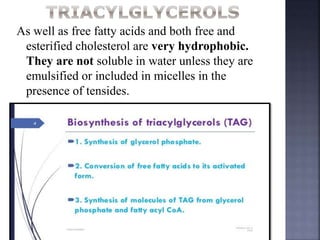
As well as free fatty acids and both free and
esterified cholesterol are very hydrophobic.
They are not soluble in water unless they are
emulsified or included in micelles in the
presence of tensides.
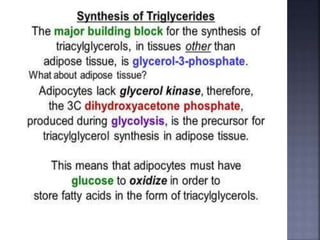
 • Also called neutral fats, triglycerides or TAGs.
 • Function: storage of metabolic energy
 – high energy content ~38 kJ/g
 – stored in adipose tissue
 • Biosynthesis of TGs from 2 precursors
 – glycerol 3-phosphate
 – Fatty acyl-CoA’s
 – synthesis generates a phosphatidic acid
(DAG-3P:
 diacylglycerol-3-P) (common intermediate in
the
 synthesis of TAGs, phosphoglyserides.)
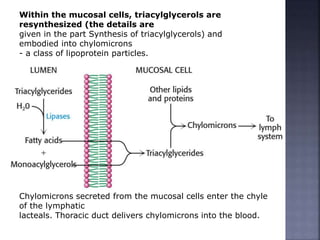
Within the mucosal cells, triacylglycerols are
resynthesized (the details are
given in the part Synthesis of triacylglycerols) and
embodied into chylomicrons
- a class of lipoprotein particles.
Chylomicrons secreted from the mucosal cells enter the chyle
of the lymphatic
lacteals. Thoracic duct delivers chylomicrons into the blood.
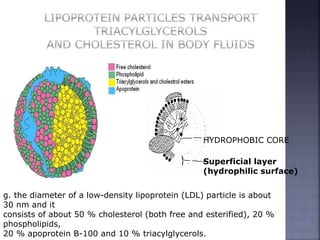
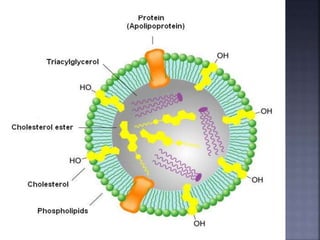
HYDROPHOBIC CORE
Superficial layer
(hydrophilic surface)
g. the diameter of a low-density lipoprotein (LDL) particle is about
30 nm and it
consists of about 50 % cholesterol (both free and esterified), 20 %
phospholipids,
20 % apoprotein B-100 and 10 % triacylglycerols.
 Lipases
 is the group name for enzymes that catalyse
hydrolysis of ester bonds of
triacylglycerols releasing so free fatty
acids.
 Some distinct types of lipases:
 Extracellular lipases
 - Pancreatic lipase secreted into the
duodenum,- Lipoprotein lipase on the
surface of the endothelium lining the
capillaries
 Intracellular lipases
 - „Hormone sensitive" lipase in adipocytes
mobilizing fat stores - Lysosomal lipase
Biochemistry

Biochemistry

  • 1.
    Topic biosynthesis oftriacylglycerol Presented by
  • 2.
     is providedby esterification of glycerol 3- phosphate (or dihydroxyacetonephosphate) by activated fatty acids - acylcoenzymes A.  There are two possible sources of glycerol phosphate:  In liver and small intestine (but not in adipose tissue) is glycerol phosphorylated by glycerol kinase.  In most other tissues glycerol phosphate originates by reduction of dihydroxyacetone phosphate, an intermediate of glycolysis, by the action of glycerol phosphate dehydrogenase
  • 4.
    As well asfree fatty acids and both free and esterified cholesterol are very hydrophobic. They are not soluble in water unless they are emulsified or included in micelles in the presence of tensides.
  • 5.
     • Alsocalled neutral fats, triglycerides or TAGs.  • Function: storage of metabolic energy  – high energy content ~38 kJ/g  – stored in adipose tissue  • Biosynthesis of TGs from 2 precursors  – glycerol 3-phosphate  – Fatty acyl-CoA’s  – synthesis generates a phosphatidic acid (DAG-3P:  diacylglycerol-3-P) (common intermediate in the  synthesis of TAGs, phosphoglyserides.)
  • 8.
    Within the mucosalcells, triacylglycerols are resynthesized (the details are given in the part Synthesis of triacylglycerols) and embodied into chylomicrons - a class of lipoprotein particles. Chylomicrons secreted from the mucosal cells enter the chyle of the lymphatic lacteals. Thoracic duct delivers chylomicrons into the blood.
  • 9.
    HYDROPHOBIC CORE Superficial layer (hydrophilicsurface) g. the diameter of a low-density lipoprotein (LDL) particle is about 30 nm and it consists of about 50 % cholesterol (both free and esterified), 20 % phospholipids, 20 % apoprotein B-100 and 10 % triacylglycerols.
  • 11.
     Lipases  isthe group name for enzymes that catalyse hydrolysis of ester bonds of triacylglycerols releasing so free fatty acids.  Some distinct types of lipases:  Extracellular lipases  - Pancreatic lipase secreted into the duodenum,- Lipoprotein lipase on the surface of the endothelium lining the capillaries  Intracellular lipases  - „Hormone sensitive" lipase in adipocytes mobilizing fat stores - Lysosomal lipase