BIOCHEMISTRY
BIOCHEMISTRY
• The Biochemistry is a science that studies the
  chemistry of living organisms, especially
  proteins, carbohydrates, lipids and nucleic
  acids, and other small molecules in cells and
  also the chemical reactions that these
  compounds (metabolism) allowing perform to
  obtain energy (catabolism) and generate
  biomolecules (anabolism).
PHARMACOLOGY
PHARMACOLOGY
• The Pharmacology is a branch of the Biochemistry; this
  science studies the drug action. More specifically, it is
  the study of the interactions that occur between a
  living organism and chemicals that affect normal or
  abnormal biochemical function.
• Actually the pharmacology has a great impact in
  medicine as in biochemistry, because the different
  types of drugs produce different effects in the same
  person, according with many factors as for example:
  the wheater and the emotional aspect.
• Any movement
               of a drug
               molecule within
               the body requires
               passage through
BIOCHEMISTRY   biological
   OF DRUG     membranes.
ABOSORCIÓN • This affects both
               the absorption
               mechanisms as
               in the distribution
               or elimination.
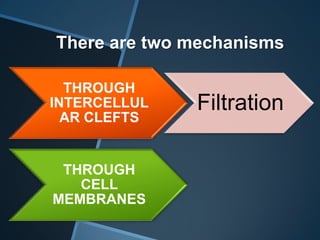
There are two mechanisms

  THROUGH
INTERCELLUL   Filtration
  AR CLEFTS


 THROUGH
   CELL
MEMBRANES
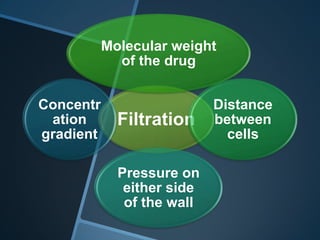
Molecular weight
             of the drug


Concentr                    Distance
 ation       Filtration     between
gradient                      cells

             Pressure on
              either side
              of the wall
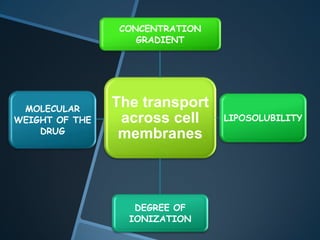
CONCENTRATION
                    GRADIENT


 MOLECULAR
                The transport
WEIGHT OF THE    across cell     LIPOSOLUBILITY
    DRUG         membranes


                   DEGREE OF
                  IONIZATION
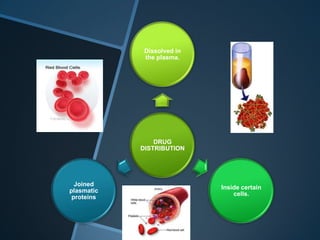
 The    distribution is    the
 transport of the medicament
 for the blood up to the place
 where he exercises his action.
Dissolved in
             the plasma.


                DRUG
            DISTRIBUTION


  Joined
                            Inside certain
plasmatic
                                cells.
 proteins
DISPOSAL OF A DRUG
• drug and its active and inactive
a
  The excretion study ways to remove
metabolites from the body to the
outside.
• Routes of excretion: they all
contribute physiologically to expel the
liquid and organic substances.
• The drugs are excreted in the
following ways: mainly by the kidney
after biliary-enteric by.
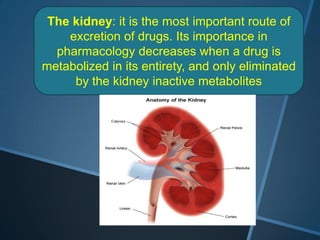
The kidney: it is the most important route of
    excretion of drugs. Its importance in
  pharmacology decreases when a drug is
metabolized in its entirety, and only eliminated
     by the kidney inactive metabolites
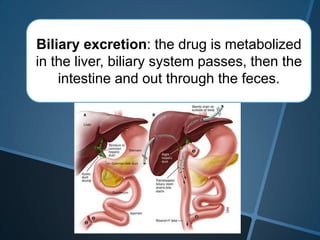
Biliary excretion: the drug is metabolized
in the liver, biliary system passes, then the
    intestine and out through the feces.
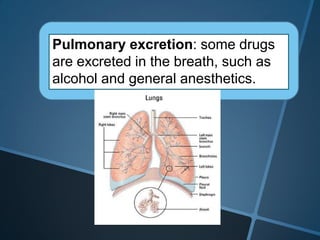
Pulmonary excretion: some drugs
are excreted in the breath, such as
alcohol and general anesthetics.
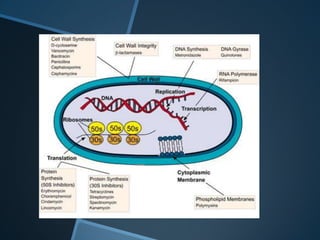
Mechanisms of action
         Antibiotics
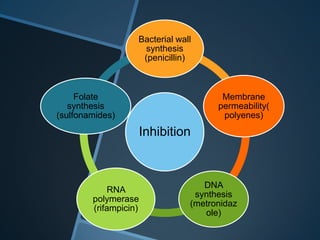
Bacterial wall
                    synthesis
                    (penicillin)


     Folate                            Membrane
   synthesis                          permeability(
(sulfonamides)                         polyenes)
                   Inhibition


                                   DNA
             RNA
                                 synthesis
        polymerase
                                (metronidaz
        (rifampicin)
                                   ole)
Biochemis..

Biochemis..

  • 1.
  • 2.
    BIOCHEMISTRY • The Biochemistryis a science that studies the chemistry of living organisms, especially proteins, carbohydrates, lipids and nucleic acids, and other small molecules in cells and also the chemical reactions that these compounds (metabolism) allowing perform to obtain energy (catabolism) and generate biomolecules (anabolism).
  • 3.
  • 4.
    PHARMACOLOGY • The Pharmacologyis a branch of the Biochemistry; this science studies the drug action. More specifically, it is the study of the interactions that occur between a living organism and chemicals that affect normal or abnormal biochemical function. • Actually the pharmacology has a great impact in medicine as in biochemistry, because the different types of drugs produce different effects in the same person, according with many factors as for example: the wheater and the emotional aspect.
  • 5.
    • Any movement of a drug molecule within the body requires passage through BIOCHEMISTRY biological OF DRUG membranes. ABOSORCIÓN • This affects both the absorption mechanisms as in the distribution or elimination.
  • 6.
    There are twomechanisms THROUGH INTERCELLUL Filtration AR CLEFTS THROUGH CELL MEMBRANES
  • 7.
    Molecular weight of the drug Concentr Distance ation Filtration between gradient cells Pressure on either side of the wall
  • 8.
    CONCENTRATION GRADIENT MOLECULAR The transport WEIGHT OF THE across cell LIPOSOLUBILITY DRUG membranes DEGREE OF IONIZATION
  • 9.
     The distribution is the transport of the medicament for the blood up to the place where he exercises his action.
  • 10.
    Dissolved in the plasma. DRUG DISTRIBUTION Joined Inside certain plasmatic cells. proteins
  • 11.
    DISPOSAL OF ADRUG • drug and its active and inactive a The excretion study ways to remove metabolites from the body to the outside. • Routes of excretion: they all contribute physiologically to expel the liquid and organic substances. • The drugs are excreted in the following ways: mainly by the kidney after biliary-enteric by.
  • 12.
    The kidney: itis the most important route of excretion of drugs. Its importance in pharmacology decreases when a drug is metabolized in its entirety, and only eliminated by the kidney inactive metabolites
  • 13.
    Biliary excretion: thedrug is metabolized in the liver, biliary system passes, then the intestine and out through the feces.
  • 14.
    Pulmonary excretion: somedrugs are excreted in the breath, such as alcohol and general anesthetics.
  • 15.
  • 16.
    Bacterial wall synthesis (penicillin) Folate Membrane synthesis permeability( (sulfonamides) polyenes) Inhibition DNA RNA synthesis polymerase (metronidaz (rifampicin) ole)