MID-TERM
PRESENTATION
BIO TERRORISM
RABIA ALAM (57523)
AYESHA ISRAR (58722)
EBADULLAH PERVAIZ()
HAMZA KHAN() INSTRUCTOR:AFSHEEN ZEHRA
INTRODUCTION
What is Bioterrorism?
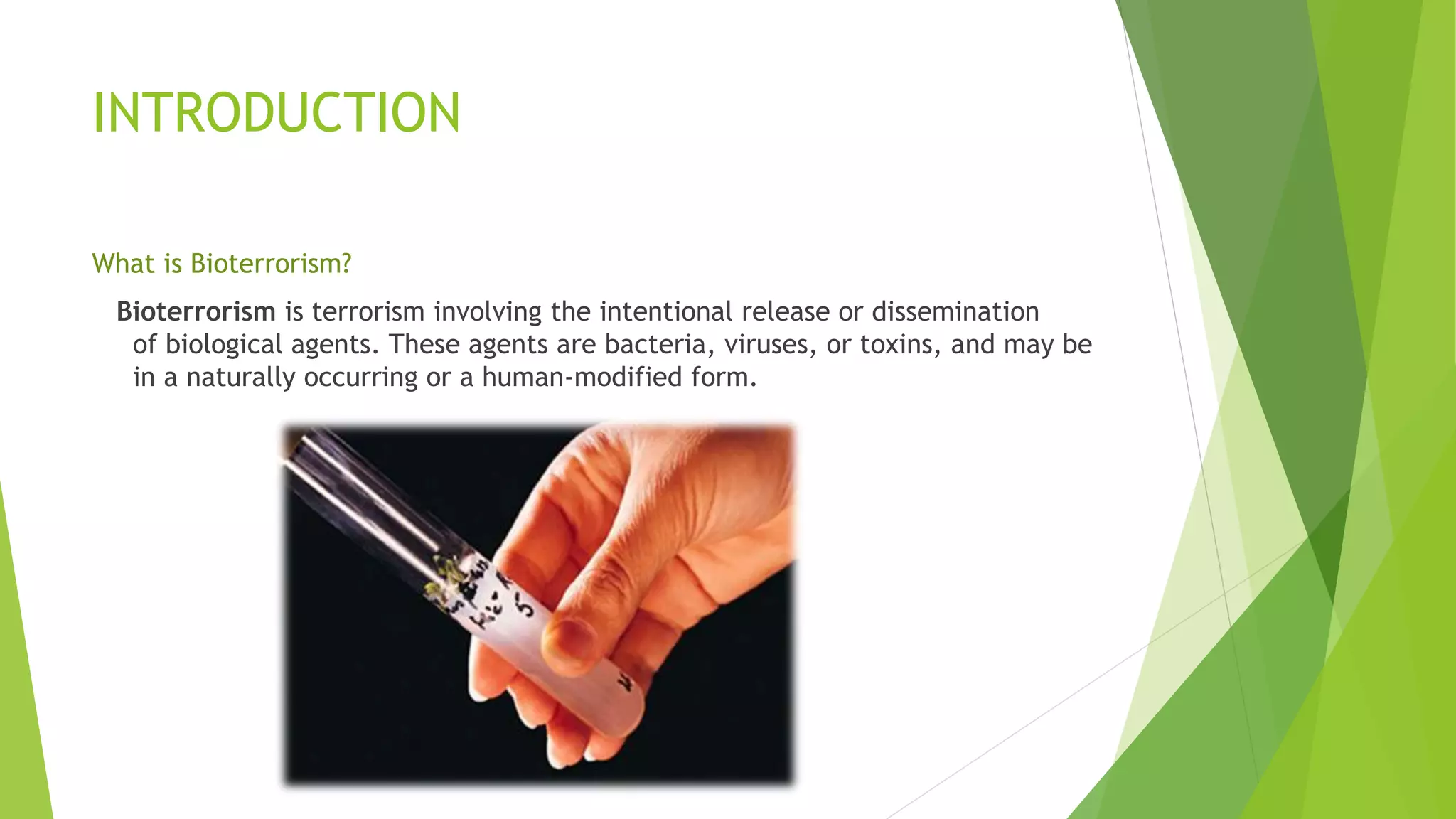
Bioterrorism is terrorism involving the intentional release or dissemination
of biological agents. These agents are bacteria, viruses, or toxins, and may be
in a naturally occurring or a human-modified form.
HISTORY OF BIOLOGICAL WARFARE:
 1346 : siege of Kaffa; plague
 1763 :French and Indian war; smallpox
 Ww1 :German program; anthrax,glanders
 1925 :Geneva protocol bans biological weapons
 Ww2 :Japanese program;anthrax,plague,cholera,shigella
 1946 :U.S announces involvement in bioweapons research
 1984 :Rajneesh ult members contaminate salad bar with Salmonella
typhimuriu in Oregon
 1992 :Ricin attack planned by Minnesota militia
CLASSIFYING BIOTERROR AGENTS
 CLASS A
• Contagious
• High death rates and high health impact on the public
• ANTHRAX, BOTULISM, SMALLPOX, TULAREMIA, PLAGUE
 CLASS B
• Moderately easy to spread
• Some illness & death rates
• TYPHUS, WATER SAFETY THREATS, SALMONELL A
 CLASS C
• Easily available
• Easily produced and spread
• Have potential for high death & illness rates
• NIPAH VIRUS Hey look, a llama! Never can be too careful
TYPES OF BIOLOGICAL AGENTS:
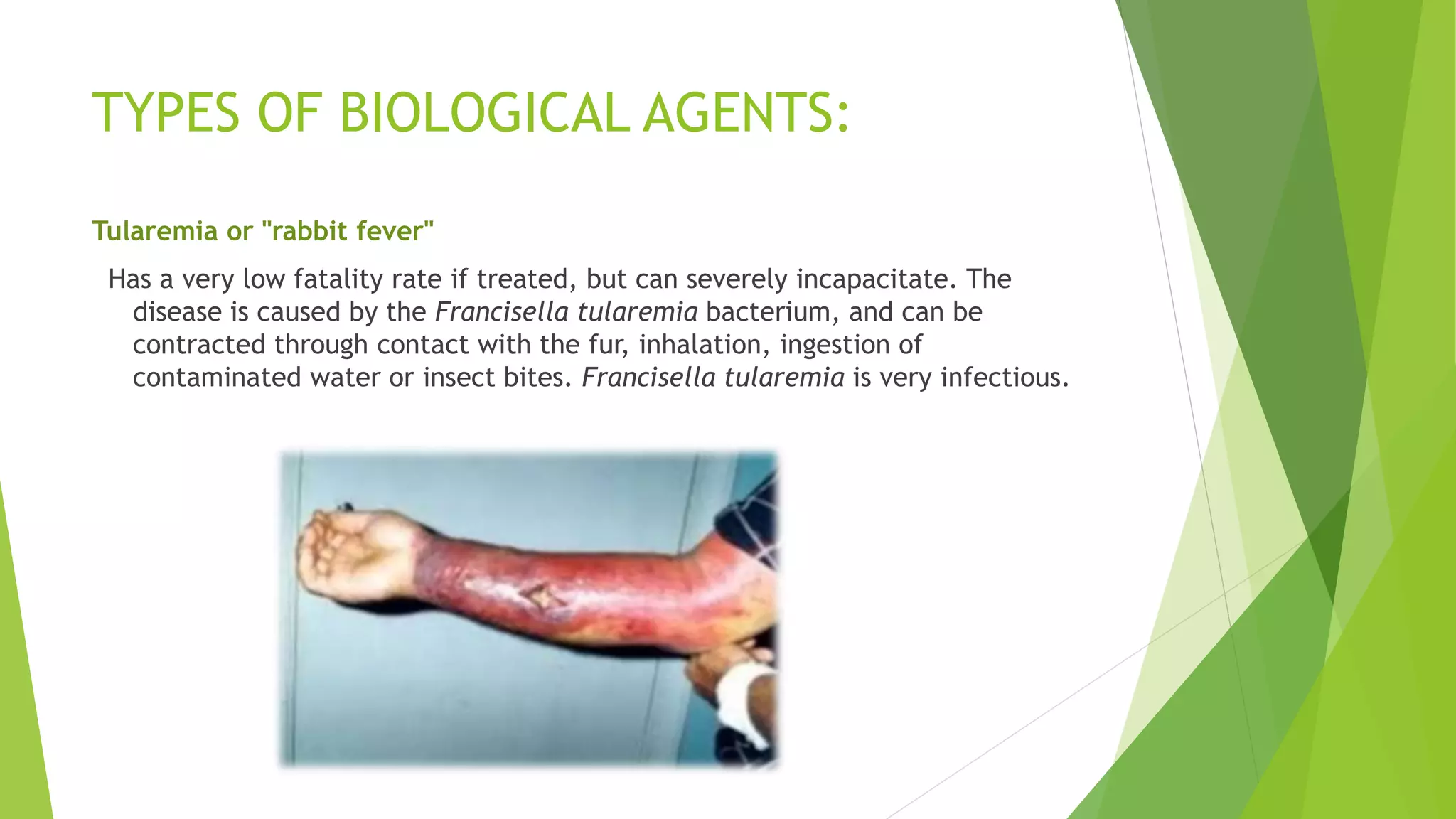
Tularemia or "rabbit fever"
Has a very low fatality rate if treated, but can severely incapacitate. The
disease is caused by the Francisella tularemia bacterium, and can be
contracted through contact with the fur, inhalation, ingestion of
contaminated water or insect bites. Francisella tularemia is very infectious.
ANTHRAX:
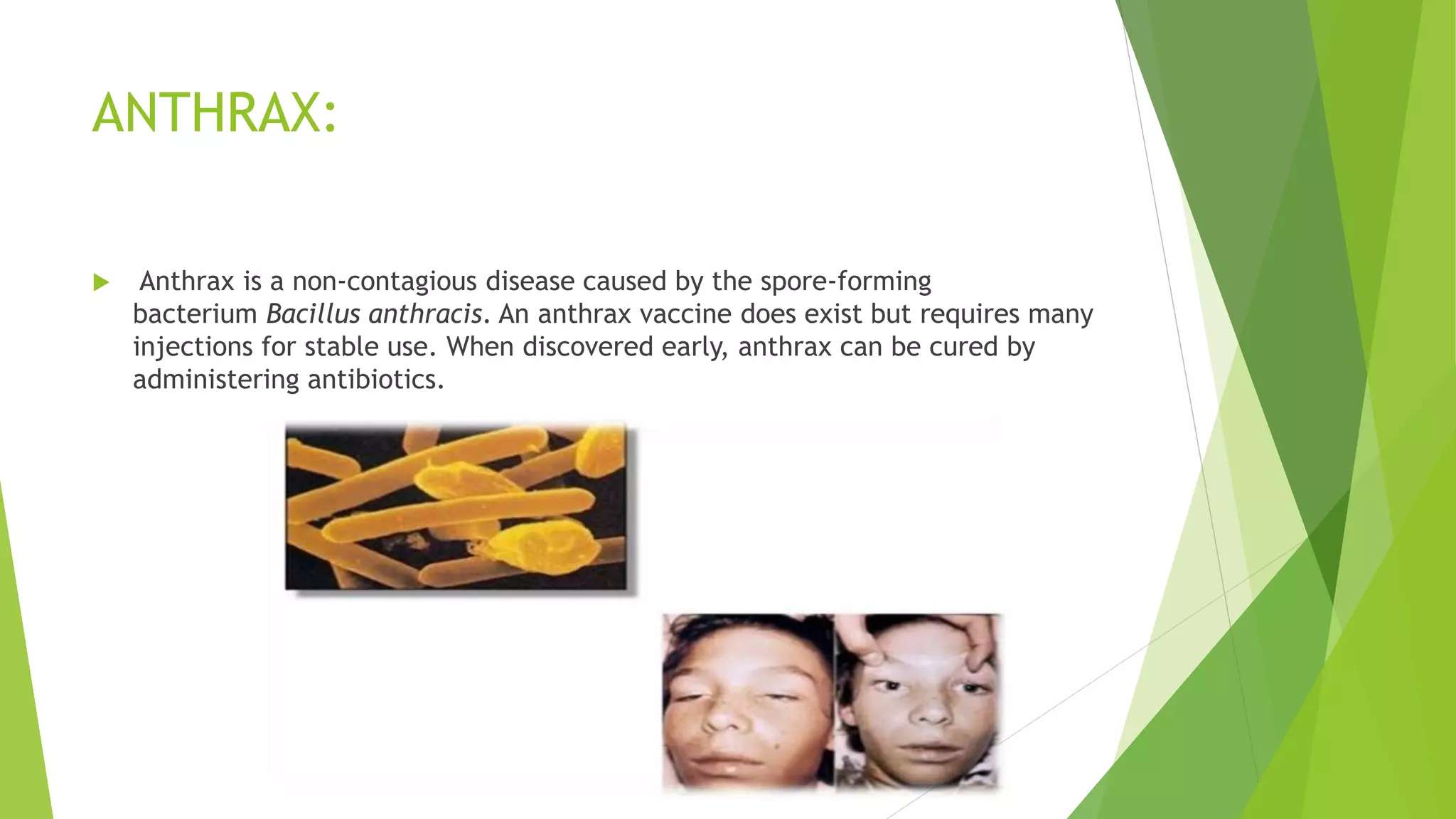
 Anthrax is a non-contagious disease caused by the spore-forming
bacterium Bacillus anthracis. An anthrax vaccine does exist but requires many
injections for stable use. When discovered early, anthrax can be cured by
administering antibiotics.
PLAGUE:
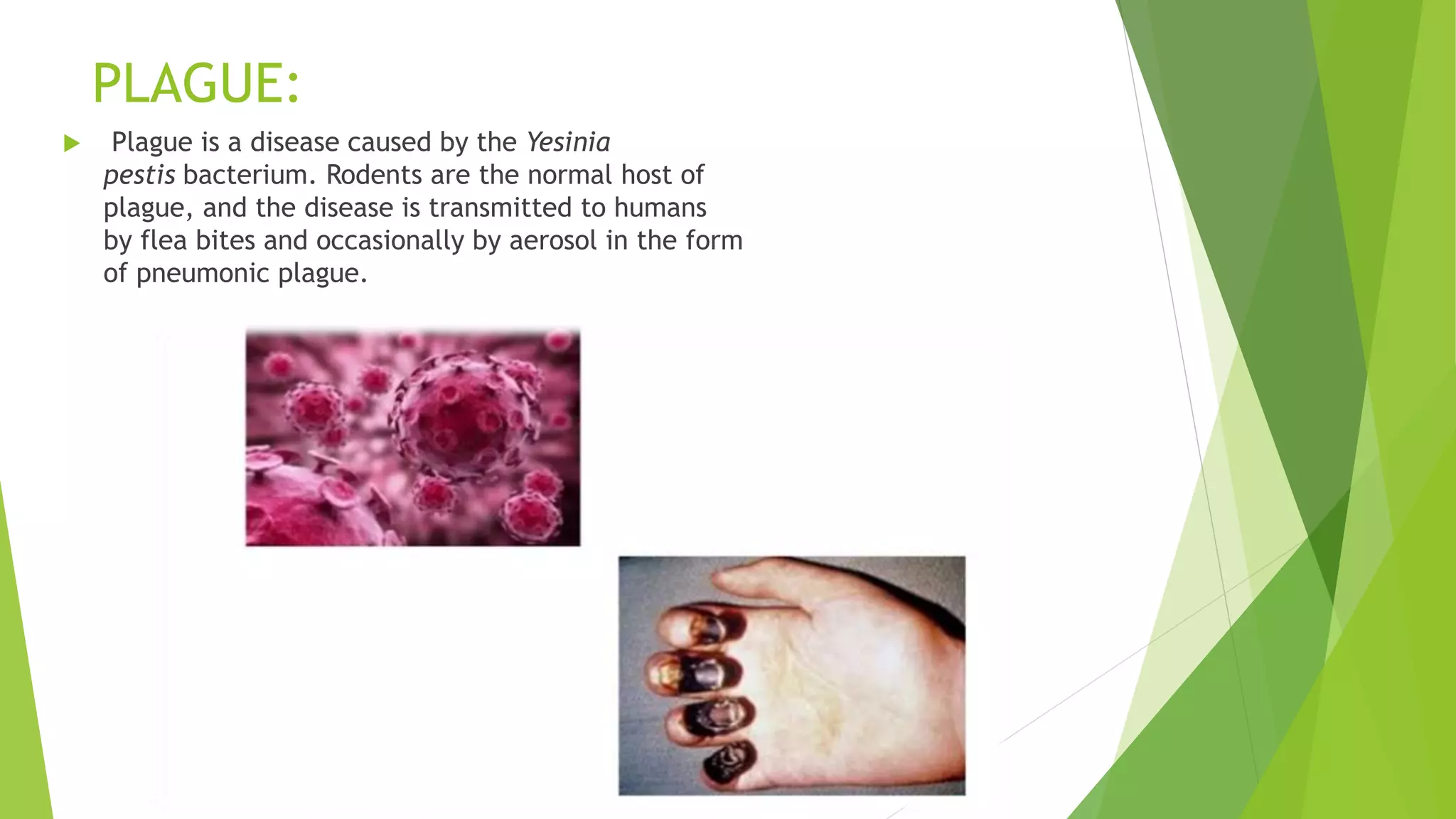
 Plague is a disease caused by the Yesinia
pestis bacterium. Rodents are the normal host of
plague, and the disease is transmitted to humans
by flea bites and occasionally by aerosol in the form
of pneumonic plague.
Why use biological weapons?
These are characteristics agents used as biological weapons:
 Invisible and microscopic
 Difficult to trace
 Easy to multiply and maintain
 Very deadly
 Simple laboratory techniques required to prepare these agents and
may not required sophisticated apparatus
DISADVANTAGES
:
 High risk of workers being contaminated
 Living organism may be destroyed when incorporated with bombs
and missiles (by heat)
 Problem of dispersal and attack, difficult to deploy
 Requires confirmation that the strains are pathogenic and diseases
causing
 Problems of acquisition for highly restricted microbes
How It become A Threat?
 Because they can extremely difficult to detect
 They do not cause illness for sevral hours to sevral days
 Some bioterrorism agents like smallpox spread from person to person and some like
athrax cannot.
 Rapid evolution
 The world is unaware
 Long term consequenses
 Spread from country to country
PREPAREDNESS:
PREVENTATION:
 Regulating environmental and agriculture condition to minimize
condition
 Limiting access to certain biological agents
 Improving intelligence to uncover plans for biological and chemical
attacks
DETECTION:
 Health care providing training
and education to improve
diagnosis
 Improve laboratory capabilities
 Enhanced surveillance and
epidiomolgy to detect outbreaks
 Threat to economy
 Threat to biodiversity and wild life
 Physic social factors during bioterrorism
 Threat to population size
Problems Faced:
Conclusion:
The threat of bioterrorism is real. To prepare for that we must educate
our health care team, in corporate bioterrorism preparedness into
disaster plans and support cooperation and communication between the
public health departments and hospitals.
THANK YOU FOR YOUR TIME ! 
Any questions? 

bio terrorism

  • 1.
    MID-TERM PRESENTATION BIO TERRORISM RABIA ALAM(57523) AYESHA ISRAR (58722) EBADULLAH PERVAIZ() HAMZA KHAN() INSTRUCTOR:AFSHEEN ZEHRA
  • 2.
    INTRODUCTION What is Bioterrorism? Bioterrorismis terrorism involving the intentional release or dissemination of biological agents. These agents are bacteria, viruses, or toxins, and may be in a naturally occurring or a human-modified form.
  • 3.
    HISTORY OF BIOLOGICALWARFARE:  1346 : siege of Kaffa; plague  1763 :French and Indian war; smallpox  Ww1 :German program; anthrax,glanders  1925 :Geneva protocol bans biological weapons  Ww2 :Japanese program;anthrax,plague,cholera,shigella  1946 :U.S announces involvement in bioweapons research  1984 :Rajneesh ult members contaminate salad bar with Salmonella typhimuriu in Oregon  1992 :Ricin attack planned by Minnesota militia
  • 4.
    CLASSIFYING BIOTERROR AGENTS CLASS A • Contagious • High death rates and high health impact on the public • ANTHRAX, BOTULISM, SMALLPOX, TULAREMIA, PLAGUE  CLASS B • Moderately easy to spread • Some illness & death rates • TYPHUS, WATER SAFETY THREATS, SALMONELL A  CLASS C • Easily available • Easily produced and spread • Have potential for high death & illness rates • NIPAH VIRUS Hey look, a llama! Never can be too careful
  • 5.
    TYPES OF BIOLOGICALAGENTS: Tularemia or "rabbit fever" Has a very low fatality rate if treated, but can severely incapacitate. The disease is caused by the Francisella tularemia bacterium, and can be contracted through contact with the fur, inhalation, ingestion of contaminated water or insect bites. Francisella tularemia is very infectious.
  • 6.
    ANTHRAX:  Anthrax isa non-contagious disease caused by the spore-forming bacterium Bacillus anthracis. An anthrax vaccine does exist but requires many injections for stable use. When discovered early, anthrax can be cured by administering antibiotics.
  • 7.
    PLAGUE:  Plague isa disease caused by the Yesinia pestis bacterium. Rodents are the normal host of plague, and the disease is transmitted to humans by flea bites and occasionally by aerosol in the form of pneumonic plague.
  • 8.
    Why use biologicalweapons? These are characteristics agents used as biological weapons:  Invisible and microscopic  Difficult to trace  Easy to multiply and maintain  Very deadly  Simple laboratory techniques required to prepare these agents and may not required sophisticated apparatus
  • 9.
    DISADVANTAGES :  High riskof workers being contaminated  Living organism may be destroyed when incorporated with bombs and missiles (by heat)  Problem of dispersal and attack, difficult to deploy  Requires confirmation that the strains are pathogenic and diseases causing  Problems of acquisition for highly restricted microbes
  • 10.
    How It becomeA Threat?  Because they can extremely difficult to detect  They do not cause illness for sevral hours to sevral days  Some bioterrorism agents like smallpox spread from person to person and some like athrax cannot.  Rapid evolution  The world is unaware  Long term consequenses  Spread from country to country
  • 11.
    PREPAREDNESS: PREVENTATION:  Regulating environmentaland agriculture condition to minimize condition  Limiting access to certain biological agents  Improving intelligence to uncover plans for biological and chemical attacks
  • 12.
    DETECTION:  Health careproviding training and education to improve diagnosis  Improve laboratory capabilities  Enhanced surveillance and epidiomolgy to detect outbreaks
  • 13.
     Threat toeconomy  Threat to biodiversity and wild life  Physic social factors during bioterrorism  Threat to population size Problems Faced:
  • 14.
    Conclusion: The threat ofbioterrorism is real. To prepare for that we must educate our health care team, in corporate bioterrorism preparedness into disaster plans and support cooperation and communication between the public health departments and hospitals.
  • 15.
    THANK YOU FORYOUR TIME !  Any questions? 