You’ve Got Rights! 
SWBAT: Examine the challenge of 
implementing the Bill of Rights while 
finding a balance between individual 
rights and the needs of government.
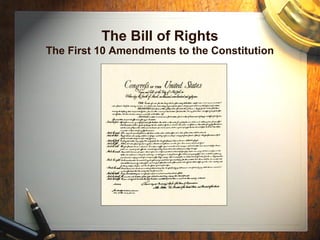
The Bill of Rights 
The First 10 Amendments to the Constitution
1st Amendment 
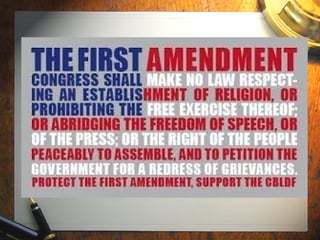
• The 1st Amendment guarantees freedom of 
religion, speech, the press, assembly, and petition. 
• This means that we all have the right to: 
• practice any religion we want to 
• to speak freely 
• to assemble (meet) 
• to address the government (petition) 
• to publish newspapers, TV, radio, Internet (press)
Applying the 1st Amendment 
• Identify which part of the first amendment 
applies to these scenarios: 
1.A magazine column criticizes the president. 
2.Protestors gather outside of city hall. 
3.People call a radio show to express their 
thoughts on a public issue 
4.Muslims go to a mosque without being 
bothered 
5.Citizens ask the government to change a tax 
law
Exclusions to Free Speech 
• Inciting Imminent Lawless Action 
• Fighting Words (Inflammatory words) 
• True Threats 
• Obscenity 
• Defamation (Libel vs. Slander) 
• Invasion of Privacy 
• Intentional infliction of emotional distress
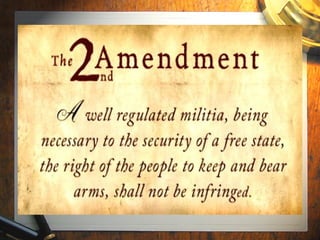
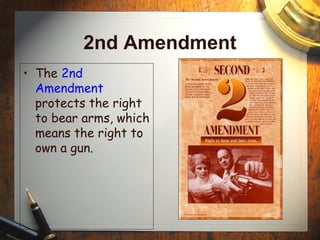
2nd Amendment 
• The 2nd 
Amendment 
protects the right 
to bear arms, which 
means the right to 
own a gun.
3rd Amendment 
• The 3rd Amendment says “No soldier 
shall, in time of peace be quartered in 
any house, without the consent of the 
owner, nor in time of war, but in a 
manner to be prescribed by law.” 
• This means that we cannot be forced to 
house or quarter soldiers.
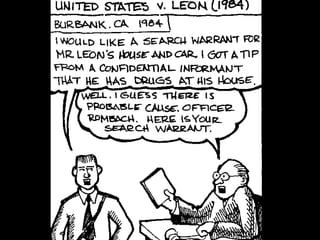
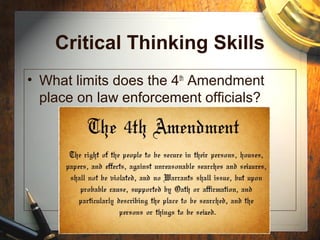
4th Amendment 
• The 4th Amendment protects the people 
from unreasonable searches and seizures. 
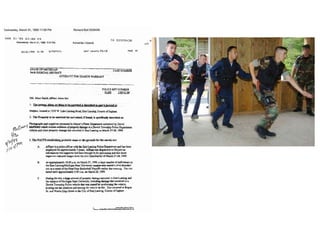
• This means that the police must have a 
warrant to enter our homes. It also means 
the government cannot take our property, 
papers, or us, without a valid warrant based 
on probable cause (good reason).
Critical Thinking Skills 
• What limits does the 4th Amendment 
place on law enforcement officials?
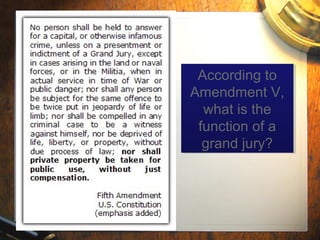
According to 
Amendment V, 
what is the 
function of a 
grand jury? 
According to 
Amendment V, 
what is the 
function of a 
grand jury?
5th Amendment 
• The 5th Amendment protects people from 
being held for committing a crime unless 
they are properly indicted, (accused) 
• You may not be tried twice for the same 
crime (double jeopardy) 
• You don’t have to testify against yourself 
in court. (Self-incrimination)
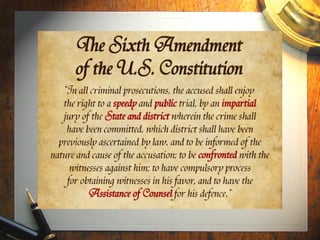
6th Amendment 
• The 6th Amendment 
guarantees a speedy trial 
(you can’t be kept in jail for 
over a year without a trial) 
• an impartial jury (doesn’t 
already think you are guilty) 
• that the accused can 
confront witnesses against 
them 
• the accused must be allowed 
to have a lawyer
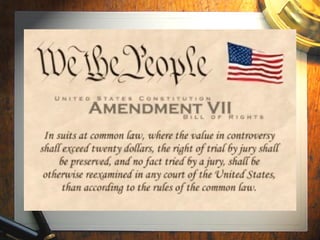
7th Amendment 
• The 7th Amendment guarantees the 
right to a speedy civil trial. 
• A civil trial differs from a criminal trial. A 
civil trial is when someone sues 
someone else. A criminal trial is when 
the state tries to convict someone of a 
crime.
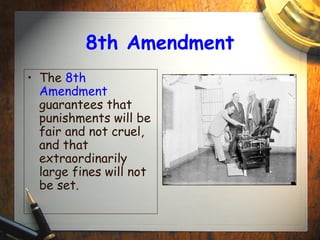
8th Amendment 
• The 8th 
Amendment 
guarantees that 
punishments will be 
fair and not cruel, 
and that 
extraordinarily 
large fines will not 
be set.
9th Amendment 
• All rights not stated in the Constitution 
and not forbidden by the Constitution 
belong to the people. 
• This means that the states can do what 
they want if the Constitution does not 
forbid it.
In Table Groups 
• Some lawyers say that the large 
amount of media coverage of some 
trials threatens the accused person’s 6th 
Amendment rights. 
• Conduct research to cite on some 
recent cases and debate this issue: 
– i.e.- Michael Jackson, Casey Anthony, OJ
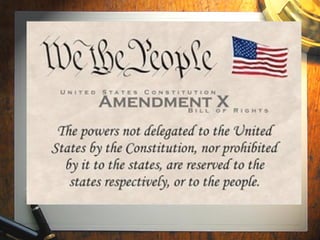
10th Amendment 
• The 10th Amendment states that any 
power not granted to the federal 
government belongs to the states or 
to the people.
• Review 
Which of the following is NOT addressed 
directly in the 1st Amendment? 
• A. 
the rights of citizens to petition the government 
for redress of grievances 
• B. 
freedom of the press 
• C. 
the protection of the rights of those accused of 
committing a crime 
• D. 
free exercise of religion
• Review- 
Which of the following is an example of 
symbolic speech that has been protected 
by the Supreme Court? 
• A. 
flag burning 
• B. 
cross burning 
• C. 
obscenity 
• D. 
“fighting words”
Review- 
According to the federal, state and local law, which of the 
following is FALSE? 
•A. 
Your right to own a dog is balanced with the responsibility of 
obtaining a license for it and supervising the dog in public. 
•B. 
Your right to listen to loud music at 2 a.m. trumps your 
neighbor’s right to a quiet neighborhood. 
•C. 
Your school’s right to control and maintain an effective learning 
environment trumps your right to free speech. 
•D. 
Your right to drive a car is balanced with the responsibility of 
carrying insurance and obeying traffic laws.
Government Lab 
• In Groups: Create a set of 2 scenarios 
or situations that illustrate the freedoms 
or rights in the first 10 amendments. Do 
not state which amendment your 
scenario is based upon. The class will 
vote as a whole.
Homework 
• In Pairs: 
– Students will utilize Amendments I, II, IV 
and V. 
– Find an online source related to your 
amendment 
– Summarize the news article 
– Tomorrow you will: 
– Present your summary to the class 
– Discuss the significance of these 
amendments in our everyday lives

Billofrights

  • 1.
    You’ve Got Rights! SWBAT: Examine the challenge of implementing the Bill of Rights while finding a balance between individual rights and the needs of government.
  • 2.
    The Bill ofRights The First 10 Amendments to the Constitution
  • 4.
    1st Amendment •The 1st Amendment guarantees freedom of religion, speech, the press, assembly, and petition. • This means that we all have the right to: • practice any religion we want to • to speak freely • to assemble (meet) • to address the government (petition) • to publish newspapers, TV, radio, Internet (press)
  • 5.
    Applying the 1stAmendment • Identify which part of the first amendment applies to these scenarios: 1.A magazine column criticizes the president. 2.Protestors gather outside of city hall. 3.People call a radio show to express their thoughts on a public issue 4.Muslims go to a mosque without being bothered 5.Citizens ask the government to change a tax law
  • 7.
    Exclusions to FreeSpeech • Inciting Imminent Lawless Action • Fighting Words (Inflammatory words) • True Threats • Obscenity • Defamation (Libel vs. Slander) • Invasion of Privacy • Intentional infliction of emotional distress
  • 9.
    2nd Amendment •The 2nd Amendment protects the right to bear arms, which means the right to own a gun.
  • 11.
    3rd Amendment •The 3rd Amendment says “No soldier shall, in time of peace be quartered in any house, without the consent of the owner, nor in time of war, but in a manner to be prescribed by law.” • This means that we cannot be forced to house or quarter soldiers.
  • 12.
    4th Amendment •The 4th Amendment protects the people from unreasonable searches and seizures. • This means that the police must have a warrant to enter our homes. It also means the government cannot take our property, papers, or us, without a valid warrant based on probable cause (good reason).
  • 15.
    Critical Thinking Skills • What limits does the 4th Amendment place on law enforcement officials?
  • 16.
    According to AmendmentV, what is the function of a grand jury? According to Amendment V, what is the function of a grand jury?
  • 17.
    5th Amendment •The 5th Amendment protects people from being held for committing a crime unless they are properly indicted, (accused) • You may not be tried twice for the same crime (double jeopardy) • You don’t have to testify against yourself in court. (Self-incrimination)
  • 19.
    6th Amendment •The 6th Amendment guarantees a speedy trial (you can’t be kept in jail for over a year without a trial) • an impartial jury (doesn’t already think you are guilty) • that the accused can confront witnesses against them • the accused must be allowed to have a lawyer
  • 21.
    7th Amendment •The 7th Amendment guarantees the right to a speedy civil trial. • A civil trial differs from a criminal trial. A civil trial is when someone sues someone else. A criminal trial is when the state tries to convict someone of a crime.
  • 23.
    8th Amendment •The 8th Amendment guarantees that punishments will be fair and not cruel, and that extraordinarily large fines will not be set.
  • 25.
    9th Amendment •All rights not stated in the Constitution and not forbidden by the Constitution belong to the people. • This means that the states can do what they want if the Constitution does not forbid it.
  • 26.
    In Table Groups • Some lawyers say that the large amount of media coverage of some trials threatens the accused person’s 6th Amendment rights. • Conduct research to cite on some recent cases and debate this issue: – i.e.- Michael Jackson, Casey Anthony, OJ
  • 28.
    10th Amendment •The 10th Amendment states that any power not granted to the federal government belongs to the states or to the people.
  • 29.
    • Review Whichof the following is NOT addressed directly in the 1st Amendment? • A. the rights of citizens to petition the government for redress of grievances • B. freedom of the press • C. the protection of the rights of those accused of committing a crime • D. free exercise of religion
  • 30.
    • Review- Whichof the following is an example of symbolic speech that has been protected by the Supreme Court? • A. flag burning • B. cross burning • C. obscenity • D. “fighting words”
  • 31.
    Review- According tothe federal, state and local law, which of the following is FALSE? •A. Your right to own a dog is balanced with the responsibility of obtaining a license for it and supervising the dog in public. •B. Your right to listen to loud music at 2 a.m. trumps your neighbor’s right to a quiet neighborhood. •C. Your school’s right to control and maintain an effective learning environment trumps your right to free speech. •D. Your right to drive a car is balanced with the responsibility of carrying insurance and obeying traffic laws.
  • 32.
    Government Lab •In Groups: Create a set of 2 scenarios or situations that illustrate the freedoms or rights in the first 10 amendments. Do not state which amendment your scenario is based upon. The class will vote as a whole.
  • 33.
    Homework • InPairs: – Students will utilize Amendments I, II, IV and V. – Find an online source related to your amendment – Summarize the news article – Tomorrow you will: – Present your summary to the class – Discuss the significance of these amendments in our everyday lives