SRINITHI G
23CHE44
I.M.Sc.CHEMISTRY
SCHOOL OF CHEMISTRY
MADURAI KAMARAJ UNIVERSITY
• Introduction
• Oxygen bind to Hb
• Structural change in Hb
• Oxygen delivery and CO2 pickup
• Bohr effect
• Haldane effect
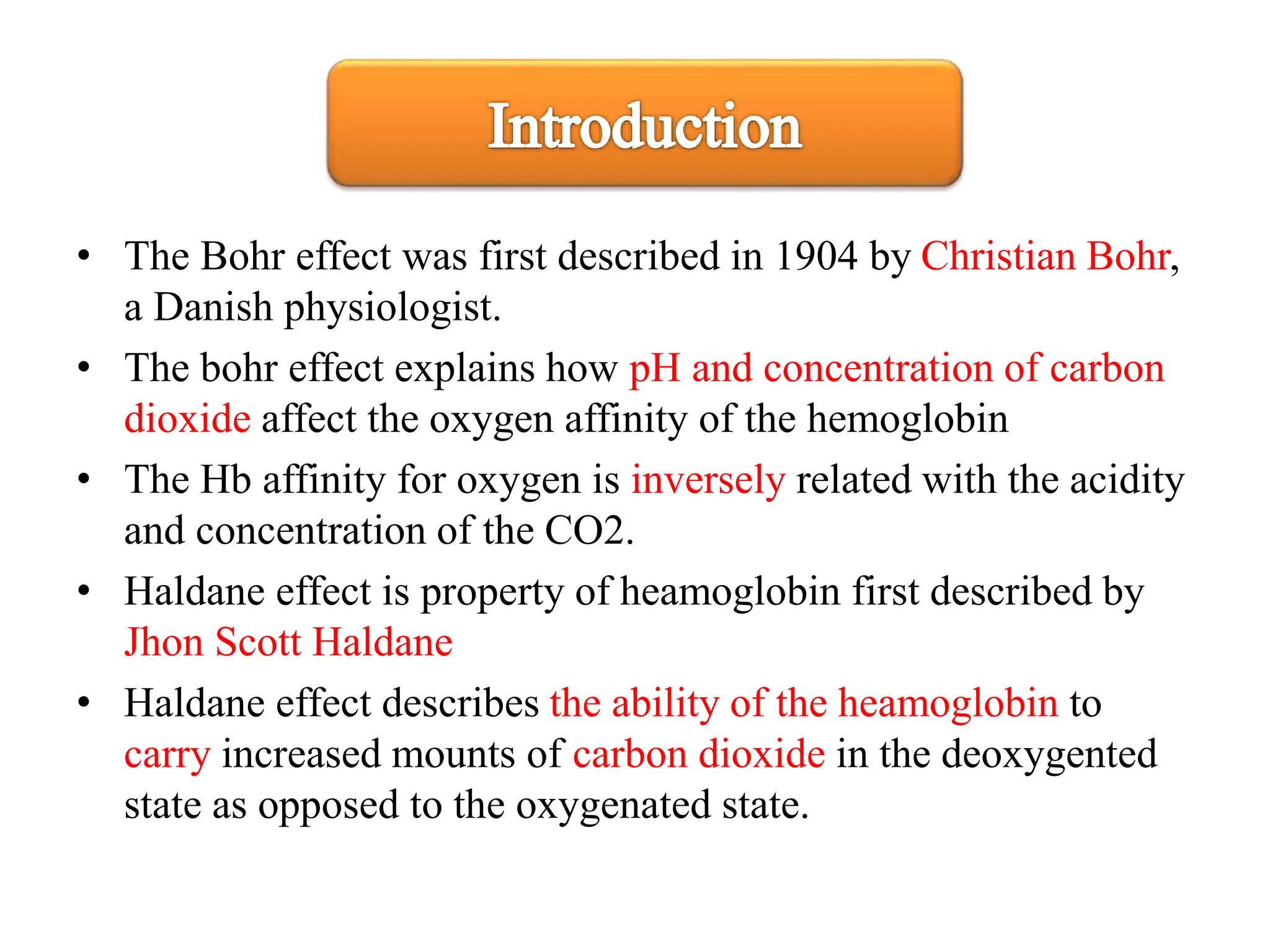
• The Bohr effect was first described in 1904 by Christian Bohr,
a Danish physiologist.
• The bohr effect explains how pH and concentration of carbon
dioxide affect the oxygen affinity of the hemoglobin
• The Hb affinity for oxygen is inversely related with the acidity
and concentration of the CO2.
• Haldane effect is property of heamoglobin first described by
Jhon Scott Haldane
• Haldane effect describes the ability of the heamoglobin to
carry increased mounts of carbon dioxide in the deoxygented
state as opposed to the oxygenated state.
 Once oxygen has entered the
blood from the lungs, it can be
bound by haemoglobin in red
blood cells.
 Haemoglobin is a protein
comprised of four subunits: two
alpha subunits and two beta
subunits.
 Each subunit has a hem group in
the centre that contain iron and
bind one oxygen molecule.
• This means each haemoglobin molecule can bind four
oxygen molecules, forming oxy-haemoglobin.
• Haemoglobin molecules with a greater number of
oxygen molecules bound are brighter red.
• This is why oxygenated arterial blood is brighter red
and deoxygenated venous blood is darker red.
• Haemoglobin changes shape based on the number of
oxygen bound to it.
• The change in shape also alter its affinity to oxygen.
• As the number of oxygen molecules bound to
haemoglobin increases, the affinity of haemoglobin
for oxygen increases. This is known as cooperativity.
 When no oxygen is bound, the haemoglobin is said to
be in the Tense state (T-state), with low affinity for
oxygen.
 At the point where oxygen first binds, the
haemoglobin alters its shape into the relaxed state
(R-state), which has the high affinity for oxygen.
• Oxygen is mostly transported in the blood bound to
hemoglobin
• If PO2 increases Hb binds O2
• If PO2 decreases Hb releases O2
• 4 O2 bind to the each haemoglobin which has 4 heme
group
• 3% oxygen dissolved in plasma and 97% of oxygen
bound to haemoglobin (Oxyheamoglobin)
• Carbon dioxide and H+, produced by actively
respiring tissues, enhance oxygen release by
haemoglobin.
• At lower pH, salt bridges (ionic bonds) form that
stabilizes the T-state.
• The N-terminal amino groups of the alpha subunits
and the C-terminal histidine of the beta subunits are
protonated in the T-state.
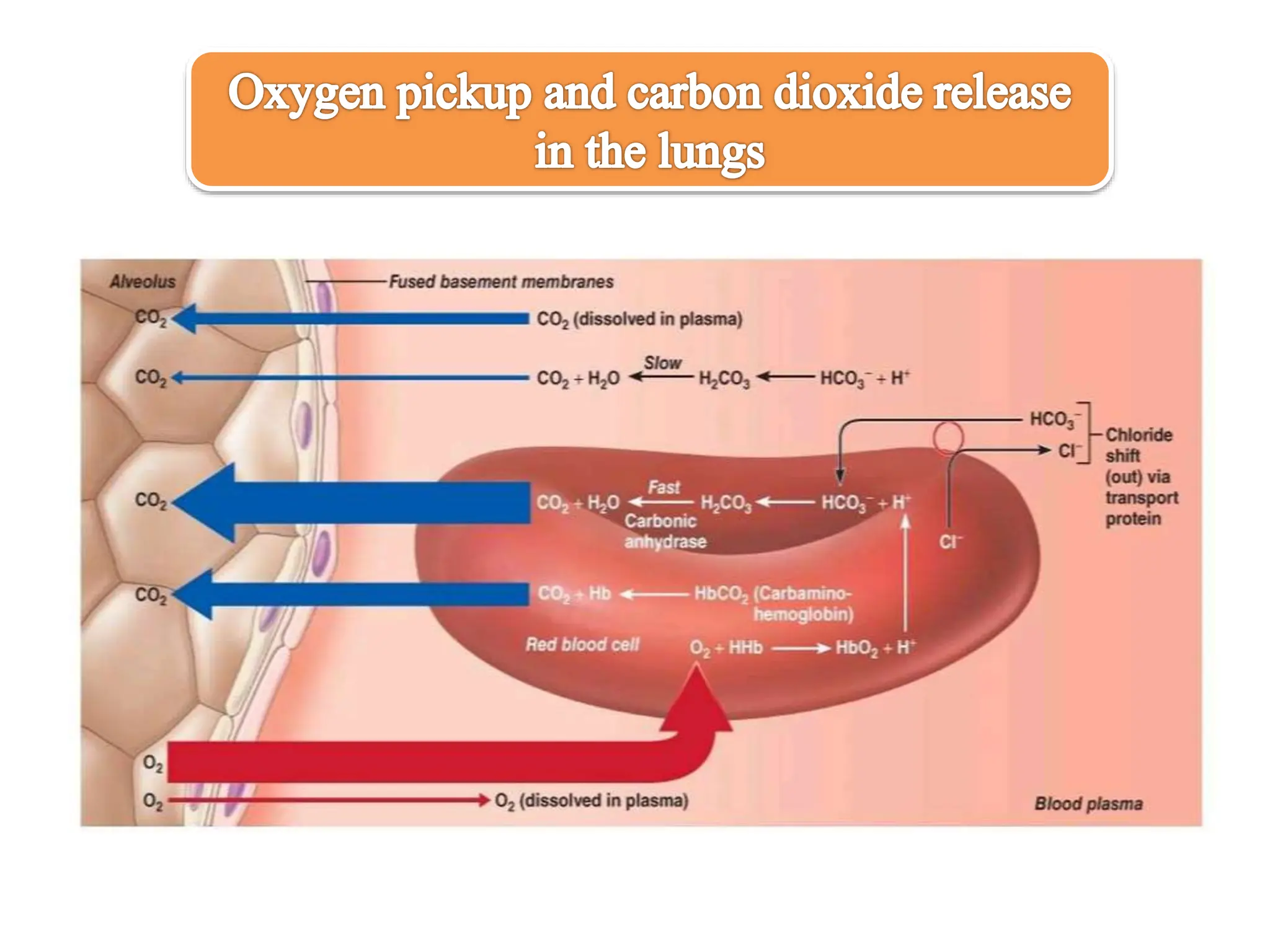
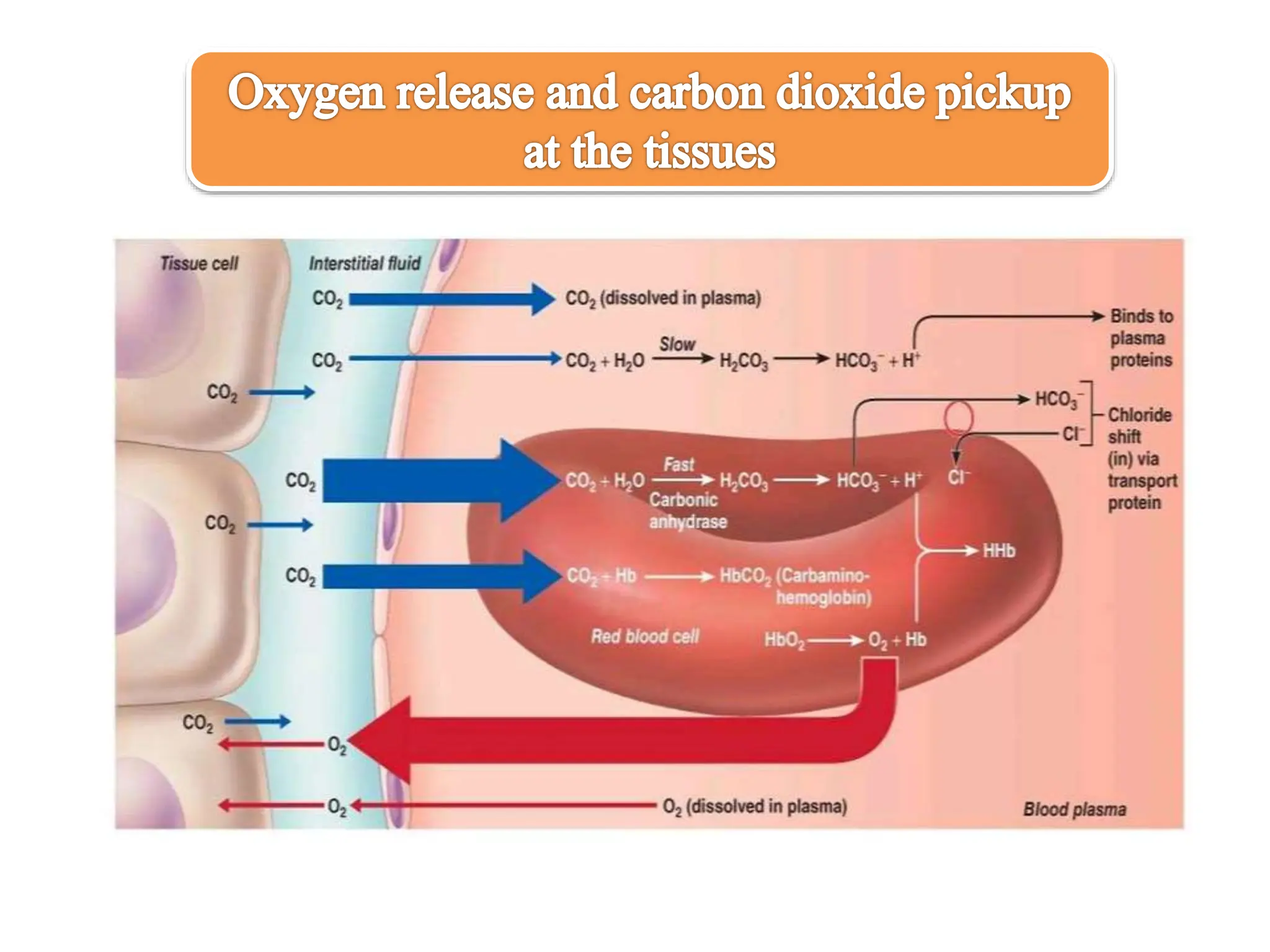
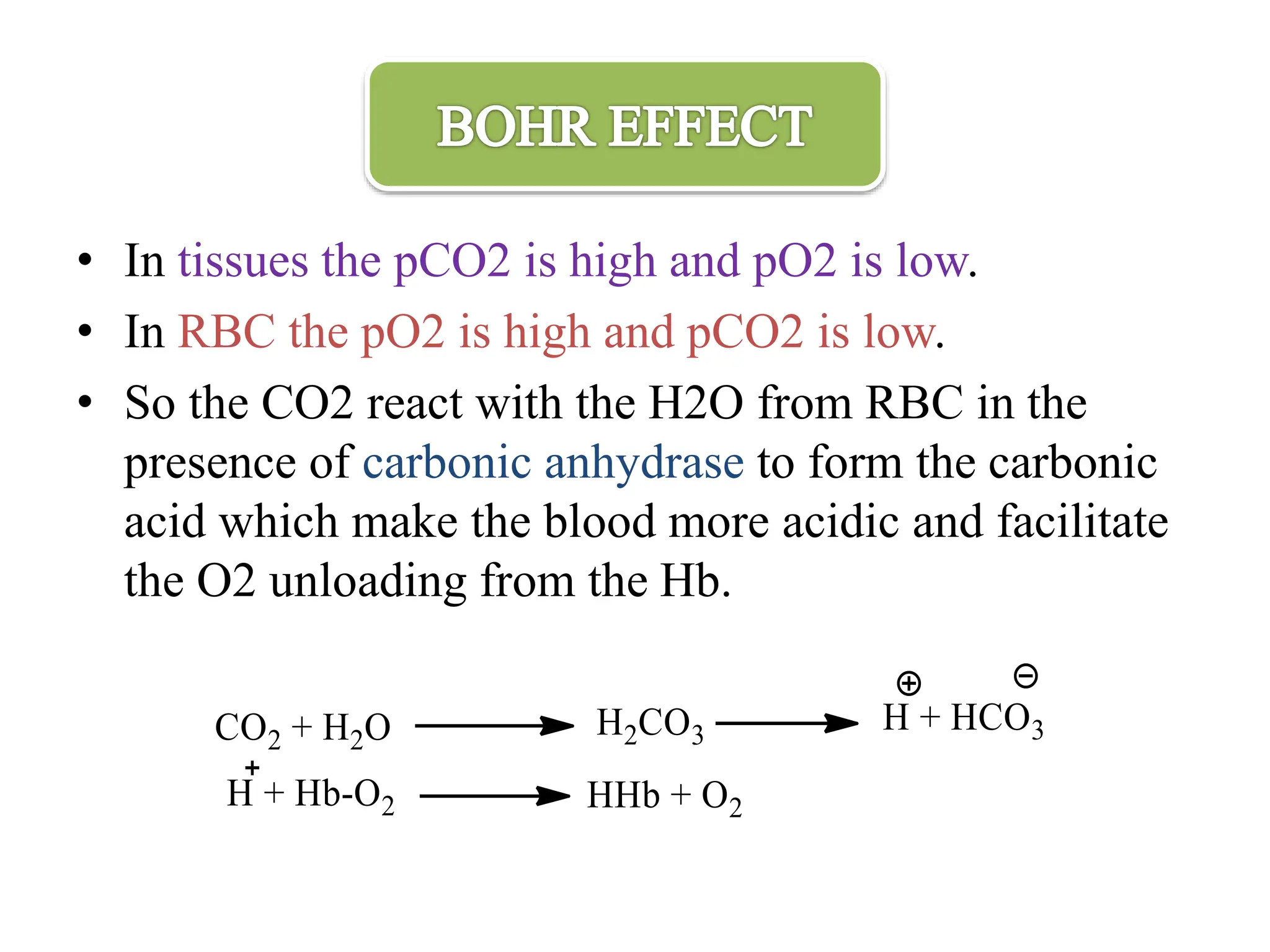
• In tissues the pCO2 is high and pO2 is low.
• In RBC the pO2 is high and pCO2 is low.
• So the CO2 react with the H2O from RBC in the
presence of carbonic anhydrase to form the carbonic
acid which make the blood more acidic and facilitate
the O2 unloading from the Hb.
R IGHT SHIFT
• Hb has low affinity for
oxygen
• Oxygen unloading is high
• Release oxygen more
readily
• Bind to oxygen is less
quickly
LEFT SHIFT
• Hb has high affinity for
oxygen
• Oxygen loading is high
• Releases oxygen less readily
• Bind to oxygen more
quickly
• 2,3-Biphosphoglycerate is the most abundant organic
phosphate in the erythrocyte.
• The 2,3-BPG produced from 1,3-DBG, an
intermediate of glycolytic pathway.
• The 2,3-BPG, bind to deoxy-Hb (not to oxy-Hb) and
decreases the oxygen affinity to Hb and stabilizes the
T-state
• When T-form reverts to the R-state , the 2,3-DBG is
ejected.
• The reduced affinity of O2 to Hb facilitates the
release of O2 at the partial pressure found in the
tissues
• 2,3-DBG shifts the oxygen dissociation curve to the
right
• The high affinity of fetal blood (HbF) is due to the
inability of gamma chain to bind with the 2,3-DBG
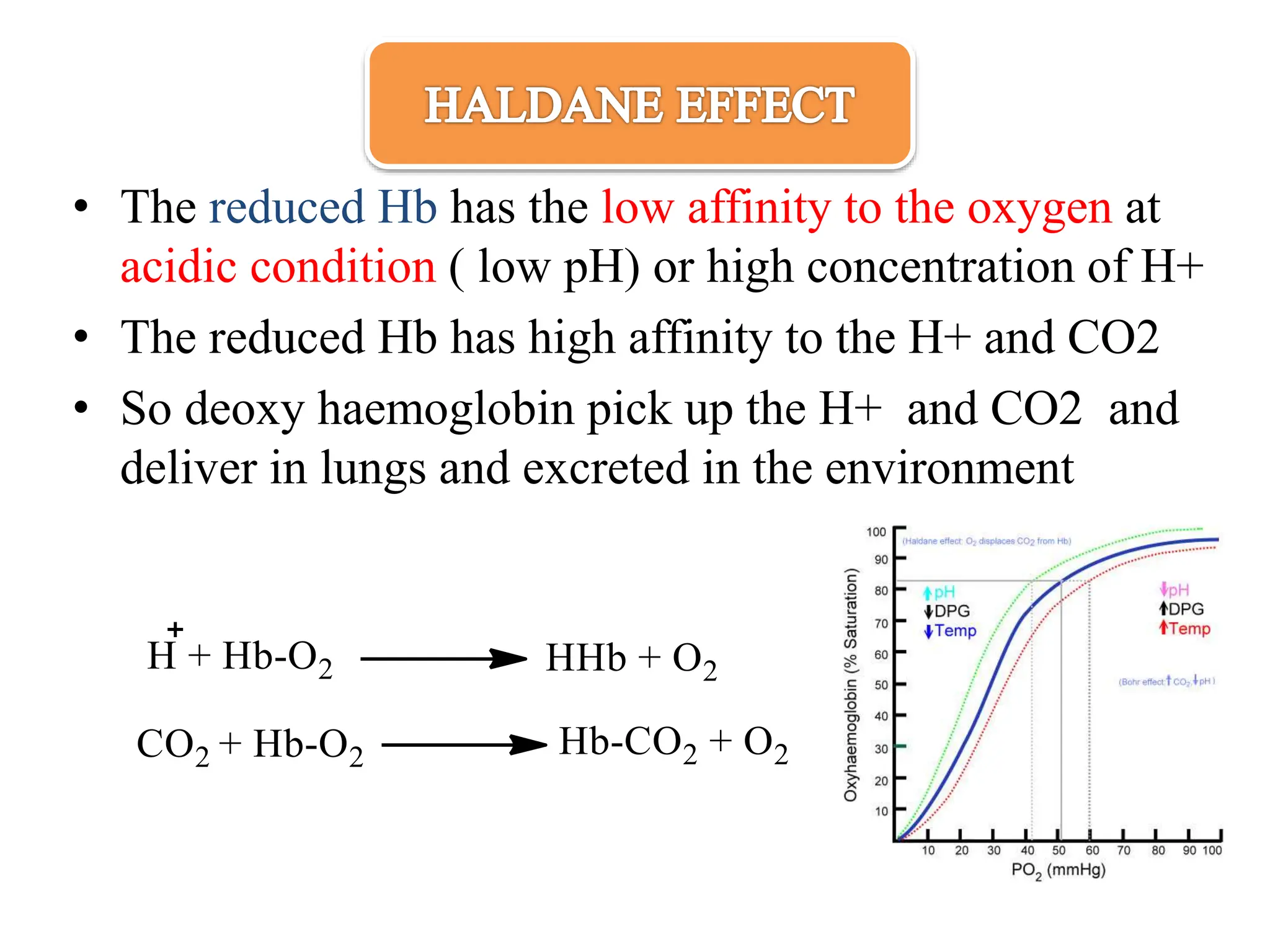
• The reduced Hb has the low affinity to the oxygen at
acidic condition ( low pH) or high concentration of H+
• The reduced Hb has high affinity to the H+ and CO2
• So deoxy haemoglobin pick up the H+ and CO2 and
deliver in lungs and excreted in the environment
Bhor and Haldane effect.pptx. bio inorganic

Bhor and Haldane effect.pptx. bio inorganic

  • 1.
    SRINITHI G 23CHE44 I.M.Sc.CHEMISTRY SCHOOL OFCHEMISTRY MADURAI KAMARAJ UNIVERSITY
  • 2.
    • Introduction • Oxygenbind to Hb • Structural change in Hb • Oxygen delivery and CO2 pickup • Bohr effect • Haldane effect
  • 3.
    • The Bohreffect was first described in 1904 by Christian Bohr, a Danish physiologist. • The bohr effect explains how pH and concentration of carbon dioxide affect the oxygen affinity of the hemoglobin • The Hb affinity for oxygen is inversely related with the acidity and concentration of the CO2. • Haldane effect is property of heamoglobin first described by Jhon Scott Haldane • Haldane effect describes the ability of the heamoglobin to carry increased mounts of carbon dioxide in the deoxygented state as opposed to the oxygenated state.
  • 4.
     Once oxygenhas entered the blood from the lungs, it can be bound by haemoglobin in red blood cells.  Haemoglobin is a protein comprised of four subunits: two alpha subunits and two beta subunits.  Each subunit has a hem group in the centre that contain iron and bind one oxygen molecule.
  • 5.
    • This meanseach haemoglobin molecule can bind four oxygen molecules, forming oxy-haemoglobin. • Haemoglobin molecules with a greater number of oxygen molecules bound are brighter red. • This is why oxygenated arterial blood is brighter red and deoxygenated venous blood is darker red.
  • 6.
    • Haemoglobin changesshape based on the number of oxygen bound to it. • The change in shape also alter its affinity to oxygen. • As the number of oxygen molecules bound to haemoglobin increases, the affinity of haemoglobin for oxygen increases. This is known as cooperativity.
  • 7.
     When nooxygen is bound, the haemoglobin is said to be in the Tense state (T-state), with low affinity for oxygen.  At the point where oxygen first binds, the haemoglobin alters its shape into the relaxed state (R-state), which has the high affinity for oxygen.
  • 8.
    • Oxygen ismostly transported in the blood bound to hemoglobin • If PO2 increases Hb binds O2 • If PO2 decreases Hb releases O2 • 4 O2 bind to the each haemoglobin which has 4 heme group • 3% oxygen dissolved in plasma and 97% of oxygen bound to haemoglobin (Oxyheamoglobin)
  • 11.
    • Carbon dioxideand H+, produced by actively respiring tissues, enhance oxygen release by haemoglobin. • At lower pH, salt bridges (ionic bonds) form that stabilizes the T-state. • The N-terminal amino groups of the alpha subunits and the C-terminal histidine of the beta subunits are protonated in the T-state.
  • 12.
    • In tissuesthe pCO2 is high and pO2 is low. • In RBC the pO2 is high and pCO2 is low. • So the CO2 react with the H2O from RBC in the presence of carbonic anhydrase to form the carbonic acid which make the blood more acidic and facilitate the O2 unloading from the Hb.
  • 14.
    R IGHT SHIFT •Hb has low affinity for oxygen • Oxygen unloading is high • Release oxygen more readily • Bind to oxygen is less quickly LEFT SHIFT • Hb has high affinity for oxygen • Oxygen loading is high • Releases oxygen less readily • Bind to oxygen more quickly
  • 15.
    • 2,3-Biphosphoglycerate isthe most abundant organic phosphate in the erythrocyte. • The 2,3-BPG produced from 1,3-DBG, an intermediate of glycolytic pathway. • The 2,3-BPG, bind to deoxy-Hb (not to oxy-Hb) and decreases the oxygen affinity to Hb and stabilizes the T-state
  • 16.
    • When T-formreverts to the R-state , the 2,3-DBG is ejected. • The reduced affinity of O2 to Hb facilitates the release of O2 at the partial pressure found in the tissues • 2,3-DBG shifts the oxygen dissociation curve to the right • The high affinity of fetal blood (HbF) is due to the inability of gamma chain to bind with the 2,3-DBG
  • 17.
    • The reducedHb has the low affinity to the oxygen at acidic condition ( low pH) or high concentration of H+ • The reduced Hb has high affinity to the H+ and CO2 • So deoxy haemoglobin pick up the H+ and CO2 and deliver in lungs and excreted in the environment