BHAGAT SINGH
THE
SHAHEED
WHY –”SHAHEED”


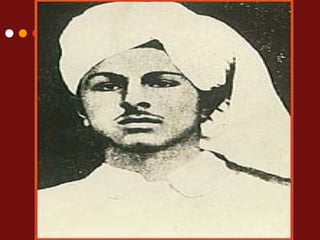
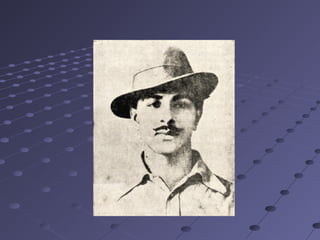
Bhagat Singh ) was an Indian freedom
fighter, considered to be one of the most
famous revolutionaries of the Indian
independence movement. For this reason,
he is often referred to as Shaheed Bhagat
Singh (the word shaheed means “martyr").
Singh’s profile









Place of birth:Khatkar Kalan village near Banga in the
Lyallpur district .
Date of birth: September 28,1907
Place of death: Lahore,Punjab,British India
Family background: Patriotic Sikh family.
Contribution of the family to the freedom struggle: Father &
both the uncles(Ajit Singh and Swaran Singh) were part of the
Ghadr party led by Kartar Singh Sarbha.
Movement: Indian Independence Movement
Favourite poet : Allama Iqbal(Muhammad Iqbal )
Organisations:1. Naujawan Bharat Sabha
2. Hindustan Republican Association
3 .Kirti kissan party
What made Bhagat to join the
struggle at teen age?
• As a child, he was deeply affected by the
Jalianwal Bagh Massacre that took place in
Punjab in 1919. When Mahatma Gandhi started
the Non-Cooperation Movement in 1920, he
became an active participant at the age of 13.
He had great hopes that Gandhi would bring
freedom in India. But he was disappointed when
Gandhi called off this movement following the
Chauri Chaura riot in 1922. At this point he had
openly defied the British and had followed
Gandhi's wishes by burning his governmentschool books and any British-imported clothing.
The early spark
Born to a family which had earlier been involved
in revolutionary activities against the British Raj
in India, Bhagat Singh, as a teenager, had
studied European revolutionary movements .
He became involved in numerous revolutionary
organizations. He quickly rose in the ranks of the
Hindustan Republican Association (HRA) and
became one of its leaders, converting it to the
HSRA .
He was noticed by a majority people during his
63-days fast in the jail.
The Beginning








Bhagat ran from his house at an early age
to avoid child marriage.
He became a member of ‘Naujawan Bharat
Sabha ‘.
He also joined ‘Hindustan Republican
Association’.
Bhagat Singh was the secretary of the ing
of various revolutionaries from across India
was called at Delhi .
The capture and hanging of the main HRA
Leaders also allowed him and Sukhdev to
be quickly promoted to higher ranks in the
party.
 When bhagat eyewitnessed Lala Lajpat
Rais death, he vowed revenge.
 A act was passed by the brithish
government for the well being of their
subjects against Bhagat singh the
revolutionary.But HSRA oppossed it and
planned to bomb the assembly.



Shortly after his arrest and trial for the
Assembly bombing, the British came to
know of his involvement in the murder of
J. P. Saunders. Bhagat Singh, Rajguru,
and Sukhdev were charged with the
murder. Bhagat Singh decided to use the
court as a tool to publicize his cause for
the independence of India
FACTS



It is believed that he had knowledge of the Kakori trian
robbery.
One of the most popular ones is that Mahatma Gandhi
had an opportunity to stop Singh's execution but did not.
A variation on this theory is that Gandhi actively
conspired with the British to have Singh executed.
Gandhi's supporters say that Gandhi did not have
enough influence with the British to stop the execution,
much less arrange it. Furthermore, Gandhi's supporters
assert that Singh's role in the independence movement
was no threat to Gandhi's role as its leader, and so
Gandhi would have no reason to want him dead.



Bha gat Singh
"The aim of life is no more to control the mind,
but to develop it harmoniously; not to achieve
salvation here after, but to make the best use
of it here below; and not to realise truth,
beauty and good only in contemplation, but
also in the actual experience of daily life;
social progress depends not upon the
ennoblement of the few but on the enrichment
of democracy; universal brotherhood can be
achieved only when there is an equality of
opportunity - of opportunity in the social,
political and individual life." — from Bhagat
Singh's prison diary.
THANK YOU

Bhagat Singh

  • 1.
  • 2.
    WHY –”SHAHEED”  Bhagat Singh) was an Indian freedom fighter, considered to be one of the most famous revolutionaries of the Indian independence movement. For this reason, he is often referred to as Shaheed Bhagat Singh (the word shaheed means “martyr").
  • 4.
    Singh’s profile         Place ofbirth:Khatkar Kalan village near Banga in the Lyallpur district . Date of birth: September 28,1907 Place of death: Lahore,Punjab,British India Family background: Patriotic Sikh family. Contribution of the family to the freedom struggle: Father & both the uncles(Ajit Singh and Swaran Singh) were part of the Ghadr party led by Kartar Singh Sarbha. Movement: Indian Independence Movement Favourite poet : Allama Iqbal(Muhammad Iqbal ) Organisations:1. Naujawan Bharat Sabha 2. Hindustan Republican Association 3 .Kirti kissan party
  • 5.
    What made Bhagatto join the struggle at teen age? • As a child, he was deeply affected by the Jalianwal Bagh Massacre that took place in Punjab in 1919. When Mahatma Gandhi started the Non-Cooperation Movement in 1920, he became an active participant at the age of 13. He had great hopes that Gandhi would bring freedom in India. But he was disappointed when Gandhi called off this movement following the Chauri Chaura riot in 1922. At this point he had openly defied the British and had followed Gandhi's wishes by burning his governmentschool books and any British-imported clothing.
  • 6.
    The early spark Bornto a family which had earlier been involved in revolutionary activities against the British Raj in India, Bhagat Singh, as a teenager, had studied European revolutionary movements . He became involved in numerous revolutionary organizations. He quickly rose in the ranks of the Hindustan Republican Association (HRA) and became one of its leaders, converting it to the HSRA . He was noticed by a majority people during his 63-days fast in the jail.
  • 8.
    The Beginning     Bhagat ranfrom his house at an early age to avoid child marriage. He became a member of ‘Naujawan Bharat Sabha ‘. He also joined ‘Hindustan Republican Association’. Bhagat Singh was the secretary of the ing of various revolutionaries from across India was called at Delhi .
  • 9.
    The capture andhanging of the main HRA Leaders also allowed him and Sukhdev to be quickly promoted to higher ranks in the party.  When bhagat eyewitnessed Lala Lajpat Rais death, he vowed revenge.  A act was passed by the brithish government for the well being of their subjects against Bhagat singh the revolutionary.But HSRA oppossed it and planned to bomb the assembly. 
  • 10.
     Shortly after hisarrest and trial for the Assembly bombing, the British came to know of his involvement in the murder of J. P. Saunders. Bhagat Singh, Rajguru, and Sukhdev were charged with the murder. Bhagat Singh decided to use the court as a tool to publicize his cause for the independence of India
  • 11.
    FACTS   It is believedthat he had knowledge of the Kakori trian robbery. One of the most popular ones is that Mahatma Gandhi had an opportunity to stop Singh's execution but did not. A variation on this theory is that Gandhi actively conspired with the British to have Singh executed. Gandhi's supporters say that Gandhi did not have enough influence with the British to stop the execution, much less arrange it. Furthermore, Gandhi's supporters assert that Singh's role in the independence movement was no threat to Gandhi's role as its leader, and so Gandhi would have no reason to want him dead.
  • 12.
      Bha gat Singh "Theaim of life is no more to control the mind, but to develop it harmoniously; not to achieve salvation here after, but to make the best use of it here below; and not to realise truth, beauty and good only in contemplation, but also in the actual experience of daily life; social progress depends not upon the ennoblement of the few but on the enrichment of democracy; universal brotherhood can be achieved only when there is an equality of opportunity - of opportunity in the social, political and individual life." — from Bhagat Singh's prison diary.
  • 13.