Kim Myers
 MGT 607
   Virtual team-geographically distributed and
    may rarely meet. Often limited existence.
    (Berry, 2011)
   What are some of the challenges?
    ◦ Cultural differences, language barriers, social
      isolation, diverse work schedules (Berry, 2011)
    ◦ Understanding norms and expectations,mission and
      deliverables (Dewar, 2011)
   Communication management is the key to
    success of virtual teams. (Weimann, 2010)
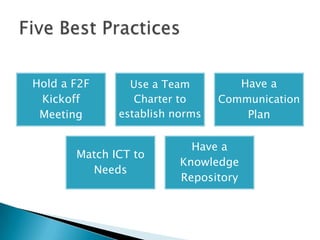
Hold a F2F      Use a Team         Have a
 Kickoff         Charter to     Communication
 Meeting      establish norms       Plan

                           Have a
       Match ICT to
                         Knowledge
         Needs
                         Repository
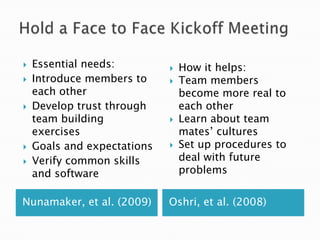
   Essential needs:            How it helps:
   Introduce members to        Team members
    each other                   become more real to
   Develop trust through        each other
    team building               Learn about team
    exercises                    mates’ cultures
   Goals and expectations      Set up procedures to
   Verify common skills         deal with future
    and software                 problems

Nunamaker, et al. (2009)     Oshri, et al. (2008)
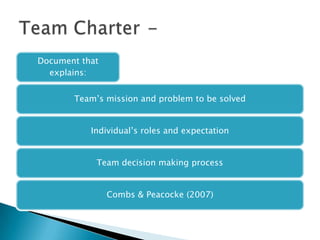
Document that
  explains:


       Team’s mission and problem to be solved


           Individual’s roles and expectation


            Team decision making process


                Combs & Peacocke (2007)
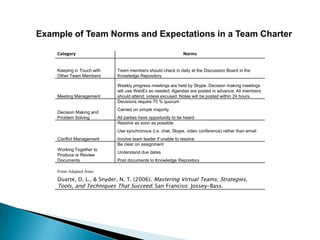
Example of Team Norms and Expectations in a Team Charter

    Category                                                  Norms


    Keeping in Touch with   Team members should check in daily at the Discussion Board in the
    Other Team Members      Knowledge Repository

                            Weekly progress meetings are held by Skype. Decision making meetings
                            will use WebEx as needed. Agendas are posted in advance. All members
    Meeting Management      should attend, unless excused. Notes will be posted within 24 hours.
                            Decisions require 70 % quorum
                            Carried on simple majority
    Decision Making and
    Problem Solving         All parties have opportunity to be heard
                            Resolve as soon as possible
                            Use synchronous (i.e. chat, Skype, video conference) rather than email
    Conflict Management     Involve team leader if unable to resolve
                            Be clear on assignment
    Working Together to
                            Understand due dates
    Produce or Review
    Documents               Post documents to Knowledge Repository

    Form Adapted from:
    Duarte, D. L., & Snyder, N. T. (2006). Mastering Virtual Teams; Strategies,
    Tools, and Techniques That Succeed. San Franciso: Jossey-Bass.
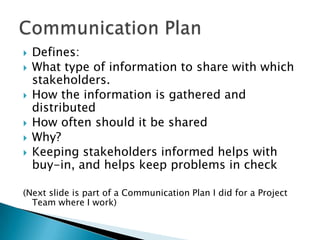
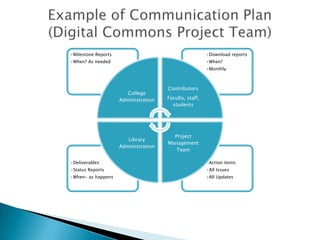
   Defines:
   What type of information to share with which
    stakeholders.
   How the information is gathered and
    distributed
   How often should it be shared
   Why?
   Keeping stakeholders informed helps with
    buy-in, and helps keep problems in check

(Next slide is part of a Communication Plan I did for a Project
  Team where I work)
•Milestone Reports                                      •Download reports
•When? As needed                                        •When?
                                                        •Monthly


                                      Contributors
                        College
                     Administration   Faculty, staff,
                                        students


                                        Project
                        Library
                                      Management
                     Administration
                                         Team

•Deliverables                                           •Action items
•Status Reports                                         •All Issues
•When- as happens                                       •All Updates
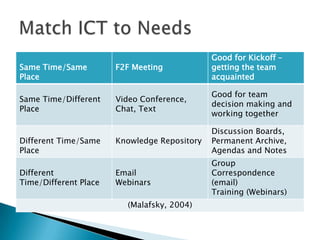
Good for Kickoff –
Same Time/Same         F2F Meeting            getting the team
Place                                         acquainted

                                              Good for team
Same Time/Different    Video Conference,
                                              decision making and
Place                  Chat, Text
                                              working together

                                              Discussion Boards,
Different Time/Same    Knowledge Repository   Permanent Archive,
Place                                         Agendas and Notes
                                              Group
Different              Email                  Correspondence
Time/Different Place   Webinars               (email)
                                              Training (Webinars)
                         (Malafsky, 2004)
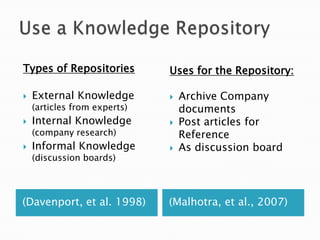
Types of Repositories         Uses for the Repository:

   External Knowledge           Archive Company
    (articles from experts)       documents
   Internal Knowledge           Post articles for
    (company research)            Reference
   Informal Knowledge           As discussion board
    (discussion boards)


(Davenport, et al. 1998)      (Malhotra, et al., 2007)
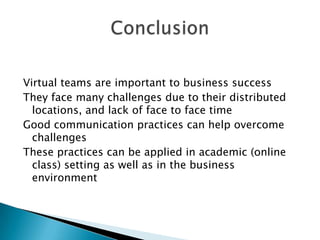
Virtual teams are important to business success
They face many challenges due to their distributed
  locations, and lack of face to face time
Good communication practices can help overcome
  challenges
These practices can be applied in academic (online
  class) setting as well as in the business
  environment
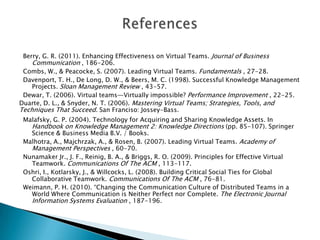
Berry, G. R. (2011). Enhancing Effectiveness on Virtual Teams. Journal of Business
    Communication , 186-206.
 Combs, W., & Peacocke, S. (2007). Leading Virtual Teams. Fundamentals , 27-28.
 Davenport, T. H., De Long, D. W., & Beers, M. C. (1998). Successful Knowledge Management
    Projects. Sloan Management Review , 43-57.
 Dewar, T. (2006). Virtual teams—Virtually impossible? Performance Improvement , 22-25.
Duarte, D. L., & Snyder, N. T. (2006). Mastering Virtual Teams; Strategies, Tools, and
Techniques That Succeed. San Franciso: Jossey-Bass.
 Malafsky, G. P. (2004). Technology for Acquiring and Sharing Knowledge Assets. In
   Handbook on Knowledge Management 2: Knowledge Directions (pp. 85-107). Springer
   Science & Business Media B.V. / Books.
 Malhotra, A., Majchrzak, A., & Rosen, B. (2007). Leading Virtual Teams. Academy of
   Management Perspectives , 60-70.
 Nunamaker Jr., J. F., Reinig, B. A., & Briggs, R. O. (2009). Principles for Effective Virtual
   Teamwork. Communications Of The ACM , 113-117.
 Oshri, I., Kotlarsky, J., & Willcocks, L. (2008). Building Critical Social Ties for Global
   Collaborative Teamwork. Communications Of The ACM , 76-81.
 Weimann, P. H. (2010). ―Changing the Communication Culture of Distributed Teams in a
   World Where Communication is Neither Perfect nor Complete. The Electronic Journal
   Information Systems Evaluation , 187-196.

Best practices in managing communication for Virtual Teams

  • 1.
  • 2.
    Virtual team-geographically distributed and may rarely meet. Often limited existence. (Berry, 2011)  What are some of the challenges? ◦ Cultural differences, language barriers, social isolation, diverse work schedules (Berry, 2011) ◦ Understanding norms and expectations,mission and deliverables (Dewar, 2011)  Communication management is the key to success of virtual teams. (Weimann, 2010)
  • 3.
    Hold a F2F Use a Team Have a Kickoff Charter to Communication Meeting establish norms Plan Have a Match ICT to Knowledge Needs Repository
  • 4.
    Essential needs:  How it helps:  Introduce members to  Team members each other become more real to  Develop trust through each other team building  Learn about team exercises mates’ cultures  Goals and expectations  Set up procedures to  Verify common skills deal with future and software problems Nunamaker, et al. (2009) Oshri, et al. (2008)
  • 5.
    Document that explains: Team’s mission and problem to be solved Individual’s roles and expectation Team decision making process Combs & Peacocke (2007)
  • 6.
    Example of TeamNorms and Expectations in a Team Charter Category Norms Keeping in Touch with Team members should check in daily at the Discussion Board in the Other Team Members Knowledge Repository Weekly progress meetings are held by Skype. Decision making meetings will use WebEx as needed. Agendas are posted in advance. All members Meeting Management should attend, unless excused. Notes will be posted within 24 hours. Decisions require 70 % quorum Carried on simple majority Decision Making and Problem Solving All parties have opportunity to be heard Resolve as soon as possible Use synchronous (i.e. chat, Skype, video conference) rather than email Conflict Management Involve team leader if unable to resolve Be clear on assignment Working Together to Understand due dates Produce or Review Documents Post documents to Knowledge Repository Form Adapted from: Duarte, D. L., & Snyder, N. T. (2006). Mastering Virtual Teams; Strategies, Tools, and Techniques That Succeed. San Franciso: Jossey-Bass.
  • 7.
    Defines:  What type of information to share with which stakeholders.  How the information is gathered and distributed  How often should it be shared  Why?  Keeping stakeholders informed helps with buy-in, and helps keep problems in check (Next slide is part of a Communication Plan I did for a Project Team where I work)
  • 8.
    •Milestone Reports •Download reports •When? As needed •When? •Monthly Contributors College Administration Faculty, staff, students Project Library Management Administration Team •Deliverables •Action items •Status Reports •All Issues •When- as happens •All Updates
  • 9.
    Good for Kickoff– Same Time/Same F2F Meeting getting the team Place acquainted Good for team Same Time/Different Video Conference, decision making and Place Chat, Text working together Discussion Boards, Different Time/Same Knowledge Repository Permanent Archive, Place Agendas and Notes Group Different Email Correspondence Time/Different Place Webinars (email) Training (Webinars) (Malafsky, 2004)
  • 10.
    Types of Repositories Uses for the Repository:  External Knowledge  Archive Company (articles from experts) documents  Internal Knowledge  Post articles for (company research) Reference  Informal Knowledge  As discussion board (discussion boards) (Davenport, et al. 1998) (Malhotra, et al., 2007)
  • 11.
    Virtual teams areimportant to business success They face many challenges due to their distributed locations, and lack of face to face time Good communication practices can help overcome challenges These practices can be applied in academic (online class) setting as well as in the business environment
  • 12.
    Berry, G. R.(2011). Enhancing Effectiveness on Virtual Teams. Journal of Business Communication , 186-206. Combs, W., & Peacocke, S. (2007). Leading Virtual Teams. Fundamentals , 27-28. Davenport, T. H., De Long, D. W., & Beers, M. C. (1998). Successful Knowledge Management Projects. Sloan Management Review , 43-57. Dewar, T. (2006). Virtual teams—Virtually impossible? Performance Improvement , 22-25. Duarte, D. L., & Snyder, N. T. (2006). Mastering Virtual Teams; Strategies, Tools, and Techniques That Succeed. San Franciso: Jossey-Bass. Malafsky, G. P. (2004). Technology for Acquiring and Sharing Knowledge Assets. In Handbook on Knowledge Management 2: Knowledge Directions (pp. 85-107). Springer Science & Business Media B.V. / Books. Malhotra, A., Majchrzak, A., & Rosen, B. (2007). Leading Virtual Teams. Academy of Management Perspectives , 60-70. Nunamaker Jr., J. F., Reinig, B. A., & Briggs, R. O. (2009). Principles for Effective Virtual Teamwork. Communications Of The ACM , 113-117. Oshri, I., Kotlarsky, J., & Willcocks, L. (2008). Building Critical Social Ties for Global Collaborative Teamwork. Communications Of The ACM , 76-81. Weimann, P. H. (2010). ―Changing the Communication Culture of Distributed Teams in a World Where Communication is Neither Perfect nor Complete. The Electronic Journal Information Systems Evaluation , 187-196.