Virtual Technology
University of Fredericton
August 14, 2014
Team A
Alicia Anderson
Jean-Francois Mercier
William Allen
Introduction
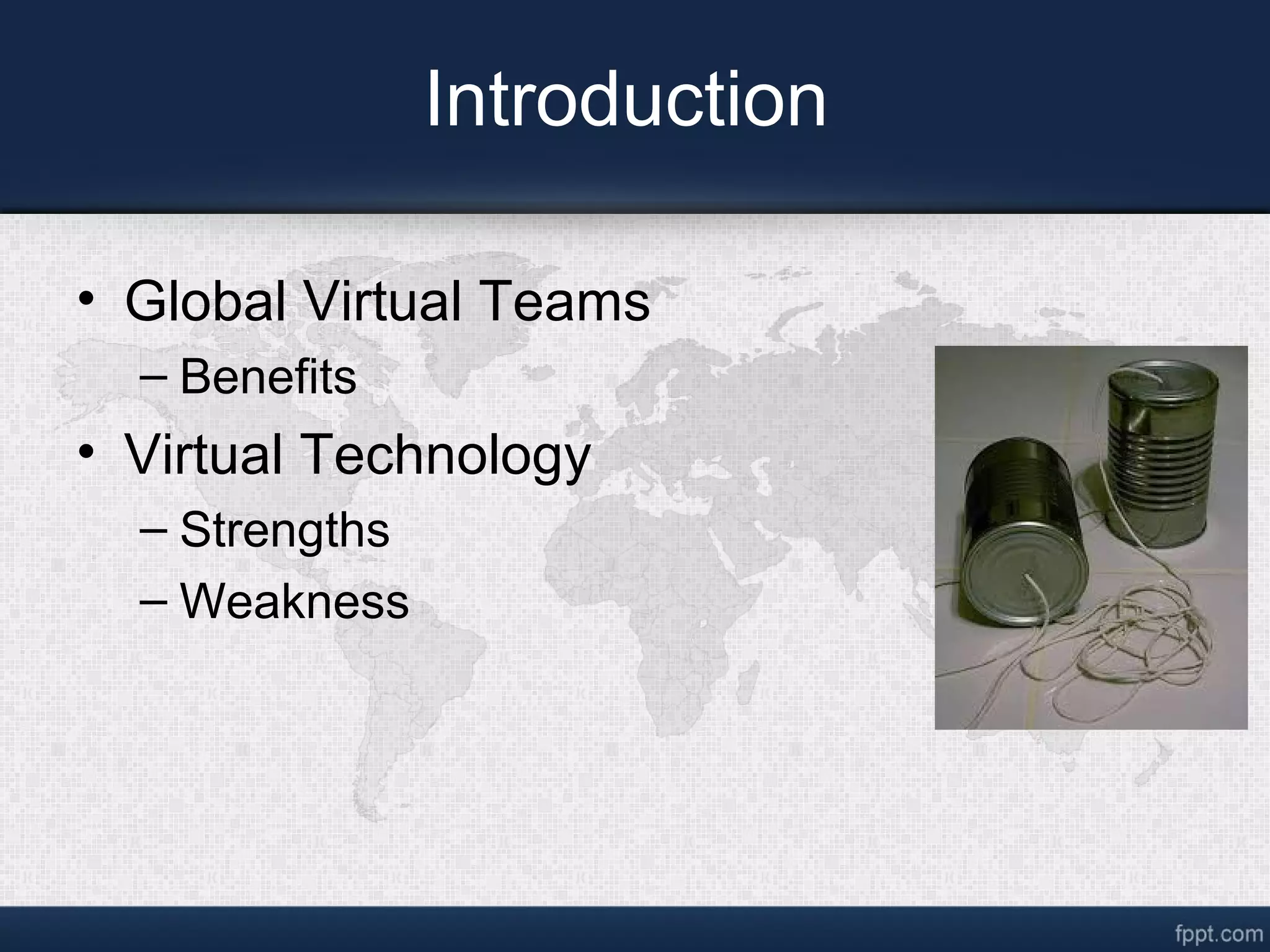
• Global Virtual Teams
– Benefits
• Virtual Technology
– Strengths
– Weakness
Communication technology
mediums
• Email
• Messenger/chat programs
– Facebook messenger
– Lync
– Google Talk
– telephone conferencing
– team blogs
– online project messaging boards
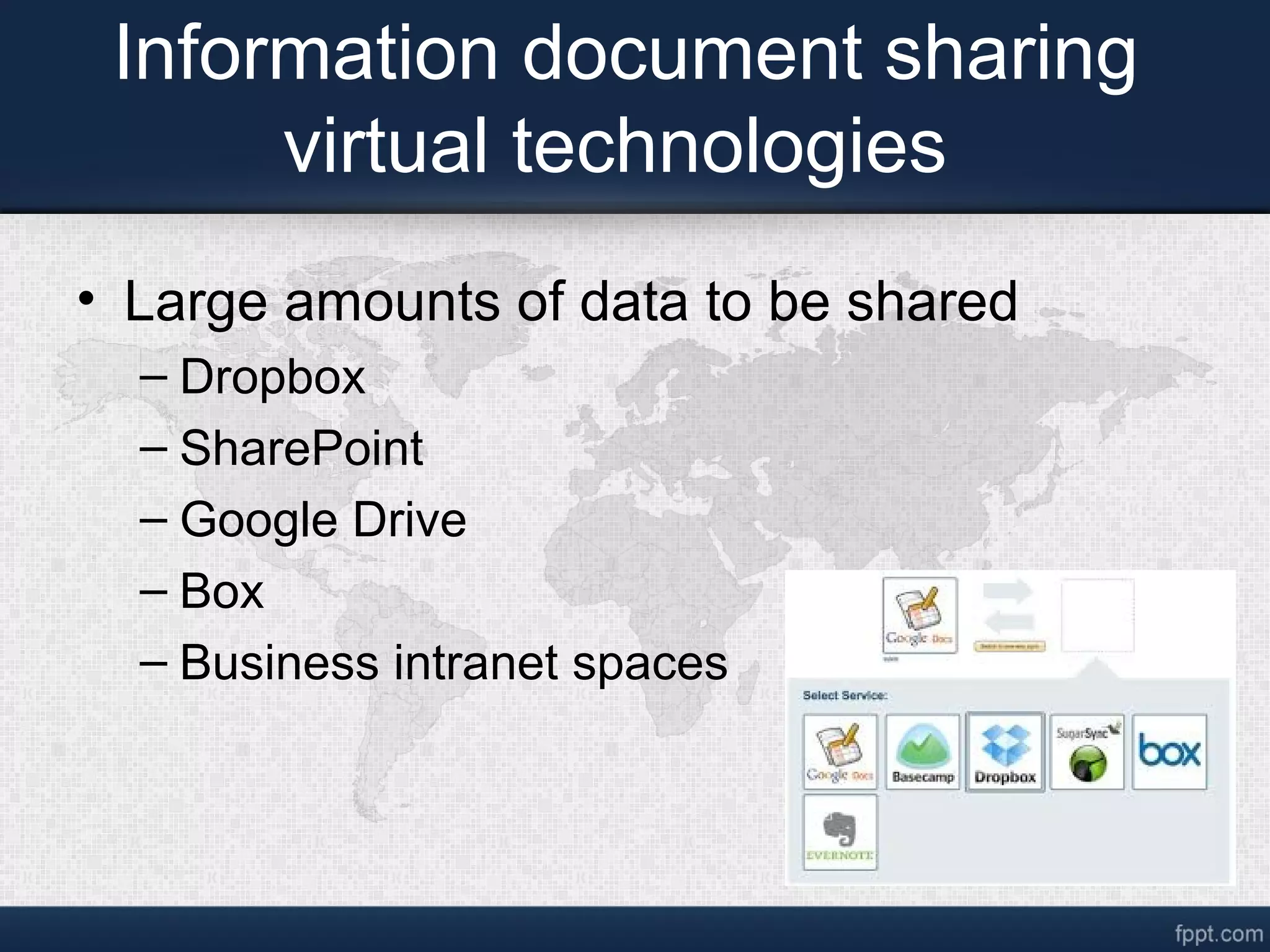
Information document sharing
virtual technologies
• Large amounts of data to be shared
– Dropbox
– SharePoint
– Google Drive
– Box
– Business intranet spaces
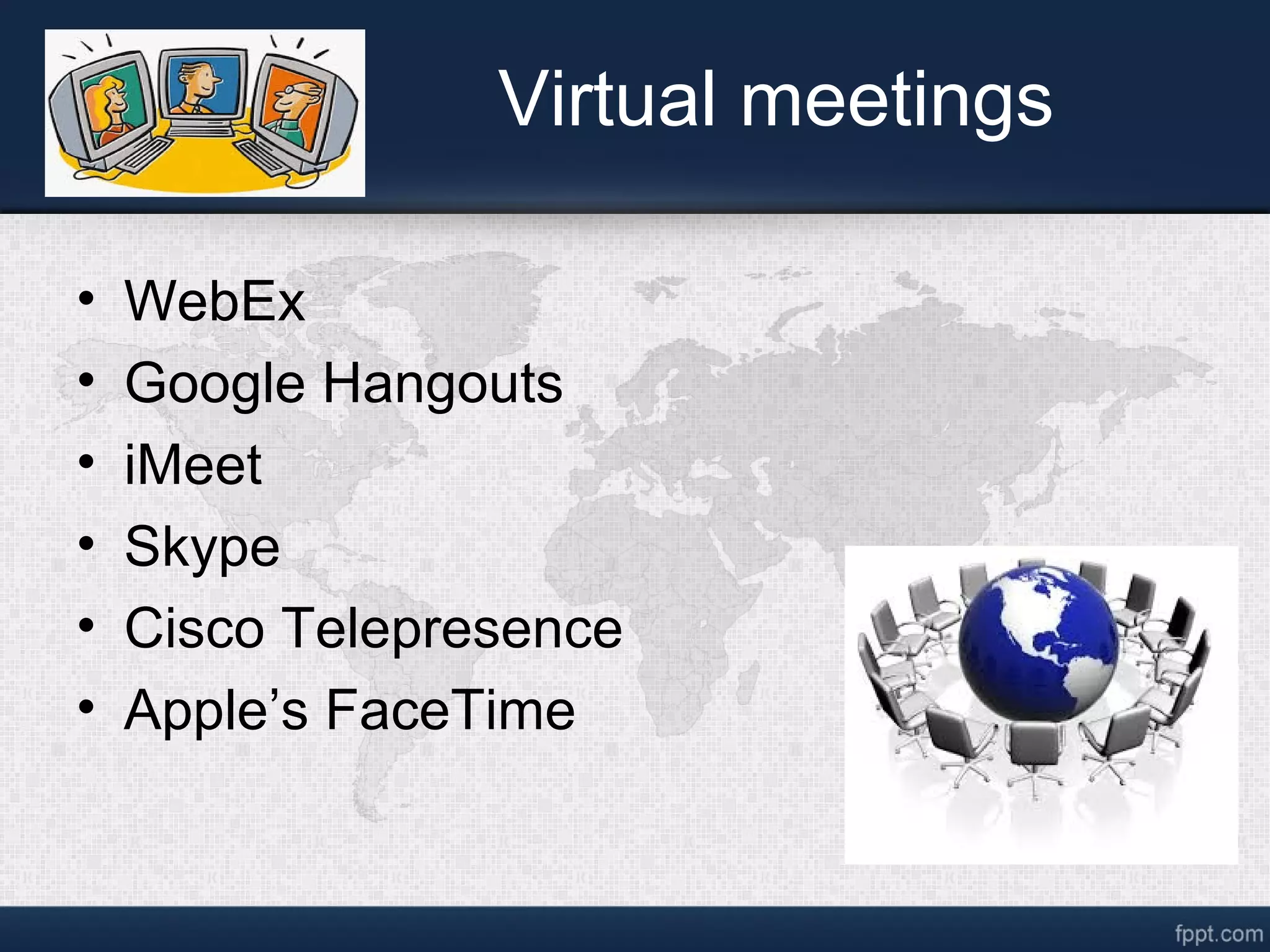
Virtual meetings
• WebEx
• Google Hangouts
• iMeet
• Skype
• Cisco Telepresence
• Apple’s FaceTime
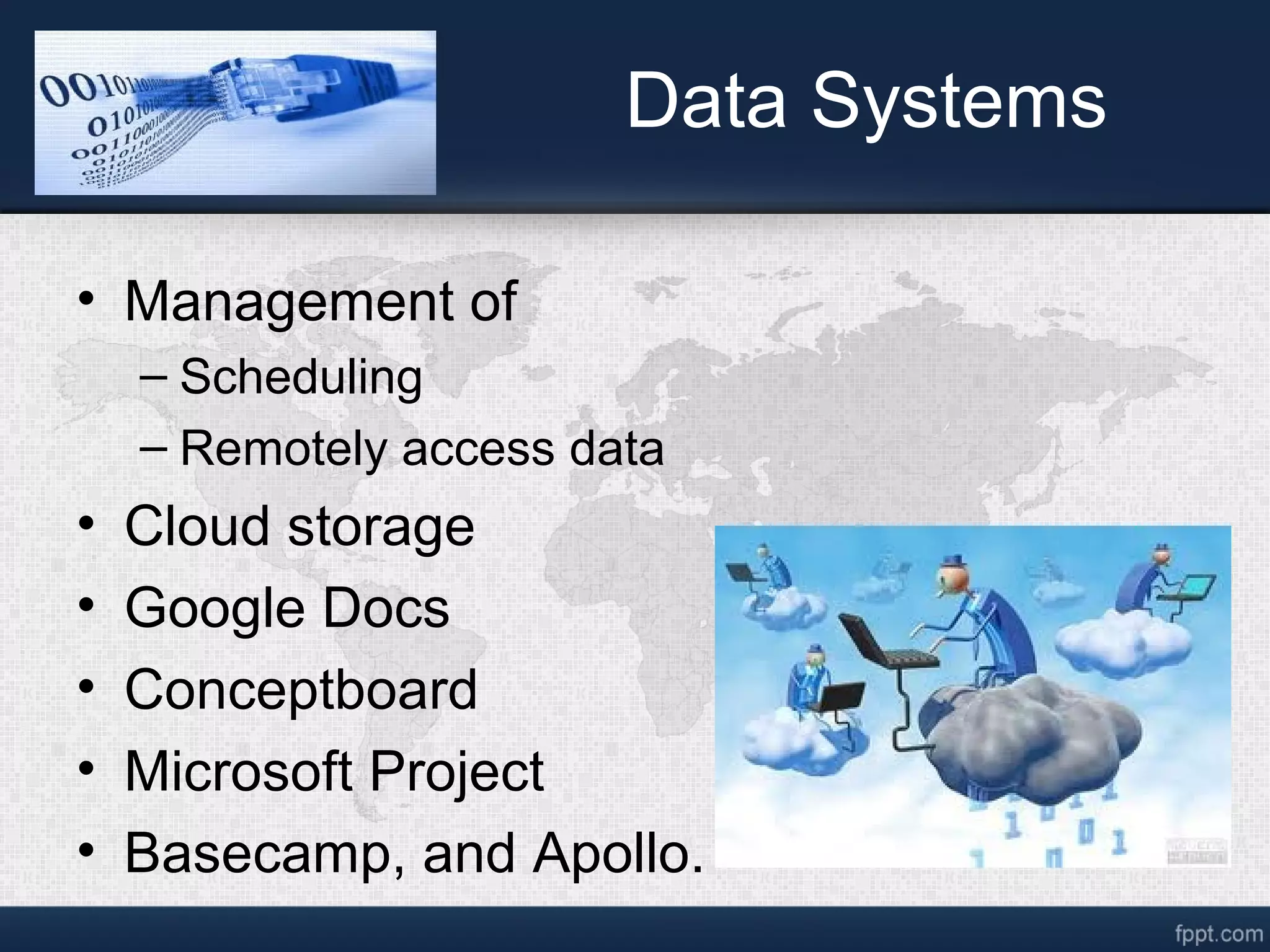
Data Systems
• Management of
– Scheduling
– Remotely access data
• Cloud storage
• Google Docs
• Conceptboard
• Microsoft Project
• Basecamp, and Apollo.
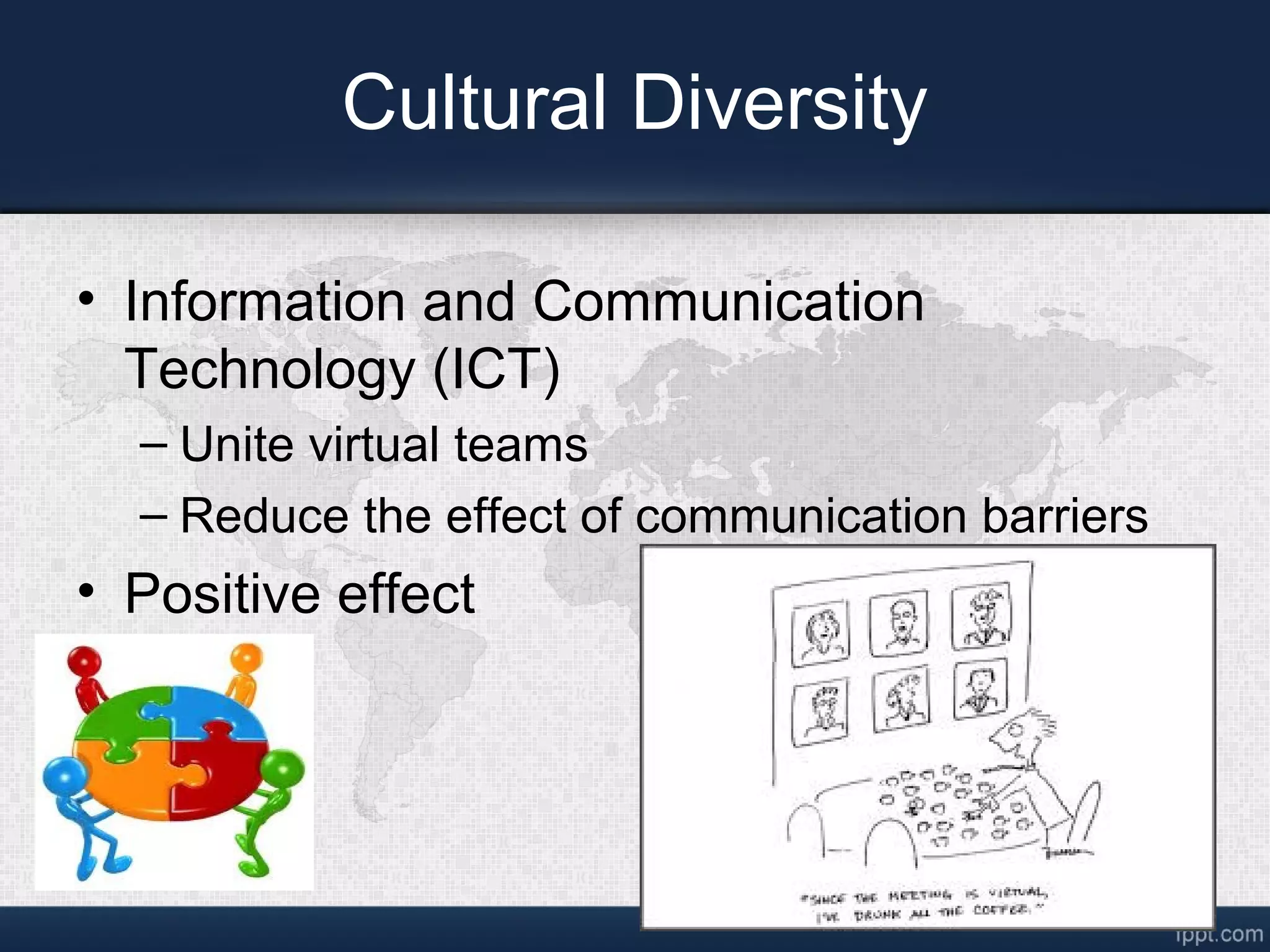
Cultural Diversity
• Information and Communication
Technology (ICT)
– Unite virtual teams
– Reduce the effect of communication barriers
• Positive effect
Issues with Technology in
Virtual Teams
• Usability
• accessible
• Benefits
• Drawbacks
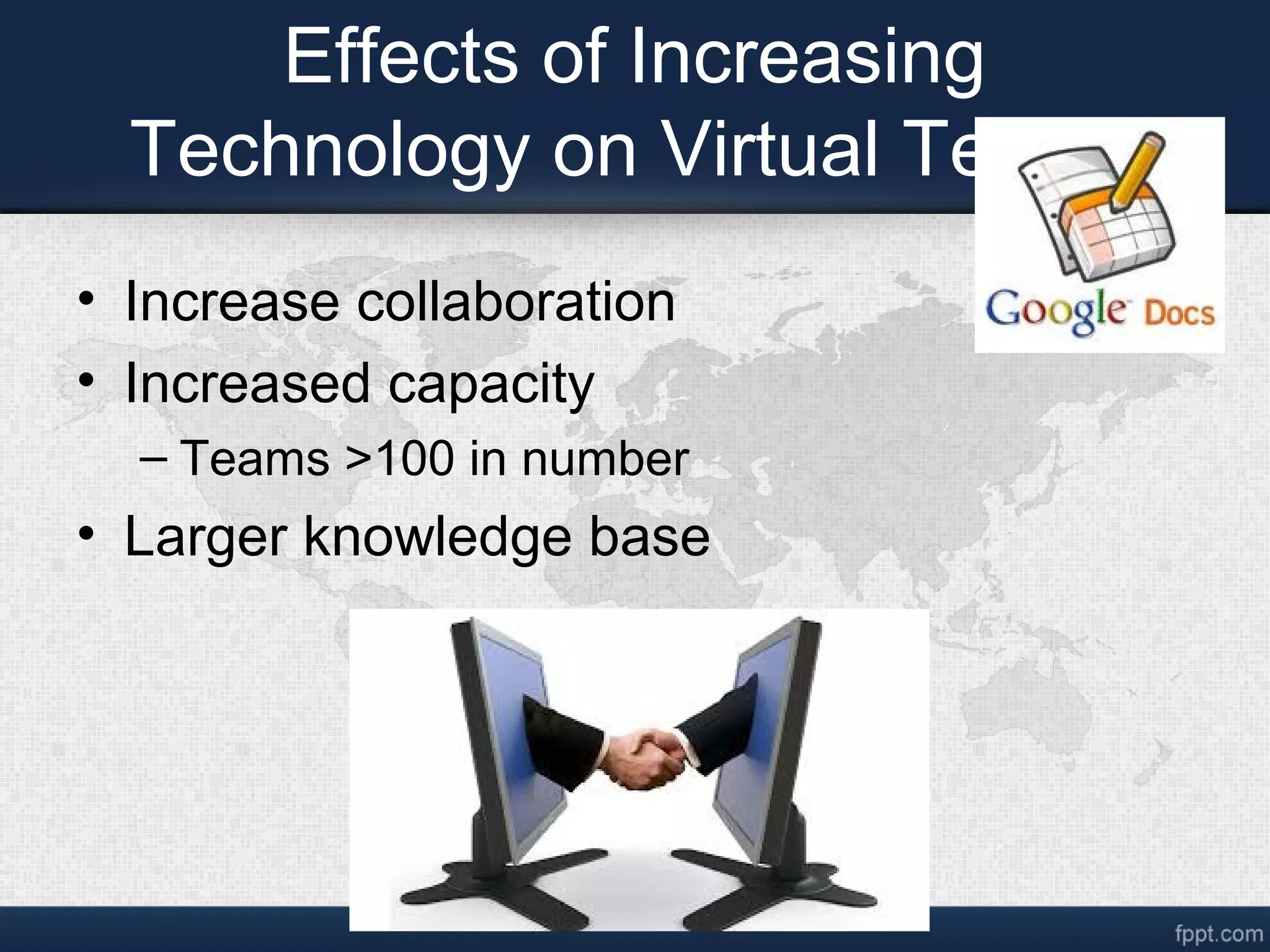
Effects of Increasing
Technology on Virtual Teams
• Increase collaboration
• Increased capacity
– Teams >100 in number
• Larger knowledge base
Honesty and Trust
• Technology
+ honesty
+ cooperation
= outcomes
Goals and Outcomes
• Automate:
– Survey Monkey
• Disseminate:
– everyone receives the same information in
timely manner.
• Schedule
– scheduling software of calendars.
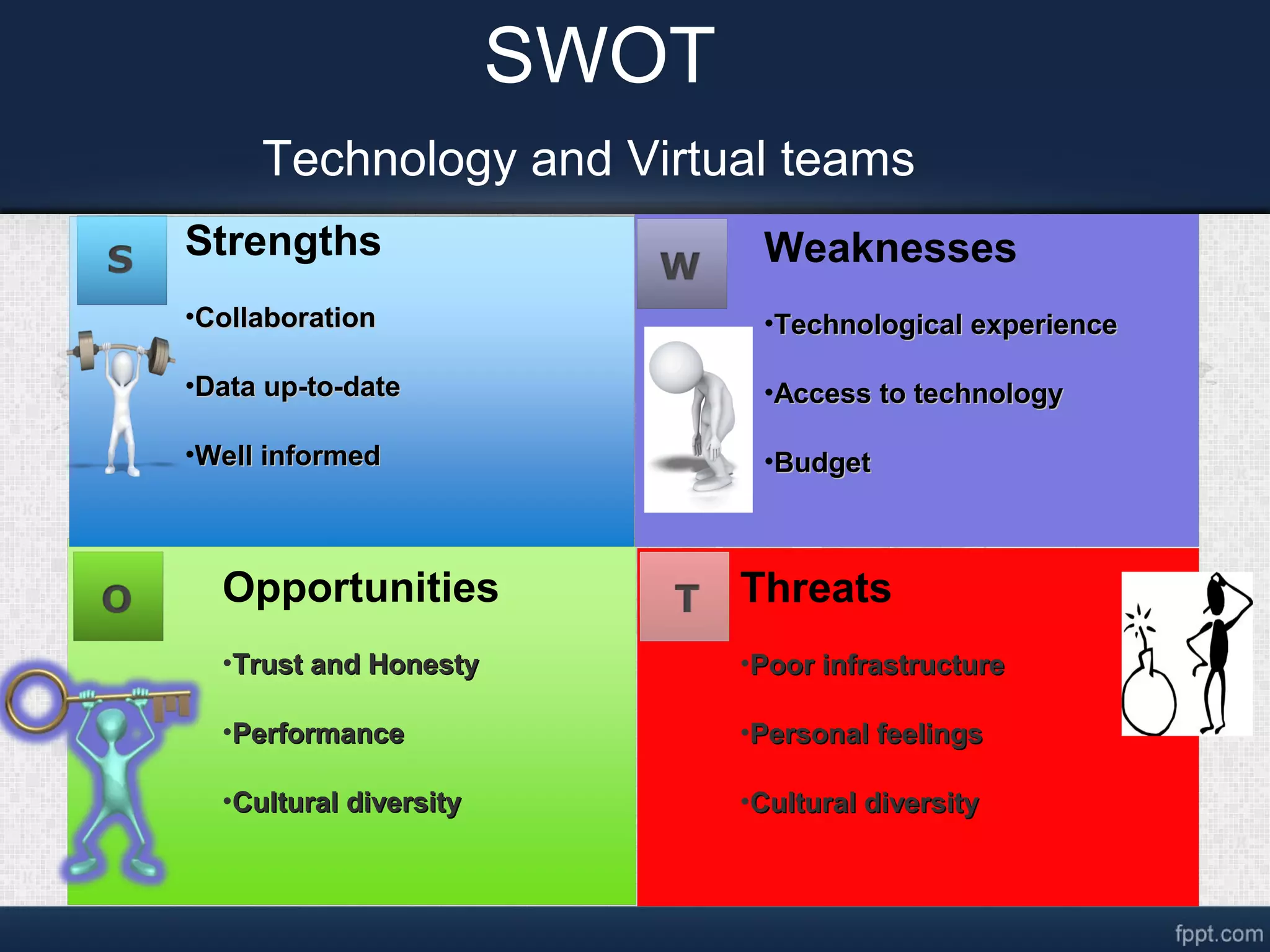
Strengths
•CollaborationCollaboration
•Data up-to-dateData up-to-date
•Well informedWell informed
Opportunities
•Trust and HonestyTrust and Honesty
•PerformancePerformance
•Cultural diversityCultural diversity
Threats
•Poor infrastructurePoor infrastructure
•Personal feelingsPersonal feelings
•Cultural diversityCultural diversity
Weaknesses
•Technological experienceTechnological experience
•Access to technologyAccess to technology
•BudgetBudget
SWOT
Technology and Virtual teams
References
• Adler, N. (2010), International Dimensions of Organizational Behavior, 5th edition. Cincinnati:
Southwestern College Publishing. ISBN: 9780324360745
• Duffy, J. (2012), Get Organized: Setting and Achieving Goals, retrieved from
http://www.pcmag.com/article2/0,2817,2403011,00.asp
• DVE - Digital Video Enterprises, (n.d.), Digital Video Enterprises [Video file], retrieved form
http://www.dvetelepresence.com/
• Fisher, K., & Fisher, M. D. (2011). Manager’s guide to virtual teams. New York: McGraw-Hill.
• Gratton, L. and Erickson, T. (2007), Eight Ways to Build Collaborative Teams, retrieved from
http://hbr.org/2007/11/eight-ways-to-build-collaborative-teams/ar/1
• Shachaf, P. (2008). Cultural diversity and information and communication technology impacts on
global virtual teams: An exploratory study. Information & Management, 45(2), 131-142.
doi:10.1016/j.im.2007.12.003
• Steinfield, C. Jang, C. Pfaff, B. (n.d.), Supporting Virtual Team Collaboration: The TeamSCOPE
• System, retrieved from http://www.google.ca/url?sa=t&rct=j&q=&esrc=s&source=we
b&cd=4&ved=0CEoQFjAD&url=http%3A%2F%2Fbenpfaff.org%2Fpapers%2Fgroup99.pdf
&ei=KZHnU8_DCdD-yQSAo4DQAQ&usg=AFQjCNF6bhw9a3NQiQwQT9D Wg8iHUWL-
lw
• The Couch Manager. (2013), The Ultimate List of Virtual Team Technology Tools [Blog],
Retrieved from http://www.thecouchmanager.com/2013/05/21/the-ultimate-list-of-virtual-
team-technology-tools/
References
• Thomas, D., & Bostrom, R. (2008). Building Trust and Cooperation through Technology
Adaptation in Virtual Teams: Empirical Field Evidence. Information Systems Management,
25(1), 45-56. doi:10.1080/10580530701777149
• Townsend, Anthony M., Samuel M. DeMarie, and Anthony R. Hendrickson. "Virtual teams:
Technology and the workplace of the future." Academy Of Management Executive 12, no.
3 (August 1998): 17-29. Business Source Elite, EBSCOhost (accessed August 9, 2014).
• Walter, Andy. (2014). Advantages & Disadvantages of Information & Communication Technology.
Retrieved from: http://smallbusiness.chron.com/advantages-disadvantages-information-
communication-technology-66948.html.
Questions

Team Virtual Technology Presentation

  • 1.
    Virtual Technology University ofFredericton August 14, 2014 Team A Alicia Anderson Jean-Francois Mercier William Allen
  • 2.
    Introduction • Global VirtualTeams – Benefits • Virtual Technology – Strengths – Weakness
  • 3.
    Communication technology mediums • Email •Messenger/chat programs – Facebook messenger – Lync – Google Talk – telephone conferencing – team blogs – online project messaging boards
  • 4.
    Information document sharing virtualtechnologies • Large amounts of data to be shared – Dropbox – SharePoint – Google Drive – Box – Business intranet spaces
  • 5.
    Virtual meetings • WebEx •Google Hangouts • iMeet • Skype • Cisco Telepresence • Apple’s FaceTime
  • 6.
    Data Systems • Managementof – Scheduling – Remotely access data • Cloud storage • Google Docs • Conceptboard • Microsoft Project • Basecamp, and Apollo.
  • 7.
    Cultural Diversity • Informationand Communication Technology (ICT) – Unite virtual teams – Reduce the effect of communication barriers • Positive effect
  • 8.
    Issues with Technologyin Virtual Teams • Usability • accessible • Benefits • Drawbacks
  • 9.
    Effects of Increasing Technologyon Virtual Teams • Increase collaboration • Increased capacity – Teams >100 in number • Larger knowledge base
  • 10.
    Honesty and Trust •Technology + honesty + cooperation = outcomes
  • 11.
    Goals and Outcomes •Automate: – Survey Monkey • Disseminate: – everyone receives the same information in timely manner. • Schedule – scheduling software of calendars.
  • 12.
    Strengths •CollaborationCollaboration •Data up-to-dateData up-to-date •WellinformedWell informed Opportunities •Trust and HonestyTrust and Honesty •PerformancePerformance •Cultural diversityCultural diversity Threats •Poor infrastructurePoor infrastructure •Personal feelingsPersonal feelings •Cultural diversityCultural diversity Weaknesses •Technological experienceTechnological experience •Access to technologyAccess to technology •BudgetBudget SWOT Technology and Virtual teams
  • 13.
    References • Adler, N.(2010), International Dimensions of Organizational Behavior, 5th edition. Cincinnati: Southwestern College Publishing. ISBN: 9780324360745 • Duffy, J. (2012), Get Organized: Setting and Achieving Goals, retrieved from http://www.pcmag.com/article2/0,2817,2403011,00.asp • DVE - Digital Video Enterprises, (n.d.), Digital Video Enterprises [Video file], retrieved form http://www.dvetelepresence.com/ • Fisher, K., & Fisher, M. D. (2011). Manager’s guide to virtual teams. New York: McGraw-Hill. • Gratton, L. and Erickson, T. (2007), Eight Ways to Build Collaborative Teams, retrieved from http://hbr.org/2007/11/eight-ways-to-build-collaborative-teams/ar/1 • Shachaf, P. (2008). Cultural diversity and information and communication technology impacts on global virtual teams: An exploratory study. Information & Management, 45(2), 131-142. doi:10.1016/j.im.2007.12.003 • Steinfield, C. Jang, C. Pfaff, B. (n.d.), Supporting Virtual Team Collaboration: The TeamSCOPE • System, retrieved from http://www.google.ca/url?sa=t&rct=j&q=&esrc=s&source=we b&cd=4&ved=0CEoQFjAD&url=http%3A%2F%2Fbenpfaff.org%2Fpapers%2Fgroup99.pdf &ei=KZHnU8_DCdD-yQSAo4DQAQ&usg=AFQjCNF6bhw9a3NQiQwQT9D Wg8iHUWL- lw • The Couch Manager. (2013), The Ultimate List of Virtual Team Technology Tools [Blog], Retrieved from http://www.thecouchmanager.com/2013/05/21/the-ultimate-list-of-virtual- team-technology-tools/
  • 14.
    References • Thomas, D.,& Bostrom, R. (2008). Building Trust and Cooperation through Technology Adaptation in Virtual Teams: Empirical Field Evidence. Information Systems Management, 25(1), 45-56. doi:10.1080/10580530701777149 • Townsend, Anthony M., Samuel M. DeMarie, and Anthony R. Hendrickson. "Virtual teams: Technology and the workplace of the future." Academy Of Management Executive 12, no. 3 (August 1998): 17-29. Business Source Elite, EBSCOhost (accessed August 9, 2014). • Walter, Andy. (2014). Advantages & Disadvantages of Information & Communication Technology. Retrieved from: http://smallbusiness.chron.com/advantages-disadvantages-information- communication-technology-66948.html.
  • 15.

Editor's Notes

  • #13 Speed of technology change (streaming vs on-demand) Increasing and changing regulatory and legal environment including, content, patents, and intellectual property rights. Intense and increased competition in maturing Pay TV industry - satellite television providers, telecommunication companies, cable companies Fraud/piracy co