BENIGN PROSTATE HYPERTROPHY
OR
BENIGN PROSTATE HYPERPLASCIA
PREPARED
BY
MARRAH
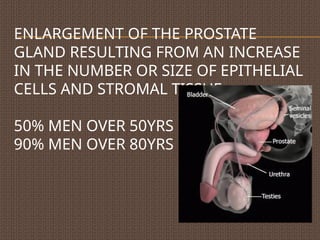
ENLARGEMENT OF THE PROSTATE
GLAND RESULTING FROM AN INCREASE
IN THE NUMBER OR SIZE OF EPITHELIAL
CELLS AND STROMAL TISSUE
50% MEN OVER 50YRS
90% MEN OVER 80YRS
ETIOLOGY
 Ageing
 Excessive accumulation of prostatic androgen
[dihydroxytestosterone]
 Stimulation by estrogen
 Local growth hormone action
RISK FACTORS
 Family history
 Environment
 Diet [saturated fatty acids]
 Reduced exercise
 Alcohol consumption
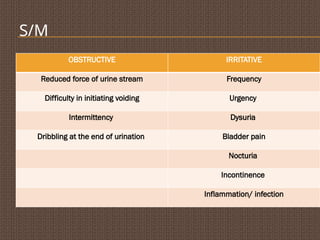
S/M
OBSTRUCTIVE IRRITATIVE
Reduced force of urine stream Frequency
Difficulty in initiating voiding Urgency
Intermittency Dysuria
Dribbling at the end of urination Bladder pain
Nocturia
Incontinence
Inflammation/ infection
COMPLICATIONS
 Acute urinary retention
 UTI & Sepsis secondary to UTI
 Incomplete bladder emptying – residual urine
 Stone formation
 Hydronephrosis
 Pyelonephritis
 Bladder damage
DIAGNOSTICS
 History & PE
 Digital Rectal examinaton
 Urinalysis
 Urine c/s
 PSA [Prostate specific antigen]
 Transrectal ultrasound
 Uroflowmetry
 Measure Postvoidal residual urine
 Cystourethroscopy
MANAGEMENT
GOALS
 Restore bladder drainage
 Relieve s/s
 Prevent / treat complications
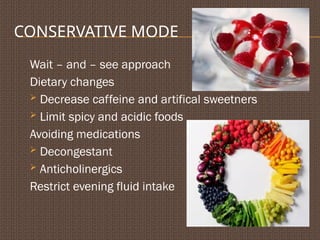
CONSERVATIVE MODE
Wait – and – see approach
Dietary changes
 Decrease caffeine and artifical sweetners
 Limit spicy and acidic foods
Avoiding medications
 Decongestant
 Anticholinergics
Restrict evening fluid intake
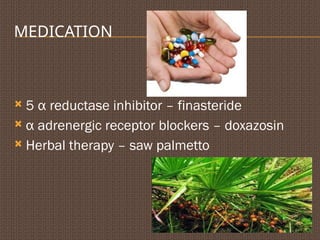
MEDICATION
 5 α reductase inhibitor – finasteride
 α adrenergic receptor blockers – doxazosin
 Herbal therapy – saw palmetto
SURGICAL APPROACHES
Several approaches can be used to remove the
hypertrophied portion of the prostate gland:
CLOSED
 Transurethral resection of the prostate (TURP),
 Transurethral incision of the prostate (TUIP)
OPEN
 Suprapubic prostatectomy,
 Perineal prostatectomy,
 Retropubic prostatectomy, and
SUPRAPUBIC PROSTATECTOMY
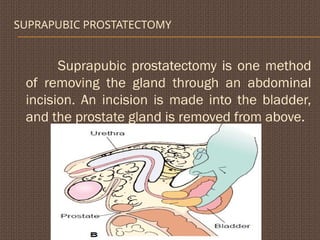
Suprapubic prostatectomy is one method
of removing the gland through an abdominal
incision. An incision is made into the bladder,
and the prostate gland is removed from above.
PERINEAL PROSTATECTOMY
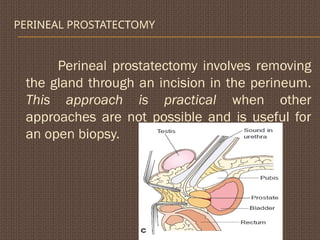
Perineal prostatectomy involves removing
the gland through an incision in the perineum.
This approach is practical when other
approaches are not possible and is useful for
an open biopsy.
RETROPUBIC PROSTATECTOMY
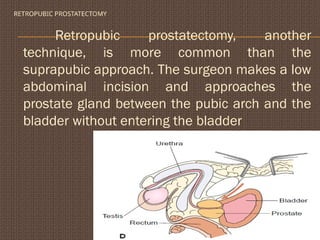
Retropubic prostatectomy, another
technique, is more common than the
suprapubic approach. The surgeon makes a low
abdominal incision and approaches the
prostate gland between the pubic arch and the
bladder without entering the bladder
TRANSURETHRAL RESECTION OF THE PROSTATE(TURP)
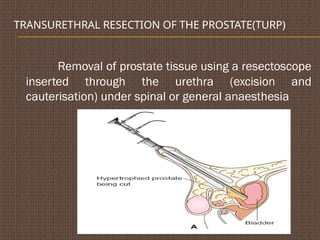
Removal of prostate tissue using a resectoscope
inserted through the urethra (excision and
cauterisation) under spinal or general anaesthesia
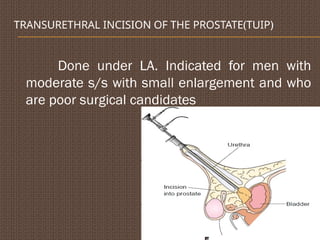
TRANSURETHRAL INCISION OF THE PROSTATE(TUIP)
Done under LA. Indicated for men with
moderate s/s with small enlargement and who
are poor surgical candidates
MINIMALLY INVASIVE THERAPY
 Transurethral microwave thermotherapy (TUMT)
An outpatient procedure of delivery
microwaves directly to the prostate through a
transurethral probe. (113°F/ 45°C)
 Transurethral needle ablation (TUNA)
Low wave radio frequency is used to heat
prostate gland with the help of a needle
providing greater precision.
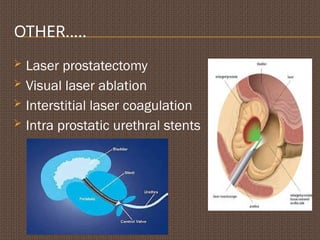
OTHER…..
 Laser prostatectomy
 Visual laser ablation
 Interstitial laser coagulation
 Intra prostatic urethral stents
NURSING MANAGEMENT
GOALS
 Restoration of urinary drainage
 Treatment of UTI
 Understanding of procedures
PREOPERATIVE INTERVENTIONS
 Avoid alcohol and caffeine
 Avoid cold as it causes smooth
muscle contraction
 Advise to urinate in every 2-3 hrs
 Normal fluid intake to avoid fluid intake & volume
overload.
 Catheterisation
 Antibiotic before any invasive
procedures
POSTOPERATIVE
 main complications- hemorrhage, bladder spasms,
urinary incontinence, infections
 Bladder irrigations with normal saline [pink, no clots]
 Monitor inflow & outflow of irrigant
 Catheter care
 avoid activities that increase the abdominal pressure
 To relieve bladder spasms- opium suppositories,
antispasmodics with relaxation techniques.
 After catheter removal, patient should urinate within 6hrs
 Patient should practice pelvic floor muscle technique
(Kegel exercise)
 Encourage to practice starting and stopping the stream
during urination
 Dietary management – fiber and easily digestible food
 Stool softners
 Avoid straining during defecation
 Avoid heavy weightlifting
 Sexual counseling

benign prostate hypertrophy.pptxlllllll,m

  • 1.
    BENIGN PROSTATE HYPERTROPHY OR BENIGNPROSTATE HYPERPLASCIA PREPARED BY MARRAH
  • 2.
    ENLARGEMENT OF THEPROSTATE GLAND RESULTING FROM AN INCREASE IN THE NUMBER OR SIZE OF EPITHELIAL CELLS AND STROMAL TISSUE 50% MEN OVER 50YRS 90% MEN OVER 80YRS
  • 3.
    ETIOLOGY  Ageing  Excessiveaccumulation of prostatic androgen [dihydroxytestosterone]  Stimulation by estrogen  Local growth hormone action
  • 4.
    RISK FACTORS  Familyhistory  Environment  Diet [saturated fatty acids]  Reduced exercise  Alcohol consumption
  • 5.
    S/M OBSTRUCTIVE IRRITATIVE Reduced forceof urine stream Frequency Difficulty in initiating voiding Urgency Intermittency Dysuria Dribbling at the end of urination Bladder pain Nocturia Incontinence Inflammation/ infection
  • 6.
    COMPLICATIONS  Acute urinaryretention  UTI & Sepsis secondary to UTI  Incomplete bladder emptying – residual urine  Stone formation  Hydronephrosis  Pyelonephritis  Bladder damage
  • 7.
    DIAGNOSTICS  History &PE  Digital Rectal examinaton  Urinalysis  Urine c/s  PSA [Prostate specific antigen]  Transrectal ultrasound  Uroflowmetry  Measure Postvoidal residual urine  Cystourethroscopy
  • 8.
    MANAGEMENT GOALS  Restore bladderdrainage  Relieve s/s  Prevent / treat complications
  • 9.
    CONSERVATIVE MODE Wait –and – see approach Dietary changes  Decrease caffeine and artifical sweetners  Limit spicy and acidic foods Avoiding medications  Decongestant  Anticholinergics Restrict evening fluid intake
  • 10.
    MEDICATION  5 αreductase inhibitor – finasteride  α adrenergic receptor blockers – doxazosin  Herbal therapy – saw palmetto
  • 11.
    SURGICAL APPROACHES Several approachescan be used to remove the hypertrophied portion of the prostate gland: CLOSED  Transurethral resection of the prostate (TURP),  Transurethral incision of the prostate (TUIP) OPEN  Suprapubic prostatectomy,  Perineal prostatectomy,  Retropubic prostatectomy, and
  • 12.
    SUPRAPUBIC PROSTATECTOMY Suprapubic prostatectomyis one method of removing the gland through an abdominal incision. An incision is made into the bladder, and the prostate gland is removed from above.
  • 13.
    PERINEAL PROSTATECTOMY Perineal prostatectomyinvolves removing the gland through an incision in the perineum. This approach is practical when other approaches are not possible and is useful for an open biopsy.
  • 14.
    RETROPUBIC PROSTATECTOMY Retropubic prostatectomy,another technique, is more common than the suprapubic approach. The surgeon makes a low abdominal incision and approaches the prostate gland between the pubic arch and the bladder without entering the bladder
  • 15.
    TRANSURETHRAL RESECTION OFTHE PROSTATE(TURP) Removal of prostate tissue using a resectoscope inserted through the urethra (excision and cauterisation) under spinal or general anaesthesia
  • 16.
    TRANSURETHRAL INCISION OFTHE PROSTATE(TUIP) Done under LA. Indicated for men with moderate s/s with small enlargement and who are poor surgical candidates
  • 17.
    MINIMALLY INVASIVE THERAPY Transurethral microwave thermotherapy (TUMT) An outpatient procedure of delivery microwaves directly to the prostate through a transurethral probe. (113°F/ 45°C)  Transurethral needle ablation (TUNA) Low wave radio frequency is used to heat prostate gland with the help of a needle providing greater precision.
  • 18.
    OTHER…..  Laser prostatectomy Visual laser ablation  Interstitial laser coagulation  Intra prostatic urethral stents
  • 19.
    NURSING MANAGEMENT GOALS  Restorationof urinary drainage  Treatment of UTI  Understanding of procedures
  • 20.
    PREOPERATIVE INTERVENTIONS  Avoidalcohol and caffeine  Avoid cold as it causes smooth muscle contraction  Advise to urinate in every 2-3 hrs  Normal fluid intake to avoid fluid intake & volume overload.  Catheterisation  Antibiotic before any invasive procedures
  • 21.
    POSTOPERATIVE  main complications-hemorrhage, bladder spasms, urinary incontinence, infections  Bladder irrigations with normal saline [pink, no clots]  Monitor inflow & outflow of irrigant  Catheter care  avoid activities that increase the abdominal pressure  To relieve bladder spasms- opium suppositories, antispasmodics with relaxation techniques.
  • 22.
     After catheterremoval, patient should urinate within 6hrs  Patient should practice pelvic floor muscle technique (Kegel exercise)  Encourage to practice starting and stopping the stream during urination  Dietary management – fiber and easily digestible food  Stool softners  Avoid straining during defecation  Avoid heavy weightlifting  Sexual counseling