UNIVERSIDAD DE GUADALAJARA
        CENTRO UNIVERSITARIO DE CIENCIAS DE LA SALUD


                 BREAST
                         Dr. Benjamín Robles Mariscal
                        Dr. Héctor Manuel Virgen Ayala
                                   Clínicas Quirúrgicas

Brenda de la Torre Aguayo
209340718
MCPA
The normal breast

ANATOMY
A “teardrop” shape
The asymmetry is common
Vascular supply:
  medial and central portion:
            perforating branches from the internal
      mammary artery
  laterally
            lateral thoracic
  fascial envelope
Suspensory ligaments of Cooper
Histology
Breast tissue
  has two histologically distinct tissues: lobular
  & ductal
   The lobule
-is the functional unit of the breast
Alveoli are terminal elongated tubular ducts
Around 10-100 alveoli coalesce to form larger
   lobular ductal units
BENIGN BREAST DISORDERS
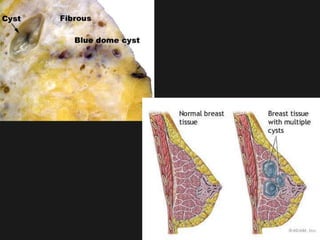
Fibrocystic disease
• Refers to women with severely symptomatic
  breast
                          Radiographic
• S&S
• Mastodynia              Clusstered
• Breast masses           micricalcifications
• Nipple discharge        on MMG

                                Treatment
                                Reassurance
Fibroadenoma
It is the most common breast common tumor in
   adolescents and young women
Patients will have multiple fibroadenomas in
   10% -15% of cases
Characteristics
A painless, slow growing mass found on self-
  breast examination
Several cm.
Changes with mestrual cycle
Well circumscribed
                         Diagnosis
Firm rubbery texture     MMG popcorn
                         calcification when
                         degeneration
                         Ultrasound evaluation
Treatment
Based on probability of missing a primary breast
  CA
-30. observation
Removal if enlarges
+30 FNA
Surgery indicated in changes
Giant fibroadenomas


                  + 5 cm
Radial scar
Radial sclerosing lesions
In MMG shows a stellate, irregular spiculated
  mass lesion

A tissue diagnosis is required to differentiate
  from cancer
Fat necrosis
Inflamatory necrosis related to trauma

Macrophages laden with fat lobules. Or foreign
 body giant cells

Treatment
Involves reassurance without excision
Periductal mastitis
Uncommon disease
      dilated mammary ducts with inspissated
  secretions and marked periductal inflammation
      S&S
      include noncyclicla mastodynia; nipple
  retraction; thick, white creamy nipple discharge; as
  sterile subareolar abscesses.
  History                           Treatment
Difficulty with breast-feeding      Reassurance
                                   Surgical incision and
                                     drainage
Infectious mastitis
80% are associated with breast-feeding
The most common pathogen is Staphylococcus
  aureus
Nonlactating women
  chronic infections (actinomycosis, tb, syphilis)
  autoimmune diseases (lupus erythematosus)
Most infections
  begin as skin cellulitis
  may be treated with antibiotics safe for feeding the
  infant
Galactoceles
Are breast cysts that are filled with milk
Almost exclusively seen after breast-feeding and
  represent silated obstructed breast ducts
Treatment
Ranges from simple aspiration to surgical
  incision and drainage
Mondor s disease
Trombophlebitis of superficial veins of the breast
This affects the lower outer quadrant, presents as
  a pakoable, cord-like mass, burning pain

                            Treatment
                            NSAIDs
Intraductal papilloma
Most common cause of bloody nipple discharge

Lesions: small, nonpalpable, close to the nipple

     Dx. Ductography

                       Tx. Subareolar excision
Nipple discharge
Bloody: intraductal papilloma & breast ca

Purulent: subareolar infection

Milky white: galactorrhea

Green/yellow or brown: fibrocystic disease
Mastodynia
2 types
Cyclie mastodynia
Continuous mastodynia

Tx
NSAIDS
Changes in life style

Benign breast disorders

  • 1.
    UNIVERSIDAD DE GUADALAJARA CENTRO UNIVERSITARIO DE CIENCIAS DE LA SALUD BREAST Dr. Benjamín Robles Mariscal Dr. Héctor Manuel Virgen Ayala Clínicas Quirúrgicas Brenda de la Torre Aguayo 209340718 MCPA
  • 2.
  • 3.
    A “teardrop” shape Theasymmetry is common Vascular supply: medial and central portion: perforating branches from the internal mammary artery laterally lateral thoracic fascial envelope Suspensory ligaments of Cooper
  • 5.
    Histology Breast tissue has two histologically distinct tissues: lobular & ductal The lobule -is the functional unit of the breast Alveoli are terminal elongated tubular ducts Around 10-100 alveoli coalesce to form larger lobular ductal units
  • 6.
  • 7.
    Fibrocystic disease • Refersto women with severely symptomatic breast Radiographic • S&S • Mastodynia Clusstered • Breast masses micricalcifications • Nipple discharge on MMG Treatment Reassurance
  • 9.
    Fibroadenoma It is themost common breast common tumor in adolescents and young women Patients will have multiple fibroadenomas in 10% -15% of cases
  • 10.
    Characteristics A painless, slowgrowing mass found on self- breast examination Several cm. Changes with mestrual cycle Well circumscribed Diagnosis Firm rubbery texture MMG popcorn calcification when degeneration Ultrasound evaluation
  • 12.
    Treatment Based on probabilityof missing a primary breast CA -30. observation Removal if enlarges +30 FNA Surgery indicated in changes
  • 13.
  • 14.
    Radial scar Radial sclerosinglesions In MMG shows a stellate, irregular spiculated mass lesion A tissue diagnosis is required to differentiate from cancer
  • 16.
    Fat necrosis Inflamatory necrosisrelated to trauma Macrophages laden with fat lobules. Or foreign body giant cells Treatment Involves reassurance without excision
  • 18.
    Periductal mastitis Uncommon disease dilated mammary ducts with inspissated secretions and marked periductal inflammation S&S include noncyclicla mastodynia; nipple retraction; thick, white creamy nipple discharge; as sterile subareolar abscesses. History Treatment Difficulty with breast-feeding Reassurance Surgical incision and drainage
  • 20.
    Infectious mastitis 80% areassociated with breast-feeding The most common pathogen is Staphylococcus aureus Nonlactating women chronic infections (actinomycosis, tb, syphilis) autoimmune diseases (lupus erythematosus) Most infections begin as skin cellulitis may be treated with antibiotics safe for feeding the infant
  • 22.
    Galactoceles Are breast cyststhat are filled with milk Almost exclusively seen after breast-feeding and represent silated obstructed breast ducts Treatment Ranges from simple aspiration to surgical incision and drainage
  • 24.
    Mondor s disease Trombophlebitisof superficial veins of the breast This affects the lower outer quadrant, presents as a pakoable, cord-like mass, burning pain Treatment NSAIDs
  • 26.
    Intraductal papilloma Most commoncause of bloody nipple discharge Lesions: small, nonpalpable, close to the nipple Dx. Ductography Tx. Subareolar excision
  • 28.
    Nipple discharge Bloody: intraductalpapilloma & breast ca Purulent: subareolar infection Milky white: galactorrhea Green/yellow or brown: fibrocystic disease
  • 29.
    Mastodynia 2 types Cyclie mastodynia Continuousmastodynia Tx NSAIDS Changes in life style