Overcoming Depression
 What are some theories?
 Roughly 25 % of the US population will experience depression in their lifetime.
 If you have experienced one episode of depression, you are likely to have another, or

to become chronically depressed.
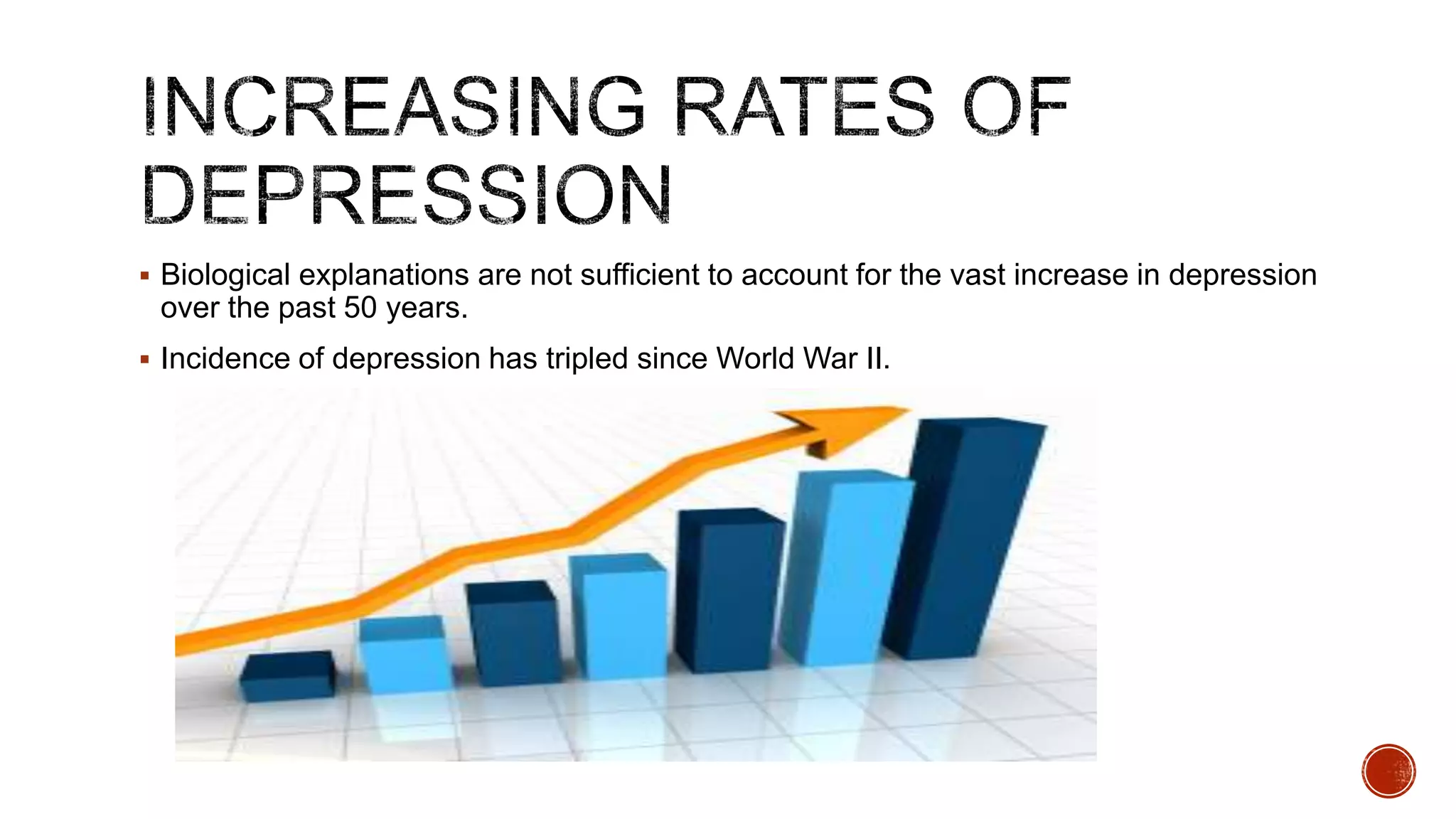
 Biological explanations are not sufficient to account for the vast increase in depression

over the past 50 years.
 Incidence of depression has tripled since World War II.
What are your theories about why depression has increased so dramatically?
we

Thinking of depression as an illness can help reduce the shame we may feel if
if we think it‟s a weakness, or that it‟s our fault.
Thinking of depression as an illness, because it has a recognizable set of
symptoms, gives the impression that it can be treated “medically.”
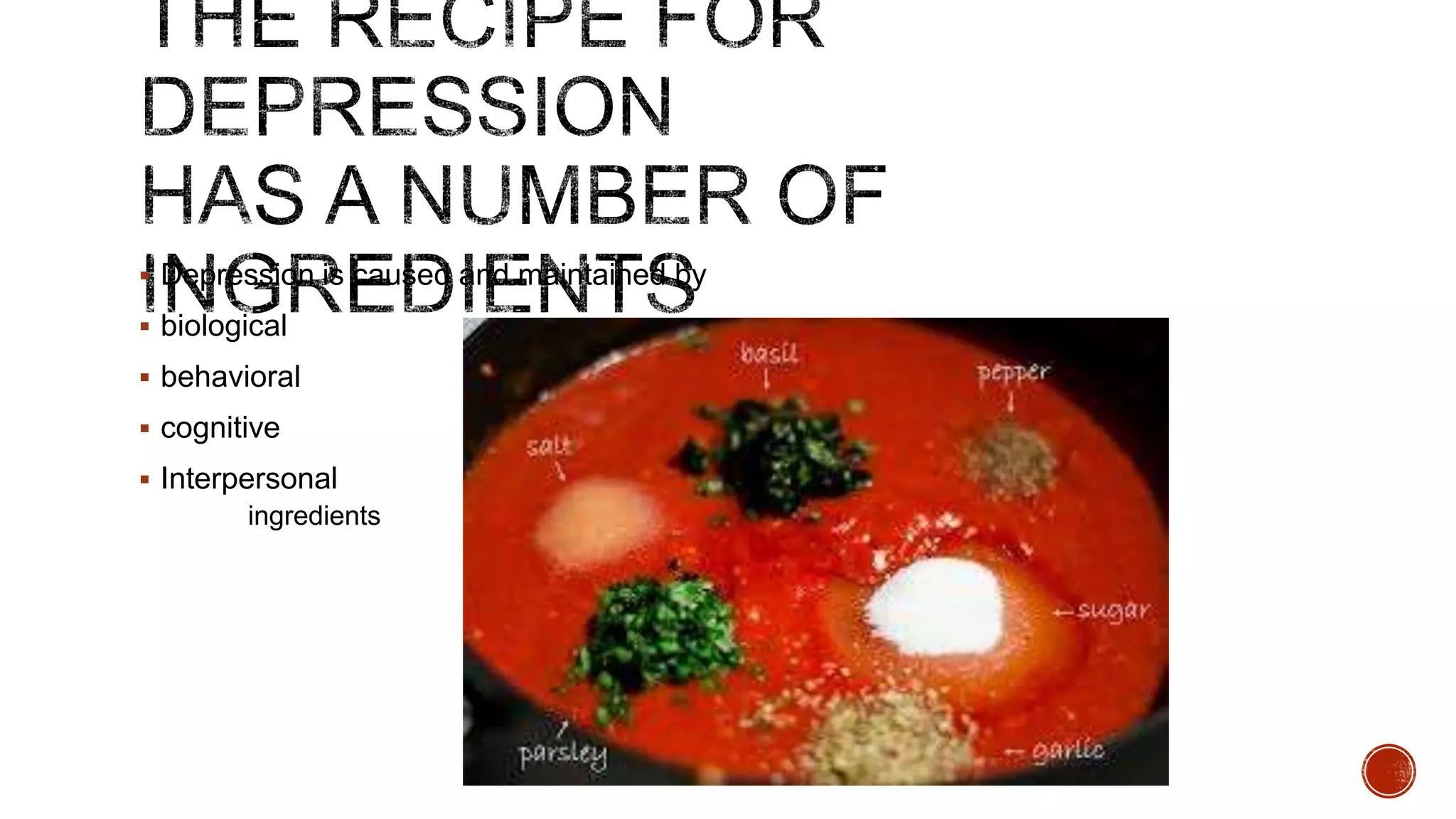
 Depression is caused and maintained by
 biological
 behavioral
 cognitive

 Interpersonal

ingredients
 Depression presents differently:
 In different cultures
 At different times in history
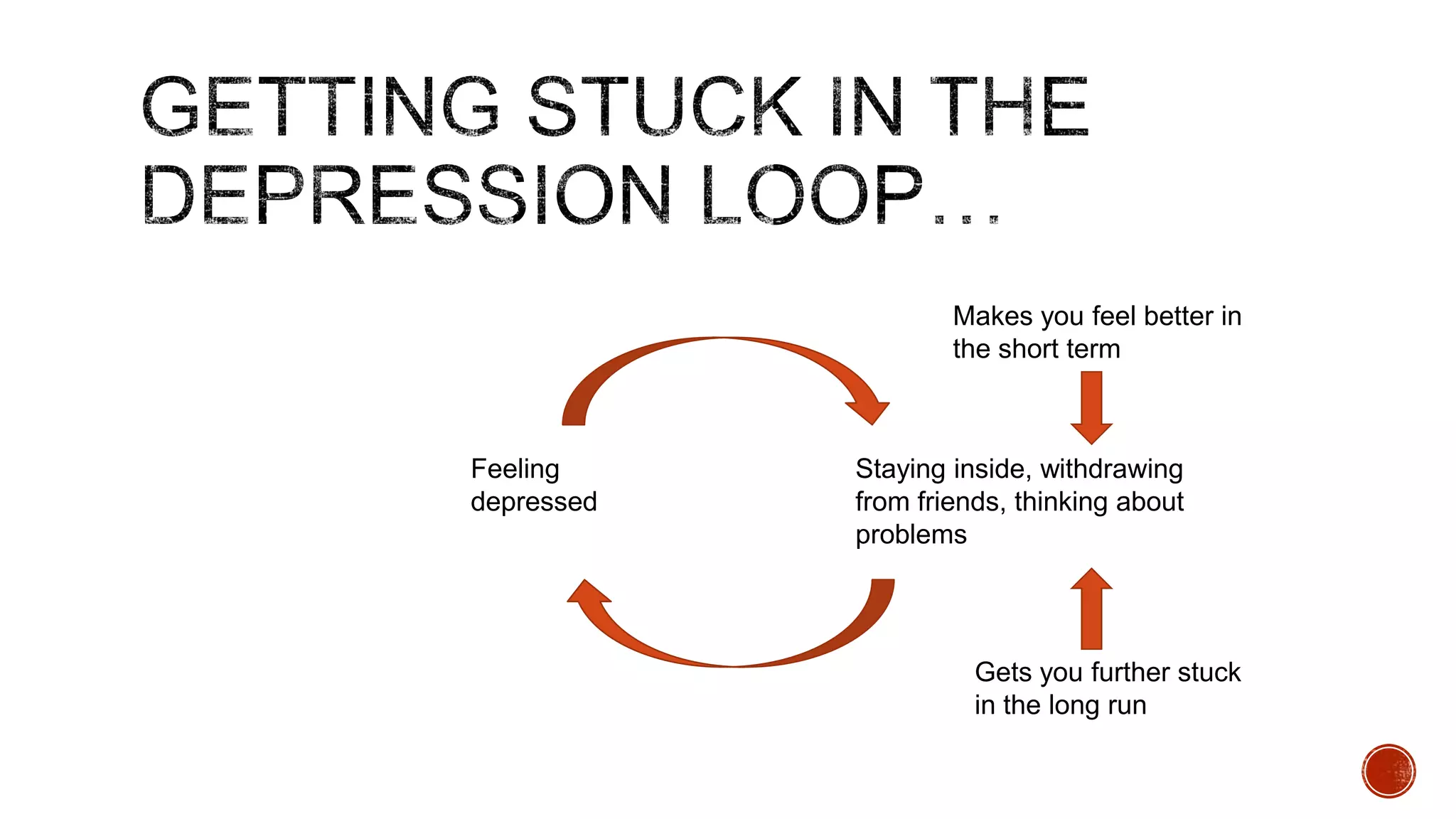
Makes you feel better in
the short term

Feeling
depressed

Staying inside, withdrawing
from friends, thinking about
problems

Gets you further stuck
in the long run
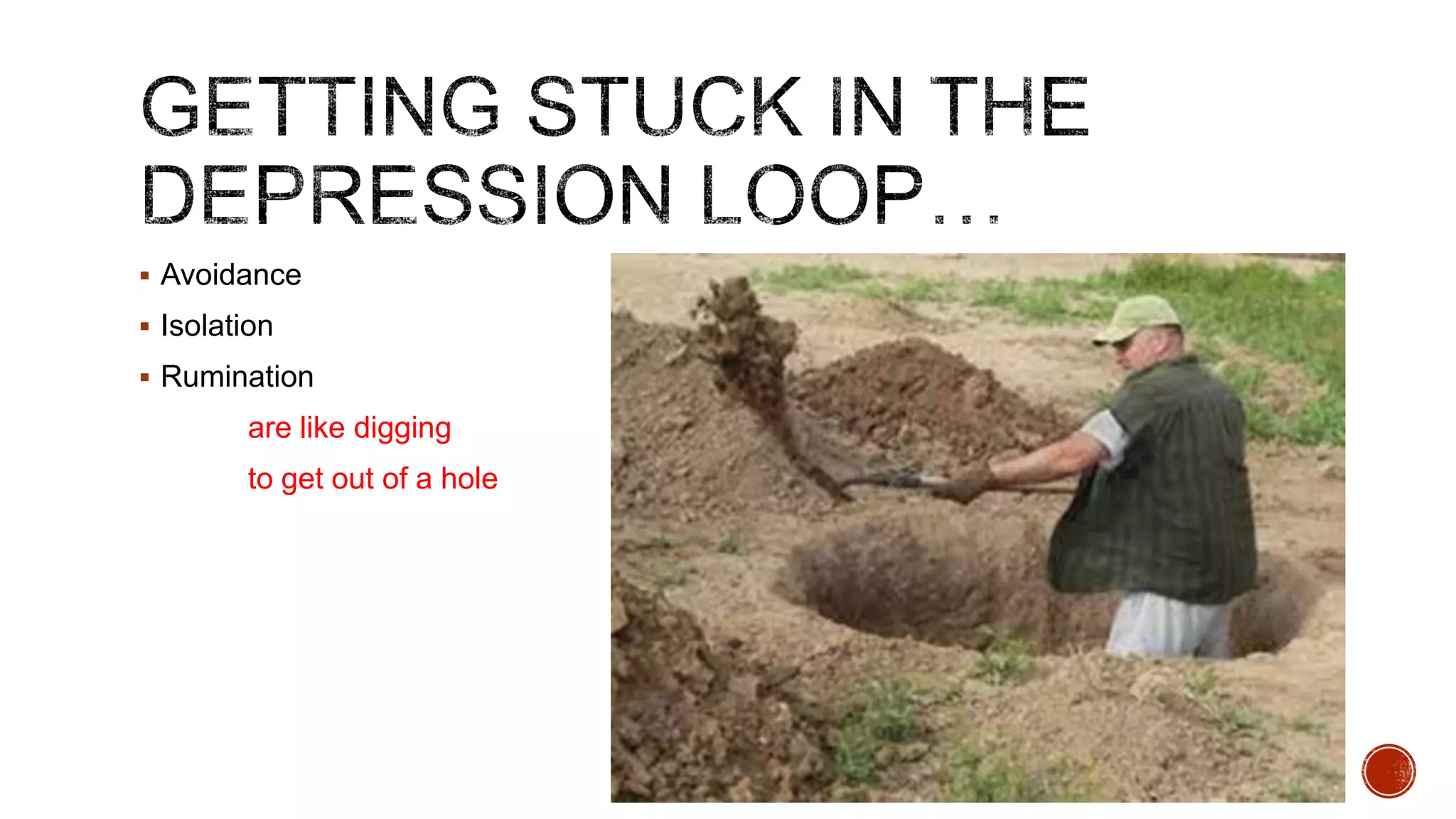
 Avoidance
 Isolation
 Rumination

are like digging

to get out of a hole
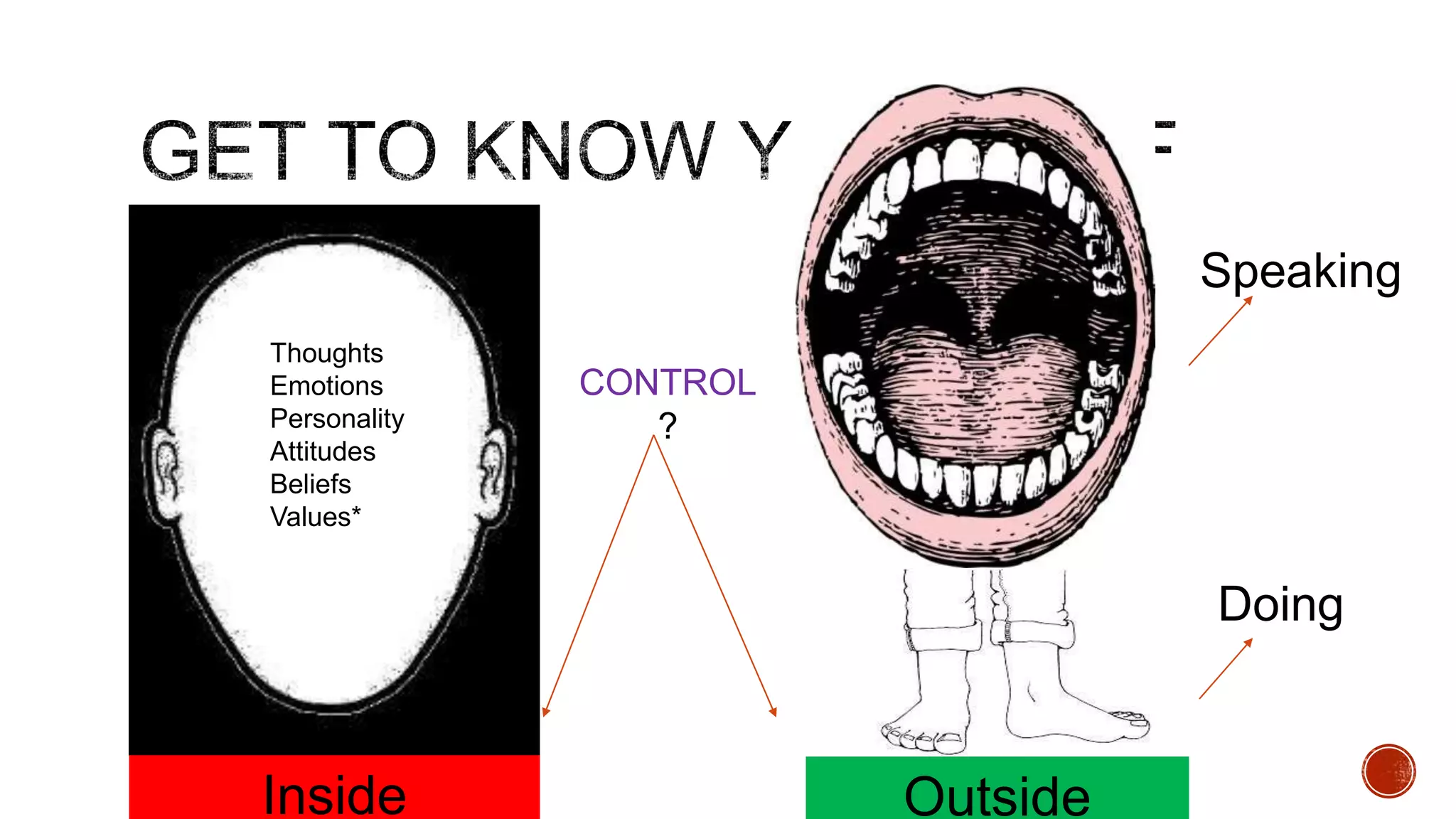
Speaking
Thoughts
Emotions
Personality
Attitudes
Beliefs
Values*

CONTROL
?

Doing

Inside

Outside
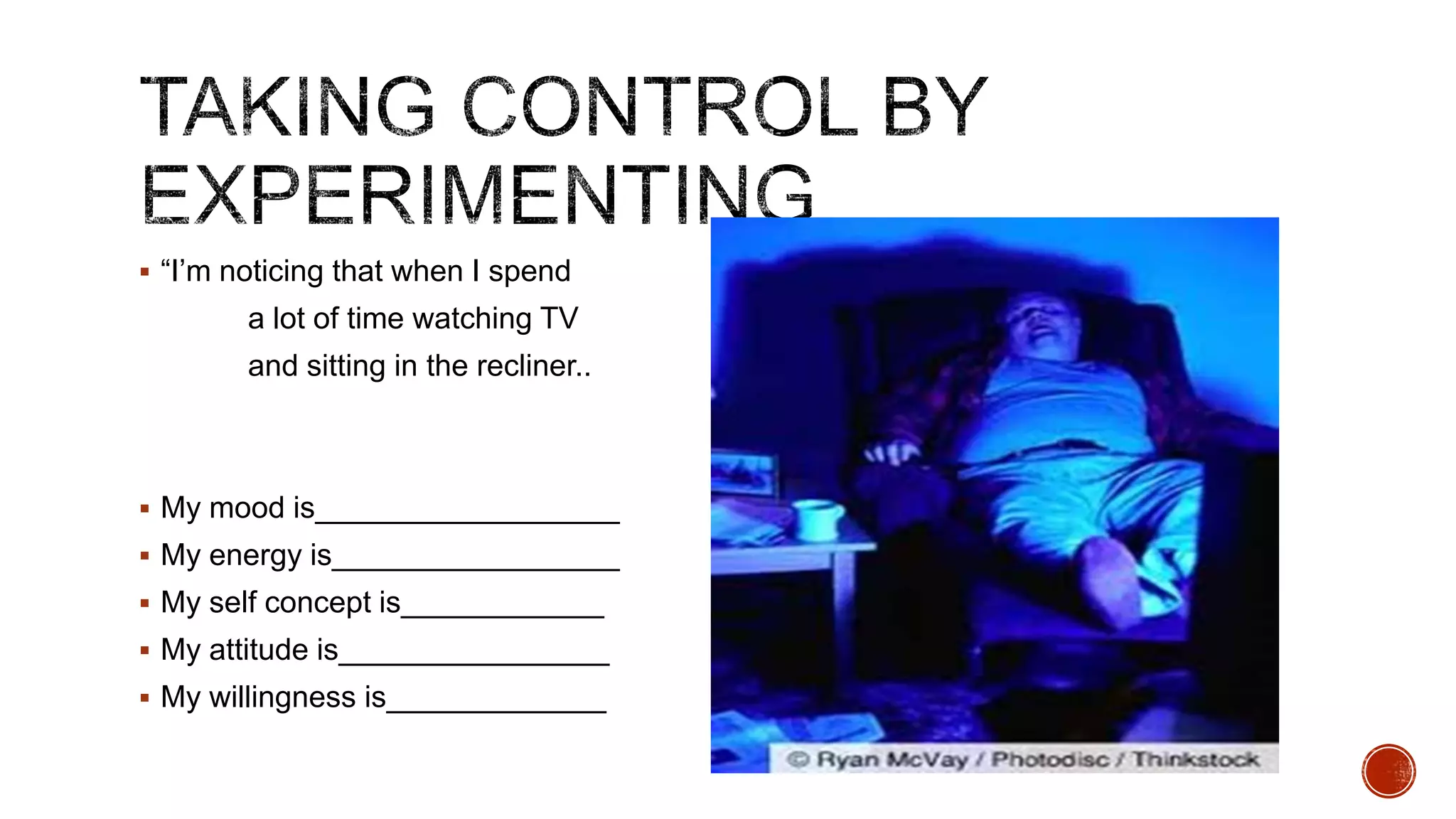
 “I‟m noticing that when I spend

a lot of time watching TV
and sitting in the recliner..

 My mood is__________________
 My energy is_________________
 My self concept is____________
 My attitude is________________
 My willingness is_____________
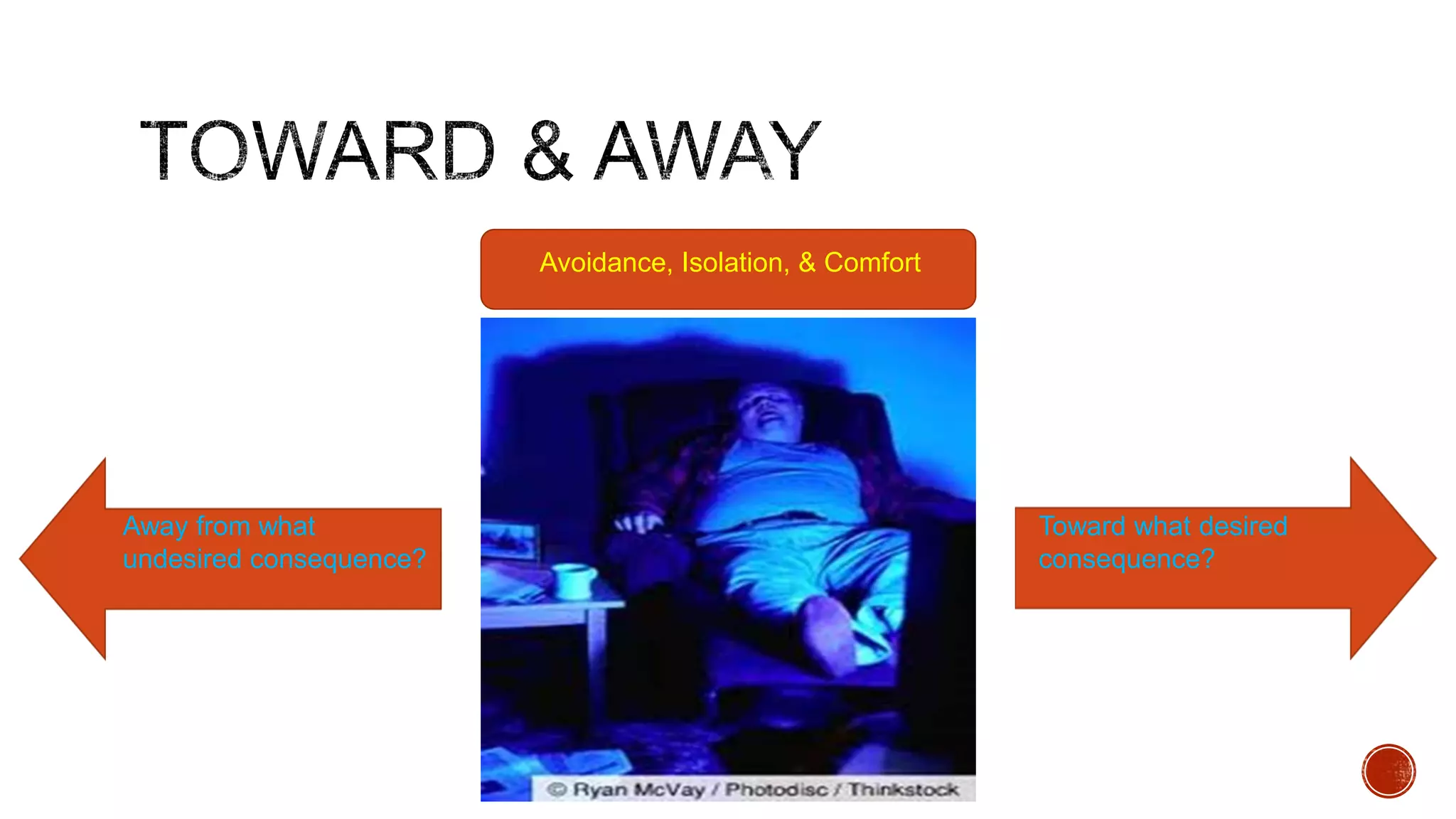
Avoidance, Isolation, & Comfort

Away from what
undesired consequence?

Toward what desired
consequence?
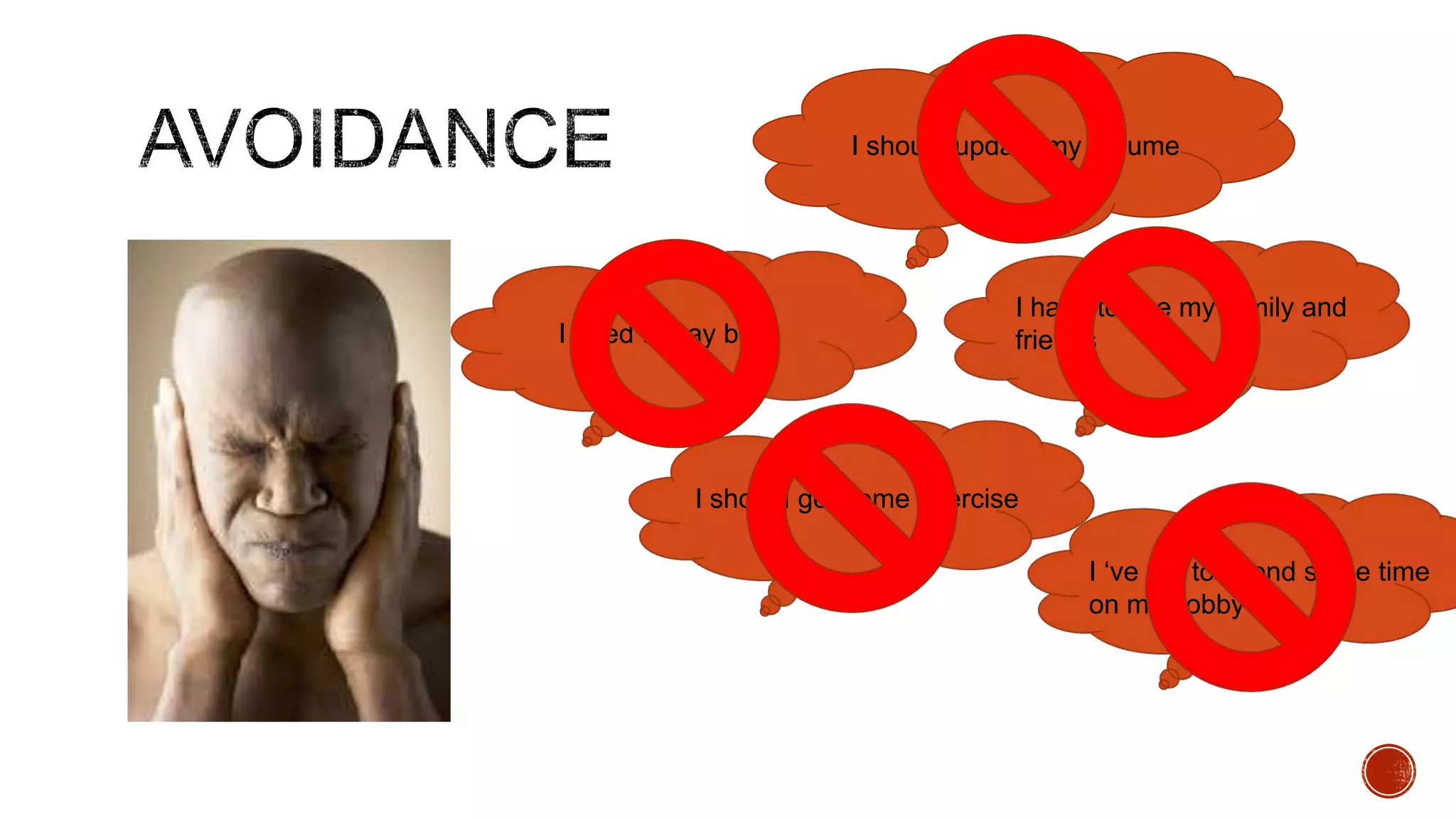
I should update my resume

I need to pay bills

I have to see my family and
friends

I should get some exercise
I „ve got to spend some time
on my hobby
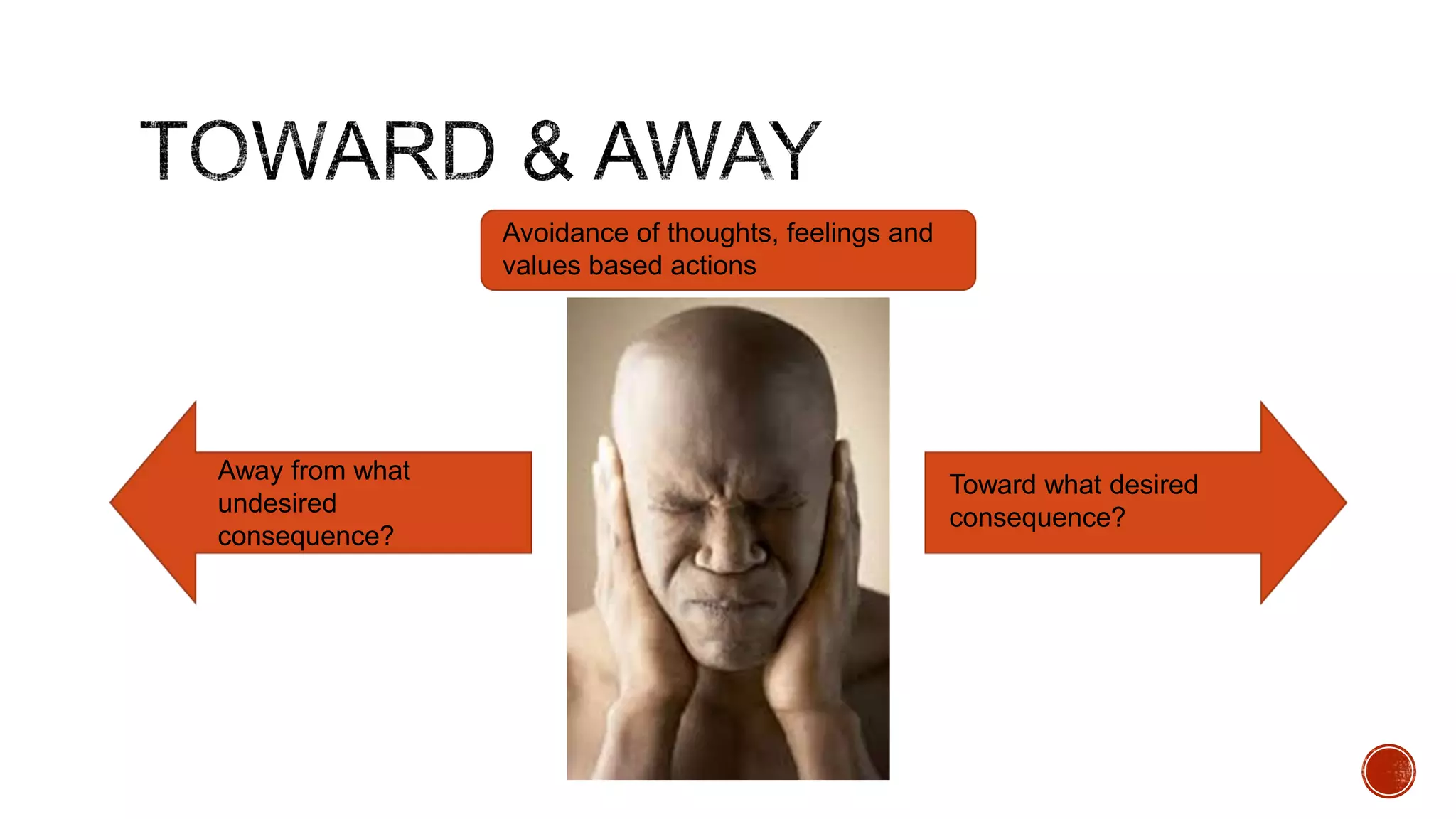
Avoidance of thoughts, feelings and
values based actions

Away from what
undesired
consequence?

Toward what desired
consequence?
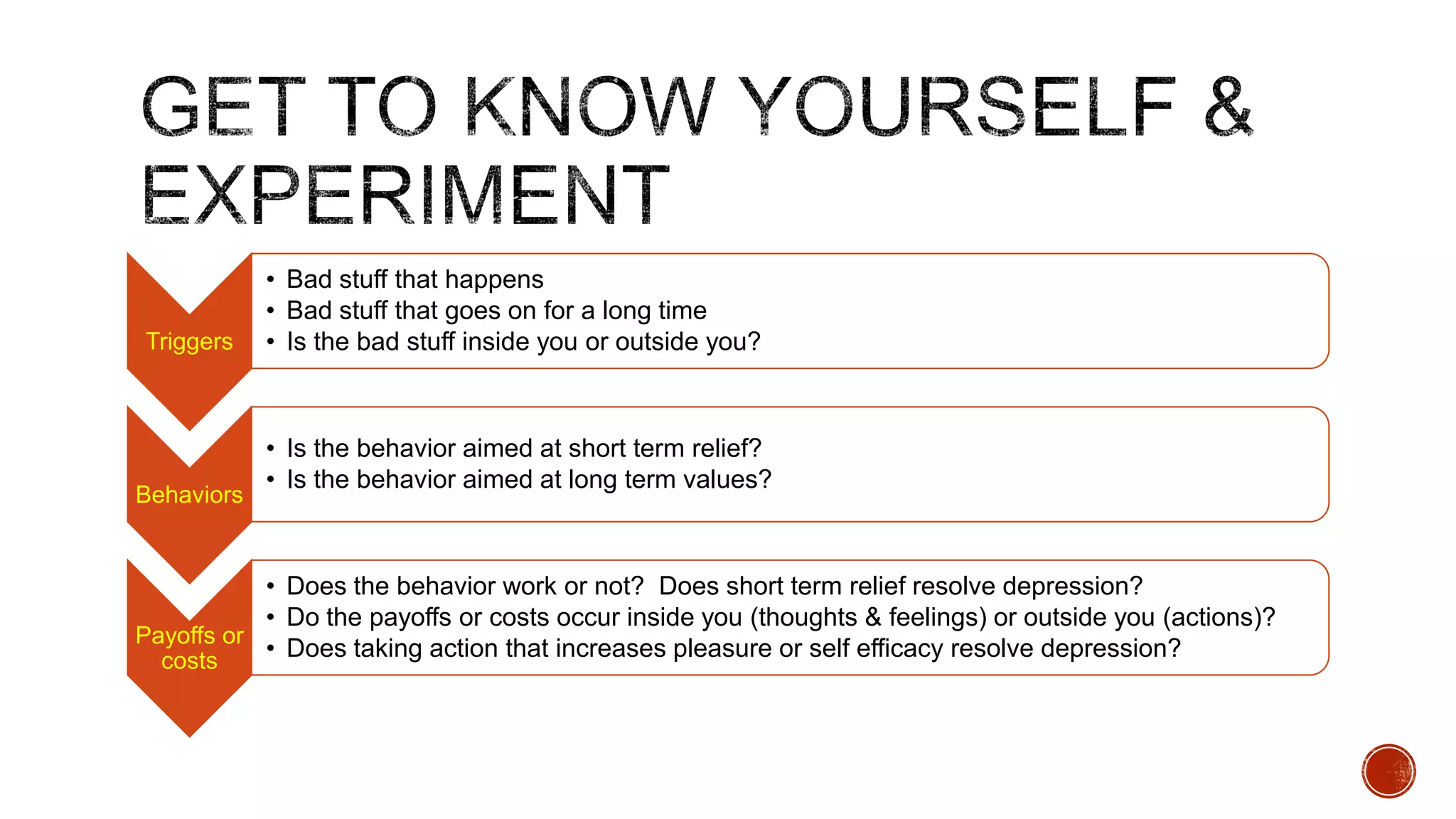
Triggers

Behaviors

• Bad stuff that happens
• Bad stuff that goes on for a long time
• Is the bad stuff inside you or outside you?

• Is the behavior aimed at short term relief?
• Is the behavior aimed at long term values?

• Does the behavior work or not? Does short term relief resolve depression?
• Do the payoffs or costs occur inside you (thoughts & feelings) or outside you (actions)?
Payoffs or
• Does taking action that increases pleasure or self efficacy resolve depression?
costs
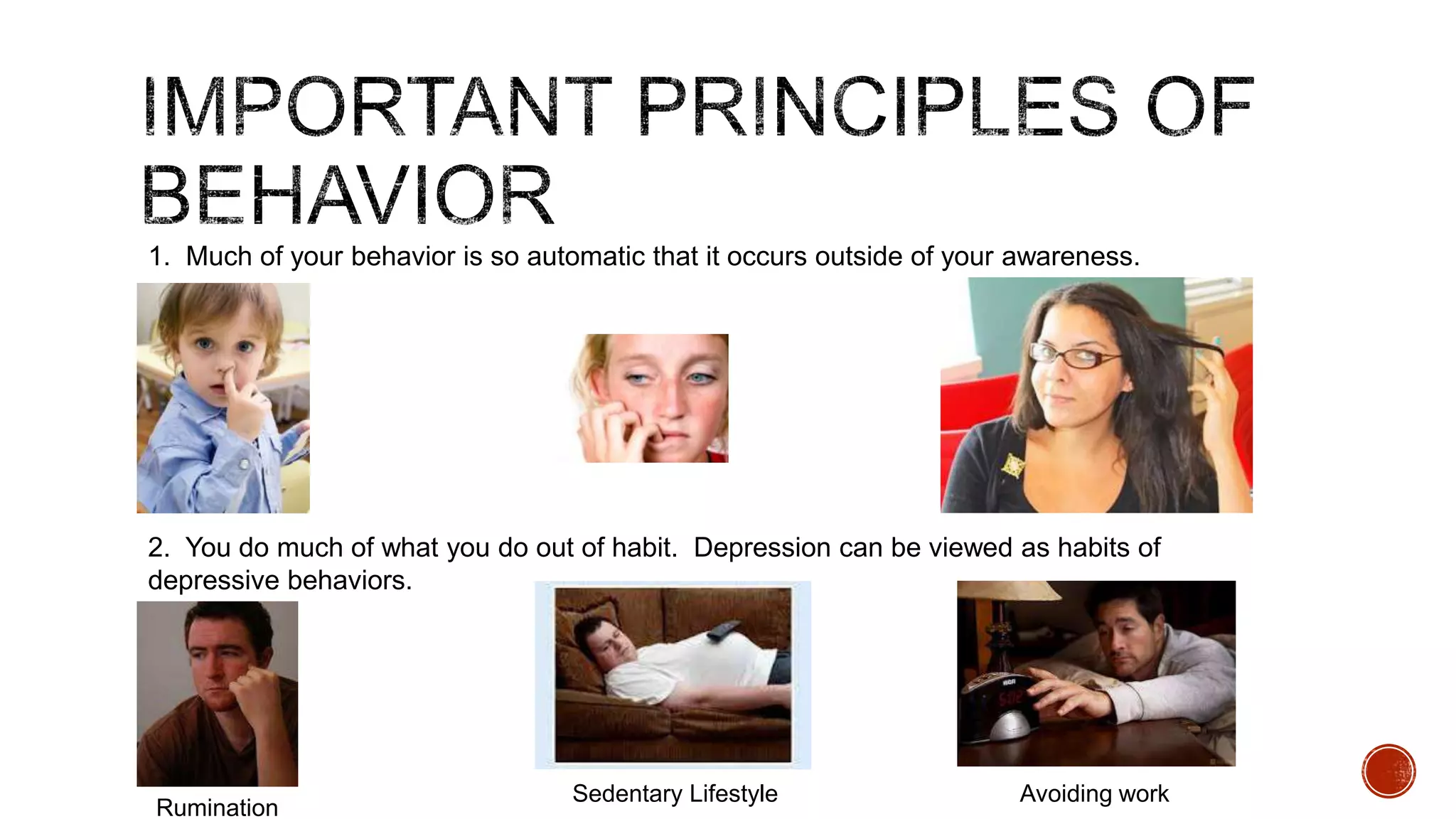
1. Much of your behavior is so automatic that it occurs outside of your awareness.

2. You do much of what you do out of habit. Depression can be viewed as habits of
depressive behaviors.

Rumination

Sedentary Lifestyle

Avoiding work
•
•
•
•
•
•

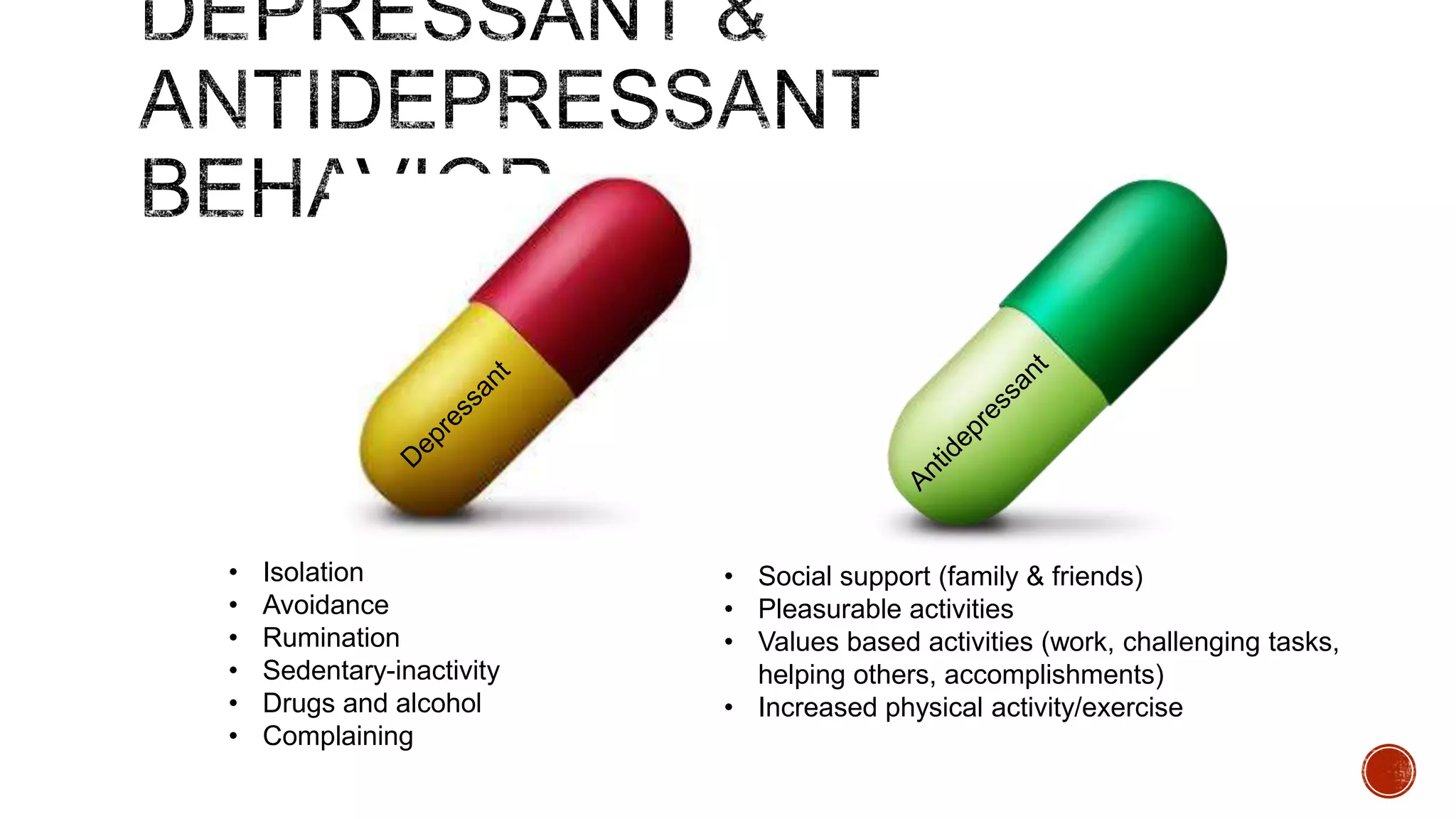
Isolation
Avoidance
Rumination
Sedentary-inactivity
Drugs and alcohol
Complaining

• Social support (family & friends)
• Pleasurable activities
• Values based activities (work, challenging tasks,
helping others, accomplishments)
• Increased physical activity/exercise
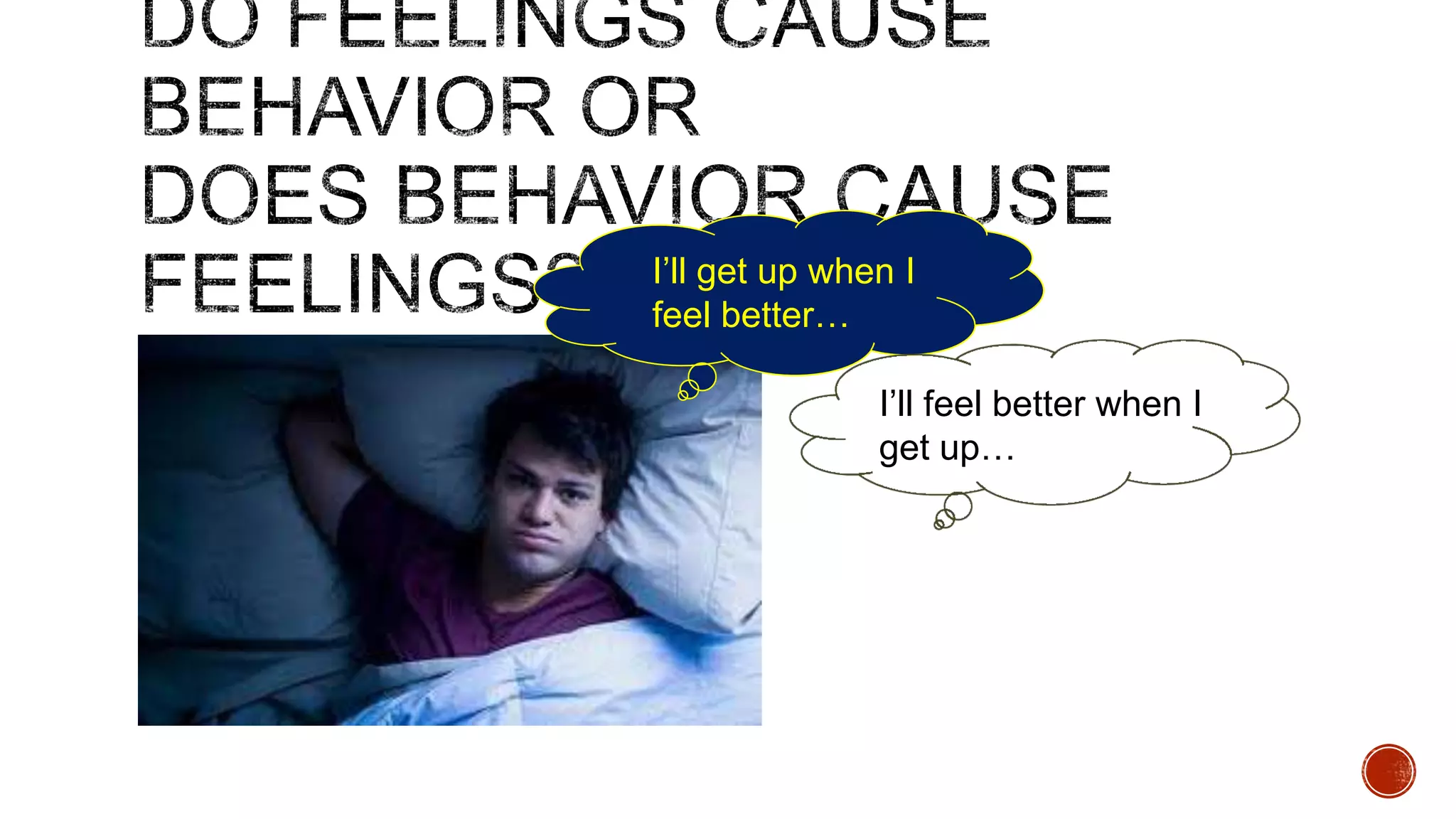
I‟ll get up when I
feel better…
I‟ll feel better when I
get up…
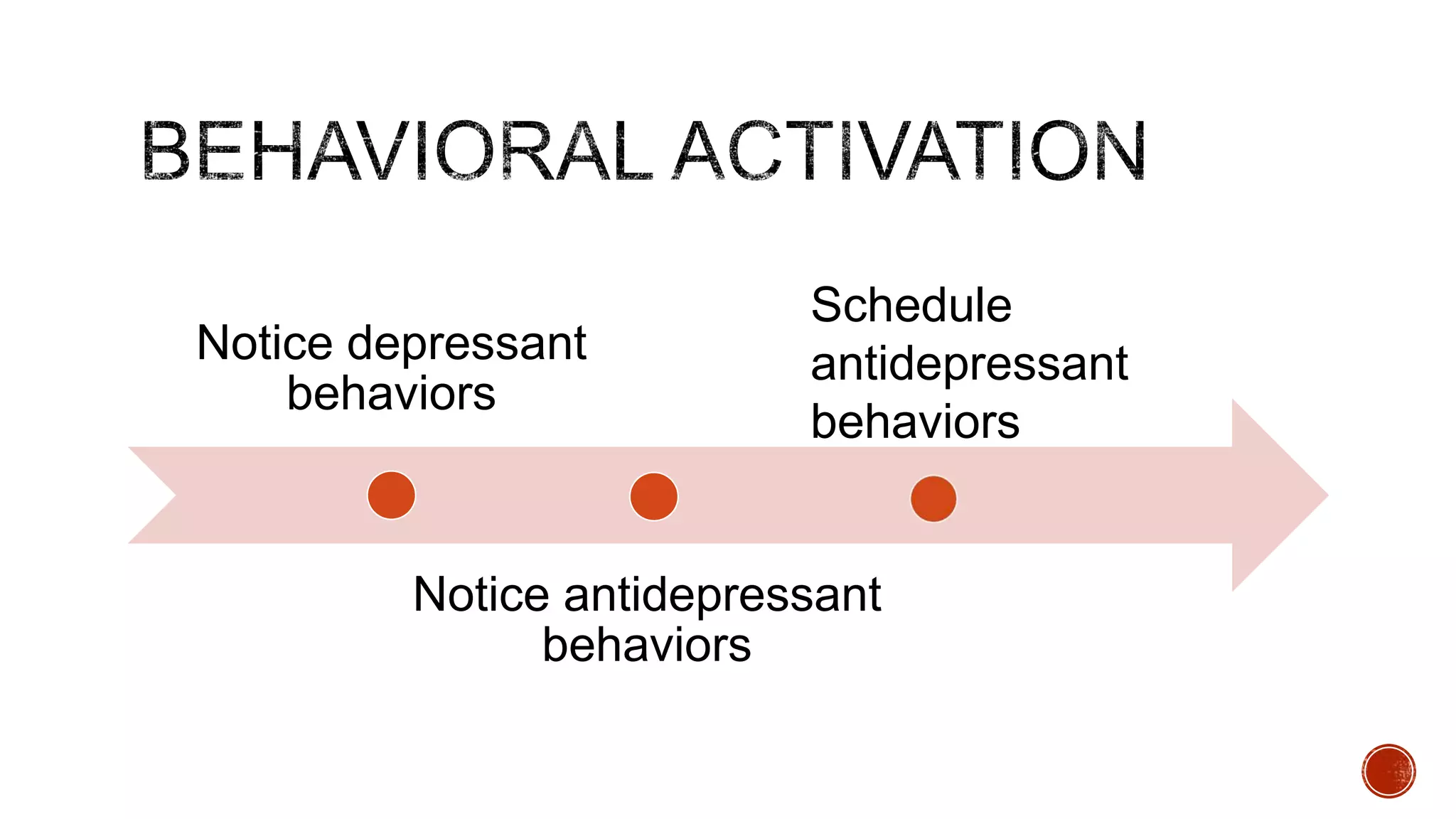
Notice depressant
behaviors

Schedule
antidepressant
behaviors

Notice antidepressant
behaviors
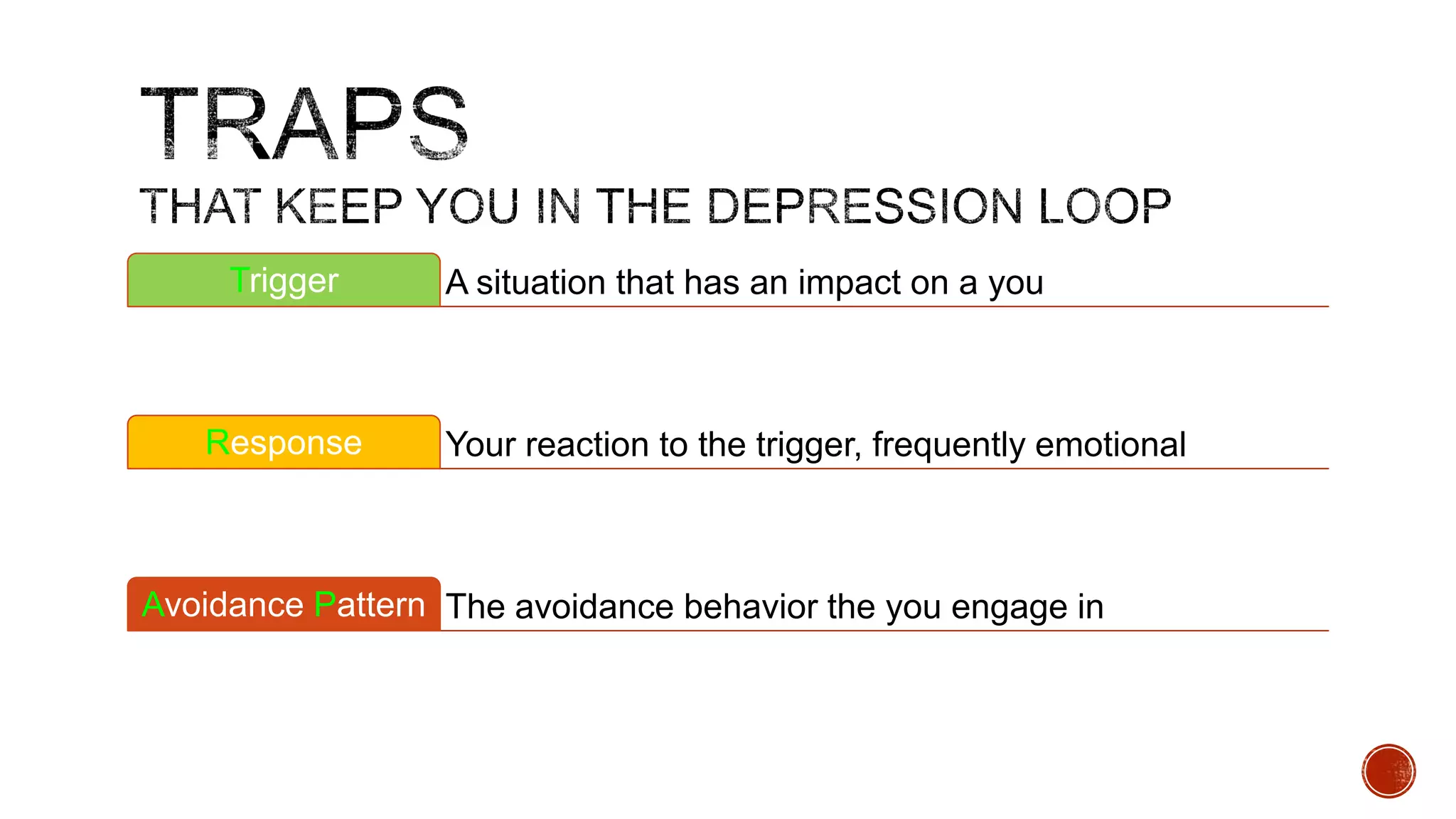
Trigger

Response

A situation that has an impact on a you

Your reaction to the trigger, frequently emotional

Avoidance Pattern The avoidance behavior the you engage in
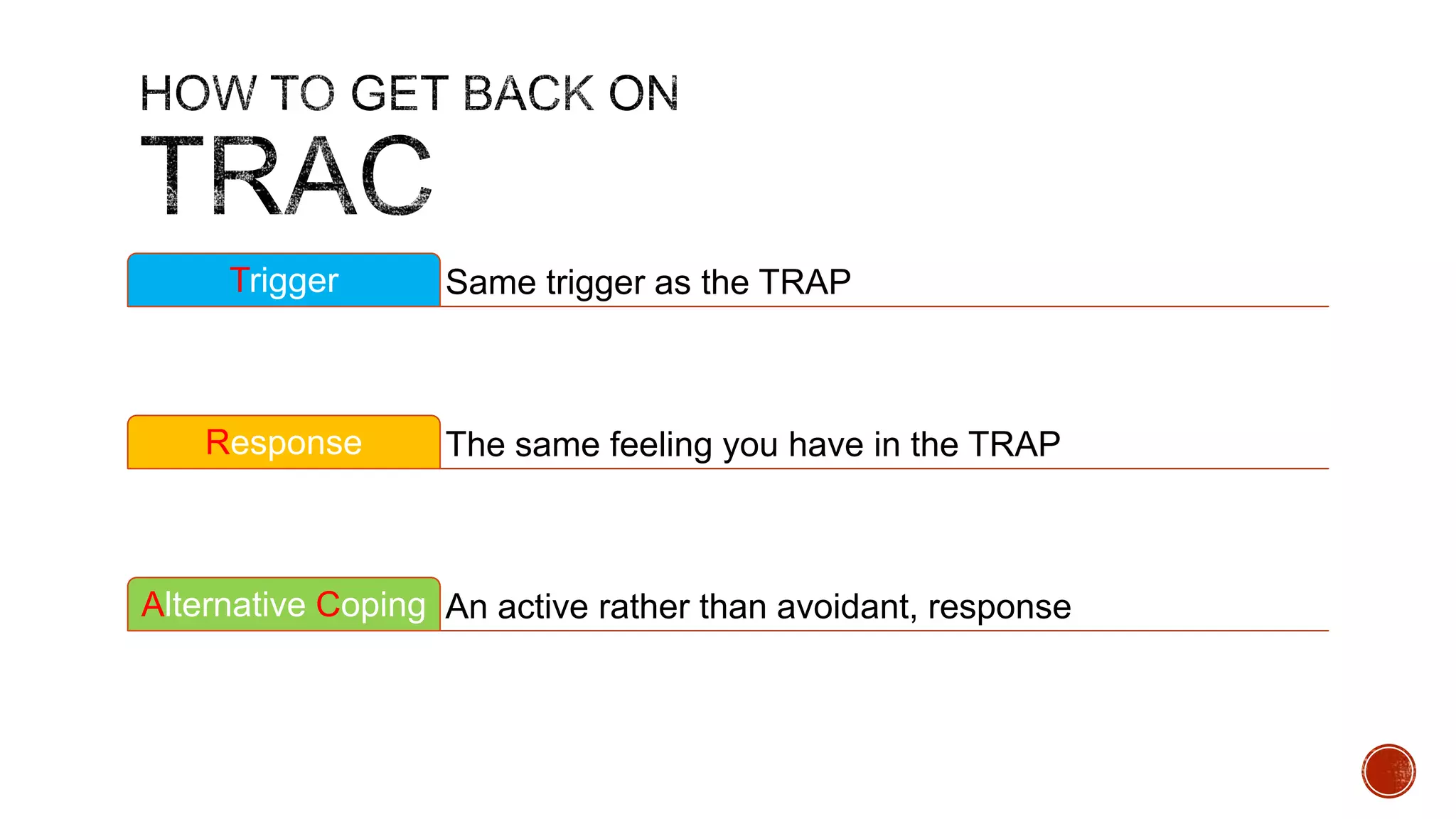
Trigger

Response

Same trigger as the TRAP

The same feeling you have in the TRAP

Alternative Coping An active rather than avoidant, response

Behavioral activation

  • 1.
  • 2.
     What aresome theories?
  • 3.
     Roughly 25% of the US population will experience depression in their lifetime.  If you have experienced one episode of depression, you are likely to have another, or to become chronically depressed.
  • 4.
     Biological explanationsare not sufficient to account for the vast increase in depression over the past 50 years.  Incidence of depression has tripled since World War II.
  • 5.
    What are yourtheories about why depression has increased so dramatically?
  • 7.
    we Thinking of depressionas an illness can help reduce the shame we may feel if if we think it‟s a weakness, or that it‟s our fault. Thinking of depression as an illness, because it has a recognizable set of symptoms, gives the impression that it can be treated “medically.”
  • 8.
     Depression iscaused and maintained by  biological  behavioral  cognitive  Interpersonal ingredients
  • 9.
     Depression presentsdifferently:  In different cultures  At different times in history
  • 10.
    Makes you feelbetter in the short term Feeling depressed Staying inside, withdrawing from friends, thinking about problems Gets you further stuck in the long run
  • 11.
     Avoidance  Isolation Rumination are like digging to get out of a hole
  • 12.
  • 13.
     “I‟m noticingthat when I spend a lot of time watching TV and sitting in the recliner..  My mood is__________________  My energy is_________________  My self concept is____________  My attitude is________________  My willingness is_____________
  • 14.
    Avoidance, Isolation, &Comfort Away from what undesired consequence? Toward what desired consequence?
  • 15.
    I should updatemy resume I need to pay bills I have to see my family and friends I should get some exercise I „ve got to spend some time on my hobby
  • 16.
    Avoidance of thoughts,feelings and values based actions Away from what undesired consequence? Toward what desired consequence?
  • 17.
    Triggers Behaviors • Bad stuffthat happens • Bad stuff that goes on for a long time • Is the bad stuff inside you or outside you? • Is the behavior aimed at short term relief? • Is the behavior aimed at long term values? • Does the behavior work or not? Does short term relief resolve depression? • Do the payoffs or costs occur inside you (thoughts & feelings) or outside you (actions)? Payoffs or • Does taking action that increases pleasure or self efficacy resolve depression? costs
  • 18.
    1. Much ofyour behavior is so automatic that it occurs outside of your awareness. 2. You do much of what you do out of habit. Depression can be viewed as habits of depressive behaviors. Rumination Sedentary Lifestyle Avoiding work
  • 19.
    • • • • • • Isolation Avoidance Rumination Sedentary-inactivity Drugs and alcohol Complaining •Social support (family & friends) • Pleasurable activities • Values based activities (work, challenging tasks, helping others, accomplishments) • Increased physical activity/exercise
  • 20.
    I‟ll get upwhen I feel better… I‟ll feel better when I get up…
  • 21.
  • 22.
    Trigger Response A situation thathas an impact on a you Your reaction to the trigger, frequently emotional Avoidance Pattern The avoidance behavior the you engage in
  • 23.
    Trigger Response Same trigger asthe TRAP The same feeling you have in the TRAP Alternative Coping An active rather than avoidant, response