Before, During, &
After Reading
Strategies
By: Breanna Elmore-King
Before Reading
• Prepare yourself.
• Activate background knowledge.
• Students make predictions.
• Preview the text.
• Set a purpose.
This Photo by Unknown Author is licensed under CC BY-SA-NC
Prepare yourself.
• Create the best environment for you to read (if possible).
• Eat before hand and have a drink ready.
• Use the restroom so you don’t have to stop in the middle of reading.
This Photo by Unknown Author is
licensed under CC BY-SA
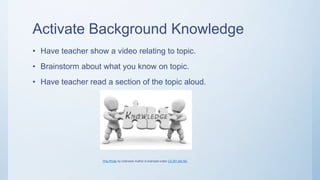
Activate Background Knowledge
• Have teacher show a video relating to topic.
• Brainstorm about what you know on topic.
• Have teacher read a section of the topic aloud.
This Photo by Unknown Author is licensed under CC BY-SA-NC
Make Predictions
• Look at pictures and guess what will happen.
• Read the title and guess what will happen.
• Read a sentence or two and guess what will happen.
This Photo by Unknown Author is
licensed under CC BY-NC
Preview
• Look at the title to gain insight.
• Look at the pictures to gain insight.
• Look at the heading and subheadings to gain insight.
This Photo by Unknown Author is licensed
under CC BY
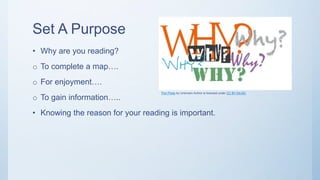
Set A Purpose
• Why are you reading?
o To complete a map….
o For enjoyment….
o To gain information…..
• Knowing the reason for your reading is important.
This Photo by Unknown Author is licensed under CC BY-SA-NC
During Reading
• Partner Reading
• Reading Guide
• Reading Rate
• Story Sequencing
• Question the Author
This Photo by Unknown Author is licensed under CC
BY-NC-ND
Partner Reading
• Read with someone so you can support each other when needed while
reading.
• Read with partner so you have each other to get ideas from.
• Read with a partner so you do not get “bored” while reading alone.
Reading Guide
• Reading while having your teacher there following along.
• Reading while having your teacher assist you when necessary
• This will help you become a more independent reader.
This Photo by Unknown Author is licensed under CC BY-SA
Reading Rate
• Monitor the speed you’re reading.
• Ensure that you are not reading to fast and not comprehending the
text.
• Ensure you are not reading to slow and will not have enough time to
finish.
This Photo by Unknown Author is
licensed under CC BY
Story Sequencing
• What order is the story written in?
o Problem/solution
o Cause/effect
o Chronological
o Compare/contrast
This Photo by Unknown Author is licensed under CC BY-SA-NC
Question The Author
• Think about things like…..
o Why did the author write this?
o What is his purpose?
o Do I agree or disagree with this statement?
This Photo by Unknown Author is licensed under CC BY-SA
After Reading
• Respond.
• Explore.
• Analyze.
• Summarize.
• Comprehend.
Respond
• Answer passage questions.
• Discuss what you’ve read.
• Review/answer your pre-reading questions.
This Photo by Unknown Author is licensed under CC BY-SA
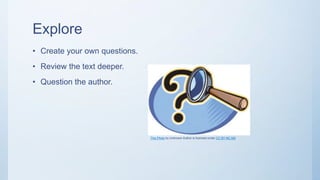
Explore
• Create your own questions.
• Review the text deeper.
• Question the author.
This Photo by Unknown Author is licensed under CC BY-NC-ND
Analyze
• Look into the text and meaning.
• Form more questions from the text.
• Create a topic sentence.
This Photo by Unknown Author is licensed under CC BY-SA-NC
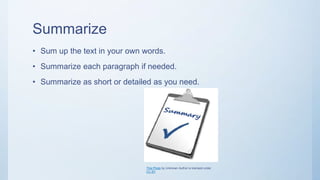
Summarize
• Sum up the text in your own words.
• Summarize each paragraph if needed.
• Summarize as short or detailed as you need.
This Photo by Unknown Author is licensed under
CC BY
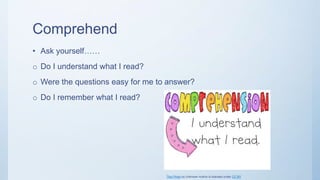
Comprehend
• Ask yourself……
o Do I understand what I read?
o Were the questions easy for me to answer?
o Do I remember what I read?
This Photo by Unknown Author is licensed under CC BY
References
• Bursuck, W. D., & Damer, M. (2007). Reading instruction for students
who are at risk or have disabilities. Boston: Pearson/Allyn and Bacon.
• Crawley, S. J. (2012). Remediating reading difficulties. New York:
McGraw-Hill.

B/D/A Reading Strategies

  • 1.
    Before, During, & AfterReading Strategies By: Breanna Elmore-King
  • 2.
    Before Reading • Prepareyourself. • Activate background knowledge. • Students make predictions. • Preview the text. • Set a purpose. This Photo by Unknown Author is licensed under CC BY-SA-NC
  • 3.
    Prepare yourself. • Createthe best environment for you to read (if possible). • Eat before hand and have a drink ready. • Use the restroom so you don’t have to stop in the middle of reading. This Photo by Unknown Author is licensed under CC BY-SA
  • 4.
    Activate Background Knowledge •Have teacher show a video relating to topic. • Brainstorm about what you know on topic. • Have teacher read a section of the topic aloud. This Photo by Unknown Author is licensed under CC BY-SA-NC
  • 5.
    Make Predictions • Lookat pictures and guess what will happen. • Read the title and guess what will happen. • Read a sentence or two and guess what will happen. This Photo by Unknown Author is licensed under CC BY-NC
  • 6.
    Preview • Look atthe title to gain insight. • Look at the pictures to gain insight. • Look at the heading and subheadings to gain insight. This Photo by Unknown Author is licensed under CC BY
  • 7.
    Set A Purpose •Why are you reading? o To complete a map…. o For enjoyment…. o To gain information….. • Knowing the reason for your reading is important. This Photo by Unknown Author is licensed under CC BY-SA-NC
  • 8.
    During Reading • PartnerReading • Reading Guide • Reading Rate • Story Sequencing • Question the Author This Photo by Unknown Author is licensed under CC BY-NC-ND
  • 9.
    Partner Reading • Readwith someone so you can support each other when needed while reading. • Read with partner so you have each other to get ideas from. • Read with a partner so you do not get “bored” while reading alone.
  • 10.
    Reading Guide • Readingwhile having your teacher there following along. • Reading while having your teacher assist you when necessary • This will help you become a more independent reader. This Photo by Unknown Author is licensed under CC BY-SA
  • 11.
    Reading Rate • Monitorthe speed you’re reading. • Ensure that you are not reading to fast and not comprehending the text. • Ensure you are not reading to slow and will not have enough time to finish. This Photo by Unknown Author is licensed under CC BY
  • 12.
    Story Sequencing • Whatorder is the story written in? o Problem/solution o Cause/effect o Chronological o Compare/contrast This Photo by Unknown Author is licensed under CC BY-SA-NC
  • 13.
    Question The Author •Think about things like….. o Why did the author write this? o What is his purpose? o Do I agree or disagree with this statement? This Photo by Unknown Author is licensed under CC BY-SA
  • 14.
    After Reading • Respond. •Explore. • Analyze. • Summarize. • Comprehend.
  • 15.
    Respond • Answer passagequestions. • Discuss what you’ve read. • Review/answer your pre-reading questions. This Photo by Unknown Author is licensed under CC BY-SA
  • 16.
    Explore • Create yourown questions. • Review the text deeper. • Question the author. This Photo by Unknown Author is licensed under CC BY-NC-ND
  • 17.
    Analyze • Look intothe text and meaning. • Form more questions from the text. • Create a topic sentence. This Photo by Unknown Author is licensed under CC BY-SA-NC
  • 18.
    Summarize • Sum upthe text in your own words. • Summarize each paragraph if needed. • Summarize as short or detailed as you need. This Photo by Unknown Author is licensed under CC BY
  • 19.
    Comprehend • Ask yourself…… oDo I understand what I read? o Were the questions easy for me to answer? o Do I remember what I read? This Photo by Unknown Author is licensed under CC BY
  • 20.
    References • Bursuck, W.D., & Damer, M. (2007). Reading instruction for students who are at risk or have disabilities. Boston: Pearson/Allyn and Bacon. • Crawley, S. J. (2012). Remediating reading difficulties. New York: McGraw-Hill.