Statistical Techniques BCS-040
Prepared by :Narayan
Thapa
Lecturer at Tribhuvan
University, Amrit Science
College(ASCOL)
Part time lecturer ICA
college 1
Descriptive Statistics
Introduction
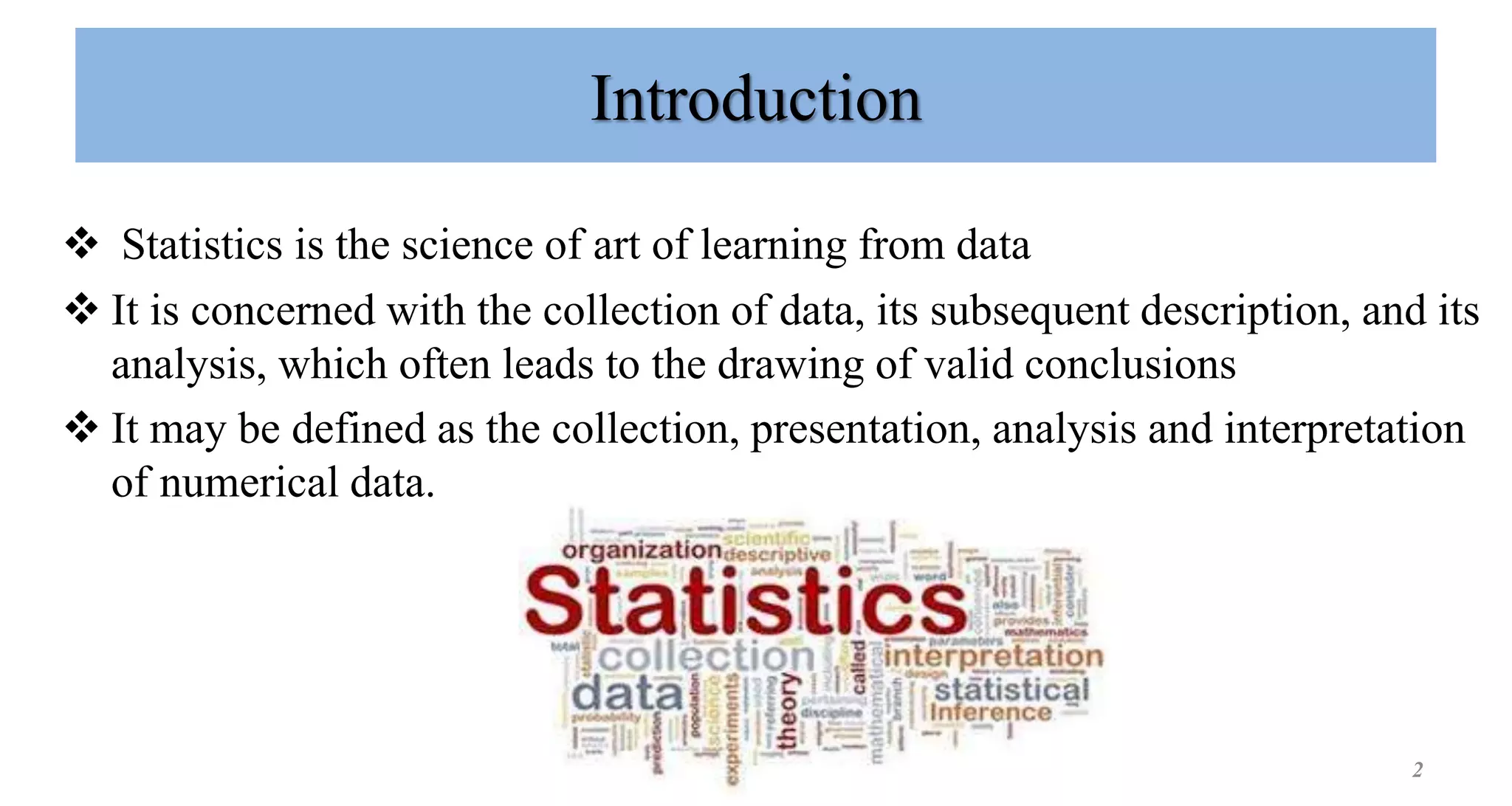
 Statistics is the science of art of learning from data
 It is concerned with the collection of data, its subsequent description, and its
analysis, which often leads to the drawing of valid conclusions
 It may be defined as the collection, presentation, analysis and interpretation
of numerical data.
2
Descriptive statistics
 The part of statistics concerned with the description and summarization
of data is called descriptive statistics
 Descriptive statistics measures the measure of location, measure of
dispersion, measure of skewness, measure of kurtosis etc.
3
Inferential statistics
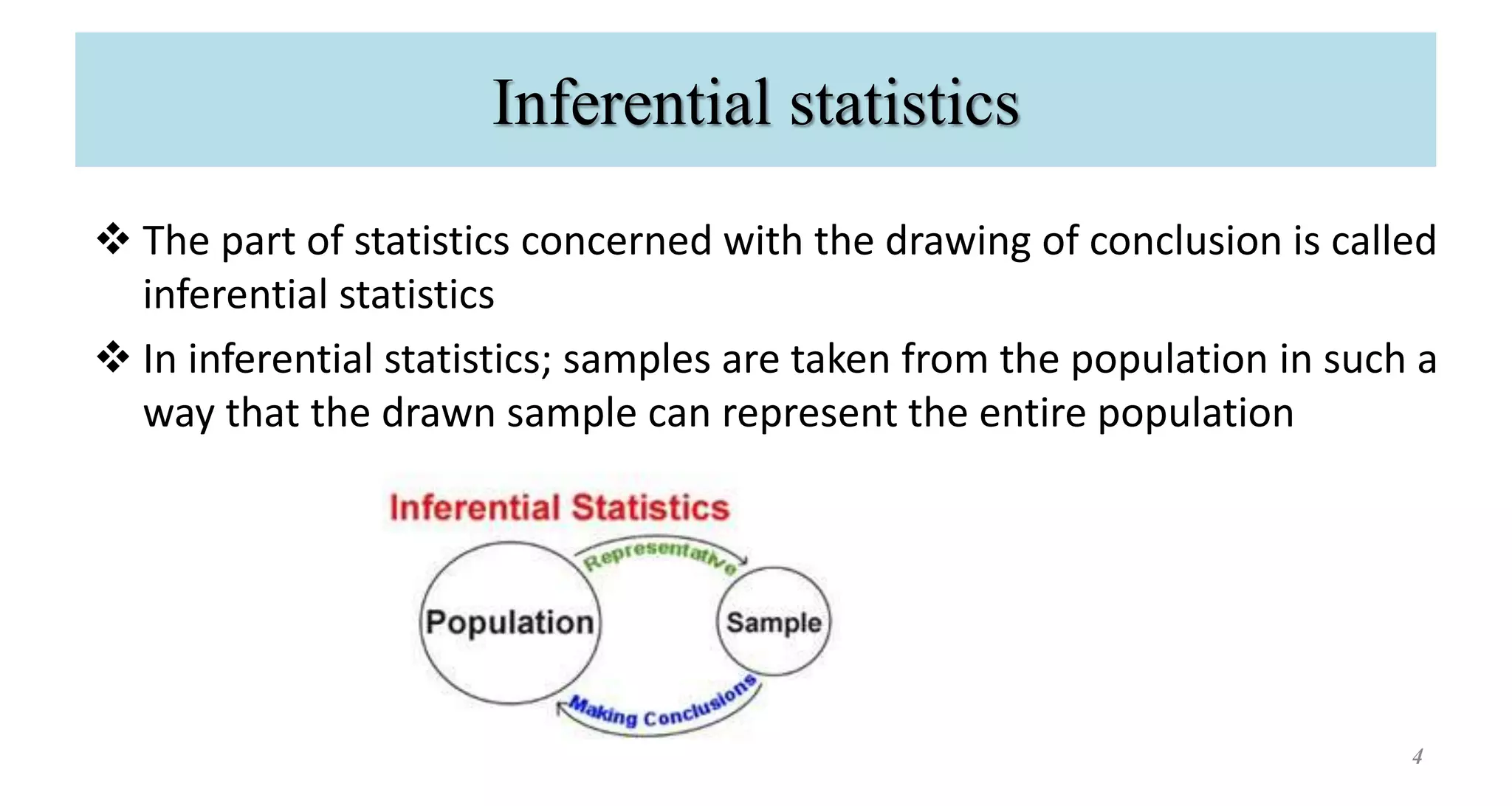
 The part of statistics concerned with the drawing of conclusion is called
inferential statistics
 In inferential statistics; samples are taken from the population in such a
way that the drawn sample can represent the entire population
4
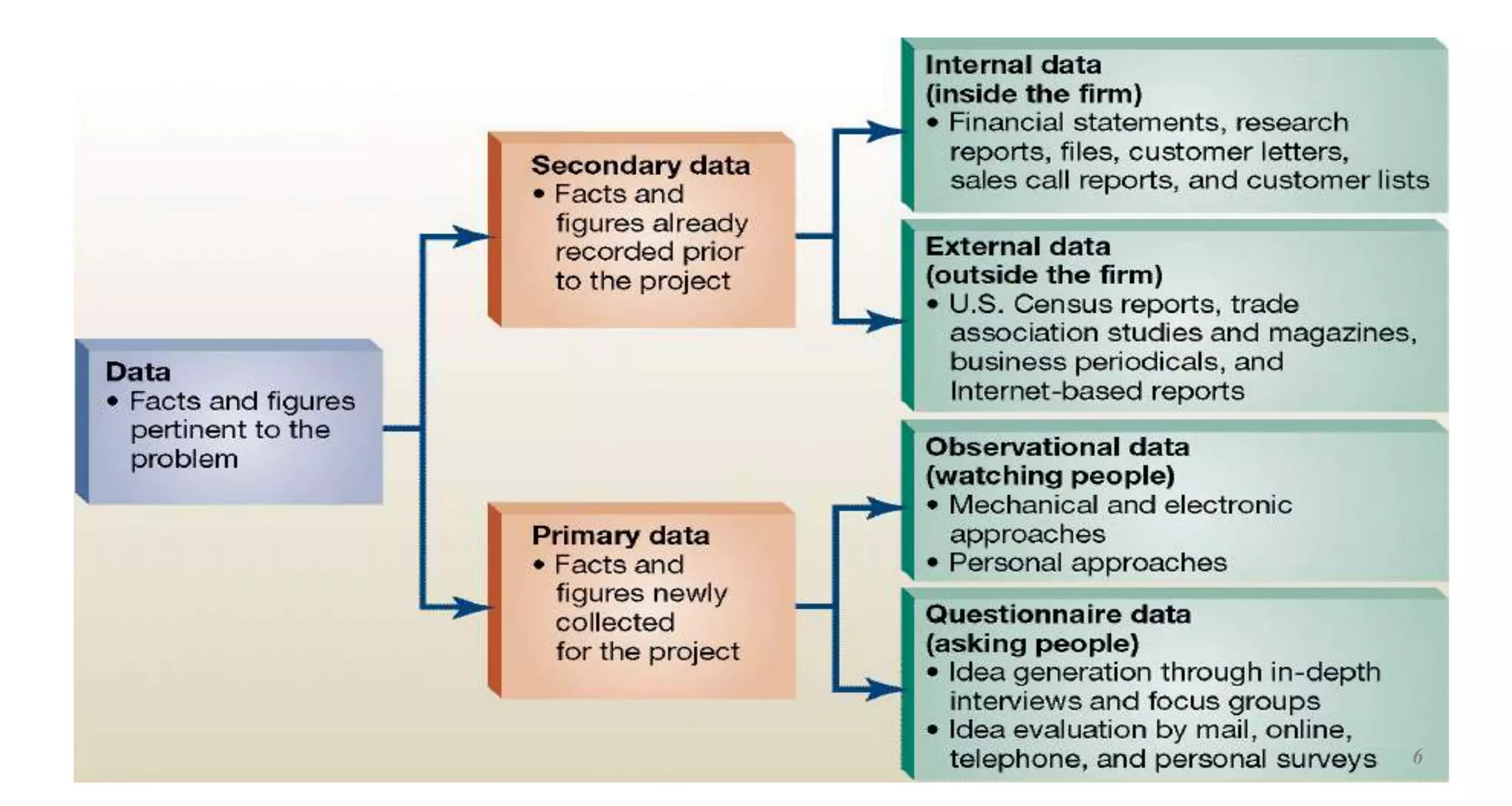
Data
 Data are the raw materials
for final statistical conclusions
 It can either be quantitative
or qualitative or attributes
5
6
Primary data
 The data which are originally collected by investigator or researcher
for the first time for the purpose of statistical enquiry is called primary
data
 It is collected by government, in individual, institution and research
bodies
 It needs more fund, time and manpower
 It is more reliable and suitable
7
Secondary data
 The data that has been already collected for a particular purpose and
used for next purpose is called secondary data
 It is not new and original data
 These types of data are generally published in newspapers,
magazines, bulletins, reports, journals, website, radio etc.
8
Population
 It is totality of units or items under study belonging to a particular a class
or group
 For example children in a school, patients in a hospital, fruits in a tree,
fishes in a pond etc.
 Population can be divided
into finite, infinite, homogeneous
population, heterogeneous
population
9
10
11
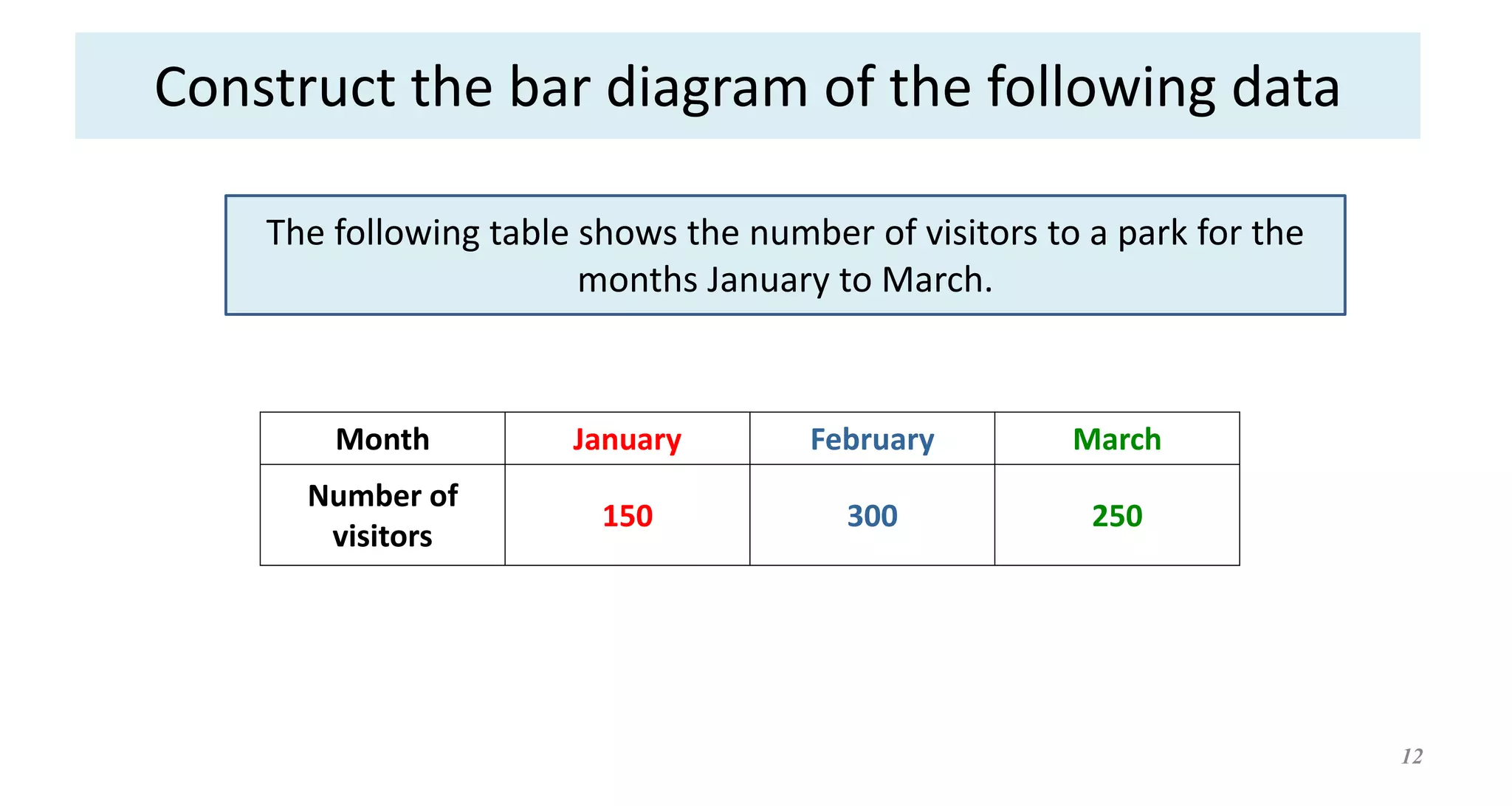
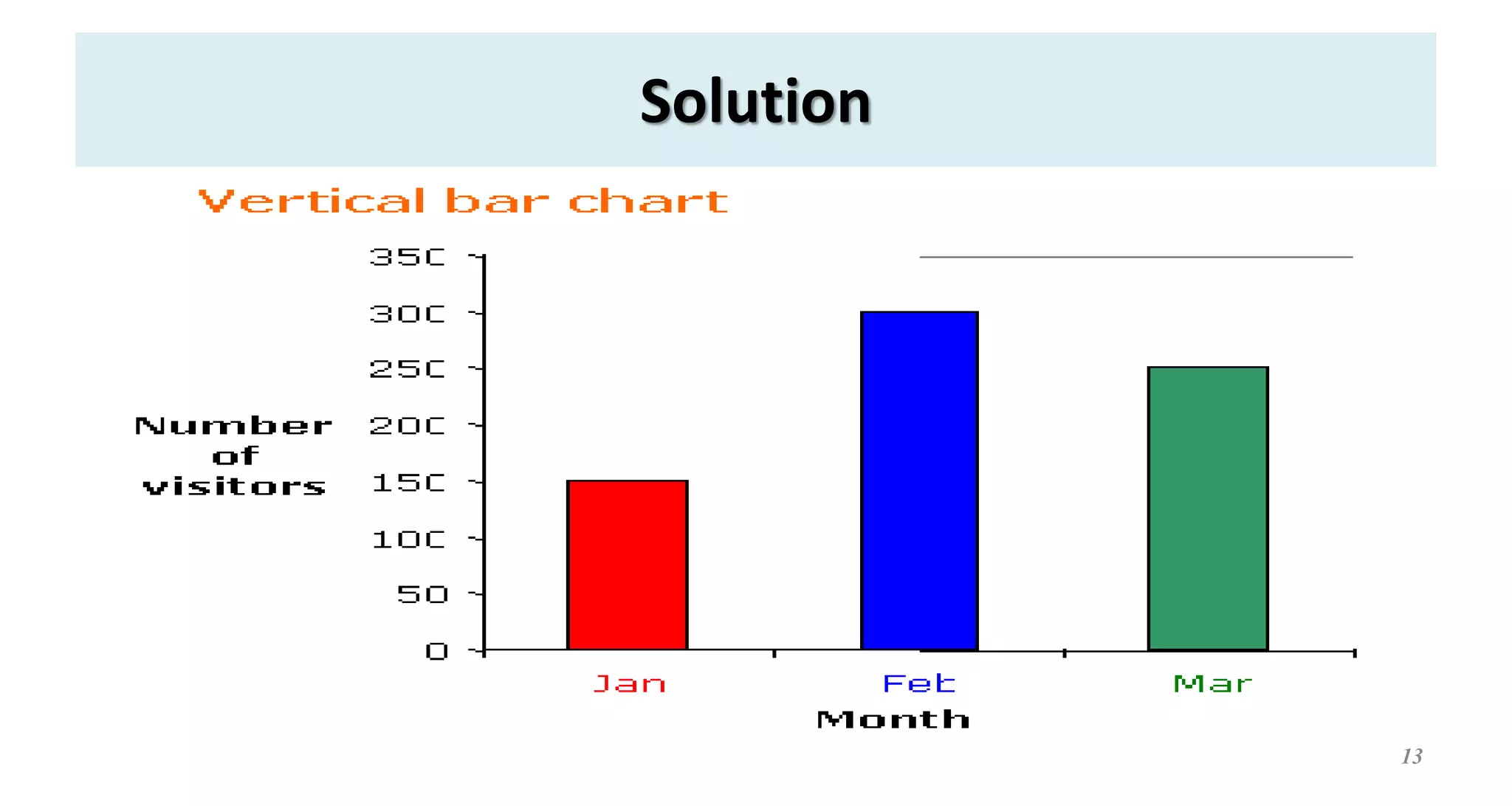
Construct the bar diagram of the following data
Month January February March
Number of
visitors
150 300 250
12
The following table shows the number of visitors to a park for the
months January to March.
Solution
13
14
15
16
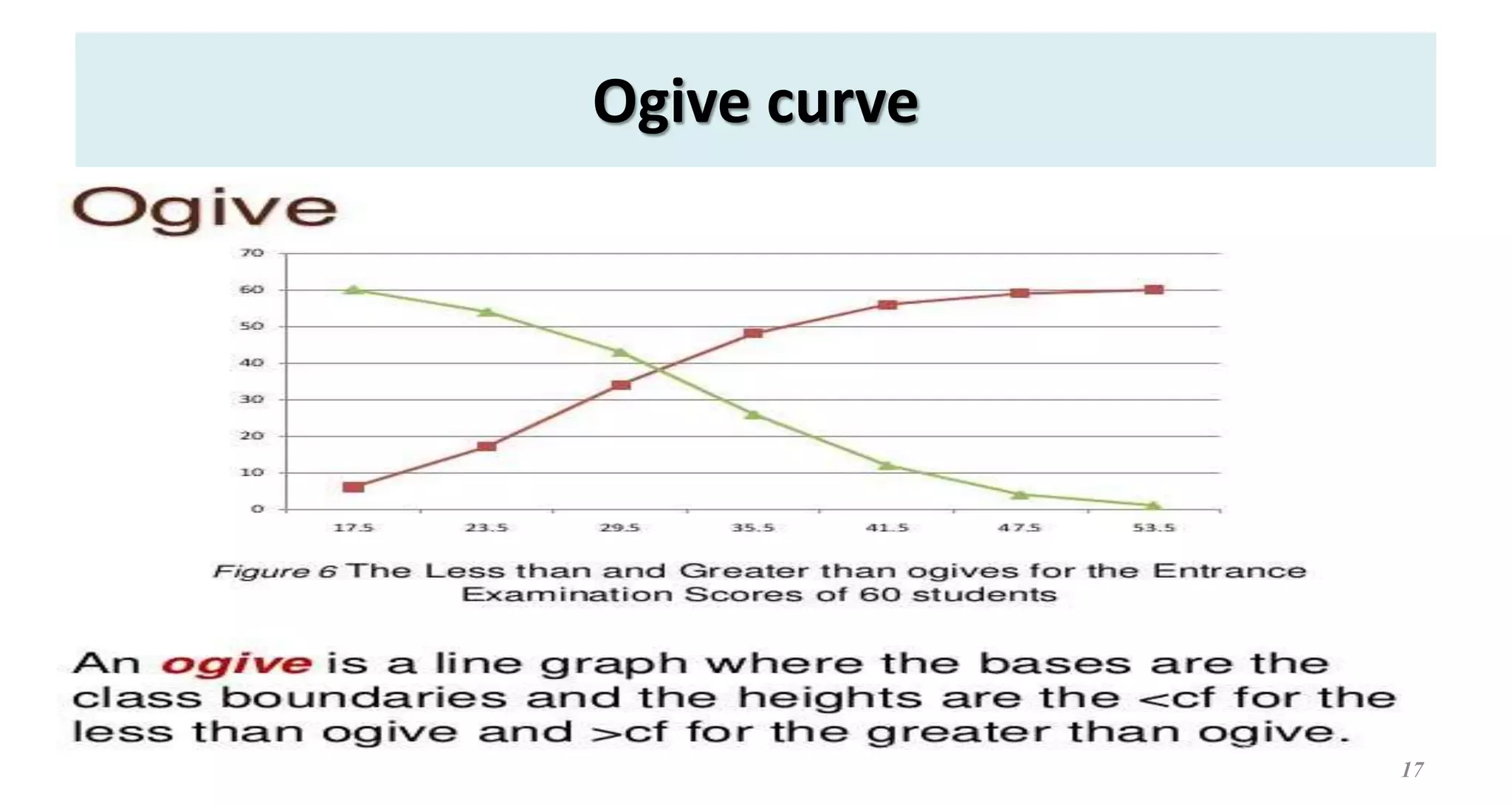
Ogive curve
17
Less than ogive curve
18
Less than or more than ogive
19
Calculation of median from ogive curve
20
21
22
Summarisation of data
 Summarization is a key data mining concept which involves techniques
for finding a compact description of a dataset.
 Some of the important measures are
a) Measure of central tendency
b) Measure of dispersion
23
Measure of central tendency
 The single value that represents the characteristic of the entire data.
Such a value is called the central value or an average
 The process of obtaining an average value from the entire data is
known as measure of central tendency
 It is designed to measure the concentration of the value in the central
part of the distribution
 It also enables us to compare two or more sets of data to facilitate
comparison
24
Types of average
25
Mean or Average
26
 Arithmetic mean is defined as the sum of all
observation is divided by the number of the
observation
 It is also called Arithmetic average
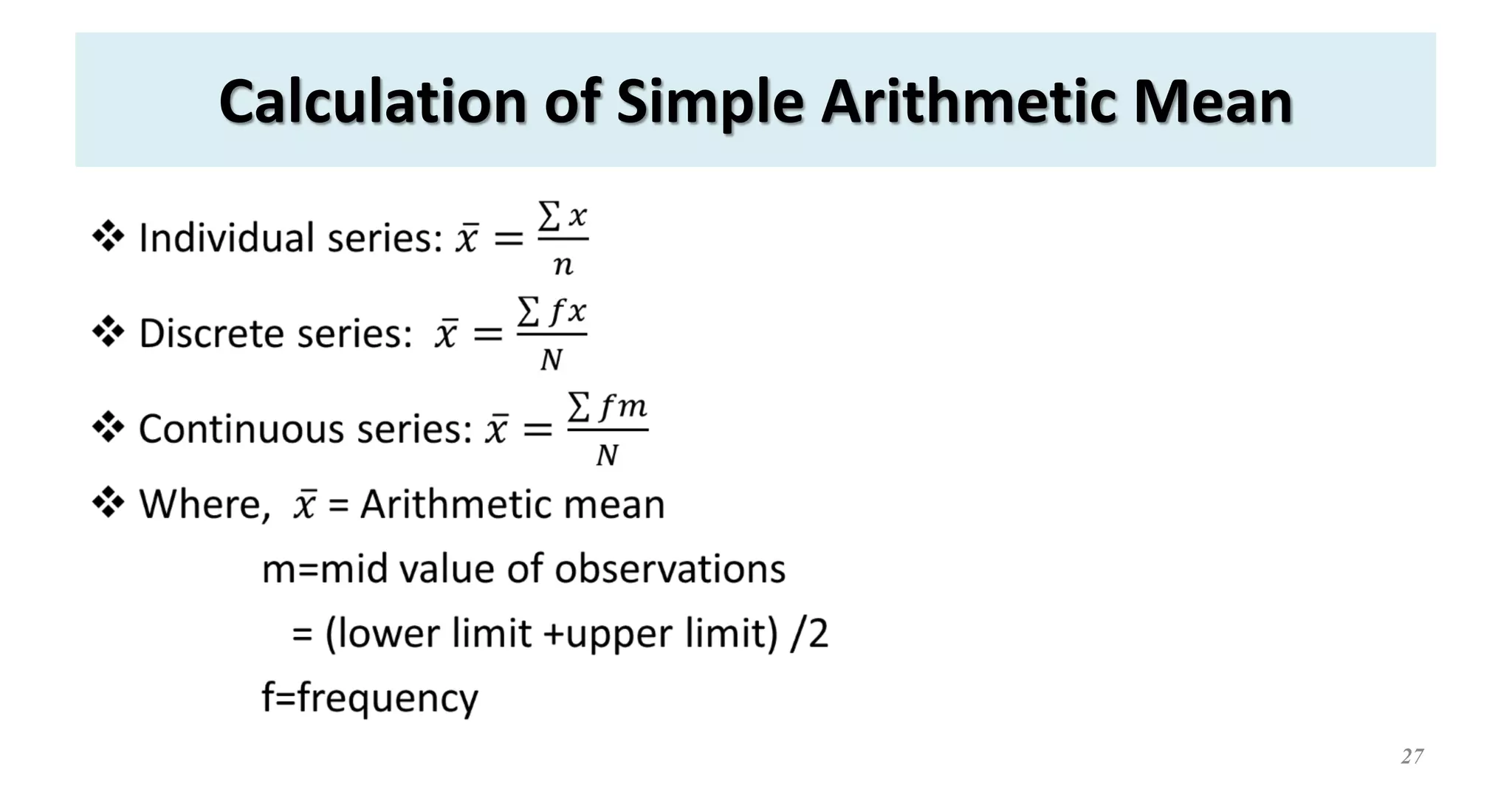
Calculation of Simple Arithmetic Mean
27
Calculate the Arithmetic mean of the following
 Income (Rs.): 1780, 1760, 1680, 1750, 1830, 1940, 1100, 1800, 1060,
1950
Variabes 15 20 25 30 40 45 49 50 54 55
Frequen
cy
2 5 6 7 1 3 4 6 1 1
Marks
obtained
10-20 20-30 30-40 40-50 50-60 60-70 70-80
No. of
students
4 5 7 10 12 6 3
28
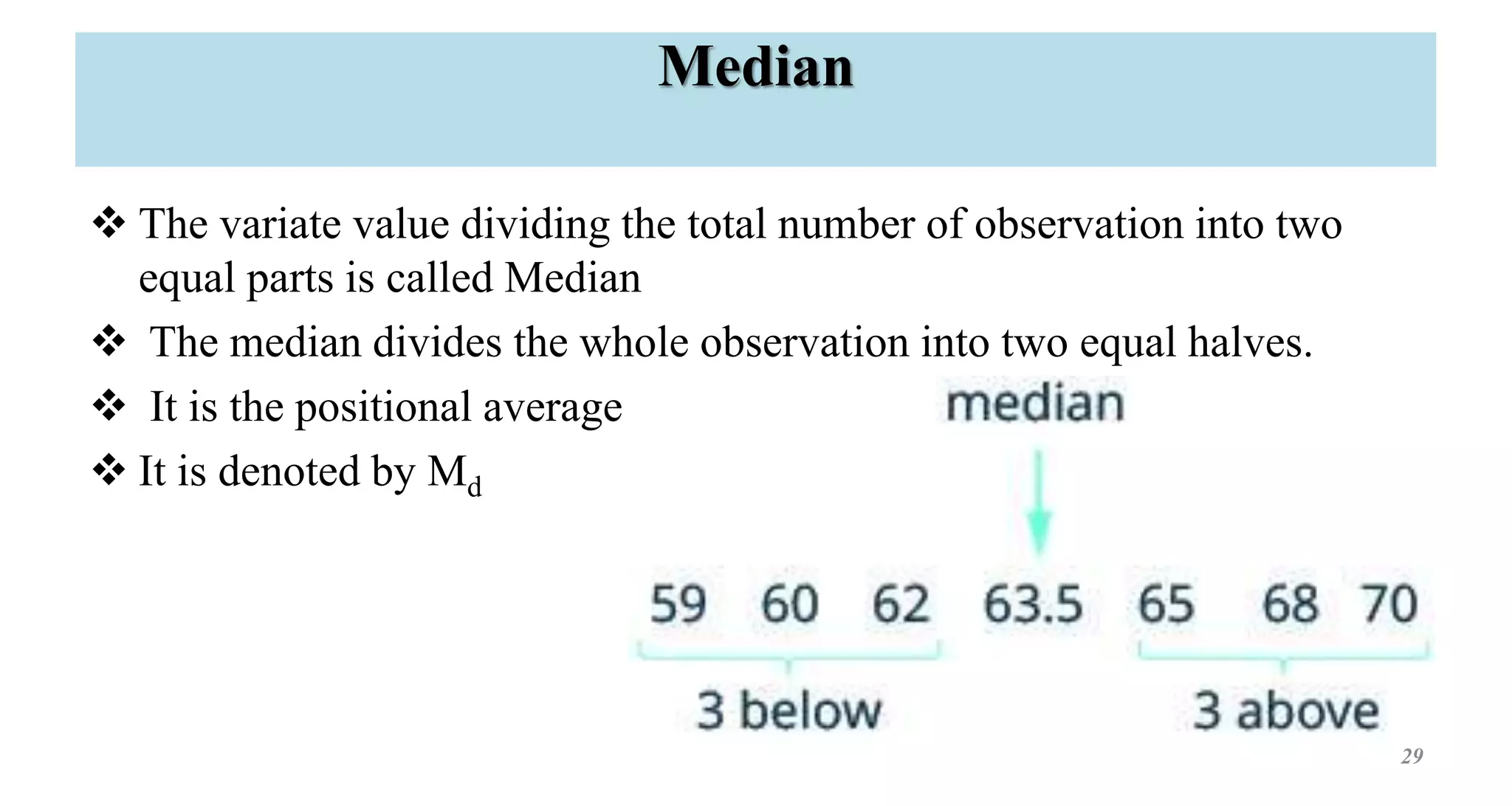
Median
 The variate value dividing the total number of observation into two
equal parts is called Median
 The median divides the whole observation into two equal halves.
 It is the positional average
 It is denoted by Md
29
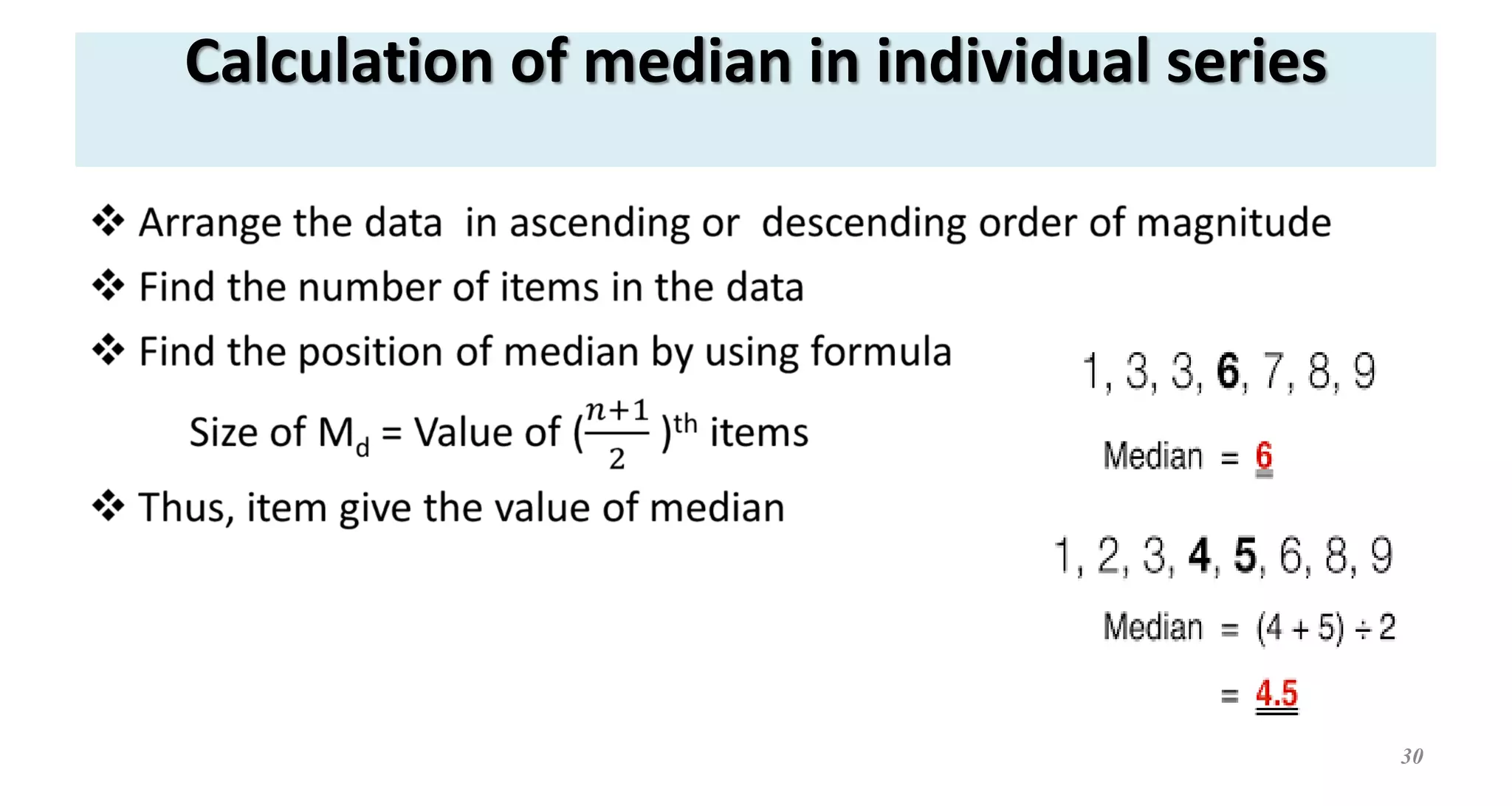
Calculation of median in individual series
30
Calculate the median from the following data
39, 38, 59,40, 67, 52, 77, 75, 24
391,384, 591, 407, 672, 522, 777, 753, 2488, 1490
31
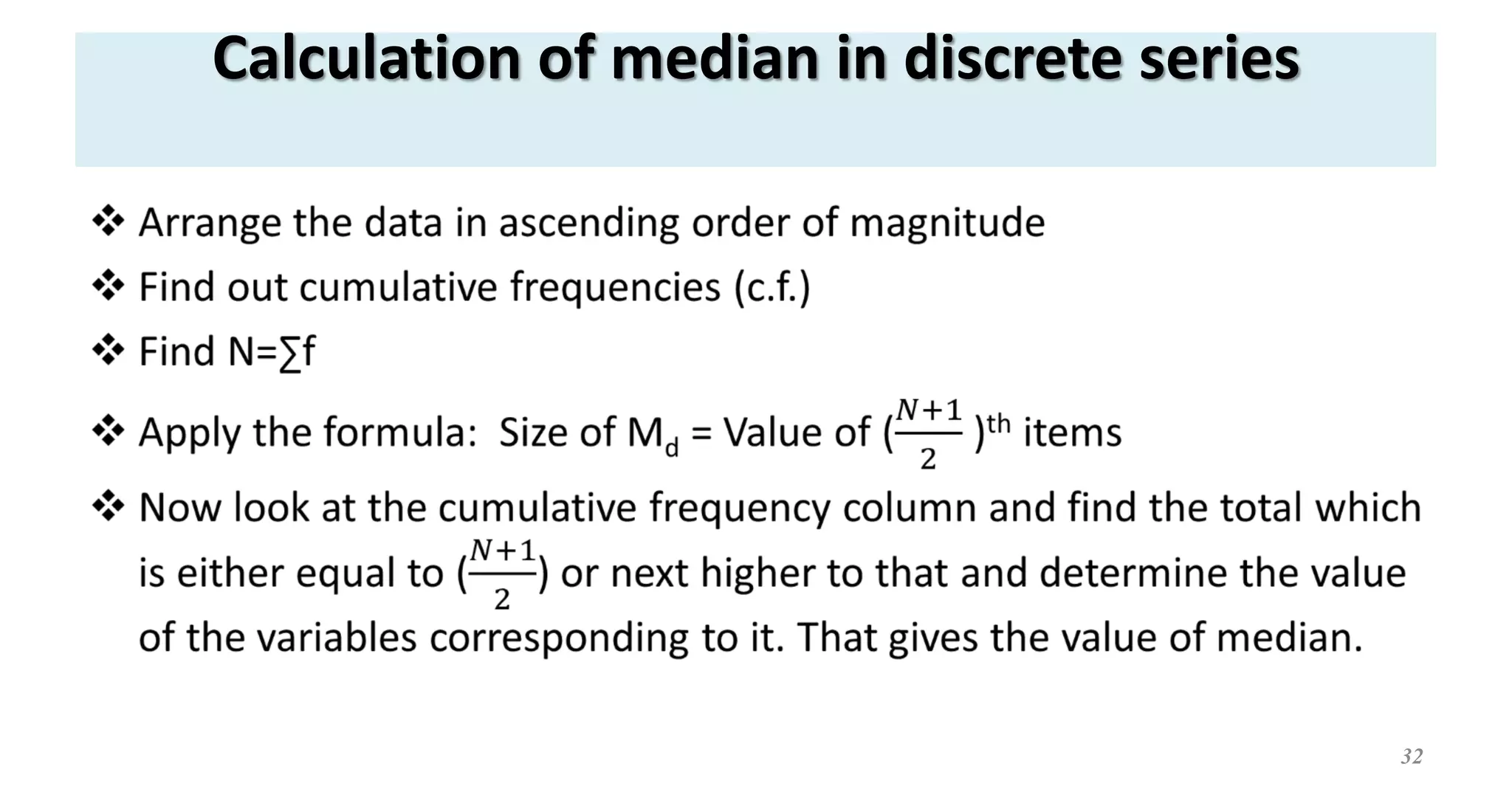
Calculation of median in discrete series
32
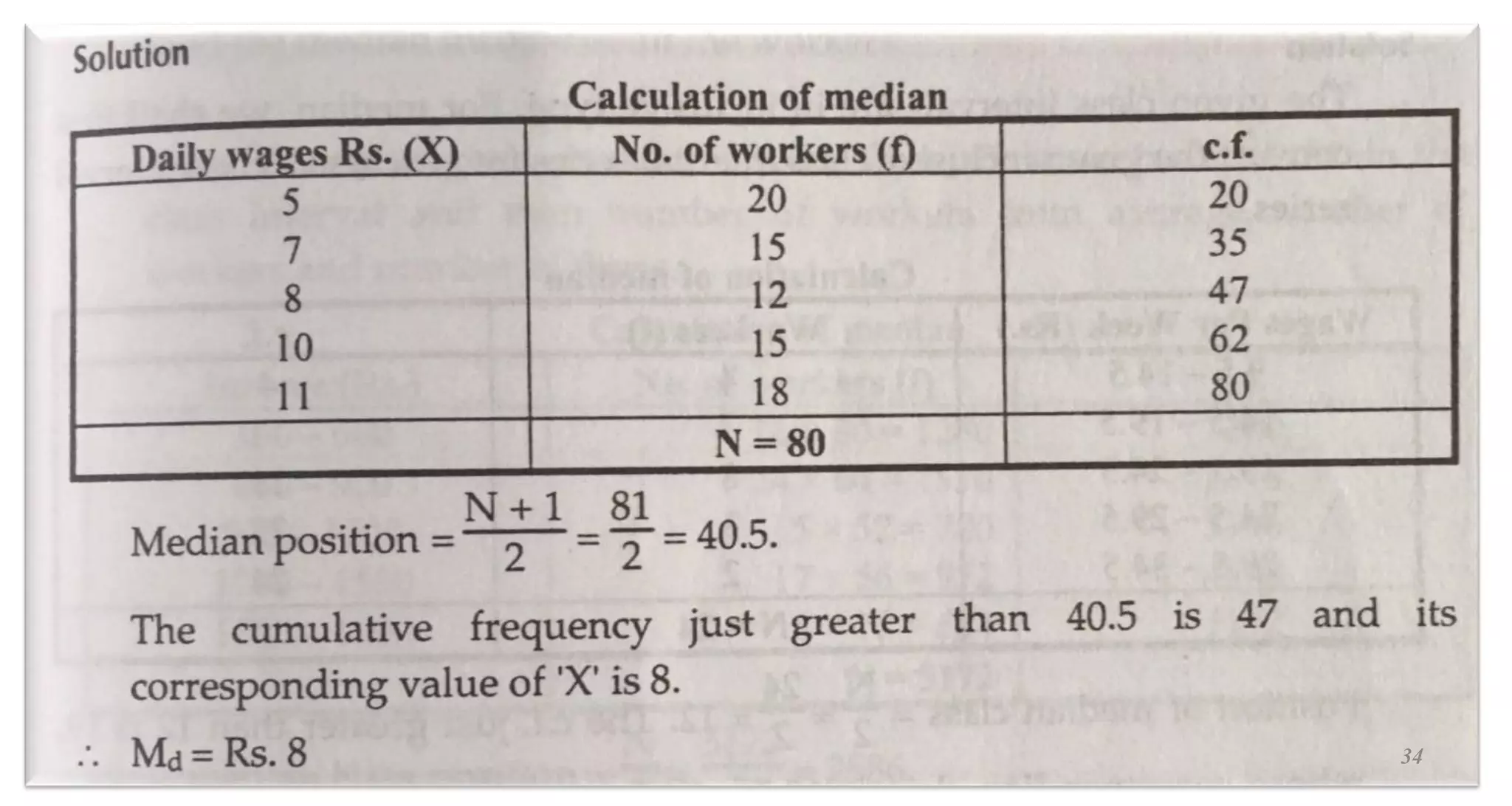
Calculate the median from the following data
Daily
wages(Rs)
5 7 8 10 11
Number of
workers
20 15 12 15 18
33
34
Calculation of median in continuous series
35
Cont…
36
Calculate the median from the following data
Wages per
week
10 - 14 15- 19 20 - 24 25 - 29 30 - 34
No of workers 4 7 8 3 4
37
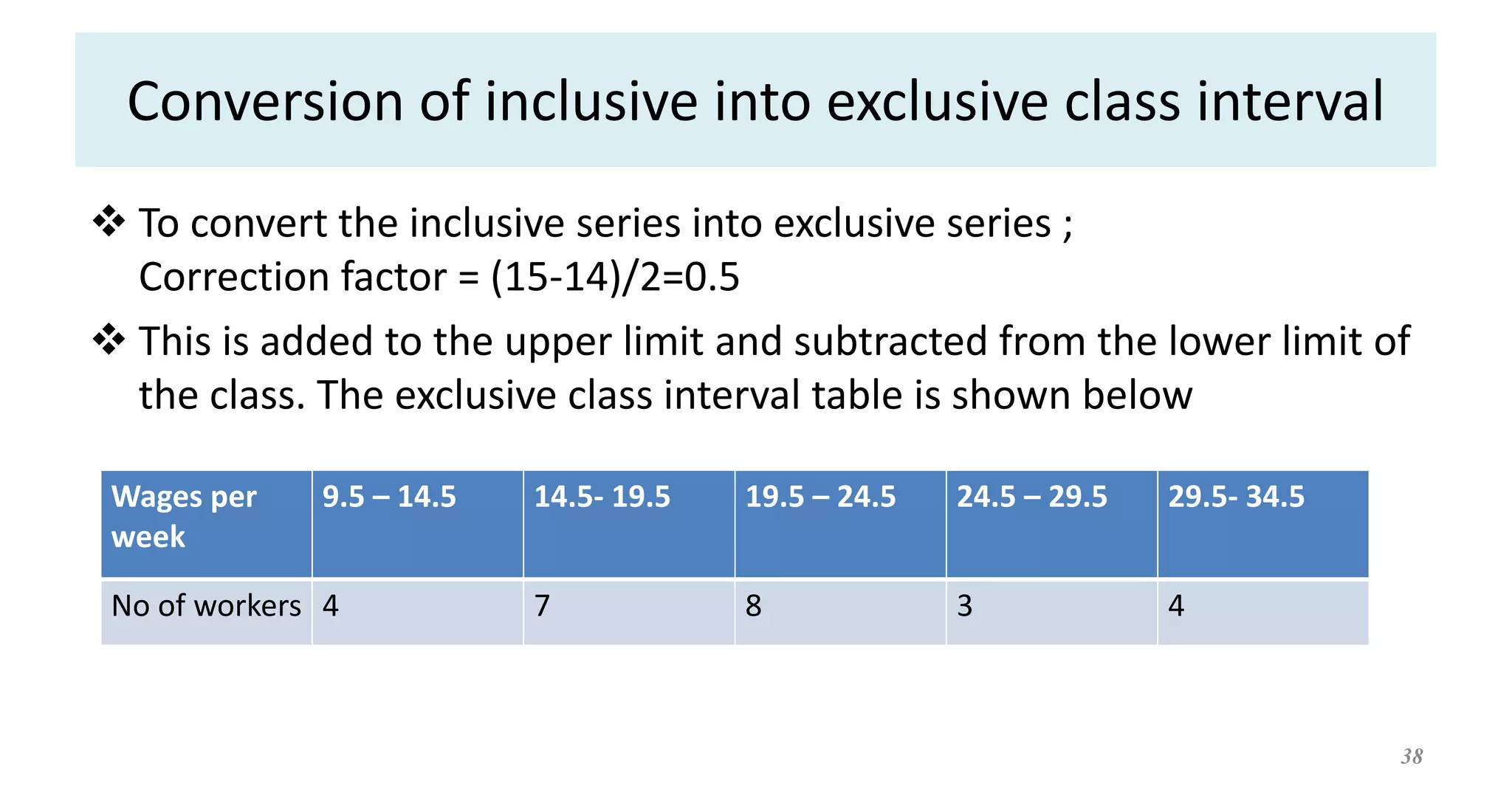
Conversion of inclusive into exclusive class interval
 To convert the inclusive series into exclusive series ;
Correction factor = (15-14)/2=0.5
 This is added to the upper limit and subtracted from the lower limit of
the class. The exclusive class interval table is shown below
Wages per
week
9.5 – 14.5 14.5- 19.5 19.5 – 24.5 24.5 – 29.5 29.5- 34.5
No of workers 4 7 8 3 4
38
39
Calculate the median from the following data
Height(in
cm)
161-167 167-173 173-179 179-185 185-191 191-197
No. of
students
79 92 60 22 5 2
Marks
obtained
Below 10 10-20 20-30 30-40 40-50 50 and
above
No. of
students
4 6 10 15 8 7
40
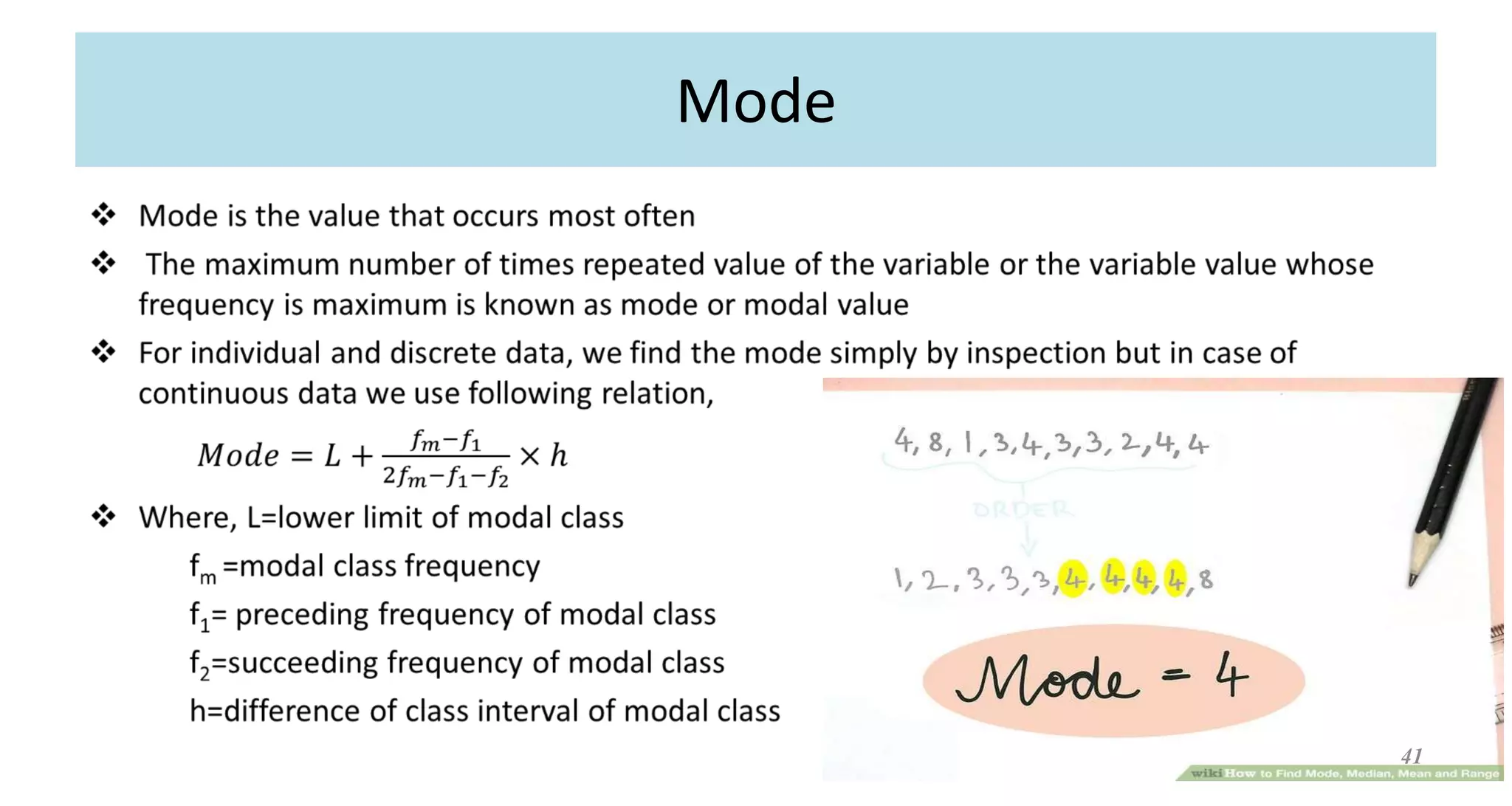
Mode
41
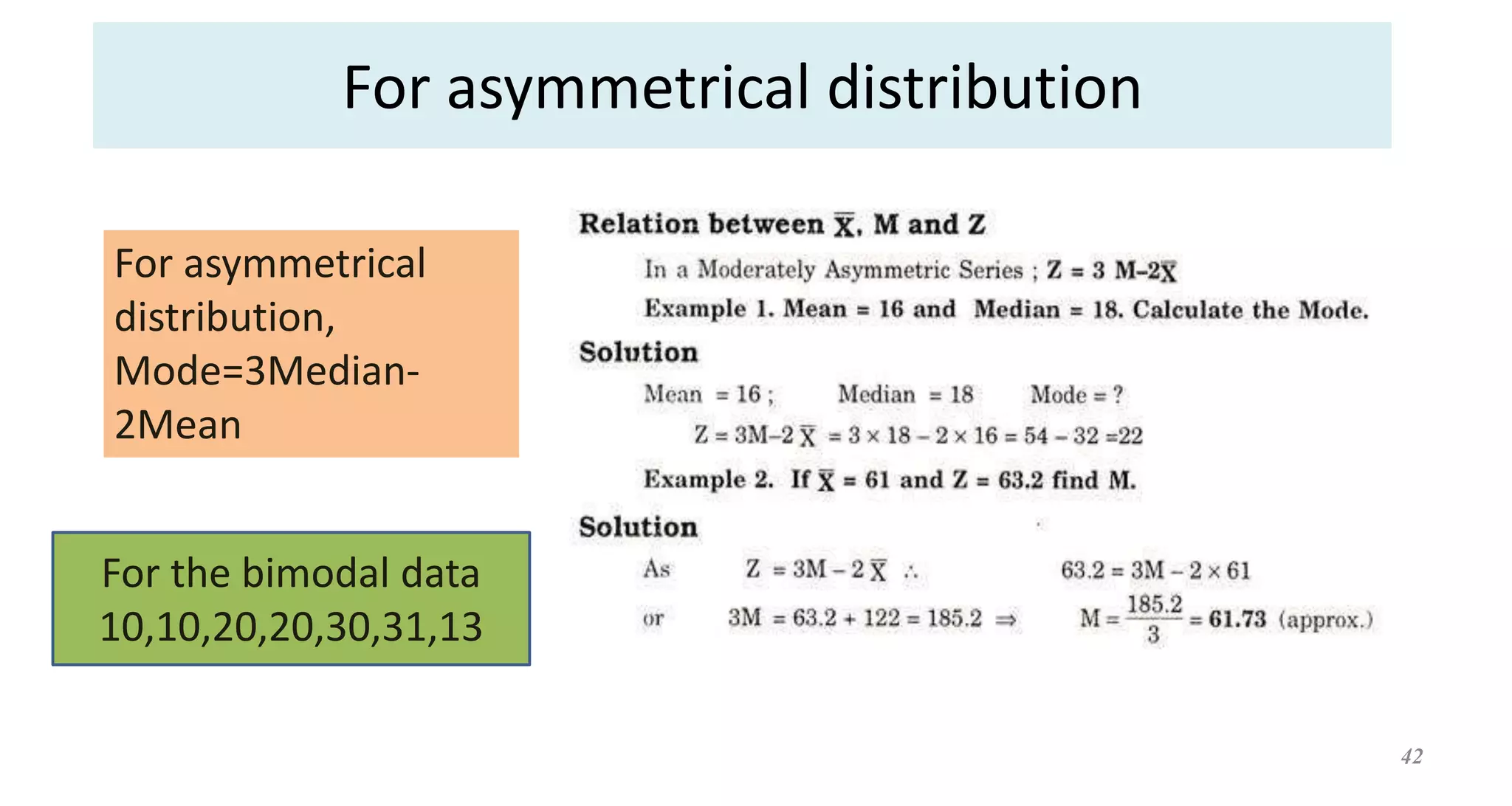
For asymmetrical distribution
42
For asymmetrical
distribution,
Mode=3Median-
2Mean
For the bimodal data
10,10,20,20,30,31,13
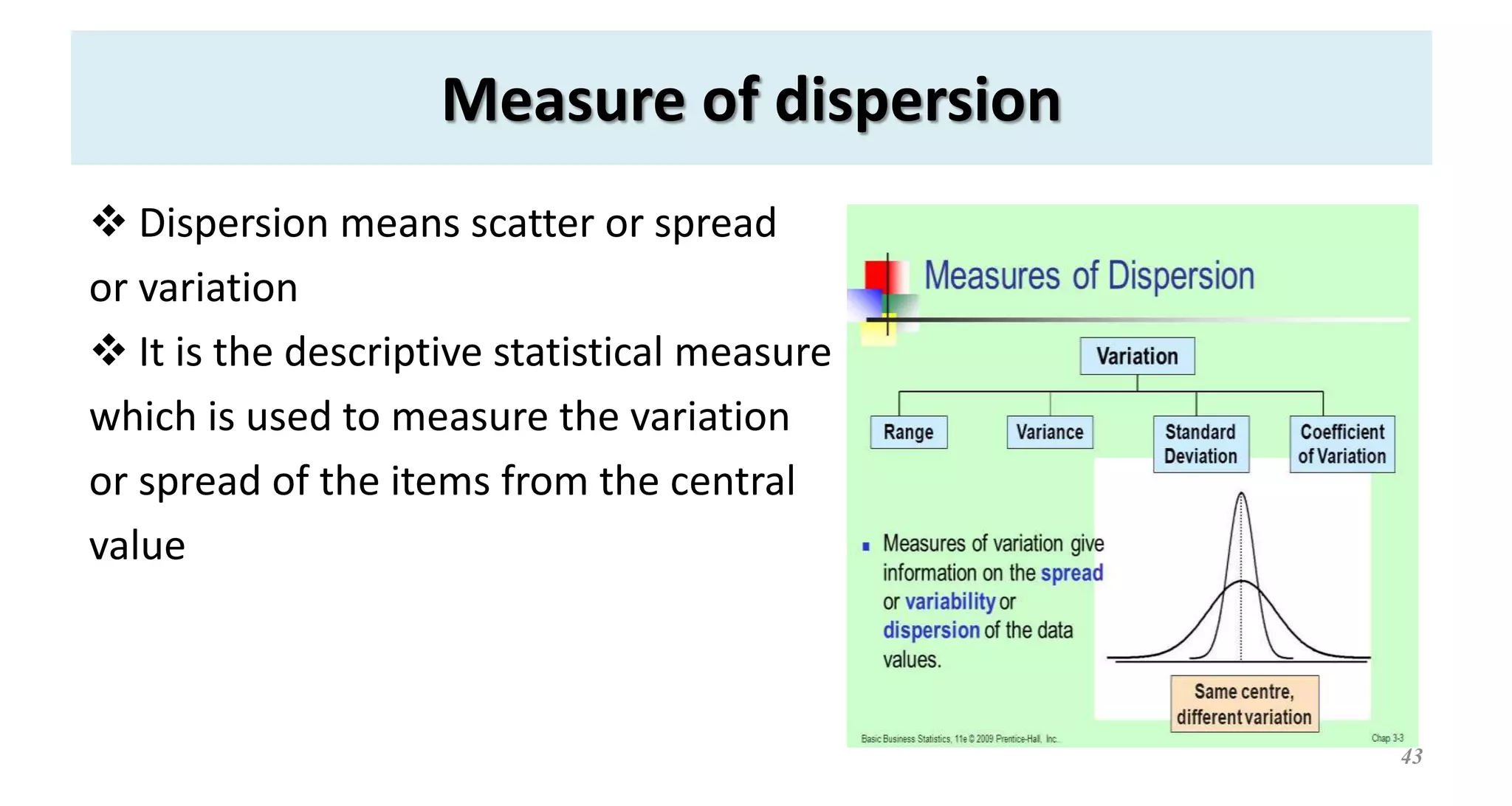
Measure of dispersion
 Dispersion means scatter or spread
or variation
 It is the descriptive statistical measure
which is used to measure the variation
or spread of the items from the central
value
43
Methods of studying dispersion
 Range
 Quartile deviation (or Semi-Inter Quartile Range)
 Standard deviation
 Mean deviation
 Coefficient of variation
44
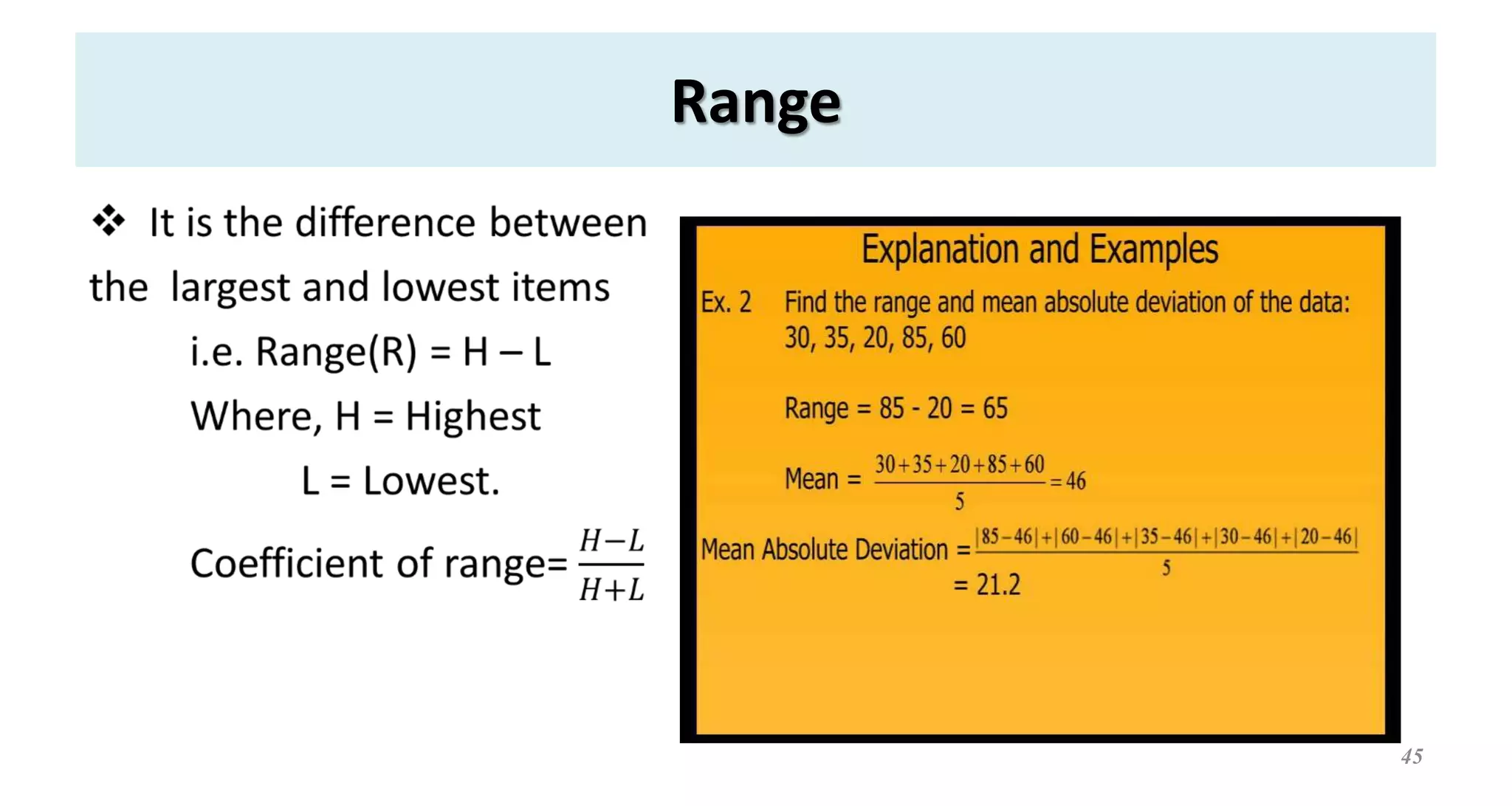
Range
45
Quartile deviation
46
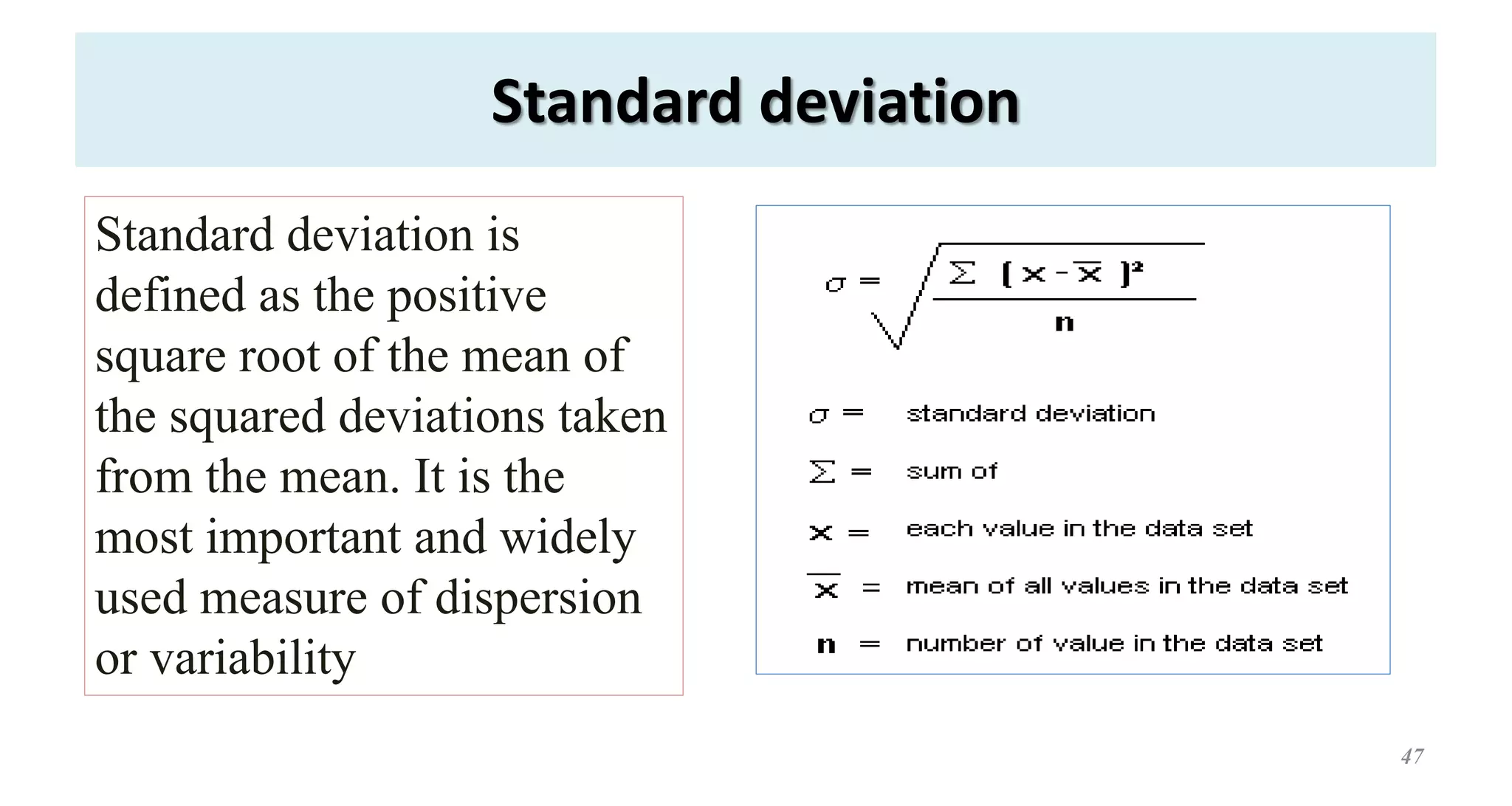
Standard deviation
47
Standard deviation is
defined as the positive
square root of the mean of
the squared deviations taken
from the mean. It is the
most important and widely
used measure of dispersion
or variability
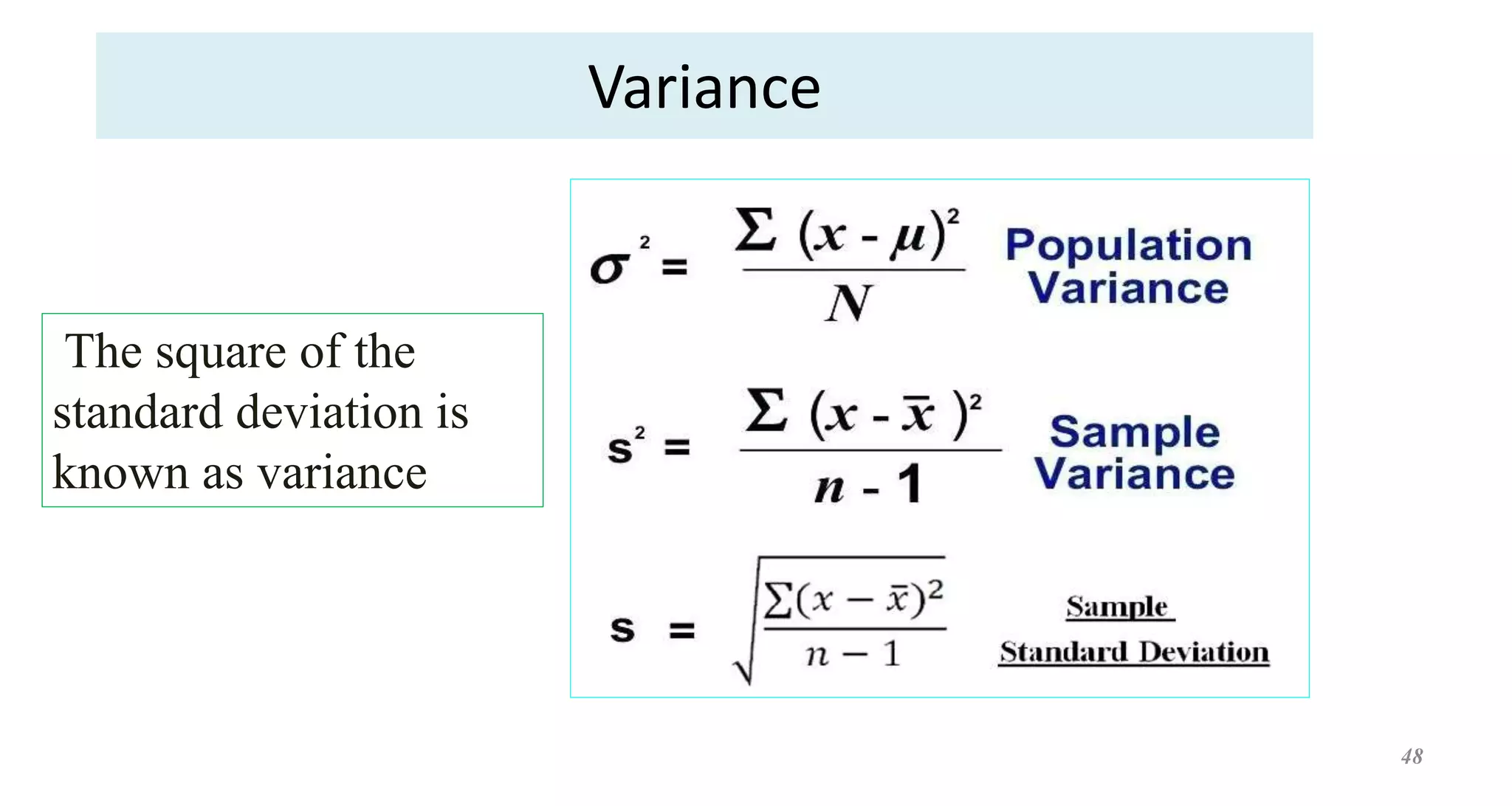
Variance
48
The square of the
standard deviation is
known as variance
Coefficient of Variation (CV)
49

Bcs 040 Descriptive Statistics

  • 1.
    Statistical Techniques BCS-040 Preparedby :Narayan Thapa Lecturer at Tribhuvan University, Amrit Science College(ASCOL) Part time lecturer ICA college 1 Descriptive Statistics
  • 2.
    Introduction  Statistics isthe science of art of learning from data  It is concerned with the collection of data, its subsequent description, and its analysis, which often leads to the drawing of valid conclusions  It may be defined as the collection, presentation, analysis and interpretation of numerical data. 2
  • 3.
    Descriptive statistics  Thepart of statistics concerned with the description and summarization of data is called descriptive statistics  Descriptive statistics measures the measure of location, measure of dispersion, measure of skewness, measure of kurtosis etc. 3
  • 4.
    Inferential statistics  Thepart of statistics concerned with the drawing of conclusion is called inferential statistics  In inferential statistics; samples are taken from the population in such a way that the drawn sample can represent the entire population 4
  • 5.
    Data  Data arethe raw materials for final statistical conclusions  It can either be quantitative or qualitative or attributes 5
  • 6.
  • 7.
    Primary data  Thedata which are originally collected by investigator or researcher for the first time for the purpose of statistical enquiry is called primary data  It is collected by government, in individual, institution and research bodies  It needs more fund, time and manpower  It is more reliable and suitable 7
  • 8.
    Secondary data  Thedata that has been already collected for a particular purpose and used for next purpose is called secondary data  It is not new and original data  These types of data are generally published in newspapers, magazines, bulletins, reports, journals, website, radio etc. 8
  • 9.
    Population  It istotality of units or items under study belonging to a particular a class or group  For example children in a school, patients in a hospital, fruits in a tree, fishes in a pond etc.  Population can be divided into finite, infinite, homogeneous population, heterogeneous population 9
  • 10.
  • 11.
  • 12.
    Construct the bardiagram of the following data Month January February March Number of visitors 150 300 250 12 The following table shows the number of visitors to a park for the months January to March.
  • 13.
  • 14.
  • 15.
  • 16.
  • 17.
  • 18.
  • 19.
    Less than ormore than ogive 19
  • 20.
    Calculation of medianfrom ogive curve 20
  • 21.
  • 22.
  • 23.
    Summarisation of data Summarization is a key data mining concept which involves techniques for finding a compact description of a dataset.  Some of the important measures are a) Measure of central tendency b) Measure of dispersion 23
  • 24.
    Measure of centraltendency  The single value that represents the characteristic of the entire data. Such a value is called the central value or an average  The process of obtaining an average value from the entire data is known as measure of central tendency  It is designed to measure the concentration of the value in the central part of the distribution  It also enables us to compare two or more sets of data to facilitate comparison 24
  • 25.
  • 26.
    Mean or Average 26 Arithmetic mean is defined as the sum of all observation is divided by the number of the observation  It is also called Arithmetic average
  • 27.
    Calculation of SimpleArithmetic Mean 27
  • 28.
    Calculate the Arithmeticmean of the following  Income (Rs.): 1780, 1760, 1680, 1750, 1830, 1940, 1100, 1800, 1060, 1950 Variabes 15 20 25 30 40 45 49 50 54 55 Frequen cy 2 5 6 7 1 3 4 6 1 1 Marks obtained 10-20 20-30 30-40 40-50 50-60 60-70 70-80 No. of students 4 5 7 10 12 6 3 28
  • 29.
    Median  The variatevalue dividing the total number of observation into two equal parts is called Median  The median divides the whole observation into two equal halves.  It is the positional average  It is denoted by Md 29
  • 30.
    Calculation of medianin individual series 30
  • 31.
    Calculate the medianfrom the following data 39, 38, 59,40, 67, 52, 77, 75, 24 391,384, 591, 407, 672, 522, 777, 753, 2488, 1490 31
  • 32.
    Calculation of medianin discrete series 32
  • 33.
    Calculate the medianfrom the following data Daily wages(Rs) 5 7 8 10 11 Number of workers 20 15 12 15 18 33
  • 34.
  • 35.
    Calculation of medianin continuous series 35
  • 36.
  • 37.
    Calculate the medianfrom the following data Wages per week 10 - 14 15- 19 20 - 24 25 - 29 30 - 34 No of workers 4 7 8 3 4 37
  • 38.
    Conversion of inclusiveinto exclusive class interval  To convert the inclusive series into exclusive series ; Correction factor = (15-14)/2=0.5  This is added to the upper limit and subtracted from the lower limit of the class. The exclusive class interval table is shown below Wages per week 9.5 – 14.5 14.5- 19.5 19.5 – 24.5 24.5 – 29.5 29.5- 34.5 No of workers 4 7 8 3 4 38
  • 39.
  • 40.
    Calculate the medianfrom the following data Height(in cm) 161-167 167-173 173-179 179-185 185-191 191-197 No. of students 79 92 60 22 5 2 Marks obtained Below 10 10-20 20-30 30-40 40-50 50 and above No. of students 4 6 10 15 8 7 40
  • 41.
  • 42.
    For asymmetrical distribution 42 Forasymmetrical distribution, Mode=3Median- 2Mean For the bimodal data 10,10,20,20,30,31,13
  • 43.
    Measure of dispersion Dispersion means scatter or spread or variation  It is the descriptive statistical measure which is used to measure the variation or spread of the items from the central value 43
  • 44.
    Methods of studyingdispersion  Range  Quartile deviation (or Semi-Inter Quartile Range)  Standard deviation  Mean deviation  Coefficient of variation 44
  • 45.
  • 46.
  • 47.
    Standard deviation 47 Standard deviationis defined as the positive square root of the mean of the squared deviations taken from the mean. It is the most important and widely used measure of dispersion or variability
  • 48.
    Variance 48 The square ofthe standard deviation is known as variance
  • 49.