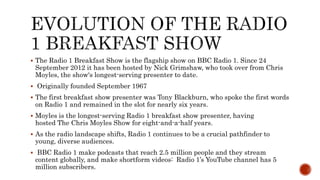
 The Radio 1 Breakfast Show is the flagship show on BBC Radio 1. Since 24
September 2012 it has been hosted by Nick Grimshaw, who took over from Chris
Moyles, the show's longest-serving presenter to date.
 Originally founded September 1967
 The first breakfast show presenter was Tony Blackburn, who spoke the first words
on Radio 1 and remained in the slot for nearly six years.
 Moyles is the longest-serving Radio 1 breakfast show presenter, having
hosted The Chris Moyles Show for eight-and-a-half years.
 As the radio landscape shifts, Radio 1 continues to be a crucial pathfinder to
young, diverse audiences.
 BBC Radio 1 make podcasts that reach 2.5 million people and they stream
content globally, and make shortform videos: Radio 1’s YouTube channel has 5
million subscribers.
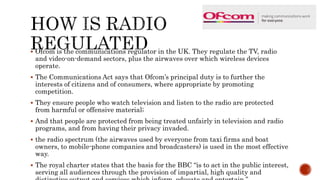
 Ofcom is the communications regulator in the UK. They regulate the TV, radio
and video-on-demand sectors, plus the airwaves over which wireless devices
operate.
 The Communications Act says that Ofcom’s principal duty is to further the
interests of citizens and of consumers, where appropriate by promoting
competition.
 They ensure people who watch television and listen to the radio are protected
from harmful or offensive material;
 And that people are protected from being treated unfairly in television and radio
programs, and from having their privacy invaded.
 the radio spectrum (the airwaves used by everyone from taxi firms and boat
owners, to mobile-phone companies and broadcasters) is used in the most effective
way.
 The royal charter states that the basis for the BBC “is to act in the public interest,
serving all audiences through the provision of impartial, high quality and
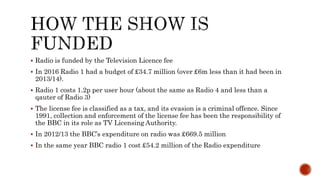
 Radio is funded by the Television Licence fee
 In 2016 Radio 1 had a budget of £34.7 million (over £6m less than it had been in
2013/14).
 Radio 1 costs 1.2p per user hour (about the same as Radio 4 and less than a
qauter of Radio 3)
 The license fee is classified as a tax, and its evasion is a criminal offence. Since
1991, collection and enforcement of the license fee has been the responsibility of
the BBC in its role as TV Licensing Authority.
 In 2012/13 the BBC’s expenditure on radio was £669.5 million
 In the same year BBC radio 1 cost £54.2 million of the Radio expenditure
 The BBC is a public service broadcaster, producing programs for the benefit of the
public, funded by the public, not owned by the state and not driven by commercial
interests.
 Because the BBC is not commercial this means that they do not have to make a
profit, therefore they can take a more risky approach playing more diverse music.
 They do not have adverts like commercial radio stations.
 Ratings do not matter as much to Public radio stations because they do not need
to attract advertisers.
 Commercial stations don't have the same kind of freedom in what they play as
non-commercial radio, their approach is usually to shy away from playing new
artists unless they are backed with a big budget promotional campaign.
 The more the exposure to the song, the more the station will be convinced that
playing it will increase their ratings since it will be familiar to their listeners.
 Features include Call or Delete – a where celebrity guests choose to either prank
call a contact on their phone or delete their number altogether.
 Other segments include The Nixtape – which sees Grimshaw select 30 minutes of
party-oriented music before a DJ comes in to mix listener requests to close the
week,
 Happy Monday, a half-hour of uplifting songs on Monday mornings,
 Showquizness, an irreverent daily quiz based around pop culture,
 Happy Hardcore FM, which sees listeners phone into the show to scream over
happy hardcore beats, and the daily
 Waking Up Song, which features celebrities encouraging listeners to get out of bed
to the sound of Pharoahe Monch.
 The Newsbeat news and sport bulletins are presented by Tina Daheley at 6:30,
7:00, 7:30, 8:00, 8:30 and 9:30; there is also entertainment news from Sinead
Garven at approximately 7:45 each morning.
 Grimshaw's incarnation of the breakfast show has received strong critical reviews
through his tenure
 However. he has polarised public opinion, which is reflected in the show's often
fluctuating listening figures - as of February 2015, the show has 5.9 million
listeners, with a small increase in listenership of 100,000.
 On 26 October 2017, it was reported that the show recorded 4.93 million weekly
listeners between July and September - down from 5.5 million last quarter, a
record low.
 The BBC claimed that this was part of the goal to attract younger listeners, while
shedding the over-25s
 In October 2017, Grimshaw's Breakfast Show fell to 4.93 million listeners a week,
the lowest listening figures for BBC Radio 1's breakfast show since records began.
 In July 2017 the BBC confirmed that Grimshaw's salary was in the £350,000 -
£399,999 bracket

BBC Radio One Breakfast Show

  • 2.
     The Radio1 Breakfast Show is the flagship show on BBC Radio 1. Since 24 September 2012 it has been hosted by Nick Grimshaw, who took over from Chris Moyles, the show's longest-serving presenter to date.  Originally founded September 1967  The first breakfast show presenter was Tony Blackburn, who spoke the first words on Radio 1 and remained in the slot for nearly six years.  Moyles is the longest-serving Radio 1 breakfast show presenter, having hosted The Chris Moyles Show for eight-and-a-half years.  As the radio landscape shifts, Radio 1 continues to be a crucial pathfinder to young, diverse audiences.  BBC Radio 1 make podcasts that reach 2.5 million people and they stream content globally, and make shortform videos: Radio 1’s YouTube channel has 5 million subscribers.
  • 3.
     Ofcom isthe communications regulator in the UK. They regulate the TV, radio and video-on-demand sectors, plus the airwaves over which wireless devices operate.  The Communications Act says that Ofcom’s principal duty is to further the interests of citizens and of consumers, where appropriate by promoting competition.  They ensure people who watch television and listen to the radio are protected from harmful or offensive material;  And that people are protected from being treated unfairly in television and radio programs, and from having their privacy invaded.  the radio spectrum (the airwaves used by everyone from taxi firms and boat owners, to mobile-phone companies and broadcasters) is used in the most effective way.  The royal charter states that the basis for the BBC “is to act in the public interest, serving all audiences through the provision of impartial, high quality and
  • 4.
     Radio isfunded by the Television Licence fee  In 2016 Radio 1 had a budget of £34.7 million (over £6m less than it had been in 2013/14).  Radio 1 costs 1.2p per user hour (about the same as Radio 4 and less than a qauter of Radio 3)  The license fee is classified as a tax, and its evasion is a criminal offence. Since 1991, collection and enforcement of the license fee has been the responsibility of the BBC in its role as TV Licensing Authority.  In 2012/13 the BBC’s expenditure on radio was £669.5 million  In the same year BBC radio 1 cost £54.2 million of the Radio expenditure
  • 5.
     The BBCis a public service broadcaster, producing programs for the benefit of the public, funded by the public, not owned by the state and not driven by commercial interests.  Because the BBC is not commercial this means that they do not have to make a profit, therefore they can take a more risky approach playing more diverse music.  They do not have adverts like commercial radio stations.  Ratings do not matter as much to Public radio stations because they do not need to attract advertisers.  Commercial stations don't have the same kind of freedom in what they play as non-commercial radio, their approach is usually to shy away from playing new artists unless they are backed with a big budget promotional campaign.  The more the exposure to the song, the more the station will be convinced that playing it will increase their ratings since it will be familiar to their listeners.
  • 6.
     Features includeCall or Delete – a where celebrity guests choose to either prank call a contact on their phone or delete their number altogether.  Other segments include The Nixtape – which sees Grimshaw select 30 minutes of party-oriented music before a DJ comes in to mix listener requests to close the week,  Happy Monday, a half-hour of uplifting songs on Monday mornings,  Showquizness, an irreverent daily quiz based around pop culture,  Happy Hardcore FM, which sees listeners phone into the show to scream over happy hardcore beats, and the daily  Waking Up Song, which features celebrities encouraging listeners to get out of bed to the sound of Pharoahe Monch.  The Newsbeat news and sport bulletins are presented by Tina Daheley at 6:30, 7:00, 7:30, 8:00, 8:30 and 9:30; there is also entertainment news from Sinead Garven at approximately 7:45 each morning.
  • 7.
     Grimshaw's incarnationof the breakfast show has received strong critical reviews through his tenure  However. he has polarised public opinion, which is reflected in the show's often fluctuating listening figures - as of February 2015, the show has 5.9 million listeners, with a small increase in listenership of 100,000.  On 26 October 2017, it was reported that the show recorded 4.93 million weekly listeners between July and September - down from 5.5 million last quarter, a record low.  The BBC claimed that this was part of the goal to attract younger listeners, while shedding the over-25s  In October 2017, Grimshaw's Breakfast Show fell to 4.93 million listeners a week, the lowest listening figures for BBC Radio 1's breakfast show since records began.  In July 2017 the BBC confirmed that Grimshaw's salary was in the £350,000 - £399,999 bracket