
Basics Financial Planning in a
Startup
Dr. Alok Nikhil Jha www.linkedin.com/in/aloknikhil
Why Create a Financial Plan?
•Why Create a Plan?
•What are various plans we create in
general?
•What is to be kept in mind while creating a
plan?
Why Create a Financial Plan?
• Know what you need
• Know why you need
• Know how much you need
• Know how you grow
• Know how you earn and spend
Financial Plan in a Pitch
• Does a company have a good understanding of its potential
market?
• Does the company have a sense of how much of that market
is obtainable?
• Are potential sales reasonable?
• Are sales prices reasonable? Is there an evidence to back it?
• Are projected costs complete and reasonable?
• How much money will be required to start the business?
• How much money will be required for self-sustainability?
• How profitable could the company be at maturity?
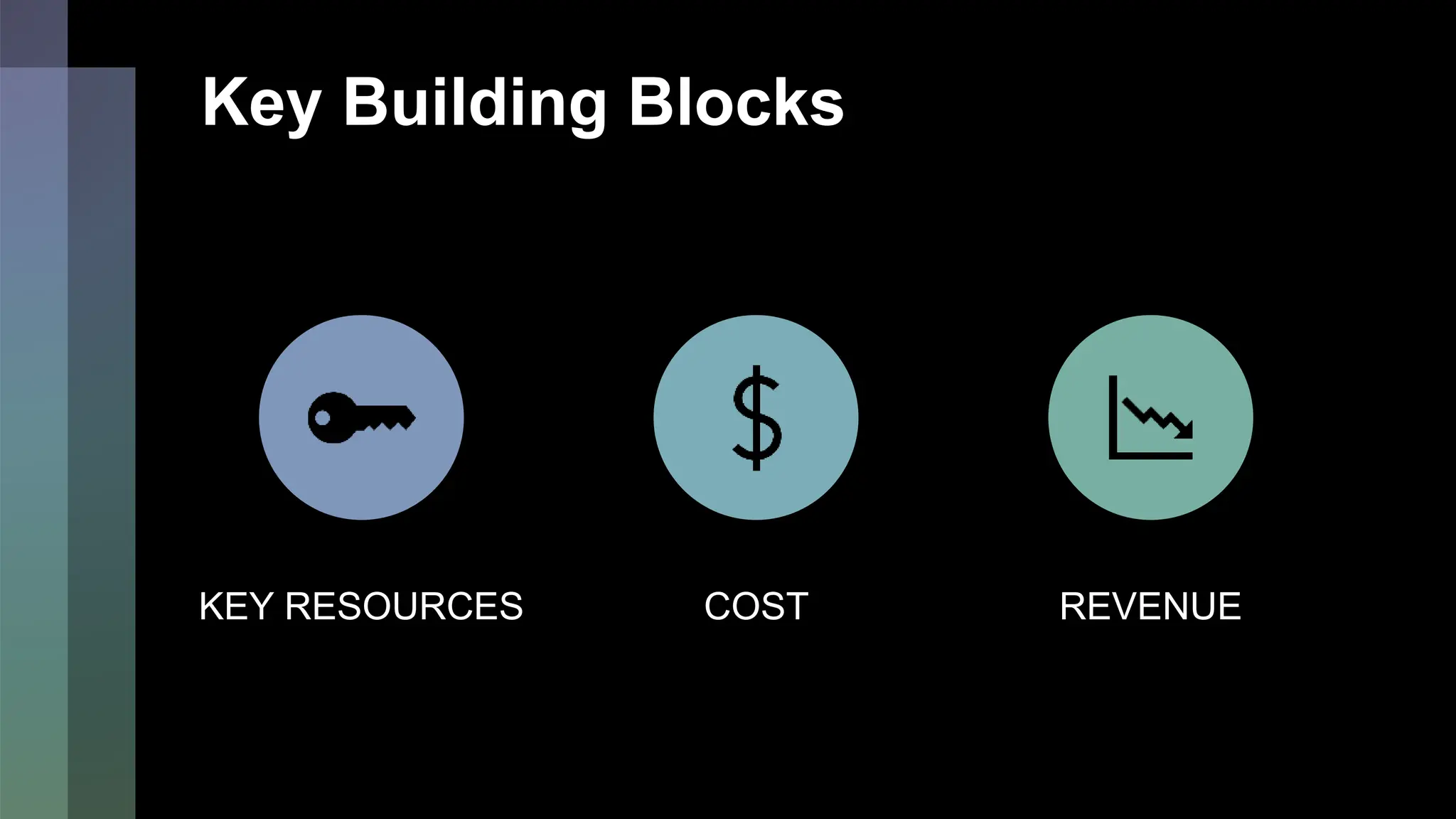
Key Building Blocks
KEY RESOURCES COST REVENUE
Resources
• What resources we need
• What do our value proposition requires to happen?
• How do we support our channels?
• How to support revenue channels?
• How to reach out to customers?
ALL THE RESOURCES THAT WE REQUIRE
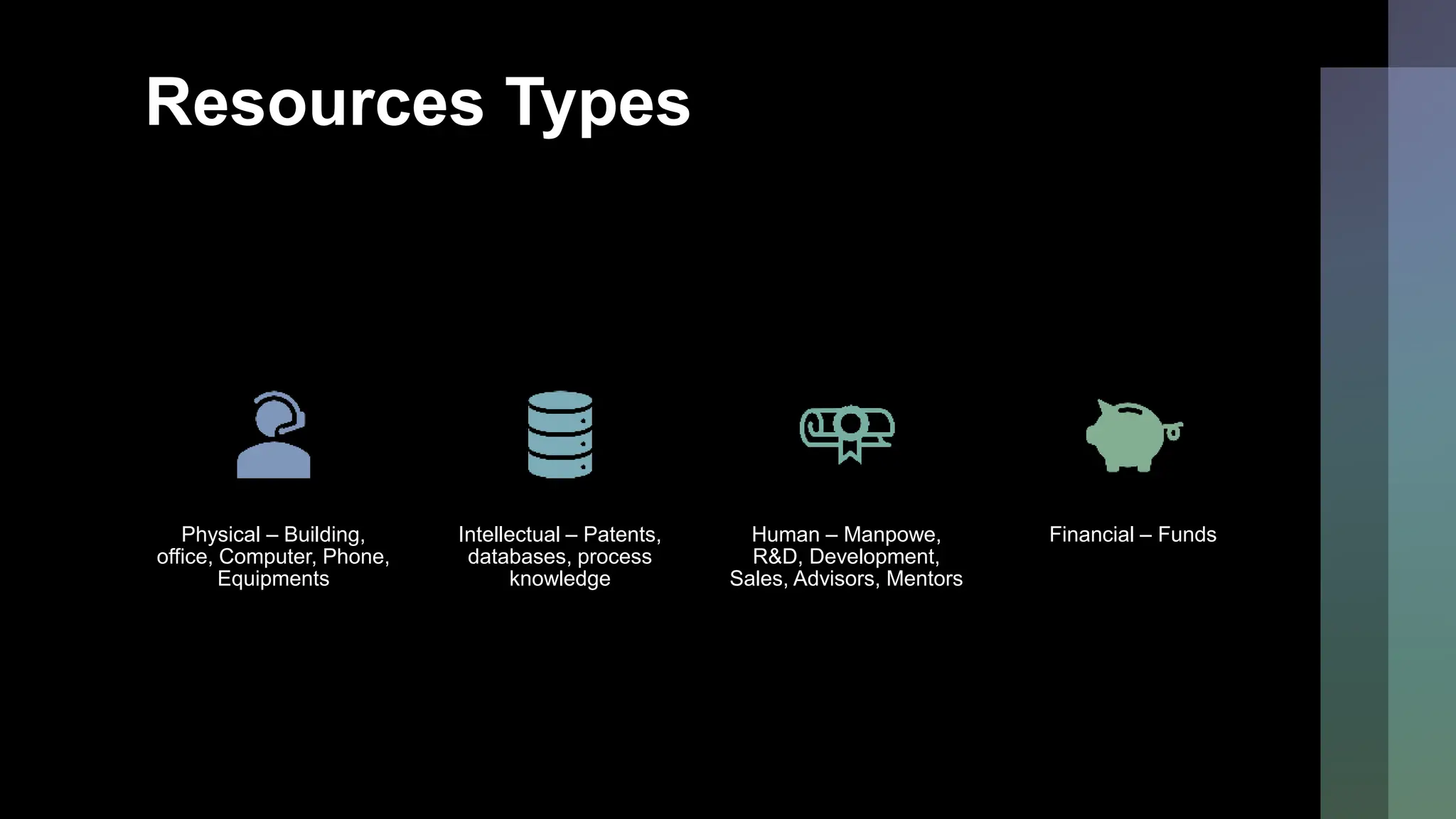
Resources Types
Physical – Building,
office, Computer, Phone,
Equipments
Intellectual – Patents,
databases, process
knowledge
Human – Manpowe,
R&D, Development,
Sales, Advisors, Mentors
Financial – Funds
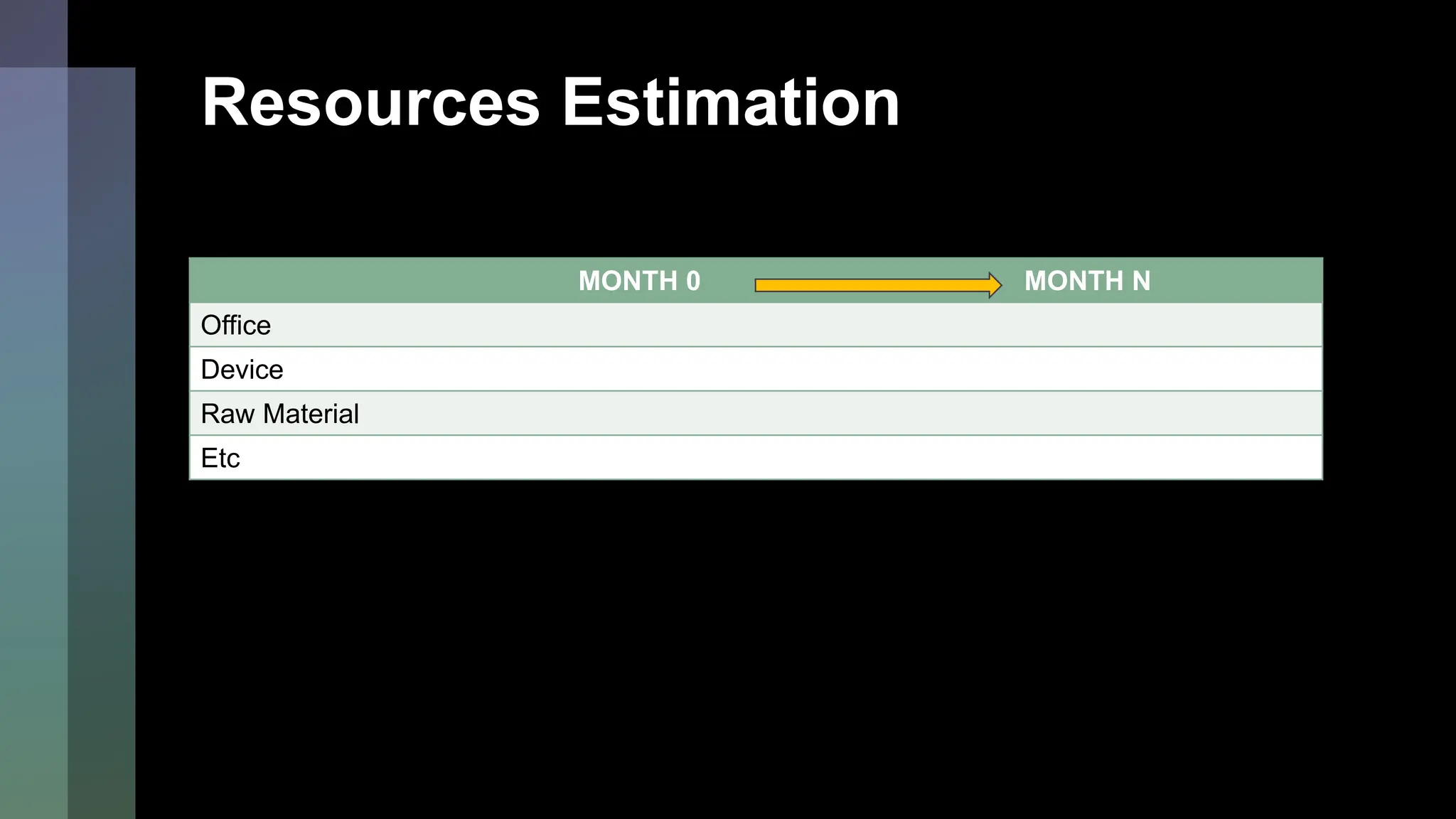
Resources Estimation
MONTH 0 MONTH N
Office
Device
Raw Material
Etc
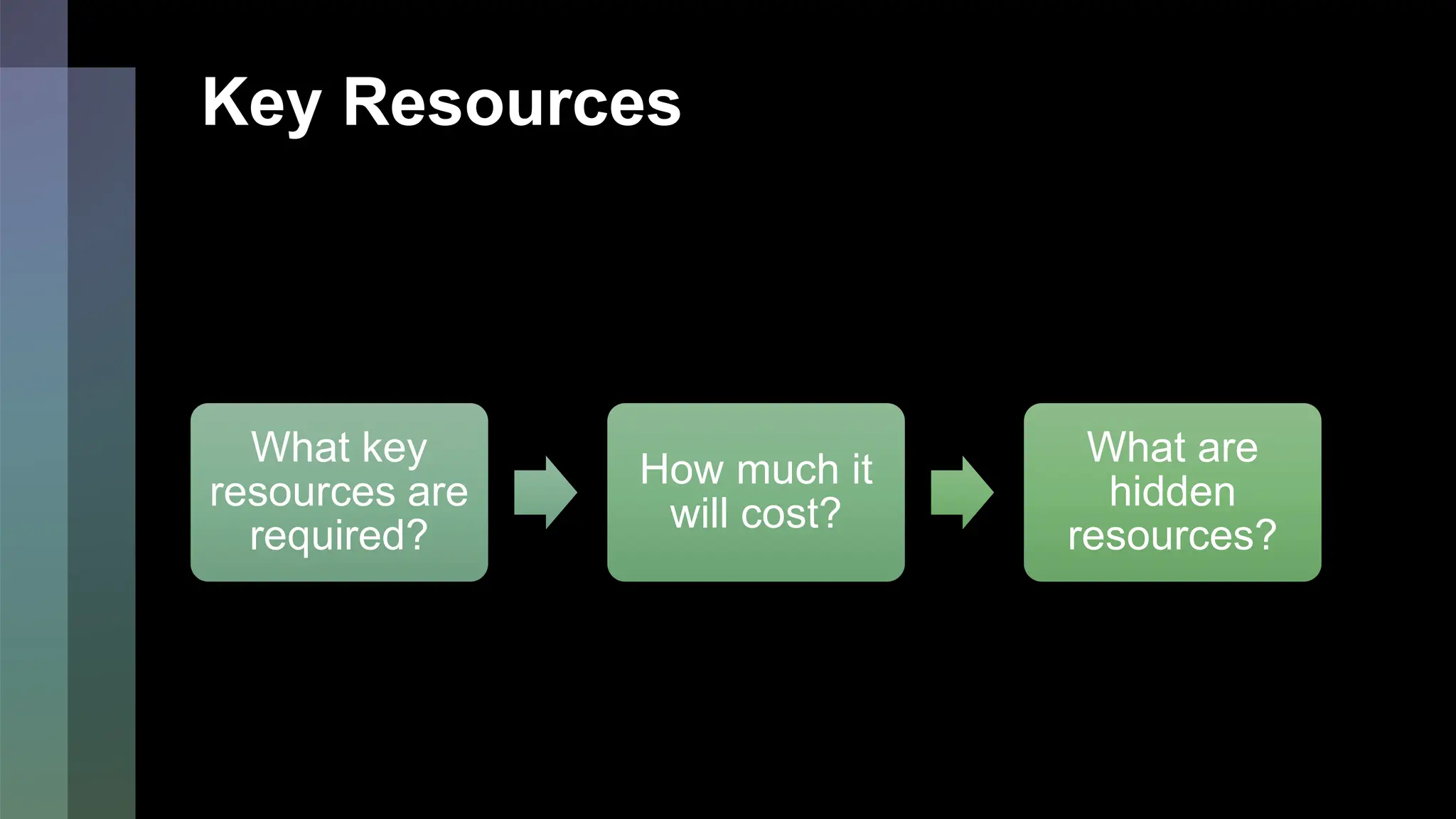
Key Resources
What key
resources are
required?
How much it
will cost?
What are
hidden
resources?
Cost Model
• What will be your cost when you are up
and running?
• How will those cost change as you grow?
• What risks are inherent in your cost
assumptions?
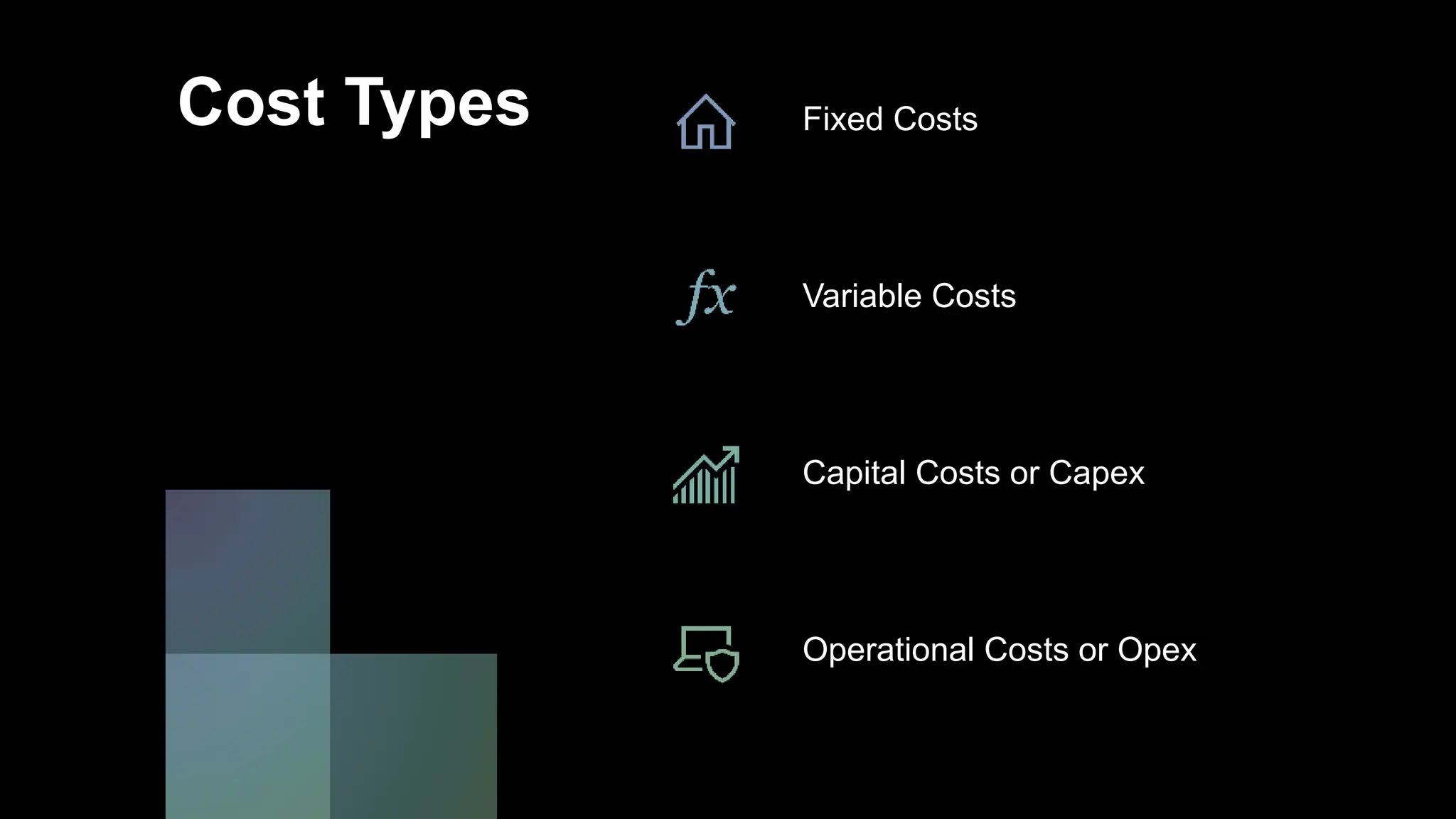
Cost Types Fixed Costs
Variable Costs
Capital Costs or Capex
Operational Costs or Opex
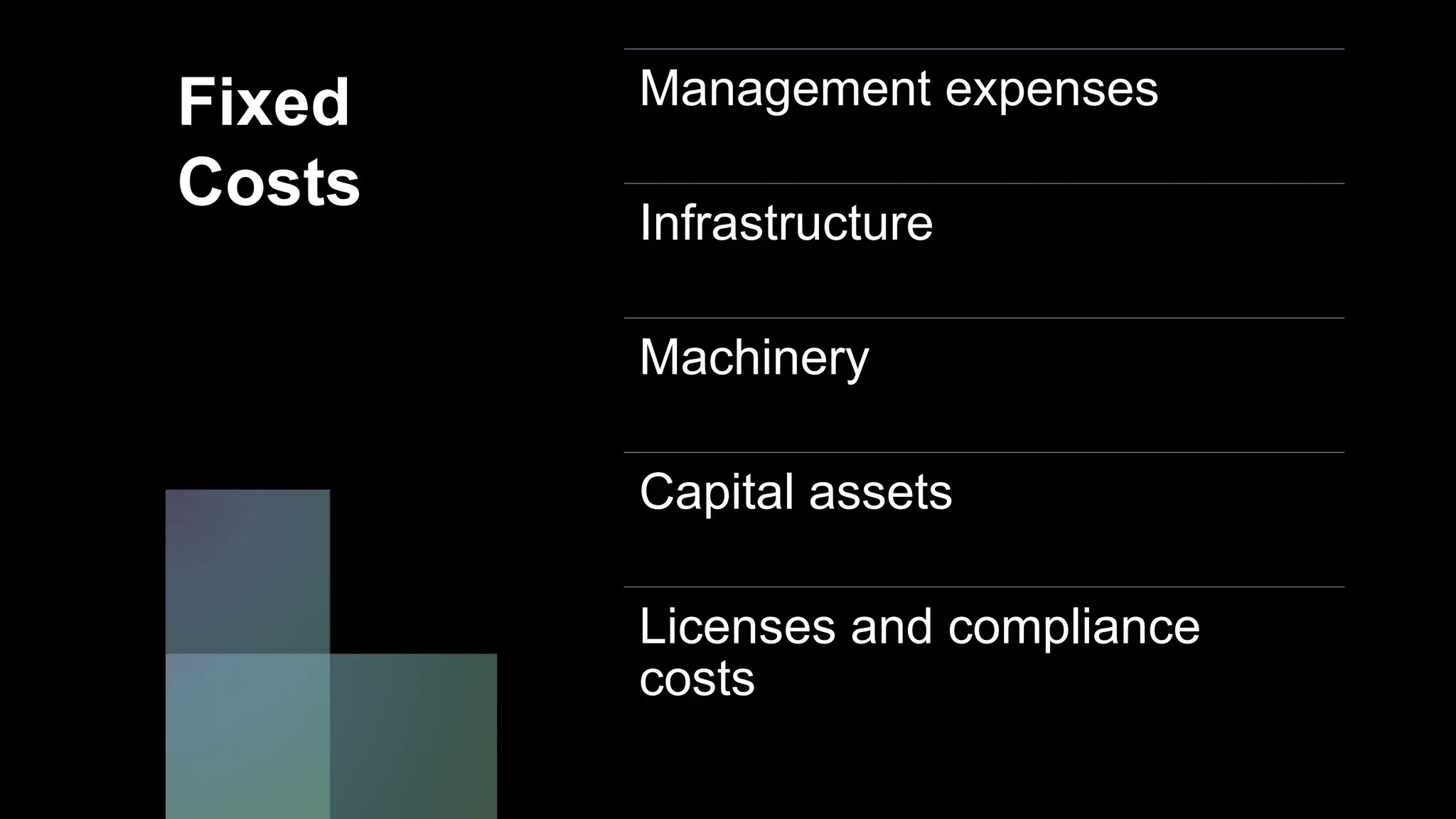
Fixed
Costs
Management expenses
Infrastructure
Machinery
Capital assets
Licenses and compliance
costs
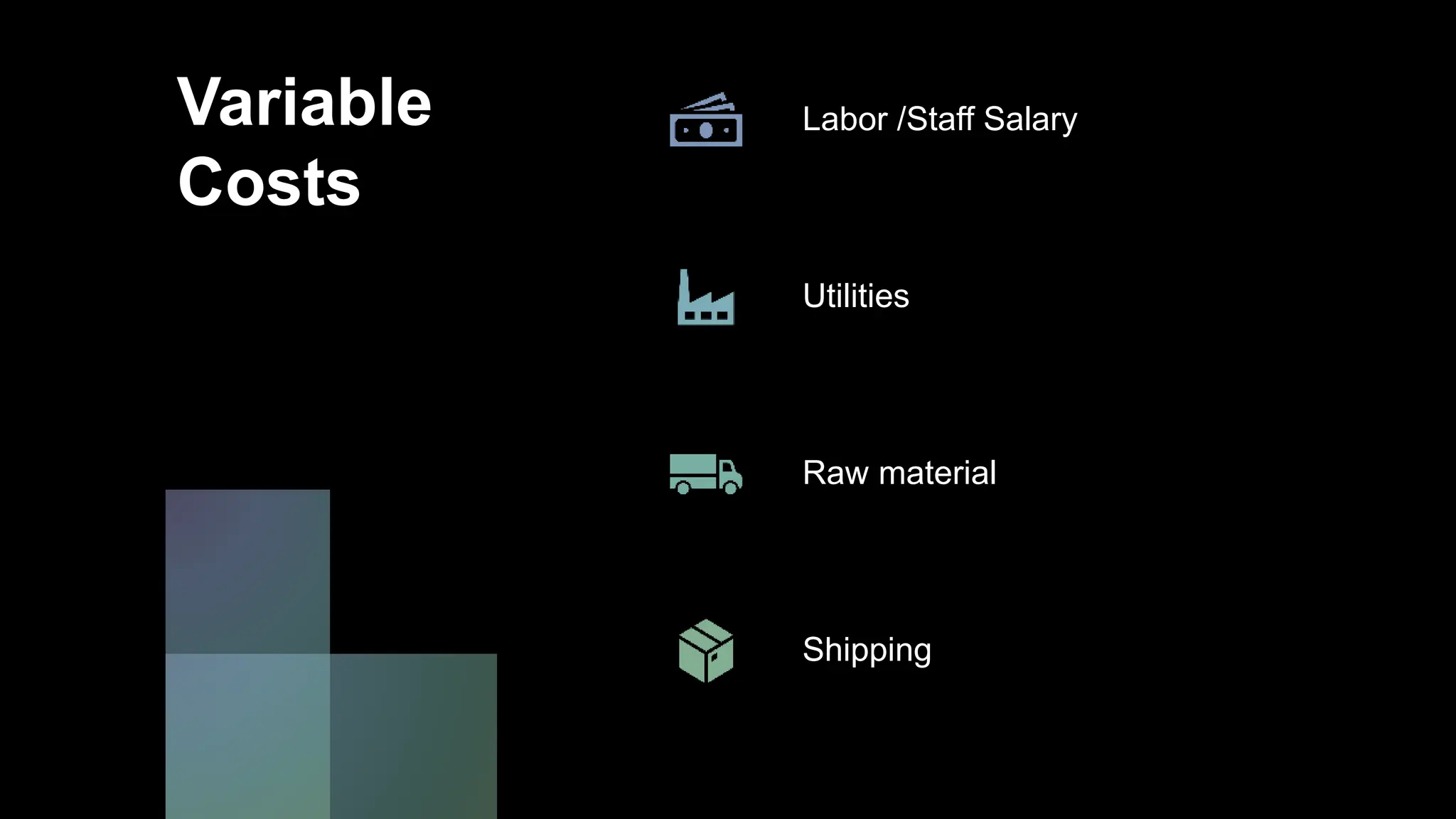
Variable
Costs
Labor /Staff Salary
Utilities
Raw material
Shipping
Economies of Scale
• Buy in Bulk
• Shipping in larger volume
• More efficient use of machinery
Economies of Scope
• One store delivering multiple products
• Multiple value proposition for a customer
• Multiple revenue streams (Extended warranty + product)
COGS
• Cost of goods Sold is a direct cost associated in providing a product or
service
• Labor
• Raw material / BoM
• Warehousing
• Revenue – COGS = PROFIT
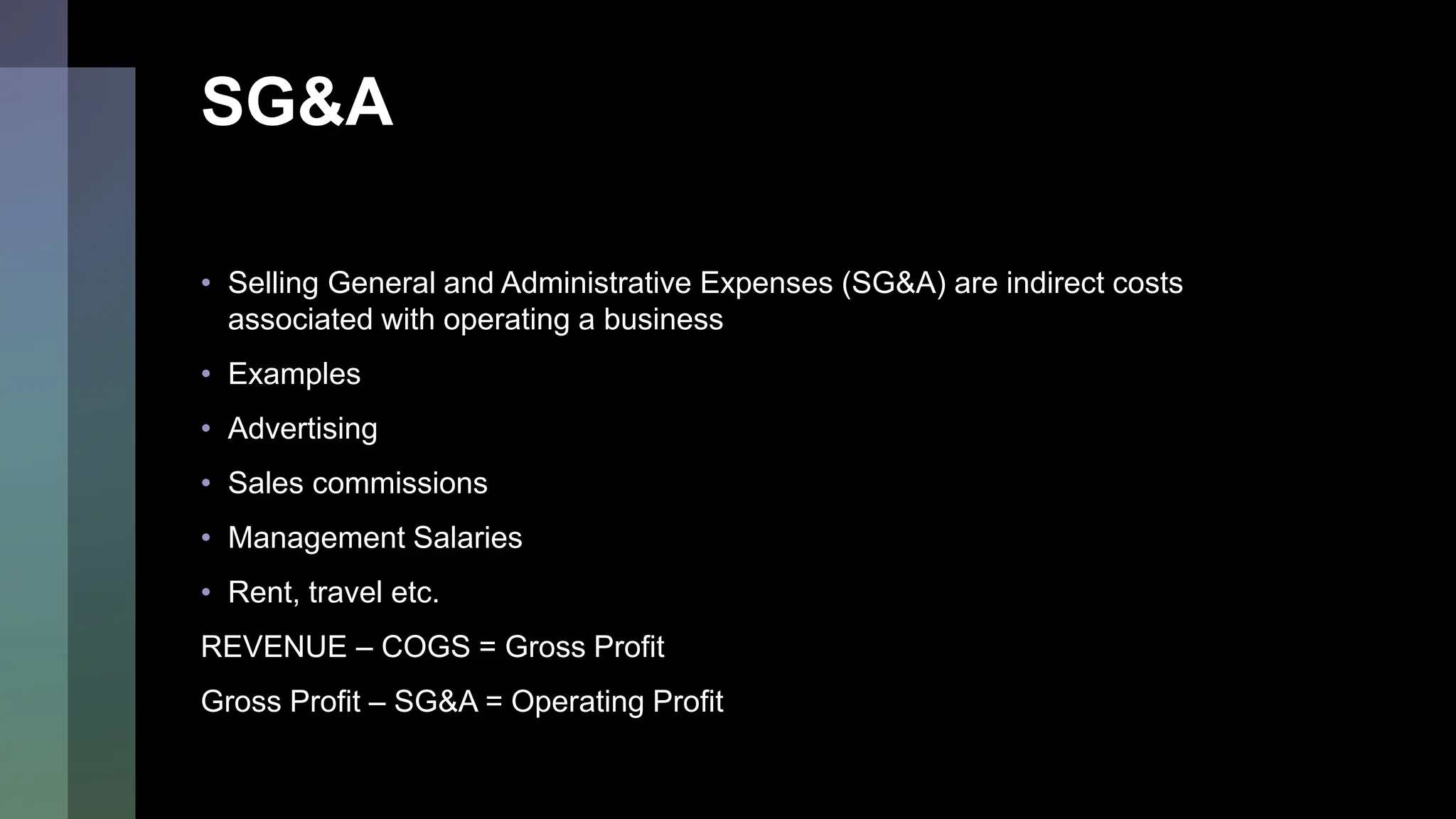
SG&A
• Selling General and Administrative Expenses (SG&A) are indirect costs
associated with operating a business
• Examples
• Advertising
• Sales commissions
• Management Salaries
• Rent, travel etc.
REVENUE – COGS = Gross Profit
Gross Profit – SG&A = Operating Profit
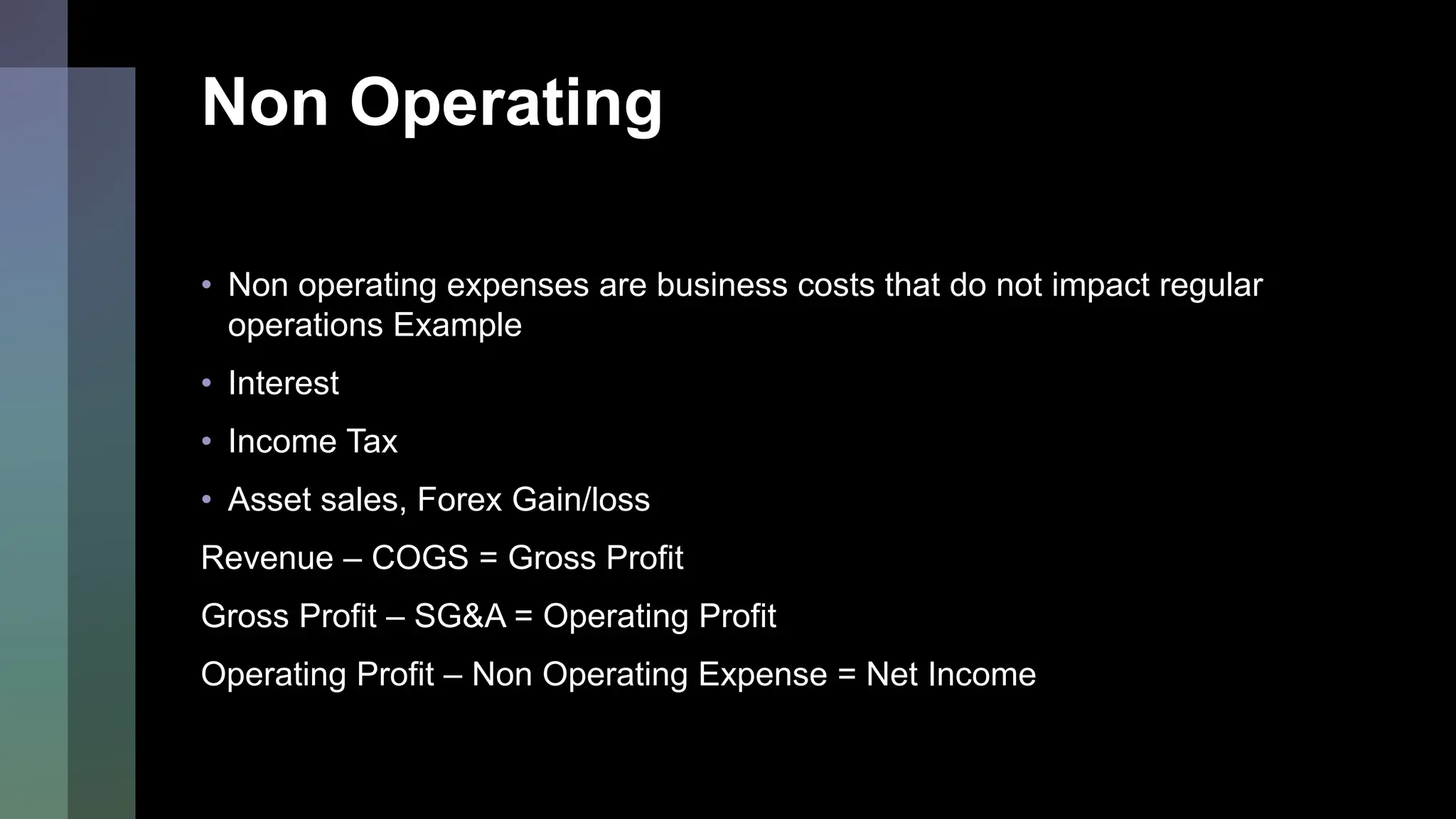
Non Operating
• Non operating expenses are business costs that do not impact regular
operations Example
• Interest
• Income Tax
• Asset sales, Forex Gain/loss
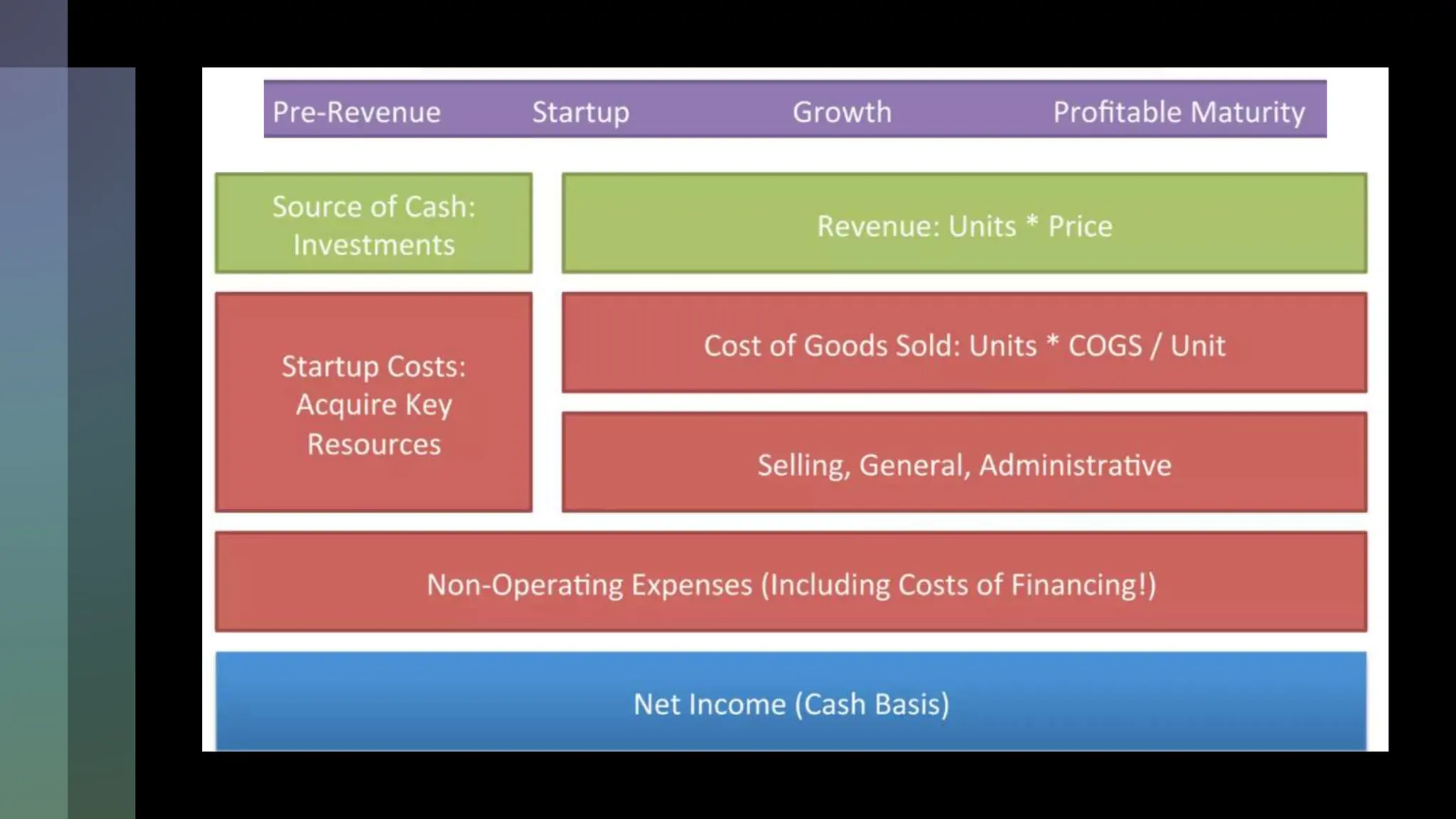
Revenue – COGS = Gross Profit
Gross Profit – SG&A = Operating Profit
Operating Profit – Non Operating Expense = Net Income
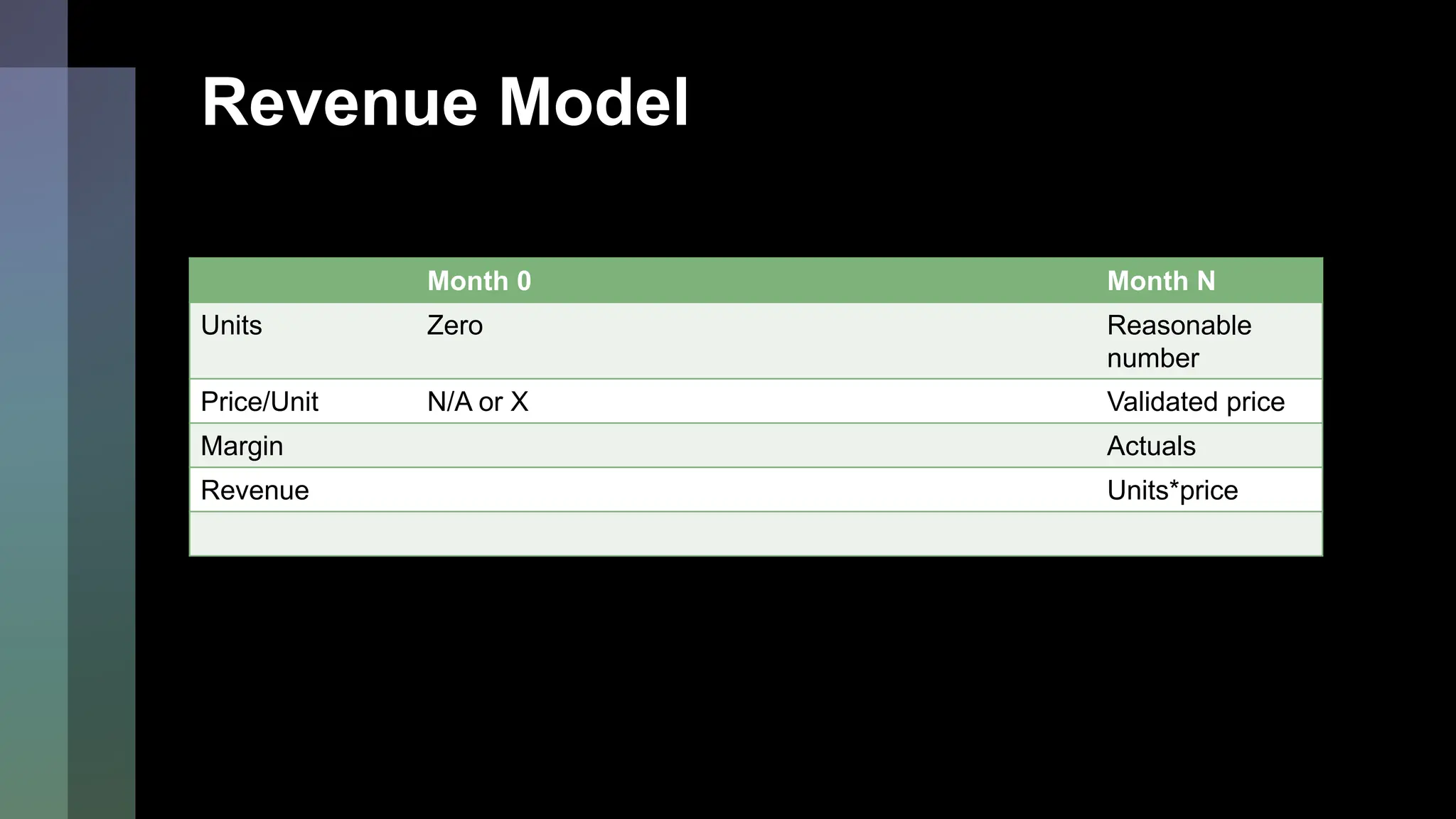
Revenue Model
Month 0 Month N
Units Zero Reasonable
number
Price/Unit N/A or X Validated price
Margin Actuals
Revenue Units*price
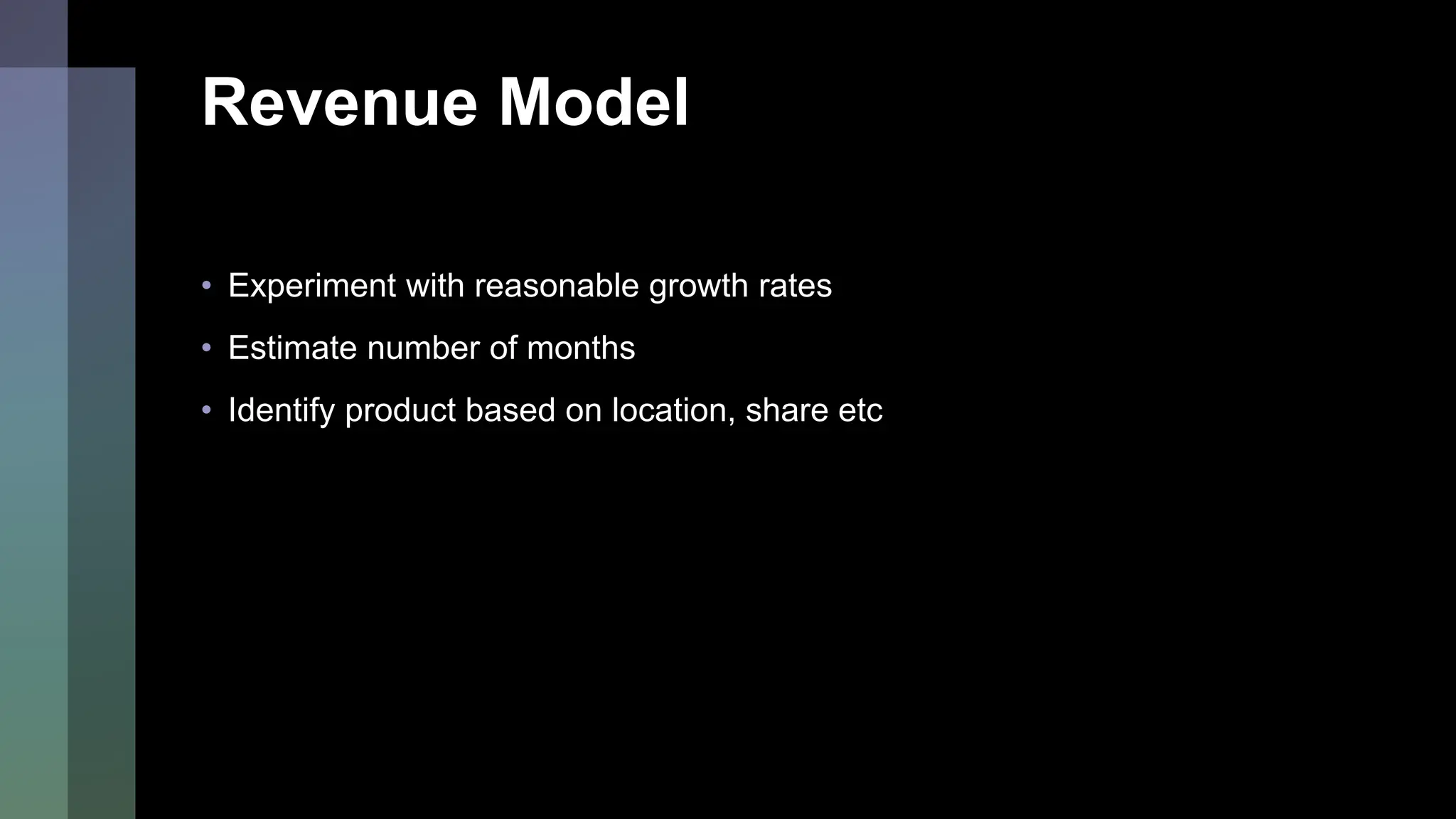
Revenue Model
• Experiment with reasonable growth rates
• Estimate number of months
• Identify product based on location, share etc
What are your expenditures on Daily Basis?
What are your expenditure on Annually Basis?
Are you making Profit?
Thank You
For Any Support and Inputs and association you
may connect online
http://linkedin.com/in/aloknikhil or
http://tiny.cc/yesanj

Basics of Financial Planning in a Startup

  • 1.
    Basics Financial Planningin a Startup Dr. Alok Nikhil Jha www.linkedin.com/in/aloknikhil
  • 2.
    Why Create aFinancial Plan? •Why Create a Plan? •What are various plans we create in general? •What is to be kept in mind while creating a plan?
  • 3.
    Why Create aFinancial Plan? • Know what you need • Know why you need • Know how much you need • Know how you grow • Know how you earn and spend
  • 4.
    Financial Plan ina Pitch • Does a company have a good understanding of its potential market? • Does the company have a sense of how much of that market is obtainable? • Are potential sales reasonable? • Are sales prices reasonable? Is there an evidence to back it? • Are projected costs complete and reasonable? • How much money will be required to start the business? • How much money will be required for self-sustainability? • How profitable could the company be at maturity?
  • 5.
    Key Building Blocks KEYRESOURCES COST REVENUE
  • 6.
    Resources • What resourceswe need • What do our value proposition requires to happen? • How do we support our channels? • How to support revenue channels? • How to reach out to customers? ALL THE RESOURCES THAT WE REQUIRE
  • 7.
    Resources Types Physical –Building, office, Computer, Phone, Equipments Intellectual – Patents, databases, process knowledge Human – Manpowe, R&D, Development, Sales, Advisors, Mentors Financial – Funds
  • 8.
    Resources Estimation MONTH 0MONTH N Office Device Raw Material Etc
  • 9.
    Key Resources What key resourcesare required? How much it will cost? What are hidden resources?
  • 10.
    Cost Model • Whatwill be your cost when you are up and running? • How will those cost change as you grow? • What risks are inherent in your cost assumptions?
  • 11.
    Cost Types FixedCosts Variable Costs Capital Costs or Capex Operational Costs or Opex
  • 12.
  • 13.
  • 14.
    Economies of Scale •Buy in Bulk • Shipping in larger volume • More efficient use of machinery
  • 15.
    Economies of Scope •One store delivering multiple products • Multiple value proposition for a customer • Multiple revenue streams (Extended warranty + product)
  • 16.
    COGS • Cost ofgoods Sold is a direct cost associated in providing a product or service • Labor • Raw material / BoM • Warehousing • Revenue – COGS = PROFIT
  • 17.
    SG&A • Selling Generaland Administrative Expenses (SG&A) are indirect costs associated with operating a business • Examples • Advertising • Sales commissions • Management Salaries • Rent, travel etc. REVENUE – COGS = Gross Profit Gross Profit – SG&A = Operating Profit
  • 18.
    Non Operating • Nonoperating expenses are business costs that do not impact regular operations Example • Interest • Income Tax • Asset sales, Forex Gain/loss Revenue – COGS = Gross Profit Gross Profit – SG&A = Operating Profit Operating Profit – Non Operating Expense = Net Income
  • 19.
    Revenue Model Month 0Month N Units Zero Reasonable number Price/Unit N/A or X Validated price Margin Actuals Revenue Units*price
  • 20.
    Revenue Model • Experimentwith reasonable growth rates • Estimate number of months • Identify product based on location, share etc
  • 21.
    What are yourexpenditures on Daily Basis? What are your expenditure on Annually Basis? Are you making Profit?
  • 23.
    Thank You For AnySupport and Inputs and association you may connect online http://linkedin.com/in/aloknikhil or http://tiny.cc/yesanj