BASICS OF
ELECTROCARDIOGRAPHY
(ECG OR EKG)
Ms. Amitha Chandran
M.Sc Nurse
INTRODUCTION
ECG is a three letter acronym for
ElectroCardioGraphy. The word is derived from
greek word.
Electro Cardio Graph
electricity heart to write
HISTORY
• 1872:Alexander Muirhead attached wires to a
feverish patients wrist to obtain a record of the
patients heartbeat at St Bartholomews
Hospital.
• 1893: Dutch physiologist Willem Einthoven
introduces the term electrocardiogram at a
meeting of the Dutch Medical Association.
Contd…
• 1902: Einthoven publishes the first electro
-cardiogram recorded on a string
galvanometer.
• 1924: Willem Einthoven(21 May 1860 – 29
September 1927) wins the Nobel prize for
inventing the electrocardiograph.
DEFINITIONS
• Graphic tracing of electrical impulses
produced in the heart.
• Is a diagnostic tool that is routinely used to
asses the electrical and muscular function
of the heart.
Contd…
• Tracing made by the various phases of
the hearts action by means of an
electrocardiograph.
• Electrocardiography is the process of
recording the electrical activity of the heart
over a period of time using electrodes
placed on the skin.
ELECTROCARDIOGRAPH
A galvanometric device that detects and
records the minute differences in electric
potential caused by heart action and occurring
between different parts of the body: used in the
diagnosis of heart disease.
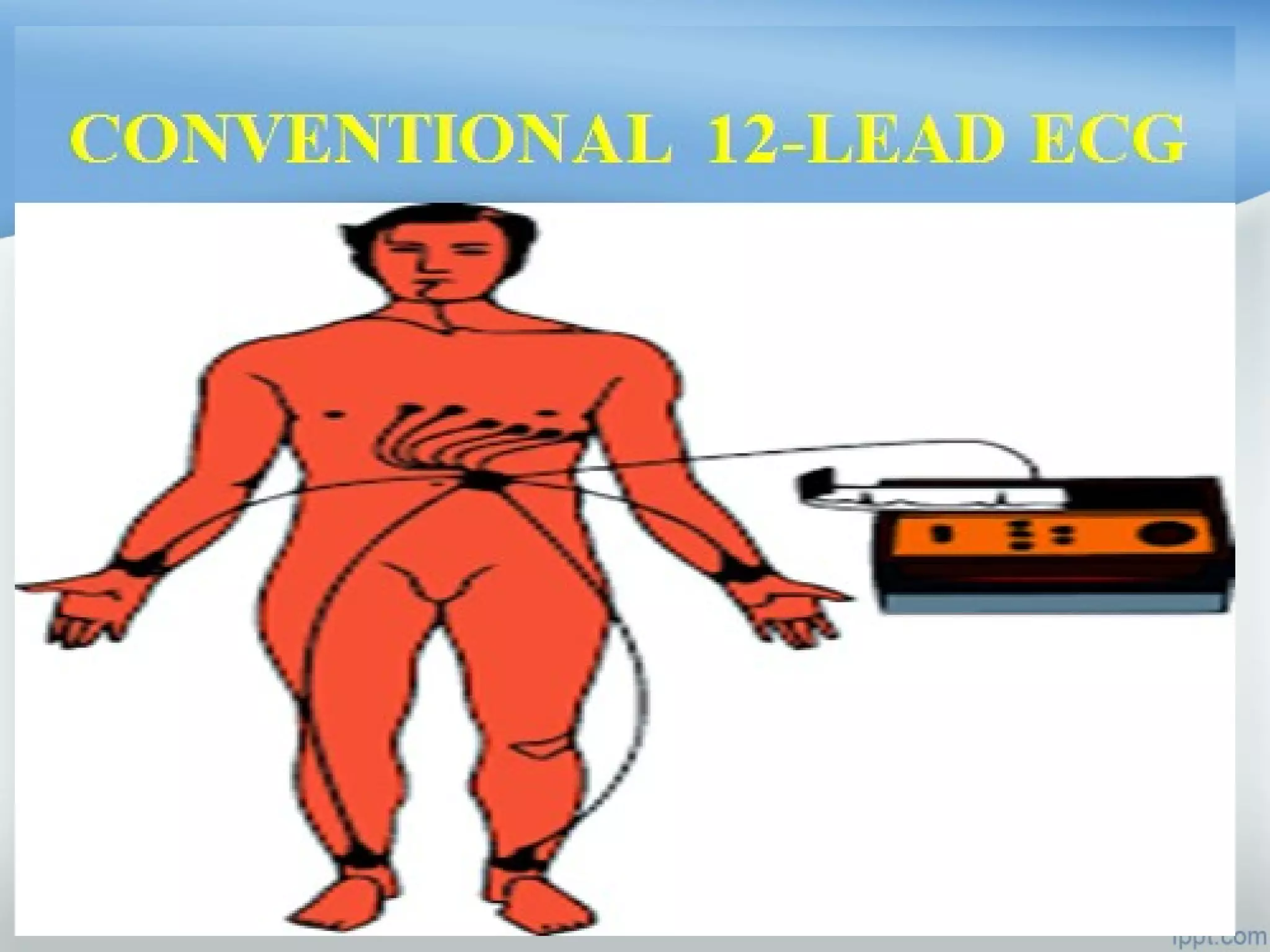
ELECTRODE PADS AND
LEAD WIRES
CONDCUTION SYSTEM OF
HEART
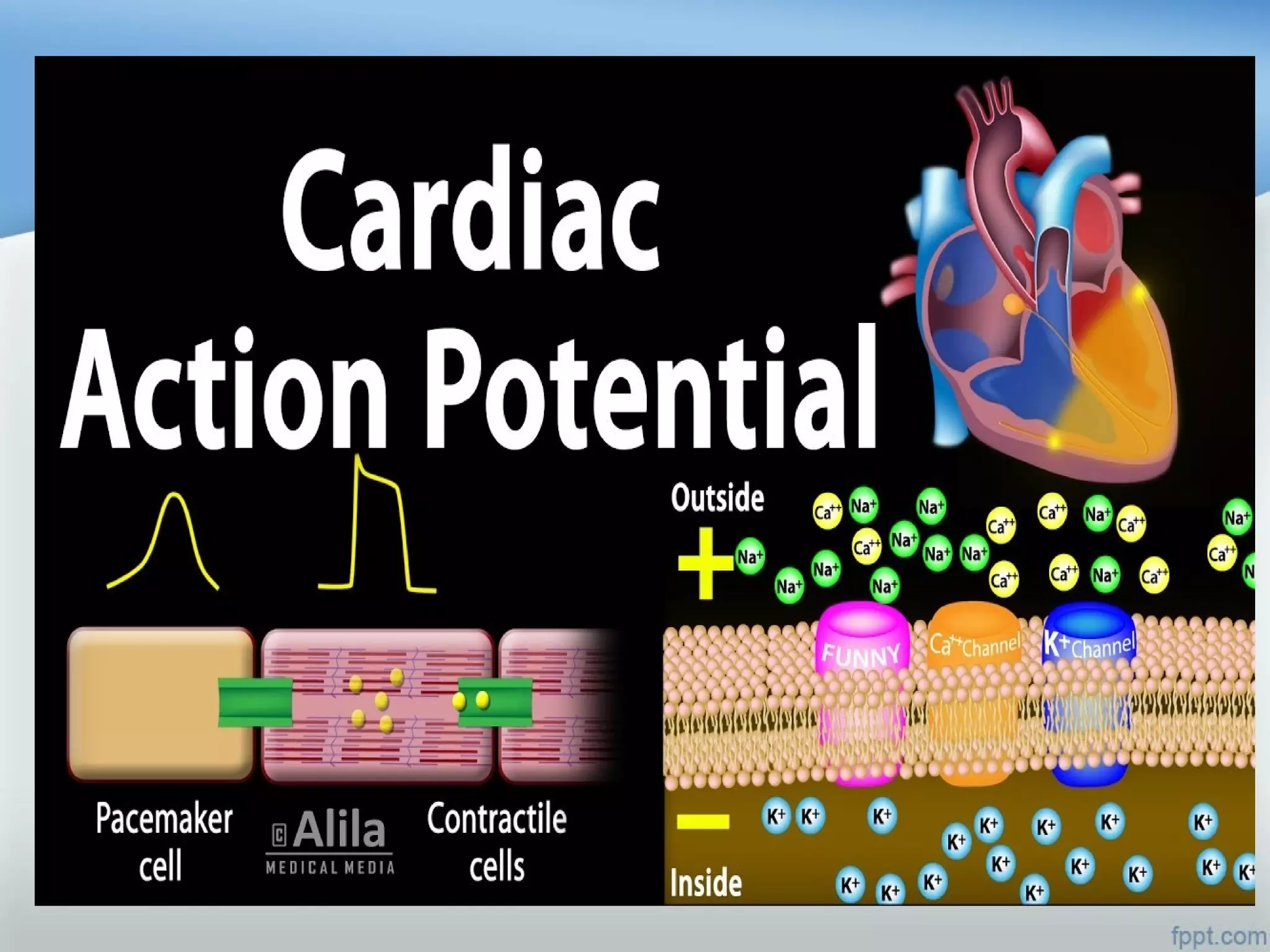
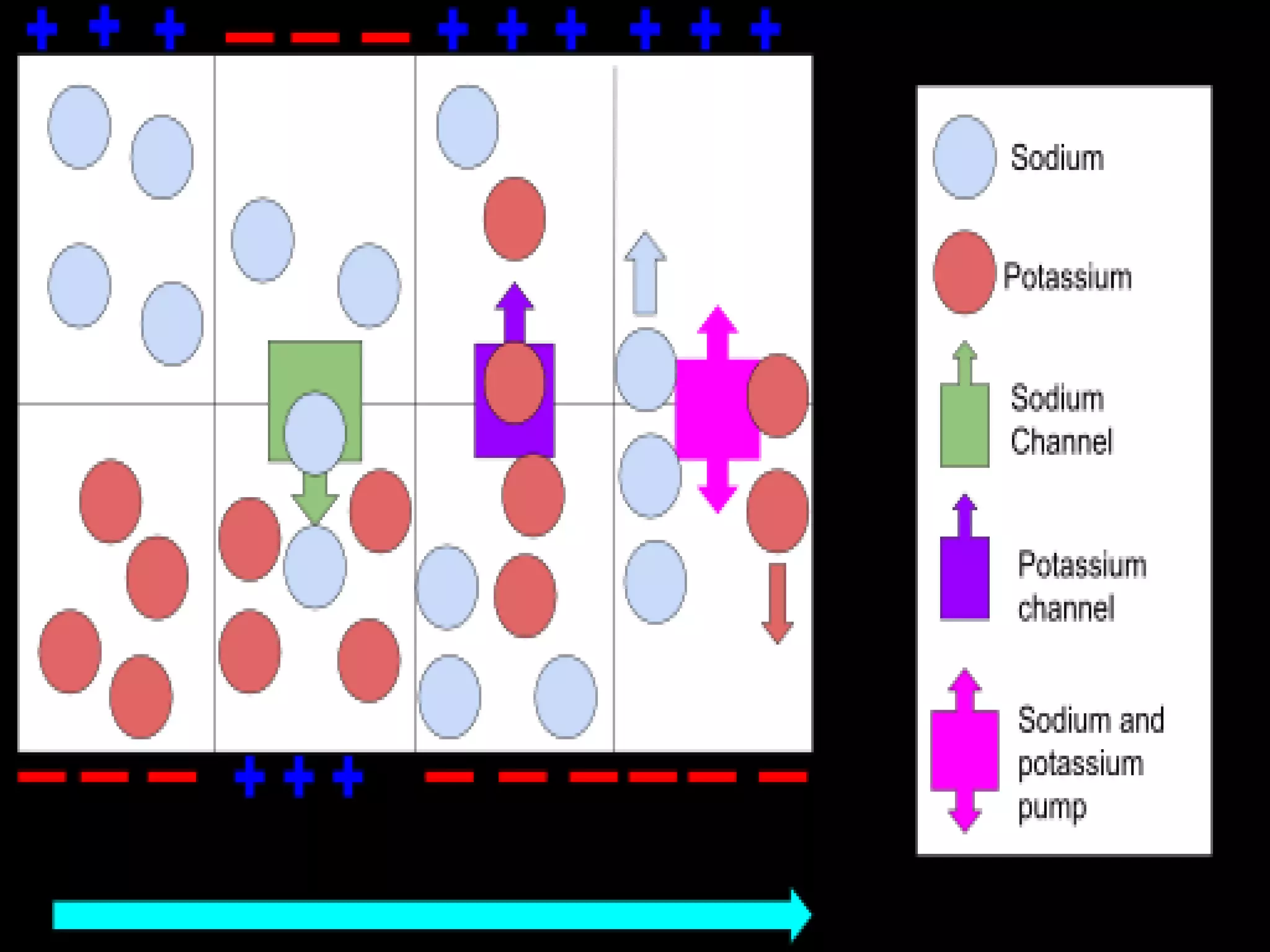
ACTION POTENTIAL
Change in electrical potential associated
with the passage of an impulse along the
membrane of a muscle cell or nerve cell.
PURPOSES
• To assess the cardiac functions : rate,
rhythm and condition.
• Diagnose cardiac rhythm disorders. e.g:-
arrhythmias, heart attack etc.
• Diagnose cardiac diseases. e.g:- MI, CAD,
ACS, CHF etc.
Contd…
• To detect electrolyte imbalance e.g:-
hypokalemia and hyperkalemia.
• To evaluate the effects of treatments. E.g:-
administration of cardiac drugs.
PRINCIPLES
• An ECG is a permanent record of the impulses
regenerated in the heart by the depolarization
and repolarization of the myocardium.
• These impulses are transmitted to the surface
of the body where they are detected and picked
up by the electrodes and measured by the
galvanometer.
INDICATIONS
 Palpitation, cyanosis, chest pain, syncope,
seizure and poisoning.
 Tachycardia, bradycardia, hypothermia,
murmur and shock.
 Suspected MI
Contd…
• Evaluation of rheumatic heart disease
congestive heart disease and all other cardiac
cases (cardiac arrest, cardiomyopathy,
ischemic heart disease, chamber abnormalities,
valvular disorders ,arrhythmias).
• Evaluation of suspected electrolyte imbalance
Contd…
• Patients with implanted defibrillators and
pacemaker
• Effects and side effects of drugs
• Evaluation of metabolic disorders.
• During perioperative procedures.
Contd…
• Pulmonary edema.
• Cases like drowning
• During CPR
• Cor pulmonale
• Pulmonary embolism
CONTRAINDICATIONS
• No absolute contraindications
• Patient refusal
• Patients allergic to adhesives used to affix the
leads.
COMPONENTS OF ECG
• Waves/Complex
• Segments
• Intervals
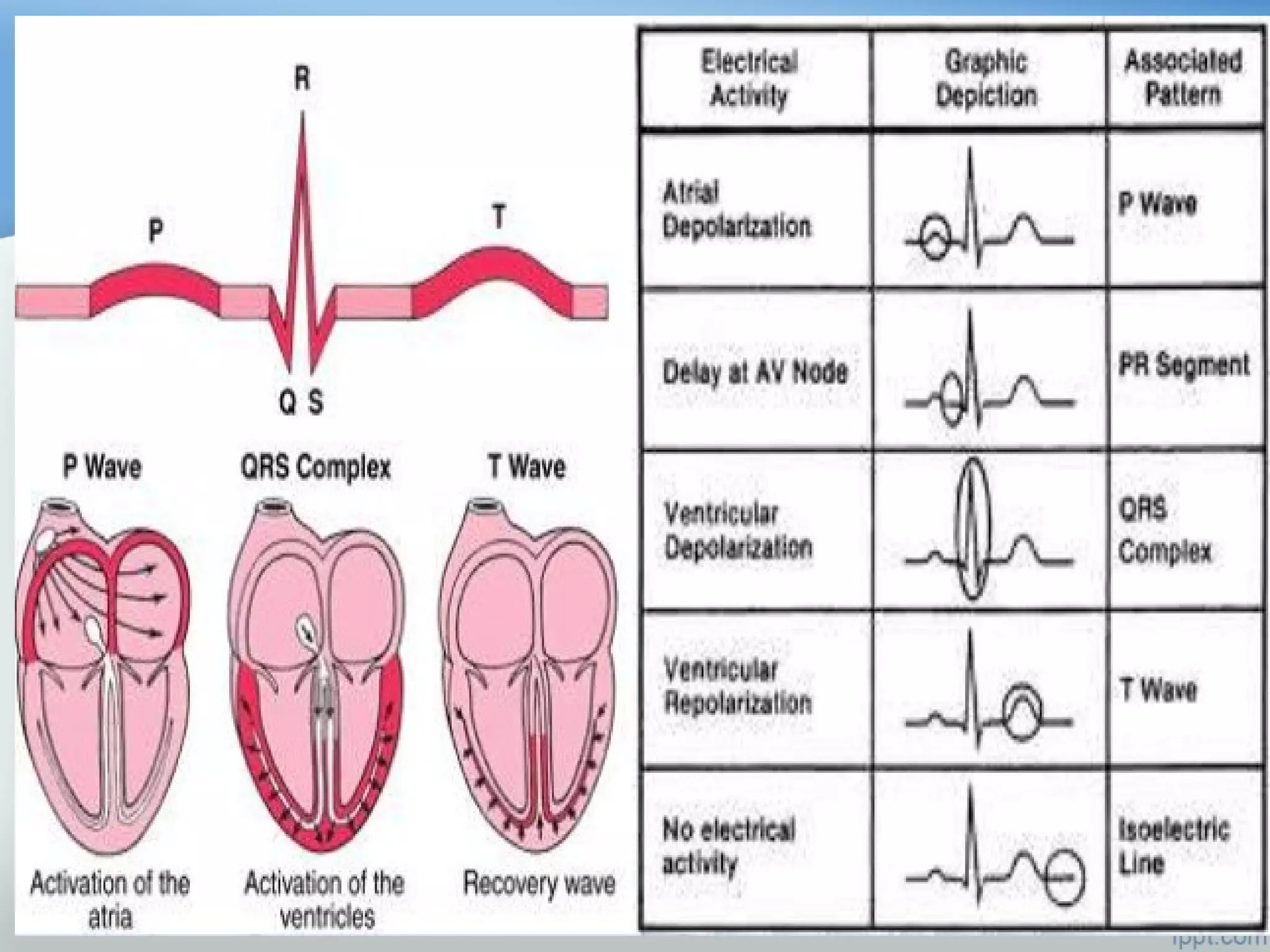
WAVES/ COMPLEX
• It is a deflection ( positive, negative or both)
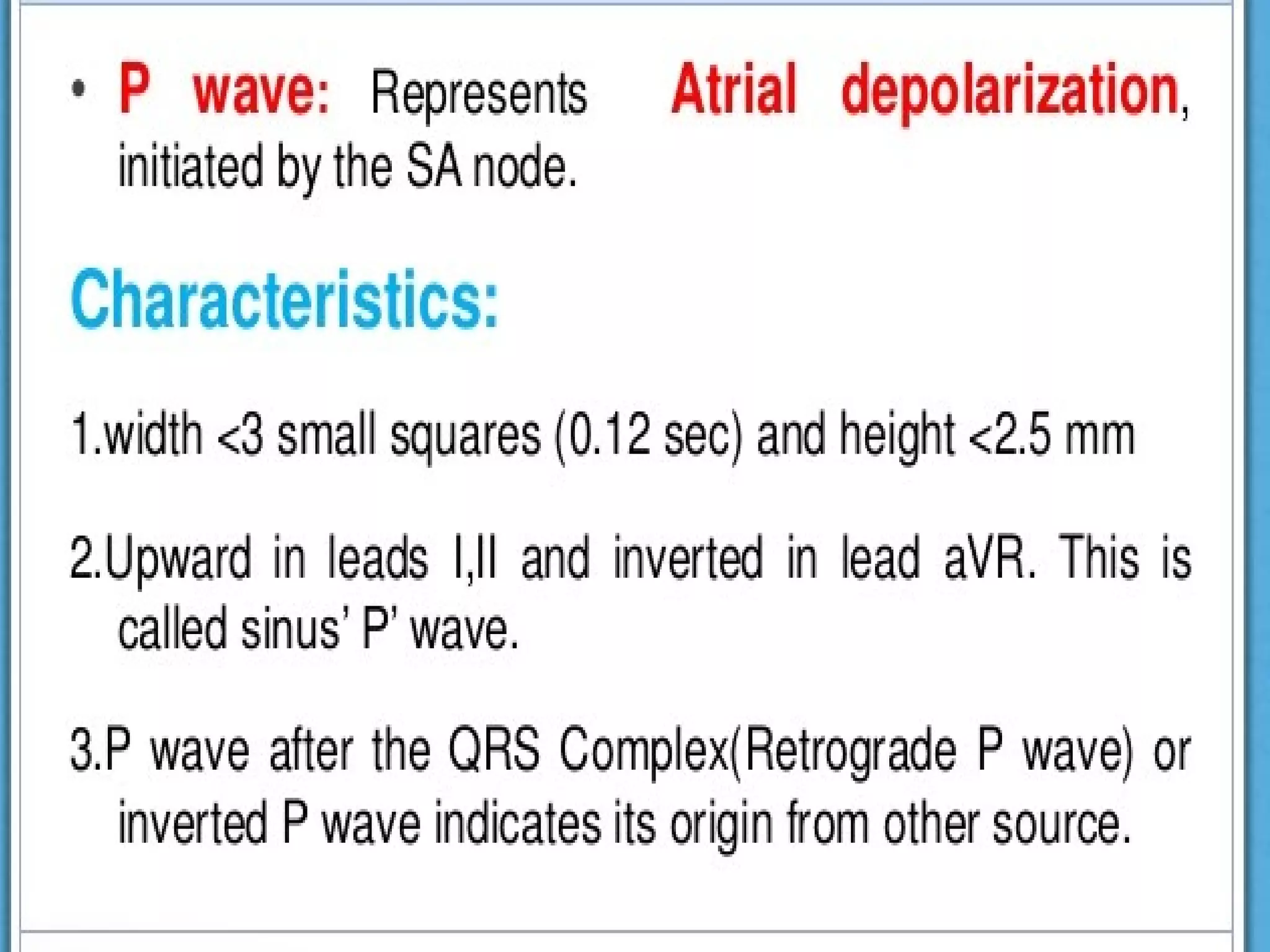
P wave and its characreristics
• Upright ,smooth and rounded.
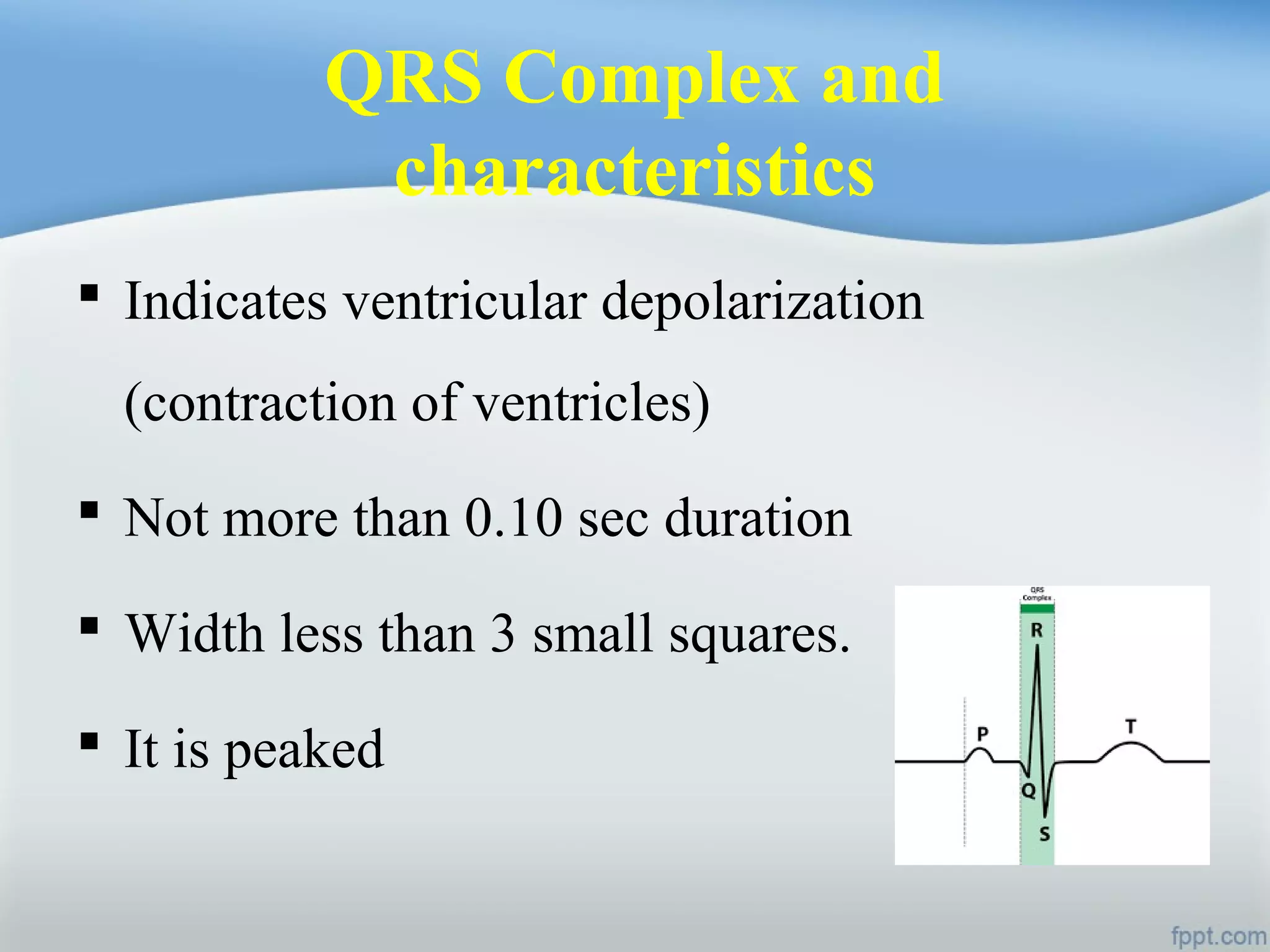
QRS Complex and
characteristics
 Indicates ventricular depolarization
(contraction of ventricles)
 Not more than 0.10 sec duration
 Width less than 3 small squares.
 It is peaked
T wave and its characteristics
• Denotes ventricular repolarization.
• 5mm in amplitude in standard limb leads and
10 mm amplitude in precordial leads.
• Rounded and asymmetrical.
U wave and its characteristics
• The U wave is a small (0.5 mm) deflection
immediately following the T wave, usually in
the same direction as the T wave.
• The U wave is a small, rounded deflection.
• U' waves are thought to represent
repolarization of the Purkinje fibers.
Note: The letters P,Q, R,S,T,U are arbitrarily
selected and have no additional meaning.
SEGMENTS
A segment is the period of time between a
wave or complex and another wave or complex;
normally, it is a straight line (isoelectric line)
e.g.: P-R, S-T, T-P.
PR SEGMENT
• From the end of the P wave to the start of the
QRS complex.
ST SEGMENT
• Indicates early ventricular repolarization
• Normally not depressed more than 0.5 mm
• May be elevated slightly in some leads (no
more than 1 mm).
• From the end of the QRS complex (J point) to
the start of the T wave.
J POINT
The J point is the junction between the
termination of the QRS complex and the
beginning of the ST segment.
TP SEGEMENT
• It is the region between the end of the T wave
(ventricular repolarization or electrical
inactivation) and the next P wave (atrial
depolarization or electrical activation).
• It represents the time when the heart muscle
cells are electrically silent.
INTERVALS
An interval is the period of time between
two points on the ECG that includes a wave, a
complex or both e.g.: P-R, Q-T, R-R.
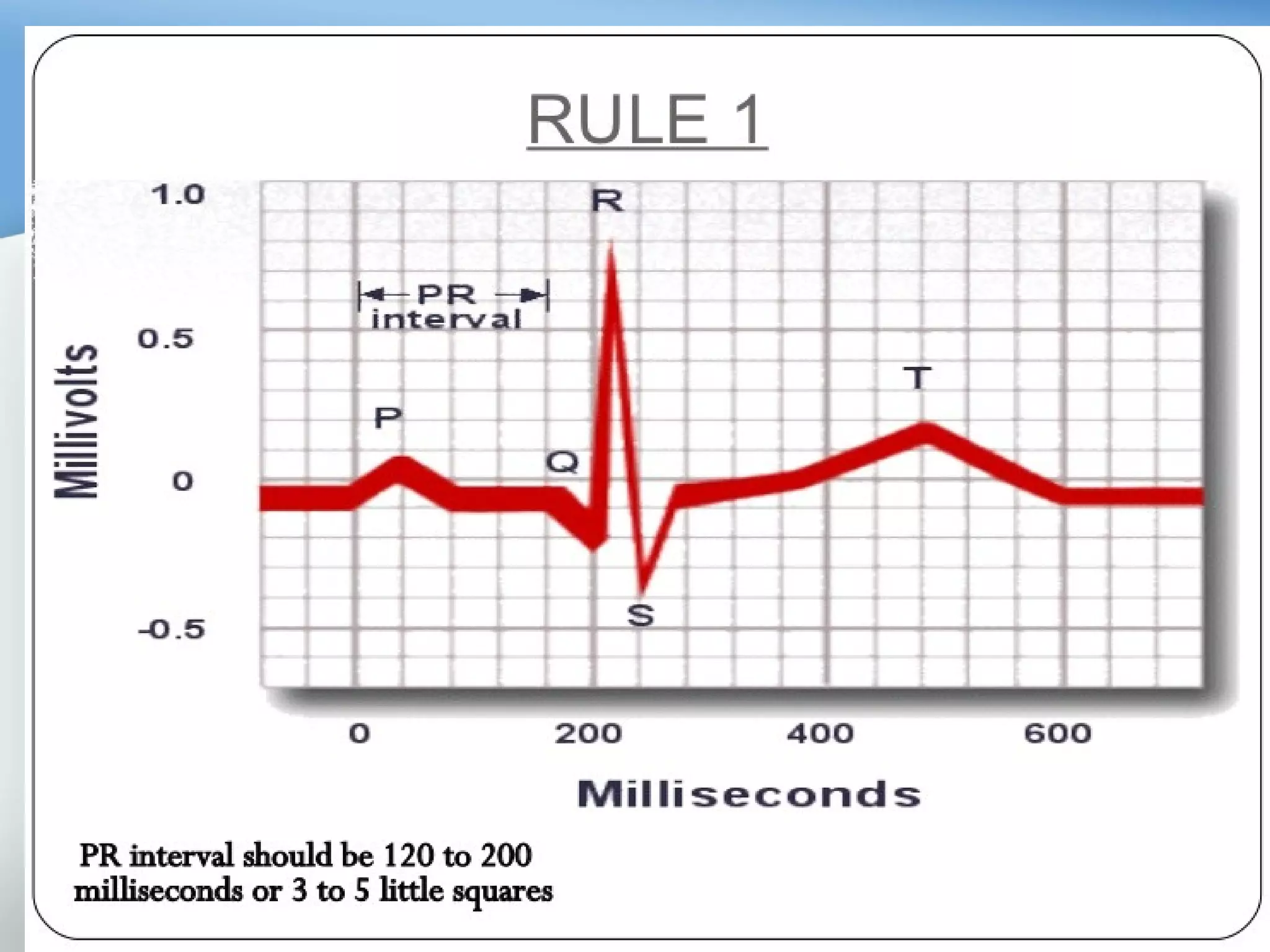
PR INTERVAL
• Indicates AV conduction time
• Duration time is 0.12 to 0.20 seconds
• From the start of the P wave to the start of the
QRS complex.
RR INTERVAL
• The time intervals between consecutive heart
beats are customarily measured in the
electrocardiogram from the beginning of a
QRS complex to the beginning of the next
QRS complex, so these intervals might be
called QQ intervals, but they are
conventionally named RR intervals.
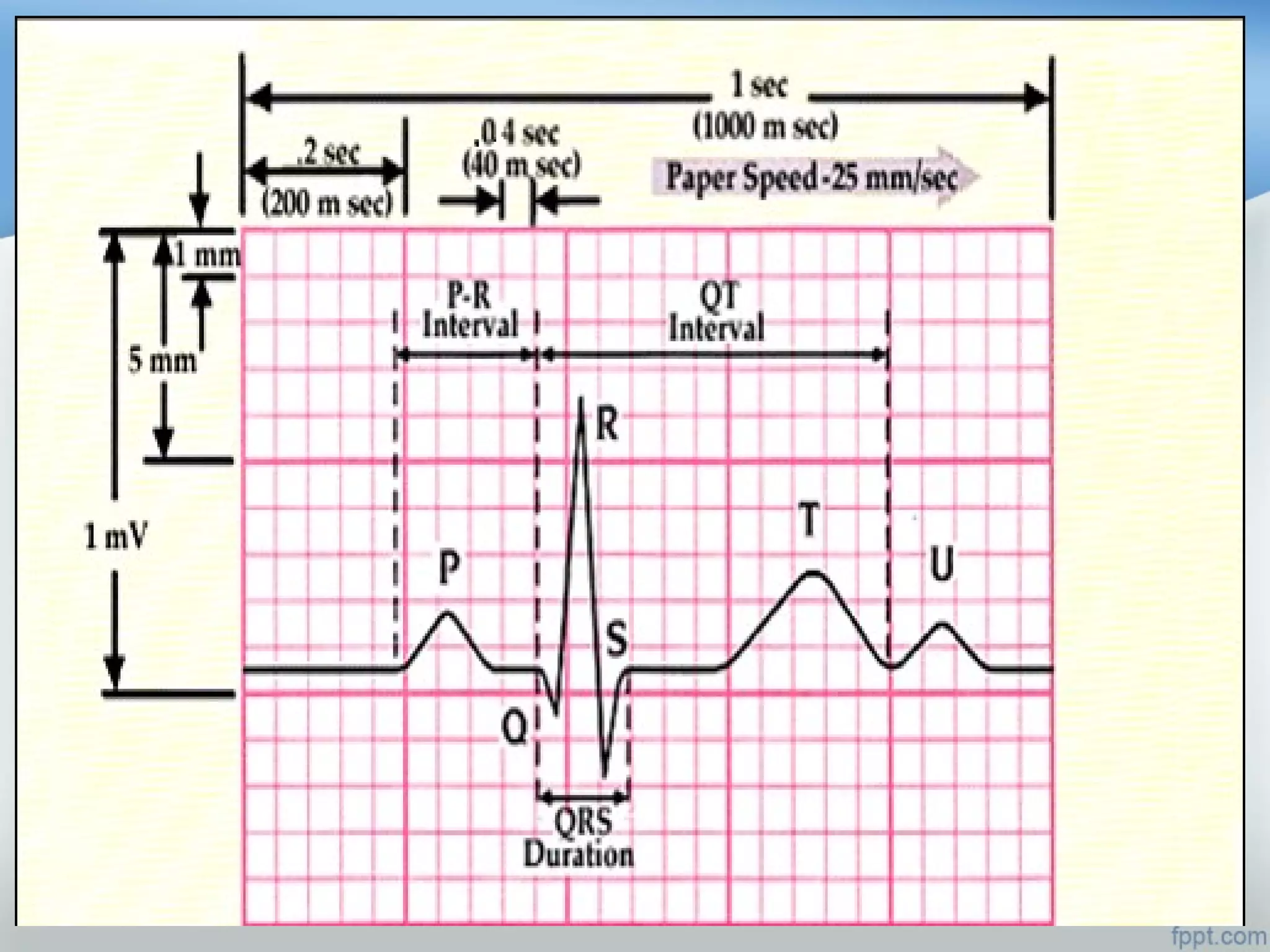
ECG PAPER
The ECG paper is a strip of graph paper with large
and small grids.
On the horizontal axis, each 1 mm square (the
smallest square) represents 0.04 seconds, and each
large square (5 mm) represents 0.2 seconds.
On the vertical axis, each large square represents 0.5
mV.
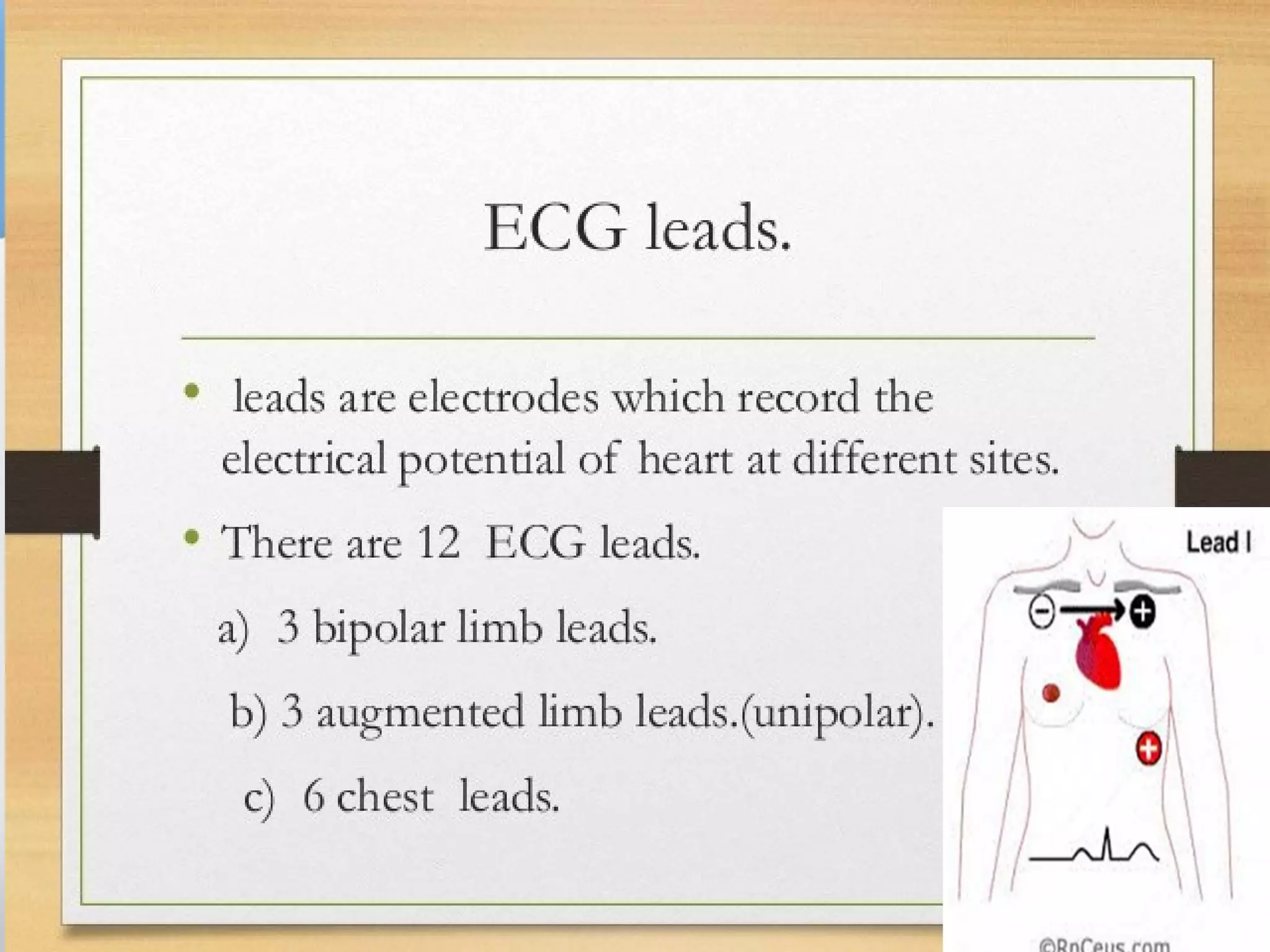
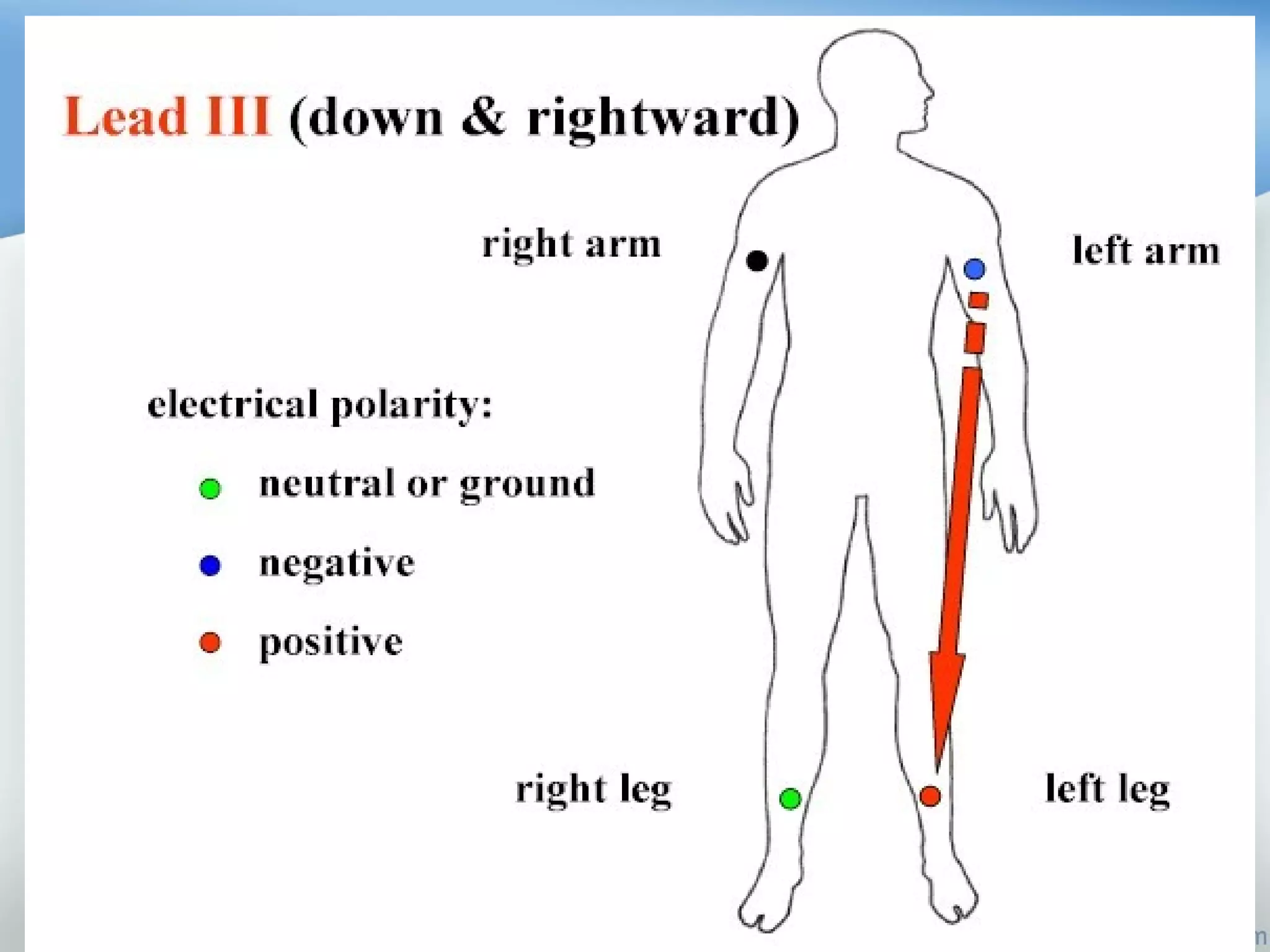
STANDARD/BIPOLAR LIMB
LEADS
• A lead composed of two electrodes of opposite
polarity.
• One electrode as exploring ( positive ) and the
other as reference electrode (negative).
• Also called Einthovens limb leads.
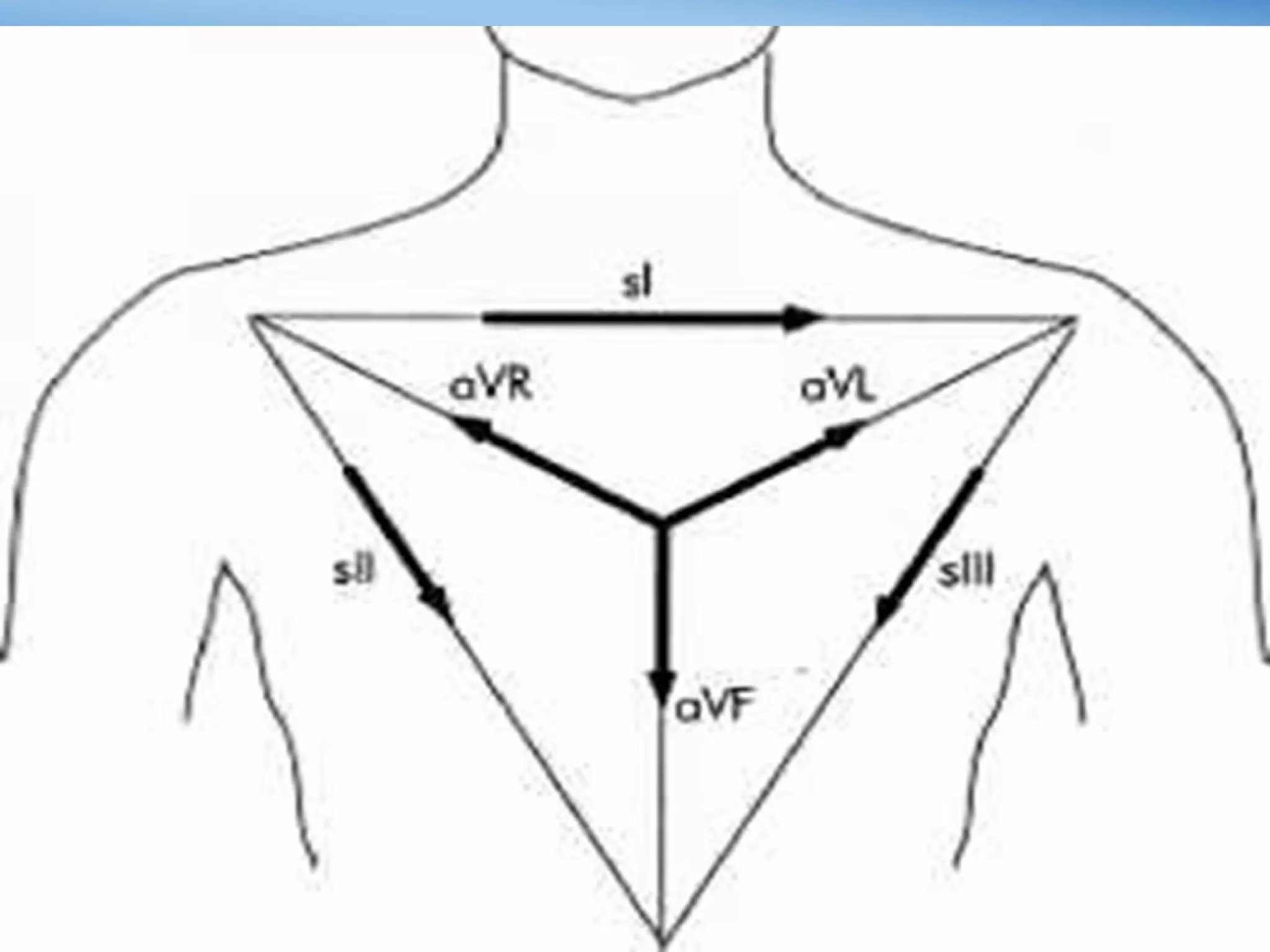
UNIPOLAR/AUGMENTED
LIMB LEADS
BASICS OF ECG
BASICS OF ECG
BASICS OF ECG
BASICS OF ECG
BASICS OF ECG
BASICS OF ECG
BASICS OF ECG
BASICS OF ECG
BASICS OF ECG
BASICS OF ECG
BASICS OF ECG
BASICS OF ECG
BASICS OF ECG
BASICS OF ECG
BASICS OF ECG
BASICS OF ECG
BASICS OF ECG
BASICS OF ECG
BASICS OF ECG
BASICS OF ECG
BASICS OF ECG
BASICS OF ECG
BASICS OF ECG

BASICS OF ECG

  • 1.
    BASICS OF ELECTROCARDIOGRAPHY (ECG OREKG) Ms. Amitha Chandran M.Sc Nurse
  • 2.
    INTRODUCTION ECG is athree letter acronym for ElectroCardioGraphy. The word is derived from greek word. Electro Cardio Graph electricity heart to write
  • 3.
    HISTORY • 1872:Alexander Muirheadattached wires to a feverish patients wrist to obtain a record of the patients heartbeat at St Bartholomews Hospital. • 1893: Dutch physiologist Willem Einthoven introduces the term electrocardiogram at a meeting of the Dutch Medical Association.
  • 4.
    Contd… • 1902: Einthovenpublishes the first electro -cardiogram recorded on a string galvanometer. • 1924: Willem Einthoven(21 May 1860 – 29 September 1927) wins the Nobel prize for inventing the electrocardiograph.
  • 7.
    DEFINITIONS • Graphic tracingof electrical impulses produced in the heart. • Is a diagnostic tool that is routinely used to asses the electrical and muscular function of the heart.
  • 8.
    Contd… • Tracing madeby the various phases of the hearts action by means of an electrocardiograph. • Electrocardiography is the process of recording the electrical activity of the heart over a period of time using electrodes placed on the skin.
  • 10.
    ELECTROCARDIOGRAPH A galvanometric devicethat detects and records the minute differences in electric potential caused by heart action and occurring between different parts of the body: used in the diagnosis of heart disease.
  • 15.
  • 16.
  • 20.
    ACTION POTENTIAL Change inelectrical potential associated with the passage of an impulse along the membrane of a muscle cell or nerve cell.
  • 25.
    PURPOSES • To assessthe cardiac functions : rate, rhythm and condition. • Diagnose cardiac rhythm disorders. e.g:- arrhythmias, heart attack etc. • Diagnose cardiac diseases. e.g:- MI, CAD, ACS, CHF etc.
  • 26.
    Contd… • To detectelectrolyte imbalance e.g:- hypokalemia and hyperkalemia. • To evaluate the effects of treatments. E.g:- administration of cardiac drugs.
  • 27.
    PRINCIPLES • An ECGis a permanent record of the impulses regenerated in the heart by the depolarization and repolarization of the myocardium. • These impulses are transmitted to the surface of the body where they are detected and picked up by the electrodes and measured by the galvanometer.
  • 28.
    INDICATIONS  Palpitation, cyanosis,chest pain, syncope, seizure and poisoning.  Tachycardia, bradycardia, hypothermia, murmur and shock.  Suspected MI
  • 29.
    Contd… • Evaluation ofrheumatic heart disease congestive heart disease and all other cardiac cases (cardiac arrest, cardiomyopathy, ischemic heart disease, chamber abnormalities, valvular disorders ,arrhythmias). • Evaluation of suspected electrolyte imbalance
  • 30.
    Contd… • Patients withimplanted defibrillators and pacemaker • Effects and side effects of drugs • Evaluation of metabolic disorders. • During perioperative procedures.
  • 31.
    Contd… • Pulmonary edema. •Cases like drowning • During CPR • Cor pulmonale • Pulmonary embolism
  • 32.
    CONTRAINDICATIONS • No absolutecontraindications • Patient refusal • Patients allergic to adhesives used to affix the leads.
  • 33.
    COMPONENTS OF ECG •Waves/Complex • Segments • Intervals
  • 34.
    WAVES/ COMPLEX • Itis a deflection ( positive, negative or both)
  • 36.
    P wave andits characreristics • Upright ,smooth and rounded.
  • 38.
    QRS Complex and characteristics Indicates ventricular depolarization (contraction of ventricles)  Not more than 0.10 sec duration  Width less than 3 small squares.  It is peaked
  • 39.
    T wave andits characteristics • Denotes ventricular repolarization. • 5mm in amplitude in standard limb leads and 10 mm amplitude in precordial leads. • Rounded and asymmetrical.
  • 40.
    U wave andits characteristics • The U wave is a small (0.5 mm) deflection immediately following the T wave, usually in the same direction as the T wave. • The U wave is a small, rounded deflection. • U' waves are thought to represent repolarization of the Purkinje fibers.
  • 41.
    Note: The lettersP,Q, R,S,T,U are arbitrarily selected and have no additional meaning.
  • 42.
    SEGMENTS A segment isthe period of time between a wave or complex and another wave or complex; normally, it is a straight line (isoelectric line) e.g.: P-R, S-T, T-P.
  • 44.
    PR SEGMENT • Fromthe end of the P wave to the start of the QRS complex.
  • 45.
    ST SEGMENT • Indicatesearly ventricular repolarization • Normally not depressed more than 0.5 mm • May be elevated slightly in some leads (no more than 1 mm). • From the end of the QRS complex (J point) to the start of the T wave.
  • 46.
    J POINT The Jpoint is the junction between the termination of the QRS complex and the beginning of the ST segment.
  • 47.
    TP SEGEMENT • Itis the region between the end of the T wave (ventricular repolarization or electrical inactivation) and the next P wave (atrial depolarization or electrical activation). • It represents the time when the heart muscle cells are electrically silent.
  • 48.
    INTERVALS An interval isthe period of time between two points on the ECG that includes a wave, a complex or both e.g.: P-R, Q-T, R-R.
  • 49.
    PR INTERVAL • IndicatesAV conduction time • Duration time is 0.12 to 0.20 seconds • From the start of the P wave to the start of the QRS complex.
  • 50.
    RR INTERVAL • Thetime intervals between consecutive heart beats are customarily measured in the electrocardiogram from the beginning of a QRS complex to the beginning of the next QRS complex, so these intervals might be called QQ intervals, but they are conventionally named RR intervals.
  • 52.
    ECG PAPER The ECGpaper is a strip of graph paper with large and small grids. On the horizontal axis, each 1 mm square (the smallest square) represents 0.04 seconds, and each large square (5 mm) represents 0.2 seconds. On the vertical axis, each large square represents 0.5 mV.
  • 57.
    STANDARD/BIPOLAR LIMB LEADS • Alead composed of two electrodes of opposite polarity. • One electrode as exploring ( positive ) and the other as reference electrode (negative). • Also called Einthovens limb leads.
  • 64.