•
•
•
•
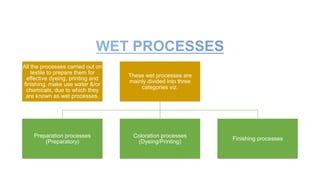
All the processes carried out on
textile to prepare them for
effective dyeing, printing and
finishing, make use water &/or
chemicals, due to which they
are known as wet processes.
These wet processes are
mainly divided into three
categories viz.
Preparation processes
(Preparatory)
Coloration processes
(Dyeing/Printing)
Finishing processes
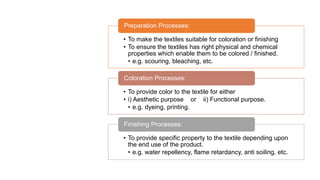
• To make the textiles suitable for coloration or finishing
• To ensure the textiles has right physical and chemical
properties which enable them to be colored / finished.
• e.g. scouring, bleaching, etc.
Preparation Processes:
• To provide color to the textile for either
• i) Aesthetic purpose or ii) Functional purpose.
• e.g. dyeing, printing.
Coloration Processes:
• To provide specific property to the textile depending upon
the end use of the product.
• e.g. water repellency, flame retardancy, anti soiling, etc.
Finishing Processes:
Sl.No. Dyeing Printing
1 The process by which a textile product is
changed physically or chemically so that it looks
mono uniform colored is called dyeing.
To produce different designs on the fabric with
motif in one or more colors one kind of
localized dyeing that is pigments or a dye are
applied locally or discontinuously is known as
Printing.
2 In dyeing process, dyed in one color uniformly
all over the fabric.
In printing process, color is applied in one side
according to the design only.
3 It is performed on fabric, yarn in wet condition. It is performed on fabric in dry condition.
4 Half bleaching is enough for fabric preparation. Full-bleaching with optical whitener is essential.
5 Dyeing process used for fiber, yarn and fabric. Printing process used for only fabric.
6 Color is applied in form of solution. Color is applied in form of thick paste.
7 For dyeing there is no design. For printing there is a specific design.
8 Dyes are applied in both side of fabric. Dyes are applied in single side of fabric.
9 For this process only one color is generally
used.
One or more colors are used in printing
process.
10 In dyeing process, color penetrates through the
fabric.
Color is applied only on the surface.
11 A particular temperature is maintained in dyeing
process.
There is no particular temperature controlling
system in printing.
12 Thickener is not used. Thickener must be used.
13 The density of dye solution is low. The density of dye solution is high.
14 Generally after dyeing, steaming, and curing are
not required.
After printing, steaming and curing is must for
fixing the dye molecules to the goods.
15 Dyed fabric is respectively soft in feeling. Printed fabric is respectively harsh in feeling.
16 Comparatively low cost from printing. Comparatively high cost from dyeing.
17 There is no localized application. There is localized application.
18 Lot of water is required. Less amount of water is used.
19 Huge time required for dye application. Less time required for printing process.
20 Liquor ratio is high. Liquor ratio is less.

The primary source of dye historically has generally
been nature, with the dyes being extracted from
animals or plants. Since the mid 18th century,
however humans have produced artificial dyes to
achieve a broader range of colors and to render the
dyes more stable to resist washing and general use.
Different classes of dyes are used for different types
of fiber and at different stages of the textile
production process, from loose fibers through yarn
and cloth to completed garments.
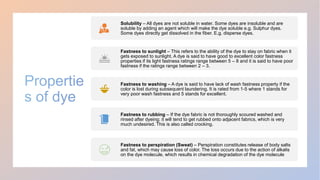
Solubility – All dyes are not soluble in water. Some dyes are insoluble and are
soluble by adding an agent which will make the dye soluble e.g. Sulphur dyes.
Some dyes directly get dissolved in the fiber. E.g. disperse dyes.
Fastness to sunlight – This refers to the ability of the dye to stay on fabric when it
gets exposed to sunlight. A dye is said to have good to excellent color fastness
properties if its light fastness ratings range between 5 – 8 and it is said to have poor
fastness if the ratings range between 2 – 3.
Fastness to washing – A dye is said to have lack of wash fastness property if the
color is lost during subsequent laundering. It is rated from 1-5 where 1 stands for
very poor wash fastness and 5 stands for excellent.
Fastness to rubbing – If the dye fabric is not thoroughly scoured washed and
rinsed after dyeing; it will tend to get rubbed onto adjacent fabrics, which is very
much undesired. This is also called crocking.
Fastness to perspiration (Sweat) – Perspiration constitutes release of body salts
and fat, which may cause loss of color. The loss occurs due to the action of alkalis
on the dye molecule, which results in chemical degradation of the dye molecule
Dyeing can be added to textiles at
various stages
• i.e. during
• Fiber
• Yarn
• fabric or product stage.




















1.
2.
3.






 A method of coloring fabric made with
strategically placed yarns of 2 or more different fibers. A
pre-planned effect becomes visible by dyeing the fabric in
different dye baths, one for each of the types of yarn.

1.
2.
1.
2.
3.
• Cochineal
• Squid sepia
• Lac
• Tyrian purple
Animal dyes
• Fustic
• Sumac
• Catechu
• Madder
• Henna
• Saffron
• Logwood
Vegetable dyes
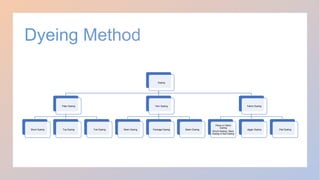
Dyeing
Fiber Dyeing
Stock Dyeing Top Dyeing Tow Dyeing
Yarn Dyeing
Skein Dyeing Package Dyeing Beam Dyeing
Fabric Dyeing
Piece or Fabric
Dyeing
Winch Dyeing / Beck
Dyeing or box Dyeing
Jigger Dyeing Pad Dyeing
 






1.
a)
b)
c)
d)
e)
f)
g)
2.
a)
b)
c)
d)
3.
a)
b)
4.
5.
a)
b)
1.
2.
3.
4.
5.
6.
7.
8.

Textile Science 2.pptx

  • 1.
  • 2.
    All the processescarried out on textile to prepare them for effective dyeing, printing and finishing, make use water &/or chemicals, due to which they are known as wet processes. These wet processes are mainly divided into three categories viz. Preparation processes (Preparatory) Coloration processes (Dyeing/Printing) Finishing processes
  • 3.
    • To makethe textiles suitable for coloration or finishing • To ensure the textiles has right physical and chemical properties which enable them to be colored / finished. • e.g. scouring, bleaching, etc. Preparation Processes: • To provide color to the textile for either • i) Aesthetic purpose or ii) Functional purpose. • e.g. dyeing, printing. Coloration Processes: • To provide specific property to the textile depending upon the end use of the product. • e.g. water repellency, flame retardancy, anti soiling, etc. Finishing Processes:
  • 6.
    Sl.No. Dyeing Printing 1The process by which a textile product is changed physically or chemically so that it looks mono uniform colored is called dyeing. To produce different designs on the fabric with motif in one or more colors one kind of localized dyeing that is pigments or a dye are applied locally or discontinuously is known as Printing. 2 In dyeing process, dyed in one color uniformly all over the fabric. In printing process, color is applied in one side according to the design only. 3 It is performed on fabric, yarn in wet condition. It is performed on fabric in dry condition. 4 Half bleaching is enough for fabric preparation. Full-bleaching with optical whitener is essential. 5 Dyeing process used for fiber, yarn and fabric. Printing process used for only fabric. 6 Color is applied in form of solution. Color is applied in form of thick paste. 7 For dyeing there is no design. For printing there is a specific design. 8 Dyes are applied in both side of fabric. Dyes are applied in single side of fabric. 9 For this process only one color is generally used. One or more colors are used in printing process. 10 In dyeing process, color penetrates through the fabric. Color is applied only on the surface. 11 A particular temperature is maintained in dyeing process. There is no particular temperature controlling system in printing. 12 Thickener is not used. Thickener must be used. 13 The density of dye solution is low. The density of dye solution is high. 14 Generally after dyeing, steaming, and curing are not required. After printing, steaming and curing is must for fixing the dye molecules to the goods. 15 Dyed fabric is respectively soft in feeling. Printed fabric is respectively harsh in feeling. 16 Comparatively low cost from printing. Comparatively high cost from dyeing. 17 There is no localized application. There is localized application. 18 Lot of water is required. Less amount of water is used. 19 Huge time required for dye application. Less time required for printing process. 20 Liquor ratio is high. Liquor ratio is less.
  • 7.
  • 8.
    The primary sourceof dye historically has generally been nature, with the dyes being extracted from animals or plants. Since the mid 18th century, however humans have produced artificial dyes to achieve a broader range of colors and to render the dyes more stable to resist washing and general use. Different classes of dyes are used for different types of fiber and at different stages of the textile production process, from loose fibers through yarn and cloth to completed garments.
  • 9.
    Solubility – Alldyes are not soluble in water. Some dyes are insoluble and are soluble by adding an agent which will make the dye soluble e.g. Sulphur dyes. Some dyes directly get dissolved in the fiber. E.g. disperse dyes. Fastness to sunlight – This refers to the ability of the dye to stay on fabric when it gets exposed to sunlight. A dye is said to have good to excellent color fastness properties if its light fastness ratings range between 5 – 8 and it is said to have poor fastness if the ratings range between 2 – 3. Fastness to washing – A dye is said to have lack of wash fastness property if the color is lost during subsequent laundering. It is rated from 1-5 where 1 stands for very poor wash fastness and 5 stands for excellent. Fastness to rubbing – If the dye fabric is not thoroughly scoured washed and rinsed after dyeing; it will tend to get rubbed onto adjacent fabrics, which is very much undesired. This is also called crocking. Fastness to perspiration (Sweat) – Perspiration constitutes release of body salts and fat, which may cause loss of color. The loss occurs due to the action of alkalis on the dye molecule, which results in chemical degradation of the dye molecule
  • 10.
    Dyeing can beadded to textiles at various stages • i.e. during • Fiber • Yarn • fabric or product stage.
  • 11.
  • 12.
  • 13.
  • 14.
  • 15.
     A methodof coloring fabric made with strategically placed yarns of 2 or more different fibers. A pre-planned effect becomes visible by dyeing the fabric in different dye baths, one for each of the types of yarn.
  • 16.
  • 17.
  • 18.
    • Cochineal • Squidsepia • Lac • Tyrian purple Animal dyes • Fustic • Sumac • Catechu • Madder • Henna • Saffron • Logwood Vegetable dyes
  • 22.
    Dyeing Fiber Dyeing Stock DyeingTop Dyeing Tow Dyeing Yarn Dyeing Skein Dyeing Package Dyeing Beam Dyeing Fabric Dyeing Piece or Fabric Dyeing Winch Dyeing / Beck Dyeing or box Dyeing Jigger Dyeing Pad Dyeing
  • 23.
  • 24.
  • 25.
  • 26.