1 Definition
Academic writing is the kind of writing that you
do in college and university.
2 Characterization
It is different from other kinds of writing such
as personal, literary, journalistic, business, etc.,
in terms of audience, tone, and purpose.
2
2.1 Audience
Consider the people who will read or hear what
you write. Who are they?
2.2 Tone
Consider the style of writing, such as choice of
words, grammatical structure, the length of your
sentences, etc. Academic writing has a highly
formal and impersonal tone. How do you
achieve such a tone?
3
 Avoid using the following informal usage:
Exclamations
Sentence fragments
Modal contractions
Initial “and”
Initial “but”
4
2.3 Purpose
Purpose of academic writing is often to explain, to
persuade, or to convince your audience of the
correctness of your claim on a certain issue or
problem.
5
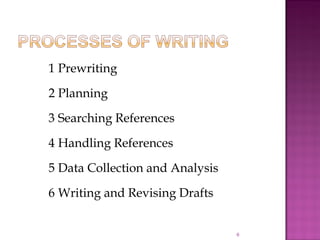
1 Prewriting
2 Planning
3 Searching References
4 Handling References
5 Data Collection and Analysis
6 Writing and Revising Drafts
6
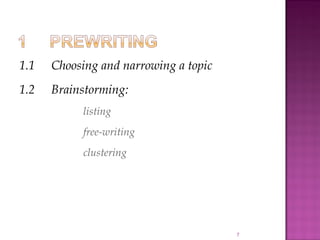
1.1 Choosing and narrowing a topic
1.2 Brainstorming:
listing
free-writing
clustering
7
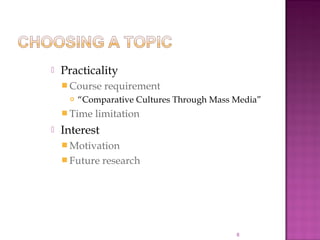
 Practicality
 Course requirement
 “Comparative Cultures Through Mass Media”
 Time limitation
 Interest
 Motivation
 Future research
8
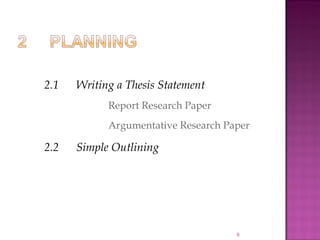
2.1 Writing a Thesis Statement
Report Research Paper
Argumentative Research Paper
2.2 Simple Outlining
9
3.1 Library
3.2 Computer
3.3 Other sources
10
4.1 Quotations
Direct Quotations
Indirect Quotations
4.2 Summaries
4.3 Paraphrases
4.4 Avoiding Plagiarism
11
5.1 Methods of Data Collection
Literature Review
Experiments
Fieldwork, etc.
5.2 Analysis and Discussion
12
6.1 Writing the First Draft
6.2 Revising Content and Organization
6.3 Blending Reference Materials
6.4 Proofreading the Second Draft for
Grammar and Mechanics
6.5 Writing the Final Manuscript
13
14

Basics academicwriting ュ

  • 2.
    1 Definition Academic writingis the kind of writing that you do in college and university. 2 Characterization It is different from other kinds of writing such as personal, literary, journalistic, business, etc., in terms of audience, tone, and purpose. 2
  • 3.
    2.1 Audience Consider thepeople who will read or hear what you write. Who are they? 2.2 Tone Consider the style of writing, such as choice of words, grammatical structure, the length of your sentences, etc. Academic writing has a highly formal and impersonal tone. How do you achieve such a tone? 3
  • 4.
     Avoid usingthe following informal usage: Exclamations Sentence fragments Modal contractions Initial “and” Initial “but” 4
  • 5.
    2.3 Purpose Purpose ofacademic writing is often to explain, to persuade, or to convince your audience of the correctness of your claim on a certain issue or problem. 5
  • 6.
    1 Prewriting 2 Planning 3Searching References 4 Handling References 5 Data Collection and Analysis 6 Writing and Revising Drafts 6
  • 7.
    1.1 Choosing andnarrowing a topic 1.2 Brainstorming: listing free-writing clustering 7
  • 8.
     Practicality  Courserequirement  “Comparative Cultures Through Mass Media”  Time limitation  Interest  Motivation  Future research 8
  • 9.
    2.1 Writing aThesis Statement Report Research Paper Argumentative Research Paper 2.2 Simple Outlining 9
  • 10.
  • 11.
    4.1 Quotations Direct Quotations IndirectQuotations 4.2 Summaries 4.3 Paraphrases 4.4 Avoiding Plagiarism 11
  • 12.
    5.1 Methods ofData Collection Literature Review Experiments Fieldwork, etc. 5.2 Analysis and Discussion 12
  • 13.
    6.1 Writing theFirst Draft 6.2 Revising Content and Organization 6.3 Blending Reference Materials 6.4 Proofreading the Second Draft for Grammar and Mechanics 6.5 Writing the Final Manuscript 13
  • 14.