 Identify
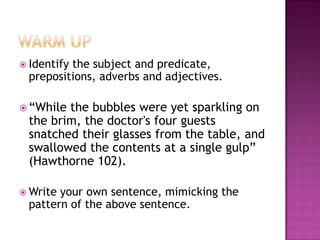
         the subject and predicate,
 prepositions, adverbs and adjectives.

 “Whilethe bubbles were yet sparkling on
 the brim, the doctor's four guests
 snatched their glasses from the table, and
 swallowed the contents at a single gulp”
 (Hawthorne 102).

 Writeyour own sentence, mimicking the
 pattern of the above sentence.
Incorporating quoted material into
                  literary analysis
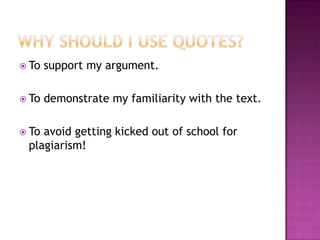
 To   support my argument.

 To   demonstrate my familiarity with the text.

 Toavoid getting kicked out of school for
 plagiarism!
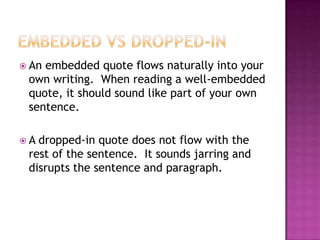
 Anembedded quote flows naturally into your
 own writing. When reading a well-embedded
 quote, it should sound like part of your own
 sentence.

A dropped-in quote does not flow with the
 rest of the sentence. It sounds jarring and
 disrupts the sentence and paragraph.
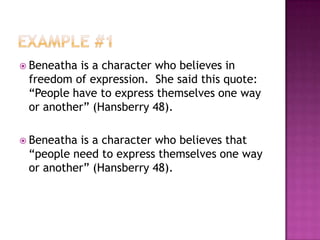
 Beneathais a character who believes in
 freedom of expression. She said this quote:
 “People have to express themselves one way
 or another” (Hansberry 48).

 Beneathais a character who believes that
 “people need to express themselves one way
 or another” (Hansberry 48).
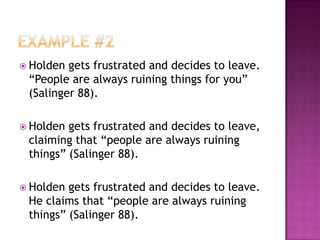
 Holden gets frustrated and decides to leave.
 “People are always ruining things for you”
 (Salinger 88).

 Holden gets frustrated and decides to leave,
 claiming that “people are always ruining
 things” (Salinger 88).

 Holden gets frustrated and decides to leave.
 He claims that “people are always ruining
 things” (Salinger 88).
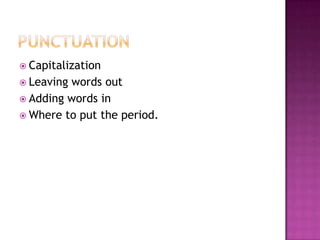
 Capitalization
 Leavingwords out
 Adding words in
 Where to put the period.
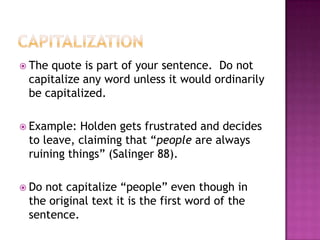
 Thequote is part of your sentence. Do not
 capitalize any word unless it would ordinarily
 be capitalized.

 Example: Holden gets frustrated and decides
 to leave, claiming that “people are always
 ruining things” (Salinger 88).

 Donot capitalize “people” even though in
 the original text it is the first word of the
 sentence.
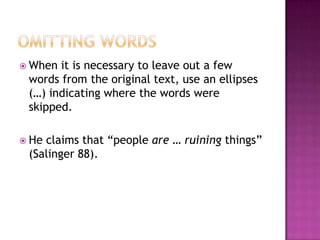
 When it is necessary to leave out a few
 words from the original text, use an ellipses
 (…) indicating where the words were
 skipped.

 Heclaims that “people are … ruining things”
 (Salinger 88).
 Sometimes  a word needs to be changed in
 order for the sentence to be grammatically
 correct.

 She is just about to apologize when she
 realizes that this nun is not “Mama or Papa
 [who she] could argue things with” (Alvarez
 15).

 The   original text is written in first person.
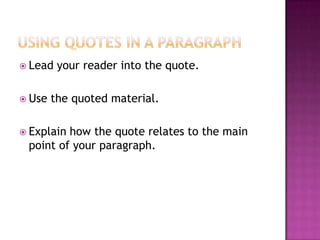
 Lead   your reader into the quote.

 Use   the quoted material.

 Explainhow the quote relates to the main
 point of your paragraph.
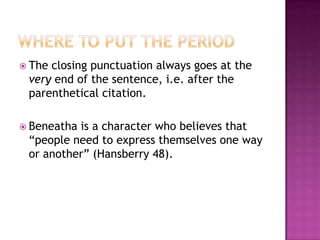
 Theclosing punctuation always goes at the
 very end of the sentence, i.e. after the
 parenthetical citation.

 Beneathais a character who believes that
 “people need to express themselves one way
 or another” (Hansberry 48).
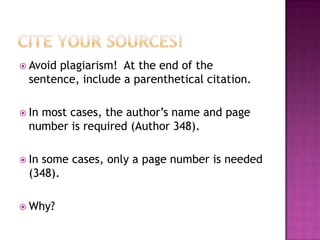
 Avoidplagiarism! At the end of the
  sentence, include a parenthetical citation.

 Inmost cases, the author’s name and page
  number is required (Author 348).

 Insome cases, only a page number is needed
  (348).

 Why?
 Theparenthetical citations co-ordinate with
 the works cited page included at the end of
 your paper.

 Helpful   websites for proper formatting:
Lastname, Firstname. Title of Book. Place of
  Publication: Publisher, Year of Publication.
  Medium of Publication.
Embedded quotes

Embedded quotes

  • 1.
     Identify the subject and predicate, prepositions, adverbs and adjectives.  “Whilethe bubbles were yet sparkling on the brim, the doctor's four guests snatched their glasses from the table, and swallowed the contents at a single gulp” (Hawthorne 102).  Writeyour own sentence, mimicking the pattern of the above sentence.
  • 2.
    Incorporating quoted materialinto literary analysis
  • 4.
     To support my argument.  To demonstrate my familiarity with the text.  Toavoid getting kicked out of school for plagiarism!
  • 5.
     Anembedded quoteflows naturally into your own writing. When reading a well-embedded quote, it should sound like part of your own sentence. A dropped-in quote does not flow with the rest of the sentence. It sounds jarring and disrupts the sentence and paragraph.
  • 6.
     Beneathais acharacter who believes in freedom of expression. She said this quote: “People have to express themselves one way or another” (Hansberry 48).  Beneathais a character who believes that “people need to express themselves one way or another” (Hansberry 48).
  • 7.
     Holden getsfrustrated and decides to leave. “People are always ruining things for you” (Salinger 88).  Holden gets frustrated and decides to leave, claiming that “people are always ruining things” (Salinger 88).  Holden gets frustrated and decides to leave. He claims that “people are always ruining things” (Salinger 88).
  • 8.
     Capitalization  Leavingwordsout  Adding words in  Where to put the period.
  • 9.
     Thequote ispart of your sentence. Do not capitalize any word unless it would ordinarily be capitalized.  Example: Holden gets frustrated and decides to leave, claiming that “people are always ruining things” (Salinger 88).  Donot capitalize “people” even though in the original text it is the first word of the sentence.
  • 10.
     When itis necessary to leave out a few words from the original text, use an ellipses (…) indicating where the words were skipped.  Heclaims that “people are … ruining things” (Salinger 88).
  • 11.
     Sometimes a word needs to be changed in order for the sentence to be grammatically correct.  She is just about to apologize when she realizes that this nun is not “Mama or Papa [who she] could argue things with” (Alvarez 15).  The original text is written in first person.
  • 12.
     Lead your reader into the quote.  Use the quoted material.  Explainhow the quote relates to the main point of your paragraph.
  • 13.
     Theclosing punctuationalways goes at the very end of the sentence, i.e. after the parenthetical citation.  Beneathais a character who believes that “people need to express themselves one way or another” (Hansberry 48).
  • 14.
     Avoidplagiarism! Atthe end of the sentence, include a parenthetical citation.  Inmost cases, the author’s name and page number is required (Author 348).  Insome cases, only a page number is needed (348).  Why?
  • 15.
     Theparenthetical citationsco-ordinate with the works cited page included at the end of your paper.  Helpful websites for proper formatting:
  • 16.
    Lastname, Firstname. Titleof Book. Place of Publication: Publisher, Year of Publication. Medium of Publication.