

Drilling fluids- sustainable
solution
SIDDHARTH SHARMA
151FA17018
PETROLEUM ENGINEERING
Contents of discussion
• Introduction
• Basic terminology involved
• Mud types
• Additives
• Functions of mud
• Environmental issues
• Valid conclusion
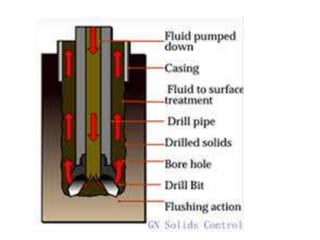
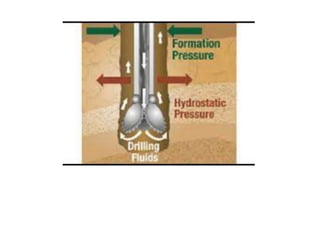
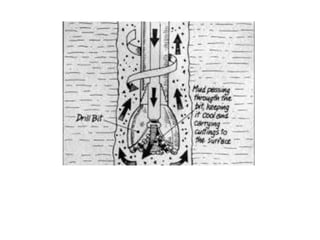
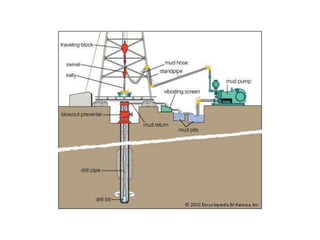
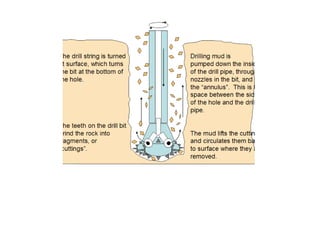
• A drilling fluid is any fluid that is used in
drilling operation in which the fluid is
circulated or pumped from the surface
• Down the drill string through the bit and back
to the surface via annulus
• When to you talk about drilling 4 basic
questions arise why when where how
• Today I am here to discuss and clear some
concepts
What is drilling fluid?
• Drilling fluid is nothing but simply mixture of
mud and clay
• Why drilling fluid is employed?
• The main aim is that to bring out the cutting
from the bottom and pressure
• For this the drilling fluids must have 2
properties
• 1. viscosity 2. density
Why drilling fluid ?
• Clean the bottom of the hole
• Cool, clean and lubricate the drill bit
• Maintain the walls in the hole
• Reduce friction between drill pipe and well bore
• Prevent the inflow of fluids from well bore
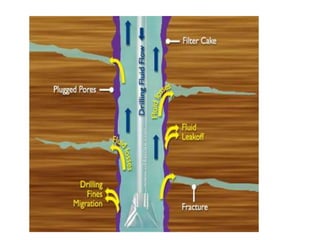
• Form a thin permeable filter cake
• Be non damaging to the producing formation
• Be non hazardous to the environment and the
personnel
Terminology
• When we talk about drilling fluids there is a
particular properties like gel strength , plastic
viscosity , yield point and fluid loss
• Fluid loss: The leakage of the liquid phase of
drilling fluid into the formation matrix
resulting in undesirable build up of solid
material . This is the reason why drilling fluids
are added with fluid loss additives
• Ex: modified starch etc
• Gel strength: The shear stress measured to the low
shear rate after a mud has set for a period of time
• The time period of testing may from to 10 seconds to
10 minutes according to the API standard
• The gel strength is a important fluid property because it
demonstrates the ability to the suspend the drill solid
and weighting material when circulation is ceased
• Ex: In WBM acid gases carbon dioxide and hydrogen
sulphide
• In oil based mud treatment with organic gelling
material and particles in mud
• If these are not circulated it form bridge and fill and can
form a stuck , lost circulation
• Yield point: it is the resistance of initial flow
of fluid or the stress required in order to move
the fluid .
• It is the attractive forces between the colloidal
particles
• In wbm the yp increases with increase in
temperature , contaminants etc
• In obm drill solids , low temperature are
favoured for increase in yp
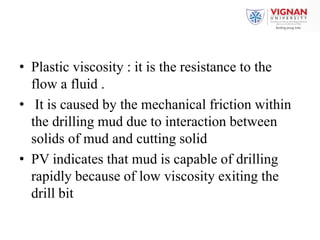
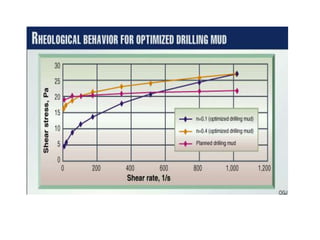
• Plastic viscosity : it is the resistance to the
flow a fluid .
• It is caused by the mechanical friction within
the drilling mud due to interaction between
solids of mud and cutting solid
• PV indicates that mud is capable of drilling
rapidly because of low viscosity exiting the
drill bit
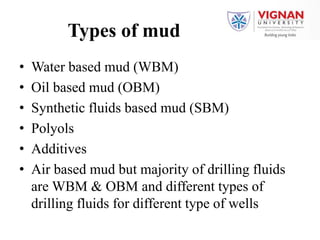
Types of mud
• Water based mud (WBM)
• Oil based mud (OBM)
• Synthetic fluids based mud (SBM)
• Polyols
• Additives
• Air based mud but majority of drilling fluids
are WBM & OBM and different types of
drilling fluids for different type of wells
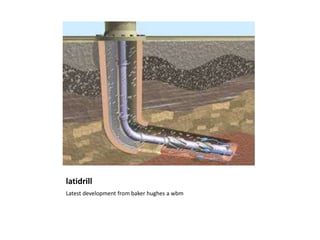
latidrill
Latest development from baker hughes a wbm
Comparison
WBM
• These can replace OBM in a
cost-effective manner for
shale instability
• No water based muds are
stable are 400 F
• Less toxic and can meet
environmental issues
• In this we can control pv ,
yp , fluid loss
OBM
• A lot of additives are to be
used for shale instability
case
• Oil based muds are stable
above 400F
• More toxic and toxicity
affects over a large area
• In this we cannot control
over 30,000 psi and other
temp conditions less than 25
c
Advantages of bio polymers
with less toxicity
• High viscosity at low concentration
• Plastic viscosity values are less
• Enabling easy injection
• Stability of the polymer viscosity to salinity,
temperature and alkaline conditions
• However smaller quantities of caustic soda and
kcl for infiltration are used
• This can solve the environmental issue
Disadvantages
• The main disadvantage is the toxicity and
disposal of the drilling mud
• There is no particular precedence in the mud
• High risk is involved as it needs a lot of
analysis
• Highly skilled labour and engineers along with
cutting edge technology are also not able to
produce desirable results
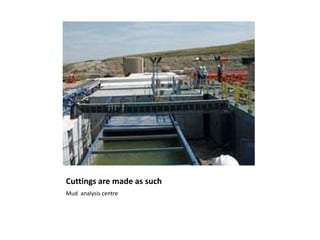
Cuttings are made as such
Mud analysis centre
Conclusion
• Bio polymers are to viscosify the drilling fluid
and schlerogen is more compatible with salt
when compared to xanthan gum
• The core point is also make sure of problems
with drilling fluids and dealing with
environmental concerns of the fluids
• So here by I can conclude that WBM muds are
most sustainable with bio polymers
References
• Rheological properties of bio polymers drilling
fluids– Samira Baba ahmed , Mansour
belhadri
• Drlling fluids : State of art --- Ryen caenn,
George V. chillingar
Thank you
Any doubts can be mailed at
siddharthrcs@gmail.com
9052389509

introduction of drilling fluids

  • 1.
    Drilling fluids- sustainable solution SIDDHARTHSHARMA 151FA17018 PETROLEUM ENGINEERING
  • 2.
    Contents of discussion •Introduction • Basic terminology involved • Mud types • Additives • Functions of mud • Environmental issues • Valid conclusion
  • 3.
    • A drillingfluid is any fluid that is used in drilling operation in which the fluid is circulated or pumped from the surface • Down the drill string through the bit and back to the surface via annulus • When to you talk about drilling 4 basic questions arise why when where how • Today I am here to discuss and clear some concepts
  • 5.
    What is drillingfluid? • Drilling fluid is nothing but simply mixture of mud and clay • Why drilling fluid is employed? • The main aim is that to bring out the cutting from the bottom and pressure • For this the drilling fluids must have 2 properties • 1. viscosity 2. density
  • 6.
    Why drilling fluid? • Clean the bottom of the hole • Cool, clean and lubricate the drill bit • Maintain the walls in the hole • Reduce friction between drill pipe and well bore • Prevent the inflow of fluids from well bore • Form a thin permeable filter cake • Be non damaging to the producing formation • Be non hazardous to the environment and the personnel
  • 7.
    Terminology • When wetalk about drilling fluids there is a particular properties like gel strength , plastic viscosity , yield point and fluid loss • Fluid loss: The leakage of the liquid phase of drilling fluid into the formation matrix resulting in undesirable build up of solid material . This is the reason why drilling fluids are added with fluid loss additives • Ex: modified starch etc
  • 9.
    • Gel strength:The shear stress measured to the low shear rate after a mud has set for a period of time • The time period of testing may from to 10 seconds to 10 minutes according to the API standard • The gel strength is a important fluid property because it demonstrates the ability to the suspend the drill solid and weighting material when circulation is ceased • Ex: In WBM acid gases carbon dioxide and hydrogen sulphide • In oil based mud treatment with organic gelling material and particles in mud • If these are not circulated it form bridge and fill and can form a stuck , lost circulation
  • 11.
    • Yield point:it is the resistance of initial flow of fluid or the stress required in order to move the fluid . • It is the attractive forces between the colloidal particles • In wbm the yp increases with increase in temperature , contaminants etc • In obm drill solids , low temperature are favoured for increase in yp
  • 13.
    • Plastic viscosity: it is the resistance to the flow a fluid . • It is caused by the mechanical friction within the drilling mud due to interaction between solids of mud and cutting solid • PV indicates that mud is capable of drilling rapidly because of low viscosity exiting the drill bit
  • 15.
    Types of mud •Water based mud (WBM) • Oil based mud (OBM) • Synthetic fluids based mud (SBM) • Polyols • Additives • Air based mud but majority of drilling fluids are WBM & OBM and different types of drilling fluids for different type of wells
  • 16.
  • 17.
    Comparison WBM • These canreplace OBM in a cost-effective manner for shale instability • No water based muds are stable are 400 F • Less toxic and can meet environmental issues • In this we can control pv , yp , fluid loss OBM • A lot of additives are to be used for shale instability case • Oil based muds are stable above 400F • More toxic and toxicity affects over a large area • In this we cannot control over 30,000 psi and other temp conditions less than 25 c
  • 18.
    Advantages of biopolymers with less toxicity • High viscosity at low concentration • Plastic viscosity values are less • Enabling easy injection • Stability of the polymer viscosity to salinity, temperature and alkaline conditions • However smaller quantities of caustic soda and kcl for infiltration are used • This can solve the environmental issue
  • 19.
    Disadvantages • The maindisadvantage is the toxicity and disposal of the drilling mud • There is no particular precedence in the mud • High risk is involved as it needs a lot of analysis • Highly skilled labour and engineers along with cutting edge technology are also not able to produce desirable results
  • 20.
    Cuttings are madeas such Mud analysis centre
  • 23.
    Conclusion • Bio polymersare to viscosify the drilling fluid and schlerogen is more compatible with salt when compared to xanthan gum • The core point is also make sure of problems with drilling fluids and dealing with environmental concerns of the fluids • So here by I can conclude that WBM muds are most sustainable with bio polymers
  • 25.
    References • Rheological propertiesof bio polymers drilling fluids– Samira Baba ahmed , Mansour belhadri • Drlling fluids : State of art --- Ryen caenn, George V. chillingar
  • 26.
    Thank you Any doubtscan be mailed at siddharthrcs@gmail.com 9052389509