What are accounting concepts
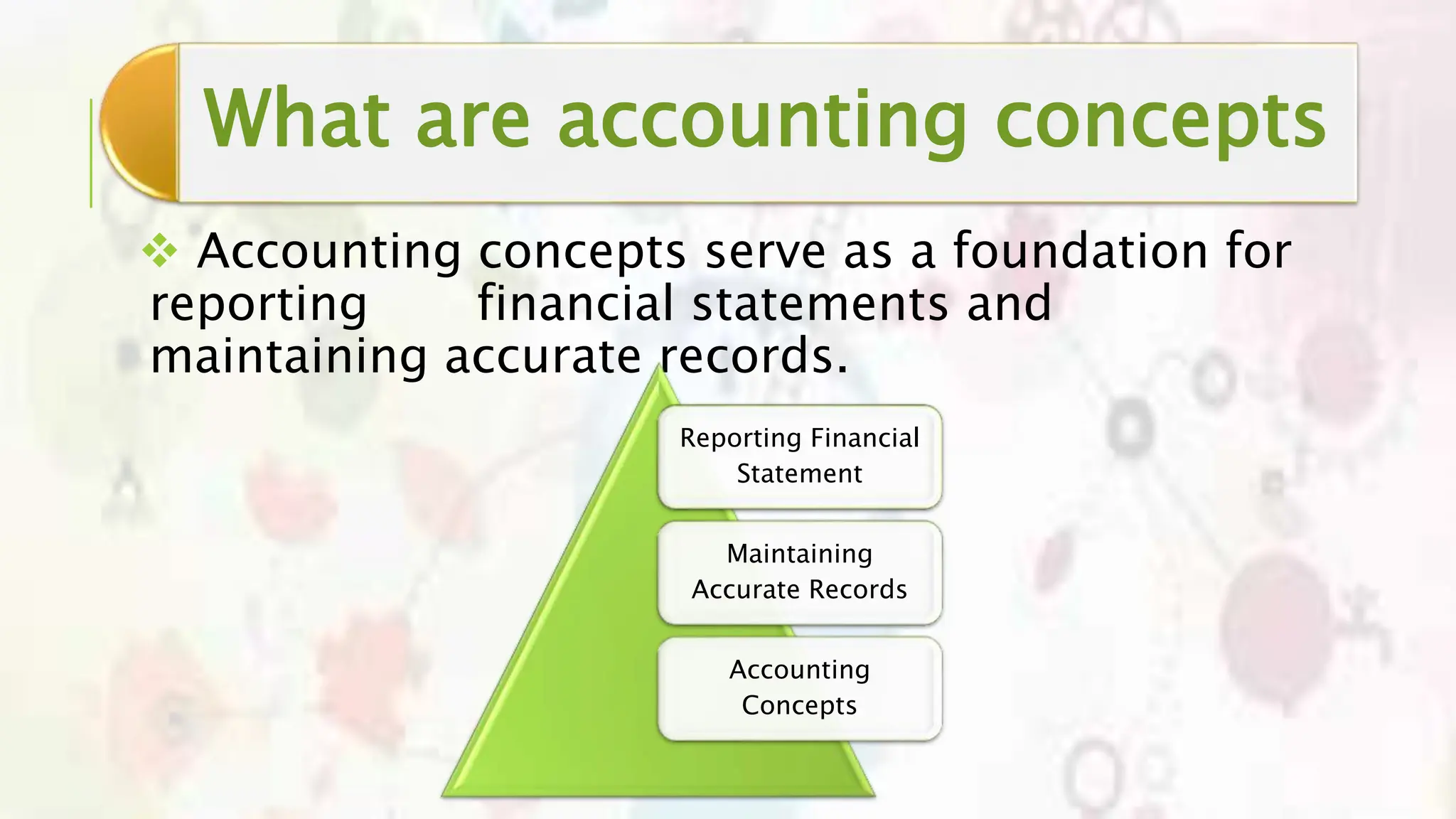
 Accounting concepts serve as a foundation for
reporting financial statements and
maintaining accurate records.
Reporting Financial
Statement
Maintaining
Accurate Records
Accounting
Concepts
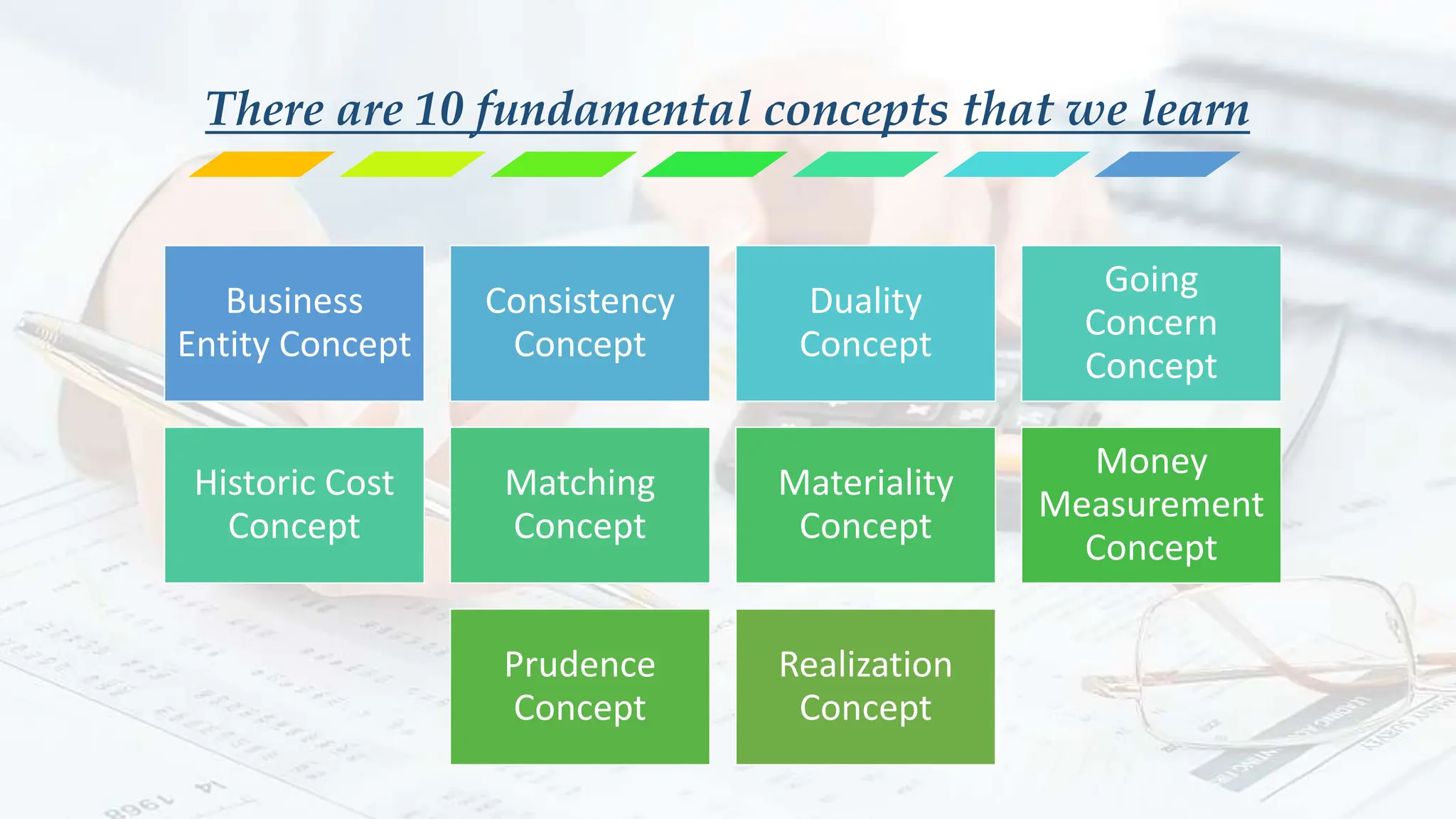
There are 10 fundamental concepts that we learn
Business
Entity Concept
Consistency
Concept
Duality
Concept
Going
Concern
Concept
Historic Cost
Concept
Matching
Concept
Materiality
Concept
Money
Measurement
Concept
Prudence
Concept
Realization
Concept
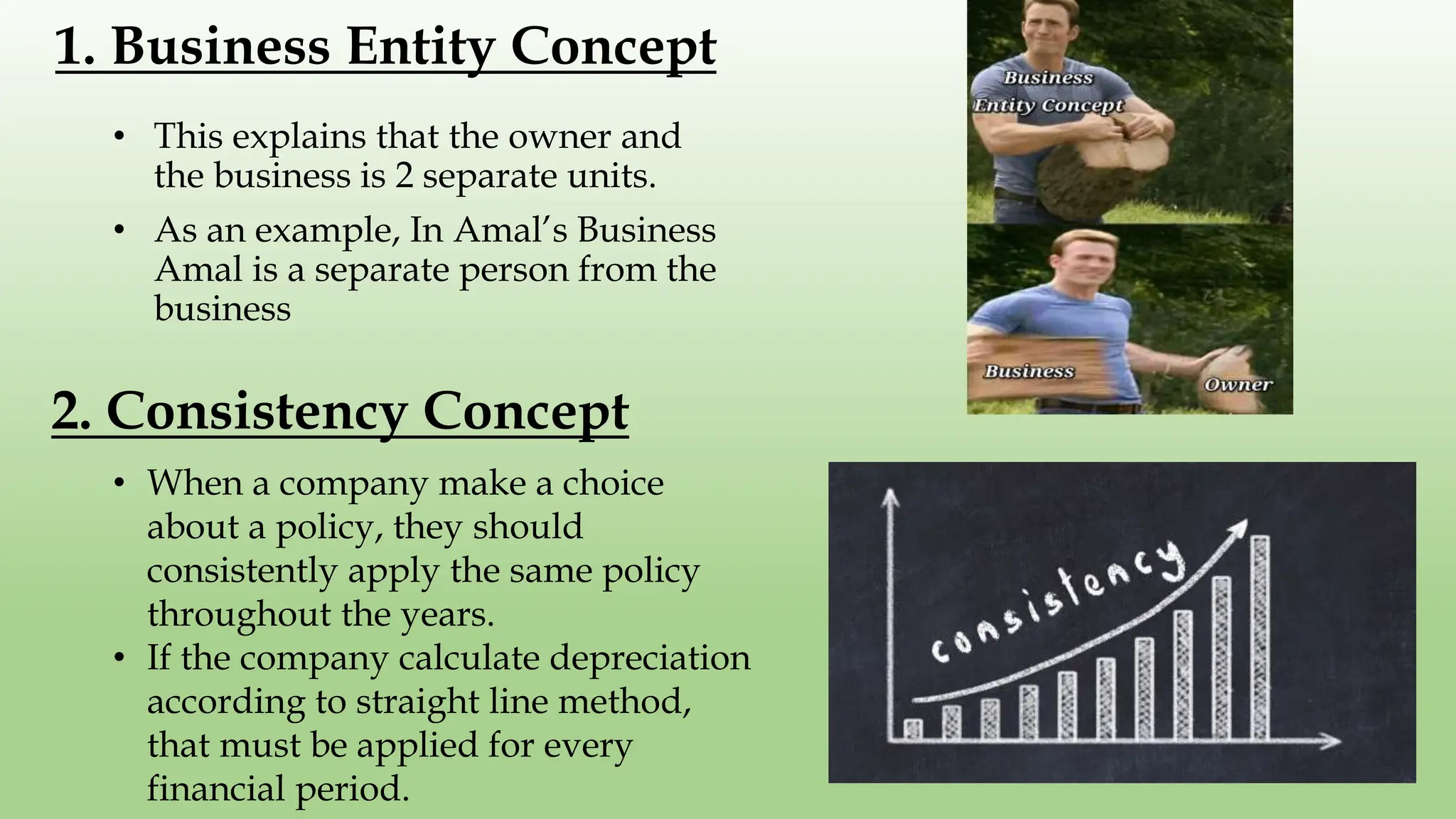
1. Business Entity Concept
• This explains that the owner and
the business is 2 separate units.
• As an example, In Amal’s Business
Amal is a separate person from the
business
2. Consistency Concept
• When a company make a choice
about a policy, they should
consistently apply the same policy
throughout the years.
• If the company calculate depreciation
according to straight line method,
that must be applied for every
financial period.
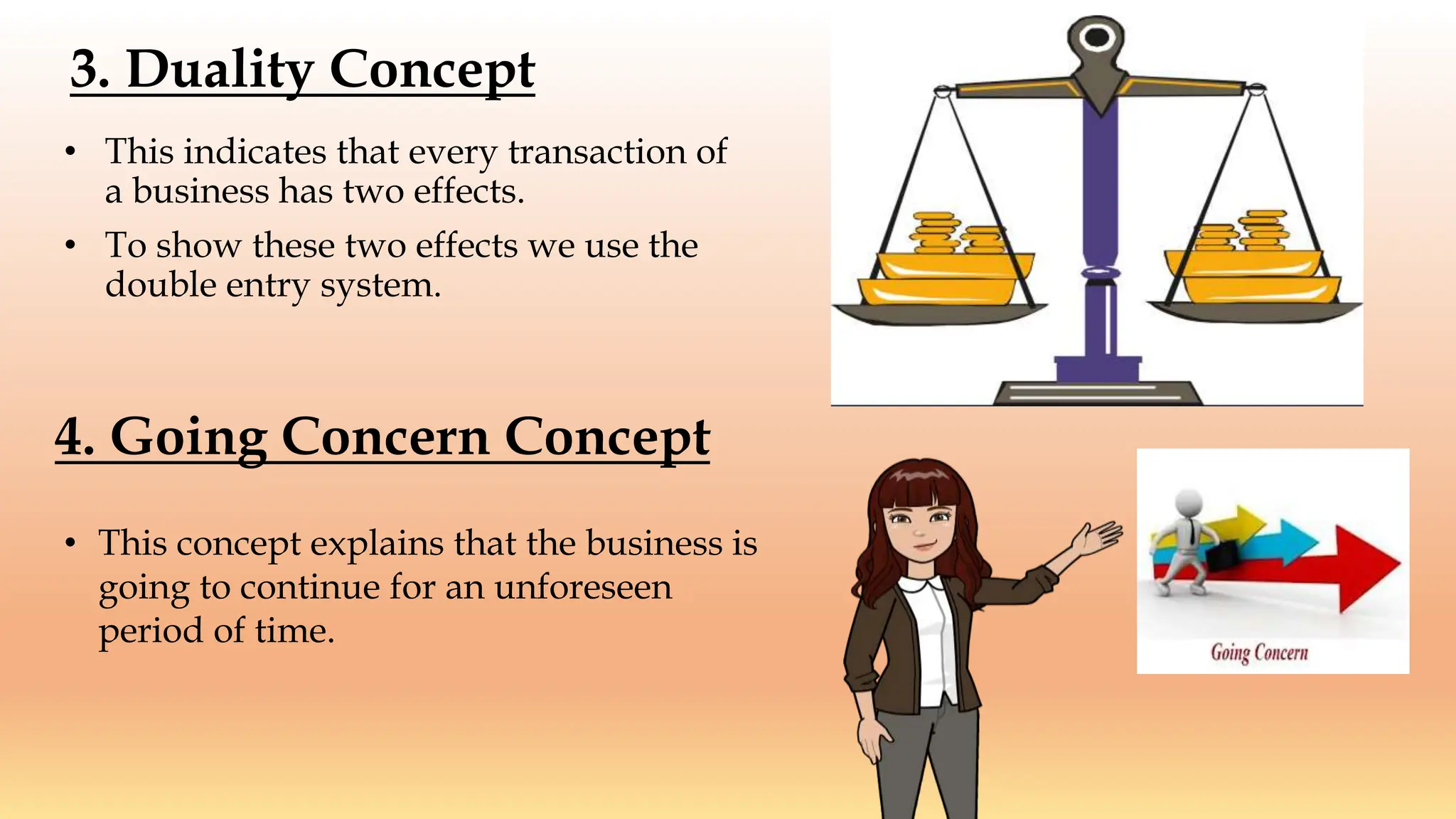
3. Duality Concept
• This indicates that every transaction of
a business has two effects.
• To show these two effects we use the
double entry system.
4. Going Concern Concept
• This concept explains that the business is
going to continue for an unforeseen
period of time.
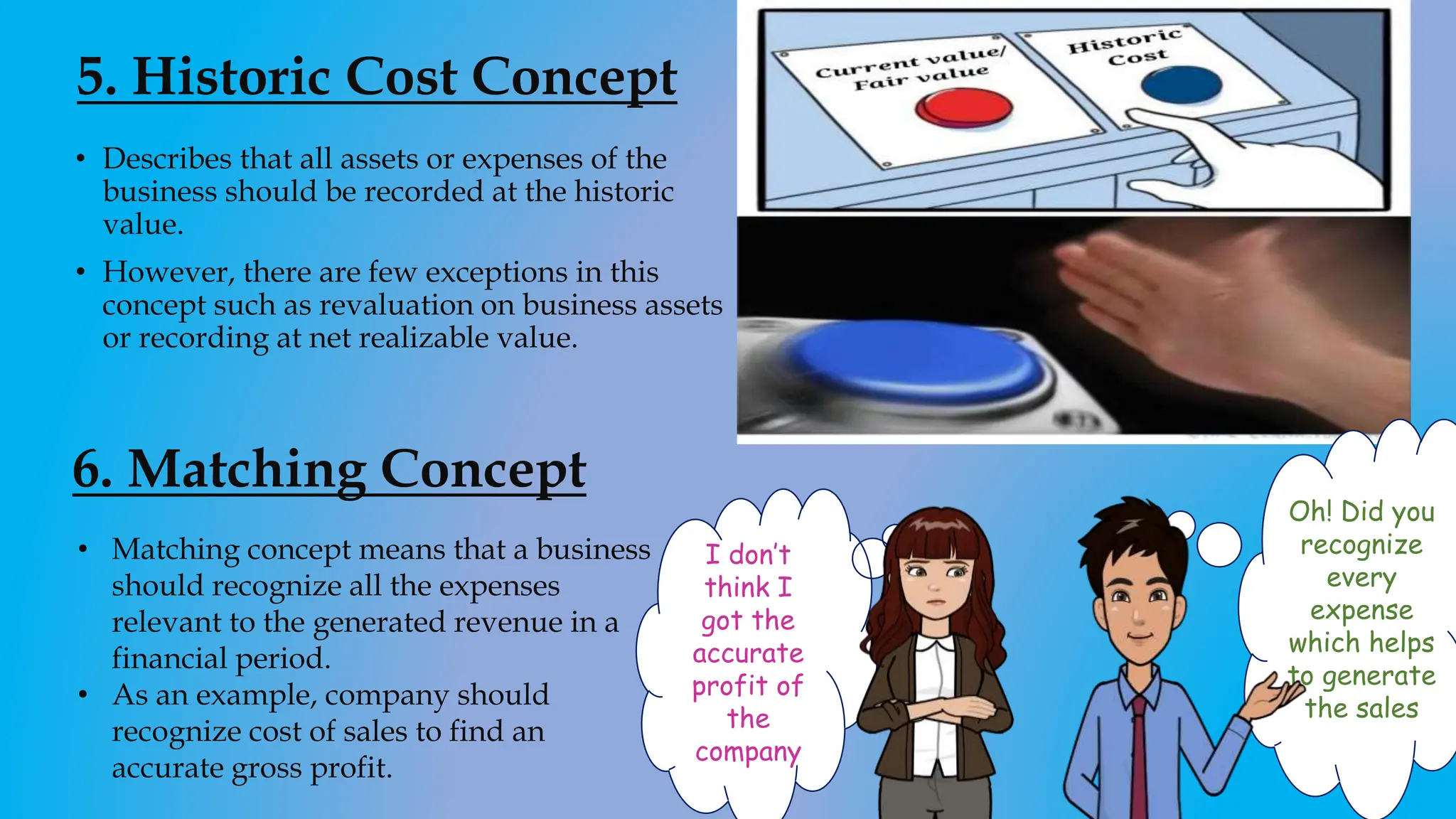
5. Historic Cost Concept
• Describes that all assets or expenses of the
business should be recorded at the historic
value.
• However, there are few exceptions in this
concept such as revaluation on business assets
or recording at net realizable value.
6. Matching Concept
• Matching concept means that a business
should recognize all the expenses
relevant to the generated revenue in a
financial period.
• As an example, company should
recognize cost of sales to find an
accurate gross profit.
I don’t
think I
got the
accurate
profit of
the
company
Oh! Did you
recognize
every
expense
which helps
to generate
the sales
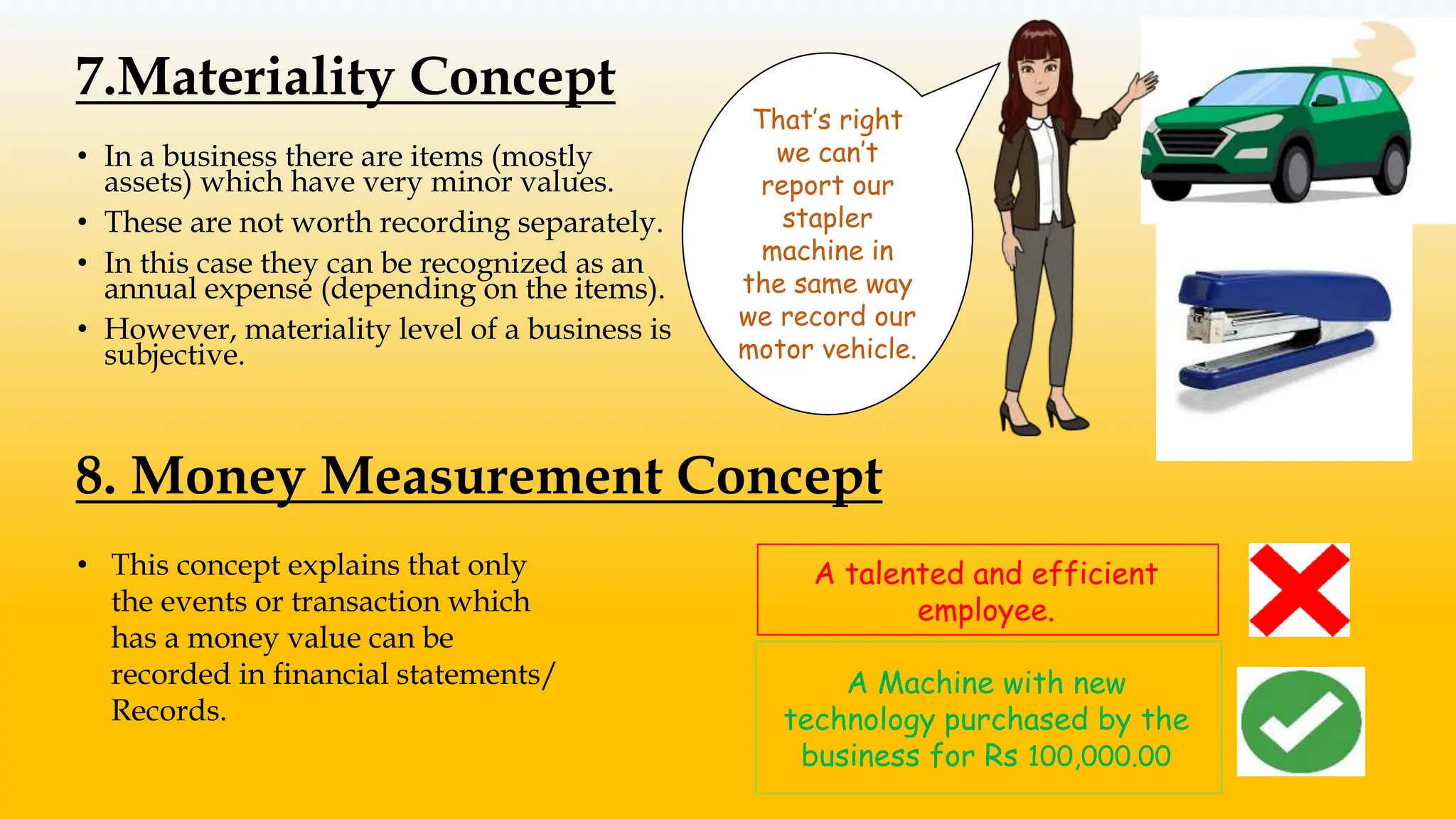
7.Materiality Concept
• In a business there are items (mostly
assets) which have very minor values.
• These are not worth recording separately.
• In this case they can be recognized as an
annual expense (depending on the items).
• However, materiality level of a business is
subjective.
That’s right
we can’t
report our
stapler
machine in
the same way
we record our
motor vehicle.
8. Money Measurement Concept
• This concept explains that only
the events or transaction which
has a money value can be
recorded in financial statements/
Records.
A talented and efficient
employee.
A Machine with new
technology purchased by the
business for Rs 100,000.00
9. Prudence Concept
• This explains that the company should
not understate their assets or income and
overstate their liabilities or expenses.
• Meaning that a business should recognize
all possible losses to make sure they do
not overstate their profit or other liquidity
ratios.
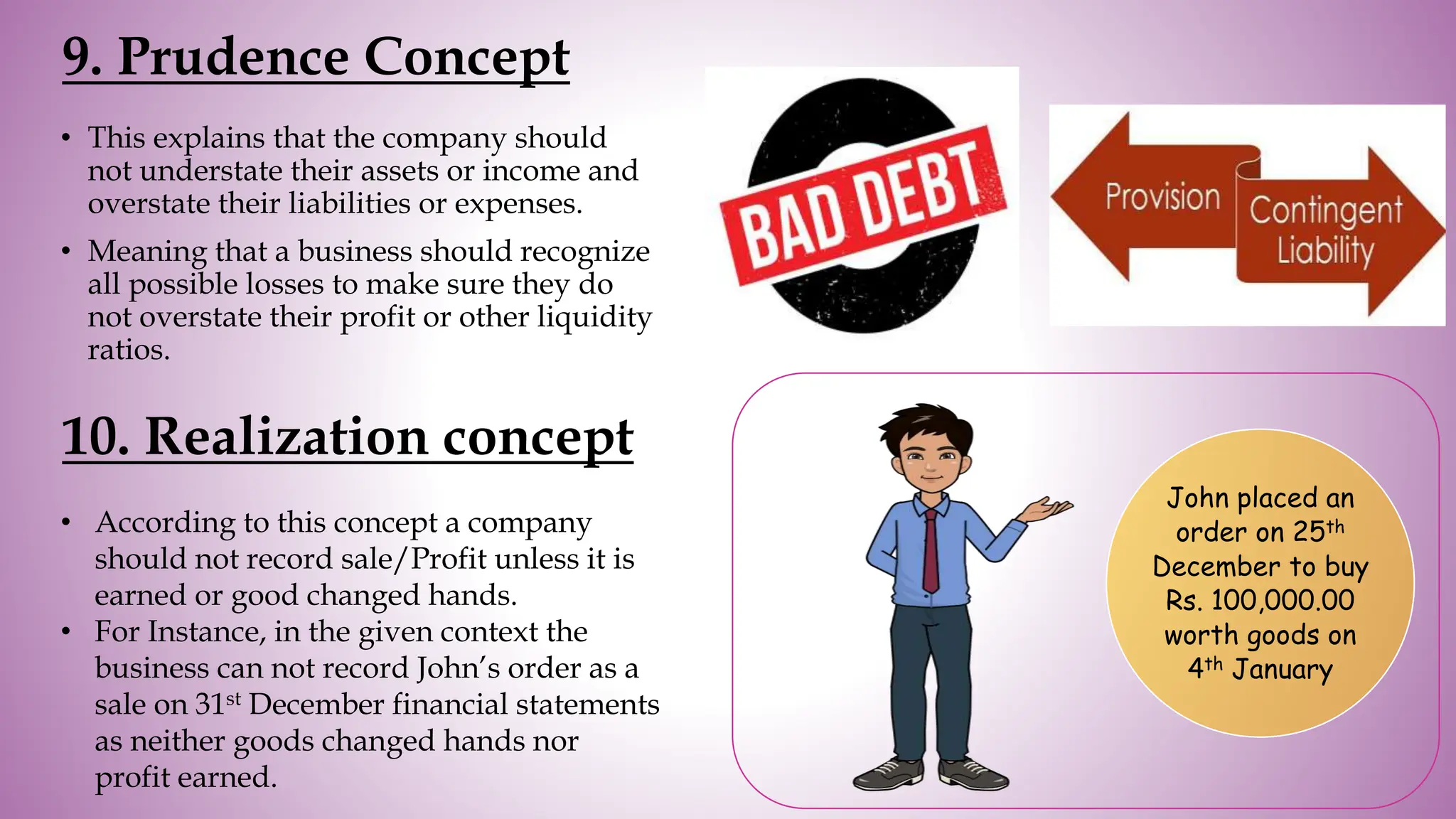
10. Realization concept
• According to this concept a company
should not record sale/Profit unless it is
earned or good changed hands.
• For Instance, in the given context the
business can not record John’s order as a
sale on 31st December financial statements
as neither goods changed hands nor
profit earned.
John placed an
order on 25th
December to buy
Rs. 100,000.00
worth goods on
4th January

Basic Accounting Concepts - For beginners

  • 1.
    What are accountingconcepts  Accounting concepts serve as a foundation for reporting financial statements and maintaining accurate records. Reporting Financial Statement Maintaining Accurate Records Accounting Concepts
  • 2.
    There are 10fundamental concepts that we learn Business Entity Concept Consistency Concept Duality Concept Going Concern Concept Historic Cost Concept Matching Concept Materiality Concept Money Measurement Concept Prudence Concept Realization Concept
  • 3.
    1. Business EntityConcept • This explains that the owner and the business is 2 separate units. • As an example, In Amal’s Business Amal is a separate person from the business 2. Consistency Concept • When a company make a choice about a policy, they should consistently apply the same policy throughout the years. • If the company calculate depreciation according to straight line method, that must be applied for every financial period.
  • 4.
    3. Duality Concept •This indicates that every transaction of a business has two effects. • To show these two effects we use the double entry system. 4. Going Concern Concept • This concept explains that the business is going to continue for an unforeseen period of time.
  • 5.
    5. Historic CostConcept • Describes that all assets or expenses of the business should be recorded at the historic value. • However, there are few exceptions in this concept such as revaluation on business assets or recording at net realizable value. 6. Matching Concept • Matching concept means that a business should recognize all the expenses relevant to the generated revenue in a financial period. • As an example, company should recognize cost of sales to find an accurate gross profit. I don’t think I got the accurate profit of the company Oh! Did you recognize every expense which helps to generate the sales
  • 6.
    7.Materiality Concept • Ina business there are items (mostly assets) which have very minor values. • These are not worth recording separately. • In this case they can be recognized as an annual expense (depending on the items). • However, materiality level of a business is subjective. That’s right we can’t report our stapler machine in the same way we record our motor vehicle. 8. Money Measurement Concept • This concept explains that only the events or transaction which has a money value can be recorded in financial statements/ Records. A talented and efficient employee. A Machine with new technology purchased by the business for Rs 100,000.00
  • 7.
    9. Prudence Concept •This explains that the company should not understate their assets or income and overstate their liabilities or expenses. • Meaning that a business should recognize all possible losses to make sure they do not overstate their profit or other liquidity ratios. 10. Realization concept • According to this concept a company should not record sale/Profit unless it is earned or good changed hands. • For Instance, in the given context the business can not record John’s order as a sale on 31st December financial statements as neither goods changed hands nor profit earned. John placed an order on 25th December to buy Rs. 100,000.00 worth goods on 4th January