Balanced Score Card
Presented by,
Patel Sneha S.
It is all about;
• Four key Business Perspectives
• Internal & Business process of Organization
• Short Run & Long Run
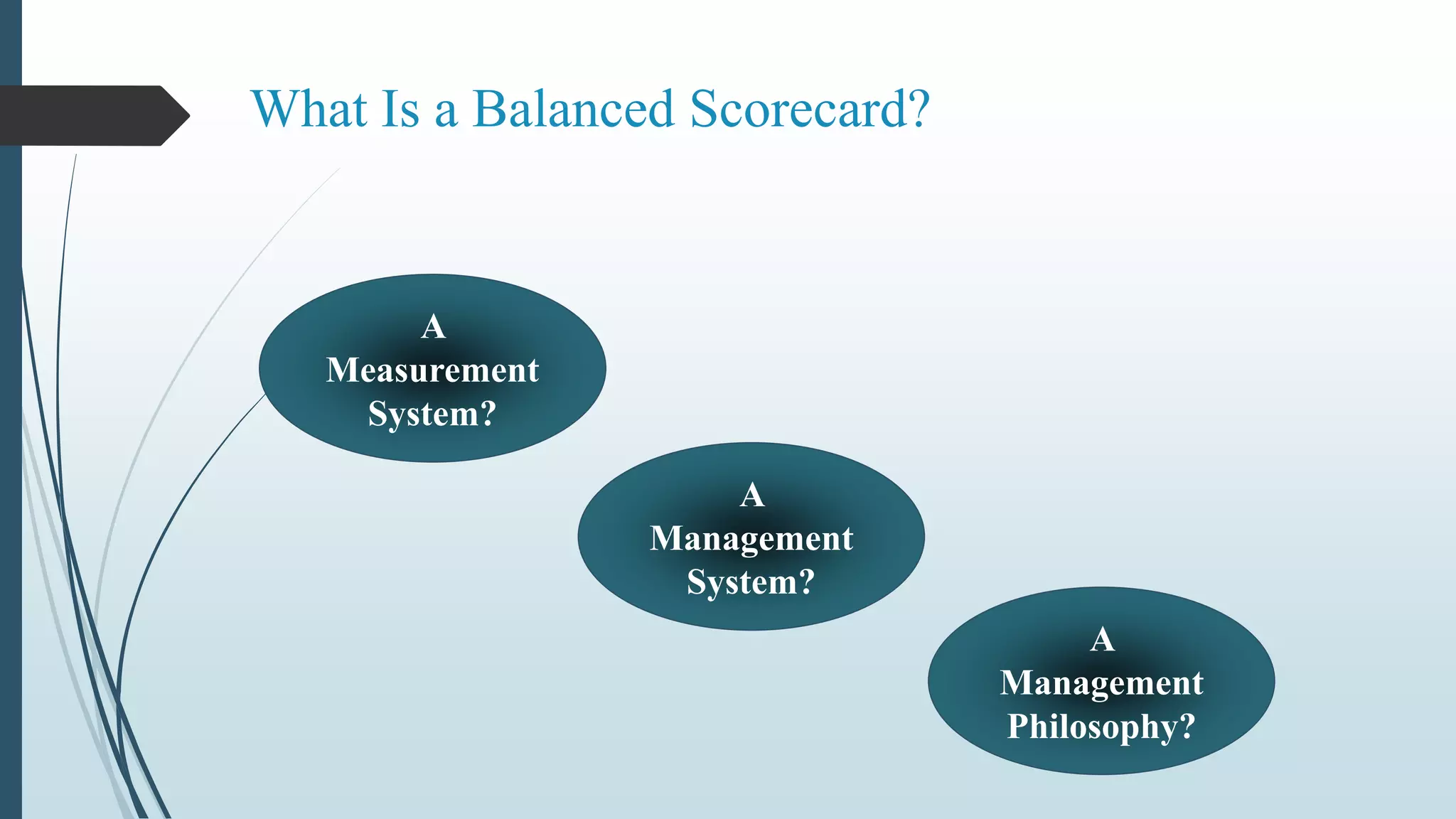
What Is a Balanced Scorecard?
A
Measurement
System?
A
Management
System?
A
Management
Philosophy?
Balanced Score Card is;
• Management system
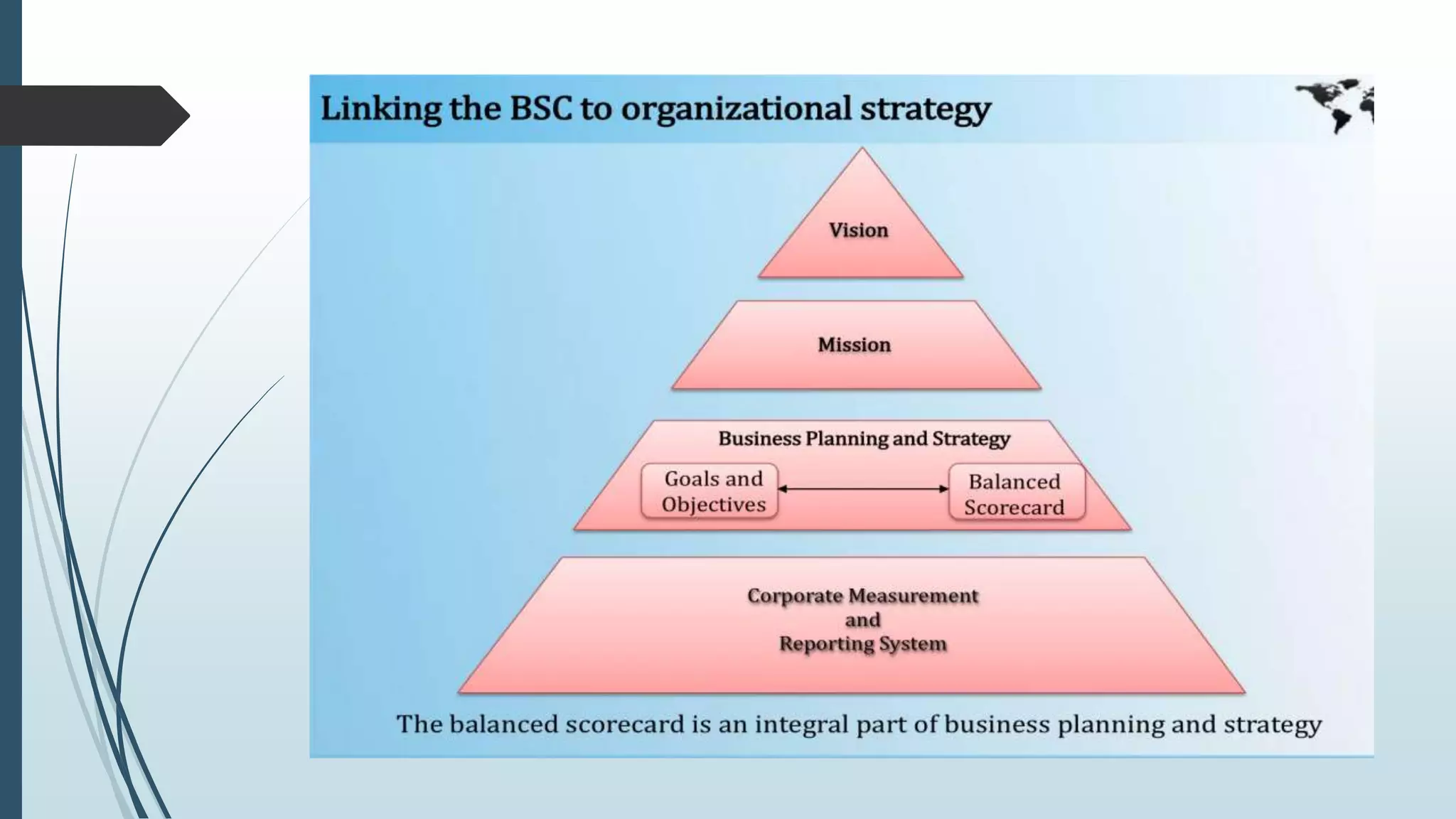
Clarifies mission & vision of an organization
Translates mission & vision into measurable and actionable
measures
Helps provide feedback and meaningful information
• Balanced Score Card was pioneered by Robert Kaplan and
David Norton of Harvard Business School in 1992
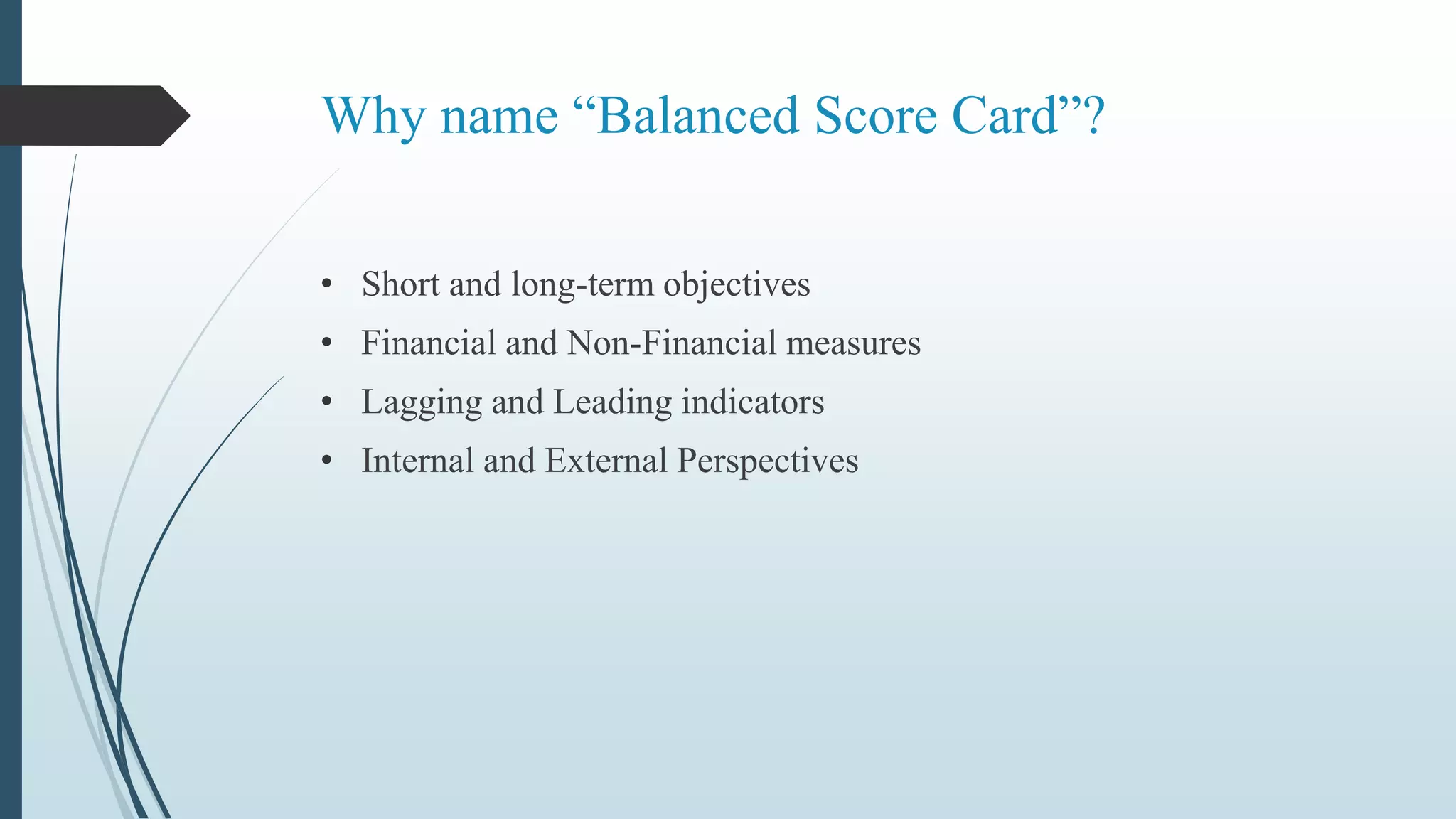
Why name “Balanced Score Card”?
• Short and long-term objectives
• Financial and Non-Financial measures
• Lagging and Leading indicators
• Internal and External Perspectives
Why Companies Uses BSC
• Change.
• Growth.
• Implementation.
The Benefits
• A robust tool
• Makes strategy tangible
• Tracks what’s important
• Measurement of financial and non-financial aspects
• Provides feedback for short-term course corrections and long-term
learning
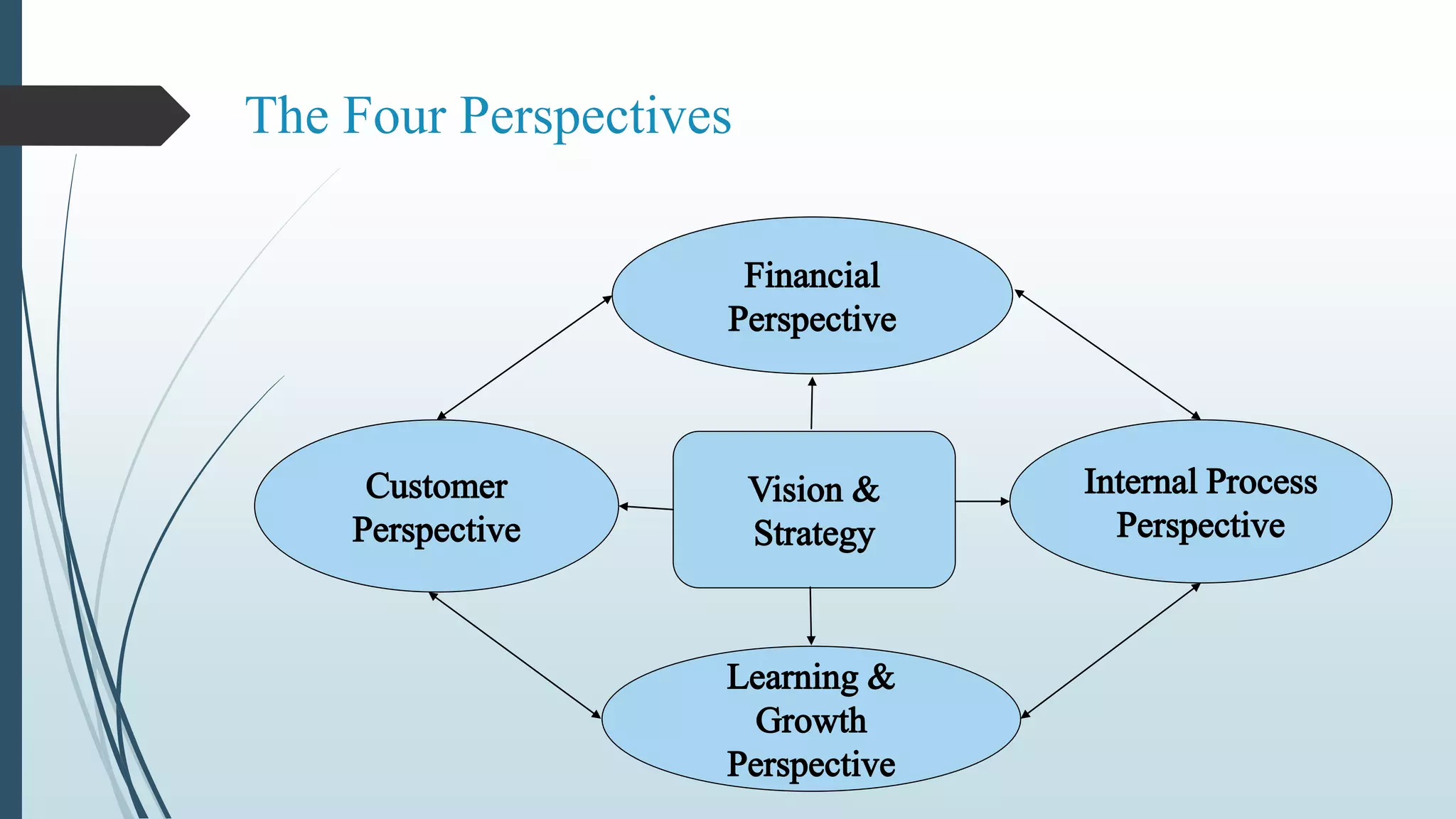
The Four Perspectives
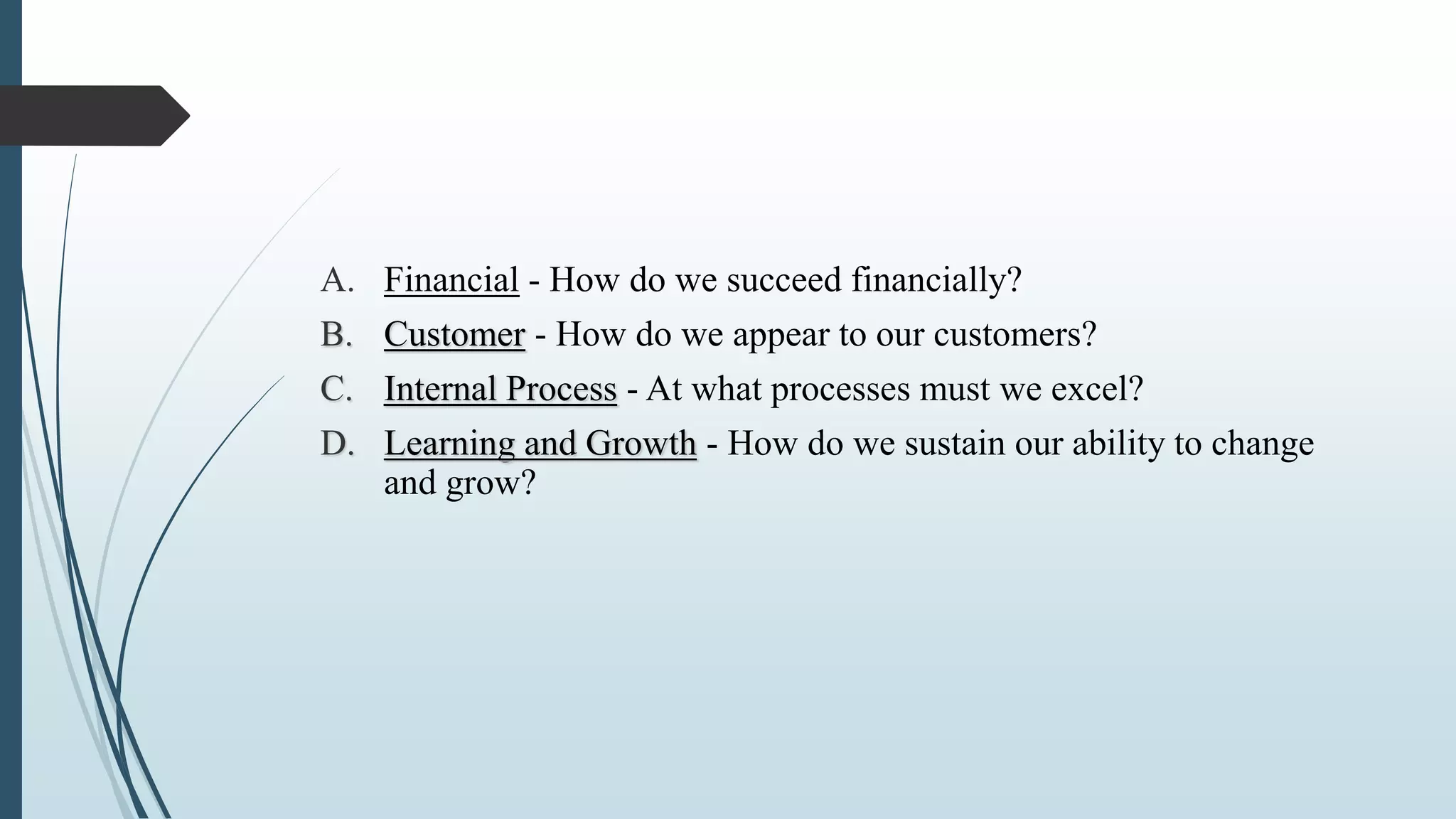
A. Financial - How do we succeed financially?
B. Customer - How do we appear to our customers?
C. Internal Process - At what processes must we excel?
D. Learning and Growth - How do we sustain our ability to change
and grow?
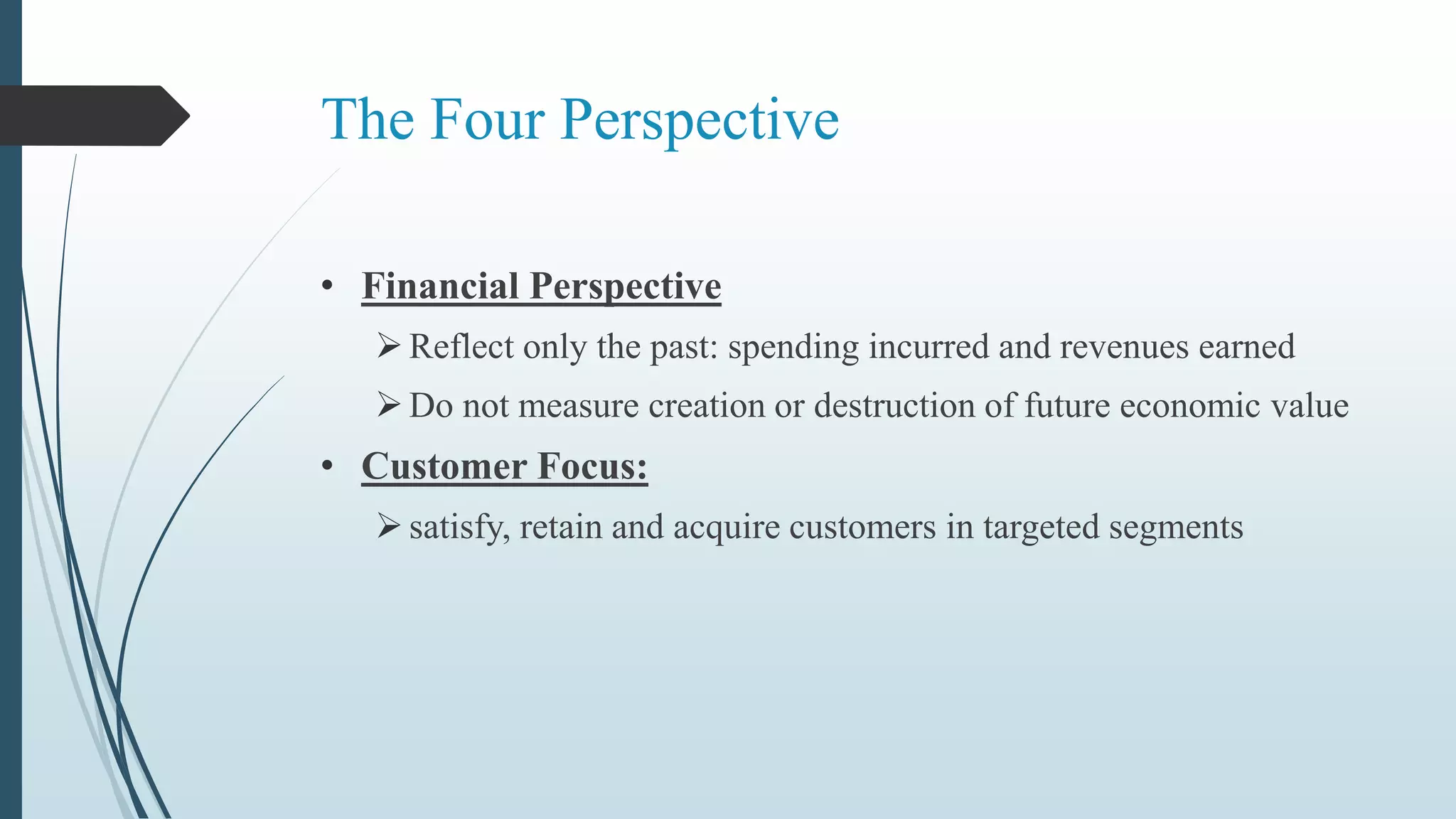
The Four Perspective
• Financial Perspective
Reflect only the past: spending incurred and revenues earned
Do not measure creation or destruction of future economic value
• Customer Focus:
satisfy, retain and acquire customers in targeted segments
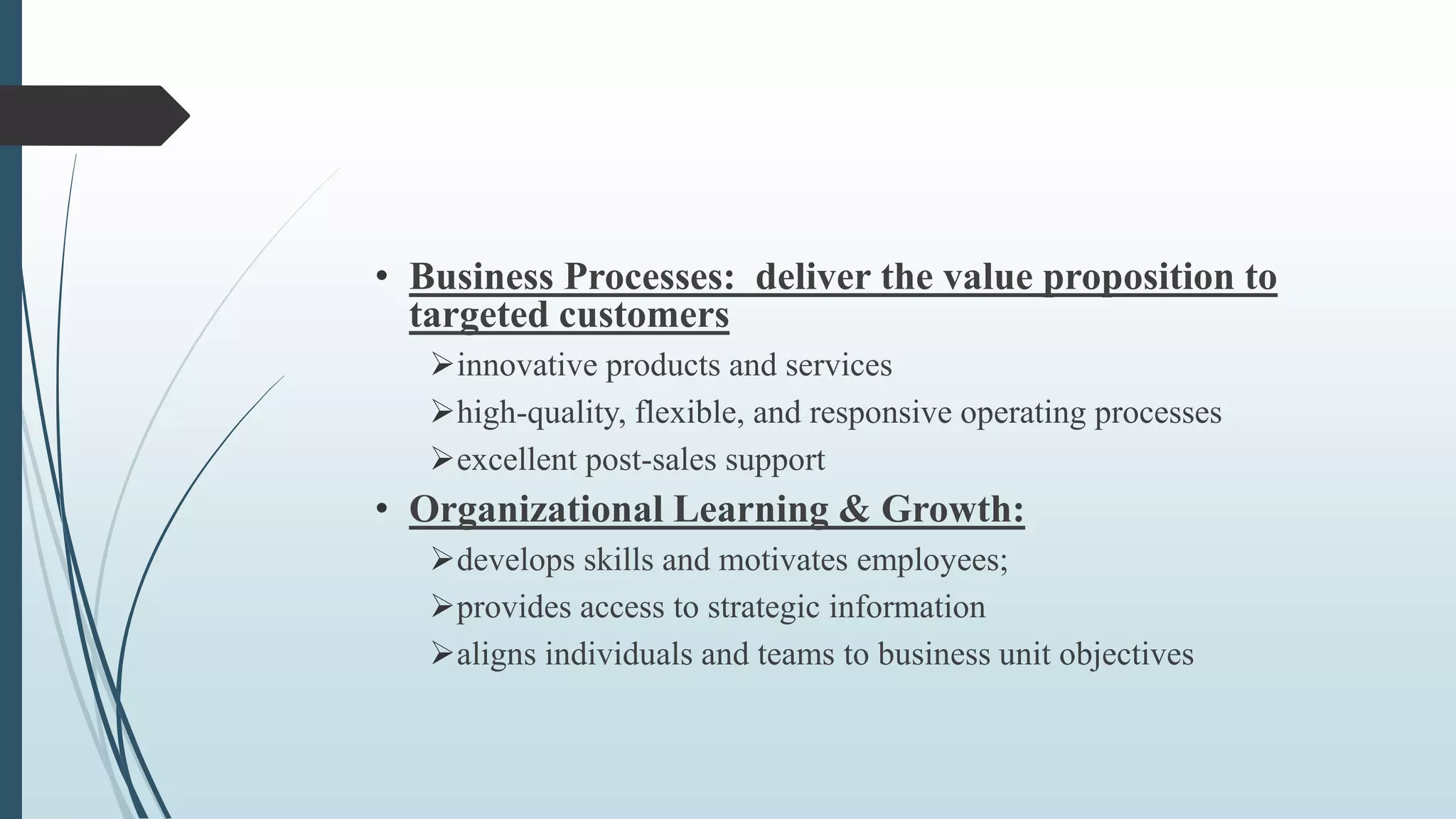
• Business Processes: deliver the value proposition to
targeted customers
innovative products and services
high-quality, flexible, and responsive operating processes
excellent post-sales support
• Organizational Learning & Growth:
develops skills and motivates employees;
provides access to strategic information
aligns individuals and teams to business unit objectives
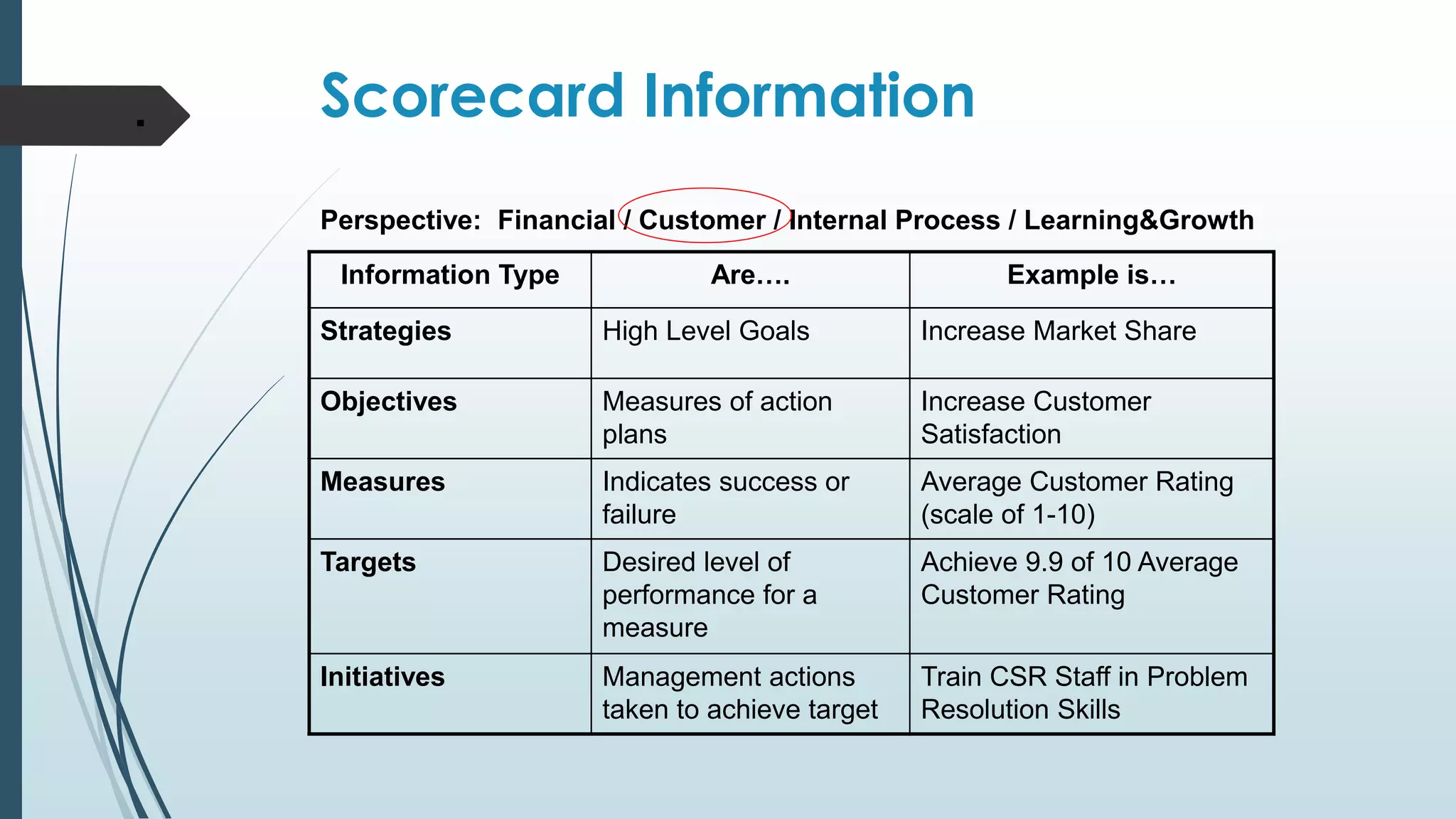
. Scorecard Information
Information Type Are…. Example is…
Strategies High Level Goals Increase Market Share
Objectives Measures of action
plans
Increase Customer
Satisfaction
Measures Indicates success or
failure
Average Customer Rating
(scale of 1-10)
Targets Desired level of
performance for a
measure
Achieve 9.9 of 10 Average
Customer Rating
Initiatives Management actions
taken to achieve target
Train CSR Staff in Problem
Resolution Skills
Perspective: Financial / Customer / Internal Process / Learning&Growth
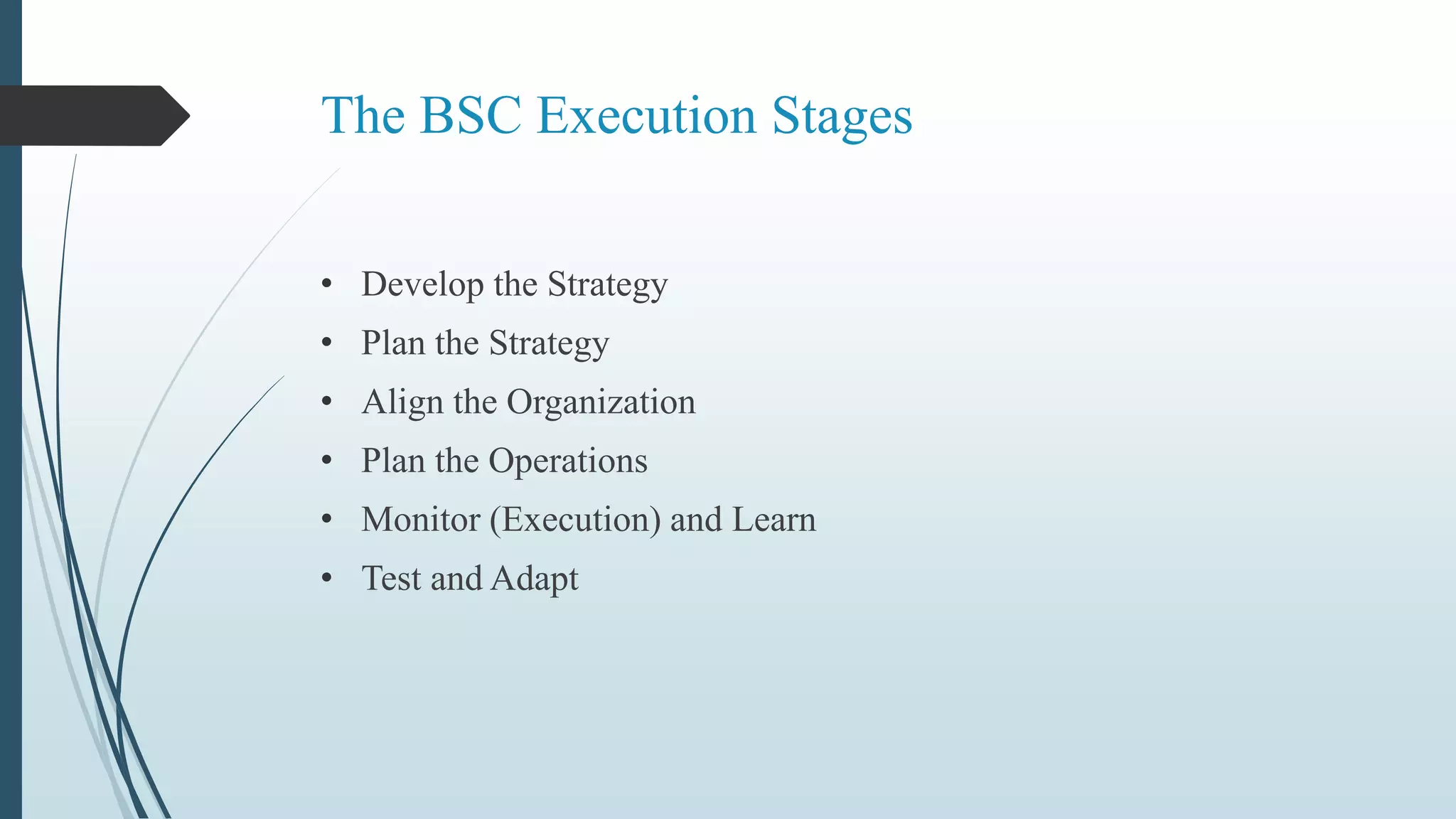
The BSC Execution Stages
• Develop the Strategy
• Plan the Strategy
• Align the Organization
• Plan the Operations
• Monitor (Execution) and Learn
• Test and Adapt
References
• "Balanced Scorecard", www.lassib.org
• "Performance Measurement with Balanced Scorecard", - Stefano
Biazzo and Patricia Gareno, Springer - Verlag Berlin Heidelberg
2012
• balanced-scorecards-and-operational-dashboards-with-microsoft-
excel

Balanced Score Card ppt

  • 1.
  • 2.
    It is allabout; • Four key Business Perspectives • Internal & Business process of Organization • Short Run & Long Run
  • 3.
    What Is aBalanced Scorecard? A Measurement System? A Management System? A Management Philosophy?
  • 4.
    Balanced Score Cardis; • Management system Clarifies mission & vision of an organization Translates mission & vision into measurable and actionable measures Helps provide feedback and meaningful information • Balanced Score Card was pioneered by Robert Kaplan and David Norton of Harvard Business School in 1992
  • 6.
    Why name “BalancedScore Card”? • Short and long-term objectives • Financial and Non-Financial measures • Lagging and Leading indicators • Internal and External Perspectives
  • 7.
    Why Companies UsesBSC • Change. • Growth. • Implementation.
  • 8.
    The Benefits • Arobust tool • Makes strategy tangible • Tracks what’s important • Measurement of financial and non-financial aspects • Provides feedback for short-term course corrections and long-term learning
  • 9.
  • 10.
    A. Financial -How do we succeed financially? B. Customer - How do we appear to our customers? C. Internal Process - At what processes must we excel? D. Learning and Growth - How do we sustain our ability to change and grow?
  • 11.
    The Four Perspective •Financial Perspective Reflect only the past: spending incurred and revenues earned Do not measure creation or destruction of future economic value • Customer Focus: satisfy, retain and acquire customers in targeted segments
  • 12.
    • Business Processes:deliver the value proposition to targeted customers innovative products and services high-quality, flexible, and responsive operating processes excellent post-sales support • Organizational Learning & Growth: develops skills and motivates employees; provides access to strategic information aligns individuals and teams to business unit objectives
  • 13.
    . Scorecard Information InformationType Are…. Example is… Strategies High Level Goals Increase Market Share Objectives Measures of action plans Increase Customer Satisfaction Measures Indicates success or failure Average Customer Rating (scale of 1-10) Targets Desired level of performance for a measure Achieve 9.9 of 10 Average Customer Rating Initiatives Management actions taken to achieve target Train CSR Staff in Problem Resolution Skills Perspective: Financial / Customer / Internal Process / Learning&Growth
  • 14.
    The BSC ExecutionStages • Develop the Strategy • Plan the Strategy • Align the Organization • Plan the Operations • Monitor (Execution) and Learn • Test and Adapt
  • 15.
    References • "Balanced Scorecard",www.lassib.org • "Performance Measurement with Balanced Scorecard", - Stefano Biazzo and Patricia Gareno, Springer - Verlag Berlin Heidelberg 2012 • balanced-scorecards-and-operational-dashboards-with-microsoft- excel